
Grilling Spices: Which Survive Direct Heat and Which Burn?
Which seasonings scorch over coals, which improve, and where on the grill each one belongs.
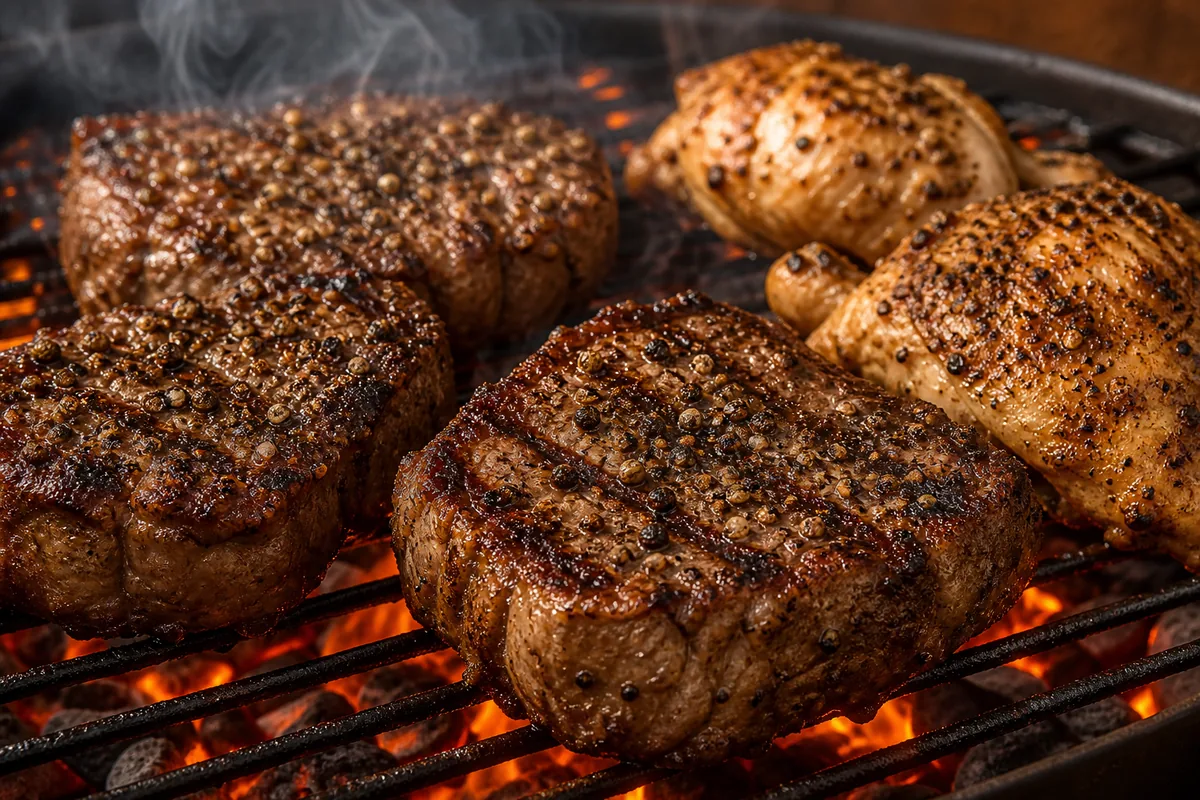
Grilling is the one method where the seasoning is hotter than the food, so the spices worth using over direct heat are the ones that survive it. Sugar, garlic powder and paprika scorch early, while coarse pepper, cracked seeds and salt come through unharmed.
Which spices survive direct heat on a grill?
Grilling is the only common cooking method where the seasoning is hotter than the food.
The surface of meat over direct coals sits far above the temperature of the meat inside it, and a spice sitting on that surface takes the full heat with nothing to protect it.
Everything else follows from that. A spice blend that tastes wonderful in a pan can turn acrid on a grill without a single thing changing about the blend.
So the useful way to sort grilling spices is not by cuisine or by flavor. It is by what happens to each of them when it gets too hot.
| Ingredient | Behavior over direct heat | Practical consequence |
|---|---|---|
| Sugar, honey, molasses | Caramelizes then burns quickly | Sauce goes on in the last few minutes only |
| Garlic and onion powder | Fine particles scorch fast and turn acrid | Use granules rather than powder, or indirect heat |
| Paprika | Scorches and turns bitter well before meat is done | Keep it off the flame side or add it late |
| Dried leafy herbs | Ignite and go to ash on the bars | Better in a marinade than a rub |
| Ground spices generally | Darken and dull, losing their top note | Grind coarse, or accept a quieter result |
| Whole and cracked seeds | Toast rather than burn | The safest things to season with |
| Salt and coarse black pepper | Effectively heatproof at grill temperatures | The backbone of any direct-heat seasoning |
This is also why a rub built for a smoker often disappoints on a grill. The two put the same spices through completely different conditions.
The numbers make the gap plain. A smoker runs at around 110 to 135 degrees Celsius, below the point where sugar starts to darken.
A grate over live coals reaches several hundred, which is well past it.
A sugary rub is therefore correct in one and a mistake in the other, and the recipe that produced it was never wrong about anything except which fire you were standing at.
Which spices burn first on a grill?
Fine particles burn first because they have the most surface for their size.
That single fact explains most grilling seasoning failures. Garlic powder is a scorch risk while garlic granules are manageable, and the difference between them is particle size rather than anything about garlic.
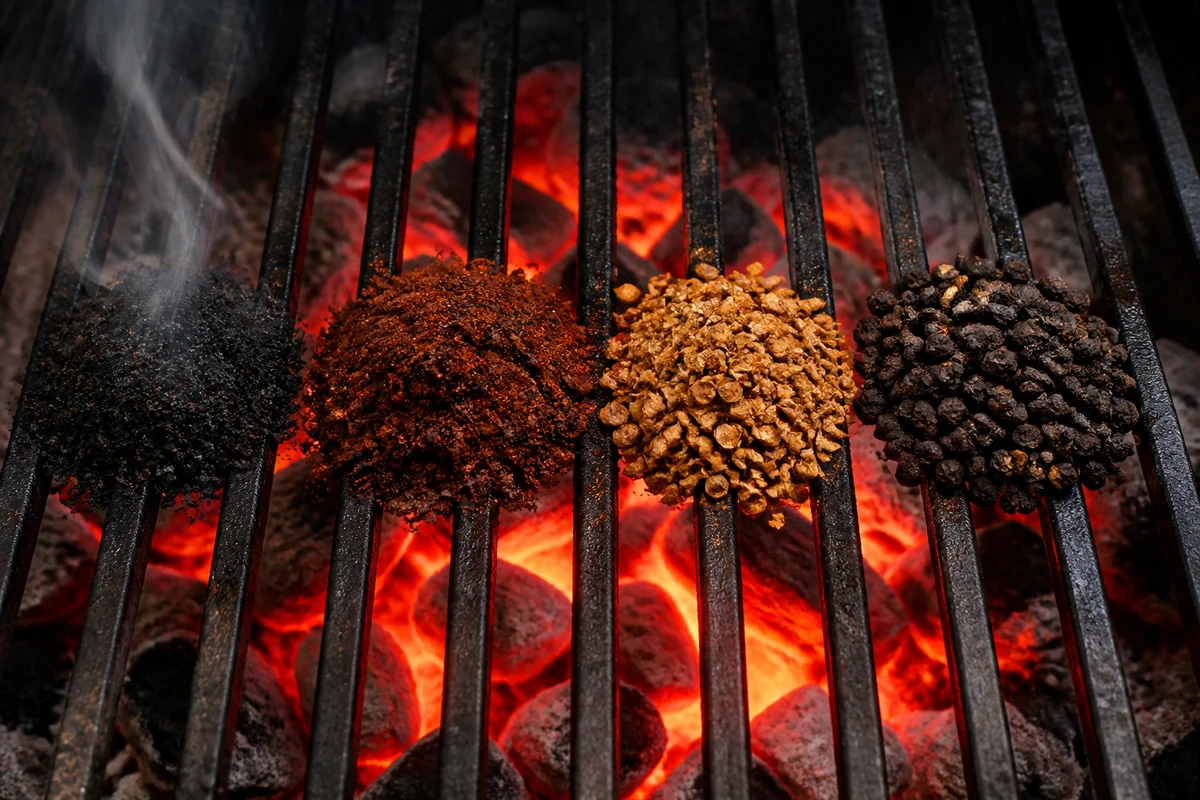
- Blackened: Fine garlic powder, past saving.
- Darkened: Ground paprika, already bitter.
- Toasted: Coarse cracked coriander, improved.
- Unchanged: Cracked black peppercorns, intact.
The practical move is to grind coarser than you would for anything else. A rub for direct heat wants texture you can feel between your fingers.
Sugar is the exception that no grind size fixes. It is going to caramelize and then burn, so the only control you have is when it arrives.
Paprika deserves singling out because it is in almost every barbecue seasoning and it is among the least heat-tolerant things in the jar.
It is a dried fruit powder rather than a seed, and it carries sugars that brown early. Long before the meat is cooked, paprika on the flame side has gone from red to brown to bitter.
Smoked paprika suffers the same fate with an extra cost, since the smoke compounds it was bought for are volatile and leave first.
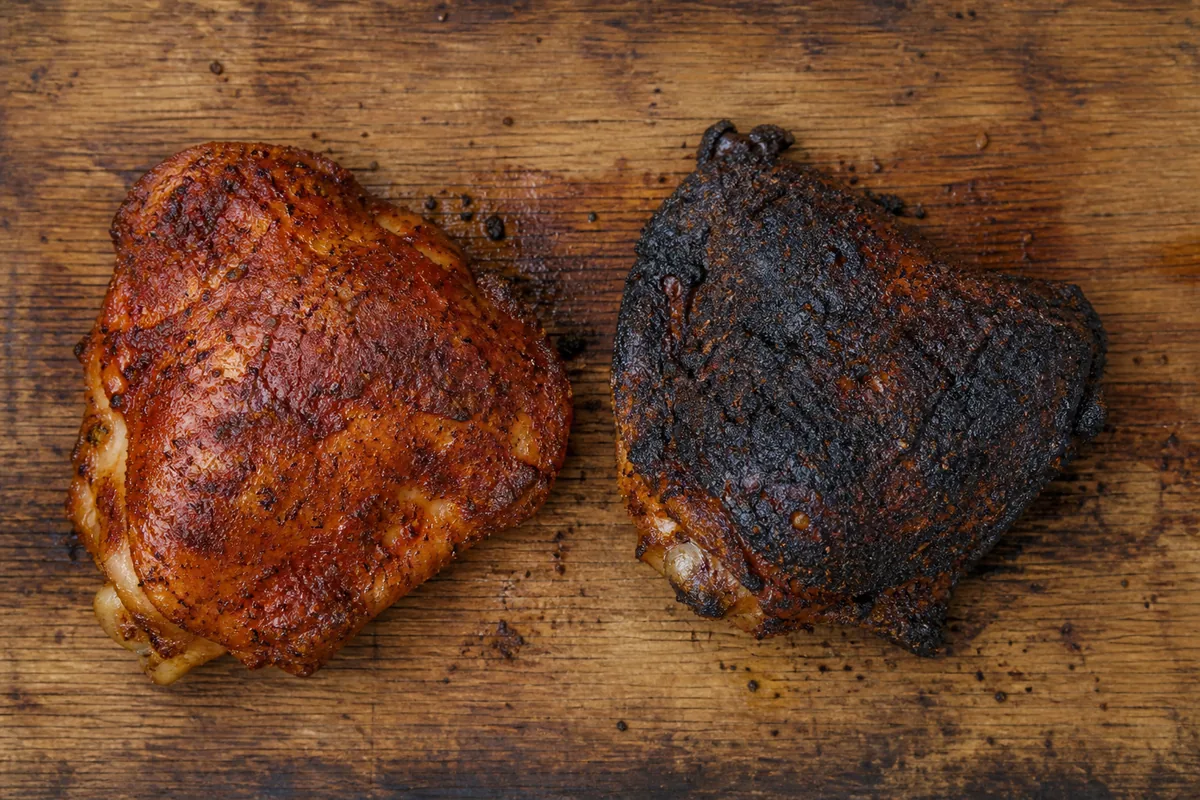
- Deep red: Cooked on the indirect side, paprika intact.
- Brown and black: Cooked over the coals, paprika scorched.
- The taste: The dark one is bitter, and no extra seasoning fixes it.
None of this argues against using it, and smoked paprika earns its place in barbecue cooking. It argues for keeping it away from direct flame.
Which spices get better over fire?
Some spices are improved by exactly the conditions that ruin the others.
Whole and cracked seeds are the group to lean on. Their oils sit inside a hard shell that toasts rather than burns, so the heat does to them what a dry pan would.
Coriander seed, cumin seed, fennel seed, mustard seed and black peppercorns all belong here. Cracked rather than ground is the form that works, because cracking opens the seed without exposing everything at once.
| Spice | Best form for the grill | What it does over fire |
|---|---|---|
| Black pepper | Coarsely cracked | Sharpens as it toasts, and never turns bitter |
| Coriander seed | Cracked | Goes nutty and citrus-like, the friendliest of the group |
| Cumin seed | Whole or cracked | Deepens and reads smokier than it does in a pan |
| Fennel seed | Whole | Sweetens, and suits pork and sausage particularly |
| Mustard seed | Whole | Pops and mellows, losing its raw sharpness |
| Chile flakes | Whole flakes, not powder | The flakes toast, the seeds and dust burn |
Chile is the split case in that list. Coarse flakes come through well while chile powder behaves like paprika, so the form matters more than the heat level.
When should salt, rubs, and finishing spices go on?
The seasoning question and the fire question are the same question, and the answer is usually about which part of the grill you use.
Direct heat over the coals is for fast cooking and simple seasoning. Salt, coarse pepper, cracked seeds and oil, with anything fragile kept off until later.
Indirect heat, with the coals to one side, is where a full rub belongs, since surface temperatures there are low enough for sugar and paprika to behave.
- Season earlySalt on the meat an hour ahead, or the day before for thick cuts.
- Oil lightlyA thin film holds the spices on and slows the scorch.
- Rub before it goes onCoarse spices pressed into the surface, not sprinkled loose.
- Start indirectCook most of the way on the cool side with the lid down.
- Finish directA few minutes over the coals for color and char.
- Sauce lastOnly in the final minutes, once the fire work is done.
That order is what a proper barbecue rub is designed around, and the ratios and salt timing behind one are covered under BBQ rub.
Salt behaves unlike every other thing in the rub, and the timing advice for it is the opposite of the rest.
Put salt on immediately before cooking and it sits on a wet surface, drawing moisture out just in time to steam rather than sear.
Put it on an hour ahead, or the day before for a thick cut, and something better happens. The moisture it draws out dissolves the salt, and that seasoned liquid is drawn back in.
The meat ends up seasoned below the surface, and the outside is drier than when you started.
A drier surface is exactly what browns well, so early salting improves the char as well as the seasoning.
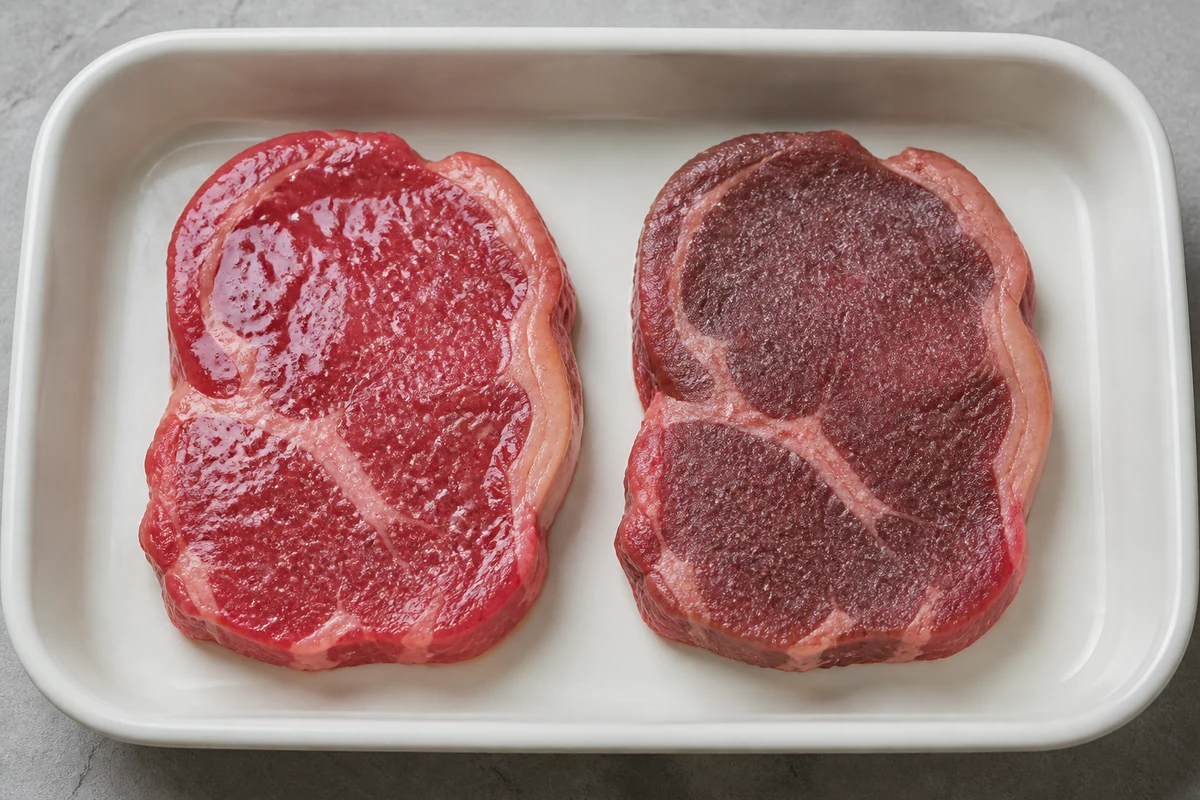
- Left: Salted minutes ago, surface beaded and glistening.
- Right: Salted the day before, surface dry and matte.
- On the grill: The dry one colors immediately, the wet one steams first.
The window to avoid is the middle. Ten to thirty minutes ahead is long enough to pull the moisture out and not long enough to take it back in, which leaves a wet surface at the worst moment.
| Cut | Salt this far ahead | Why |
|---|---|---|
| Thin steaks and chops | An hour, or immediately before | Enough time to dry, or too little to wet |
| Thick steaks | Four hours to overnight, uncovered in the fridge | Seasons through and dries the surface |
| Chicken pieces | Overnight, uncovered | The skin dries and crisps far better |
| Whole birds | A day ahead | The only way to season the breast meat |
| Fish | Fifteen minutes at most | Longer firms the flesh more than you want |
| Vegetables | After cooking | Salt before makes them steam and stick |
The neat resolution to most of this is to stop treating seasoning as one event.
Anything that cannot survive the grill does not have to be on the grill. A finishing scatter goes on hot meat as it rests, where the residual heat is enough to bloom the spice and nowhere near enough to burn it.
This is where the fragile group finally earns its place. Sumac, paprika, dried herbs, citrus zest and fine chile powder all work beautifully on hot rested meat and would have burned on the bars.
- Take the meat off and let it rest on a warm plate.
- Scatter the fragile spices while the surface is still hot.
- Add anything fresh, such as herbs, zest or garlic, at the same moment.
- Spoon the resting juices back over so the spices stick.
- Taste before adding more salt, since the resting juices carry plenty.
It also solves the aroma problem. The top notes that would have boiled off over the coals arrive at the table instead.
How does wood smoke change the seasoning?
Wood smoke behaves like a spice and competes with the ones in your rub, which is why heavily rubbed and heavily smoked food often tastes muddled.
Strong woods such as hickory and mesquite carry enough of their own character to take the place of half a spice blend. Beside them a complicated rub is wasted.
Fruit woods are milder, and they leave room for the spices to be heard. If a rub matters to you, the gentler wood is the one that lets it show.
Fat dripping onto coals produces its own smoke, and that one is not a seasoning. It is sooty rather than aromatic, so a flare-up leaves a harsh taste that no amount of rub will fix.
When should you use a marinade instead of a rub?
A marinade puts the fragile spices somewhere the fire cannot reach them directly.
Suspended in oil and acid, dried herbs and ground spices sit in a wet layer that has to boil off before anything can scorch, which buys real time on the grill.
That is why the herb-heavy traditions grill with marinades rather than rubs. Oregano, thyme and rosemary on a dry surface burn on the bars, and the same herbs in oil and lemon do not.
The trade-off is browning. A wet surface has to dry before it can char, so a heavily marinated piece of meat colors more slowly and needs to be patted down before it goes on.
How should you season different foods for the grill?
Different foods spend different lengths of time over the fire, and that changes what survives.
| On the grill | Time over direct heat | Seasoning that works |
|---|---|---|
| Steak or chops | Minutes | Salt, coarse pepper, nothing that can burn |
| Chicken pieces, skin on | Twenty minutes or more | Indirect first, rub with granules not powder |
| Whole fish or fillets | Minutes, and delicate | Marinade or herbs inside the cavity |
| Vegetables | Short and hot | Oil plus cracked seeds, salt after cooking |
| Sausages and burgers | Moderate, with fat flaring | Fennel and pepper in the mix rather than on it |
| Ribs and shoulder | Hours, mostly indirect | A full rub, sugar included, on the cool side |
Vegetables are the case people under-season. Salt drawn out onto a hot surface makes them steam and stick, so oil and whole spices go on before cooking and salt goes on after.
A short shelf beats a large one, because grilling rewards a few things used properly.
- Coarse salt, and enough of it to season an hour ahead.
- A pepper mill set to its coarsest grind.
- Whole coriander, cumin and fennel seed, cracked as needed.
- Granulated garlic and onion rather than the fine powders.
- Chile flakes, and paprika kept for late or for sauce.
- An oil to carry it all and hold it on the surface.
Grind what you need on the day, since cracked seed loses its edge within a few days.
The gap between fresh cracked pepper and the jar is wider over fire than anywhere else, and grinding covers how coarse to go.