
Why Does Freshly Ground Black Pepper Taste Better?
Freshly cracked peppercorns add fragrance and lift, while pre-ground pepper offers little beyond a dusty, flat burn.
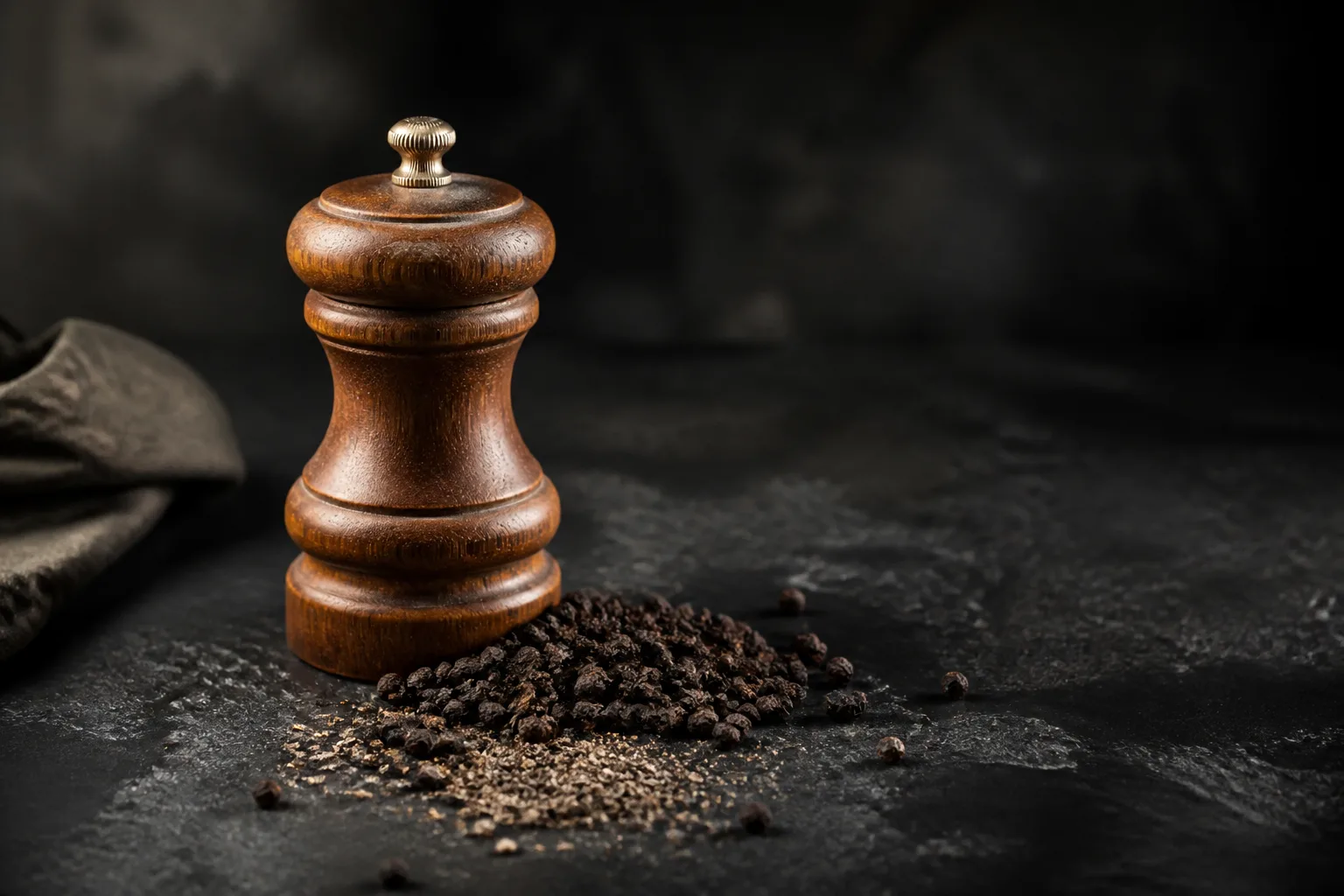
Black pepper carries volatile aroma that begins escaping as soon as the berry is ground. Grind it fresh, then add it late for fragrance or early for softer background bite.
Why does freshly ground black pepper taste better?
Black pepper is the dried berry of a tropical vine, and most of its magic is aroma, not heat. That aroma comes from volatile oils that begin escaping the moment you grind it.
Grind a peppercorn fresh and you get fragrance, warmth, and a bright lift. Pre-ground pepper has lost most of that, leaving a dusty, flat burn behind.
This is why a pepper mill beats the pre-ground tin. The heat survives grinding, but the fragrant top notes do not.
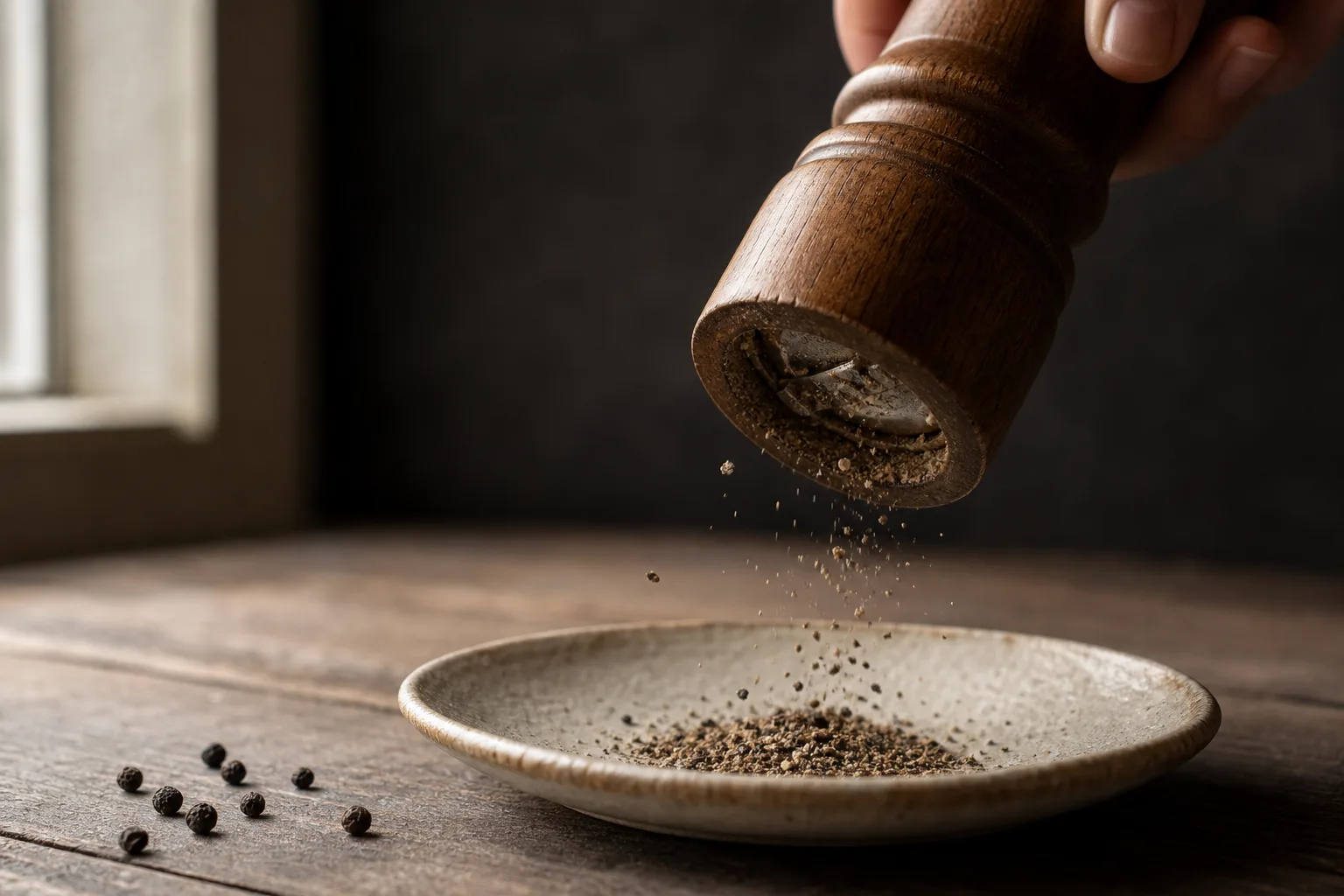
- Whole peppercorns: Keep their aroma sealed until you grind them.
- Pre-ground: Stale within months, mostly heat with little fragrance.
- Fresh grind: Fragrant, warm, and bright, the reason to own a mill.
The pungent heat comes from the piperine compound, which also helps trigger a sneeze from fresh dust. Heat survives grinding, but aroma does not.
Black pepper is aroma first, heat second
Treat black pepper as a fragrant seasoning, not just a way to add heat. Its job is to lift and brighten, the way a squeeze of lemon does.
That reframing changes how you use it. A heavy hand of stale pepper only adds dull burn, while a little fresh pepper adds fragrance and depth.
Pepper works with almost everything, which is why it sits on every table. It rounds out savory food and even lifts sweet dishes like strawberries and cheese.
It pairs naturally with salt, fat, and acid. Cracked pepper on buttered pasta or a ripe tomato needs almost nothing else to taste complete.
Because it flatters so many foods, pepper is easy to add on autopilot. Grinding it fresh at the last second is the single habit that most improves everyday cooking.
Fat, dairy, and acid change how pepper lands
Black pepper feels sharper on a dry surface than inside a fatty sauce.
The carrier changes how widely its aroma and pungency spread.
Butter and oil distribute fine pepper through pasta, eggs, vegetables, and pan sauces.
The bite becomes broader and less concentrated in one spot.
| Carrier | Pepper result | Useful example |
|---|---|---|
| Butter or oil | Rounded aroma spread through the food | Pasta, eggs, roasted vegetables |
| Cream or yogurt | Softer heat with a long savory finish | Peppercorn sauce and marinades |
| Lemon or vinegar | Brighter aroma and a sharper edge | Salads, tomatoes, grilled fish |
| Dry crust | Concentrated heat and crunch | Steak au poivre and spice rubs |
Cream and yogurt soften the perceived burn without erasing the pepper aroma.
That is why peppercorn sauce can use more pepper than clear broth.
Acid makes fresh pepper smell brighter, especially on tomatoes, greens, and grilled fish.
Add the pepper after the acid when fragrance matters most.
Salt reveals pepper but does not replace it.
Season the food first, then decide whether the dish needs more fragrance, heat, or texture.
When should you add black pepper?
Timing decides whether pepper gives fragrance or background bite. Its volatile aroma fades with long cooking, so when you add it matters.
Add pepper at the end for a fragrant, aromatic hit. Cracked over a finished steak or soup, it keeps the fresh top notes that heat would drive off.
Add it early for a softer, integrated warmth. Bloomed in oil or simmered in a sauce, pepper loses fragrance but leaves a mellow background heat.
This mirrors how you time other aromatic spices across the cook. The clock changes pepper's character as much as the amount.
| When you add it | What you get | Best for |
|---|---|---|
| Cracked at the end | Fragrant, bright, sharp | Steak, soup, pasta, salad |
| Bloomed early in fat | Rounded, warm background | Curries, braises, sauces |
| Both early and late | Depth plus a fresh top note | Pepper-forward dishes |
For the most control, add pepper twice. A little early for depth and a fresh crack at the end covers both fragrance and warmth.
Pepper applied before hard searing can taste darker and less fragrant because the exposed particles meet intense surface heat.
A finishing grind needs a short rest on hot food so steam can carry its aroma toward the eater.
What is the difference between black, white, green, and pink pepper?
Black, white, and green pepper come from one plant at different stages, while pink pepper is a different berry entirely. Each brings a distinct flavor and look.
Black pepper is the ripe berry dried with its skin on, giving the fullest, most pungent aroma. It is the default for almost everything.
| Type | What it is | Best use |
|---|---|---|
| Black | Ripe berry, dried with skin | The all-purpose default |
| White | Ripe berry, skin removed | Pale sauces, mashed potato, Asian dishes |
| Green | Unripe berry, brined or dried | Fresh, milder, cream sauces and Thai food |
| Pink | A different berry, not true pepper | Delicate, fruity garnish and looks |
Its pale cousin, white pepper, is milder and earthier, and it disappears into pale sauces where black specks would show. It carries a distinct, slightly funky note some dishes want.
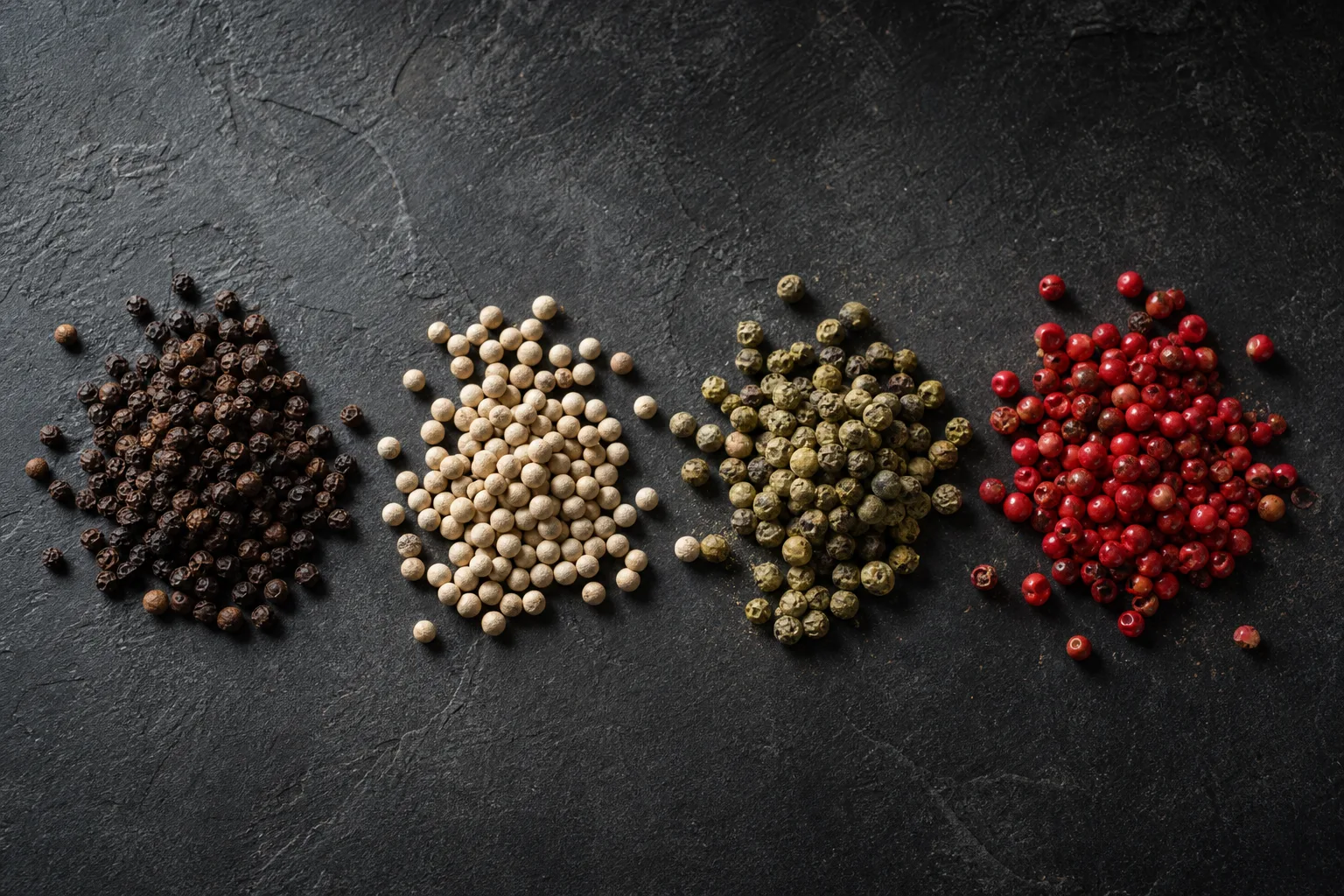
- Black and white: The same ripe berry, with or without its skin.
- Green: The unripe berry, milder and fresher.
- Pink: A different berry, fruity and delicate.
Green pepper is the unripe berry, fresh and bright, and it stars in creamy peppercorn sauce. Pink pepper is fruity and delicate, used more for color than heat.
For most cooking, black pepper is all you need. Reach for the others only when a dish wants a pale color, a milder note, or a fruity garnish.
Choose the grind before the pepper meets food
Grind size changes where black pepper lands in a bite. Fine particles spread through food, while coarse pieces create brief aromatic bursts.
Use a fine grind inside sauces, meat mixtures, dressings, and dough. It distributes evenly, but its large exposed surface loses aroma fastest.
| Grind | What the eater notices | Best fit |
|---|---|---|
| Fine | Even warmth with no distinct pieces | Sauces, dressings, meatballs, baking |
| Medium | Balanced aroma and gentle texture | Table seasoning, eggs, vegetables |
| Coarse | Clear fragrant bursts | Salads, pasta, finished soups |
| Cracked | Crunch and concentrated heat | Steak crusts and peppercorn sauces |
Medium grind is the useful default because it releases aroma without feeling gritty. Adjust the mill only when the dish needs a different texture.
Coarse pepper works on pasta, salads, roasted vegetables, and finished soup. Those foods give each piece room to release aroma as you chew.
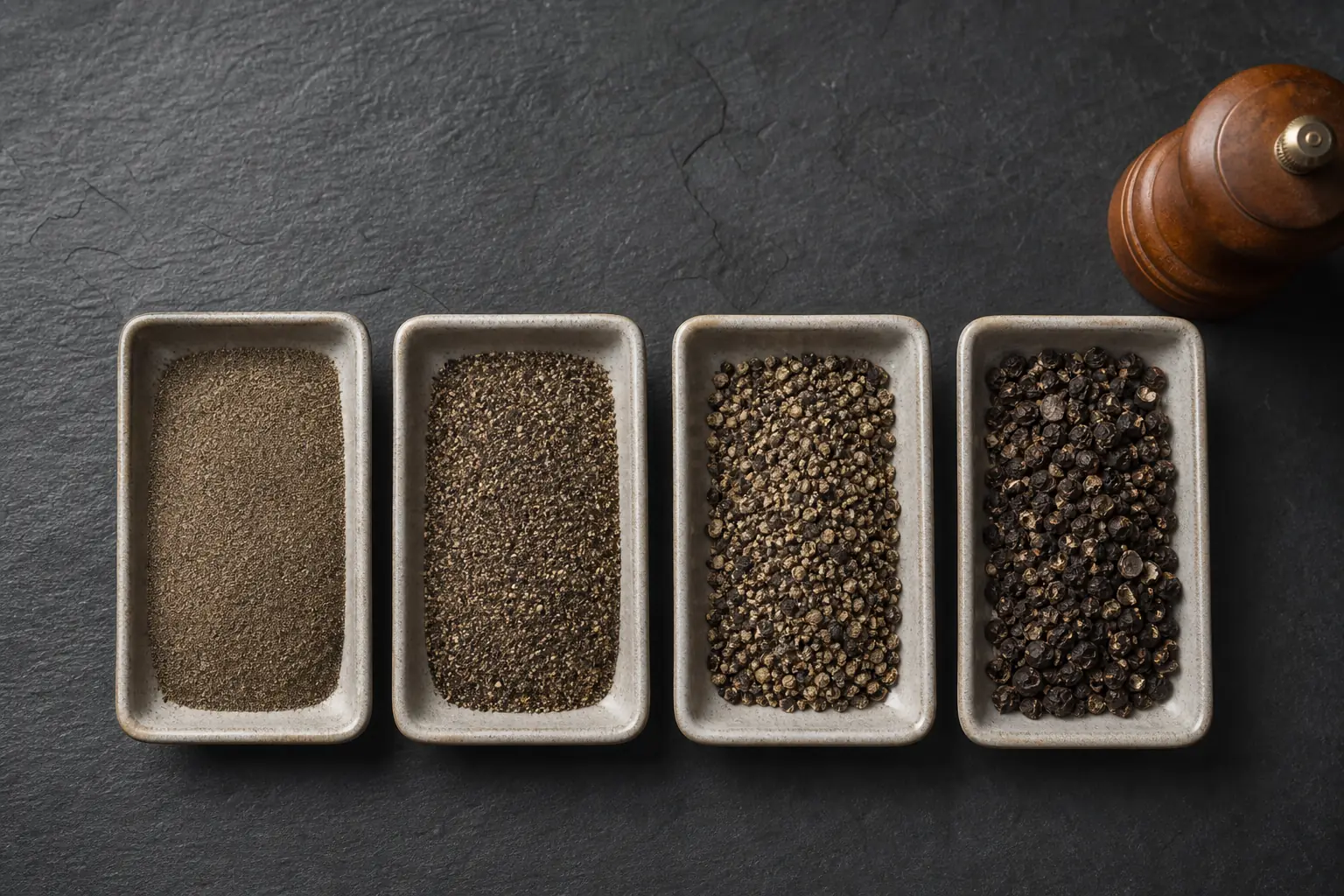
- Fine: Spreads through sauce and loses aroma quickly.
- Medium: Covers most table and cooking jobs.
- Coarse: Gives fragrant bursts without a hard crust.
- Cracked: Builds crunch on steak and pepper-forward dishes.
Cracked pepper needs a food that can carry its hard texture. It can feel sandy in a smooth soup, custard, or delicate cream sauce.
Grind only the amount you need because smaller particles fade first. That rule matters most for fine pepper prepared before a long cooking session.
How much pepper, and where does it lead a dish?
For most cooking, pepper is a background seasoning added to taste. A few cracks season a plate, and you can always add more at the table.
But some dishes put pepper in the lead, and those need real technique. Here pepper is the flavor, not the accent.
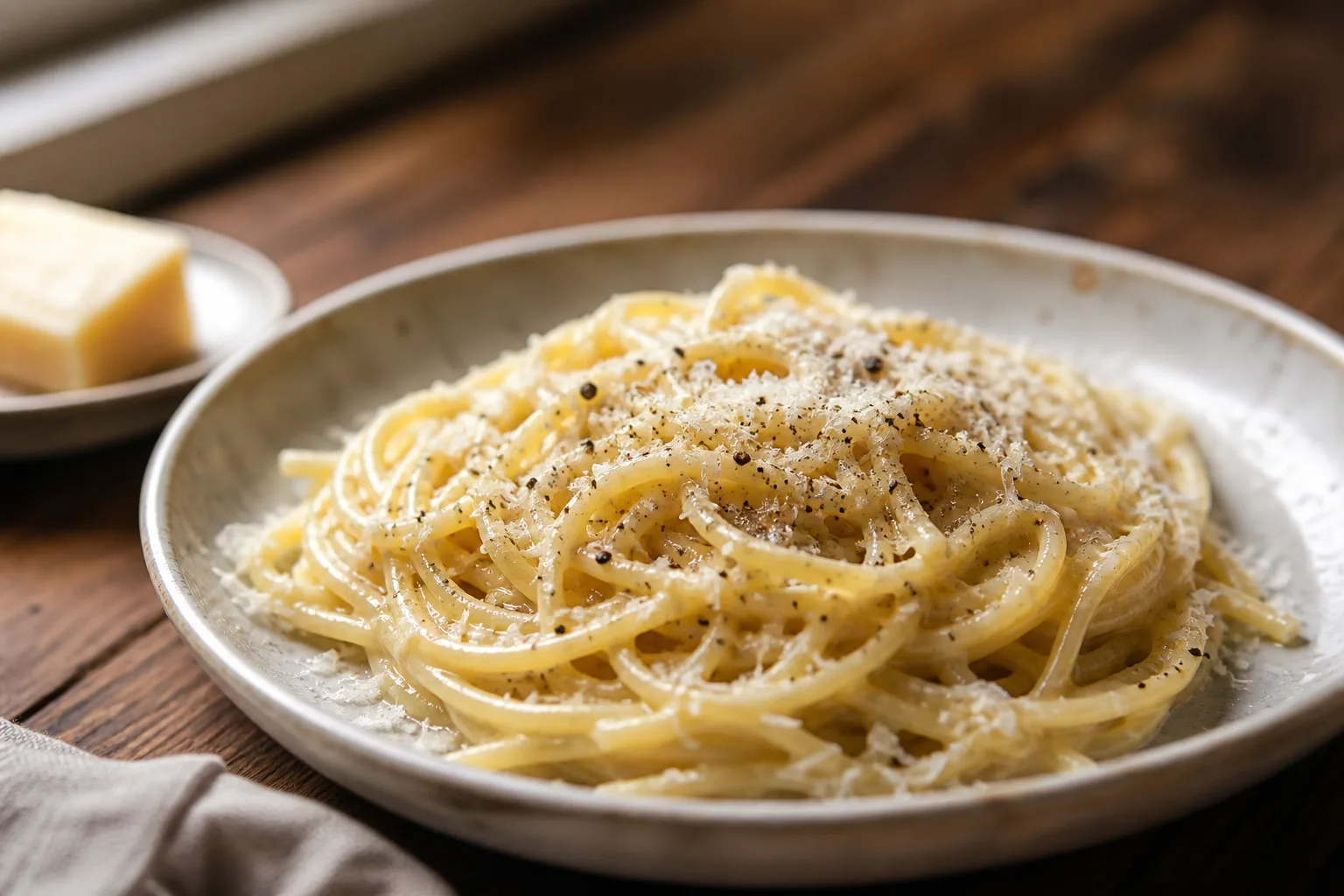
- Cacio e pepe: Toasted pepper bloomed in fat carries the whole dish.
- Steak au poivre: A thick crust of cracked pepper on the meat.
- Peppercorn sauce: Green or black pepper in cream over steak.
In these dishes, toast the cracked pepper in fat first. Warming it in butter or oil wakes up the aroma before the other ingredients arrive.
Steak au poivre pushes this furthest, pressing a thick crust of cracked pepper into the meat before searing. The crust turns fragrant and toasty rather than harshly hot.
Peppercorn sauce takes the softer route, simmering green or black pepper in cream and stock. The dairy rounds the heat into a warm, savory backbone for steak.
Coarse cracks give bursts of heat and fragrance, while a fine grind spreads evenly. Match the grind to whether you want pepper to punctuate or blend.
Measure cracked pepper by volume carefully because large pieces leave more empty space in a spoon than fine powder.
What can you use instead of black pepper?
Black pepper is hard to replace because its aroma is unique. Decide whether you need the heat, the fragrance, or both before reaching for a swap.
For pure heat, a pinch of ground chile or ground cayenne covers the burn, but it changes the flavor and adds fruitiness. Use far less than the pepper called for.
| What pepper did | Best swap | What shifts |
|---|---|---|
| A pale dish, no black specks | White pepper | Milder, earthier, invisible |
| Just the heat | A pinch of cayenne or chile | Fruitier, hotter, no pepper aroma |
| Aromatic warmth in a blend | A little ground coriander | Citrusy, softer, not pungent |
| Finishing lift | Grains of paradise | Peppery with citrus and cardamom notes |
The closest aromatic cousin is grains of paradise, peppery with citrus and cardamom notes. When pepper leads the dish, no swap fully copies it, so lean on the substitute-by-job approach and keep peppercorns stocked.
How do you buy and store peppercorns?
Buy whole peppercorns and grind them yourself. Whole pepper keeps its aroma for years, while pre-ground pepper is stale within months.
Look for firm, evenly sized peppercorns with a strong smell. Tellicherry peppercorns, left to ripen longer, are prized for a fuller, fruitier aroma.
Crush one peppercorn under a spoon before buying in bulk. A fresh berry smells sharp, woody, citrusy, and warm immediately.
A dusty smell with little lift means age has already taken the volatile oils. Dark color cannot prove the aroma remains.
This is the same logic behind buying most spices whole. As with the choice of whole versus ground spices, the flavor lives in the intact seed until you break it.
- Buy whole: Peppercorns hold aroma for years; pre-ground fades fast.
- Store airtight: Keep the jar and the mill away from heat and steam.
- Grind to order: Only crack what you need, when you need it.
- Freshness check: Good pepper smells sharp and fragrant, not just dusty.
Keep peppercorns in a sealed jar away from the stove. Steam and heat above the range are what dull a spice, the same way they age any jar past its prime.
A grinder set to coarse suits finishing, while fine works for even seasoning. Owning one mill you can adjust covers almost every job.
Keep only a small working amount inside the mill and seal the rest separately. An open mill is less airtight than a storage jar.
Clean old pepper dust from the burrs before refilling. Stale fine powder can flatten the aroma of a fresh batch.