
Black Pepper and Curcumin: What the Absorption Study Says
Piperine helps the body hold onto curcumin under studied conditions, yet a table grind is nothing like the milligrams used in the research.
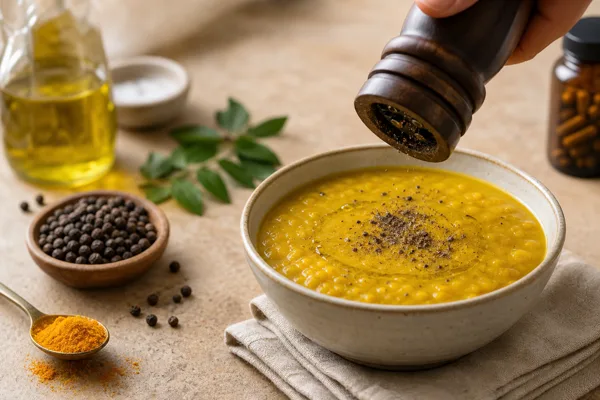
Black pepper's piperine can sharply raise curcumin exposure, but the well-known result came from measured supplement doses, not a few grinds over dinner. Pepper helps the specific curcumin pairing, not every nutrient, and concentrated piperine products need more caution than food seasoning.
What black pepper actually helps absorb
Black pepper can help curcumin show up more in the body under studied conditions. It does not make every vitamin, mineral, or plant compound in a meal absorb better.
The useful claim centers on the piperine compound, the pungent molecule behind pepper's bite. Curcumin from turmeric is the pairing with the clearest human evidence.
The honest version is narrow because pepper supports one studied pairing, not a general nutrient boost you can sprinkle over any plate.
That matters because the phrase nutrient absorption sounds broader than the evidence. A claim should name what was measured before you treat it as useful.
Absorption is only one step because whether turmeric reduces inflammation is a separate evidence question.
In cooking, this points to a sensible habit rather than a medical promise. Add pepper because it fits the dish, then let the absorption claim stay modest.
What does piperine change in the body?
Piperine matters because it can change how fast the body processes some compounds, which is different from simply adding more spice. Curcumin has poor oral bioavailability, so a small change can look dramatic.
That is why the study result looks bigger than a normal recipe choice.
Two names appear often in this work. CYP3A4 is an enzyme system that breaks compounds down, while P-glycoprotein is a pump that can move compounds out before they reach the blood.
If piperine slows those pathways, curcumin can stay available longer. The same mechanism is why concentrated piperine can also affect medicines that use those routes.
- CYP3A4: An enzyme system that processes compounds.
- P-glycoprotein: A pump that moves compounds out of cells.
- Piperine: Can slow both, so curcumin lingers longer.
That distinction keeps the mechanism language restrained. A pathway change is not the same as a proven health result from a meal.
It also explains why food and capsules should not be discussed as if they are the same thing. A grinder adds flavor, while an extract tries to deliver a measured compound.
Where did the famous curcumin absorption figure come from?
A 1998 human study paired 2 grams of curcumin with 20 milligrams of piperine. Measured curcumin exposure rose sharply for a short window.
That is the source of the huge percentage you see repeated online. It is a real result, but it describes controlled compounds, not a mixed meal.
The study did not ask whether a teaspoon of turmeric in dinner produces the same blood levels. It also did not turn pepper into a treatment claim.
It came from a single, short study window, not from years of eating ground turmeric with pepper at dinner. One measured spike is not the same as a daily food habit.
The dose boundary is the whole point. A few grinds over dal are not the same as 20 milligrams of measured piperine beside isolated curcumin.
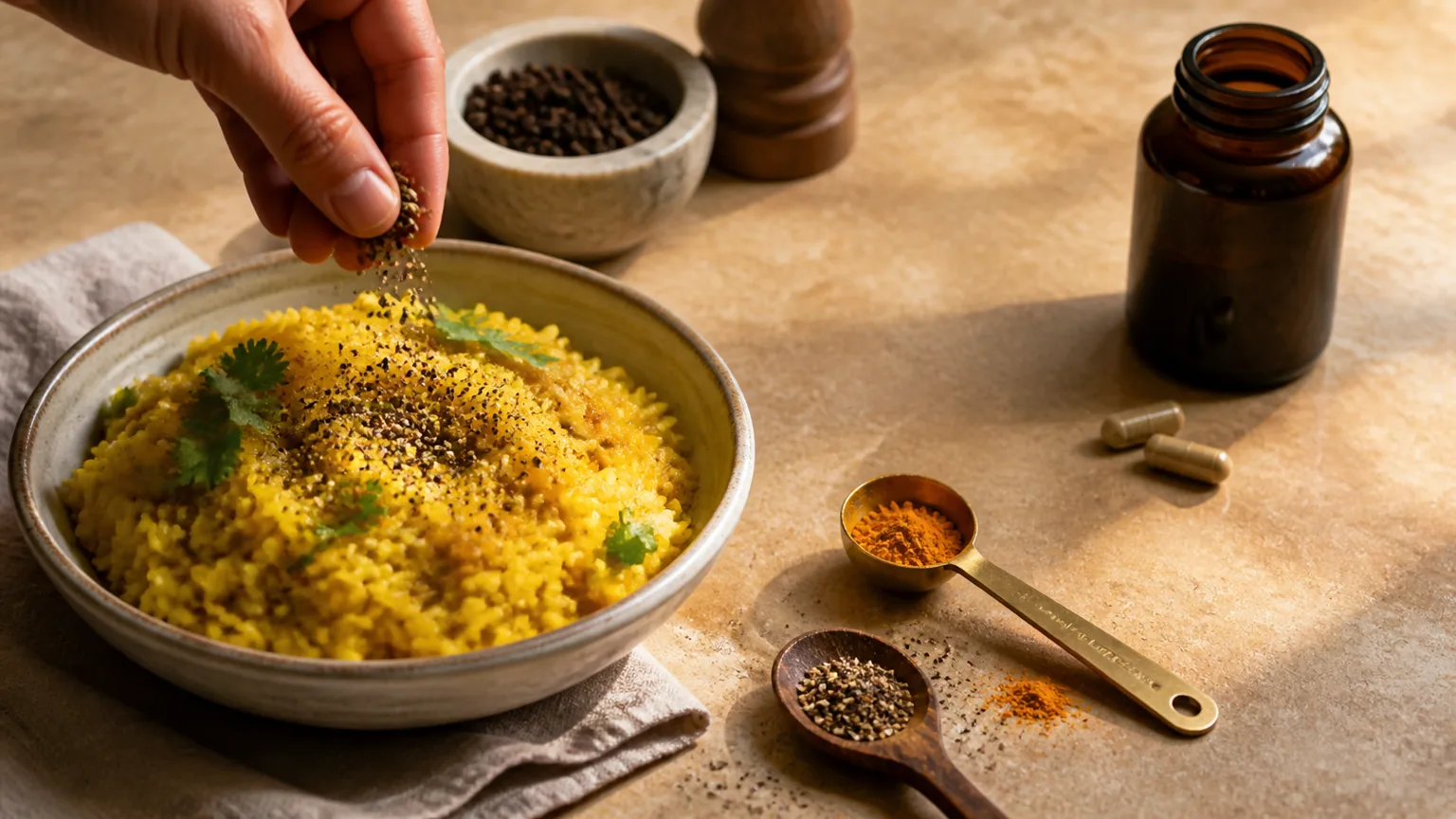
- The study: Grams of curcumin plus measured milligrams of piperine.
- Your dinner: A few grinds of pepper into a mixed meal.
- The lesson: Do not turn the percentage into recipe math.
You also cannot count piperine from grinder turns. Pepper strength varies by variety, age, grind size, and storage, so a table grind is not a measured dose.
This is the line to keep when reading recipes. A pinch may be smart, but it does not reproduce a capsule study.
Which absorption claims are worth trusting?
Trust claims that name the compound, form, dose, and measured outcome, and be skeptical when pepper is sold as a universal booster.
Curcumin plus piperine is specific. A broad phrase like nutrient absorption is too loose unless it names the actual nutrient or compound.
Good claims also separate bioavailability from benefit. More curcumin in blood does not automatically prove less pain, lower inflammation, or better long-term health.
| Claim | Strength | How to read it |
|---|---|---|
| Piperine raised curcumin exposure in a study | Solid but narrow | True for that dose and setup |
| Black pepper boosts nutrient absorption | Vague | Ask which nutrient, and how much |
| Add pepper to absorb your vitamins | Weak | No named compound or dose |
| A pinch of pepper cures inflammation | False framing | Absorption is not a cure |
When a claim sounds large, look for milligrams and study form because kitchen pinches and capsule labels are not interchangeable.
The safest reading is practical. Pepper can support turmeric use, but it should not make a weak supplement claim feel stronger than it is.
How do you use pepper with turmeric in cooking?
The strongest kitchen move is turmeric with fat and a little pepper. That combination improves flavor and fits the evidence better than turmeric in plain water.
Start with the food, not the claim. Briefly bloom ground turmeric in oil before liquid enters the pan, since raw powder tastes dusty even when pepper is present.
Then add pepper in a normal seasoning amount. Freshly ground pepper usually tastes better than a stale pre-ground shake, but it still is not a measured piperine dose.
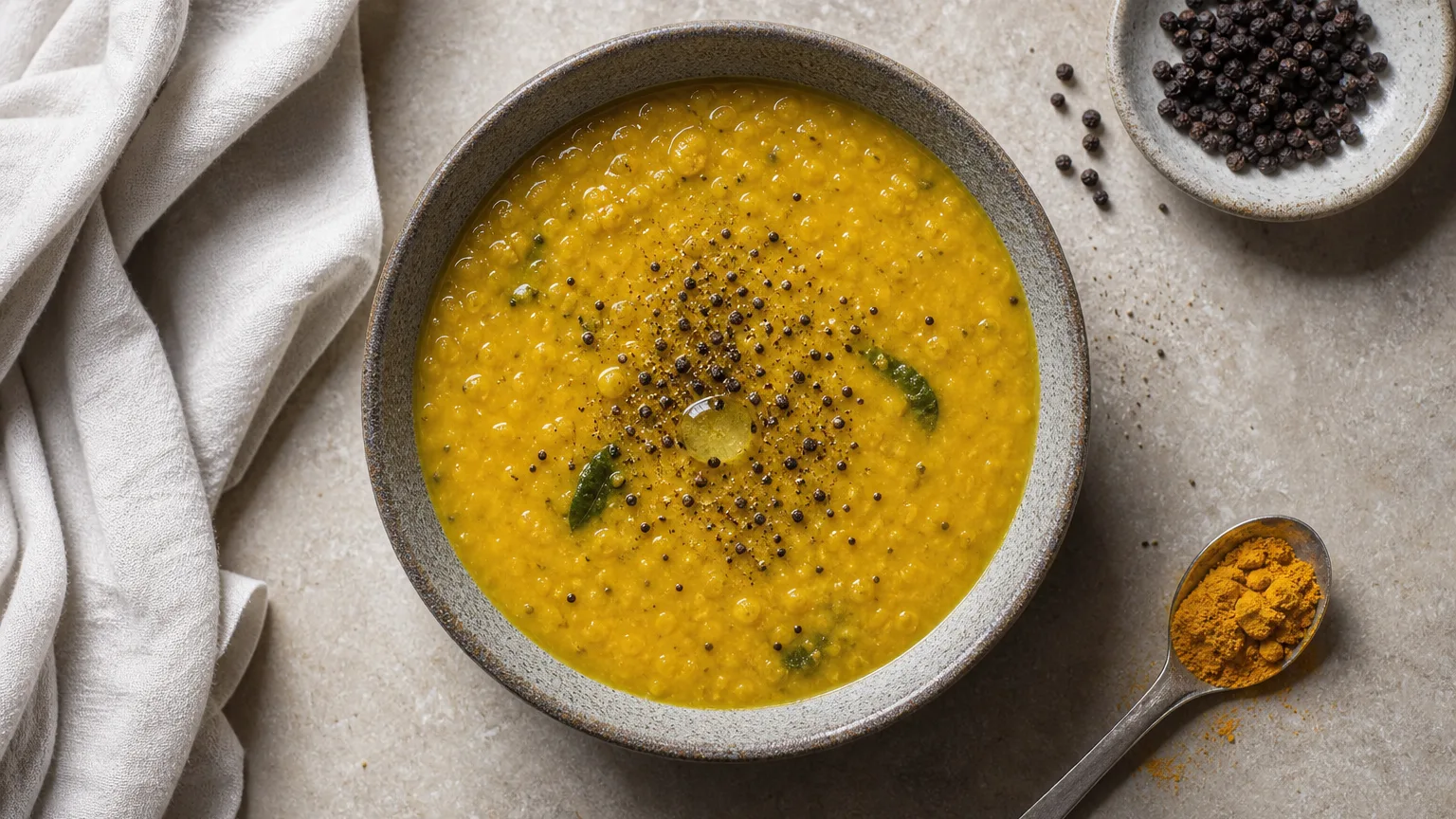
- Fat first: Bloom turmeric in oil before liquid.
- Then pepper: A pinch sharpens flavor and supports absorption.
- Stop early: If the dish tastes sharp, do not add more.
Curcumin behaves like a fat-loving compound, so fat-soluble flavor behavior matters as much as the pepper. Use the pan as the test: if turmeric tastes dusty, fat contact matters more than extra grinds.
The dish should still taste like food. If pepper dominates, the absorption idea has gone too far, and the meal suffers for it.
- Use fat: Oil, coconut milk, yogurt, eggs, or broth with fat carries turmeric better than plain water.
- Use a pinch: Enough pepper to season the dish is the kitchen goal.
- Cook gently: Bloom turmeric briefly, then add liquid so it does not taste raw.
- Stop for flavor: Extra pepper that makes the dish sharp is not useful.
- Keep perspective: Food habits are not the same as piperine capsules.
Dal, lentils, eggs, rice, soups, and golden milk are better places for the habit than plain turmeric water. They give turmeric fat, heat, and flavor support.
Can piperine interact with medications?
Normal food amounts of black pepper are fine for most people. Concentrated piperine deserves a different level of caution.
Because piperine can affect the same enzymes and transporters that process drugs, it may change exposure to some medicines. That is the same mechanism that interests researchers.
Ask a pharmacist about piperine products if you take regular medicine, especially narrow-dose drugs. This caution is about supplements, not a grinder at dinner.
Check labels for black pepper extract, piperine, or BioPerine, which usually mean a concentrated product. Food seasoning rarely needs this level of review, but capsules and stacks do.
Tell your care team about piperine products before surgery or a new medicine. Pepper on your dinner is a different conversation entirely.
The same caution applies when piperine is bundled with curcumin in a joint, inflammation, or wellness stack. The marketing may highlight turmeric, but the absorption helper still matters.
That label check is the practical dividing line.
What black pepper cannot do
Pepper does not rescue a weak diet, stale spices, or a supplement claim with no dose because its real role is narrow.
It does not prove that turmeric will treat inflammation. It only addresses one absorption barrier around curcumin, which is a single step in a much longer story.
An anti-inflammatory eating pattern is built from repeated meals with vegetables, legumes, fat, protein, and fiber. Pepper cannot carry that pattern alone.
Freshness still matters, too. The same checks that flag spices past their prime apply, since a dull grind adds little aroma and no extra benefit.
- Not a diet fix: Pepper cannot rescue weak, repetitive meals.
- Not a cure: Absorption is one step, not proof of a health effect.
- Not a vitamin booster: The evidence is specific to curcumin.
- Not a measured dose: A grind is not the same as milligrams of piperine.
The useful correction is plain. Good ingredients and steady meals beat dramatic one-time dosing, and pepper is one small, sensible part of that.
That is enough for cooking. You do not need to turn every turmeric dish into a supplement project for pepper to be worthwhile.
Let the grinder stay a seasoning tool.