
Does Turmeric Actually Help Inflammation in Food Amounts?
The curcumin research is real but studies extracts, so turmeric earns its place at the table as a habit, not a cure.
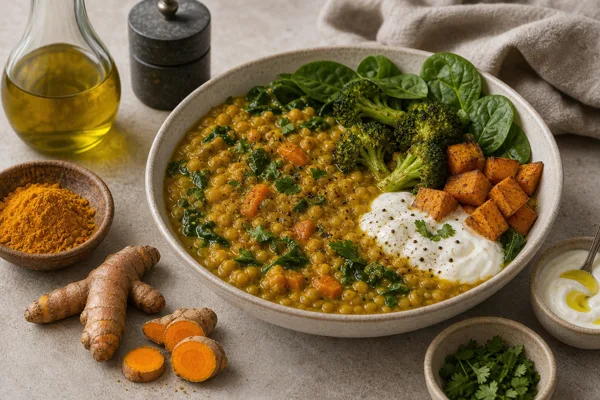
Turmeric can support an anti-inflammatory eating pattern, but a spoonful in food is far below the curcumin doses used in studies. Cook it with fat, pair it with pepper when the dish wants pepper, and keep high-dose curcumin supplements separate from food.
Does turmeric help inflammation?
Turmeric can support an anti-inflammatory way of eating, but a spoonful in food is not a treatment dose. That is the honest answer.
Most of the research is about curcumin, one compound in turmeric, at doses far larger than a pinch in dal. The gap between the study and the plate shapes every fair claim.
That does not make turmeric pointless in the kitchen. It means the benefit belongs to a meal pattern, not to one golden drink.
A useful anti-inflammatory pattern looks like legumes, vegetables, fish, olive oil, yogurt, fresh ginger, garlic, and turmeric, repeated over time. Turmeric is one voice in that chorus.
Start from the everyday kitchen role of turmeric before treating the spice like a supplement. The food still has to taste good to be worth repeating.
That is the practical test. If turmeric makes lentils, rice, eggs, soup, or vegetables easier to eat often, it is doing useful food work.
How much curcumin does turmeric actually contain?
This is where most turmeric claims fall apart. Ground turmeric is only a few percent curcumin by weight, so a teaspoon delivers a modest amount.
Clinical trials, by contrast, often use concentrated curcumin extracts measured in grams. A spoonful in a curry does not come close to those study doses.
That dose gap is not a small technicality. It is the difference between seasoning a meal and testing a concentrated compound.
| Turmeric in food | Curcumin in studies | |
|---|---|---|
| What it is | The whole ground spice | A concentrated extract |
| Curcumin amount | A small fraction of a teaspoon | Often one to two grams |
| Comes with | Fat, fiber, other spices, a meal | Measured, isolated, often with piperine |
| Honest claim | Supports a good eating habit | Tests a specific dose and outcome |
So a recipe cannot inherit a study result just because it contains the same plant. The dose is a different scale entirely.
Some studies also give curcumin with piperine or in special formulations to raise absorption. Those extra steps push the study even further from a spoonful stirred into a pot.
That is not a reason to give up on turmeric. Use it more often instead of piling more into one bitter dish.
More turmeric can backfire because the powder turns bitter and dusty when it overwhelms the food.
What does the inflammation research actually show?
Curcumin research points to plausible activity on inflammation pathways, but most of it uses extracts, high doses, or lab conditions. That keeps recipe-level promises modest.
Study language names pathways, biomarkers, and condition scores. A meal cannot claim those outcomes just because turmeric was in the pan.
The better takeaway is cautious. Curcumin is biologically interesting, but culinary turmeric is still food.
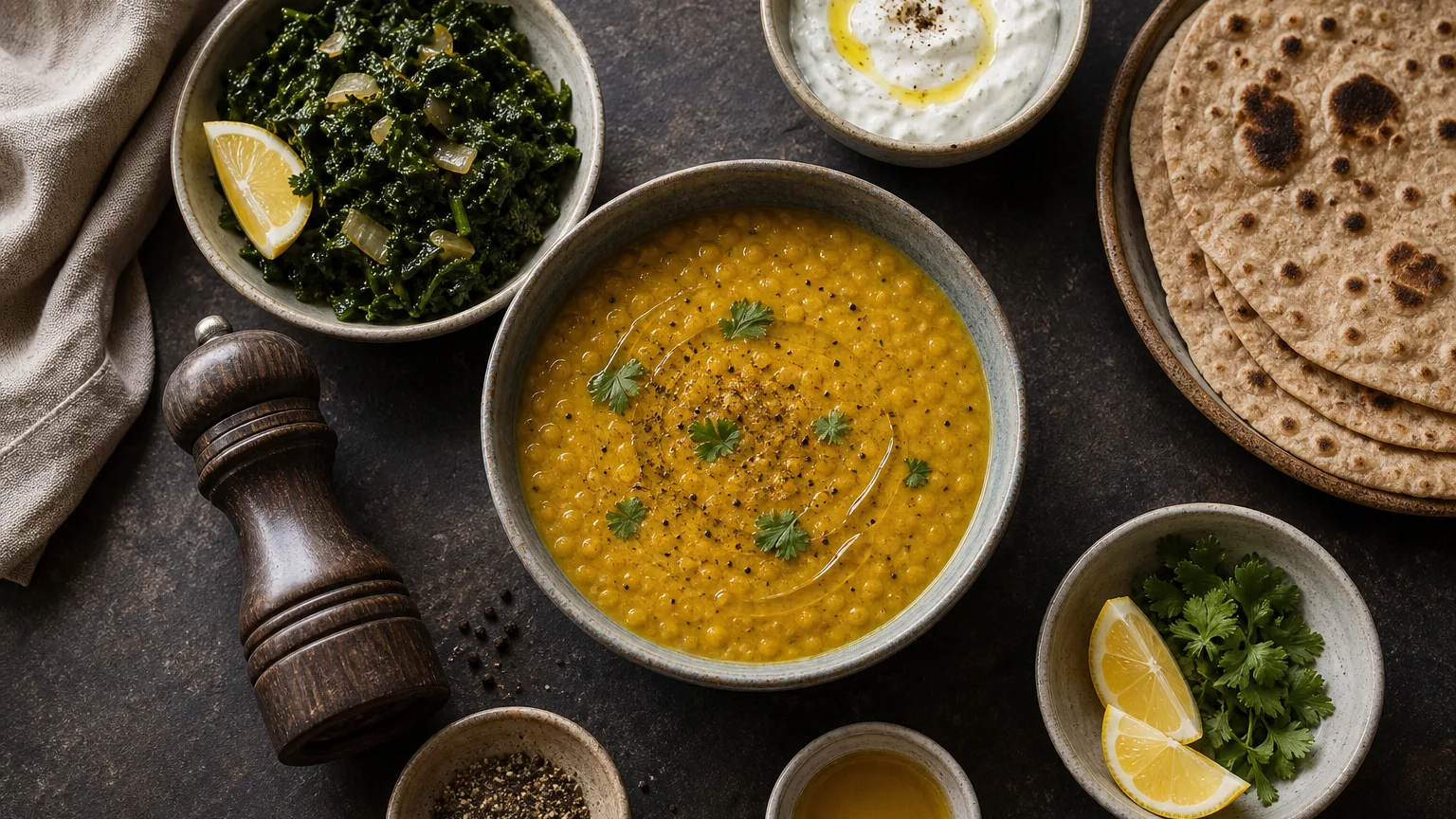
- Studies test: Isolated curcumin at gram-scale doses.
- Dinner delivers: A pinch of turmeric inside a mixed meal.
- Fair claim: Turmeric supports a pattern, not a measured effect.
Food still matters, because nobody eats curcumin alone. Turmeric arrives with starch, fat, protein, fiber, and other spices that change how it behaves.
The public health view is cautious for the same reason. Culinary turmeric is treated as food, while concentrated curcumin is studied as a supplement with its own questions.
Read health claims with that scale in mind. When a headline promises a dramatic effect, it is usually describing an extract in a trial, not turmeric in tonight's dinner.
This also protects the food from disappointment. A curry can be worthwhile without pretending to work like a capsule.
Turmeric is one part of an anti-inflammatory pattern
Turmeric works best when it improves a meal you would eat anyway, so let the health idea follow the plate.
A turmeric shot can contain the right spice and still be the weaker habit, because it often lacks fiber, protein, and a normal meal shape. A lentil bowl gives the same spice a better job.
The pattern is what matters. An anti-inflammatory spice habit is built from repeated ordinary meals, not one heroic drink.
So the boundary is simple. Turmeric can help you cook a useful pattern, but it cannot promise to cure anything from a single food.
The best turmeric habit is almost boring: small amounts, good food, and steady repetition. That is what an evidence-aware kitchen looks like.
A useful target is ordinary weekly use. If turmeric appears in two or three real meals, the habit is easier to keep.
That pattern also limits overuse. You get color and aroma without turning one dish bitter for the sake of a health claim.
- Build a meal: Pair turmeric with legumes, vegetables, yogurt, eggs, fish, or whole grains.
- Use enough fat: Oil, ghee, coconut milk, or yogurt helps carry turmeric better than water.
- Repeat it: A steady habit matters more than one oversized spoon.
- Keep claims modest: Food can support a pattern, not replace care.
That pattern also makes the habit easier to keep, because the spice is improving dinner rather than acting like a chore.
How should you cook turmeric to get the most from it?
Turmeric behaves like a fat-loving spice, so a water-only turmeric tea is the weakest preparation. Cooking it with oil or ghee does more for both flavor and absorption.
Bloom ground turmeric in fat before liquid enters the pan. That spreads the color, deepens the flavor, and puts the compounds in contact with fat.
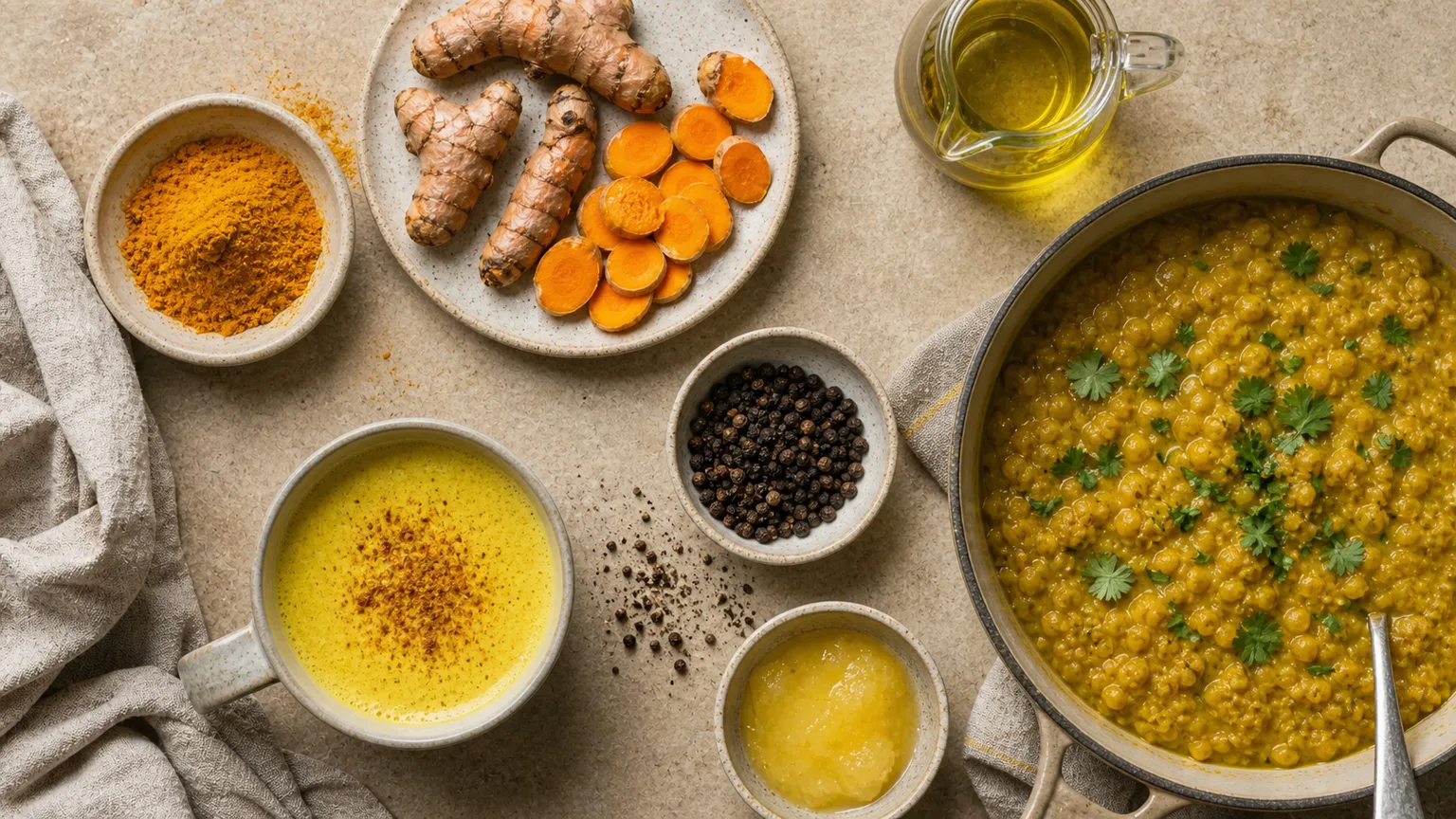
- Bloom in fat: Cook turmeric in oil or ghee before adding liquid.
- Add a little pepper: A pinch sharpens flavor and aids absorption.
- Use it often: Curry bases, dal, soups, rice, and marinades.
A small pinch of pepper helps too. The piperine in black pepper sharpens the flavor and supports curcumin absorption, which the black pepper and absorption evidence covers in detail.
This is where normal fat-soluble flavor behavior matters more than chasing a supplement effect. A good pan method makes turmeric taste better first.
Use a pinch of pepper, not a medicinal amount, because good cooking rounds the dish rather than making it harsh or bitter.
Then use turmeric where its flavor already belongs: lentils, rice, cauliflower, chicken marinades, coconut soups, and warm milk drinks. The food carries the spice, not the other way around.
If a dish tastes muddy, use less turmeric next time and cook the aromatics longer before adding liquid.
Is turmeric safe to eat often?
Culinary turmeric is safe for most people in normal food amounts. Concentrated curcumin supplements are where caution rises.
Talk with a clinician before high-dose curcumin if you take blood thinners, have gallbladder disease, have surgery planned, or are pregnant. A recipe cannot answer that safely.
- Food amounts: Fine for most people as everyday seasoning.
- Blood thinners: Ask a clinician before curcumin supplements.
- Gallbladder disease or surgery: Raise concentrated doses with your care team.
- Upset stomach: Use less and take it with food, not more.
The caution is really about concentrated curcumin, which can affect the same pathways some medicines use. It is a supplement question, not a seasoning one.
Be wary of sudden, large habit changes. Strong daily drinks stacked with capsules are a much bigger exposure than a pinch of turmeric in lentils twice a week.
If turmeric upsets your stomach, cut the amount and take it with food. More spice is not automatically a better health choice.
For normal cooking, the simplest safety rule is portion size.
How do you buy turmeric worth cooking with?
Buy turmeric for freshness first, not for wellness wording on the label. Bright color and a strong, warm aroma matter far more than a health claim.
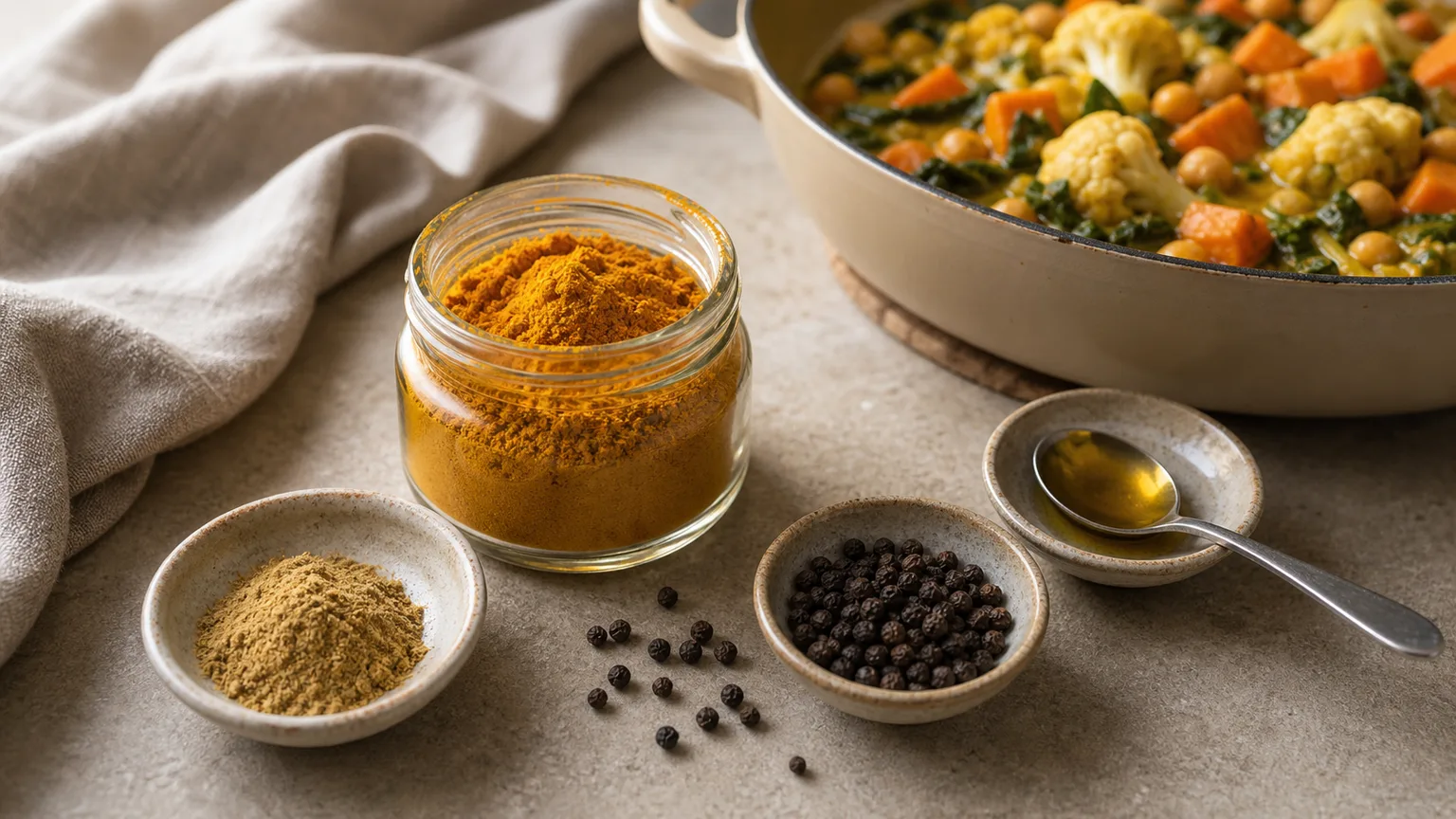
- Look for color: Vivid gold, not pale beige.
- Smell for aroma: Warm and earthy, not dusty and flat.
- Buy small: Ground turmeric fades within a year.
Use the spice shelf-life chart as a rough guide: check packed dates, choose small sizes, and skip pale, faded powder. Stale turmeric tastes dusty and makes the habit harder to keep, the same way any spice past its prime drags down a dish.
A fresh jar supports both flavor and consistency. The best turmeric routine is small amounts, good food, steady habits, and no cure language.