
Are Your Spices Still Good? The Tests That Matter
Use smell, texture, color, pest, and moisture checks to decide whether a jar is weak, usable, or ready to toss.
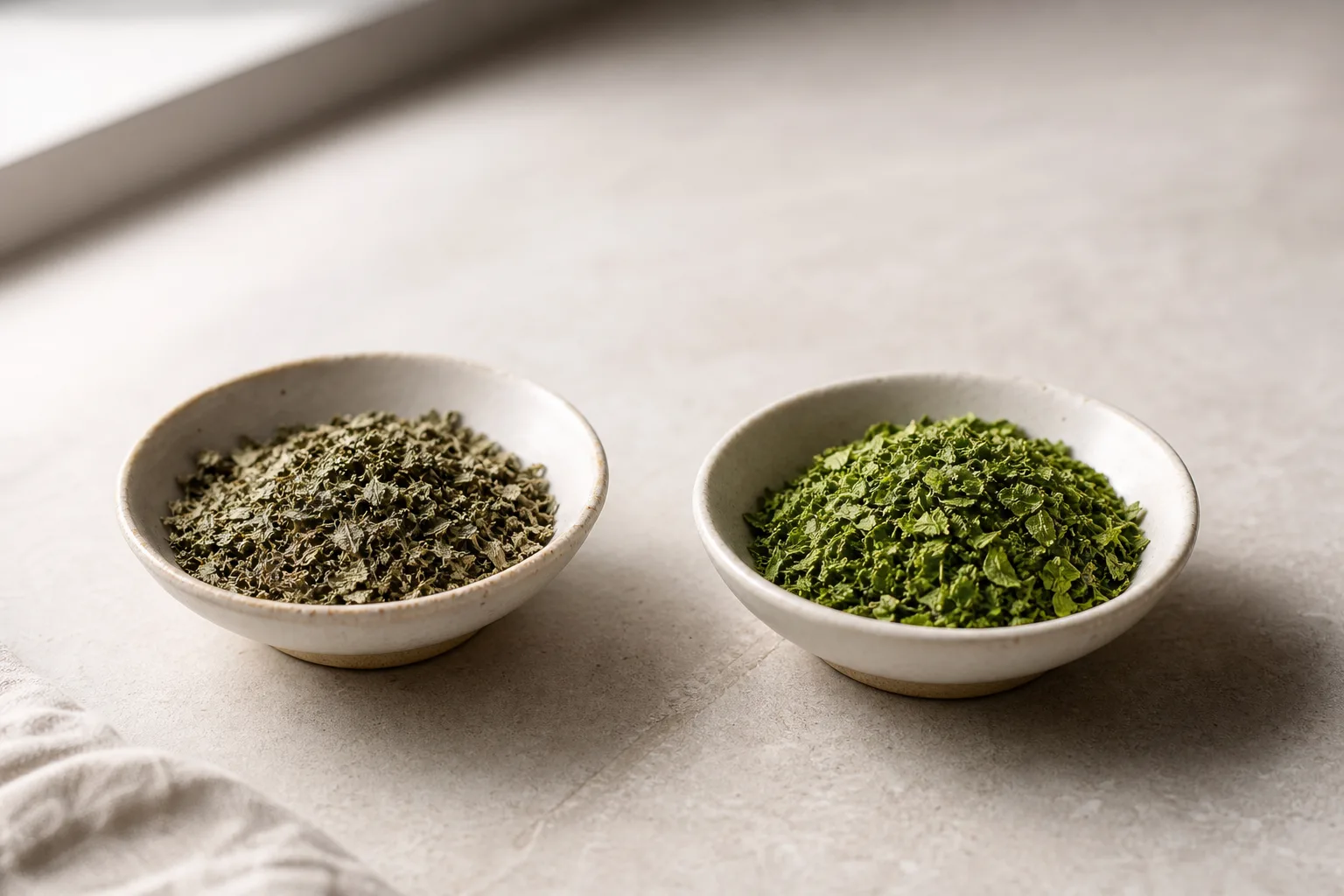
Most old dry spices fade before they become unsafe. Keep a dry jar that still smells clear, replace a weak jar when flavor matters, and discard any jar with moisture, mold, pests, rancid oil, sour odor, or a broken seal.
Separate weak flavor from real discard signs
The first question is not the date on the lid. Ask whether the jar is dry, clean, and still aromatic.
Most old dry spices lose volatile oils and taste flat before they become unsafe. That makes them a cooking problem first.
Moisture, mold, pests, rancid oil, sour smell, and broken seals change the decision. Those signs mean the jar should leave the kitchen.
Do not treat every old jar the same way. A weak but dry cinnamon jar is different from a damp chile powder jar.
The safe habit is to sort by evidence. Dry weakness can be managed, but contamination signs should not be cooked around.
| Sign | What it usually means | Best action |
|---|---|---|
| Dry but faint smell | Flavor has faded | Replace for important dishes |
| Dry and strong smell | Still useful | Keep and use normally |
| Sticky clumps or damp powder | Moisture entered the jar | Discard the jar |
| Webbing, insects, or mold | Contamination risk | Discard and clean the shelf |
| Painty or sour oil smell | Rancid oils in seeds or blends | Discard the jar |
A spice shelf life date helps you prioritize checks. It does not replace your nose, eyes, and texture test.
When in doubt, keep the test away from the pot. You can always add a fresh spice, but you cannot remove a bad one.
Do the rub and smell test before you taste
Pour a small pinch into your palm, then rub it between your fingers. Warmth and friction should wake the aroma quickly.
A fresh cumin, cinnamon, or oregano jar smells clear before it touches food. A stale jar smells dusty, flat, or almost blank.
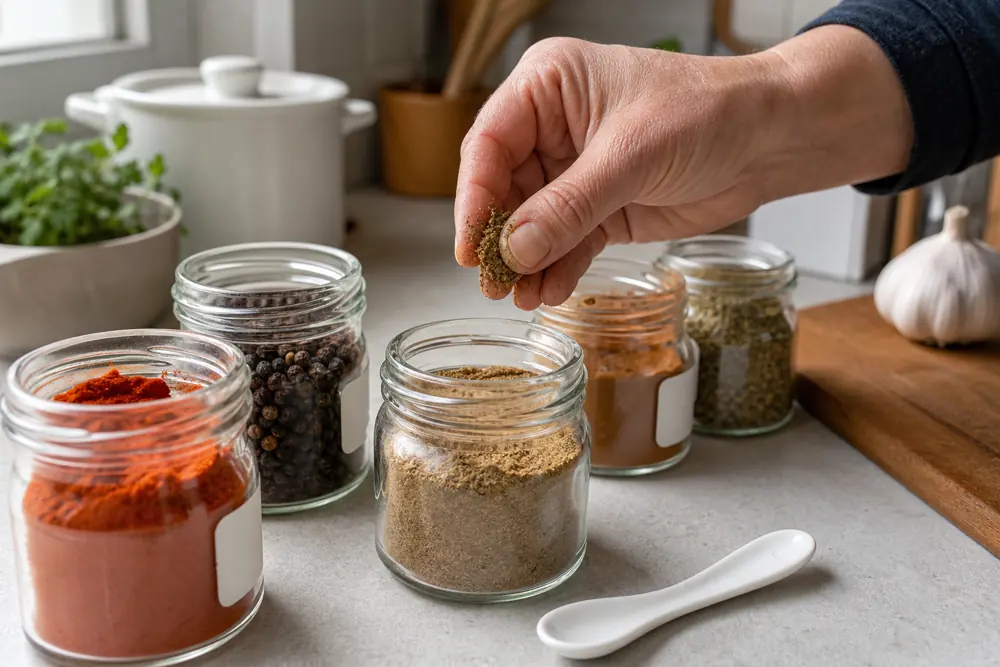
- Smell the spice away from steam and cooking smells.
- Compare with a newer jar if you have one.
- Wash your hands after testing hot chile powders.
Do not taste from a jar that smells musty, sour, or oily. Smell catches many discard signs before the spice reaches food.
Test away from the stove because onion, garlic, smoke, and hot oil can hide a faint jar. A clean counter gives a truer read.
- Clear aroma: keep the jar and use the normal amount.
- Weak aroma: use it only where precision does not matter.
- Dusty aroma: replace it before blends, rubs, and sauces.
- Musty aroma: discard it because moisture may be involved.
This smell test is stricter for finishing spices. A weak pinch can disappear in soup, but it ruins a dry rub or finishing oil.
If you are comparing two jars, smell the newer jar second. That keeps the stronger aroma from making the old jar seem worse than it is.
Moisture, mold, and pests are not flavor problems
Dry spices should pour, spoon, shake, or crumble without sticky pressure. Damp clumps mean steam or humid air reached the jar.
Hard dry clumps can happen in salty blends or sugar-based rubs. Sticky clumps, wet patches, or smears are different.
Steam is the usual kitchen culprit. A spoon held over a simmering pot can carry moisture back into the jar.
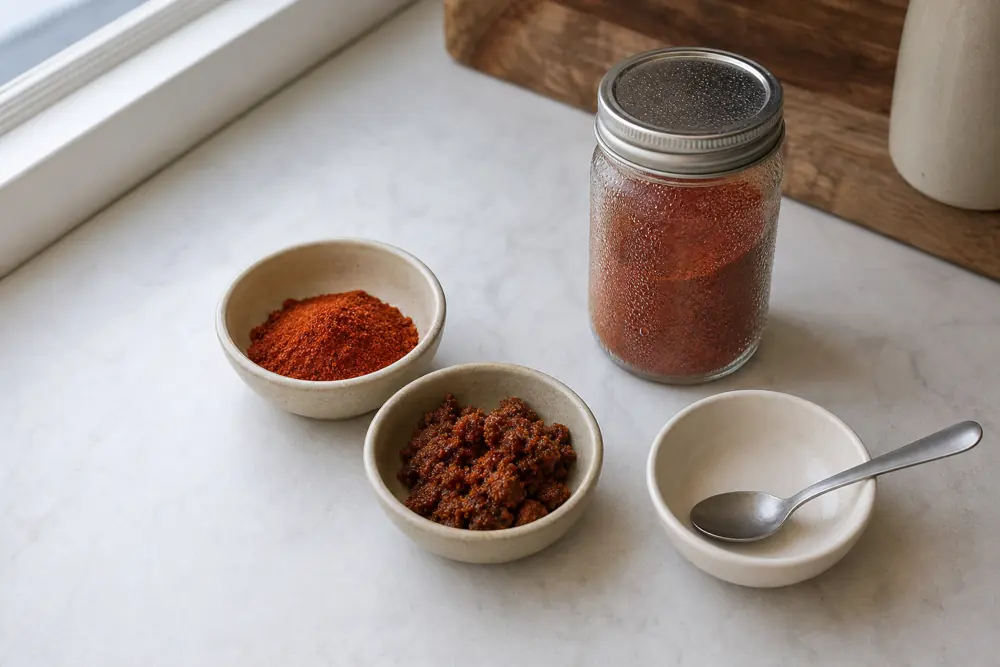
- Do not scrape moldy powder into food.
- Discard jars with insects, webbing, or larvae.
- Check nearby jars before restocking the shelf.
Pantry pests can leave webbing, shed skins, fine dust, or movement inside the jar. If you see any of those, discard it.
A loose lid or torn seal deserves the same close check. Even a new jar can fail early if air and moisture reached it.
Proper spice storage lowers this risk because tight lids and dry spoons keep steam out of the jar.
Color loss tells you which job will fail
Color is not only decoration for paprika, turmeric, saffron, and chile powders. The color often tells you whether the jar can still do its job.
A faded red powder may still taste mild and smoky. It will not give the same color to rubs, rice, sauces, or oil.
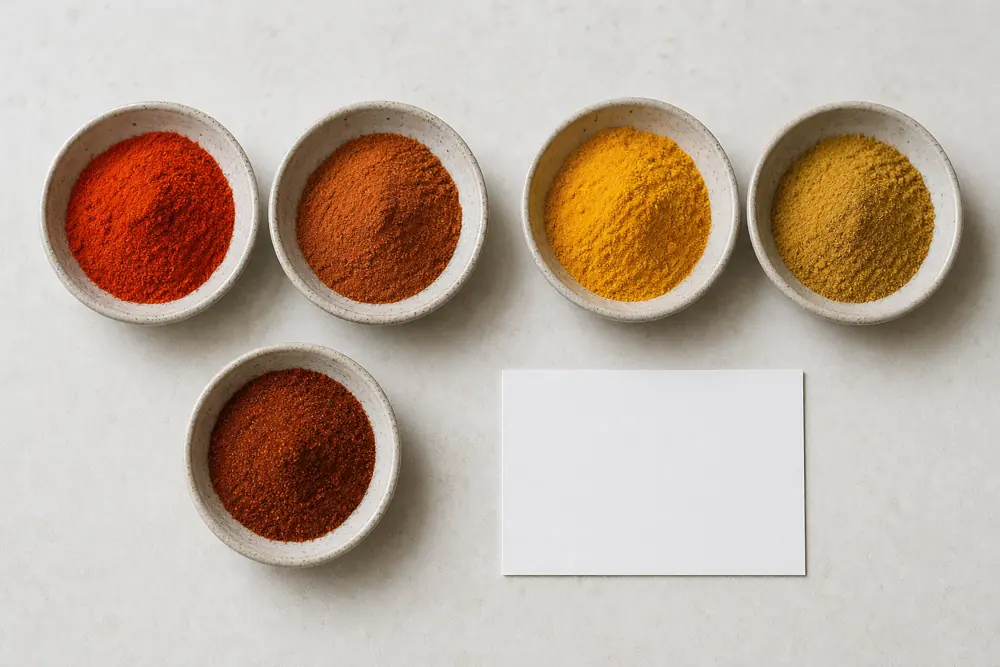
- Look for dull red, brown, gray, or pale yellow color.
- Replace color spices before visual dishes.
- Store bright powders away from light.
Smoked paprika, sweet paprika, and chile powder show light damage fast. Red color can fade before the jar smells empty.
Ground turmeric can look dull and still stain strongly. Smell and bitterness matter along with color.
Color loss does not always mean the jar is unsafe. It means the recipe may miss the visual cue the spice was supposed to bring.
That matters most in paprika oil, yellow rice, chile sauces, and rubs. In a brown stew, the same fading may matter less.
Whole spices need a break test
Whole cloves, peppercorns, cinnamon sticks, cumin seed, coriander seed, and cardamom pods protect aroma inside hard shells and bark.
Crack one piece before judging the jar. The outside can smell quiet while the inside still carries useful aroma.
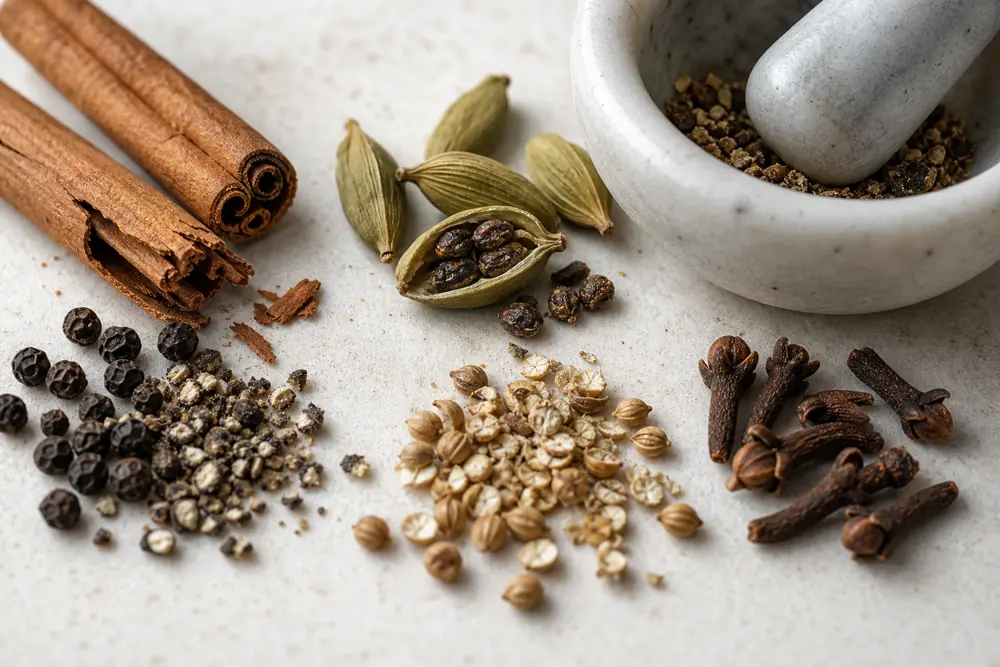
- Crack one piece with a mortar, knife, or pan bottom.
- Smell the broken interior, not only the jar air.
- Grind only after the broken piece smells alive.
If the inside smells flat, grinding will not fix it. Heat can wake weak aroma, but it cannot create fresh oils.
That is why whole versus ground decisions matter. Whole form buys time, but it does not make a jar permanent.
Whole spices can also hide surface problems. Check for dusty residue, pest holes, or a stale oil smell before you grind.
If one cracked seed smells vivid and another smells empty, mix the jar before deciding. Uneven age can happen in large containers.
Ground blends and oily seeds fail differently
Ground blends age faster because every ingredient is already exposed to air. Salt can stay stable while the herbs and spices fade.
Curry powder, taco seasoning, pumpkin spice, and barbecue rubs can taste flat even when they still look fine. Smell the blend before adding more.
Oil-rich seeds and seed-heavy blends need another check. If they smell like old nuts, paint, crayons, or bitter oil, discard them.
| Form | Common failure | How to test |
|---|---|---|
| Ground spice | Aroma fades quickly | Rub and smell a pinch |
| Whole seed or pod | Interior aroma fades slowly | Crack one piece |
| Dried leafy herb | Green aroma turns dusty | Crush leaves in your palm |
| Seasoning blend | One ingredient fades before the rest | Smell before adding salt |
| Oil-rich seed | Rancid odor develops | Smell for painty or bitter oil notes |
Ground cumin is a clear example. A stale jar can make food taste dusty even when it is not unsafe.
Dried herbs need a gentler version of the same test. If crushed leaves smell like paper, they will not season a sauce well.
Do not fix a faded blend by adding more blend blindly. You may add extra salt, sugar, garlic powder, or heat before you add useful aroma.
For blends, smell first and then taste a tiny amount only if the jar is dry and clean. That tells you whether salt now leads the flavor.
Match the decision to the dish
A weak spice is not equally bad in every recipe. The dish decides whether you can use it up or need a fresh jar.
Use a dry but faint spice in long simmered soup, oatmeal, or a background seasoning. Replace it for dry rubs, marinades, oils, and quick sauces.
| Dish job | Weak jar risk | Better decision |
|---|---|---|
| Dry rub | Flat surface flavor | Replace first |
| Finishing oil | Old aroma is obvious | Replace first |
| Long simmered soup | Flavor has support from broth | Use up if dry and clean |
| Baking background spice | Sugar and fat can hide weakness | Use more only after smelling |
| Color-heavy rice or sauce | Dull final color | Replace bright powders |
This is where smart spice buying matters. A large cheap bag can cost more if half of it fades unused.
If you keep a weak jar for low-risk cooking, mark it for use-up. Do not let it return to the main rotation.
A recipe with only one or two spices needs fresher jars than a stew with broth, aromatics, acid, and fat. Weakness has fewer places to hide.
Dry rubs, spice pastes, and finishing oils expose the jar directly. Replace questionable spices before those dishes.
Run a short pantry audit before buying replacements
A quick audit works better than replacing jars one by one when dinner tastes flat. Pull out the spices you use most and sort them together.
Start with the jars that decide flavor by themselves. Cumin, paprika, chile powder, cinnamon, dried oregano, and curry blends are good first checks.
- Step one: discard anything damp, moldy, pest-damaged, rancid, or sour.
- Step two: replace weak jars used in rubs, blends, sauces, and finishing oils.
- Step three: mark dry but faint jars for soup, oatmeal, or background seasoning.
- Step four: write the open month on every replacement jar.
Do not buy every replacement in the largest size. Match the jar size to how often that spice appears in your cooking.
This audit also shows patterns. If every jar near the stove smells weak, heat is the cause, not the brand.
Clean the storage spot before you restock
A bad jar can leave spice dust, oil film, pest traces, or damp residue behind. Restocking without cleaning can repeat the problem.
Remove nearby jars, wipe the shelf dry, and check lids for trapped powder. Let the space dry fully before putting spices back.
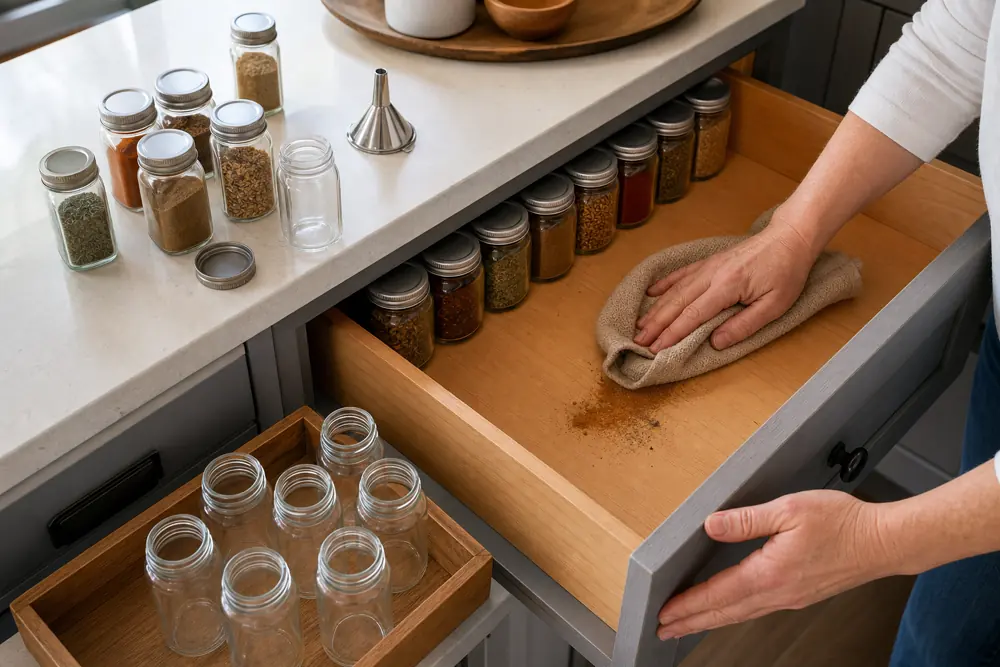
- Check nearby jars for the same problem.
- Wipe the shelf and let it dry.
- Restock with smaller jars when turnover is slow.
Do not pour a questionable spice into a clean new jar. If the spice caused the problem, a fresh container only hides the warning sign.
After cleanup, keep the working jars small and sealed. Use the broader storage and buying habits for the rest of the pantry.
Use dates as a prompt, not a verdict
Best-by dates usually point to quality, not a perfect safety cutoff. A dry spice can be usable after the date if it still smells clear.
The opposite is also true. A new jar can be bad early if a lid was loose, a seal broke, or steam entered during cooking.
- Check now: any jar opened more than a year ago.
- Check sooner: paprika, chile powder, dried herbs, and blends.
- Trust less: huge bulk bags with no pack date.
- Discard fast: jars with moisture, pests, mold, or rancid odor.
The practical rule is simple. Smell first, inspect for damage second, then decide by the dish you plan to cook.