
Whole vs Ground Spices: Which Actually Lasts Longer?
Buy whole for aroma protection, ground for speed, and blends only when turnover is high.
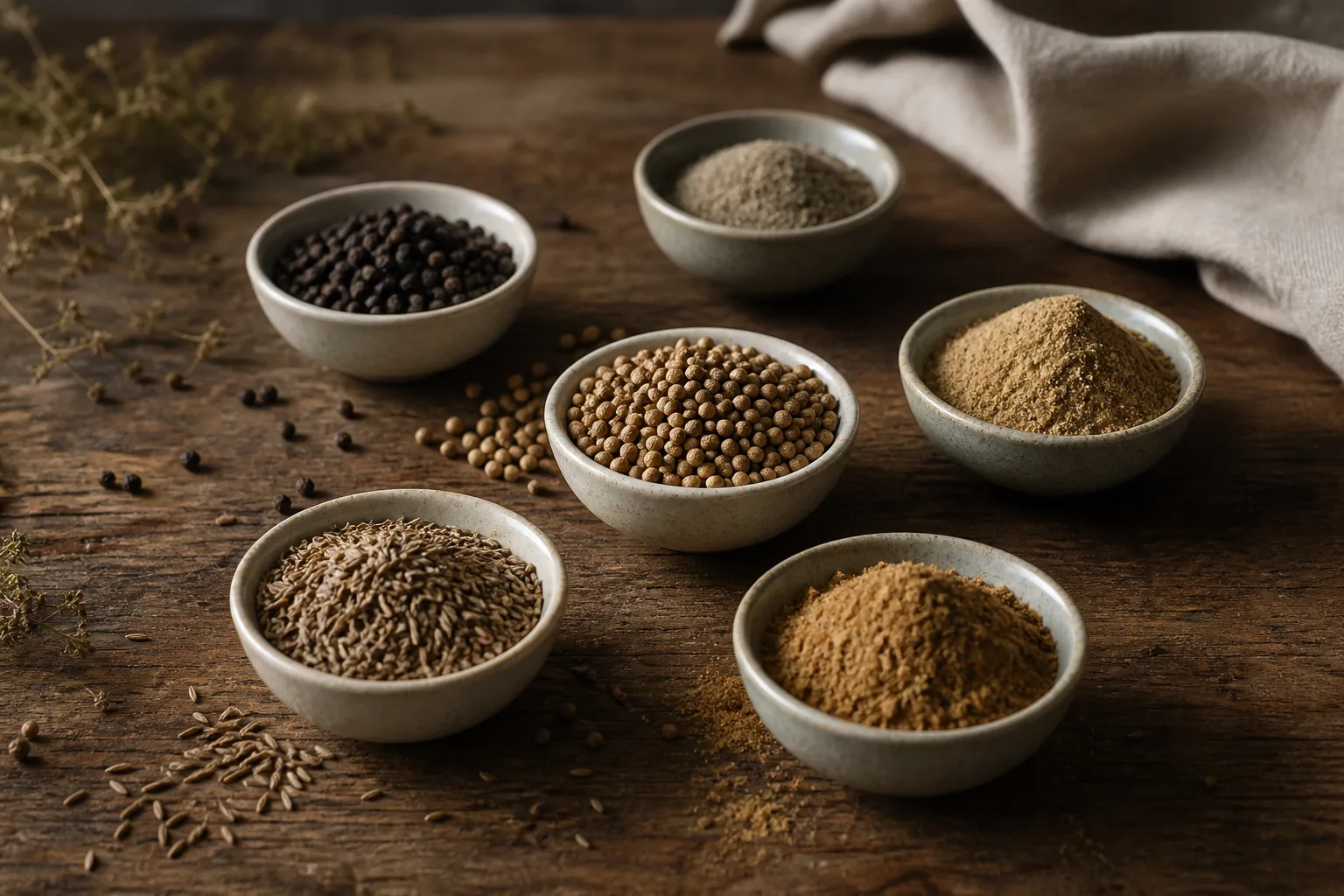
Whole spices usually last longer than ground spices because less surface area touches oxygen, light, and moisture. Buy whole for peppercorns, cumin, coriander, cardamom, cloves, nutmeg, allspice, and fennel when you can grind them. Buy ground spices when you use them fast, need even color, or cannot grind hard ingredients safely.
Do whole spices last longer than ground spices?
Whole spices last longer because their intact surface slows aroma loss. Grinding exposes more surface area to oxygen, light, and moisture.
That is a flavor chemistry problem, not just a pantry habit. Aroma disappears before a spice looks spoiled.
| Form | Best window after opening | Best use |
|---|---|---|
| Whole hard spices | 1 to 3 years | Grinding, infusing, toasting |
| Whole seeds | 1 to 2 years | Toasting, pickles, spice blends |
| Ground spices | 3 to 9 months for best aroma | Fast cooking and even mixing |
| Ground dried herbs | 3 to 6 months for best aroma | Soups, sauces, rubs |
| Spice blends | 3 to 6 months for best balance | High-turnover daily cooking |
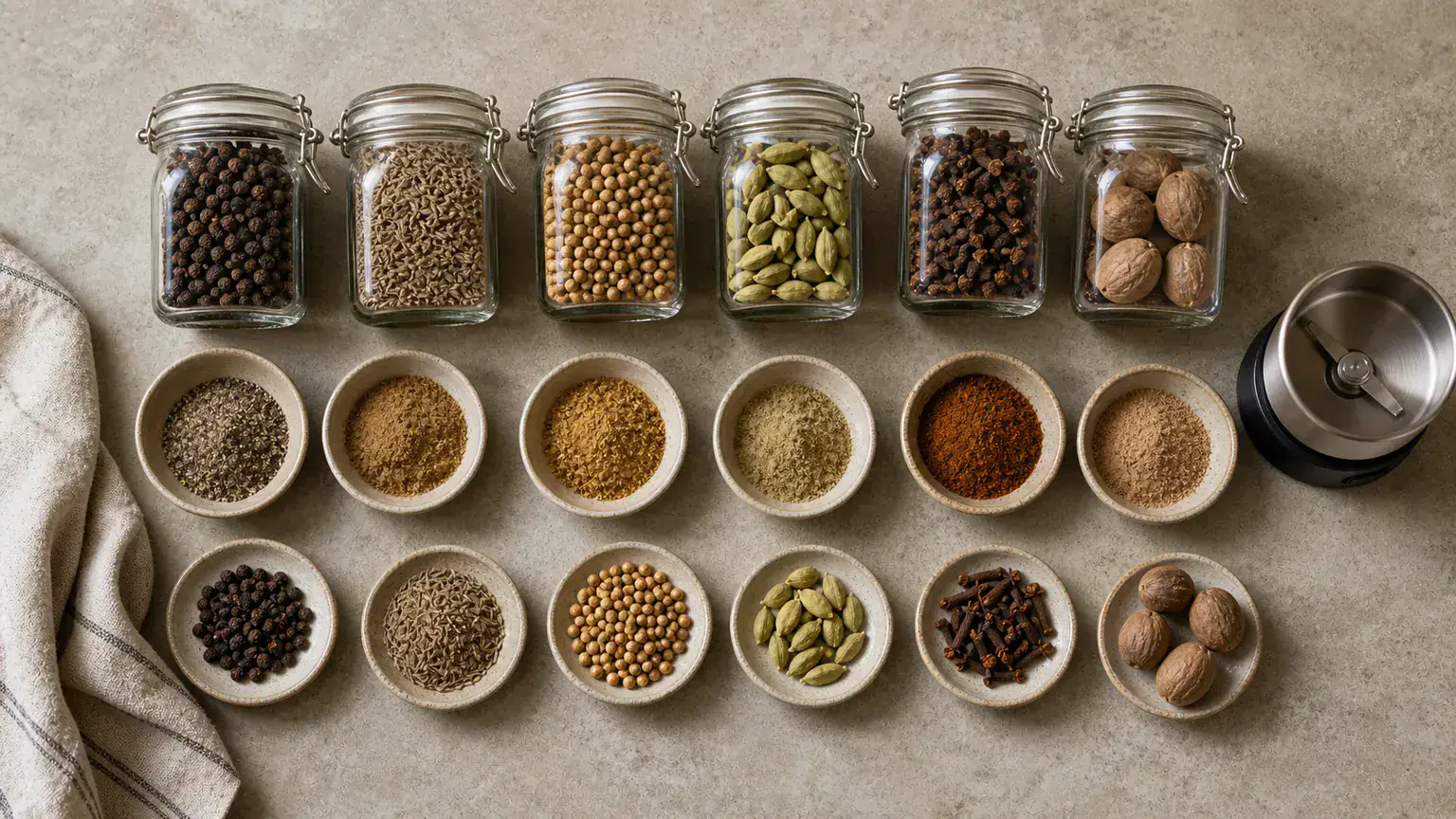
- Whole hard spices: Keep aroma protected until grinding or infusing.
- Seeds: Toast or crack when the dish needs fresh top notes.
- Powders: Choose when color, smooth texture, or speed matters.
- Tool check: Whole spices only help if you can grind them well.
Those windows are practical quality windows, not food safety deadlines. Most old dry spices fade before they become unsafe.
The shelf-life winner can still lose at dinner. Whole cloves are durable, but they are not always convenient.
Use them in a Tuesday sauce only if you can count them, remove them, or grind them cleanly.
Use smell as the real test. A spice that smells weak before cooking will taste weaker after cooking.
Which spices are worth buying whole?
Whole form matters most for spices with fragile aroma or obvious grinding payoff. Pepper, cumin, coriander, cardamom, cloves, and nutmeg show the upgrade fast.
In the dish, black pepper is the easiest proof. Fresh cracked pepper has aroma that pre-ground pepper loses quickly.
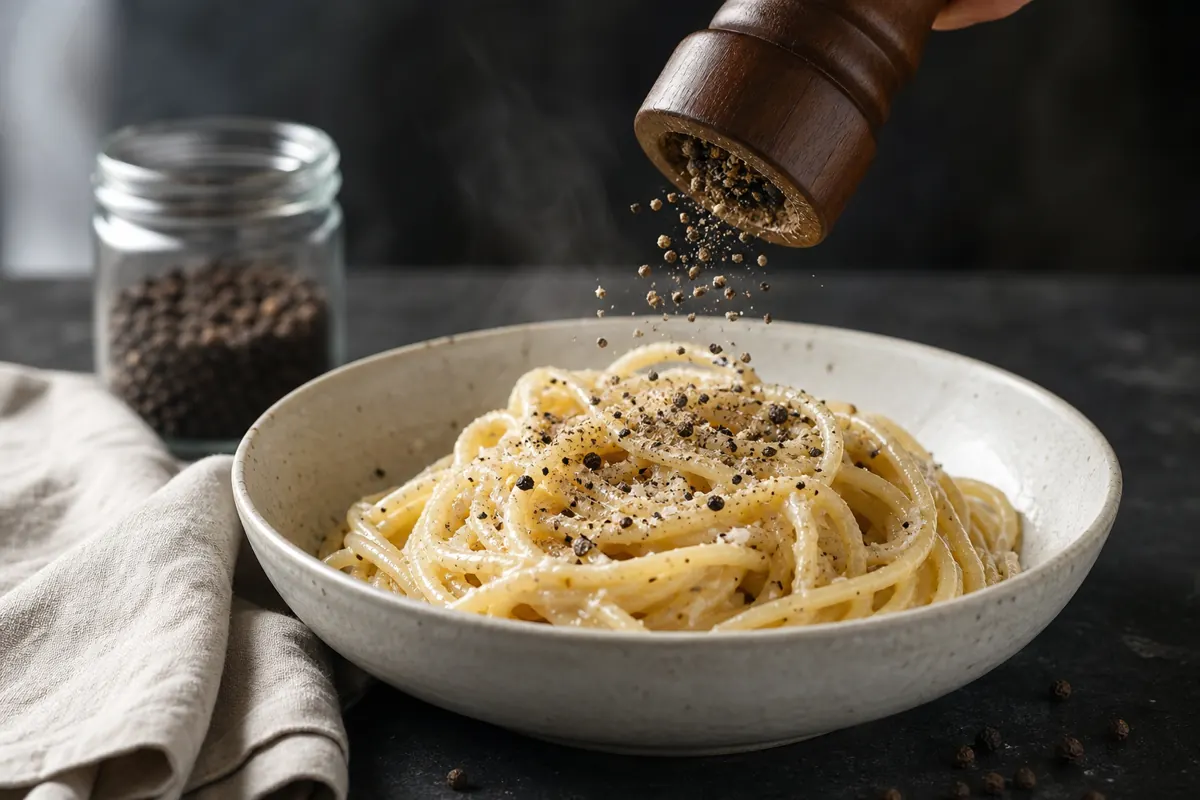
- Whole peppercorns: Keep volatile aroma protected until the meal is ready.
- Coarse grinding: Releases fresh top notes and gives the food visible texture.
- At the plate: Avoids losing the most fragile aroma during a long cook.
- Easy tool: A pepper mill makes this whole-spice upgrade practical every day.
| Spice | Why whole helps | Grinding note |
|---|---|---|
| Black pepper | Top notes fade fast after grinding | Use a pepper mill |
| Cumin | Toasted seed aroma is stronger | Toast, cool, then grind |
| Coriander | Citrus aroma fades quickly | Crack for rubs or grind fine |
| Cardamom | Pods protect seeds | Shell pods before grinding |
| Nutmeg | Fresh grated aroma is dramatic | Use a microplane carefully |
Whole does not mean inconvenient if the tool is simple. A small grinder or mortar changes the tradeoff.
When cooking, grinding spices at home makes sense when you cook those spices often. It is a burden for jars you rarely touch.
- Buy whole: Choose whole when the spice is hard, aromatic, and easy to grind.
- Buy small: Small whole bags beat large stale bags.
- Toast first: Toast seeds before grinding when roasted aroma is wanted.
- Cool first: Let toasted spices cool so steam does not clump the powder.
The best whole-spice setup is small and repeatable. Buy what you will grind, not what looks impressive.
When are ground spices the better choice?
Ground spices are not automatically worse. They are better when the recipe needs speed, smooth texture, color, or even distribution.
In the dish, ground turmeric is the practical choice because dried rhizome is hard to grind at home. Paprika and many chile powders also start as powders.
| Need | Ground advantage | Example |
|---|---|---|
| Even color | Spreads through food fast | Turmeric rice or curry base |
| Smooth texture | No gritty pieces | Sauces, batters, drinks |
| Fast weeknight cooking | No grinder cleanup | Taco night or soup |
| Delicate powder | Hard to grind well at home | Paprika or chile powder |
| Measured baking | Consistent distribution | Cinnamon or ginger cake |
Buy ground if you will finish the jar while it still smells strong. Fresh turnover beats whole-spice ambition.
During storage, buying spices online works best when the seller has high turnover and clear package dates. Fresh ground spice beats old whole spice.
- Use often: Buy ground when the jar empties within a few months.
- Need color: Turmeric, paprika, and chile powders spread color better as powder.
- Need smoothness: Drinks and batters usually need fine powder.
- No grinder: Buy small ground jars rather than crushing hard spices poorly.
The real mistake is buying large ground jars for occasional cooking. Small and fresh wins.
Why do ground spice blends go stale so quickly?
Spice blends fade in layers because each ingredient ages at a different speed. The most fragile aroma sets the practical shelf life.
This matters for spice blends because one jar can contain ground seeds, chiles, herbs, salt, sugar, and anti-caking agents.
- Curry powder: Buy pre-ground only if you use it weekly. Make it fresh when coriander and cumin need to taste bright.
- Garam masala: Buy from a high-turnover brand or grind small batches. Finish aroma matters more than jar size.
- Taco seasoning: Pre-ground works when speed matters. Make it fresh when salt and chile heat need control.
- BBQ rub: Buy only what you will use soon. Sugar, salt, and chile balance drift as the jar sits.
A blend can smell pleasant and still taste flat. The missing top notes are hard to notice until food tastes dull.
If a blend contains coriander, cumin, cinnamon, clove, or chile, freshness changes the whole result. Replace blends sooner than whole spices.
Buy blends in amounts tied to meals you already cook. Variety without turnover is the enemy.
Can poor storage erase the whole-spice advantage?
Whole spices still fail under heat, light, moisture, and air. A whole jar above the stove can lose to a fresh ground jar kept well.
Use the basics from proper spice storage: tight lids, dark space, dry spoon, and distance from stove heat.
- Heat: Keep jars away from ovens, dishwashers, and sunny counters.
- Light: Use a cabinet or opaque container for fragile powders.
- Moisture: Do not shake jars over steaming pots.
- Air: Close lids quickly and avoid giant half-empty containers.
- Time: Date the jar when opened, not only when bought.
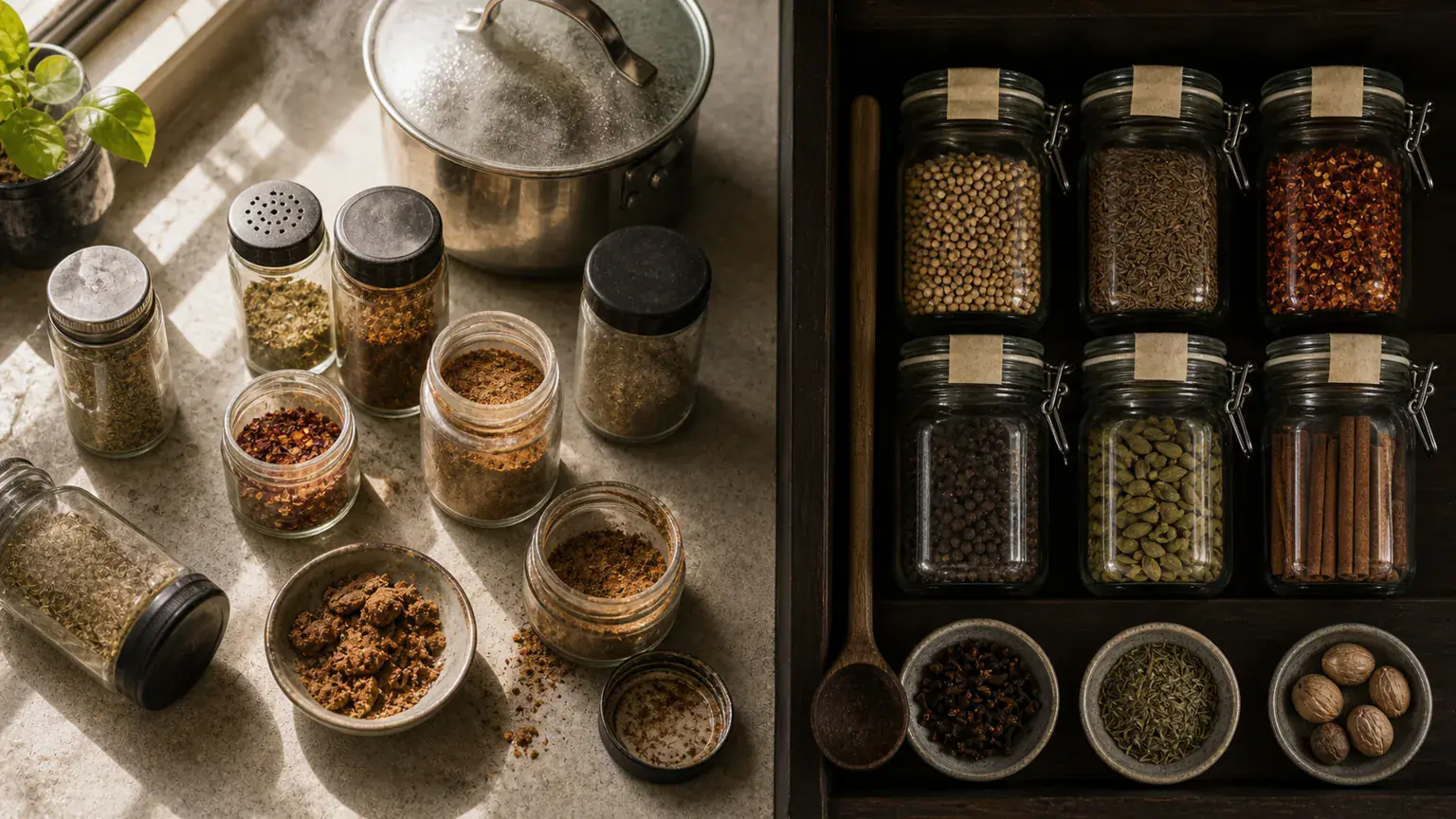
- Steam: Do not shake jars over a pot; use a spoon away from heat.
- Sunlight: Clear jars need a cabinet, not a bright counter.
- Loose lids: Oxygen keeps working after every opening.
- Dark drawer: Whole seeds and powders both last longer there.
Moisture is the most dangerous storage change because it can clump powders and invite spoilage. Steam over the pot is not harmless.
If a jar clumps, smells musty, or shows insects, discard it. Shelf life advice assumes dry storage.
The storage rule is simple: buy smaller, store darker, open less, and smell before using.
If you keep spices in clear jars, put those jars inside a cabinet. Pretty storage near sunlight costs aroma every week.
That small habit protects both whole seeds and powders. It also keeps labels readable, which makes open-date checks less annoying.
How much spice should you buy at once?
Turnover is the missing shelf-life variable. A fresh ground jar used weekly can beat a whole spice that sits untouched for years.
Daily pepper belongs in a mill because fresh grinding is effortless. Weekly dal or chili can justify whole cumin and coriander.
Monthly baking usually wants small ground jars. Rare holiday spices should be the smallest package, even when the unit price looks worse.
The wrong purchase is usually oversized, not whole or ground. A large cheap bag becomes expensive when half of it smells flat.
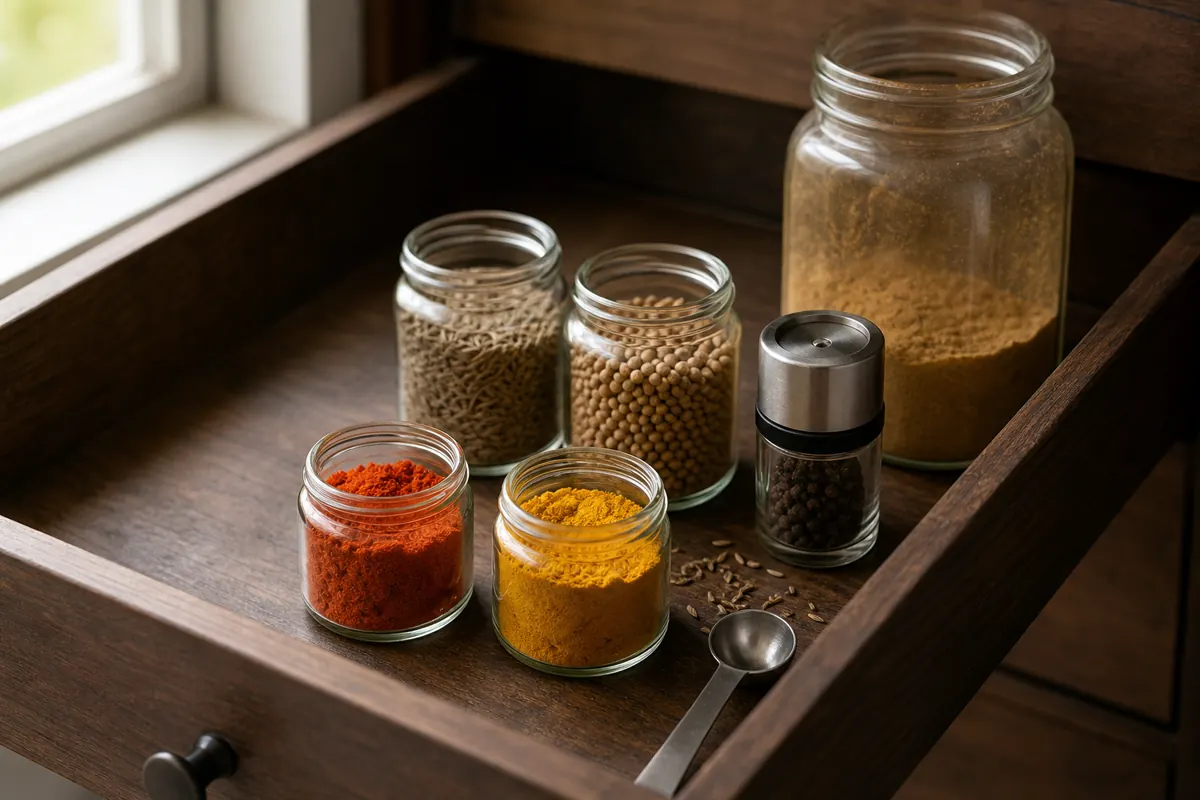
- Ground powders: Choose small jars that will empty within a few months.
- Whole seeds: A slightly larger pack works when you grind them every week.
- Bulk powder: A low unit price loses value when half the jar turns flat.
- Grinder habit: Whole form only pays off when it reaches the food.
Use open dates for powders and smell tests for whole seeds. Replace the jar when aroma no longer changes after crushing.
- Upgrade first: Pepper, cumin, coriander, cardamom, and nutmeg show the most obvious whole-spice gain.
- Keep ground: Turmeric, paprika, cayenne, and baking ginger usually earn their place as powders.
- Buy tiny: Clove, allspice, mace, and rare blends should match real cooking frequency.
- Skip bulk: Bulk only works when meals use the spice every week.
Jar-size risk changes by spice. A peppercorn refill is safer than a pre-ground pepper tub.
Cumin and coriander tolerate small whole bags well. Paprika, chile powder, clove, and allspice punish bulk buying faster.
Jar size is a flavor decision. The form matters less when the package is too large for the kitchen using it.
Whole spices give you time, but not infinite time. Old whole seeds still fade after repeated warm openings.
- Buy whole and small: Best for seeds you toast often.
- Buy ground and tiny: Best for powders that give color or smooth texture.
- Buy blends carefully: Best only when the meal repeats often.
- Replace without guilt: Stale spice is already wasted before it reaches the pan.
- Whole cumin: Crush a seed. Keep it only if the aroma is vivid.
- Ground coriander: Replace it when the citrus note turns dusty.
- Large paprika bag: Move a small amount into a sealed jar away from heat.
- Rare blend: Buy smaller next time if you did not cook it this month.
A pantry audit should lead to fewer jars, not more jars. Keep the forms that match real meals.
The best storage system is the one you use while cooking. A perfect cabinet plan fails if jars return to the stove rail.
This keeps the advice practical. The goal is better flavor in real meals, not a pantry that looks more serious.
Should you buy every spice whole?
Most home cooks should buy a mixed pantry, not an all-whole pantry. Whole and ground forms solve different kitchen problems.
The best split depends on what you cook often. An Indian spice pantry needs whole cumin and mustard seed, but still uses ground turmeric.
| Buy whole | Buy ground | Buy only if used often |
|---|---|---|
| Peppercorns | Turmeric | Garam masala |
| Cumin seed | Paprika | Curry powder |
| Coriander seed | Cayenne | Dried basil |
| Cardamom pods | Ground ginger | Pumpkin pie spice |
| Nutmeg | Cinnamon if baking often | Large BBQ rubs |
Start with whole forms for spices you smell and toast often. Keep ground forms for color, baking, and speed.
Do not build a pantry around ideals. Build it around repeat meals and replace stale jars without guilt.
A practical split starts with three whole upgrades: peppercorns, cumin seed, and coriander seed. Keep turmeric, paprika, cinnamon, and ginger ground.
Move those spices to whole form only when you already have a repeat use for them.
That split avoids the common failure of buying whole everything, then skipping the grinder on busy nights. A spice form that you do not actually use is not fresher in the food.
- Weeknight cook: Keep small ground jars for speed, then upgrade pepper and cumin first.
- Blend maker: Buy whole seeds and a grinder before buying rare blends.
- Baker: Keep ground cinnamon and ginger, but grate nutmeg fresh.
- Occasional cook: Buy the smallest jar, even if unit price is higher.
Freshness is the best value. The cheapest jar is waste if it turns flat before you use it.