
Toasting Spices: Pull Them the Moment They Turn Fragrant
Use dry heat for whole seeds and sturdy pods, then grind or bloom only after aroma opens.
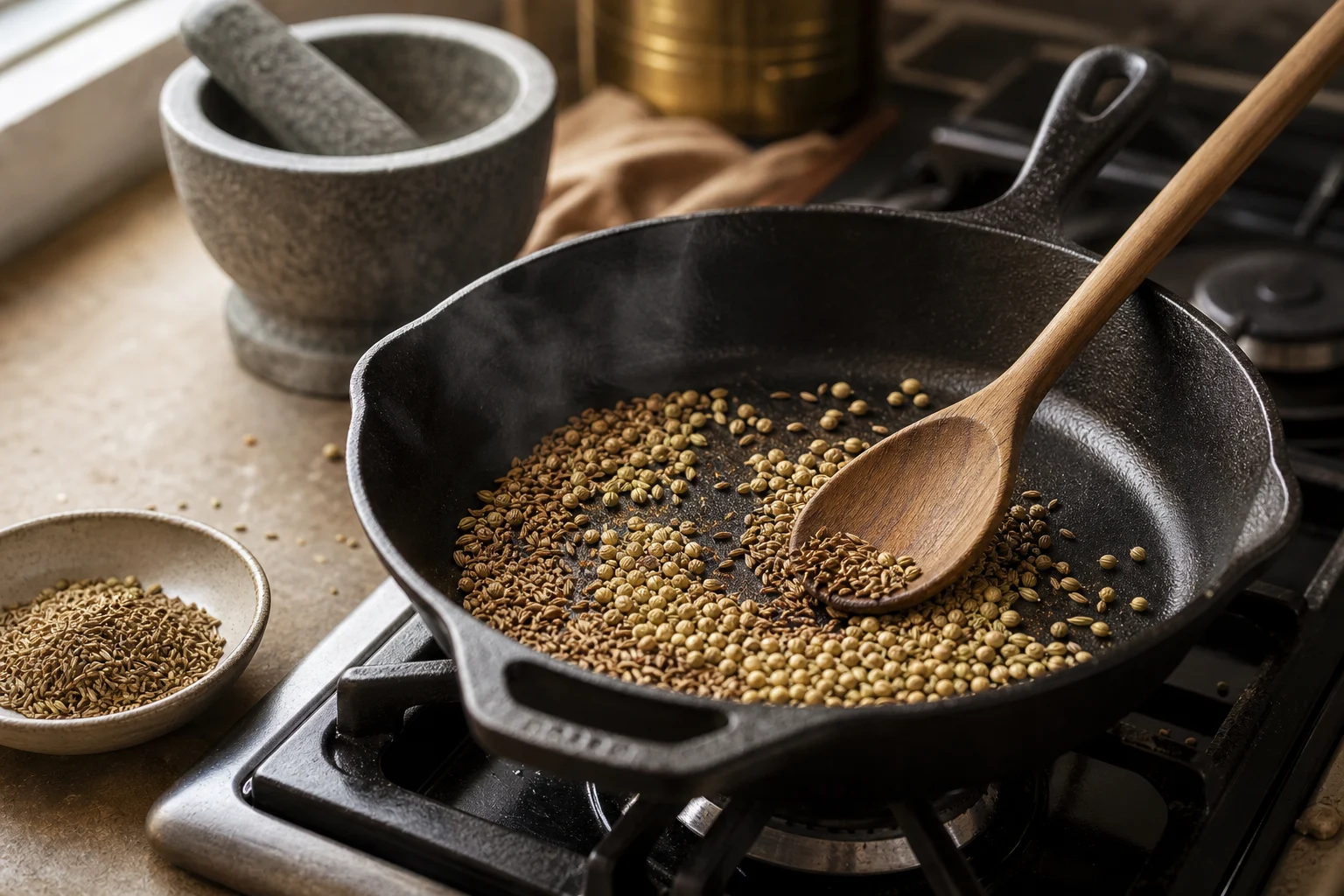
Toasting spices means heating whole spices in a dry pan until their aroma opens, usually 30 to 90 seconds. Use medium heat, keep the spices moving, and stop before smoke appears. Toast whole seeds before grinding, but use oil blooming instead for most ground powders.
What toasting actually changes
Toasting spices changes whole seeds from raw and woody to warm, nutty, and easier to grind. The heat opens aroma before the spice ever touches fat.
When cooking, order decides flavor. Toast first for dry depth, and bloom later when fat should carry the aroma.
- Better aroma: Dry heat releases volatile oils from seeds and pods before they enter the dish.
- Cleaner grinding: Warm seeds become more brittle, so a mortar or grinder breaks them more evenly.
- Less raw edge: Coriander, cumin, and fennel taste rounder after brief heat.
The goal is not dark color. The goal is a clear aroma shift while the spice still smells sweet, green, citrusy, or nutty.
The basic dry-pan method
Use a dry skillet over medium heat and add spices in one loose layer. A crowded pan steams seeds instead of toasting them.
Shake or stir constantly. Small seeds can move from fragrant to scorched in a few seconds.
| Spice | Typical time | Ready cue |
|---|---|---|
| Cumin seed | 45-75 seconds | Smells earthy and popcorn-like |
| Coriander seed | 60-90 seconds | Smells citrusy and nutty |
| Fennel seed | 45-75 seconds | Smells sweet and anise-like |
| Mustard seed | 30-60 seconds | Darkens slightly before popping |
| Cloves or cardamom pods | 1-2 minutes | Aroma strengthens without smoke |
In the dish, cumin shows the cue clearly: stop when the aroma turns warm and savory, not when the seeds turn black.
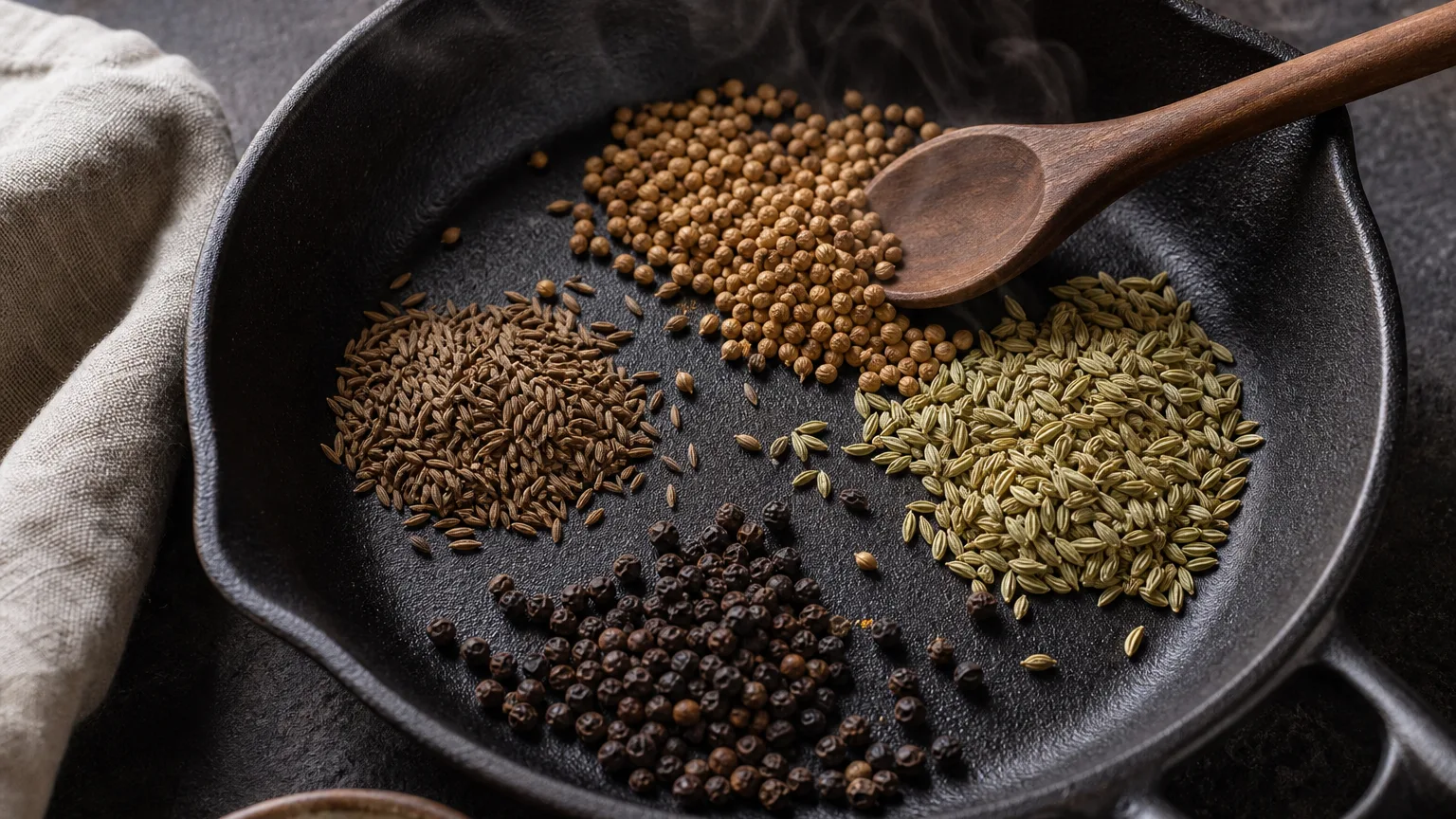
- Dry surface: Oil belongs to blooming, not dry toasting.
- One layer: Crowding traps steam and leaves uneven raw spots.
- Constant motion: Seeds can scorch in seconds once aroma peaks.
- Stop cue: Pull the pan when the smell turns warm, not smoky.
Pour toasted spices onto a cool plate immediately. Leaving them in the hot pan keeps cooking them after the burner is off.
Toasting is not blooming
Toasting uses dry heat. Blooming uses fat, so the two techniques solve different problems.
Use toasting when whole spices need roasted depth or better grinding. Use blooming spices in oil when ground spices need fat to spread through a sauce.
| Decision | Toasting | Blooming |
|---|---|---|
| Medium | Dry pan | Oil, ghee, butter, or other fat |
| Best spice form | Whole seeds and pods | Ground spices and some whole seeds |
| Main result | Roasted aroma and easier grinding | Flavor carried through fat |
| Failure sign | Smoke or blackened seeds | Bitter powder in oil |
In the dish, turmeric is a good boundary case. Ground turmeric usually needs fat, not dry toasting, because fine powder scorches fast.
If a recipe asks you to toast whole cumin, grind it, then fry it in oil, those are sequential steps. Each step changes a different part of the flavor.
Which spices toast well
Whole seeds with protective shells toast best because they can handle brief dry heat. Fine powders and leafy herbs have too much exposed surface.
In the dish, coriander seed is one of the safest practice spices. Its aroma becomes lemony and nutty before the seed darkens much.
- Excellent: Cumin, coriander, fennel, mustard seed, fenugreek seed, sesame, and black peppercorns.
- Good with care: Cloves, cardamom pods, cinnamon fragments, star anise, and dried chiles.
- Poor fit: Ground turmeric, paprika, curry powder, dried basil, mint, and saffron threads.
A blend like garam masala tastes cleaner when the whole spices are toasted before grinding. Cooking the finished powder longer gives a duller result.
For ground blends like curry powder, use oil blooming instead. Dry heat can burn turmeric and fenugreek before the blend tastes better.
Common mistakes and fixes
Most toasting mistakes come from too much heat or too little attention. The pan should smell lively, not smoky.
If the spice smells acrid, discard it. Burnt spice bitterness spreads through the entire dish.
| Toasting problem | Likely cause | Fix next time |
|---|---|---|
| Bitter seeds | Pan was too hot | Use medium heat and move constantly |
| Uneven color | Crowded pan | Toast in one loose layer |
| Flat aroma | Stopped too soon or spices were stale | Toast until aroma rises, or replace the jar |
| Powdery scorch | Ground spice was dry-toasted | Bloom powder in fat instead |
Stale seeds cannot become vivid through heat alone, so storage and buying comes before toasting.
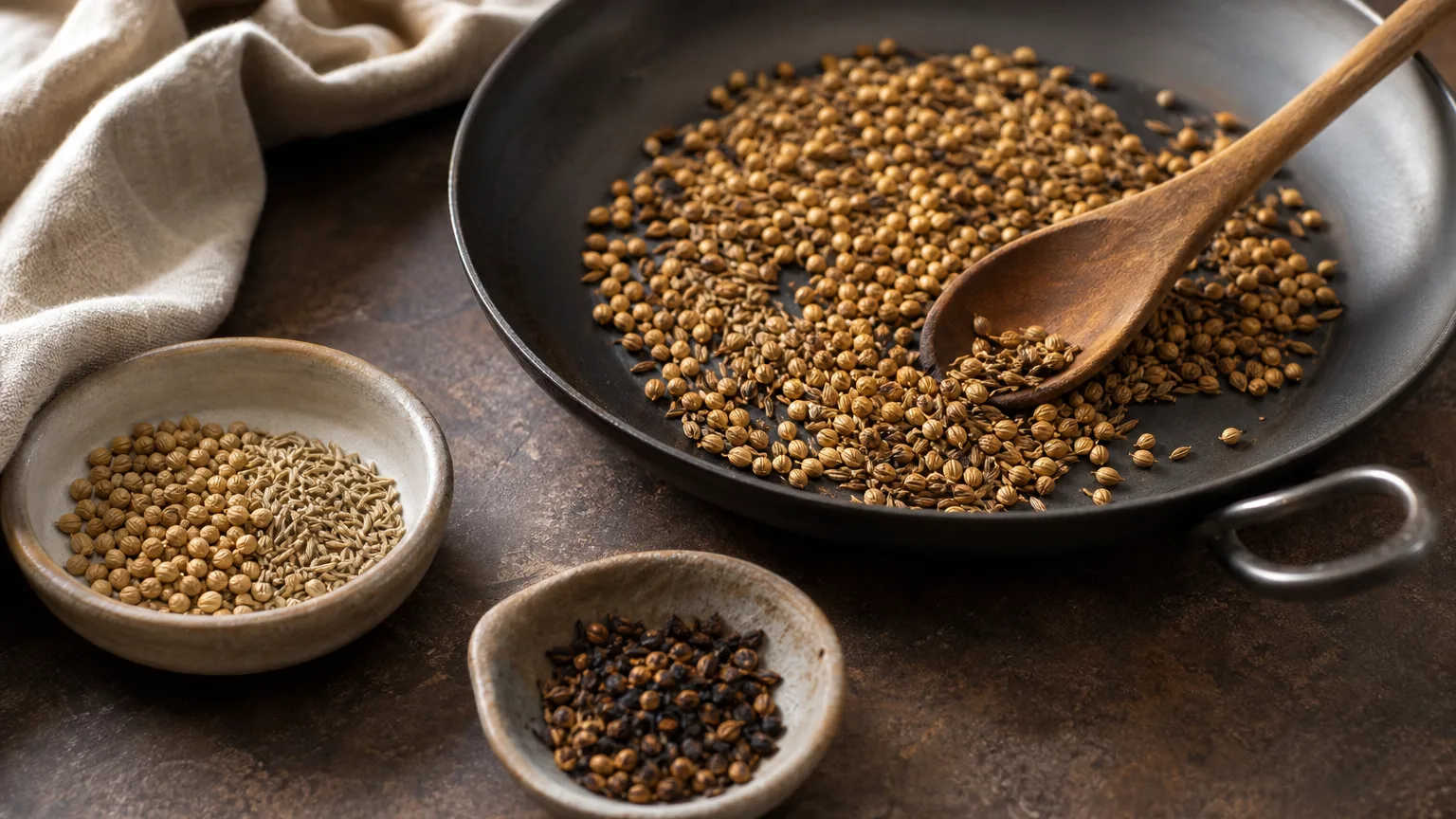
- Pale sample: Raw seeds smell quiet and woody.
- Ready sample: Toasted seeds smell round before they look very dark.
- Scorched sample: Acrid seeds should be discarded, not hidden in a dish.
- Practice move: Learn the smell cue with cumin or coriander first.
Practice with one tablespoon of cumin or coriander before you toast an expensive blend. The smell cue matters more than a timer.
How to toast before grinding
Toast whole spices before grinding when you want the freshest powder possible. Let them cool for one minute so trapped steam does not clump the grinder.
Grind while the spices are still slightly warm, then use the powder soon. Freshly toasted powder loses its high notes quickly.
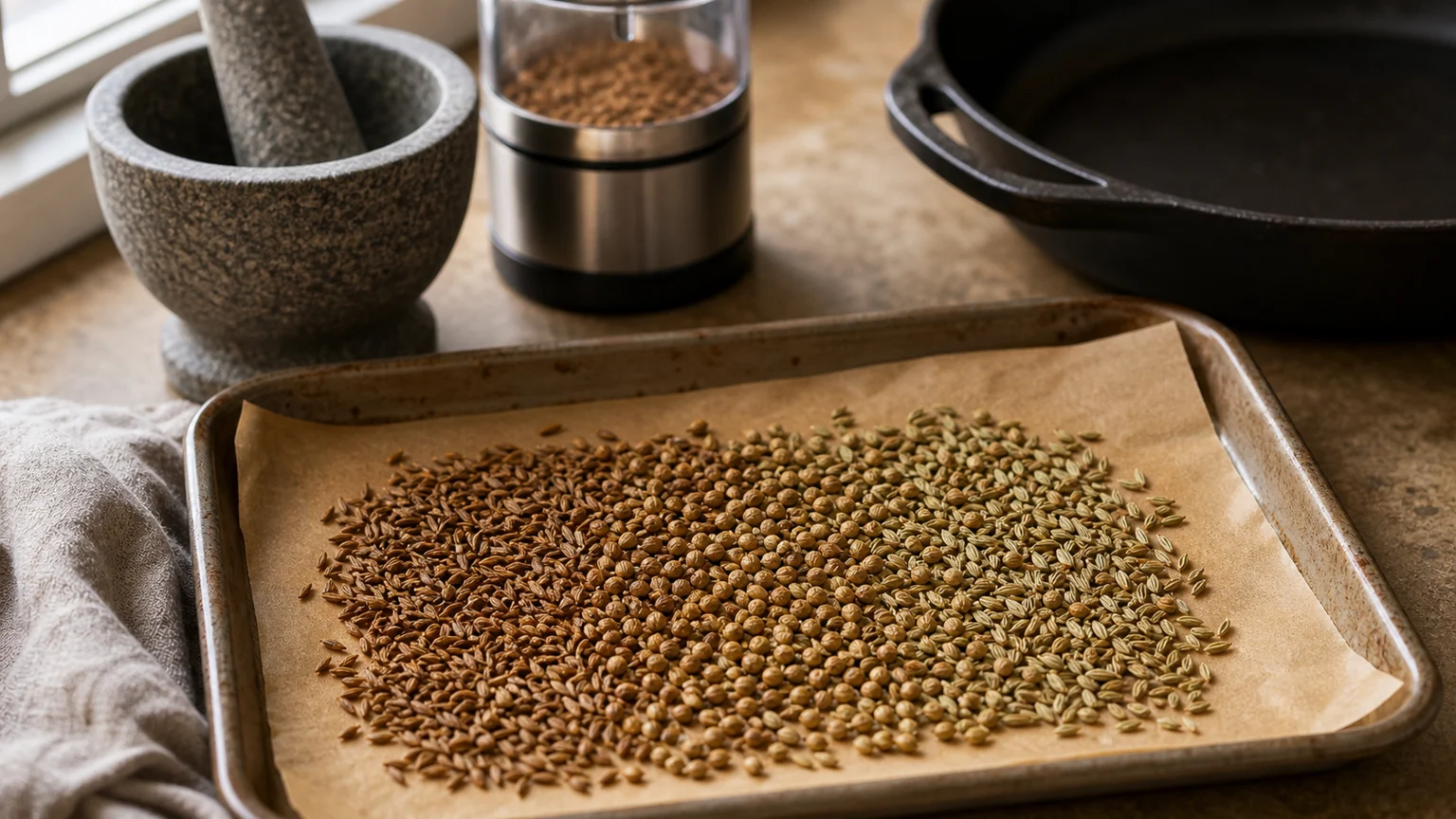
- Cool briefly: One minute lets steam escape without losing the toasted aroma.
- Grind small: Fresh toasted powder fades faster than whole seeds.
- Stop before smoke: Golden aroma matters more than dark color.
- Mortar method: Best for small batches where texture can stay rustic.
- Blade grinder: Best for smooth powder, but pulse instead of running continuously.
- Sieve move: Sift coarse husks if the blend must disappear into a sauce.
- Batch size: Grind only what you can use within a few weeks.
In the dish, black pepper proves the freshness rule. Once a spice is cracked or ground, aroma starts leaving immediately.
If you need both texture and powder, grind half fine and leave half cracked. That gives a rub more layers without adding more spice.
Pan, oven, and batch choices
A skillet gives the most control because you can smell the spice and move it constantly. Use it for small batches and any expensive spice.
An oven works for larger batches, but it hides the cue that matters most: aroma. Use lower heat and check often.
| Method | Best for | Risk |
|---|---|---|
| Dry skillet | One to four tablespoons of seeds | Burns fast if you stop moving the pan |
| Sheet pan | Large batches of coriander, cumin, or fennel | Aroma cue arrives later than browning |
| Saucepan | Round seeds that jump or pop | Crowding traps steam in the bottom |
| Microwave | Emergency small amounts only | Uneven hot spots and weak aroma control |
For oven toasting, spread seeds thinly at 300°F and stir every two minutes. Remove them when the aroma is clear, not when they look dark.
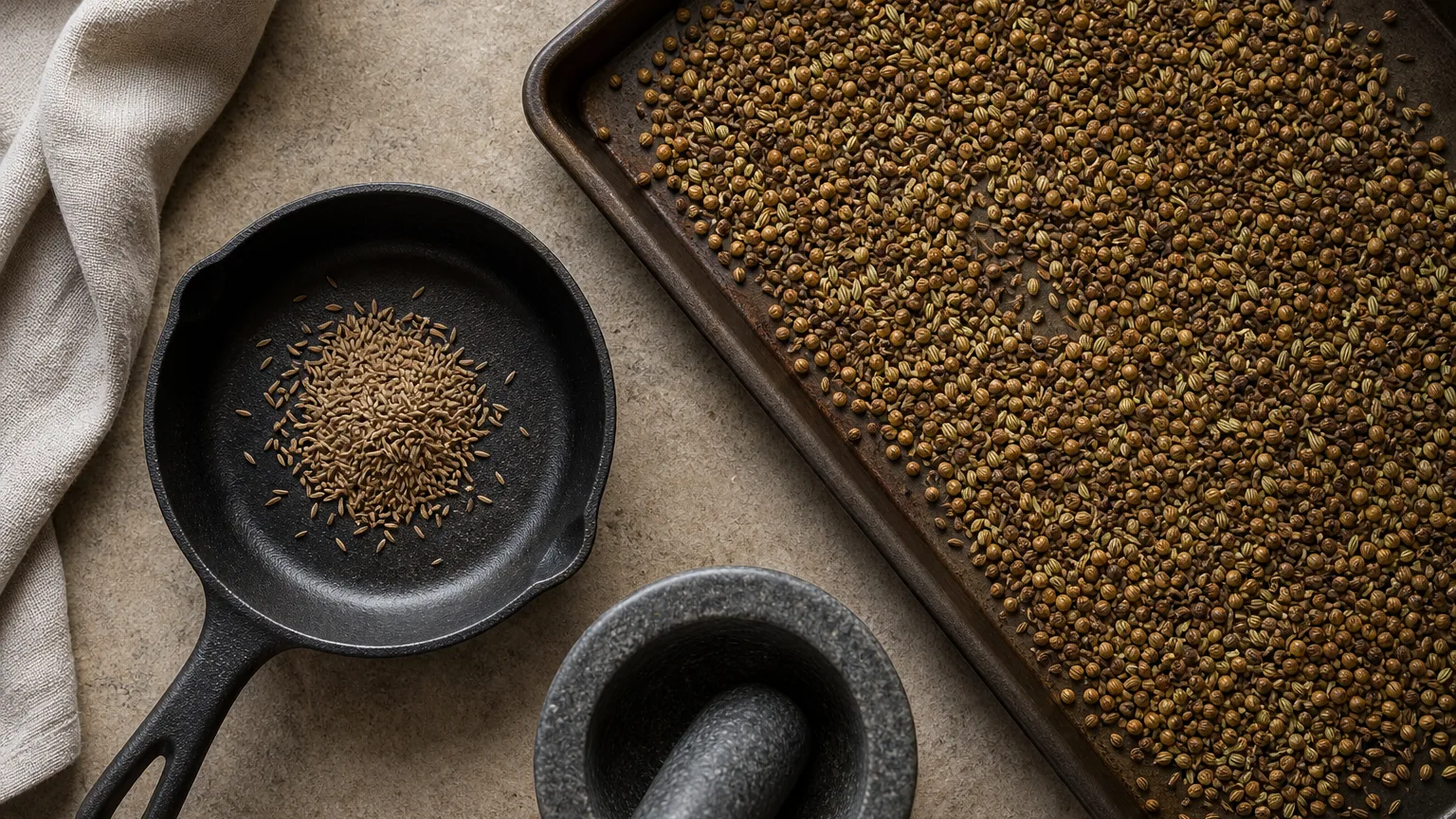
- Skillet: Best for one to four tablespoons because you can smell and move the seeds.
- Sheet pan: Best for larger coriander or cumin batches spread thinly.
- Different sizes: Toast cumin, cardamom, and cloves separately when possible.
- After heat: Cool spices before grinding so steam does not clump the powder.
For stovetop batches, toast one spice at a time when sizes differ. Cumin, cardamom, and cloves do not finish together.
- Small batch: Use a skillet, medium heat, and constant movement.
- Large batch: Use the oven only for sturdy seeds, then cool them on a tray.
- Mixed blend: Toast large pods first, small seeds second, and delicate spices last.
Mixed timing matters in homemade blends. If cloves scorch before coriander wakes up, the whole blend tastes medicinal.
For a weeknight spice rub, toast and grind only the cumin and coriander. Leave delicate chile powder or paprika out of the dry pan.
When not to toast
Do not toast every spice automatically. Some ingredients lose exactly the aroma you wanted when dry heat touches them.
Delicate herbs, saffron, and most fine powders need gentler handling. Technique follows the form, not the ingredient name.
- Do not toast saffron hard: Bloom it in warm water, milk, or stock so aroma spreads gently.
- Do not toast dried herbs like seeds: Basil, mint, and cilantro turn bitter under direct dry heat.
- Do not toast paprika powder: Use fat and lower heat because the powder scorches quickly.
- Do not toast old spices to fix them: Heat cannot restore volatile oils that already escaped.
Use toasting as a precision tool for whole spices. It should not become an automatic ritual.
Once you can smell the difference between toasted and scorched cumin, most spice timing becomes easier.
Dishes where toasting pays off
Toasted spices pay off when dry aroma needs to arrive before liquid blocks browning. Dal, hummus, chili, pickles, and pilaf each use that roasted note for a different job.
In dal, cumin and mustard seed can wake in the pan before moisture enters. Chili uses toasted cumin and coriander differently, building roasted depth under tomato and chile.
An Indian spice pantry makes the sequence visible because whole seeds often lead, ground spices follow, and finishing blends arrive late.
| Dish | Toast this | Why it helps |
|---|---|---|
| Dal or tadka | Cumin and mustard seed | Adds nutty seed aroma before fat carries it |
| Hummus | Cumin seed | Makes the powder taste warmer and less dusty |
| Chili | Cumin and coriander | Builds roasted depth under chile and tomato |
| Pickling spice | Mustard, coriander, fennel | Opens seed aroma before brine extracts it |
| Rice pilaf | Whole cumin or cardamom | Perfumes the fat before rice absorbs it |
In blends, spice blends often taste cleaner when their whole components are toasted separately before grinding. A finished powder gives you less control.
The best dish use should name why the spice was toasted before it entered the pan. If you cannot name the job, skip the step.
What to do after toasting
Toasting is rarely the final step, because it sets up the form decision. Once seeds cool, they can stay whole, crack into texture, or become powder.
For finishing spices, stop after toasting and grinding. For base spices, toast first, then bloom or simmer as the recipe requires.
Working through whole spice families teaches the method faster because each seed has a distinct cue. Cumin, coriander, and fennel are easier teachers than complex blends.
- Leave whole: Use this when the diner should notice cumin, mustard, fennel, or cardamom as distinct bites.
- Crack coarsely: Use this when a rub or pickle needs texture without large hard seeds.
- Grind fine: Use this when the spice should disappear into hummus, chili, dal, or a sauce base.
- Blend after cooling: Combine toasted spices only after steam has left, so the mix stays loose and aromatic.
Cooling is part of the technique, not waiting around. Warm spices can pull moisture from salt, clump in a grinder, and lose aroma faster.
Choose the form before the next cooking step. That decision keeps toasting from turning into a vague ritual and makes the finished dish easier to control.
The aroma limit
Toasting wakes aroma, but it can also drive aroma away. The useful window sits between raw seed smell and smoke.
Many spice aromas are volatile, so extended heat can make them easier to lose. Clear fragrance matters more than darker color.
Coriander seed is a good practice case because its citrusy linalool-rich aroma becomes easy to notice before browning goes far.
| Cue | What it means | Next move |
|---|---|---|
| Aroma turns clear | Volatile oils are available | Remove from heat |
| Seeds darken slightly | Roasting has started | Cool on a plate |
| Smoke appears | Oil is burning away | Discard and restart |
| Smell turns sharp | Bitterness is forming | Lower heat next time |
The best result tastes deliberate, controlled, and clearly specific. Toasting should make the spice more legible, not simply darker.
If the finished dish tastes flat, the issue may be stale spice or missing salt. More toasting cannot replace aroma that has already escaped.