
What Is Capsaicin, and Why Does It Make Peppers Hot?
Understand pepper heat as chemistry you can control, not just pain you endure.
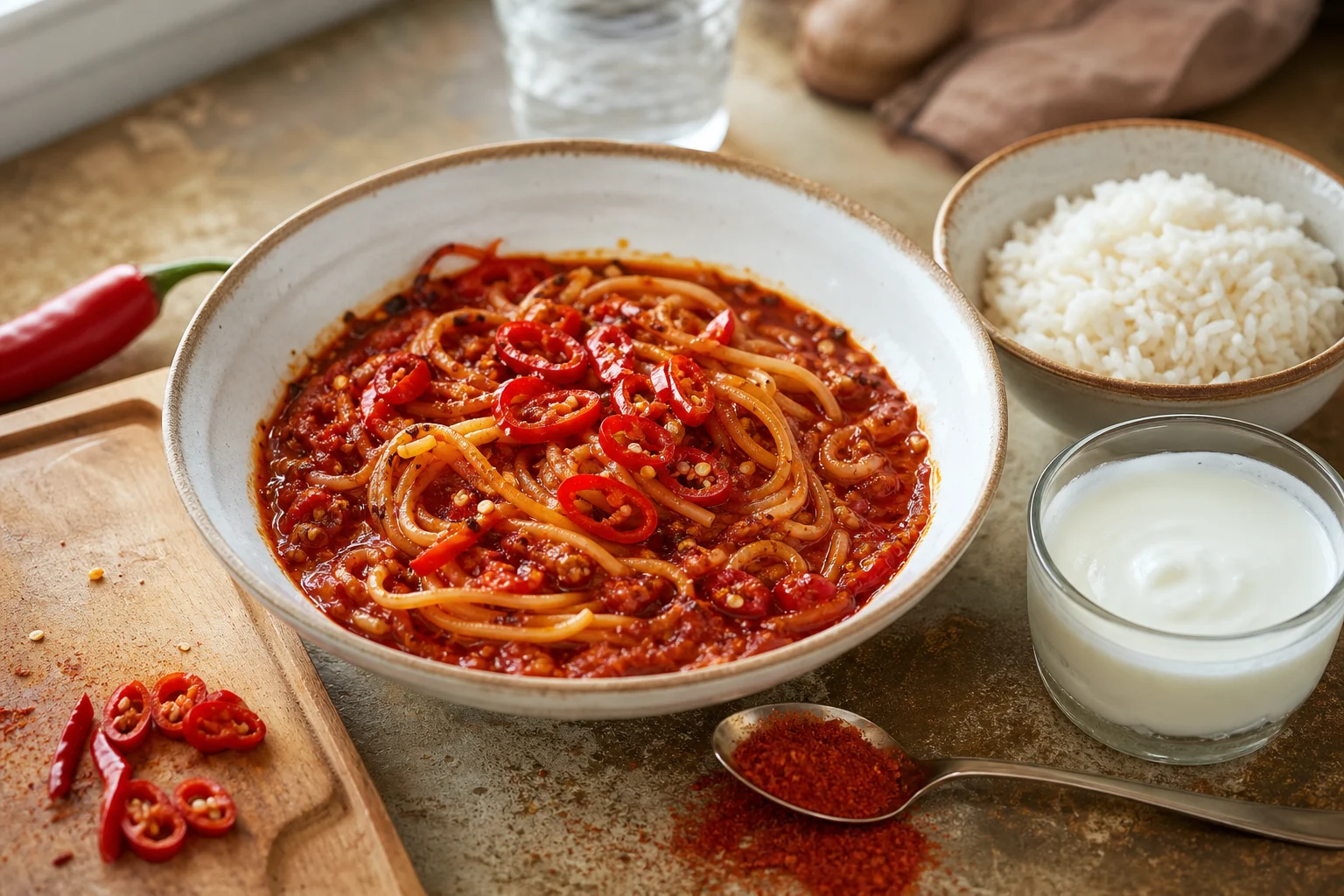
Capsaicin is the compound that makes chile peppers feel hot by activating heat and pain receptors in your mouth. It does not dissolve well in water, so dilution, fat, dairy, starch, and careful timing work better than drinking water. Use Scoville ratings as a starting point, then manage heat by pepper form, cooking method, and the whole dish.
What capsaicin does in food
Capsaicin is the chile pepper compound that makes food feel hot, even when the food itself is cool. It turns pepper heat into a body signal.
That signal is not the same thing as chile flavor. Pepper flesh, drying, smoke, vinegar, salt, and fermentation still shape the taste.
That is the useful frame for spice science: the chemistry matters only when it changes a cooking decision.
A salsa can taste bright and mild until minced serrano spreads through the bowl. A stew can taste smoky while the heat builds slowly.
Capsaicin also changes how you season.
Once heat climbs too high, salt, acid, and aroma become harder to notice.
| Kitchen question | Capsaicin answer | Cooking consequence |
|---|---|---|
| Why does chile burn? | It activates TRPV1 receptors | Your mouth reads the signal as heat |
| Why does water fail? | Capsaicin is poorly water soluble | Water spreads burn without lifting much away |
| Why does dairy help? | Casein and fat help move capsaicin | Milk or yogurt calms heat better than water |
| Why do dried chiles vary? | Capsaicinoids concentrate by variety and processing | A small amount can lead the whole dish |
Use capsaicin as a seasoning variable, not a dare. The best spicy food still has aroma, salt, acid, sweetness, and texture.
This is why good chile cooking often starts mild. You can always add heat, but you cannot pull capsaicin back out cleanly.
That distinction matters when you adjust a dish.
Cooling the food may not cool the burn if the capsaicin concentration stays high.
Why peppers feel hot, not just taste hot
Capsaicin binds to TRPV1 receptors, which normally help warn your body about high heat. Your brain receives a burn signal.
This is why chile heat feels physical. It can make you sweat, flush, salivate, or pause before you taste the pepper clearly.
A chile can smell fruity because flavor chemistry separates aroma from sensation.
A habanero can still burn hard.
Cooks use that split constantly. Jalapeno brings green snap, chipotle brings smoke, and cayenne brings cleaner heat.
- Fruit aroma: Fresh habanero can smell tropical before its heat builds.
- Green bite: Jalapeno gives grassy flavor with moderate heat when seeds and ribs stay in.
- Smoke layer: Chipotle adds smoke, sweetness, and heat because drying changes the whole pepper.
- Powder spread: Cayenne powder disperses fast, so heat reaches more bites evenly.
Separate those jobs when cooking. If you only need chile aroma, choose a milder pepper or use less of the hot part.
If you need clean heat without much aroma, use a measured pinch of cayenne or a small dash of hot sauce.
This also explains why swapping peppers by color alone fails. Red pepper can mean sweet paprika, cayenne, gochugaru, or crushed chile flakes.
Ask what the pepper is doing before you substitute it.
Aroma, heat level, texture, and acidity are separate jobs.
How Scoville ratings help and mislead
Scoville Heat Units estimate pungency by capsaicinoid concentration. They help compare peppers, but they do not predict the whole meal.
Use the Scoville scale beside taste tests, not above them. Sugar, fat, starch, acid, and serving size all change perceived heat.
A hot sauce label can look scary and still taste balanced on eggs.
A mild fresh chile can dominate a raw salsa.
Dose changes everything. One sliced serrano in a quart of soup behaves differently from the same pepper in two tacos.
| Pepper or product | Common SHU range | Cooking read |
|---|---|---|
| Bell pepper | 0 | Sweet pepper flavor without capsaicin heat |
| Poblano | About 1,000-2,000 | Gentle roasted chile depth |
| Jalapeno | About 2,500-8,000 | Noticeable fresh green heat |
| Cayenne | About 30,000-50,000 | Sharp heat in powders and sauces |
| Habanero | About 100,000-350,000 | Fruity aroma with serious burn |
| Carolina Reaper | Over 1,000,000 | Extreme heat, not casual seasoning |
A lower-Scoville pepper can still taste hotter if you use more of it. Total dose matters more than a label.
Measure powdered chile when repeatability matters.
A half teaspoon can be the difference between warmth and regret.
For home cooking, use Scoville numbers to set expectations. Then taste the dish after dilution and simmering.
If guests vary in tolerance, keep the base mild and offer chile oil or hot sauce at the table.
Why water does not fix spicy food
Water does not fix spicy food because capsaicin is poorly soluble in water. It can move heat around your mouth without removing much.
Fat, dairy, and alcohol dissolve or disperse capsaicin better. In food, fat is usually the useful tool.
Fat changes heat behavior because fat-soluble versus water-soluble flavors move differently from plain water.
This is why yogurt cools a curry more effectively than a glass of water. It changes both dilution and capsaicin transport.
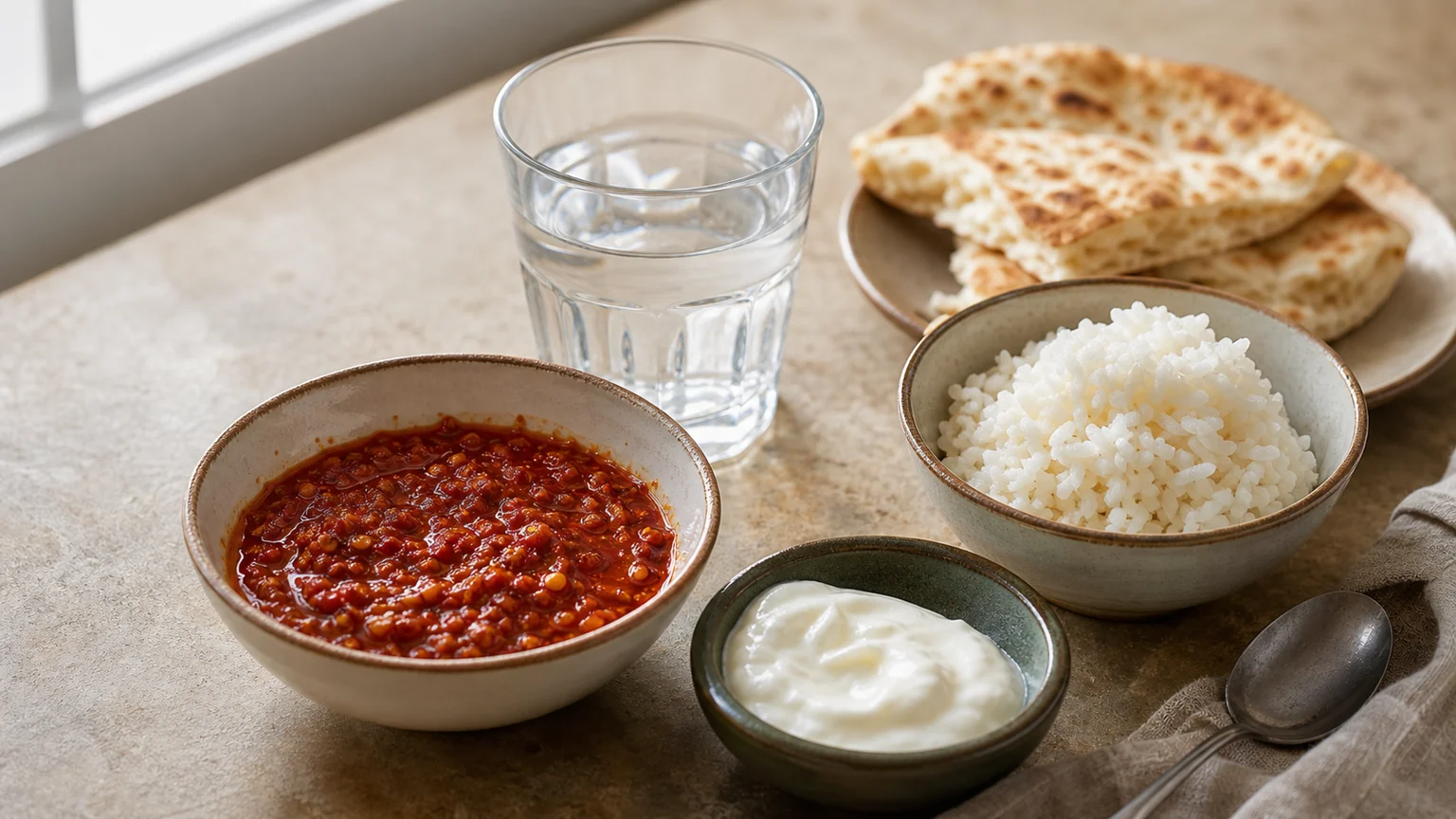
- Water spreads: It can move heat around without removing much capsaicin.
- Dairy helps: Fat and casein make yogurt or milk more useful for burn.
- Starch buffers: Rice and bread dilute the bite while you wait.
| Choice | Why it helps or fails | Best use |
|---|---|---|
| Water | Poor capsaicin solvent | Rinse only when nothing else exists |
| Milk or yogurt | Casein and fat help carry capsaicin away | Mouth burn and spicy sauces |
| Rice or bread | Starch dilutes and scrapes the palate | Curries, chile, and hot stews |
| Sugar or honey | Sweetness masks some burn | Hot sauces, glazes, and marinades |
| Acid | Brightens flavor but does not erase capsaicin | Salsa, pickles, and rich dishes |
If a dish is too hot, add body before adding more water. Beans, rice, coconut milk, yogurt, potatoes, or tomato work better.
Water still has a role when a sauce is too thick.
It just should not be your main plan for capsaicin burn.
For the mouth, take small bites of starch or dairy and wait. Capsaicin sensation fades with time as receptors calm.
How cooking changes capsaicin heat
Cooking does not make capsaicin vanish quickly. Heat can soften pepper aroma, but the burn usually stays unless you dilute or balance it.
Capsaicin spreads well through fat, so oil can carry heat across a whole pot.
That is useful when measured and punishing when accidental.
Bloom chile powders in oil carefully. Thirty seconds can be enough before the pepper darkens and bitterness starts.
Fresh chiles behave differently. Their cell walls soften during cooking, so heat migrates into the sauce instead of staying in each slice.
- Bloom briefly: Warm chile powder in fat until color deepens, then add liquid before it scorches.
- Add fresh chiles earlier: Simmering softens texture and spreads heat through the sauce.
- Add hot sauce late: Vinegar, salt, and fermented aroma stay clearer near the end.
- Remove ribs for control: The pale inner tissue often carries more capsaicin than the flesh.
Timing matters because flavor and burn do not move together.
When you add chile changes the final heat curve.
If you overshoot, stop adding chile and add bulk. More simmering alone rarely turns a fiery dish mild.
This is also why chile oil tastes so even. The fat carries capsaicin across noodles, rice, dumplings, or roasted vegetables.
For dry rubs, mix chile powder with salt and sugar before applying it.
Even distribution prevents one brutal bite.
Choosing chile form for the heat you want
Fresh chiles, dried chiles, flakes, powders, pastes, and sauces deliver capsaicin differently.
Form decides speed, spread, and aroma.
Fresh jalapeno gives green crunch and uneven heat. Powder gives fast, even heat because particles spread through fat and liquid.
Red pepper color does not always mean the same heat. Sweet paprika, cayenne, gochugaru, and crushed chile all behave differently.
An ancho chili gives slow dried-fruit depth, so it suits braises, moles, harissa-style pastes, and long sauces.
| Form | Best use | Control risk |
|---|---|---|
| Fresh sliced chile | Salsa, stir-fries, garnish | Hot bites cluster around slices |
| Dried whole chile | Stews, braises, sauces | Seeds and ribs can spike heat |
| Chile flakes | Finishing heat and pizza-style seasoning | Easy to overapply at the table |
| Ground cayenne | Rub, sauce, and chili heat | Spreads fast and tastes hotter than expected |
| Hot sauce | Acidic finishing heat | Salt and vinegar change the dish too |
Use form as your control knob. Whole dried chiles build a base, while chili flakes and sauces adjust the finished plate.
For repeatable cooking, measure powdered chiles with spoons. Fresh peppers vary enough that tasting matters every time.
For a party dish, choose a mild base chile and serve hotter condiments separately. People enjoy heat more when they control it.
For a marinade, remember that hot sauce adds vinegar and salt. Reduce other acid and seasoning before blaming the pepper.
Mistakes that make heat harder to control
Most capsaicin mistakes happen before tasting. Cooks add too much powder, keep all ribs, or try to rescue heat with water.
The fix starts with source control. Choose the pepper form that matches the dish, then adjust in smaller rounds.
With chile powder, small spoon changes matter because they shift the whole heat level.
A teaspoon of cayenne in a dry rub does not behave like a teaspoon in soup. Surface contact changes perceived intensity.
- Adding powder straight to liquid: The chile can clump and taste raw. Bloom it briefly in fat first.
- Trusting one Scoville number: Pepper variety, growing conditions, and amount all change the burn.
- Using water as rescue: Water thins the dish but does not carry capsaicin away well.
- Ignoring sauce salt: Hot sauce adds vinegar and salt, not just capsaicin heat.
- Handling chiles barehanded: Capsaicin can linger on skin and sting eyes later.
The reason why toasting spices works is separate from chile heat. Toasting deepens aroma, but it does not erase heat.
For hands, use gloves with very hot peppers. Wash knives, boards, and fingers before touching your face.
Do not ask every guest to meet the hottest eater at the table. Build a shared base and let toppings carry the fire.
When a dish tastes flat after dilution, rebuild salt and acid gently. Heat control should not leave the food watery.
Why does the same chile feel milder over time?
Regular chile eaters are not imagining their tolerance.
Capsaicin works by binding TRPV1, the same receptor that reports genuine heat, and repeated activation leaves that receptor less responsive. The effect builds over weeks of frequent exposure rather than across a single meal.
This is why a dish that felt punishing last year can taste comfortable now. Your receptors adjusted, and the chile did not get weaker.
Tolerance also fades.
Stop eating chile regularly for a few months and the same sauce will feel sharp again.
Cook for the table you have rather than the tolerance you built. A pot seasoned to your own threshold can be genuinely painful for someone who eats chile once a month.
Health claims and safety boundaries
Capsaicin has real biological effects, but dinner amounts are not the same as a medical dose. Keep culinary and supplement claims separate.
Research links capsaicin to TRPV1 activation, pain signaling, metabolism questions, and topical pain products. A spicy meal does not prove those outcomes.
Black pepper gives a useful contrast because piperine works differently from chile pepper heat.
Health claims should stay proportional here. A safer capsaicin explanation starts with sensation, then separates food amounts from health claims.
| Situation | Food-level answer | Caution |
|---|---|---|
| Normal spicy food | Usually fine for many adults | Stop if it causes pain or reflux |
| Very hot peppers | Use small amounts and gloves | Avoid eye and skin contact |
| Children or guests | Serve heat on the side | Tolerance varies widely |
| Supplements or extracts | Different from cooking | Ask a clinician if using high doses |
Spicy food should feel exciting, not reckless. A good cook protects guests from surprise heat.
The best capsaicin control is simple: add less, taste more, and build heat in layers.
If a dish burns instead of tastes good, the problem is balance. Lower the dose and let the pepper flavor return.