
Chili Flakes: Late, Uneven Heat You Can Control
Treat flakes as a texture and heat tool, not just a smaller version of chile powder.
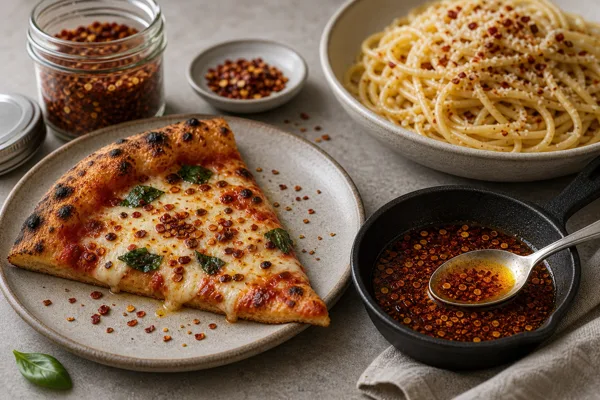
Chili flakes add visible, delayed heat because broken chile skin, seeds, and membranes hydrate at different speeds. Use them late for pops of heat, bloom them briefly for deeper heat, or simmer them when the dish needs steady warmth. Substitute cayenne only in tiny amounts because it spreads faster and tastes hotter.
Chili flakes give uneven heat on purpose
Chili flakes do not dissolve into food the way fine powder does. They give visible red pieces and small bursts of heat.
That makes them different from cayenne. Cayenne spreads fast, while flakes keep more texture and delay.
| Use | Heat behavior | Best result |
|---|---|---|
| Pizza finish | Late, sharp bites | Visible heat without changing sauce |
| Garlic oil | Warm, infused heat | Oil carries color and chile aroma |
| Soup simmer | Steady background warmth | Heat spreads through broth |
| Dry rub | Patchy contact heat | Texture on meat surface |
| Pickles | Slow extraction | Heat grows during storage |
Use flakes when that unevenness helps. Choose powder when every spoonful should taste the same.
Seeds carry heat because they touch that tissue. Seed-heavy flakes can taste hotter and rougher.
What are chili flakes actually made of?
Chili flakes are dried red chillies crushed coarsely, seeds and all. The seeds are the reason the jar looks pale and speckled rather than uniformly red.
Red pepper flakes and chili flakes are the same product under two names.
American jars usually say crushed red pepper, British ones say chilli flakes, and the contents are indistinguishable. Neither name tells you which chilli went in.
The generic supermarket jar is usually cayenne-type chillies.
Producers rarely name the variety because they blend whatever the season delivered, which is why heat varies between jars of the same brand.
Seeds carry very little heat of their own. They sat against the placental rib inside the pod and picked capsaicin up by contact, so a seedy jar is harsher and more bitter rather than genuinely hotter.
The pale dust at the bottom is broken seed and pith.
It burns faster than the flake in hot oil, which is where a lot of unexplained bitterness comes from.
| What is in the jar | Where it comes from | What it does |
|---|---|---|
| Red flake | The flesh of the dried pod | Most of the color and the clean heat |
| Seeds | Loose inside the pod | Little heat of their own, harshness and bitterness |
| Pale dust | Broken seed and pith | Burns first in hot oil, a common source of bitterness |
| The name | Crushed red pepper or chilli flakes | The same product, no clue to the variety |
Late flakes stay sharp and visible
Add chili flakes late when you want heat to sit on top of the dish. This works for pizza, pasta, eggs, soups, and roasted vegetables.
Late use follows the broader spice timing rule. Fine powders integrate early, while coarse flakes can finish.
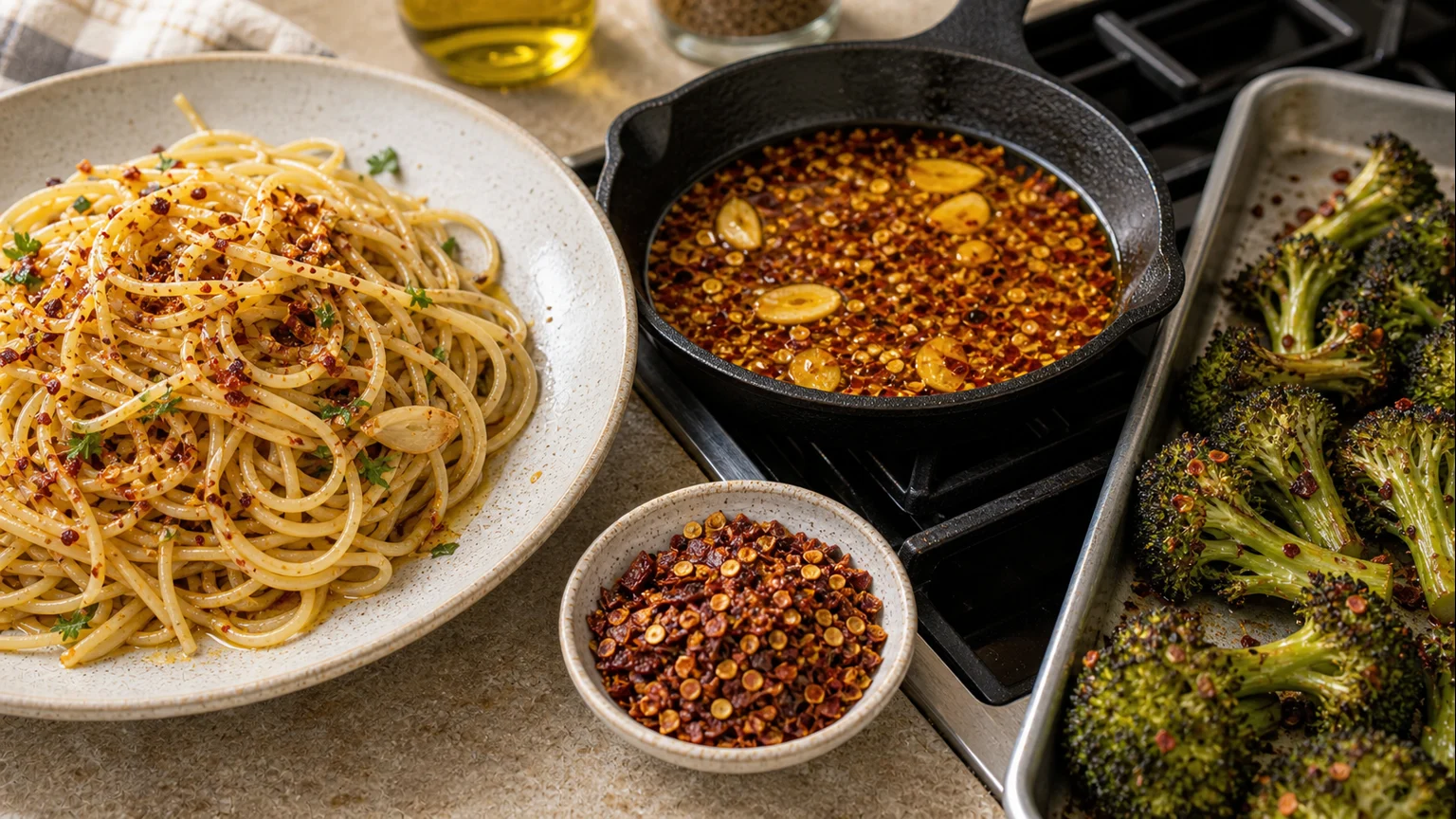
- Dry finish: Pizza, eggs, and flatbread keep the red pieces visible.
- Oil contact: Pasta and beans turn one pinch into broader heat.
- Roasted edges: Broccoli and potatoes catch flakes where oil collects.
- Seed dust: The fine material at the jar bottom spreads faster than big flakes.
A late pinch is a surface decision, not a recipe-wide seasoning decision. It changes the next bite more than it changes the pot.
Crush flakes between your fingers for faster release.
Leave them coarse when texture is part of the pleasure.
Salt changes perception, so taste before adding more chile. A bland dish can make heat feel harsher.
- For pizza: Add flakes after baking so the chile stays fragrant and dry.
- For pasta: Warm flakes in oil for a few seconds before sauce enters.
- For eggs: Add a tiny pinch at the end because fat carries heat quickly.
- For salad: Use flakes only when the dressing has enough oil or acid.
A late pinch should make the next bite brighter. It should not make the whole dish taste dusty.
Blooming flakes makes the heat rounder
Hot oil pulls color, aroma, and capsaicin from chili flakes. The same spoonful tastes deeper after brief fat contact.
When cooking, blooming spices in oil works here, but flakes burn faster than whole dried chiles.
Keep the oil below smoking.
| Moment | Flavor effect | Failure sign |
|---|---|---|
| 5 to 10 seconds | Aroma opens | No color change yet |
| 10 to 20 seconds | Oil turns orange red | Good for pasta and beans |
| Over 30 seconds | Heat gets rough | Dark flakes smell bitter |
| After garlic browns | High burn risk | Garlic and chile taste harsh |
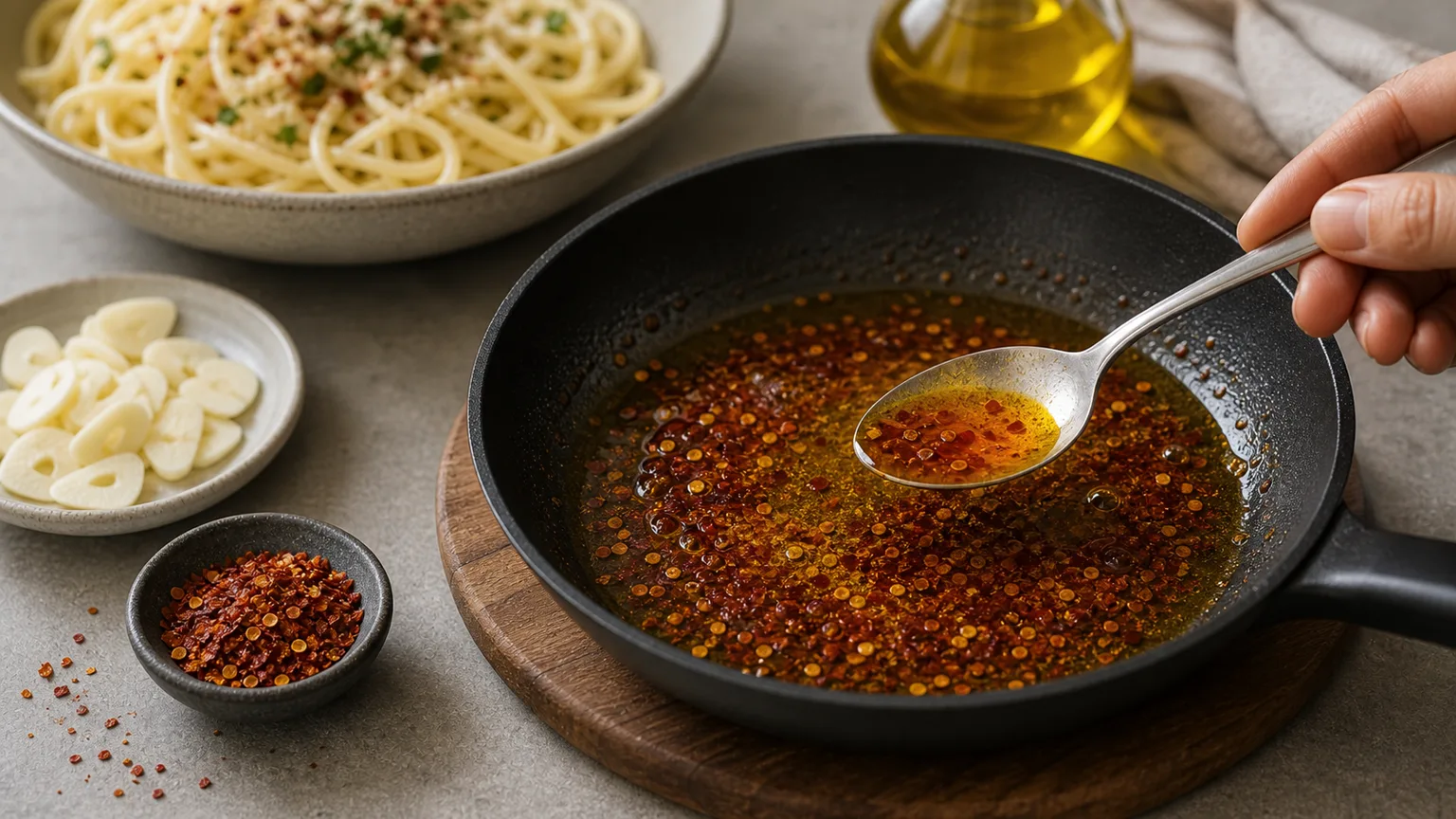
- Color cue: Stop when the oil turns orange-red, not smoky brown.
- Garlic delay: Add garlic after the flakes start coloring the oil.
- Pale spoon: Use a light spoon or bowl to judge the oil color.
- Pasta use: Bloomed flakes coat noodles more evenly than dry flakes.
Add garlic after the chile starts coloring the oil, or use lower heat. Burnt garlic makes flakes taste harsher.
For chile oil, let flakes steep off heat after a brief warm start. Long frying extracts bitterness.
Use a pale spoon or white bowl to judge color. Dark pans hide the moment the oil turns orange-red.
If the flakes smell like toasted nuts, you are still safe. If they smell like smoke, pull the pan off heat.
That fat behavior also explains why water does little for an overly hot bite.
Dairy or oil-based food helps more.
Substitutes change texture first
A chili flake substitute should match texture, heat spread, and pepper flavor.
Cayenne only matches heat, and it does that aggressively.
Heat depends on capsaicin concentration, but that is only one part. Flake size changes when heat arrives.
| Flake substitute | Starting ratio | What changes |
|---|---|---|
| Aleppo-style flakes | 1:1 | Fruitier and usually gentler |
| Gochugaru | 1:1 | Softer heat and larger flakes |
| Cayenne | 1/4 as much | Fast, clean, stronger burn |
| Hot paprika | 1:1 plus cayenne if needed | More color and pepper sweetness |
| Crushed dried chile | 1:1 | Depends on chile type |
Use paprika plus a tiny cayenne pinch when color and body matter.
Use cayenne alone only when texture does not matter.
In the dish, paprika gives color and ripe pepper flavor, but most sweet paprika will not replace heat. Add cayenne slowly.
Aleppo-style flakes are useful when the original recipe wants fruitiness, oil, and moderate heat. They are not a neutral heat replacement.
Gochugaru works when flake size matters, especially in marinades and ferments. It usually tastes rounder and less sharp than grocery red flakes.
- For pizza: Use Aleppo-style flakes or crushed dried chile, not cayenne dust.
- For soup: Cayenne works if you want even heat without pieces.
- For kimchi-style flavor: Use gochugaru because the flake texture matters.
- For color: Use hot paprika, then adjust heat separately.
If flakes are the visible finish, preserve that visibility. The best substitute is not always the hottest one.
Which chile is in your flakes?
Named flakes behave very differently from the generic jar, and the name is the only warning you get.
Three are worth recognising on a shelf.
Gochugaru is Korean, sun-dried, and deseeded.
It is bright red, mild to moderate, and slightly sweet, and it dissolves into kimchi and stews rather than sitting on top. Substituting the generic jar makes kimchi hotter and muddier at once.
Aleppo pepper, or pul biber, is coarse, dark red, and oily to the touch.
The oil is often added during processing along with salt, so it clumps rather than pours. It reads fruity and raisin-like with moderate heat.
Urfa biber is the dark one worth knowing about.
It is sun-dried then sweated overnight, which turns it almost black with a smoky, chocolate-like depth and very little brightness.
An unnamed jar is the wild card.
It is cayenne-type chilli of unstated origin, hotter than any of the named three, and it is the only one where you should start with less than you think.
| Flake | Looks like | Tastes like | Heat |
|---|---|---|---|
| Generic crushed red pepper | Pale, seedy, dry | Straight heat, little else | Highest of these |
| Gochugaru | Bright red, few seeds | Slightly sweet, clean | Mild to moderate |
| Aleppo, pul biber | Dark red, coarse, oily | Fruity, raisin-like | Moderate |
| Urfa biber | Almost black, damp | Smoky, chocolate-like | Mild to moderate |
Seeds and dust decide harshness
The bottom of a chili flake jar is hotter and dustier than the top. Fine particles spread faster and scorch faster.
This is why dry spice storage matters. Broken chile pieces lose aroma while fine dust grows stale.
- Seed-heavy jar: Expect sharper heat and more bitterness if the seeds fry.
- Dust-heavy jar: Use less because fine powder spreads through the dish.
- Bright red flakes: Usually smell fresher than brown, dull flakes.
- Oily or clumped flakes: Check for moisture, age, or poor storage.
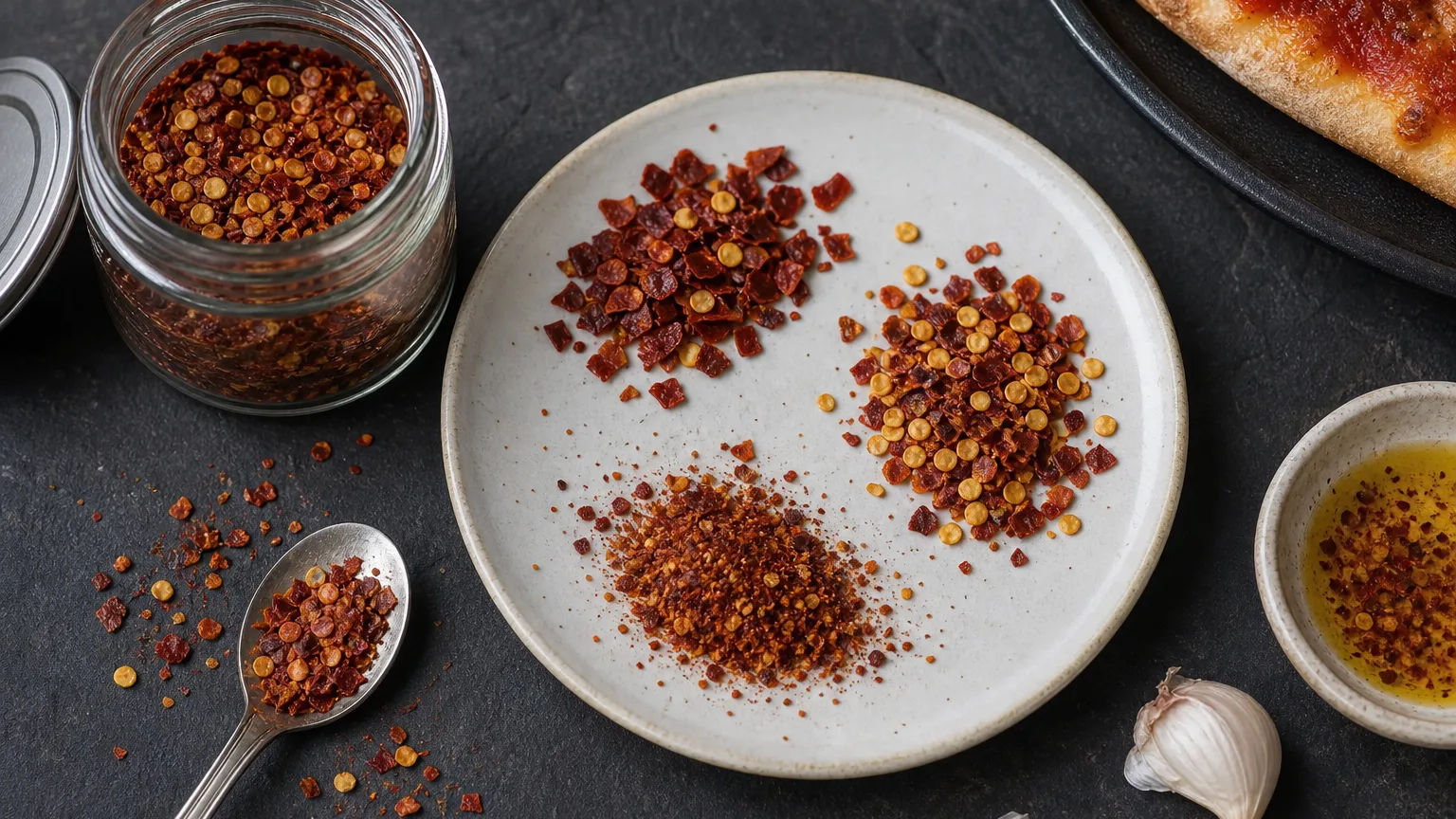
- Large flakes: They stay visible and give slower bites of heat.
- Loose seeds: They taste sharper when they fry or sit on pizza.
- Fine dust: It spreads like powder and scorches quickly in oil.
- Fresh color: Dull brown flakes usually lose aroma before they lose heat.
Shake the jar before measuring if the grind is uneven. Otherwise one teaspoon may be mostly dust.
Buy small amounts if you use flakes mostly as a table seasoning. Open jars fade from oxygen and light.
For an old jar, pour a spoonful onto a plate before using it.
Brown flakes, loose seed dust, and weak aroma tell you to use less or replace it.
If a recipe uses flakes as a finish, sift out the powdery bottom first. Dust gives burn without the clean red texture.
For garlic oil, use the larger flakes first and save the dusty bottom for soups. Oil makes dust bitter before the bigger flakes open.
For pizza, mix the jar before serving. Guests should not get one spoonful of seeds and one spoonful of pale skin.
For pickles, measure from a mixed spoonful instead of the jar bottom. Fine chile particles keep extracting while the jar sits.
- Before frying: Tap out the spoon and remove loose dust if the oil is already hot.
- Before finishing: Keep the larger flakes visible so the dish reads as chile, not red powder.
- Before storing: Close the jar quickly because flake edges expose more surface area than whole dried chiles.
- Before replacing: Smell the flakes first. Weak aroma with harsh seeds means the jar is past useful table duty.
This is a texture decision as much as a heat decision. The jar bottom changes both.
Store chili flakes away from the stove. Heat makes pepper aroma fade before the flakes look old.
Where chili flakes work best
Chili flakes work best when the dish benefits from visible heat and a little dried pepper texture.
They are not just a heat number.
They sit naturally among hot and pungent spices, but they behave differently from black pepper or mustard heat.
Pizza and flatbread want dry finishing heat because the flake sits on cheese, sauce, or oil instead of disappearing. Aglio e olio wants the opposite: flakes need a short oil bloom so the heat coats the noodles.
Beans, greens, and soup can take earlier flakes because starch and liquid spread the burn. Pickles and ferments need caution because heat keeps building while the jar sits.
- Use dry finish: Pizza, eggs, avocado toast, and flatbread need visible red pieces.
- Use oil bloom: Pasta, white beans, greens, and chili crisp need fat-carried heat.
- Use simmering: Soup, tomato sauce, and braised beans need steady background warmth.
- Use slow extraction: Pickles and ferments need fewer flakes because the heat grows in storage.
Use flakes with enough fat, acid, or salt to make heat taste intentional. Plain heat on bland food feels harsh.
Taste a new jar before using a full recipe amount. Brand changes can change dinner.
Why do chili flakes taste bitter?
Bitterness in chilli flakes is almost always a heat mistake rather than a bad jar. The flake has very little moisture, so it scorches in a fraction of the time a fresh chilli would.
The dust burns before the flake does.
Those fine particles at the bottom of the jar hit smoking oil and turn acrid within seconds, taking the whole pan with them.
Add flakes to warm oil, not hot oil.
Pull the pan off the heat for a moment, stir them in, and let the residual warmth do the work. The oil should turn red without the flakes darkening.
A long dry toast is the other common cause.
Flakes need seconds rather than the minute a whole seed can take, and by the time they smell strongly toasted they have usually gone too far.
An old jar contributes in a quieter way. As the bright volatile aroma fades the residual bitterness stays put, so a stale jar tastes proportionally more bitter even though nothing about it changed for the worse.
- Warm oil, not hot: Pull the pan off the heat, stir them in, let residual warmth do it.
- Watch the oil, not the clock: It should turn red without the flakes darkening.
- Seconds, not a minute: Flakes scorch far faster than whole seeds.
- The dust burns first: Fine particles at the bottom of the jar go acrid before the flake does.
- An old jar tastes more bitter: The bright aroma fades while the bitterness stays.
How long do chili flakes keep their heat?
Heat and aroma fade at very different rates, which is what makes a stale jar deceptive. Capsaicin is stable and barely degrades, so an old jar still burns.
What leaves is everything that made it taste of chilli.
The fruity, smoky, and grassy notes sit in volatile compounds that go within about a year of opening, leaving heat with nothing attached to it.
That is why old flakes taste harsh rather than weak.
A cook who compensates by adding more gets a hotter dish that still tastes of nothing, which is the usual reason a jar ends up in the bin.
Color is the honest indicator.
Bright red means recent, and a brownish or faded jar has been sitting in light or heat long enough for the aroma to have gone with the pigment.
Buy small and buy named where you can. A named flake tells you what it should smell like, which gives you something to check against a year later.
Decant a bulk bag into a small jar and keep the rest sealed and dark.
Flakes lose aroma from the moment air reaches them, so the working jar should hold a few months of cooking rather than the whole purchase. The reserve then ages at its own pace instead of at the pace of your cooking.
- Heat: Barely fades. An old jar still burns.
- Aroma: Mostly gone within a year of opening, which is what you actually lose.
- The trap: Adding more to compensate gives heat without flavor.
- Color: Bright red is recent. Brown or faded means light and time.
- Storage: Airtight, dark, and away from the hob, like any ground spice.
How to control the burn at the table
Chili flakes are easy to add but hard to remove. Table seasoning should start with small pinches and enough salt or fat.
The Scoville scale measures pepper heat, but your jar still depends on chile type and seed load.
| Problem | Best move | Why it works |
|---|---|---|
| Too hot in soup | Add broth, beans, cream, or potato | Dilution spreads capsaicin |
| Too hot in pasta | Add oil, cheese, or more noodles | Fat and starch soften the bite |
| Too sharp on pizza | Add honey, cheese, or more sauce | Sweetness and fat slow heat |
| Too dull | Warm flakes in oil briefly | Fat carries chile aroma |
| Too patchy | Crush flakes before adding | Smaller pieces spread faster |
| Too hot tomorrow | Serve with yogurt or cheese | Cold fat softens leftover heat |
At the table, heat control is mostly about carriers.
Fat softens capsaicin, starch dilutes it, and acid can make the same flake feel sharper.
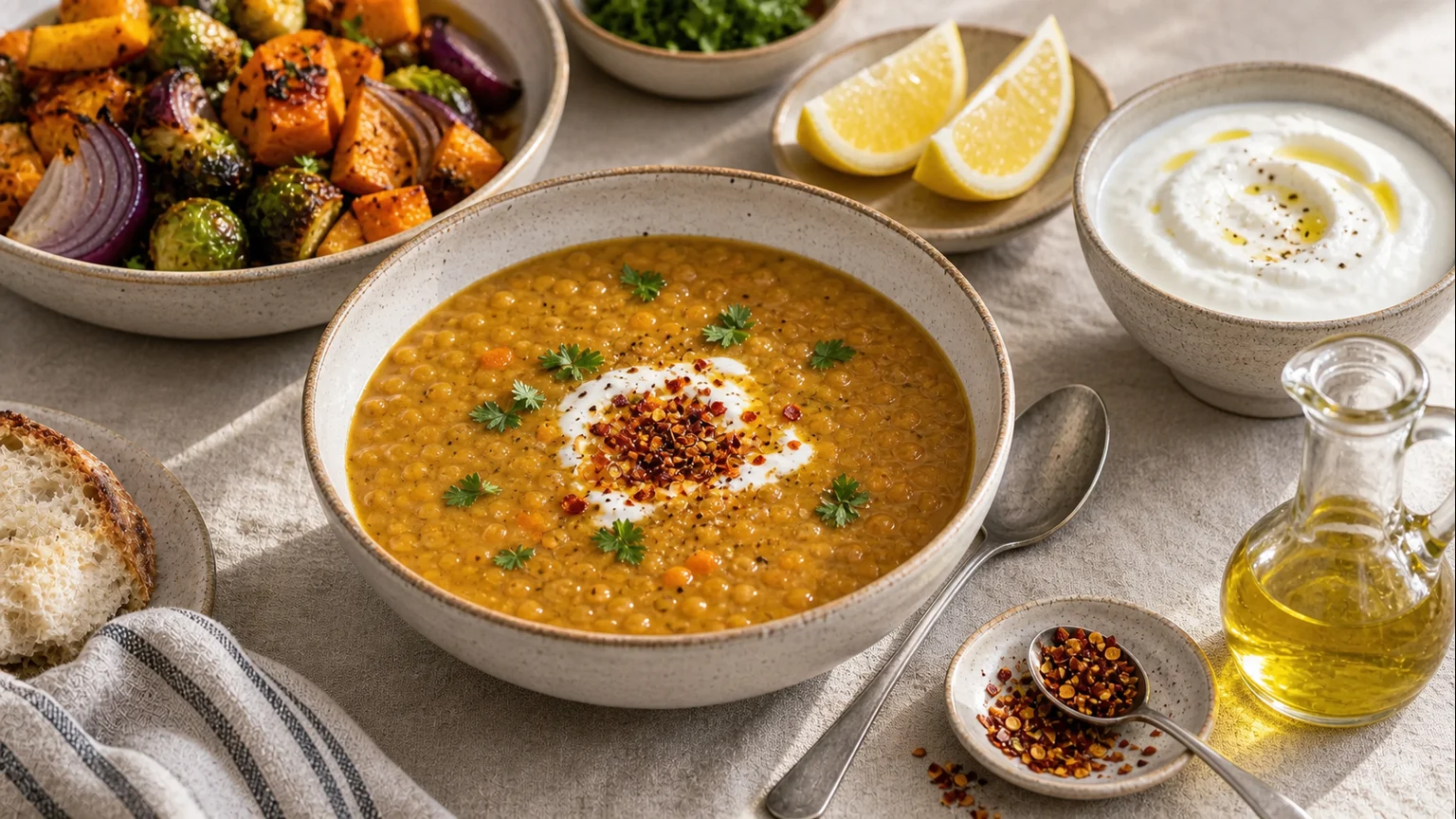
- Soup: Dilute first, then correct salt after the burn settles.
- Eggs: Add a tiny finish because yolk and oil spread heat quickly.
- Roasted vegetables: Toss flakes with oil so dust does not land in one bitter spot.
- Dairy side: Yogurt, cheese, or cream gives guests a real heat brake.
Leftovers can taste hotter because flakes keep releasing into sauce.
Mark spicy batches before storing them.
For family meals, season the base gently and put chile oil or flakes on the table. That keeps one pot usable.
Do not chase heat with more flakes before the dish rests. Chile pieces keep hydrating for several minutes.
For guests, serve flakes separately when the base dish already tastes balanced. Heat control belongs to the eater at that point.
- For children: Keep flakes out of the main pot and finish adult servings separately.
- For dairy sauces: Use fewer flakes because fat spreads capsaicin quickly.
- For acidic sauces: Add flakes slowly because tomato and vinegar make heat feel sharper.
- For leftovers: Expect heat to feel stronger after flakes sit overnight.
The cleanest heat adjustment is staged.
Add a pinch, wait, taste, then decide.
That patience matters more with flakes than powder. The pieces need time to soften and release heat.
For oil-based leftovers, reheat gently and taste before adding more flakes. Warm fat can make the previous mild pinch feel stronger.
For broth-based leftovers, add plain liquid first if the heat has climbed. Then fix salt after the burn settles.
For dry toppings, mix flakes with oil before serving. The oil catches dust and keeps heat from landing in one bitter spot.
For a mixed table, season the pot for the lowest heat tolerance and put flakes beside oil or yogurt. Heat lovers still get a stronger path.
Taste slowly.