
Why Small-Batch Grinding Keeps Spice Aroma Alive
Choose the tool by seed hardness, batch size, and the texture the dish can tolerate.
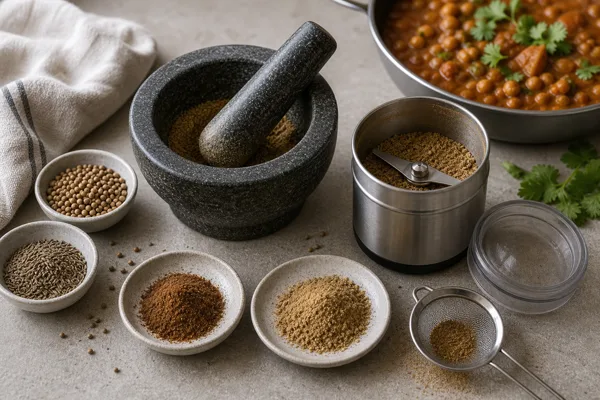
Grind spices at home right before cooking when aroma matters, especially for cumin, coriander, pepper, cardamom, and cloves. Toast whole seeds first only when the recipe wants deeper roasted aroma, then cool them before grinding. Use a mortar for small rough texture, a blade grinder for bigger batches, and sift only when gritty pieces would hurt the dish.
Grind for the texture the dish needs
Grinding spices changes both aroma and texture. Fine powder disappears into sauce, while cracked seed gives small bursts in rice, rubs, and pickles.
This is why whole versus ground spices is not only a shelf-life choice. It changes the bite.
Ask what the mouth should feel before choosing the grinder setting. A curry and a steak crust need different particles.
| Texture | Best for | Avoid when |
|---|---|---|
| Cracked | Rice, pickles, steak crusts | Smooth sauces or custards |
| Coarse | Dry rubs, roasted vegetables, beans | Delicate soups |
| Fine | Curries, sauces, spice blends | Foods where powder can scorch |
| Sifted fine | Desserts, drinks, smooth dips | Rustic dishes that need texture |
Stop grinding when the powder fits the dish. More grinding is not automatically better.
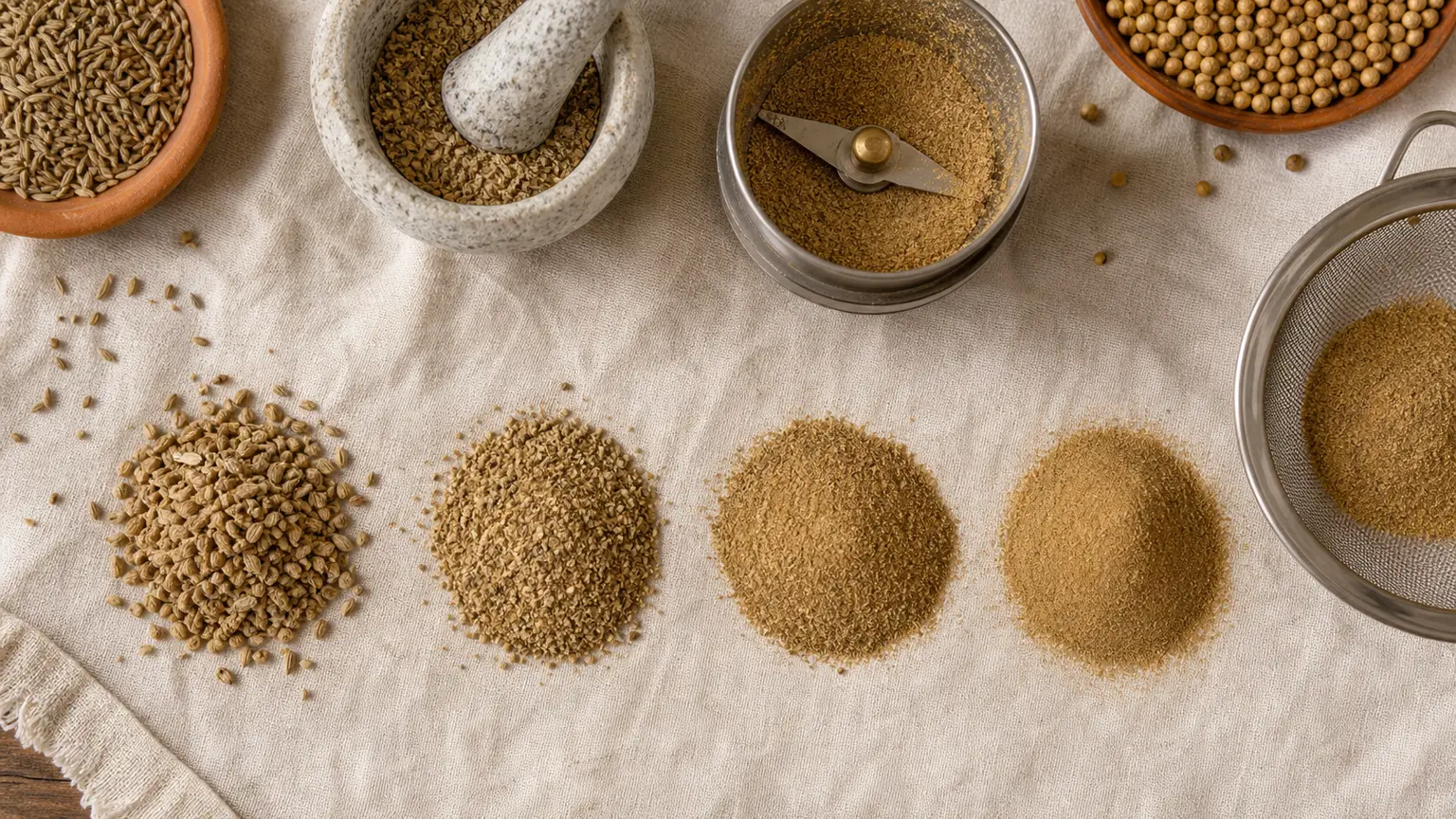
- Cracked: Bursts for rice, pickles, and crusts.
- Coarse: Texture for rubs and roasted vegetables.
- Fine: Smooth spread through sauces and blends.
- Sifted: No grit in drinks, dips, and desserts.
If a sauce tastes gritty, the problem may be particle size, not spice amount. Sift or grind finer next time.
Choose whole spices that reward grinding
Not every jar deserves a grinder. Whole cumin, coriander, pepper, cardamom, cloves, and nutmeg give the clearest payoff.
Turmeric, paprika, and many chile powders are usually bought ground because the home tool cannot improve their texture much.
- High reward: Cumin, coriander, black pepper, fennel, cardamom seed, cloves, and nutmeg.
- Low reward: Turmeric, paprika, onion powder, garlic powder, and very fine commercial chile powder.
- Use whole only when fresh: Old seeds can grind beautifully and still taste tired.
- Buy ground for color: Paprika and turmeric need even color more than fresh cracked texture.
This keeps grinding from becoming kitchen theater. Use the tool where it changes dinner.
Separate hard seeds, soft flakes, and fragile powders
A mixed spice batch grinds better when hard seeds go first. Soft flakes and finished powders need less blade time.
Coriander, cumin, fennel, and pepper can handle pulses. Paprika, turmeric, and dried herbs can turn bitter or dusty.
| Ingredient type | Grind order | Reason |
|---|---|---|
| Hard seeds | First | They need blade contact and time |
| Peppercorns | First or alone | They throw sharp dust when fine |
| Chile flakes | Middle | They shred fast and carry heat |
| Paprika or turmeric | Last or not at all | They are already fine powders |
| Dried herbs | Last pulse only | They turn to dull dust quickly |
This order matters most for homemade blends. It keeps a baharat or rub from tasting scorched before it reaches food.
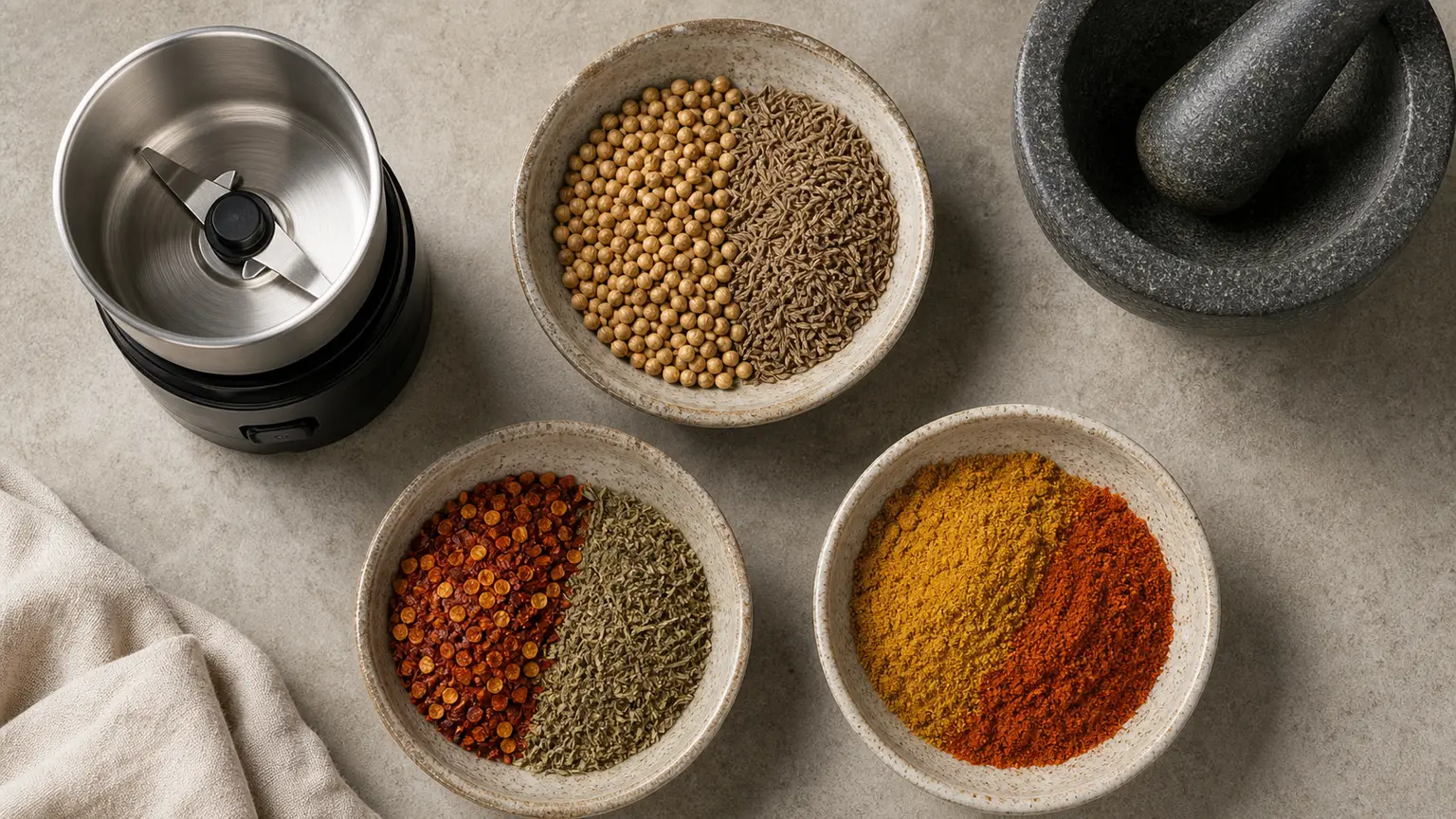
- First: Cumin, coriander, fennel, pepper.
- Middle: Chile flakes and medium pieces.
- Last pulse: Dried herbs, if texture can handle it.
- Stir in: Paprika, turmeric, and finished powders.
If one ingredient is much harder than the rest, grind it alone. Then stir it into the softer spices afterward.
Toast, cool, then grind when you want depth
Toast before grinding when the dish wants deeper aroma from cumin, coriander, fennel, mustard, or pepper. Skip toasting when you need bright raw lift.
Cooling matters because hot seeds steam inside a grinder. That moisture can clump powder and dull aroma.
Use the same smell cue as toasting spices: stop when aroma rises and color deepens slightly.
Spread toasted seeds on a plate for one minute before grinding. The short pause prevents trapped steam.
- Cumin: Toast cumin briefly until earthy aroma rises, then cool before powdering.
- Coriander: Toast coriander gently because citrus lift fades when pushed too dark.
- Cardamom: Grind cardamom seeds, not the whole green pod, for smooth blends.
- Cloves: Grind tiny amounts because the powder takes over quickly.
If toasted powder tastes bitter, the mistake happened before grinding. The pan went too far.
Pick the tool by batch size and cleanup
A mortar gives control and uneven texture. A blade grinder gives speed, volume, and a finer powder.
A mortar is best when you want to stop halfway. A blade grinder is best when the whole batch should disappear into sauce.
| Tool | Best use | Weak point |
|---|---|---|
| Mortar and pestle | Small amounts, cracked texture, wet pastes | Slow for hard seeds |
| Blade spice grinder | Dry batches and blends | Can overheat powder |
| Microplane | Nutmeg and hard pieces | Bad for cumin or coriander |
| Pepper mill | Peppercorns at table | Usually too narrow for blends |
Pulse a grinder instead of running it nonstop. Short pulses reduce heat and help pieces fall back into the blades.
For spice blends, grind the hard seeds first, then add fragile powders after. Paprika and turmeric do not need blade time.
If the grinder smells hot, stop and let it rest. Warm powder loses the freshness you were trying to gain.
Sift only when grit would hurt the dish
Sifting is useful for smooth sauces, drinks, dips, and desserts. It is wasted work for rubs, rice, and roasted vegetables.
The goal is not perfect powder. The goal is no hard shard where the eater expects smooth food.
- Sift for yogurt sauce: Coarse coriander shells feel sandy in a cold dip.
- Sift for chai: Fine spice disperses better and leaves less sludge.
- Do not sift for steak: Coarse pepper helps build a crust.
- Do not sift for pilaf: Small seed pieces can make the rice more aromatic.
Keep the sifted coarse bits if they smell good. Add them to stock, braises, or pickling liquid instead of throwing them away.
If every batch needs sifting, your grinder may be too small or too crowded. Grind less at once.
Clean the grinder before old aromas move in
A grinder remembers cloves, cumin, chile, and coffee. Clean it before switching from savory spices to baking spices.
Run a spoonful of dry rice or stale bread through the grinder, then wipe it out. Do not wash an electric grinder bowl unless the maker allows it.
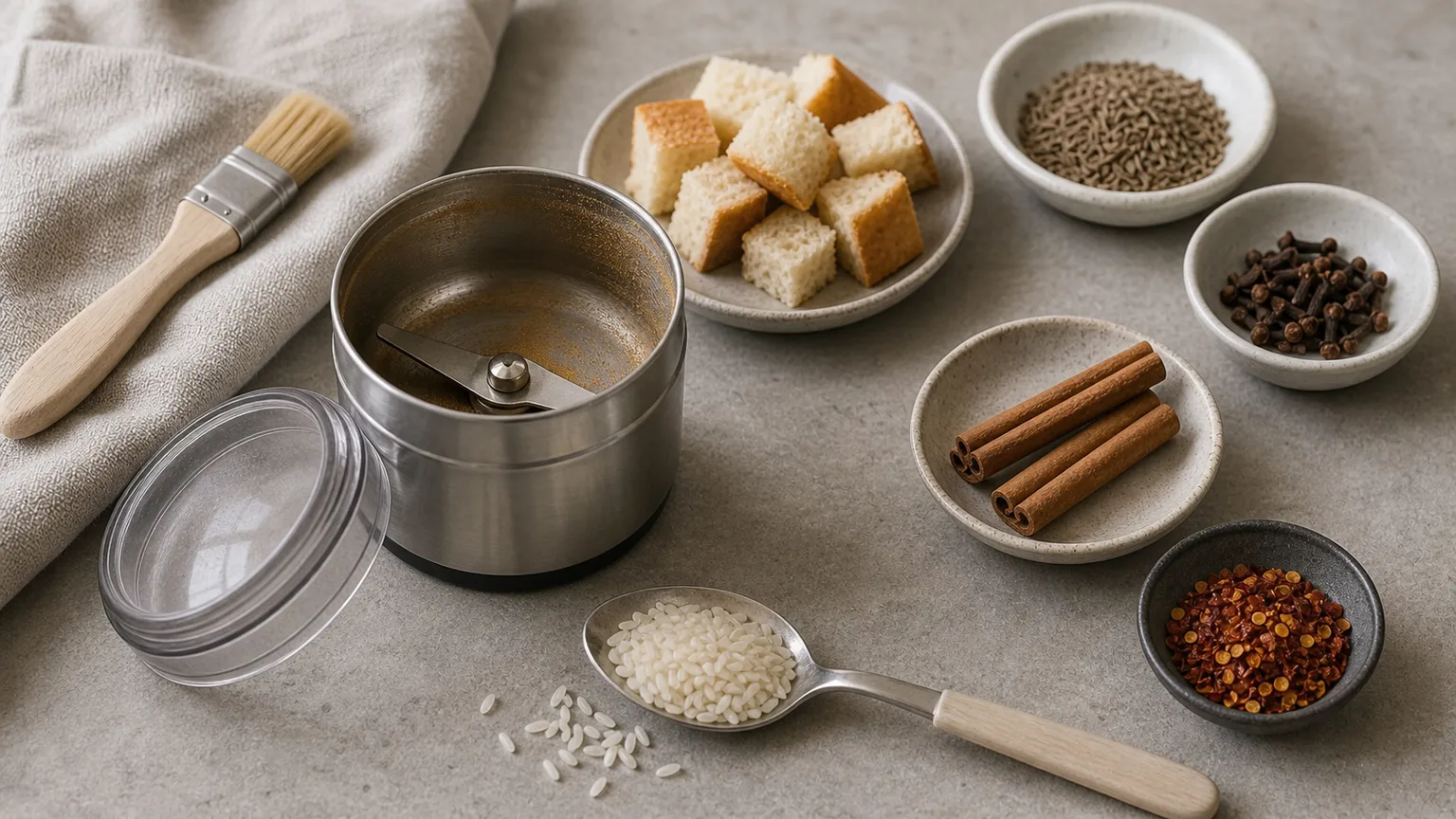
- Rice: Use dry grains to pick up powder stuck under the blade.
- Bread: Use stale cubes when oily spice residue clings to the bowl.
- Brush: Clear corners after the rice or bread run.
- Order: Clean before quiet baking spices, not after they taste wrong.
The cleaning goal is not perfume removal. It is preventing old clove or chile from entering a quiet blend.
Clean before grinding cinnamon, clove, cardamom, or coffee. Those aromas move into the next batch quickly.
Use fresh powder before it fades
Freshly ground spice is strongest in the first hour and still useful for days. It is not a pantry product for the next year.
If you grind extra, store it like other spices in a sealed dark jar. Label the date because fresh powder fades fast.
- For dinner: Grind only what the recipe needs, then cook immediately.
- For a weekly blend: Grind a small jar and keep it away from steam.
- For rubs: Leave some coarse texture so meat or vegetables get bursts.
- For sauces: Grind finer so the powder hydrates without grit.
When cooking, spice timing still matters after grinding. Fine powder can scorch faster than whole seeds.
Fresh grinding is useful only when the powder reaches the food at the right time.
For a weeknight shortcut, grind enough cumin and coriander for two dinners, not a month. That keeps the benefit noticeable.
When not to grind at home
Skip home grinding when the spice must dissolve into a very smooth custard, drink, or pale sauce. Commercial fine powder may work better.
Also skip it when the whole seed is old. Grinding stale seed only makes stale flavor louder.
| Situation | Better move | Reason |
|---|---|---|
| Fine dessert spice | Use fresh commercial powder | Texture matters more than rustic aroma |
| Very old whole seed | Replace the jar | Grinding cannot restore aroma |
| Tiny clove amount | Buy ground or grind one bud | Excess powder overwhelms food |
| Bright chile powder | Use the right powder | Grinding flakes changes heat texture |
Troubleshoot powder that clumps, heats, or tastes flat
Grinding problems usually show up as clumping, heat, grit, or weak aroma. Each problem points to a different fix.
Clumping often means the seeds were warm, oily, or crowded. Weak aroma usually means the whole spice was old before grinding.
| Problem | Likely cause | Next move |
|---|---|---|
| Powder clumps | Seeds were hot or moist | Cool longer and grind smaller batches |
| Powder smells hot | Blade ran too long | Pulse and pause between bursts |
| Powder tastes flat | Whole spice was stale | Replace the seed, not the grinder |
| Sauce feels gritty | Particles are too coarse | Regrind, sift, or cook longer |
| Blend tastes dusty | Powders were overworked | Add fragile powders after grinding |
Do not solve clumping with more grinding time. More blade heat can make the aroma worse.
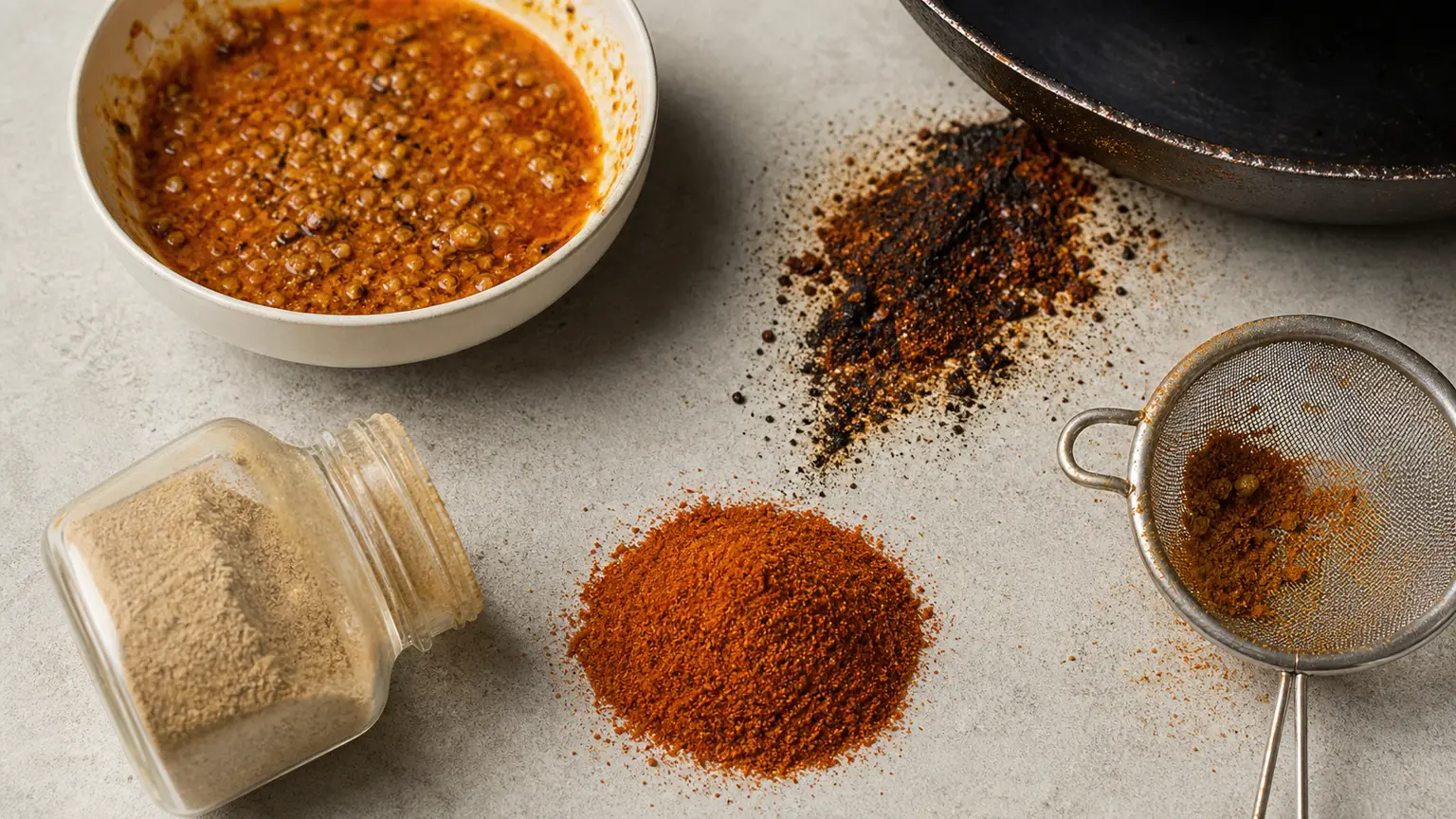
- Clumps: Cool the spice and reduce batch size.
- Hot smell: Pulse and pause instead of holding the blade.
- Flat aroma: Replace the old whole spice.
- Grit: Regrind or sift for smooth food.
For oily spices, pause and scrape the grinder wall. Nutmeg, mace, and some chiles can smear instead of flowing.
For hard spices, break them first if the tool struggles. A cracked cinnamon piece is safer than forcing a blade grinder.
The cleanest fix is usually smaller batches. A half-full grinder moves better than a packed cup.
- Before grinding: Smell the whole spice and discard it if the aroma is weak.
- During grinding: Stop when the sound changes from rattling pieces to soft powder movement.
- After grinding: Tap the lid and wait before opening so the dust settles.
- Before storing: Let powder cool fully, then seal it away from steam.
Those small pauses protect aroma. They also keep powder out of the air and off the counter.
If the spice is for a smooth sauce, test a pinch between your fingers. Grit there will show up in the dish.
If the powder is for a dry rub, a little grit may be useful. Meat and vegetables can carry texture better than sauce.
If the powder is for a blend jar, write the date on the lid. Fresh grinding loses value when the jar sits forgotten.
This is why grinding is a batch-size decision. The right amount is what you can use while the aroma still matters.
For most home cooks, that means grinding for one meal or one week. Anything larger should have a clear plan.
A planned batch is useful for tacos, dal, or rubs. An unplanned batch becomes another fading jar.