
When Should You Add Spices So They Taste Clear?
Use early heat for base notes, short fat contact for powders, and late additions for fragile aroma.
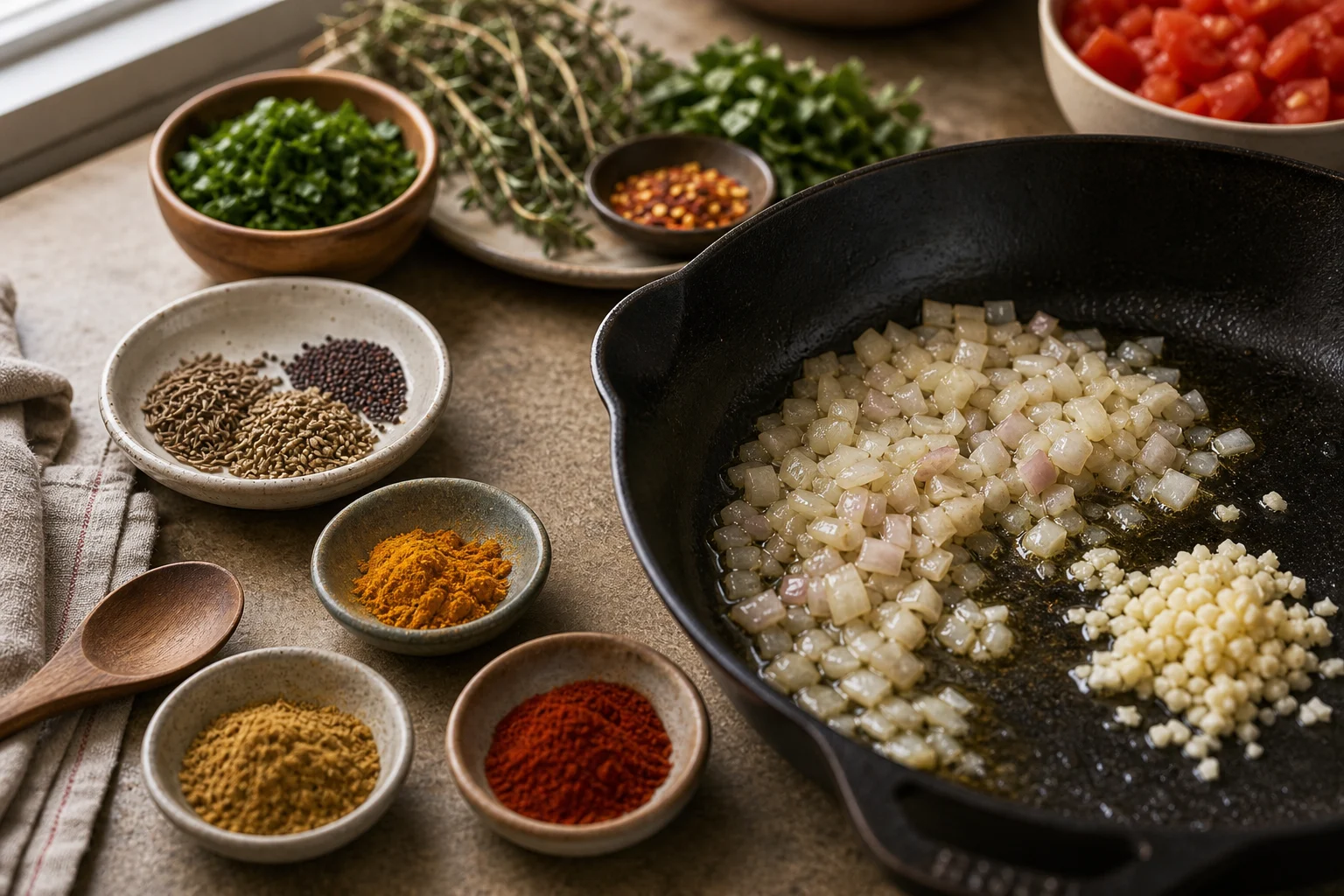
Spices should enter the pan when their form and flavor job match the cooking stage. Whole seeds usually go early, ground spices need brief fat contact, and delicate finishing spices belong near the end. Add liquid only after the spice smells clear, or the flavor may stay dusty, bitter, or flat.
The timing rule that fixes flat spice flavor
Spices taste clearer when you add them at the stage that can extract their best aroma. The same cumin can taste nutty, muddy, or sharp depending on timing.
Use dry heat for sturdy whole spices, hot fat for many ground spices, and late heat for fragile finishing aromas. The broader cooking techniques pattern is order before amount.
| Stage | Best fit | What can go wrong |
|---|---|---|
| Dry pan | Whole cumin, coriander, fennel, cardamom | Seeds scorch before aroma opens |
| Hot fat | Ground turmeric, paprika, cumin, curry powder | Powder burns before liquid arrives |
| Wet simmer | Bay leaf, cinnamon stick, whole chiles | Ground spices taste dusty if added late |
| Final minute | Black pepper, garam masala, herbs | Fresh aroma disappears under long heat |
Think of timing as extraction control, not recipe obedience. You choose the stage that can carry the spice into the food.
The timing question is not whether spices go first or last.
It is whether the pan can extract the flavor you actually want.
Start whole spices before powders
Whole spices have protective seed coats, pods, or bark, so they tolerate early heat better than powders. Give them time before finer spices enter.
Use dry toasting when whole seeds need roasted depth before grinding. Use oil afterward if the dish still needs fat-carried flavor.
- Seeds first: Cumin, coriander, fennel, and mustard seed can start in a dry pan or hot fat.
- Pods with care: Cardamom, cloves, and cinnamon need lower heat because their aromas turn medicinal when scorched.
- Powders later: Turmeric, paprika, and chile powder have exposed surface area, so they burn fast.
- Mixed blends last: Finished blends often include fine powders and fragile roasted spices.
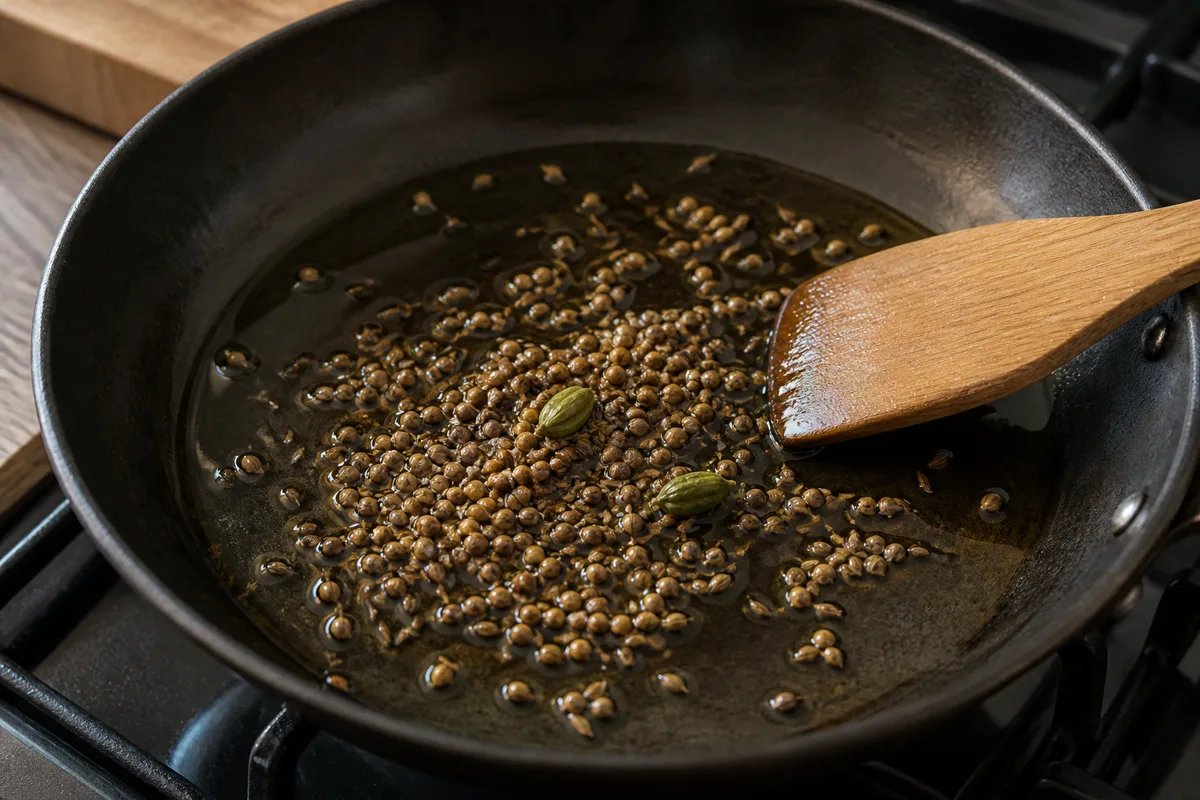
- Look: Seeds deepen slightly but remain distinct
- Listen: A few seeds may sizzle or move in the oil
- Smell: Savory aroma rises before smoke
- Stop: Black seeds or smoke mean the useful window has closed
In the dish, cumin seeds show the early-stage cue well because they darken slightly and smell savory. Blackened seeds mean the dish will carry bitterness.
For rice, lentils, and pickles, whole spices can perfume the cooking medium before the main ingredient arrives. That gives the dish a base note.
If sizes differ, toast or fry the largest pieces first.
Add small seeds and powders only after the pan has settled.
Bloom ground spices before liquid
Ground spices usually need a short meeting with fat before water, tomato, stock, or coconut milk enters. Once liquid arrives, extraction slows and powder can taste raw.
When cooking, oil blooming works because hot fat spreads aroma through the dish. Keep the next wet ingredient measured beside the stove.
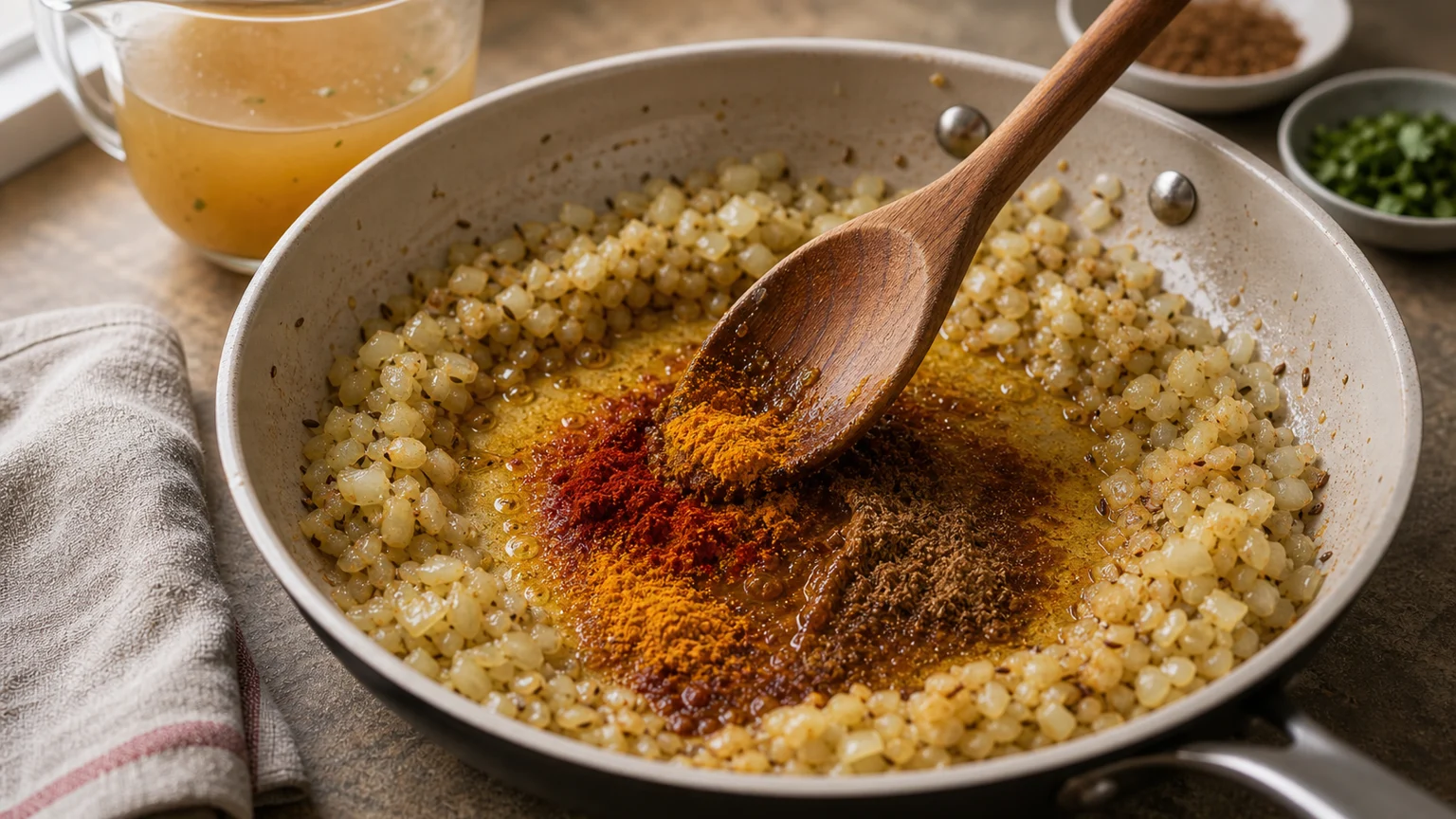
- Clear oil space: Push aromatics aside so powder touches fat, not wet onion.
- Keep liquid ready: Add it as soon as raw spice smell fades.
- Lower heat: Paprika and chile powder burn before they look ruined.
| Spice form | Typical window | Move forward when |
|---|---|---|
| Ground turmeric | 15-25 seconds | Oil turns gold and aroma softens |
| Ground cumin or coriander | 20-30 seconds | Earthy aroma turns nutty |
| Paprika or chile powder | 10-20 seconds | Color blooms before bitterness |
| Curry powder | 20-30 seconds | Raw powder smell fades |
In the dish, ground turmeric needs this sequence because water alone gives color with less roundness. Fat first makes the flavor feel cooked.
Use a lower flame for paprika and chile powder than for cumin. Their color looks vivid before bitterness becomes obvious.
If the pan smells sharp, add liquid immediately.
If it smells smoky, discard the fat and restart.
Add spices around onions, garlic, and tomatoes
Wet aromatics change spice timing because onion, garlic, ginger, and tomato release water. Too much moisture turns blooming into simmering.
Cook onions until their raw bite fades, then clear a small oily space before adding ground spices. The prep method choice changes the extraction window.
| Dish base | Best spice moment | Reason |
|---|---|---|
| Onion curry base | After onions soften and oil shows | Powder touches fat instead of wet onion |
| Tomato sauce | Before tomatoes enter | Acid and water slow blooming |
| Garlic oil | After garlic softens, before browning | Burnt garlic and burnt spice compound bitterness |
| Bean pot | Before beans and broth | Fat carries flavor into the starch |
Tomatoes are the common trap. Add them after spices bloom unless a recipe deliberately wants a lighter simmered flavor.
Garlic creates another timing risk because it browns fast. Add powder after garlic softens, not after it turns deep brown.
For yogurt, coconut milk, or cream, bloom the spices first and lower the heat.
Direct high heat can split dairy and dull aroma.
Hold finishing spices until the end
Some spices taste best when heat barely touches them. Long cooking can erase the exact aroma you wanted.
Late additions depend on timing rules. Their job is lift, not base flavor.
- Black pepper: Add near the end when you want sharp top notes instead of background heat.
- Garam masala: Stir in late so roasted spices stay fragrant instead of turning dull.
- Saffron: Steep in warm liquid before adding, rather than frying the threads hard.
- Fresh herbs: Add tender leaves late because their green aroma collapses under long heat.
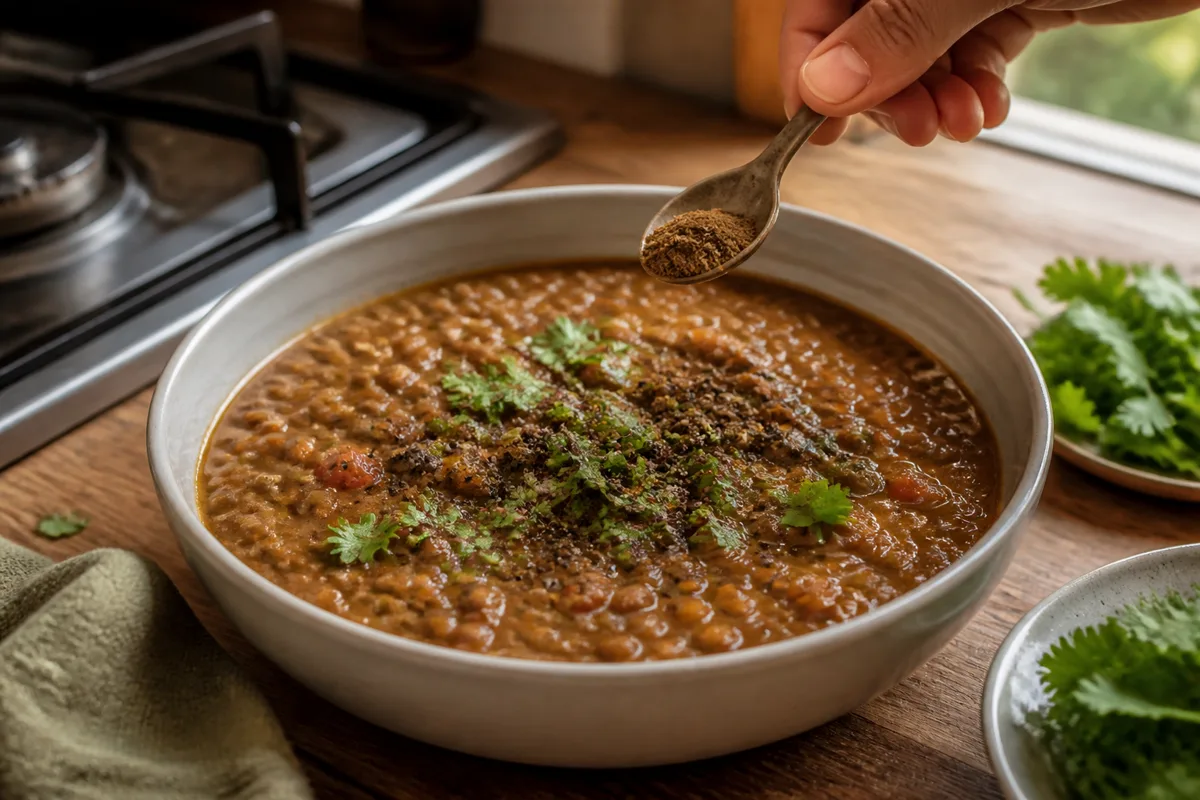
- Use little: Late powder smells stronger than the same amount simmered early
- Taste first: Add only the aroma the finished dish lacks
- Settle briefly: Residual heat integrates the spice without flattening it
With herbs, fresh basil timing sits at the finishing end because tender leaves bruise, darken, and lose their green aroma under long heat.
Finishing spices also help after a long simmer. They restore top aroma that steam carried away during cooking.
Late does not mean careless.
Add finishing spices, taste, then give the dish one minute to settle.
Use timing to fix common spice mistakes
Most spice mistakes trace back to one broken contract: the spice met the wrong medium. Fix the next batch by changing order before increasing amount.
When cooking, swap decisions depend on what the missing ingredient was doing. Timing repairs a different problem: extraction.
| Problem | Likely timing issue | Fix next time |
|---|---|---|
| Dusty flavor | Powder went into liquid | Bloom powder in fat before wet ingredients |
| Bitter flavor | Powder or seeds burned | Lower heat and shorten the window |
| Weak aroma | Spice was stale or simmered too long | Use fresher spice and add some late |
| Harsh raw edge | Spice skipped fat contact | Cook briefly in oil before dilution |
Do not rescue burnt spice with sugar, salt, or acid. Burnt bitterness spreads through the dish and usually needs a restart.
For flat flavor, the repair can be gentler. A small spoon of fresh spice oil often works better than dry powder stirred into broth.
If the flavor is only flat, make a small spice oil in a separate pan.
Stir it into the finished dish carefully.
Build a reliable spice order for real dishes
A reliable spice order turns timing into a repeatable habit. Set the spices, liquid, and spoon beside the stove before heat starts.
The grinding choice changes cues because cracked seeds release aroma faster than whole seeds.
One clear aroma teaches more than a crowded masala.
| Dish | Early spice | Late spice |
|---|---|---|
| Dal or beans | Cumin seed and turmeric in fat | Garam masala or pepper at the end |
| Chili | Toasted cumin and chile in oil | Fresh black pepper after simmering |
| Rice pilaf | Whole cumin or cardamom before rice | Saffron liquid near absorption |
| Soup | Base spices with aromatics | Pepper or herbs just before serving |
If you use a blend, check whether it contains delicate finishing spices. Layering decisions change when one mix contains both base and finish notes.
For weeknight cooking, split the spice bowl into early and late piles. That tiny move prevents most timing mistakes.
Your best timer is smell, followed by color and sound.
Move forward when the aroma becomes clear, not when a clock says so.
When should spices go into roasting, baking, and slow cooking?
Closed cooking changes the timing decision because you cannot smell and correct the food every few seconds. Set the extraction stage before the tray, dough, slow cooker, or pressure cooker closes around the food.
For roasted vegetables, mix sturdy ground spices with oil before the tray enters the oven. The thin oil coat spreads powder over the surface and reduces dry patches that scorch before the vegetables brown.
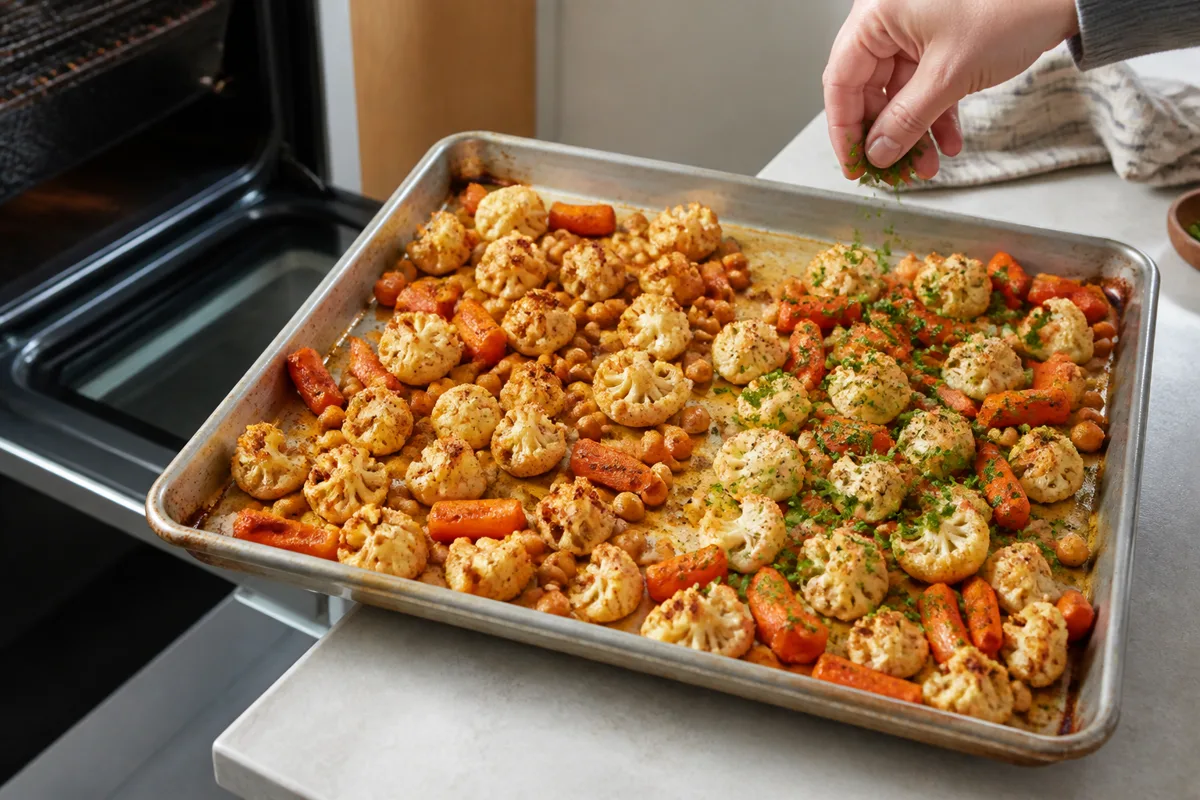
- Before roasting: Coat sturdy powder evenly with oil
- During roasting: Keep loose spice out of dry tray corners
- After roasting: Add pepper or tender herbs for fresh top aroma
Paprika, chile powder, and garlic powder still face intense surface heat.
Use enough oil to wet them, keep sugary rubs away from the hottest rack, and add a fresh finishing pinch only after tasting.
Whole cumin, coriander, or fennel seeds can roast on an oiled surface, but loose seeds on a bare tray burn quickly. Press them into the food or oil rather than leaving them in dry corners.
Baking asks a different question because the spice must disperse before the structure sets. Ground cinnamon, ginger, cardamom, or nutmeg usually enters with the dry ingredients so one pocket does not carry the whole dose.
Whole seeds on bread crusts sit in direct oven heat and toast faster than spice mixed inside dough.
Watch surface color and cover the loaf if the seeds darken before the center finishes.
A slow cooker supplies long moist heat but almost no open-pan blooming stage. Whole bay, cinnamon bark, dried chiles, and sturdy seeds can enter early, while raw ground powder may stay dull if it goes straight into a full pot of liquid.
When possible, warm ground spices briefly in oil with the aromatics before transferring them to the cooker. If that extra pan is impractical, mix powder into a small amount of oil or sauce first so it enters as a smooth slurry rather than dry islands.
Delicate herbs, black pepper, and aromatic finishing blends belong in the final stretch.
Long covered cooking softens their top notes, so reserve part of the seasoning for the last taste.
Pressure cooking makes the early decision even more important because the lid hides aroma cues after sealing. Bloom seeds and powders before adding the main liquid, scrape the pot clean enough to prevent scorching, then seal only when the base smells rounded rather than raw.
After pressure releases, taste before adding more of the early spices. A small late addition of pepper, garam masala, herbs, or infused saffron can restore lift without restarting the entire extraction cycle.
The sealed cooker also concentrates every early mistake. Burnt fond, an oversized clove dose, or raw powder trapped above the liquid cannot be corrected until the cycle ends.
Keep a small reserve of the same seasoning outside the pot.
Comparing the finished aroma with the fresh reserve tells you whether the dish needs more base spice, a fragile top note, or simply salt and acid.
If no fresh reserve remains, open the cooker and wait for the first cloud of steam to clear before judging aroma. The trapped vapor can make a finished dish smell stronger than it tastes.
The practical split is simple. Coat or bloom base spices before closed heat, let sturdy whole aromatics travel through the full cook, and keep fragile aroma in reserve for the opening of the lid.
When timing cannot save the spice
Timing cannot repair stale, damp, or poorly stored spices. Heat can release remaining aroma, but it cannot replace oils that already escaped.
Use pairing logic only after freshness checks, because stale spices confuse the whole dish. A weak jar makes every timing decision less effective.
- Smell first: Replace spices that smell dusty, papery, or faint before they hit the pan.
- Keep jars dry: Steam from the stove clumps powders and damages aroma faster.
- Buy smaller amounts: Ground spices perform better when you finish the jar while aroma remains vivid.
- Separate heat zones: Store finishing spices away from the oven and stovetop.
Do not double a stale spice to chase flavor. You often add more bitterness, dust, or color without gaining aroma.
Freshness also changes timing confidence. A vivid spice gives a clear aroma cue before the pan gets dangerous.
Stale spices make you wait too long for aroma.
That delay often burns the powder before the flavor ever becomes clear.
Once freshness and timing work together, spices taste intentional instead of loud. The dish needs less spice because each addition lands cleanly.
A simple timing checklist before you cook
Before you cook, sort spices by form and job. Seeds, powders, simmering aromatics, and finishing spices should not enter together.
This small setup prevents panic at the stove. It also keeps fragile spices from waiting in hot fat while you open cans.
- Ask the medium: Does this spice need dry heat, fat, water, or almost no heat?
- Ask the form: Is it whole, cracked, ground, blended, leafy, or steeped?
- Ask the dish: Will liquid, acid, dairy, or long simmering arrive soon?
- Ask the cue: Should you watch for aroma, popping, color, or softening?
Put the early spices closest to the stove and the finishing spices farther away.
The layout reminds you which bowl enters first.
If a recipe uses a pre-ground blend, assume it needs caution. Start lower, smell sooner, and add liquid faster.
The checklist is simple because cooking is fast. Decide the spice moment before the pan forces the decision.
This is why mise en place matters for spices. The next ingredient should be ready before powder hits oil.
Use timers only while learning a new spice.
After that, aroma should lead and the timer should confirm.
Use the first batch as practice, then adjust by smell. Spice timing becomes easier when you stop treating every jar the same.