
How Do You Layer Spices So the Flavor Goes Deeper?
Use timing stages to separate base depth from fresh top notes.
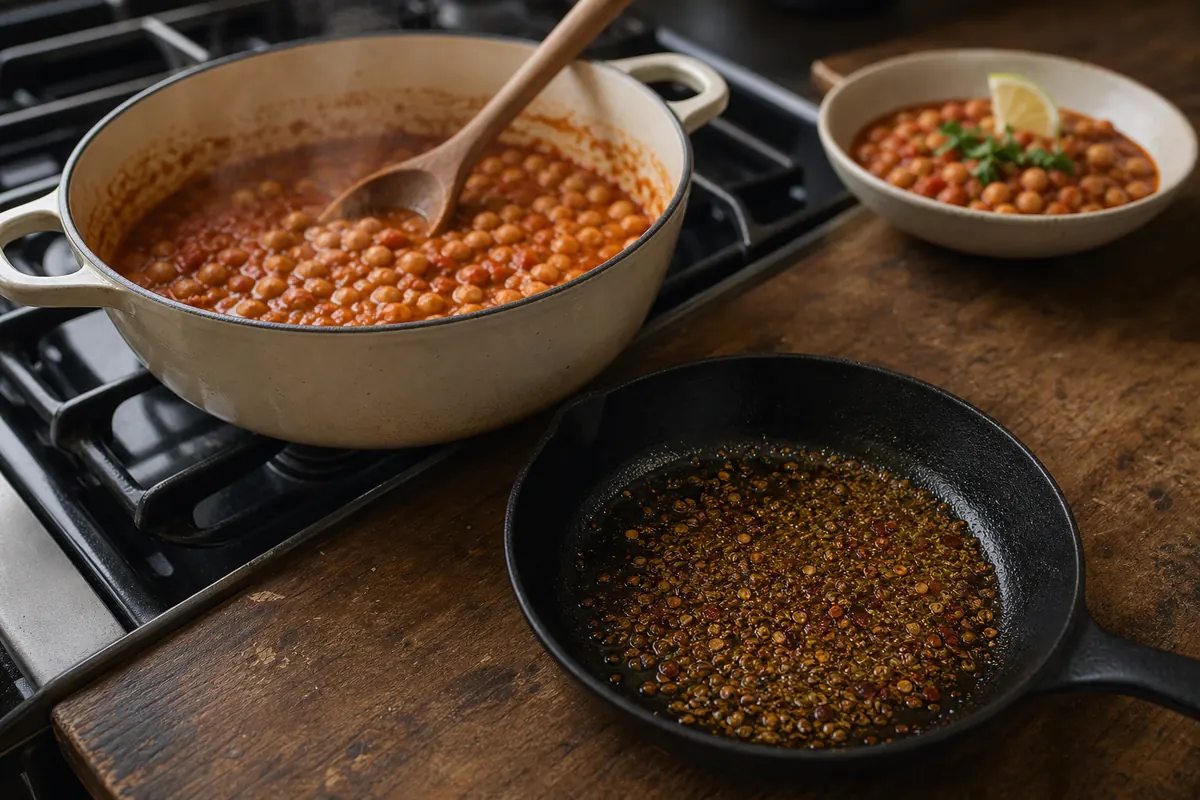
Layer spices by adding different forms at different moments, not by dumping more powder into the pot. Bloom sturdy spices in fat first, simmer ground spices that need hydration, then finish with fragile aromatics or acid. The method creates depth because the first layer seasons the base, while the last layer keeps aroma visible.
What does layering spices actually mean?
Layering spices means giving each addition a different job. One layer builds the base, another seasons the body, and one finishes aroma.
This differs from adding spices at the right time because layering may use the same spice twice for different effects.
The method answers one question: what should the spice do now that it could not do earlier?
| Layer | Best additions | Job |
|---|---|---|
| Base | Cumin seed, mustard seed, dried chile, sturdy powders | Builds fat-soluble depth |
| Body | Ground coriander, turmeric, paprika, blends | Seasons liquid, beans, meat, or vegetables |
| Finish | Black pepper, garam masala, herbs, citrus | Restores aroma and edge |
If each layer tastes like the same powder repeated, the dish gets louder but not deeper.
How do you plan spice layers before cooking?
A layer plan prevents random spooning. Decide which spice opens in fat, which hydrates in liquid, and which returns at the end.
The plan can be short. One early seed, one middle powder, and one finish is enough for many weeknight dishes.
| Dish | Base | Body | Finish |
|---|---|---|---|
| Lentils | Cumin seed in oil | Coriander and turmeric in simmer | Lemon and black pepper |
| Tomato chickpeas | Chile flake in oil | Baharat in tomato | Parsley and cumin pinch |
| Rice pilaf | Cardamom or cumin in fat | Coriander before stock | Herbs after resting |
| Chicken stew | Pepper and onion base | Paprika in sauce | Acid and fresh pepper |
This makes the outline specific to the dish. It also stops the common habit of adding every warm spice twice.
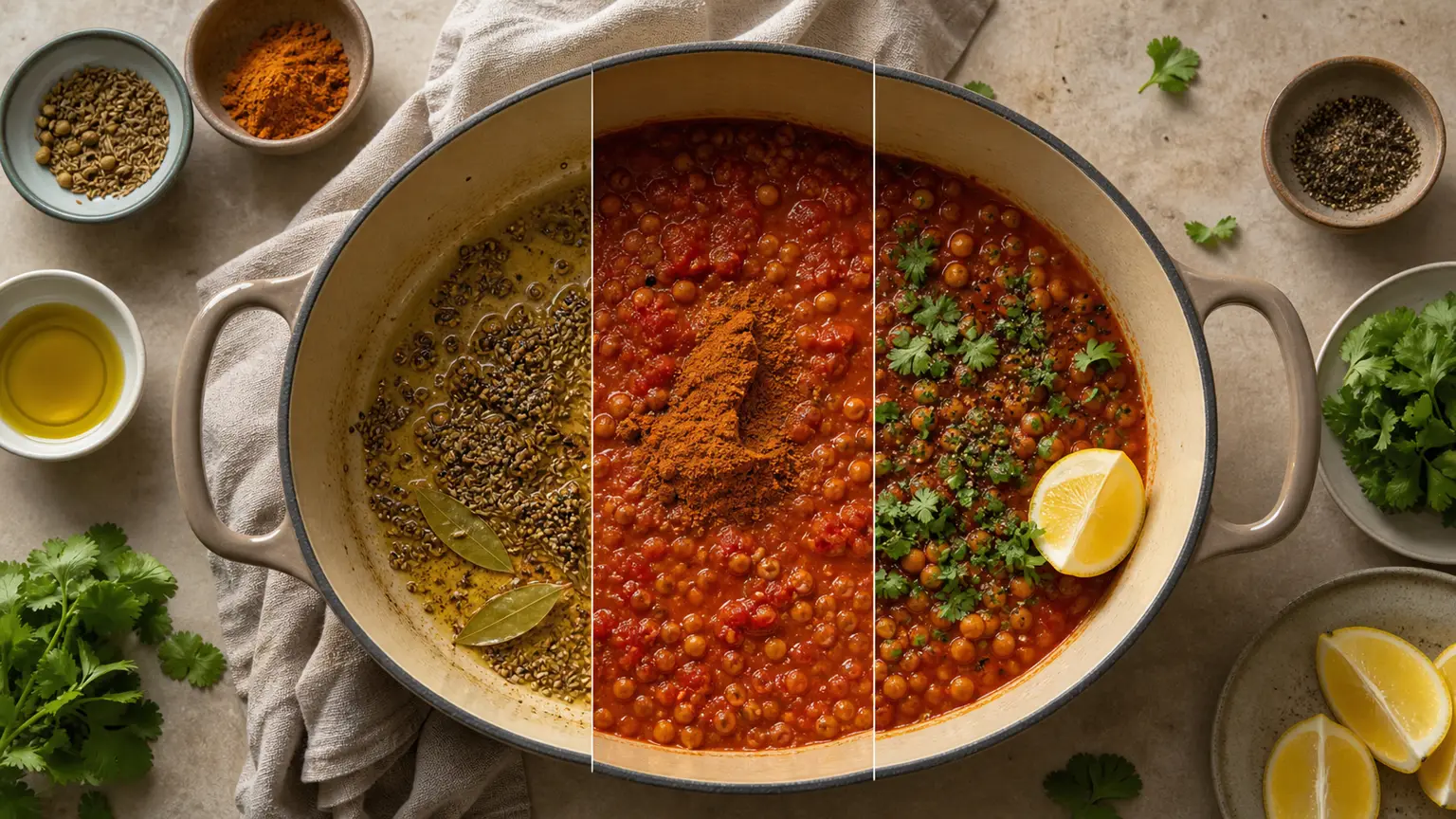
- Base: Aroma opens in fat before liquid arrives.
- Body: Powder hydrates into broth, sauce, or starch.
- Finish: Fresh aroma returns after heat fades.
- Stop: Skip a layer if its job is unclear.
If you cannot name the job of a layer, skip that layer. Silence is better than muddy seasoning.
Which spices belong in the first layer?
The first layer belongs in fat when the spice has oil-soluble aroma. Cumin, chile, mustard seed, and many blends wake up there.
When cooking, blooming spices in oil creates a base that water alone cannot build. The oil carries aroma across the whole dish.
In the dish, cumin seed shows the base-layer idea clearly. The seed tastes deeper after fat contact than after plain simmering.
Watch the pan, not the clock. The base layer is ready when aroma rises before color turns dark.
For paprika or turmeric, let softened onion or tomato protect the powder. Bare oil can darken it before its raw edge cooks off.
- Whole seeds: Add first and wait for crackle or fragrance before adding wet ingredients.
- Ground powders: Add after onion or tomato gives moisture so they do not scorch.
- Garlic and ginger: Add before dry powders when they need to soften into the base.
- Chile flakes: Use brief oil contact unless you want bitterness and harsher heat.
The base layer should smell active before the pot gets wet. If it smells burnt, do not hide it with another spoonful.
What belongs in the middle of the cook?
The middle layer is where ground spices hydrate into the food. This stage matters in beans, stews, braises, and sauces.
Add ground coriander, turmeric, paprika, or a baharat blend before the long simmer when the powder needs time to lose raw edges.
This layer should change the broth or sauce, not only the smell above the pot. Taste the liquid before adding more powder.
| Dish | Add during | Stop adding when |
|---|---|---|
| Beans or lentils | After aromatics, before most liquid | The broth tastes seasoned |
| Tomato sauce | After tomato starts reducing | Raw powder smell disappears |
| Rice pilaf | Before stock enters | Fat coats the grains |
| Meat stew | Before simmering liquid | The sauce tastes integrated |
This stage is not for fragile aroma. It is for spices that must join the dish instead of sitting on top.
Which spices should you add at the end?
The finishing layer should replace aroma lost to heat, not repeat the whole recipe. Use a small amount and taste first.
In the dish, black pepper, fresh herbs, lemon, toasted cumin, or garam masala can restore lift after simmering.
A finish works best when the base already tastes seasoned. It should sharpen the edge, not repair a missing middle.
- Flat but salty enough: Add acid or fresh herbs before more spice.
- Deep but dull: Add fresh pepper, toasted seed powder, or a tiny finishing blend.
- Hot but thin: Add fat or body, not more chile.
- Sweet spice too loud: Add salt, acid, and savory base instead of more cinnamon.
A finishing layer should make the first spoon taste clearer. It should not make the last spoon tiring.
How does layering change for dry, wet, and long-cooked dishes?
Layering looks different in rice, beans, soup, and dry rubs. A single timing pattern cannot serve all four.
| Dish type | Base move | Finish move |
|---|---|---|
| Rice pilaf | Bloom seed or powder before stock | Rest with pepper, herbs, or citrus zest |
| Beans or lentils | Season fat and aromatics early | Add acid and fresh spice after softening |
| Tomato sauce | Cook powders into reduced tomato | Finish with pepper or herb oil |
| Dry rub roast | Season before heat | Finish with sauce, acid, or fresh herb |
The dish type decides whether the middle layer has liquid, fat, or meat juices to carry it.
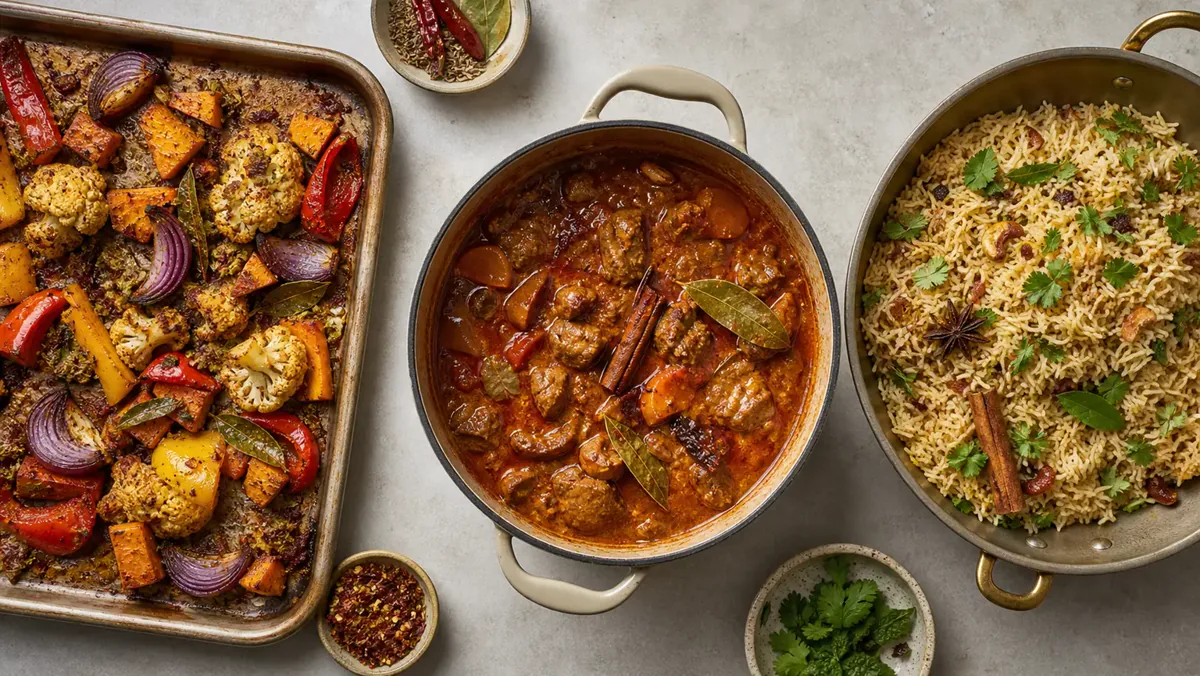
- Rice: Fat coats grains before stock.
- Beans: Aromatics season broth before softening.
- Tomato: Powder cooks into reduction.
- Roast: Rub leads, finish restores edge.
One dish needs a sequence across several stages. A single timing rule for one spice cannot do that.
When should you taste between spice layers?
Tasting too often can make the cook chase noise. Taste after each stage has had time to change the food.
After the base layer, smell tells you whether fat carried aroma. After the middle layer, taste the liquid.
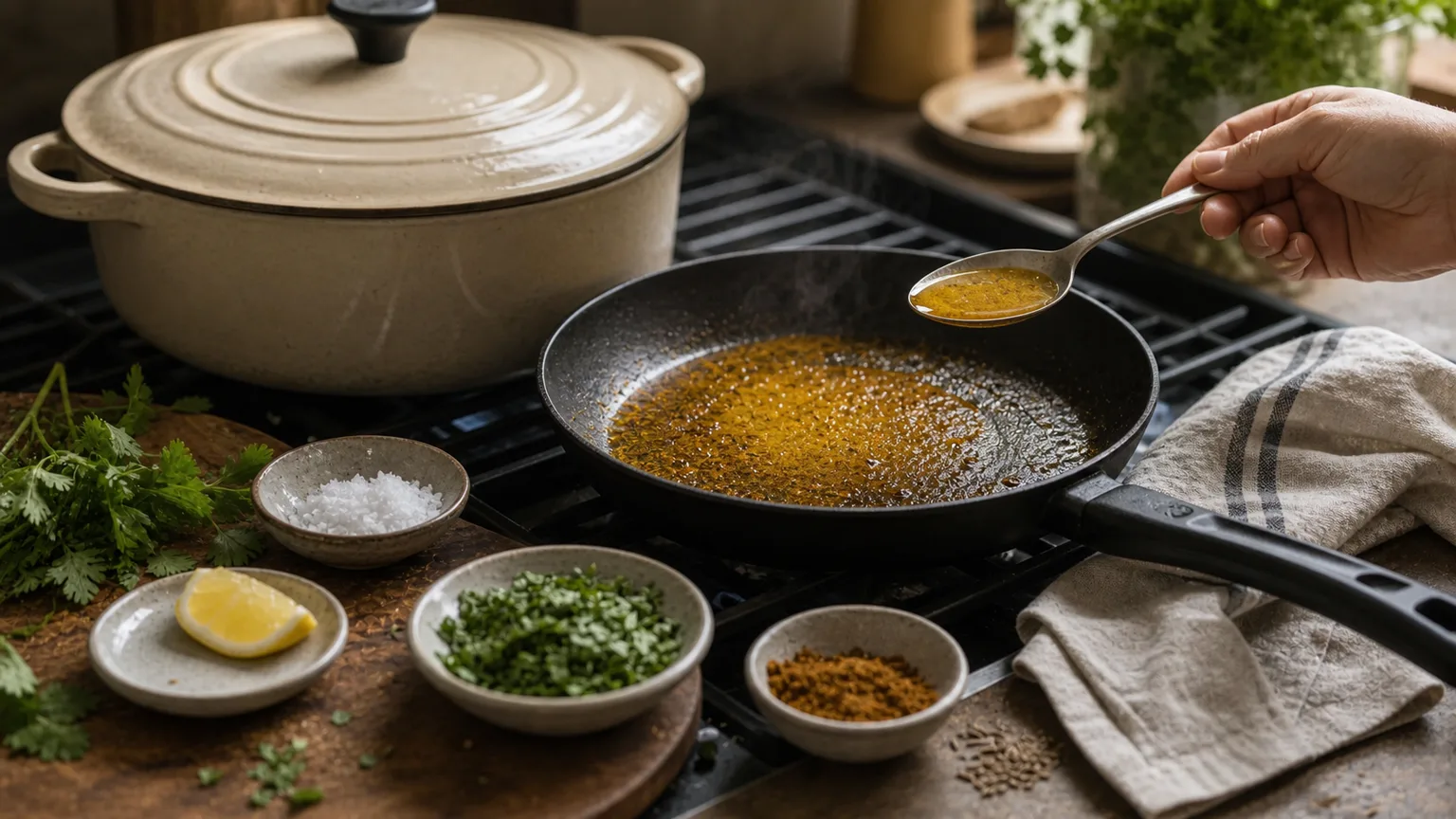
- Base: Smell the seasoned fat before liquid enters.
- Middle: Taste the broth after simmering, not right after powder lands.
- Finish: Check salt and acid before adding more aroma.
- Rest: Let steam settle rice, beans, or stew before the last judgment.
- After blooming: The fat should smell seasoned before onions, tomato, or stock enter.
- After simmering: The broth should taste like food, not loose spice powder.
- Before finishing: Check salt and acid before adding more aromatic spice.
- After resting: Rice, beans, and stews often taste clearer after five minutes.
This checkpoint habit protects the final layer. Many cooks add finishing spice when the real problem is salt.
If the dish tastes correct but smells quiet, finish lightly. If it smells strong but tastes thin, fix the middle.
How do salt, acid, and fat affect spice layers?
Spice layers do not work alone. Salt, acid, and fat decide whether the layers taste clear or dull.
Salt makes spice taste like food. Acid brightens late aroma.
Fat carries early aroma across the pot, especially when cumin, chile, or mustard seed opens first.
| Support | Best timing | What it fixes |
|---|---|---|
| Salt | Before judging the middle layer | Dusty spice that tastes separate |
| Fat | Before sturdy spices bloom | Thin aroma that does not spread |
| Acid | Near the end | Flat stew, beans, or sauce |
| Water or stock | After powders touch fat or aromatics | Raw powder edges |
| Resting time | After heat stops | Sharp layers that need to settle |
This is why a bland curry may not need another spoon of spice. It may need salt or lemon first.
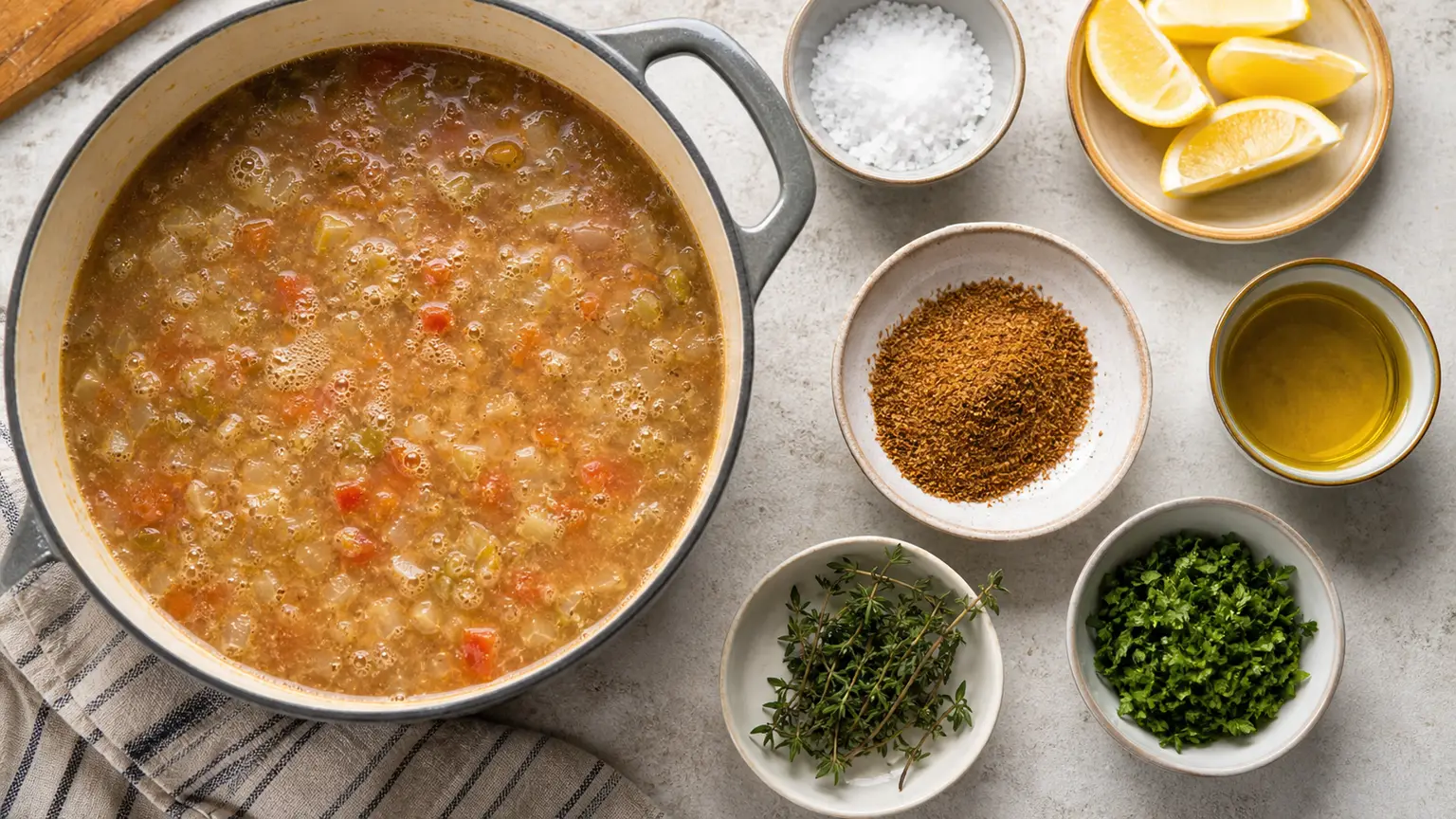
- Salt: Judge the middle layer only after seasoning.
- Fat: Look for color spreading through oil.
- Acid: Add late when the food tastes cooked.
- Rest: Let steam finish the layer.
A harsh dish may need fat or time. More powder can make harshness louder.
Layering works best when each support arrives at the right moment. The spice is only one part of the sequence.
If a final pinch tastes raw, stir it into warm fat before adding it. That keeps the finish aromatic but not dusty.
- Salt checkpoint: Taste the liquid before adding a second spice layer.
- Fat checkpoint: Look for spice color spreading through oil, not dry powder spots.
- Acid checkpoint: Add lemon or vinegar after the food tastes cooked and seasoned.
- Rest checkpoint: Let rice, beans, or stew sit before judging the finish.
These checks make layering practical. The cook has a reason to act, not just another instruction to follow.
If two checkpoints fail, fix the earlier one first. A finish cannot repair a weak base.
For example, a lentil pot with raw coriander needs simmer time before lemon. Acid added too early can freeze the mistake in place.
A rice pilaf with dull aroma needs resting before more spice. Steam keeps moving aroma after the burner turns off.
A tomato sauce with harsh chile needs fat or sweetness first. More chile will only sharpen the same edge.
For beans, wait until the skins soften before judging acid. Lemon before tenderness can make the pot taste unfinished.
For braises, taste the sauce, not only the meat. The sauce shows whether the middle layer worked.
Those examples turn layering into diagnosis. Each stage gives evidence before the next spice enters.
If the evidence is unclear, stop and wait five minutes. Heat and starch can finish blending the layer.
That pause often prevents a muddy second correction.
Why do layered spices turn muddy?
Muddy flavor usually comes from adding many warm spices at the same moment. They fight for the same space.
The fix is not a larger spice list. The fix is fewer jobs per stage and cleaner timing.
| Problem | Likely cause | Repair |
|---|---|---|
| Tastes dusty | Powder added late without fat or moisture | Bloom a small fresh amount in oil |
| Tastes bitter | Powder scorched in dry heat | Dilute, add fat, and stop adding spice |
| Tastes flat | No final aroma or acid | Finish with pepper, herbs, or lemon |
| Tastes confused | Too many sweet spices | Add savory base and reduce cinnamon next time |
When cooking, substitution logic matters when fixing a pot. Replace the missing job, not the missing label.
If a pot tastes muddy, stop adding dry spice. Add food mass, fat, salt, acid, or fresh aroma by diagnosis.
How can you layer spices in a weeknight dish?
For beans, rice, soup, or curry, use one base spice, one body spice, and one finishing move. That keeps the method usable.
Example: bloom cumin in oil, simmer coriander with the liquid, then finish with black pepper and lemon.
The pattern scales better than a fixed recipe. It teaches you what the pot is missing at each stage.