
What Is Coriander, and Why Does It Brighten Heavy Food?
Use whole seeds for aroma, ground coriander for bulk, and ratios to keep dishes from tasting heavy.
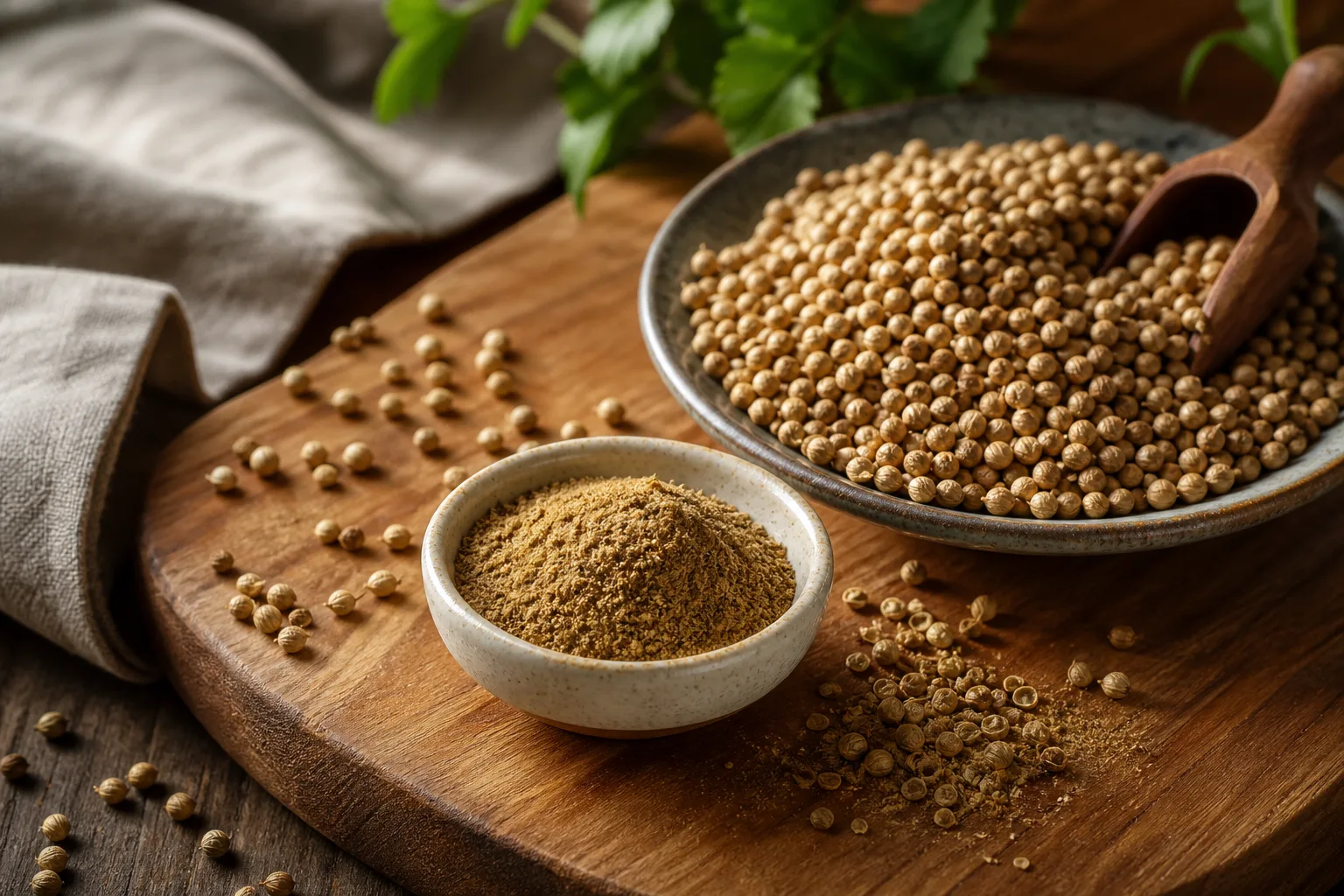
Coriander seed tastes citrusy, nutty, and gently sweet, with no chile heat. Use it when a dish needs brightness without lemon, especially with cumin, turmeric, lentils, roasted vegetables, pickles, and spice blends. Whole seeds keep aroma longer, while ground coriander needs early fat, liquid, or simmering to avoid a dusty finish.
Coriander brings lift, not heat
Coriander seed is the dried fruit of the cilantro plant, and it makes heavy food taste clearer without turning it sour. It brings citrusy lift, gentle nuttiness, and a soft seed aroma.
That job is different from cumin. Cumin makes a dish deeper, while coriander keeps that depth from turning muddy.
| Dish context | Coriander job | What goes wrong without it |
|---|---|---|
| Dal or lentils | Lightens earthiness | The bowl tastes heavy and flat |
| Vegetable curry | Stretches turmeric and chile | The base tastes harsh |
| Roasted carrots | Echoes sweetness with citrus seed aroma | Sweetness feels one-note |
| Pickles and brines | Adds seed fragrance | Acid tastes sharp but plain |
| Falafel or kofta | Balances cumin and herbs | The mix tastes dark |
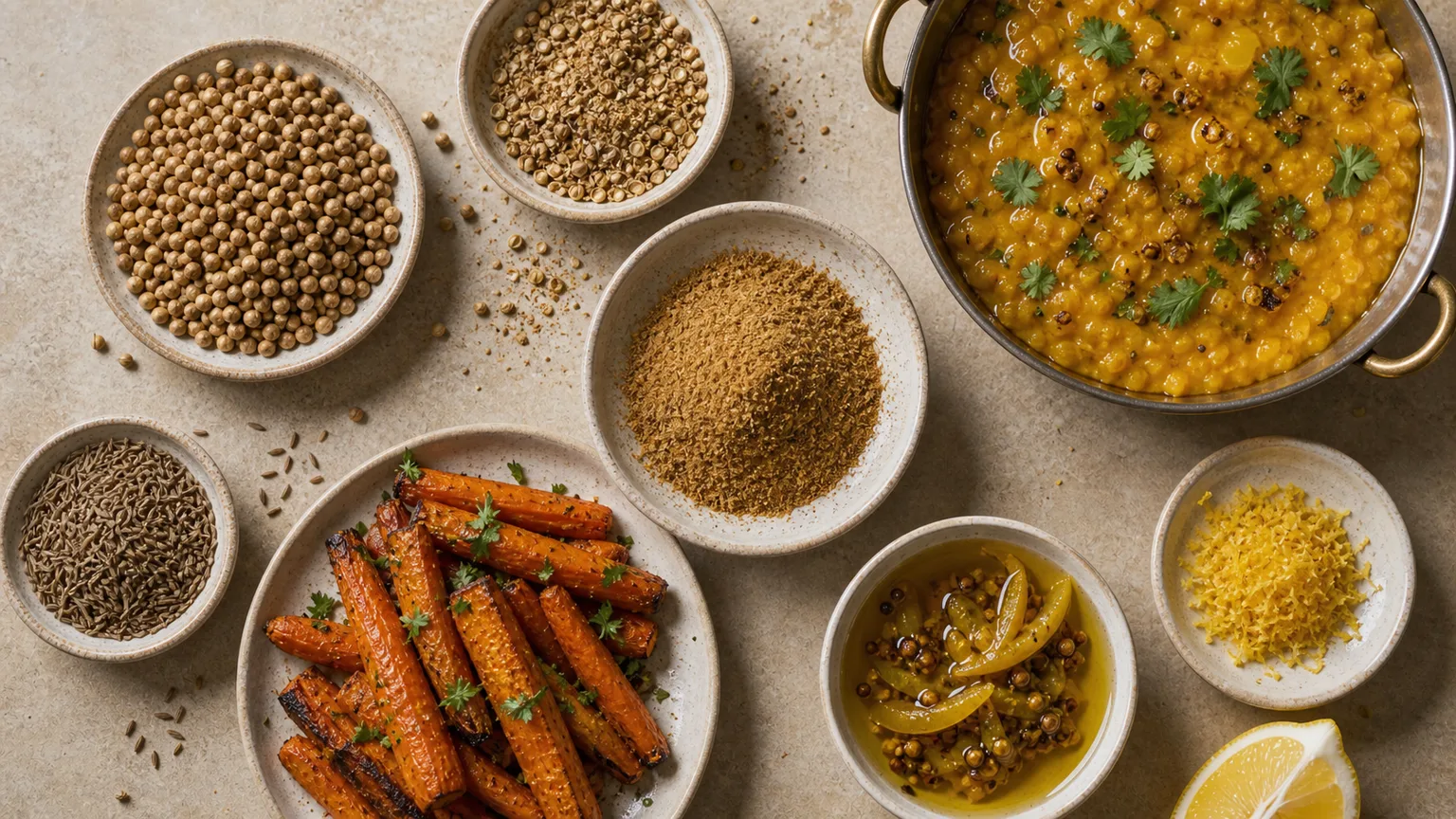
- Lentils: Use coriander when earthiness needs lift from inside the base.
- Roasted carrots: Cracked seed links sweetness to savory spice.
- Pickles: Whole seed gives round aroma as acid extracts it.
- Cumin pair: Let coriander brighten when cumin gives weight.
Use coriander when you want brightness inside the spice base.
Use lemon or vinegar when the finished dish needs actual acid.
Coriander is most useful when the cook wants brightness before the final squeeze of lemon.
The seed is warm and citrusy. The leaf is fresh, green, and polarizing for some eaters.
Is coriander the same as cilantro?
Same plant, different part, and they taste nothing alike.
Coriandrum sativum gives both. The leaf is sold as cilantro in North America and as coriander in Britain, while the dried seed is sold as coriander seed almost everywhere.
The seed is warm, citrusy, and faintly floral. The leaf is sharp, green, and to some people soapy.
Nothing about liking one predicts liking the other.
The soap reaction belongs to the leaf alone, and people who cannot eat cilantro usually have no trouble at all with the seed.
Ground coriander and chopped cilantro are never interchangeable.
A recipe calling for a teaspoon of ground coriander wants a warm background note, and a handful of chopped leaf thrown in instead gives a raw green finish that fights the dish.
Read the recipe's origin when the word is ambiguous.
A British recipe saying coriander with a quantity in tablespoons almost certainly means the fresh leaf, while a spice blend calling for coriander always means the seed.
| Part of the plant | Sold as | Tastes like | Used for |
|---|---|---|---|
| Dried seed | Coriander, coriander seed | Warm, citrusy, faintly floral | Blends, curry bases, pickling, rubs |
| Fresh leaf | Cilantro in the US, coriander in the UK | Sharp, green, soapy to some | Finishing, salsa, chutney, garnish |
| Root | Coriander root | Concentrated, earthier than the leaf | Thai curry pastes |
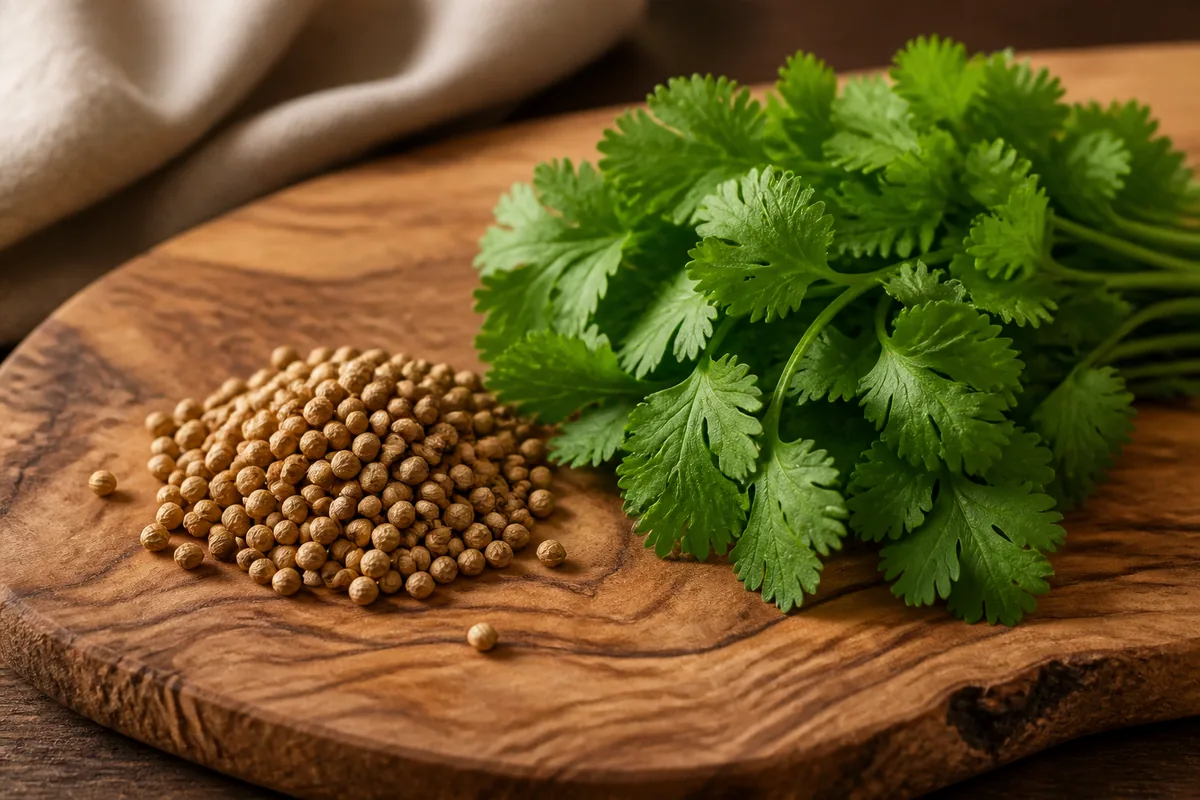
- The seed: Warm, citrusy, faintly floral. Belongs in blends, curry bases, and pickling.
- The leaf: Sharp and green, soapy to some people. Belongs at the end, raw.
- The soap gene: Affects the leaf only, so a cilantro hater can still cook with the seed.
- Never swap them: A teaspoon of ground seed and a handful of leaf do opposite jobs.
Whole seeds taste cleaner than old powder
Whole coriander seed protects aroma better than ground coriander. The powder is convenient, but its citrus top note fades quickly after grinding.
During storage, whole and ground spices age differently because grinding exposes more surface area.
Coriander shows that loss clearly.
| Form | Best use | Risk |
|---|---|---|
| Whole seed | Toasting, pickles, spice blends | Can stay gritty if not cracked |
| Cracked seed | Rubs, roasted vegetables, coarse blends | Can burn if pan is too hot |
| Ground coriander | Curry bases, soups, lentils, sauces | Turns dusty when old |
| Cilantro leaf | Fresh salsa, chutney, garnish | Not a seed substitute |
Toast whole seeds until the citrus aroma rises, then cool them before grinding. Hot seeds trap steam and clump.
When cooking, toasting spices works especially well here because coriander seeds are round, dry, and aromatic.
Stop before the smell turns smoky.
Cracked seed gives a different result from fine powder. It keeps texture in rubs and roasted vegetables.
- For pickles: Use whole seeds so the brine extracts aroma slowly.
- For curry: Use ground coriander early so liquid can soften it.
- For rubs: Crack the seeds so they cling and do not roll off meat.
- For finishing: Use fresh cilantro or citrus, not raw ground coriander.
If your coriander smells like cardboard, replace it.
A larger dose will not bring the missing citrus back.
The cumin and coriander ratio controls weight
Cumin and coriander work as a pair because they pull in opposite directions. Cumin gives bass, and coriander gives lift.
The detailed cumin and coriander difference comes down to balance. Ratio changes the dish more than either spice alone.
Let coriander lead in dal and curry powder styles, where lentils and turmeric need lift.
Let cumin lead in chili.
Use equal parts for falafel, kofta, and roasted vegetables. That keeps herbs, meat, and sweetness balanced.
If a dish tastes flat after enough cumin, add coriander before adding more cumin. More bass will not create brightness.
In the dish, turmeric often needs coriander because its earthy bitterness can feel blunt. Coriander rounds that edge.
Smell the pot before adjusting.
A heavy, dull aroma asks for coriander, while a thin aroma may need cumin.
Heat changes coriander gently
Coriander is forgiving, but it still needs the right heat. Whole seeds can toast, while ground coriander prefers brief fat contact or simmering.
When cooking, blooming spices in oil gives ground coriander a rounder aroma. Keep the heat moderate because fine powder scorches fast.
| Method | Best for | Stop when |
|---|---|---|
| Dry toast whole seeds | Grinding and blends | Citrus aroma rises |
| Bloom ground powder | Curry bases and soups | Raw powder smell fades |
| Simmer in liquid | Beans and lentils | Flavor spreads through starch |
| Use raw at finish | Rarely useful | Avoid unless in a seasoned mix |
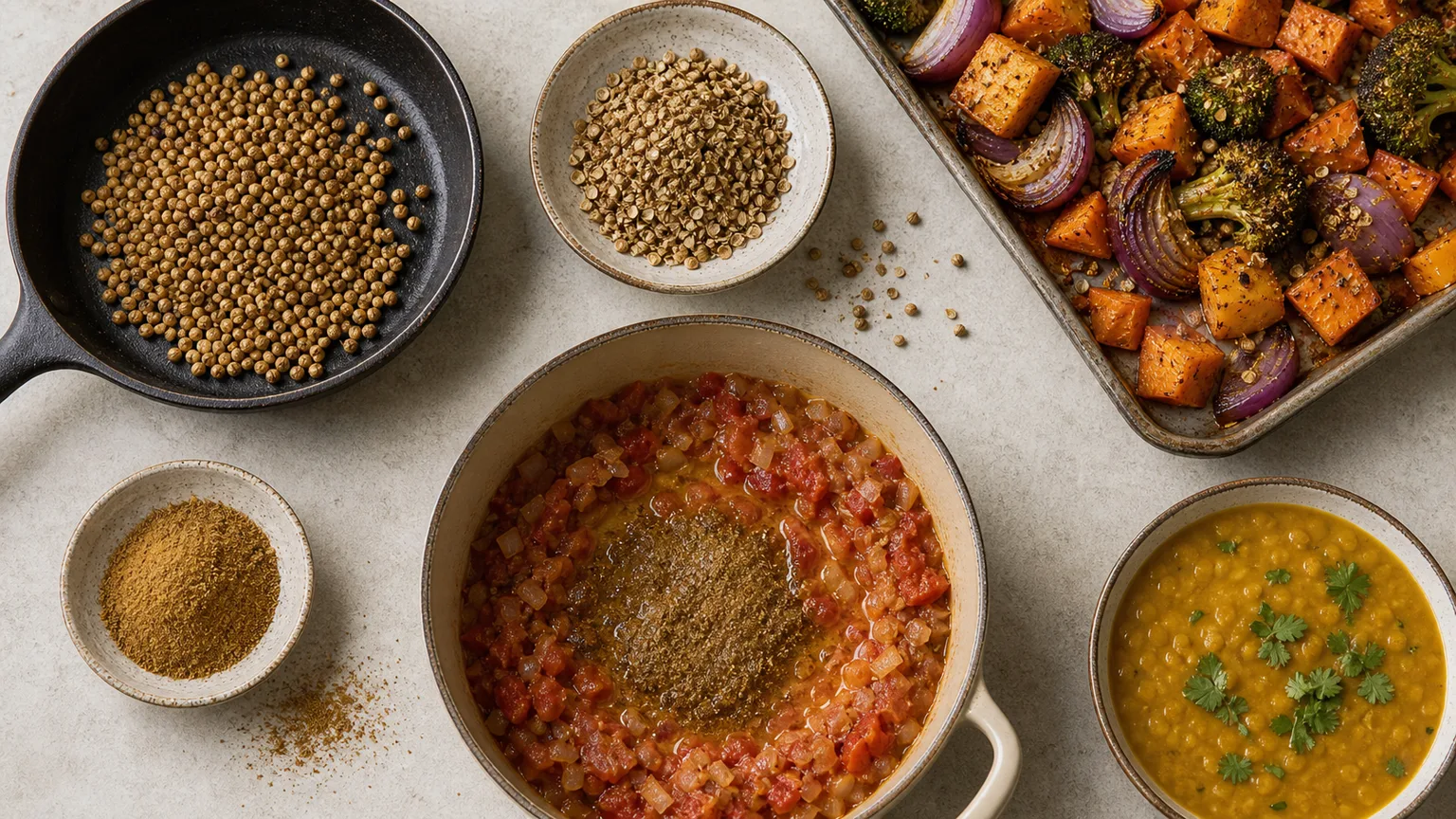
- Whole seed: Toast before grinding or leave intact for brines.
- Cracked seed: Use with oil on roasted vegetables and rubs.
- Ground powder: Bloom gently after aromatics add moisture.
- Long simmer: Let liquid remove the raw dusty edge.
Add ground coriander after onion or tomato has moisture. Dry powder against a bare hot pan can turn bitter.
Whole seeds can start earlier because the seed coat slows heat.
Crack them when you need faster extraction.
This is also why old ground coriander fails twice. It has already lost the light top note, then late cooking leaves the powdery base exposed.
- Dal: Bloom ground coriander with turmeric after aromatics soften.
- Pickles: Leave seeds whole so they perfume the brine over time.
- Roasted vegetables: Use cracked seeds with oil so they do not burn.
- Soup: Simmer ground coriander long enough to lose chalkiness.
Good coriander should taste round after cooking. If it tastes dusty, it was old, raw, or added too late.
Substitutes need brightness more than sameness
The best coriander substitute depends on why the recipe used it. Replace citrus lift, seed warmth, or blend volume before matching the name.
When cooking, spice substitution works better when you name the missing job.
Coriander has more than one job.
Cumin can cover space, but start with half as much because it moves the dish earthier.
Caraway fits rye, cabbage, pork, and braises.
Fennel seed adds sweetness and can drift toward licorice.
Lemon zest plus a tiny cumin pinch often protects brightness better.
Cumin alone is not a clean coriander substitute. It fills space, but it makes the dish heavier.
Lemon zest plus a tiny cumin pinch often works better in vegetables. It gives brightness and a little seed depth.
- For curry: Use cumin plus a little lemon zest if coriander is missing.
- For pickles: Use mustard seed, fennel, or caraway by brine style.
- For falafel: Keep cumin lower and add parsley or lemon.
- For roasted carrots: Use fennel seed carefully because sweetness rises fast.
If coriander is the main flavor, do not pretend the swap is invisible. The dish will move darker or sweeter.
Should you toast coriander seeds?
Usually yes, and only briefly.
Thirty to sixty seconds in a dry pan over medium heat wakes the citrus note and takes the raw edge off. The seeds tell you when they are ready by smell rather than by color.
Listen as well as smell.
Coriander seeds pop and skitter as they heat, and the sound settling down is a reliable sign that they have gone as far as they should.
Skip toasting when coriander is finishing a raw dish.
A yoghurt sauce or a fresh salad wants the clean citrus of untoasted seed, and toasting pushes it toward something nuttier that suits a curry base better.
Toast before grinding, never after.
Ground coriander scorches in seconds because there is no husk left to protect the oils, and scorched coriander tastes flat and slightly bitter.
- Time: Thirty to sixty seconds in a dry pan on medium heat.
- Cue: The popping settles and the smell turns citrusy rather than dusty.
- Order: Toast whole, then grind. Ground coriander scorches almost instantly.
- Skip it: Raw yoghurt sauces and salads want the untoasted citrus note.
- Cool first: Grinding warm seed makes the powder cling to the mill.
Buying coriander that still smells alive
Good coriander seed smells citrusy, sweet, and warm when cracked. Weak seed gives almost nothing after grinding.
Use cool, dark storage and buy small amounts of powder. Ground coriander can fade in months, not years.
- Whole seed: Look for tan round seeds with a clear aroma when crushed.
- Ground powder: Buy from high-turnover shops and avoid giant stale bags.
- Storage: Keep it sealed away from stove heat and window light.
- Pantry check: Replace coriander when cumin and turmeric also smell flat.
Coriander is cheap enough to replace before it dies completely. Fresh powder changes everyday lentils and vegetables.
A small grinder makes whole seed practical.
Grind only what the dish needs that week.
Label the jar with an open date. A clear date beats guessing from color.
What do you do with too much coriander?
Too much coriander tastes soapy and perfumed rather than hot.
It is a gentler failure than too much cumin or clove, which means it is easy to miss until the dish is finished. The fix is dilution first.
Add more of the unseasoned base. More stock, tomato, lentils, or rice spreads the same amount across more food, and coriander responds to this better than most spices because its flavor is not aggressive to begin with.
Acid sharpens a dish that has gone flat and floral.
Lemon or a splash of vinegar pulls the perfume back and gives the other spices somewhere to sit.
Do not answer it with more cumin. Doubling the earthy side to mask the citrus side gives you a heavier dish that still tastes floral, and now the ratio is wrong in both directions.
- Dilute: More stock, tomato, lentils, or rice. Coriander dilutes more gracefully than most.
- Add acid: Lemon or vinegar pulls the perfume back into line.
- Add fat: Cream or yoghurt rounds a dish that has gone sharply floral.
- Do not add cumin: Masking citrus with earth leaves the ratio wrong both ways.
- Next time: Measure coriander before cumin, since it is the one that creeps.
Where coriander is essential
Coriander is essential when a dish has earth, chile, or fat that needs lift from inside the spice base.
It is quiet but structural.
In that cuisine, Indian spice pantry cooking often uses coriander in larger volume than louder spices. It stretches masala without making it harsh.
- North Indian dal: Ground coriander lightens lentils and turmeric.
- Adobo-style sauce: Seed or ground coriander supports chile without extra heat.
- Middle Eastern kofta: Ground or cracked coriander balances cumin and meat fat.
- Pickling brine: Whole seed gives acid a rounder aroma over time.
- Roasted carrots: Cracked seed links sweetness to savory spice.
Use more coriander when the dish tastes heavy but already has enough salt.
Use less when acid or fresh herbs already lead.
That family link explains why coriander can overlap with fennel or caraway. It does not make them interchangeable.
Let coriander lead only when the dish can hold it
Coriander can lead a dish, but only when the food has enough body. It needs starch, fat, vegetables, meat, or acid nearby.
Let coriander lead with lentils, beans, roasted carrots, squash, and pickles. Those foods give the seed enough body.
Use coriander as support on lean chicken or yogurt sauce.
Powder sitting raw on dry meat tastes thin and dusty.
Coriander becomes thin when the food underneath is thin. That is why it works better with lentils than with plain boiled vegetables.
It also becomes dusty when ground powder lands too late. Give it oil, liquid, or a short simmer before judging the flavor.
- Lead with coriander: Dal, vegetable curry, carrot trays, pickles, and chickpea mixtures.
- Support with coriander: Chili, kofta, lamb, and cumin-heavy rubs.
- Hold back: Raw finishes, dry sauces, and dishes already led by lemon or fresh herbs.
- Refresh late: Use lemon zest or cilantro leaf when cooked coriander cannot add enough top note.
Earthy lentils want ground coriander simmered into the base.
Sweet roots want cracked seed roasted in oil.
Sharp brines want whole seed.
Meat fat wants coriander with cumin, while fresh herb finishes need less cooked coriander.
Coriander is quiet enough to use generously, but not invisible. When it leads, the dish needs a reason to stay grounded.
Cumin, chile, browned onion, tomato, yogurt, or lentils can provide that ground. Plain water and raw powder cannot.
- Use more: The dish has lentils, roots, chickpeas, pickling acid, or turmeric.
- Use less: The dish already has lemon, cilantro leaf, dill, mint, or sharp vinegar.
- Toast first: Whole seeds need heat before they taste round.
- Simmer ground: Powder needs liquid contact before it tastes clean.
That is the difference between a spice profile and a cooking decision. Form, food base, and timing decide whether coriander feels bright or weak.
How coarse should coriander be?
Coriander is one of the few spices where the grind changes the dish more than the amount does.
The husk is thin and hollow, so the seed shatters rather than powders, and how far you take it decides whether the spice disappears or stays visible.
Fine powder disappears into a sauce.
This is what a curry base or a spice blend wants, because the citrus note has to spread evenly through liquid rather than turn up in one mouthful. Fine coriander also thickens a sauce slightly, which is part of why it appears in such large amounts in some curry recipes.
A coarse crack keeps texture and pops in the mouth.
Press the seeds under the flat of a knife or give them three or four strikes in a mortar, stopping while the pieces are still visible. This is the form for a rub, a pickle brine, or a crust on fish.
Whole seeds belong where they will be strained out or where crunch is wanted.
Pickling liquid, a braise you will pass through a sieve, and a slow-roasted joint all suit the intact seed.
The husk is the reason a blade grinder struggles.
Light hollow fragments bounce above the blade instead of meeting it, so a mortar or a burr mill gives a far more even result than pulsing a blade grinder for longer.
| Grind | Where it belongs | What you get |
|---|---|---|
| Fine powder | Curry bases, spice blends, marinades | Even citrus through the whole dish, slight thickening |
| Coarse crack | Rubs, pickle brine, fish crust | Visible texture and small bursts of aroma |
| Whole seed | Pickling, strained braises, roasts | Slow release, easy to remove, occasional crunch |
That same thin hollow husk is why coriander fades faster than harder whole spices.
A peppercorn or a clove protects its oils behind dense material. A coriander seed is mostly air, so a two-year-old jar of whole coriander can already smell like nothing.
How much coriander to use
Coriander usually works by the teaspoon, not by the pinch. It is gentler than cumin, but old powder can still taste dusty.
Use more coriander in wet dishes that can hydrate the powder.
Use less in dry rubs where seed pieces sit on the surface.
Start lower when cumin, fennel, or lemon already appears. Those ingredients can make coriander feel brighter than expected.
| Dish | Amount | Adjustment cue |
|---|---|---|
| Lentils for 4 servings | 1 to 2 teaspoons ground | Add more if cumin tastes heavy |
| Roasted vegetables tray | 1 teaspoon cracked seed | Add oil so seed aroma spreads |
| Pickle brine quart | 1 to 2 teaspoons whole seed | Reduce if fennel also appears |
| Kofta or meatballs | 1 teaspoon ground per pound | Balance with cumin and herbs |
Increase only after cooking contact. Raw ground coriander tastes thinner than coriander that has bloomed or simmered.
If you are unsure, start lower and add a small toasted pinch later. Coriander can brighten a finished dish after brief oil contact.