
Cumin vs Coriander: Which One Does Your Dish Need?
Cumin vs Coriander
Cumin gives dishes depth; coriander gives lift. The right ratio changes the whole plate.
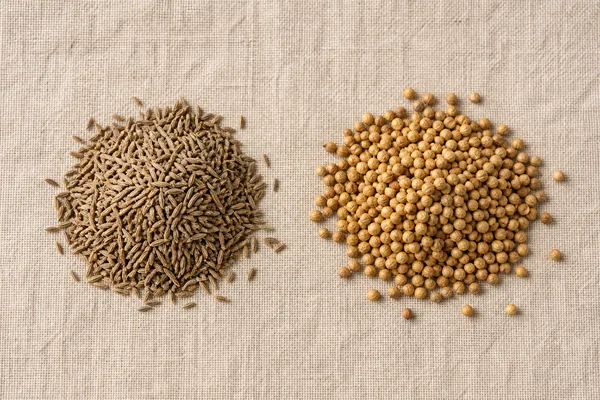
Cumin and coriander are not interchangeable twins. Cumin gives dishes earth, smoke, and structure; coriander gives citrus lift and roundness. Use 1:1 for balance, more cumin for chili and meat, and more coriander for dal, curry bases, and vegetables.
The practical difference
In the dish, cumin and coriander are partners, not twins. Cumin pushes a dish downward with earth, smoke, and persistence.
In the dish, coriander pushes upward with citrus, nuttiness, and a lighter finish. When a curry tastes dark, flat, or heavy, more cumin usually makes the problem worse.
| Decision | Cumin | Coriander |
|---|---|---|
| Flavor role | Earthy bass note | Citrus lift and roundness |
| Best form | Whole seed toasted, then ground | Whole seed toasted, then ground |
| Heat behavior | Gets deeper in hot oil | Gets nuttier, but loses brightness if cooked too long |
| Best cuisines | Indian dal, Mexican chili, Middle Eastern kofta | Indian curry bases, pickles, soups, roasted vegetables |
| When it fails | Can taste dusty or bitter when heavy | Can taste thin when asked to anchor a dish |
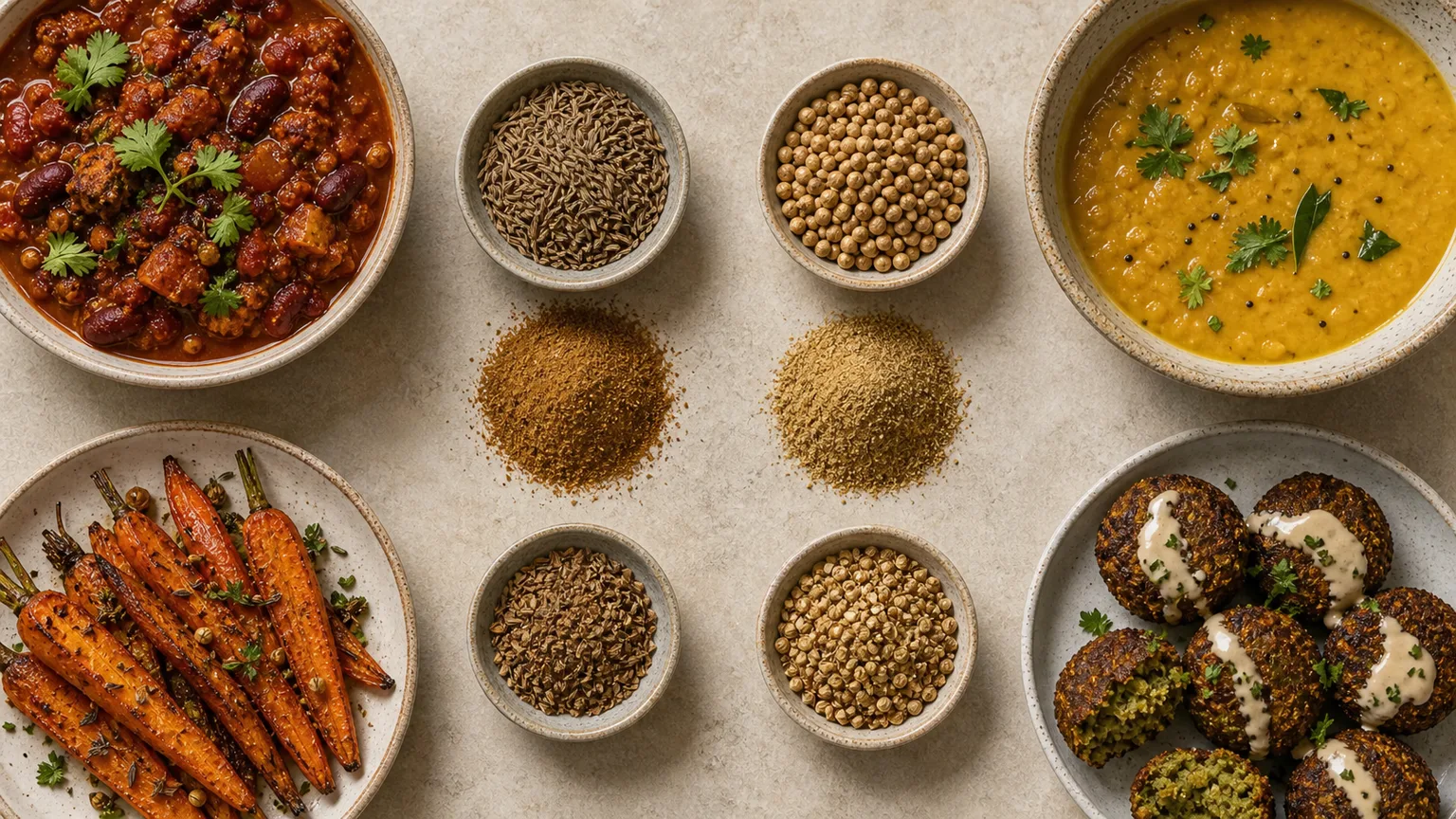
- Cumin leads: Chili, beans, lamb, and taco seasoning need an earthy anchor.
- Coriander leads: Dal, vegetable curry, pickles, and carrots need lift.
- Equal parts: Falafel and kofta need both weight and brightness.
- Freshness: Whole seeds make the comparison clearer than stale powder.
The useful question is not which spice is stronger. The useful question is whether your dish needs an anchor or a lift.
A spoonful of cumin can make food taste more seasoned and still less balanced. Coriander often fixes heaviness faster than more cumin.
That is especially true when the base already has browned onion, meat, beans, or dried chile.
Flavor chemistry in plain kitchen terms
Cumin owes much of its identity to cuminaldehyde. That compound gives the seed a warm, earthy character that survives long cooking.
Coriander seed carries linalool, a floral citrus compound also found in many herbs and flowers. That is why coriander can make a rich spice base taste fresher without adding acid.
This chemistry matters most when the dish already has weight. Beans, lamb, and browned onion make cumin feel natural.
Vegetables, lentils, and turmeric often need coriander because the citrus note keeps the base from tasting dull.
- Use cumin first when the dish needs a deeper floor: chili, black beans, lamb, kofta, dal, or taco seasoning.
- Use coriander first when the dish needs brightness without lemon: vegetable curry, lentil soup, pickles, or roasted carrots.
- Use both together when a dish needs shape. Cumin gives it weight; coriander keeps that weight from becoming muddy.
- Do not chase volume: If either spice tastes dull, freshness usually matters more than adding another spoonful.
This is why garam masala and many curry bases use both. The pair creates contrast inside the same spoonful.
Heat changes both spices differently
Both spices improve with heat, but they do not improve in the same way. Cumin wants hotter oil and a shorter window.
Coriander tolerates gentler heat and turns rounder when toasted. Push it too long and the citrus note fades into plain nuttiness.
| Technique | Cumin result | Coriander result |
|---|---|---|
| Dry toast | Smokier, deeper, more assertive | Nuttier, sweeter, less sharp |
| Bloom in oil | Releases bass notes fast | Rounds the spice base without dominating |
| Long simmer | Holds structure well | Softens and blends into the sauce |
| Added late | Can taste raw and dusty | Can add a light citrus-seed finish |
The pan cue is different too. Cumin should smell deep quickly, then move out of direct heat.
Coriander can stay gentler because its seed coat and softer aroma tolerate a slower toast.
For oil-based cooking, start with cumin, then add coriander once the first aroma blooms. Both spices release more flavor in fat than in water, so blooming spices in oil changes the comparison.
The ratio changes the cuisine signal
The cumin-coriander ratio is one of the fastest ways to move a dish between culinary identities. Same pantry, different balance.
A cumin-heavy blend reads darker and more Mexican or Middle Eastern. A coriander-heavy blend reads lighter and more South Asian.
| Dish context | Ratio | What changes |
|---|---|---|
| Indian dal | 1 part cumin to 2 parts coriander | Coriander brightens lentils while cumin stays supportive |
| Chili or taco seasoning | 2 parts cumin to 1 part coriander | Cumin leads with smoke and earth |
| Falafel or kofta | 1 part cumin to 1 part coriander | Equal weight keeps herbs and meat balanced |
| Curry powder style blends | 1 part cumin to 2 parts coriander | Coriander stretches the blend and softens turmeric |
| Roasted vegetables | 1 part cumin to 1 part coriander | Cumin gives depth, coriander keeps sweetness clear |
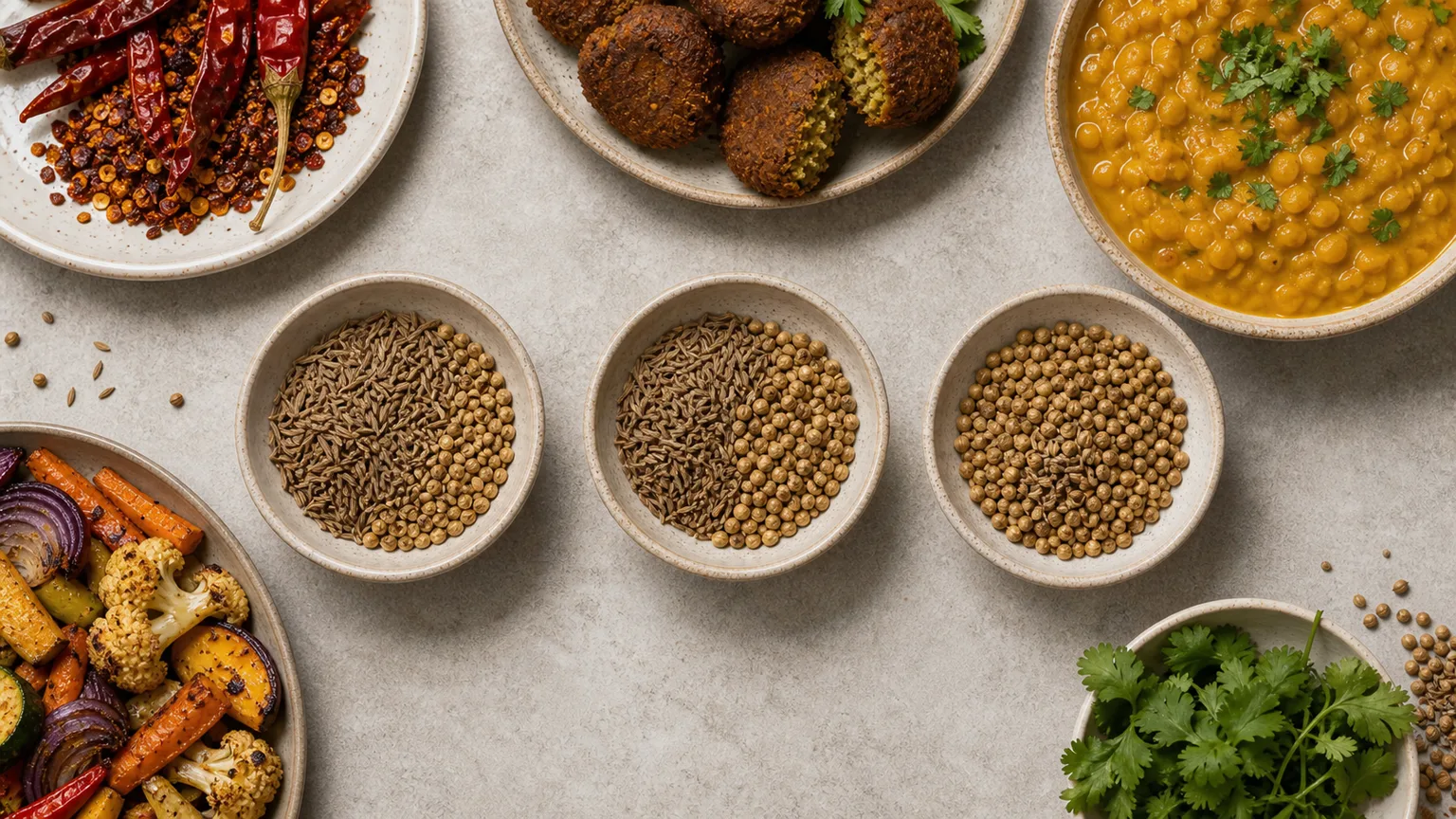
- 2:1 cumin: Use for chili, beans, beef, and taco-style seasoning.
- 1:1 balance: Use for falafel, kofta, and roasted vegetables.
- 1:2 coriander: Use for dal, curry bases, and turmeric-heavy food.
- Adjust late: Bloom a small pinch before adding it to finished food.
In blends, curry powder often leans coriander-heavy because it has to carry turmeric, chili, and fenugreek without turning harsh.
Ratio is more useful than a fixed substitution rule. You can keep both spices present while changing which one the eater notices first.
Read the finished dish before adding more
The ratio decision changes after food cooks. Heat, salt, fat, and acid can make the same balance read differently.
| What you taste | Likely issue | Next move |
|---|---|---|
| Heavy and brown | Cumin is leading too hard | Bloom coriander with a little oil |
| Thin and green | Cumin is too quiet | Bloom a small cumin pinch |
| Bitter edge | Powder scorched or spice is stale | Add fat, starch, or tomato before more spice |
| Good aroma but flat taste | Salt or acid is missing | Season food before changing ratio |
| Bright but not savory | Coriander leads without an anchor | Add cumin or browned aromatics |
This matters because cumin has a louder reputation. Many cooks add it when the dish actually needs lift, salt, or acid.
Coriander also has a limit. Too much can make a dish smell pleasant but taste loose.
- Fix heavy dal: Bloom coriander, add a squeeze of lemon, then rest before tasting again.
- Fix thin chili: Bloom cumin with chile powder, then simmer so the fat carries it.
- Fix dusty sauce: Stop adding powder and add liquid, fat, or tomato first.
- Fix bland vegetables: Add salt before deciding the cumin-coriander ratio failed.
Dish context decides the repair. Dal usually wants coriander and lemon, while chili usually wants cumin bloomed in fat.
Falafel and kofta need a tighter balance. Herbs, salt, browned onion, and pepper matter as much as the cumin-coriander split.
The repair path depends on the food base. Lentils, meat, vegetables, and chickpeas expose the two spices in different ways.
Do not correct every problem with another spoon from the jar. Salt, acid, fat, and rest can reveal spice that is already there.
- Use smell first: Heavy aroma points toward coriander or acid.
- Use taste second: Thin flavor may need cumin, salt, or browned aromatics.
- Use time third: Freshly bloomed spices need a few minutes to spread.
- Use restraint: Extra powder late in cooking is the fastest route to dustiness.
- Heavy curry base: Do not start with more cumin. Check coriander, acid, and salt first.
- Flat chili: Do not sprinkle raw coriander on top. Bloom cumin with fat and chile.
- Dusty falafel mix: Do not add more powder. Fix herbs, salt, and moisture first.
- Sweet roasted carrots: Do not add coriander alone. Add cumin or chile for anchor.
This is where the two-spice comparison becomes useful at the stove. It gives the next move, not just flavor adjectives.
The best comparison is not a pantry chart. It is the correction a cook makes when the pot already has food in it.
Dish decisions you can make quickly
Use the dish in front of you as the decision tool. The ingredient list usually tells you which spice should lead.
Beans, lamb, beef, and tomato sauces can hold more cumin. Lentils, vegetables, yogurt sauces, and pickles usually need more coriander.
- Dal: Let coriander lead because lentils already have earthiness. Cumin should support the base, not darken it.
- Chili: Let cumin lead because tomato, beef, beans, and dried chili need a deeper anchor.
- Falafel: Keep the ratio even. Chickpeas need cumin, but herbs need coriander to stay bright.
- Roasted carrots: Use equal parts first. Coriander echoes sweetness while cumin keeps the tray savory.
- Raita or yogurt sauce: Use toasted cumin carefully and coriander lightly. Too much of either can make dairy taste dusty.
If a finished dish tastes heavy, add coriander before adding more salt. If it tastes sharp or unfinished, add a small pinch of cumin bloomed in oil.
That pattern is easy to miss in recipes because cumin has the louder reputation. In the pan, coriander often does the quiet balancing work.
When you are unsure, smell the finished dish before adjusting. A dull, heavy aroma asks for coriander, while a thin, green aroma asks for cumin.
Taste again after 2 minutes because bloomed spices need time to spread before serving.
Can you substitute one for the other?
You can substitute cumin and coriander only when the spice is supporting the dish. If either spice is the main flavor, the swap changes the result.
Use coriander for cumin when you need gentler earth and more brightness. Use cumin for coriander when the dish needs a stronger savory base.
- Cumin for coriander: Use half as much cumin first. It is heavier and can dominate a recipe built for coriander.
- Coriander for cumin: Use equal volume, then add a pinch more if the dish still feels flat.
- Better cumin backup: Caraway is closer when you need earth. It lacks cumin smoke, but the structure is similar.
- Better coriander backup: A little fennel seed plus lemon zest can mimic the lift, though not the exact seed flavor.
- Blend context: In a blend with turmeric, chili, and garlic, small swaps disappear more easily.
The substitution test is simple: if the recipe names the spice in the title, do not swap casually. If it appears among five spices, you have more room.
When you do swap, change the rest of the dish too. Cumin in place of coriander may need lemon, tomato, or fresh herbs, and coriander in place of cumin may need browned onion, chile, or longer blooming.
Buying and storage decide more than brand
Old cumin and old coriander create the same failure: a dish tastes seasoned but not alive. The jar may still smell pleasant, but the top notes have gone.
In the dish, whole seeds and ground powders age differently: whole seeds age slower than ground powder.
Buy whole seeds when possible. Toasting and grinding fresh gives you a bigger upgrade than switching brands.
- Whole seeds: Keep them airtight and dark. They usually stay useful for about 2 to 3 years.
- Ground jars: Treat 6 months as the serious limit. After that, flavor drops quickly.
- Toast cue: Stop when the kitchen smells vivid. Smoke means you have crossed into bitterness.
- Pantry check: If fenugreek and cumin both smell stale, replace the whole curry shelf together.
For most home cooks, the winning setup is simple: whole cumin, whole coriander, a small pan, and a cheap grinder.