
What Is Cinnamon, and Which Jar Do You Actually Need?
Most "cinnamon" is cassia, bolder, cheaper, with a coumarin content worth understanding if you use it daily.
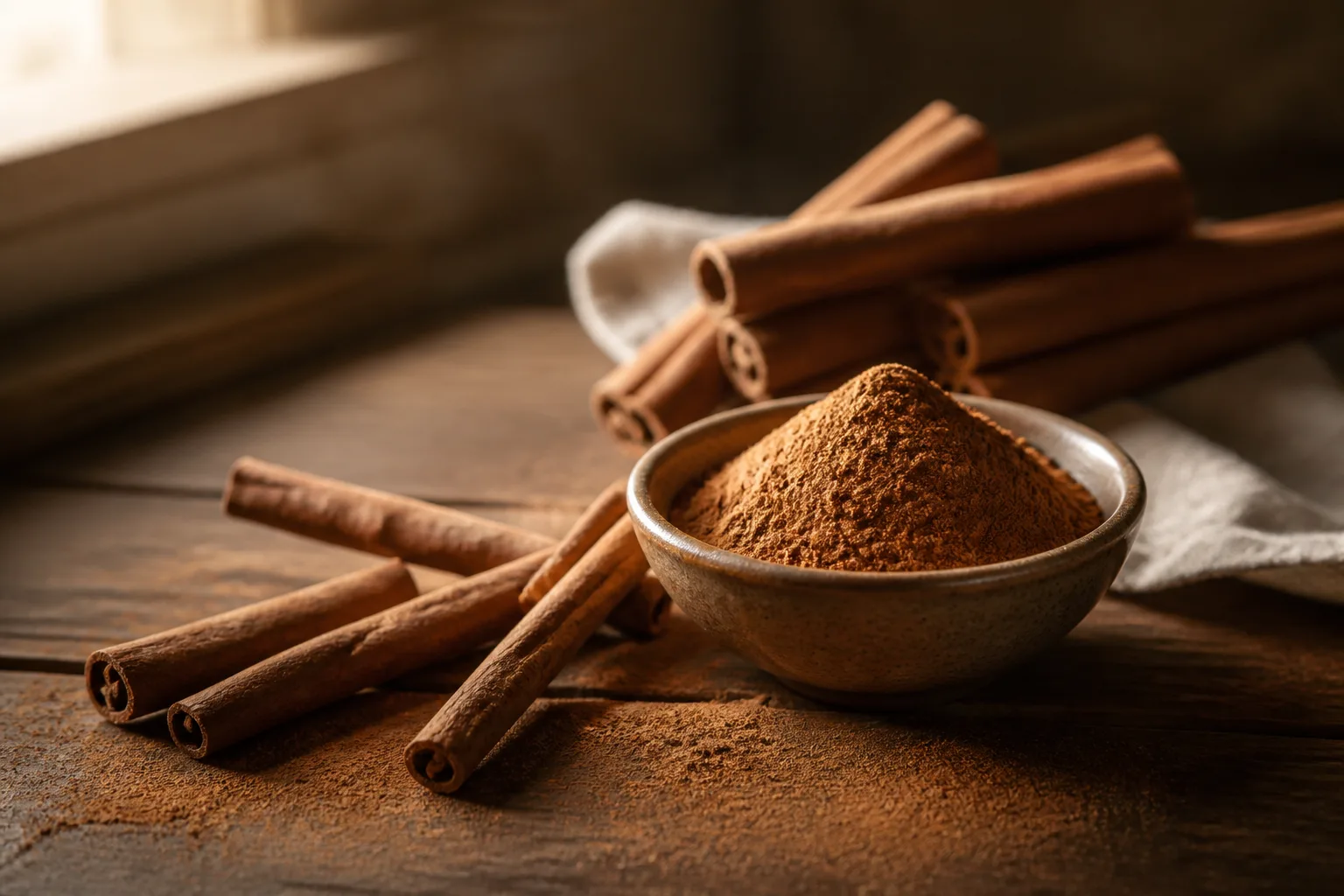
Most "cinnamon" is cassia, bolder, cheaper, and higher in coumarin than true Ceylon from Sri Lanka. For baking, cassia's intensity is an advantage, while Ceylon is the better choice for daily use or delicate preparations. Cinnamon is a savory spice across most of the world, from Indian biryani to Moroccan tagine and Vietnamese pho, and you should remove whole sticks before 45 minutes of active heat or they turn astringent.
The name on the jar is probably wrong
True cinnamon (Cinnamomum verum, Ceylon cinnamon) comes from a single origin: the inner bark of trees grown in Sri Lanka. Cassia comes from China, Vietnam, and Indonesia, different species with a different flavor profile.
In the United States, labeling laws allow cassia to be sold simply as "cinnamon." Most consumers have never tasted the real thing, and the difference is significant enough to change what a recipe produces.
The distinction matters most in delicate applications, a chai where cardamom should lead, or a rice pudding where the spice should whisper. Cassia will dominate those dishes where Ceylon would integrate.
Ceylon vs cassia: what actually differs
Ceylon cinnamon is made of many thin, papery layers of inner bark rolled together, it crumbles easily between your fingers. Cassia is a single thick piece of dark reddish-brown bark, hard enough to require a grinder.
| Ceylon (True Cinnamon) | Cassia (Common "Cinnamon") | |
|---|---|---|
| Flavor | Subtle, complex, citrus-edged, delicate | Bold, spicy-sweet, one-dimensional |
| Coumarin | Trace amounts, safe at any culinary use | 1–2% by weight, limit with daily use |
| Bark texture | Thin, papery, crumbles easily | Thick, hard, needs a grinder |
| Color | Pale tan to light brown | Dark reddish-brown |
| Best for | Delicate desserts, drinks, raw applications | Baking, heavy blends, braising |
The coumarin issue is real but context-dependent. The EFSA tolerable daily intake is one tenth of a milligram per kilogram of body weight.
That matters for people consuming multiple teaspoons every day, not for occasional baking.
The cinnamon and blood sugar research question depends on form, since many trials used cassia extract rather than Ceylon.
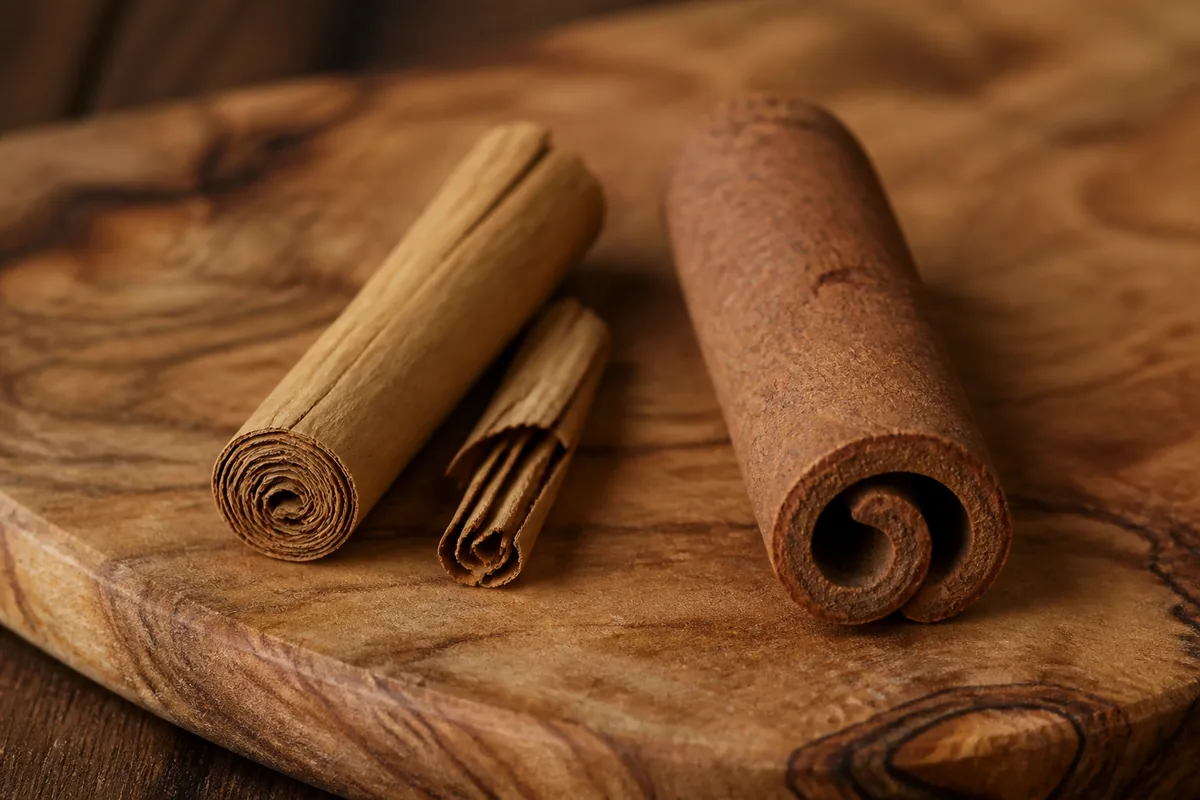
- Ceylon: Pale tan, many thin papery layers, crumbles between your fingers.
- Cassia: Dark reddish-brown, one thick layer, curls inward on itself.
- Broken open: Ceylon shows its layers, cassia stays a single hard sheet.
- On the label: If it says only cinnamon, it is cassia.
Which cassia is sitting in your jar?
Cassia is not one spice either.
Three species share the label, and they do not taste the same. Indonesian, Saigon, and Chinese cassia arrive in different jars with the same word on the front.
Indonesian cassia, sold as korintje, fills most supermarket jars in the United States.
It is the mildest of the three, and it is what most people picture when they think of cinnamon. The bark is thick, dark, and reddish brown.
Saigon cassia is the loudest, with a sharp sweet heat that carries through heavy batters.
It also holds the most coumarin of the common types, which matters for anyone using cinnamon daily rather than occasionally. Premium jars usually name it, because the intensity is the selling point.
Chinese cassia sits between the two and turns up most often as whole quills.
Those thick hard sticks are what simmer in pho and in Chinese braises, and they are far too tough to grate.
If a jar names no species at all, it is almost certainly Indonesian. Naming the species costs money, so a producer who pays for it tends to advertise it.
| Cassia type | Where it shows up | What it tastes like |
|---|---|---|
| Indonesian, korintje | Most supermarket jars, usually unlabelled | Mildest of the three, the default cinnamon flavor |
| Saigon | Premium jars that name it | Sharpest and sweetest, highest coumarin |
| Chinese | Whole quills for pho and braises | Middle ground, too hard to grate |
| Ceylon | Sold as true or Ceylon cinnamon | Delicate, citrus edge, only trace coumarin |
Cinnamon as a savory spice
The sweet-spice association is a Western limitation. Most of the world uses cinnamon as a savory ingredient, with meat, in broths, alongside herbs and other whole spices.
In Indian biryani, a cinnamon stick simmers with rice and meat alongside whole cloves. The stick infuses fat before liquid is added.
In Moroccan tagine, ground cinnamon adds warmth against dried fruit and ginger in slow-cooked lamb.
In Vietnamese pho, cinnamon is structural: toasted whole alongside star anise and charred onion, then simmered for hours in the bone broth.
In Chinese five-spice powder, cassia provides the sweet-woody backbone that balances star anise, cloves, fennel, and Sichuan pepper.
If you have only used cinnamon in baking, you have used roughly a quarter of what it can do. A whole stick in a braise costs almost nothing and contributes a dimension that ground cinnamon cannot replicate.
What does the coumarin limit mean in teaspoons?
A limit written in milligrams per kilogram is hard to act on at the counter.
The EFSA tolerable daily intake works out to roughly six milligrams a day for a sixty kilogram adult. Cassia carries somewhere between about two and ten milligrams of coumarin per gram, depending on species and batch.
One level teaspoon of ground cassia weighs about two and a half grams.
That single teaspoon can land anywhere from well under the daily figure to several times over it, and nothing on the label tells you which. The range, not the average, is the real problem.
Occasional baking sits nowhere near this.
A tray of cinnamon rolls spreads its teaspoon across twelve servings, and a tolerable daily intake describes a long-term habit rather than one dose.
The people who should care are daily users.
A heaped spoonful stirred into oatmeal or coffee every morning is the pattern that adds up, and switching that one habit to Ceylon removes the question.
Ceylon carries only trace coumarin. That is the whole practical argument for keeping a second jar.
| Question | Answer |
|---|---|
| The EFSA limit | About 0.1 mg of coumarin per kg of body weight per day |
| For a 60 kg adult | Roughly 6 mg a day |
| Coumarin in cassia | Around 2 to 10 mg per gram, varying by species and batch |
| One level teaspoon | About 2.5 g of ground cassia |
| Ceylon | Trace amounts only |
When Ceylon is worth the extra cost
Ceylon is not automatically better. It is better when its gentle citrus edge can be tasted.
Spend the extra money for Ceylon in light dairy, poached fruit, tea, and daily-use spice routines. Save cassia for bold baking.
| Use case | Best choice | Why it wins |
|---|---|---|
| Apple pie | Cassia | Butter and sugar need stronger spice intensity |
| Rice pudding | Ceylon | Delicate dairy lets the citrus edge show |
| Pho broth | Cassia stick | Long simmer needs bark structure and power |
| Daily supplement-style use | Ceylon | Lower coumarin makes repeated use safer |
| Chai | Ceylon or light cassia | Cardamom and ginger should not be buried |
The mistake is treating cinnamon as one ingredient. Ceylon and cassia solve different kitchen problems.
Sticks vs ground - when each is right
Sticks release flavor slowly into liquids over time. Add one at the start of a braise, soup, or rice pot.
Remove it before 45 minutes, when tannins overtake sweetness.
- Use sticks: Broths, braises, rice pots, poached fruit, and milk infusions need slow extraction.
- Use ground: Cakes, cookies, dry rubs, and spice blends need even distribution.
- Switch forms: If ground cinnamon tastes dusty, use a stick in the liquid phase instead.
Ground cinnamon is the only option for baked goods, rubs, and anything requiring even distribution through solid food. It blooms in 15 seconds in hot oil, far more effective than the same amount stirred cold into batter.
In blends, garam masala uses cinnamon in both forms: stick fragments in whole-spice blends and ground cinnamon in pre-mixed versions. The whole version carries more aromatic complexity, while ground delivers immediate warmth through the dish.
How much cinnamon to use
Cinnamon works differently by form. A stick seasons slowly, while ground cinnamon spreads immediately and can dominate in seconds.
Use cassia when you want obvious warmth in baked goods. Use Ceylon when the cinnamon should sit behind dairy, fruit, rice, or tea.
- Oatmeal or yogurt: Use 1/8 to 1/4 teaspoon ground cinnamon per serving. Cassia reads sweeter; Ceylon reads lighter.
- Cookies and quick breads: Use 1 teaspoon ground cassia for every 2 cups flour. Ceylon can disappear under butter and sugar.
- Rice pudding or custard: Use one Ceylon stick for 2 cups milk. Remove it before the dairy tastes woody.
- Braises and broths: Use one stick for 4 servings. Pull it after 30 to 45 minutes before tannins take over.
If a dish tastes dusty, the problem is usually stale ground cinnamon or too much cassia. Switch forms before adding sugar.
How do you get cinnamon into a drink?
A stick dropped into a hot cup does very little.
The aroma compounds need either time or heat with fat, and a five minute soak in water gives neither. You get a decorative stirrer.
Simmering is what actually works.
Break the stick, cover it with liquid, and hold it at a bare simmer for fifteen to twenty minutes before anything else goes in. That is how chai, mulled wine, and horchata get their backbone.
Milk pulls out more than water does.
Several of the compounds dissolve better in fat, so a stick simmered in milk gives a rounder result than the same stick in tea.
For iced drinks, make a concentrate instead of chilling a weak infusion.
Simmer the stick in a small amount of liquid, then dilute it. Cold water will not pull flavor from bark in any useful time.
Ground cinnamon in a drink is a different tool.
It clouds the liquid and settles at the bottom, which is right in horchata and wrong in tea.
- Chai and mulled wine: Break the stick and simmer fifteen to twenty minutes before anything else goes in.
- Milk based drinks: Fat pulls out more than water, so a stick in milk beats the same stick in tea.
- Iced drinks: Simmer a concentrate, then dilute. Cold water extracts almost nothing.
- Coffee: A whole stick in the cup is decoration. Grind a small piece with the beans instead.
- Ground cinnamon: Right for horchata where cloudiness belongs, wrong for a clear tea.
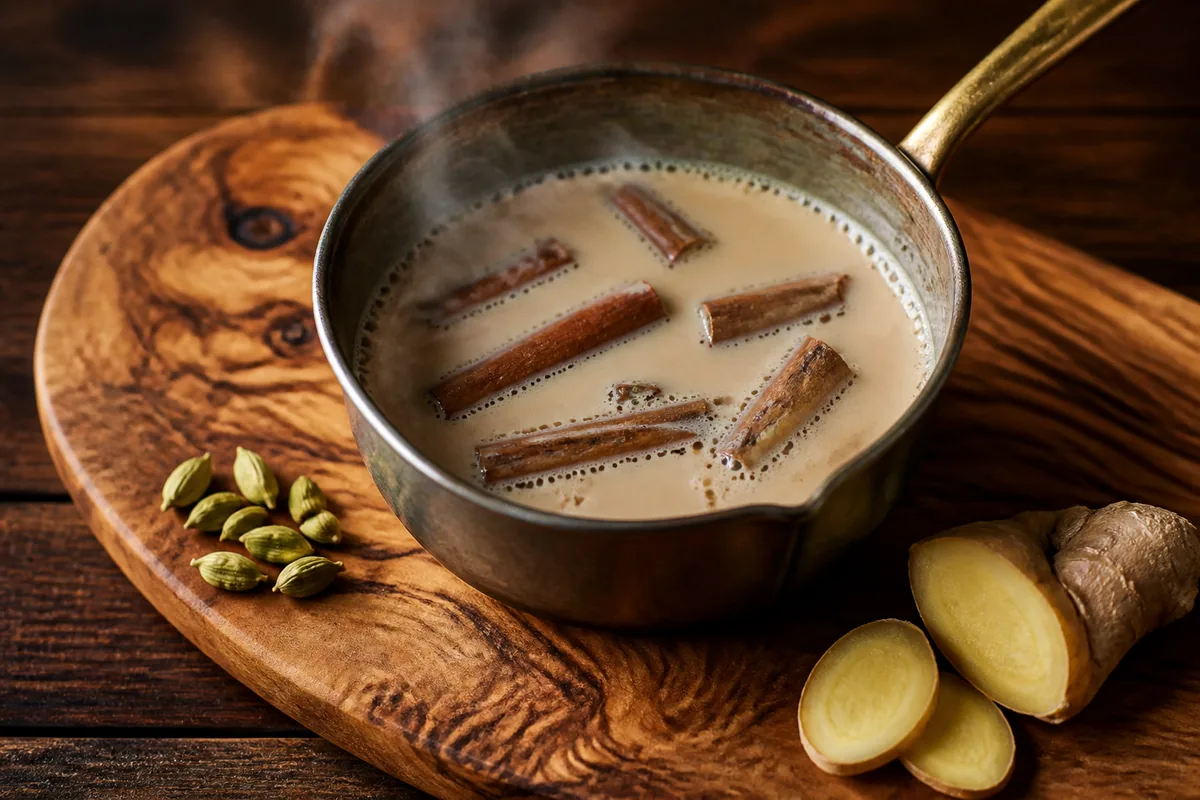
- Break it first: More cut surface means faster extraction.
- Simmer, do not steep: Fifteen to twenty minutes at a bare simmer.
- Use milk where you can: Several of the compounds dissolve better in fat than in water.
- Add the rest after: Tea leaves and sugar go in once the cinnamon has given up its aroma.
Can you use a cinnamon stick twice?
Once, and only for something forgiving.
A stick that has simmered for twenty minutes has given up most of what dissolves easily, so a second pass yields a thin and slightly woody result. Rinse it, dry it completely, and put it in a pot of rice or a stock where cinnamon is only a background note.
Do not keep one that sat in milk or in a sweet syrup.
Sugar and dairy cling to the bark and sour in storage, which makes this a food safety question rather than a flavor one.
Whole sticks are cheap enough that reuse rarely pays.
A stick costs a few cents and a ruined pot of rice costs the rice, so the arithmetic favours a fresh one whenever the dish matters.
Common cinnamon mistakes
Most cinnamon mistakes come from using the right spice in the wrong form. Ground, stick, Ceylon, and cassia are not interchangeable tools.
- Leaving sticks too long: Cinnamon bark keeps extracting tannins. Pull sticks before the broth or sauce turns dry.
- Using cassia in delicate dairy: Cassia can overpower rice pudding, custard, and tea. Ceylon fits those lighter dishes better.
- Buying unlabeled powder: If the jar does not name Ceylon, Saigon, Korintje, or cassia, you cannot predict strength.
- Adding ground cinnamon late: Dry powder clumps in finished sauces. Bloom it in fat or whisk it into liquid first.
The easiest upgrade is not more cinnamon.
It is choosing the form that matches the dish.
What cinnamon pairs with and why
Cinnamon pairs best with spices that either sharpen its sweetness or give it a darker base. Random warm-spice stacking makes food taste flat.
Pairing depends on the dish family.
Baking, meat, tea, and broth each need a different partner.
- With cardamom: Use in chai, buns, and rice pudding when cinnamon should support a floral top note.
- With cloves: Use sparingly in braises, mulled drinks, and five-spice style blends. Cloves can overpower fast.
- With ginger: Use for tagines, pumpkin dishes, and spiced tea where heat keeps cinnamon from tasting candy-like.
- With star anise: Use whole sticks in pho and Chinese red-cooked dishes. Both need time in broth.
- With nutmeg: Use in custards and cream-based desserts where fat softens both spices.
- With allspice: Use in cakes and fruit fillings when you want clove-like depth without adding cloves.
- With black pepper: Use in meat rubs and savory braises. Pepper keeps cinnamon from reading as sweet.
- With bay leaf: Use in broths and rice dishes. Bay keeps cinnamon savory instead of pastry-like.
- With coriander: Use in North African stews where citrus lift keeps cinnamon from feeling heavy.
- With vanilla: Use in custards and poached pears. Vanilla rounds the bark edge without muting it.
If a blend tastes generically warm, reduce cinnamon first. It often hides the smaller details of the other spices.
For frequent cinnamon users, two jars make sense.
Keep cassia for bold baking and Ceylon for dairy, tea, and daily light use.
If you only keep one, choose based on frequency. Daily users should favor Ceylon, and occasional bakers can keep cassia without losing performance.
Restaurants make the same decision by menu role: subtle dairy gets Ceylon, spice-heavy batters get cassia.
That split also keeps your pantry honest. One jar handles force and the other handles nuance.
It also prevents delicate desserts from tasting like breakfast cereal.
That distinction matters most in custards, tea, and poached fruit, where subtle bark aroma has room to show.
What can you use instead of cinnamon?
No single spice replaces cinnamon, because it does two jobs at once.
It supplies a sweetness that is not sugar, and it supplies a woody base that holds other warm spices together. Most substitutes cover one and miss the other.
Allspice is the closest single swap for baking.
Use about half as much, because its clove and pepper notes grow quickly. It works better in a dark batter than in a pale custard.
Nutmeg and mace fill the aroma gap without the woody base.
They suit dairy and eggs, which is often where cinnamon was sitting quietly anyway.
For a savoury braise, leave the cinnamon out rather than replace it.
A pho or a tagine missing its stick tastes incomplete, while a wrong stand-in tastes wrong, and incomplete is the safer failure.
Cassia and Ceylon substitute for each other with an adjustment. Use a little less cassia where a recipe assumed Ceylon, and a little more Ceylon where it assumed cassia.
| Instead of cinnamon | Use | What changes |
|---|---|---|
| Baking, dark batter | Allspice, half the amount | Clove and pepper notes arrive with it |
| Custard, dairy, eggs | Nutmeg or mace | Aroma without the woody base |
| Savoury braise | Nothing, omit it | Incomplete beats wrong |
| Recipe assumed Ceylon | Cassia, slightly less | Louder and more assertive |
| Recipe assumed cassia | Ceylon, slightly more | Gentler, with a citrus edge |
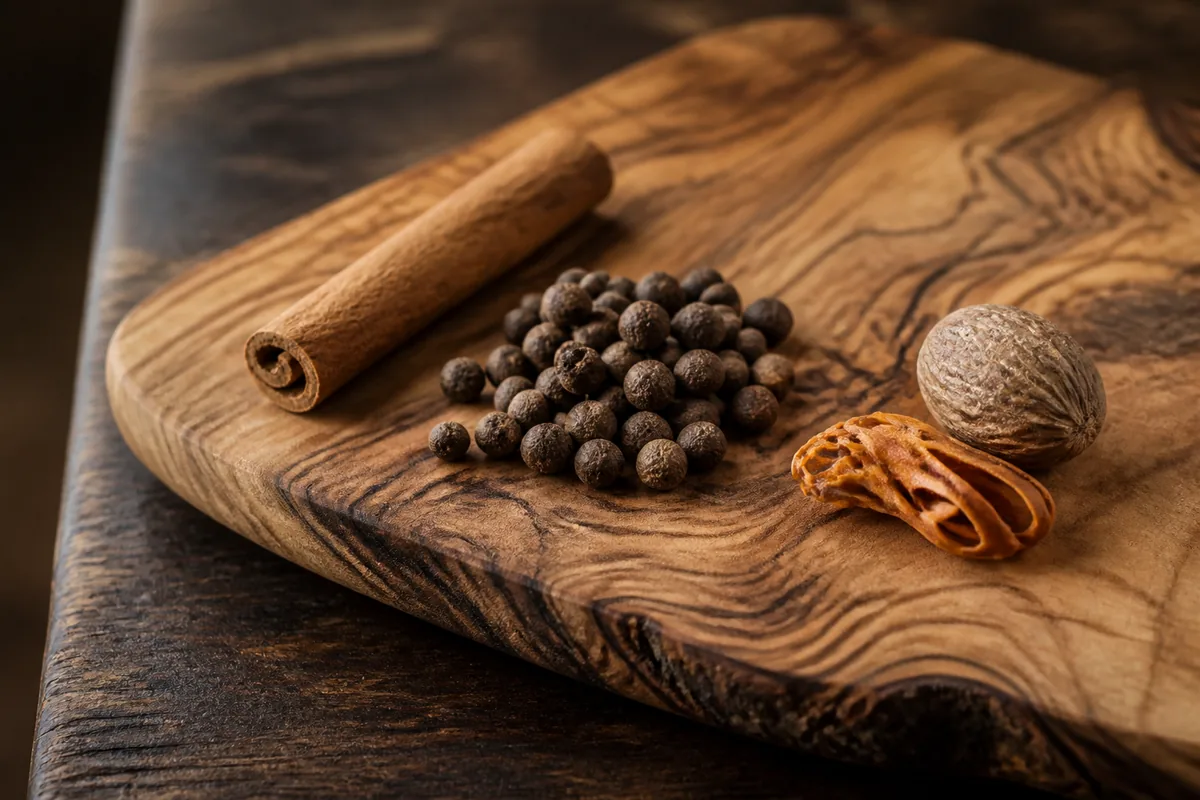
- Allspice: Closest for baking, half the amount, brings clove and pepper with it.
- Nutmeg and mace: Aroma for dairy and eggs, without the woody base.
- Savoury braises: Leave it out rather than substitute.
- Cassia and Ceylon: Swap for each other with a small adjustment either way.
Buying, identifying, and storing
To identify Ceylon: pale tan, tightly rolled in multiple thin papery layers, breaks easily, smells gently sweet with a citrus edge. Cassia is dark reddish-brown, thick, single-layered, and aggressively spicy-sweet.
Ground cinnamon loses potency within 6 months. Whole sticks last 3–4 years, making them the better long-term buy for savory use.
Cinnamon follows the same ground-spice freshness window as cumin and coriander. It goes stale at the same rate.
Cinnamon goes stale alongside nutmeg and allspice. Most baking cabinets keep them together, and all ground forms fade within 6 months.
For daily use where the coumarin question matters, buy Ceylon. For bold baking where intensity is an advantage, cassia is the right tool.
Most specialty spice shops carry labeled Ceylon sticks. Look for Cinnamomum verum or "Ceylon cinnamon" in the product description.
Do not trust "true cinnamon" by itself.