
Cloves: Why One Bud Can Take Over a Pot
Use whole buds when you can remove them, and use ground cloves by the pinch.
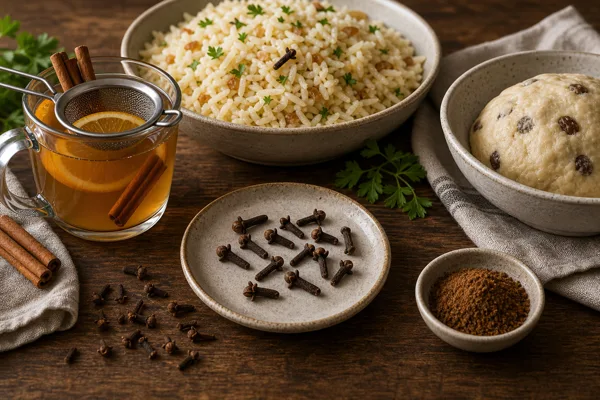
Cloves taste sweet, hot, woody, and medicinal when overused. Whole cloves are best for infusing braises, rice, mulled drinks, and stocks because you can remove them. Ground cloves spread fast in baking and spice blends, so start with tiny amounts and balance them with cinnamon, cardamom, nutmeg, citrus, or fat.
Cloves are powerful because eugenol is loud
Cloves make food taste warm, sweet, woody, and slightly numbing. The same strength turns medicinal when the dose is too high.
That strength separates cloves from cinnamon. Cinnamon can lead a dessert, while cloves usually support from the back.
| Use | Safe starting point | Risk |
|---|---|---|
| Rice or pilaf | 1 to 3 whole buds per pot | Biting a hidden clove |
| Braise or stew | 2 to 4 whole buds | Medicinal broth |
| Pumpkin pie spice | Tiny ground pinch | Numbing sweetness |
| Mulled drink | 3 to 6 whole buds | Bitter extraction |
| Pickle brine | 1 or 2 buds per jar | Perfume takes over |
Use whole cloves when the liquid has time to extract aroma.
Remove them before serving whenever possible.
That bud structure explains their shape and intensity. A small piece carries more aroma than its size suggests.
What exactly is a clove?
A clove is a flower bud that was picked before it opened.
Syzygium aromaticum is an evergreen tree, and the buds are harvested green, then dried until they turn hard and dark brown. The name comes from clavus, the Latin for nail, which is what a dried one looks like.
The shape has two parts worth knowing. The round head is the unopened petals and it holds most of the aromatic oil, while the tapering shaft is the flower stem and carries far less.
That split explains a common disappointment.
A jar full of headless shafts is cheap for a reason, and it will season a dish with woodiness and almost none of the warm sweetness you were paying for.
Cloves carry more essential oil by weight than almost any other spice. Somewhere around fifteen to twenty percent of a good dried clove is oil, and most of that is eugenol, which is why the smell reaches you across a room.
If a clove is picked after the flower opens, it is no longer a clove.
Growers time the harvest to the point where the bud has swollen and turned pink but has not split, and a few days either side changes the crop.
| Part | What it is | Why it matters |
|---|---|---|
| The round head | Unopened petals and stamens | Holds most of the oil and the sweetness |
| The tapering shaft | The flower stem | Woody, far less aroma |
| Whole clove, oil content | Roughly 15 to 20 percent by weight | Among the highest of any spice |
| Main compound | Eugenol | The smell, the numbness, and the bitterness |
Whole cloves give control
Whole cloves are safer than ground cloves in long-cooked food because you can remove them. That control matters in rice, stock, braises, and drinks.
During storage, whole spices also keep aroma longer. Cloves are a clear case where whole form protects both flavor and control.
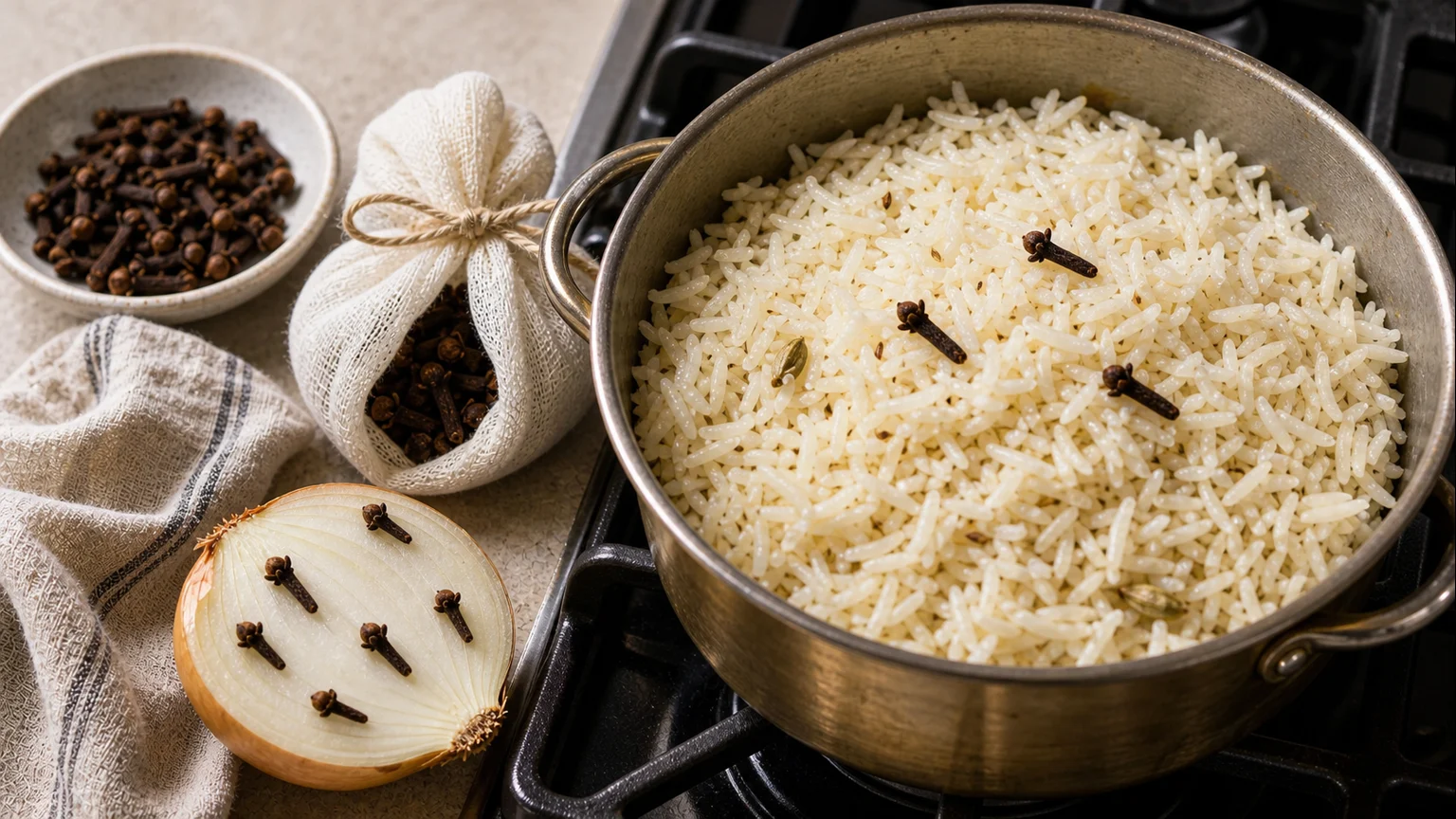
- Rice: Use 1 to 3 buds, then remove or warn diners before serving.
- Braises: Put buds in a spice bag when the sauce turns dark.
- Drinks: Strain as soon as the clove aroma is clear.
- Ground form: Keep it for doughs and blends where removal is impossible anyway.
The removal plan changes the cooking method.
Biryani can hold cloves in a studded onion. A dark stew needs a spice bag or final straining.
Studding an onion is not old-fashioned fuss. It keeps cloves findable and prevents a harsh bite.
If a recipe uses many whole spices, put cloves in a spice bag. They are easy to miss in dark sauces.
- Count them: Know how many cloves entered the pot before serving.
- Keep them whole: Broken cloves release faster and taste stronger.
- Strain drinks: Hot alcohol and sugar extract clove quickly.
- Use fewer in pressure cooking: Sealed heat can make clove aroma stronger.
Whole cloves give you an exit. Ground cloves do not.
Ground cloves need tiny measurements
Ground cloves spread through batter, sauce, and spice blends immediately. That makes them useful, but also easy to overdo.
In the dish, nutmeg has a similar tiny-dose problem in sweet food. Both spices can take over before the dish looks heavily seasoned.
| Dish | Starting amount | Balance partner |
|---|---|---|
| Cookie dough | 1/8 teaspoon per batch | Cinnamon and ginger |
| Pumpkin pie | Pinch to 1/8 teaspoon | Nutmeg and dairy |
| BBQ rub | Tiny pinch per cup rub | Paprika and sugar |
| Curry base | Pinch with warm spices | Cardamom and cinnamon |
| Hot drink | Use whole if possible | Citrus and sugar |
Measure ground cloves over a small dish, not over the pot.
One slip can ruin the batch.
Ground cloves work best when flour, sugar, dairy, or fruit can buffer the spice. Thin sauces expose the numbing edge too quickly.
Do not bloom ground cloves alone in hot oil.
Add them with other warm spices, then move quickly into the wet base.
When cooking, layering spices is useful here because cloves belong with other warm notes.
They rarely need to stand alone.
That overlap explains why allspice can replace cloves in some dishes. It also explains why both together need restraint.
Clove substitutes should soften the edge
A clove substitute should replace warmth and sweetness without copying the medicinal edge. Most dishes need less force, not equal force.
Use substitution logic when clove can be structural or optional.
A holiday cookie needs it more than a stew does.
| Clove substitute | Ratio | Where it works |
|---|---|---|
| Allspice | 1:1 or less | Baking, jerk-style rubs, stews |
| Cinnamon plus nutmeg | 2 parts cinnamon, 1 part nutmeg | Sweet dishes and drinks |
| Cardamom | 1:1 for aroma shift | Rice, coffee, some desserts |
| Mace | 1:1 gently | Cream sauces and baking |
| No clove | Skip it | When only one bud was listed |
In the dish, cardamom moves the dish floral instead of medicinal. That can be better in rice, coffee, and milk sweets.
Allspice is the closest pantry backup, but it is not weaker.
Start low, then taste after heat wakes it.
For savory food, skipping clove is often safer than forcing a substitute.
A braise can still taste complete with bay, pepper, and cinnamon.
For sweet food, the missing note is easier to rebuild. Cinnamon, nutmeg, citrus zest, and vanilla can cover the gap without copying clove.
- For baking: Use allspice or cinnamon plus nutmeg, then keep the total warm spice modest.
- For rice: Use cardamom or cinnamon stick if cloves are missing.
- For braises: Skip cloves before adding too much substitute.
- For drinks: Use cinnamon, orange peel, and allspice in small amounts.
The goal is warmth, not proof that clove was there. A softer dish is better than a medicinal one.
Buying cloves by oil and shape
Good whole cloves look plump, dark brown, and nail-shaped. They should smell sweet and strong when cracked.
Cloves age like other stored spices, but whole buds keep useful aroma longer than powder. Light, heat, and air still matter.
- Whole buds: Look for intact heads and stems, not a bag of broken dust.
- Aroma: A fresh bud smells sweet, woody, and sharp when pressed.
- Ground cloves: Buy tiny jars because the powder is strong and slow to use.
- Storage: Keep cloves sealed, dry, cool, and away from the stove.
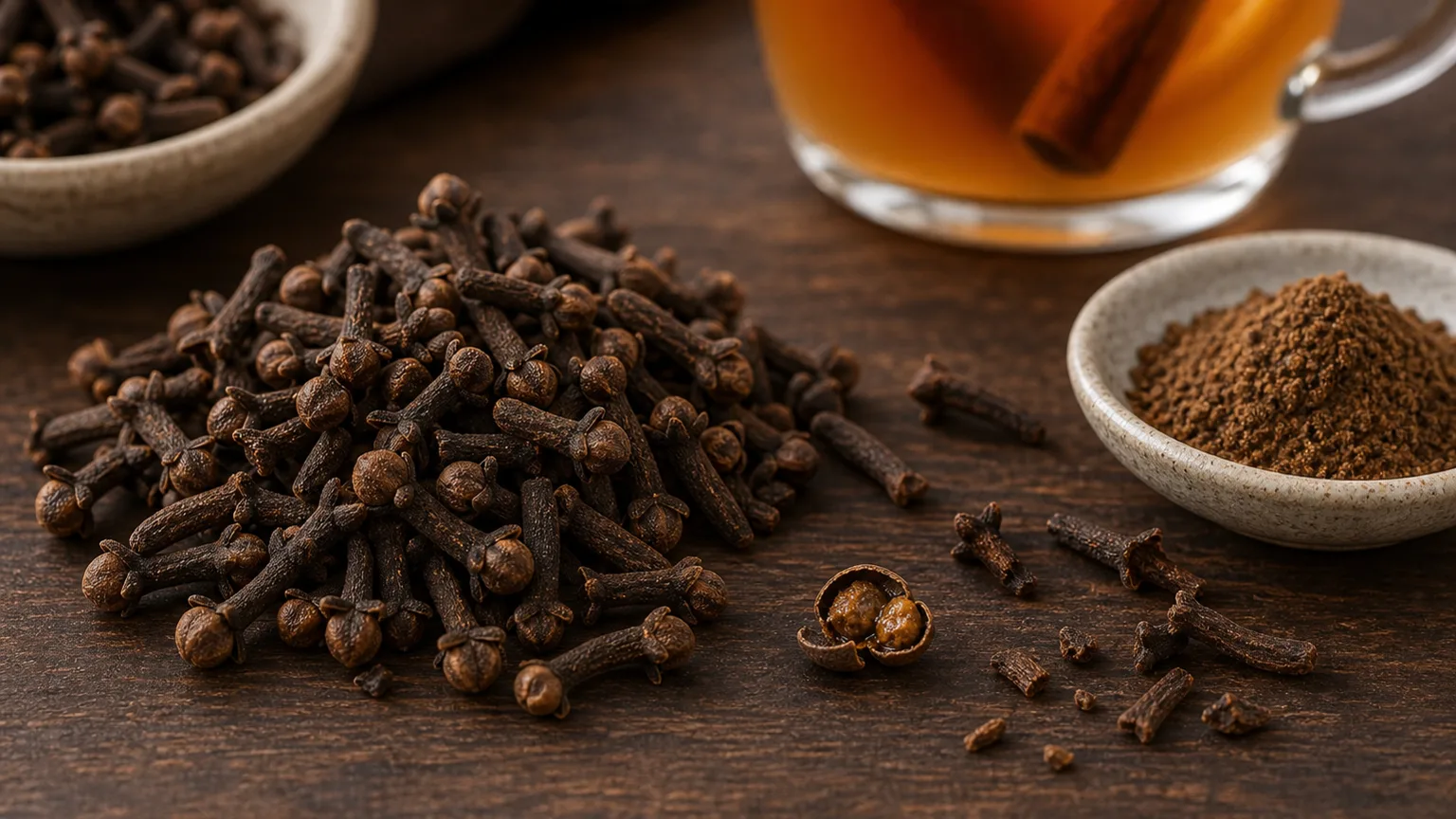
- Intact heads: The round bud top carries the aroma you want.
- Broken stems: Too many stems season weakly and can taste woody.
- Oily crack: A fresh clove smells strong when pressed or split.
- Ground dish: Powder should be bought in small jars because it fades slowly on the shelf.
If whole cloves smell faint, they will not improve in the pot.
Replace them before increasing the amount.
A few fresh buds do more than a spoonful of tired powder. Strength should come from freshness, not volume.
Press a whole bud with your fingernail before buying from a bulk bin. A fresh clove should feel slightly oily, not hollow and brittle.
Broken heads matter because the round bud top carries much of the aroma. A bag of stems will season weakly and harshly.
Bulk bins need extra caution because clove aroma can perfume the scoop while the buds themselves are old.
Crack one bud if the shop allows it.
If you cannot test a bud, buy the smallest sealed amount. Cloves are strong, so a large bag usually ages before it is useful.
Ground cloves should smell sweet before they smell medicinal. A flat jar will push you to add too much and create the exact problem clove causes.
- For rice: Choose whole buds with intact heads so one or two can perfume the pot.
- For baking: Choose a tiny fresh ground jar instead of grinding a large batch.
- For drinks: Use whole buds so the steep can stop before bitterness builds.
- For blends: Grind cloves only with enough other spices to dilute their force.
Buying cloves well is dose control before cooking starts. Fresh buds let you use fewer pieces with cleaner aroma.
Write the open date on ground cloves.
They often sit through many baking seasons unnoticed.
Why do cloves numb your mouth?
Biting a whole clove leaves a spreading numbness that no other kitchen spice produces.
Eugenol is a mild local anaesthetic, and a clove is loaded with it. That is the same property behind the old dentist-office smell and behind clove oil sold for toothache.
The numbness is harmless at cooking amounts. A clove that turns up in a mouthful of biryani gives an unpleasant surprise and a numb tongue for a few minutes, and nothing more than that.
Concentrated clove oil is a different matter.
It is strong enough to irritate skin and gums, and swallowing it is genuinely dangerous, which is why a bottle of essential oil is not a kitchen substitute for the spice.
The same compound is why cloves preserve food. Eugenol slows bacterial growth, and that is part of why cloves turn up in cured meats, pickling spice, and long-keeping fruit preserves rather than only in sweets.
It also explains the bitterness of too many.
Push past a few cloves in a pot and eugenol stops reading as warm and starts reading as medicinal, because there is nothing else in the spice to balance it.
- The numbness: Eugenol acting as a mild local anaesthetic. Harmless at cooking doses.
- Clove oil: Not a kitchen ingredient. Strong enough to irritate skin and gums.
- Preserving: The same compound slows spoilage, which is why cloves are in pickling spice.
- Too many: Eugenol with nothing to balance it reads as medicinal, not warm.
Where cloves belong
Cloves belong where sweetness, fat, or starch can absorb their force. They are risky in thin liquids without balance.
In many warm spice blends, cloves act like punctuation. They make the blend smell complete, then disappear behind larger notes.
Rice and pilaf can take whole cloves because steam carries aroma through starch. Braises can take them because fat and time round the phenolic edge.
Baking needs ground cloves because the spice must spread evenly through dough.
Mulled drinks and pickles need whole buds because the cook has to stop extraction before bitterness wins.
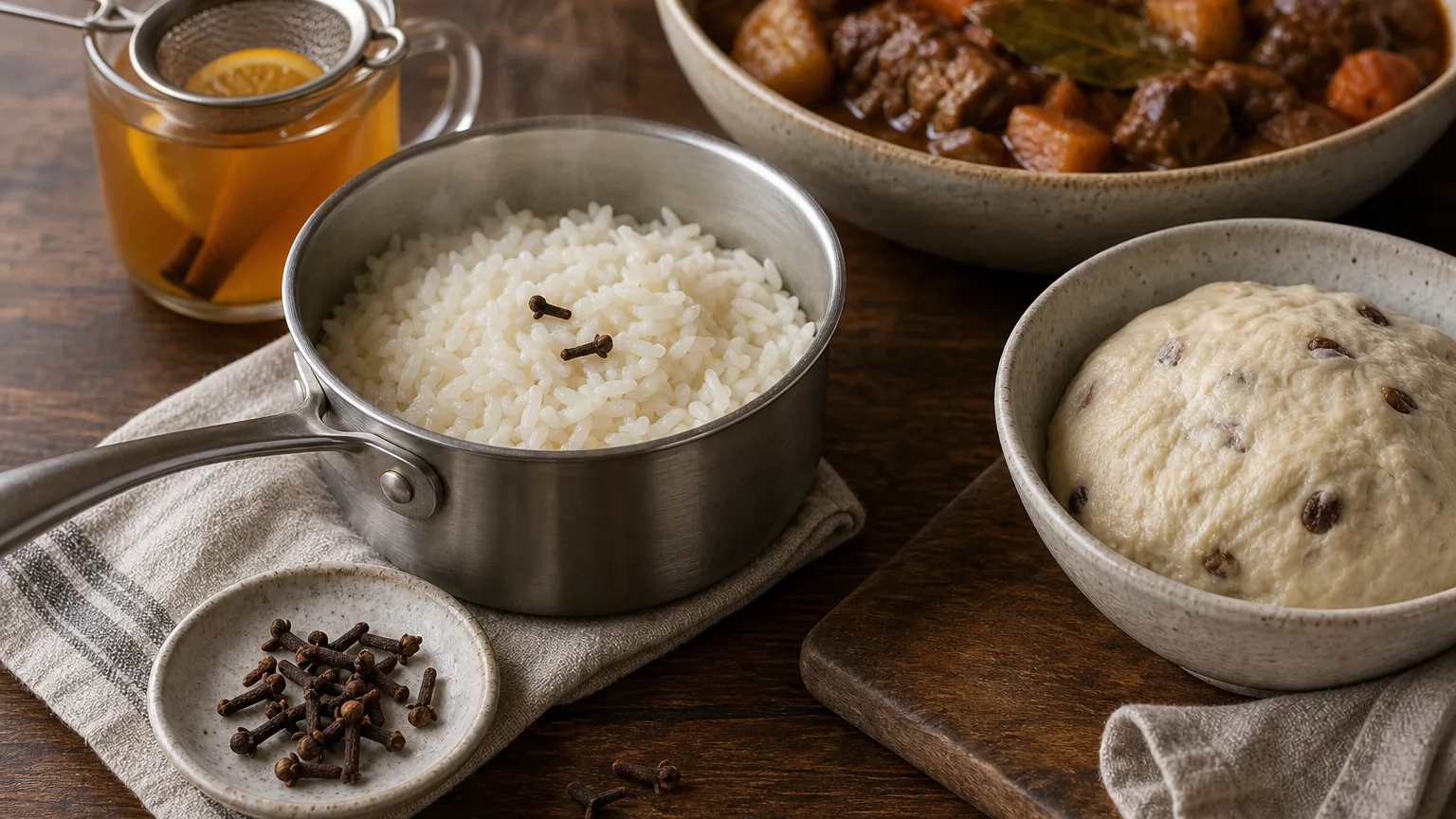
- Rice: Whole buds can perfume starch, but they still need removal.
- Dough: Ground cloves spread safely only when flour and fat dilute them.
- Drink: Straining stops hot liquid from overextracting the buds.
- Braise: Fat and time round the edge better than thin broth does.
- Starch buffer: Rice, bread, and cookie dough soften clove strength by spreading it through bulk.
- Fat buffer: Braises and dairy desserts round the woody edge better than thin broths.
- Acid risk: Pickles need very few buds because acid makes the aroma feel sharper.
- Drink timing: Hot wine and cider extract quickly, so cloves should come out before the spice tastes bitter.
Use cloves with cinnamon, cardamom, citrus, ginger, black pepper, or bay.
Do not let clove carry the whole spice load.
That is the practical lesson. Use clove as a small signal, not a main voice.
Can you eat whole cloves?
They are edible, and almost nobody wants to.
A whole clove is hard, fibrous, and concentrated enough that biting one delivers a burst of eugenol that overwhelms everything else in the mouth. It will not hurt you.
Treat them the way you treat a bay leaf. Count them into the pot so you can count them out again, and a clove studded into an onion or wrapped in a spice bag makes retrieval simple.
Some dishes hide them deliberately. An onion pique in a bechamel, cloves pushed into a ham, and a mulling bundle all put the whole spice where it can be lifted out in one piece.
Ground cloves are a different question entirely.
There is nothing to remove, which is why ground clove is measured in pinches and why a heavy hand cannot be undone once the pot is stirred.
A clove that shows up on a plate is a serving mistake, not a safety one. Apologise, hand over a fork, and count more carefully next time.
- Whole cloves: Edible but unpleasant to bite. Count them in so you can count them out.
- Studded onion or spice bag: The easiest way to retrieve them from a large pot.
- Ground cloves: Nothing to remove, which is why they are measured in pinches.
- On the plate: A serving mistake, not a safety one.
Are cloves and allspice the same thing?
They are unrelated plants that ended up smelling like cousins.
Allspice is the dried berry of Pimenta dioica, a Caribbean tree, and it was named for tasting like clove, cinnamon, and nutmeg at once. Cloves come from a different genus on the other side of the world.
Eugenol is the reason they overlap. Both spices carry it as their leading compound, which is why allspice is the one substitute that genuinely covers a clove's job rather than approximating it.
The difference is what sits alongside the eugenol. Allspice brings pepper and a faint sweetness that softens the edge, so it lands where a clove would have arrived sharp and alone.
Swap allspice in at roughly double the clove quantity.
Two allspice berries stand in for one clove in most braises and mulling mixes, and the result reads warmer and less sharp than the original.
How to rescue too much clove
Too much clove tastes numbing, bitter, and medicinal. The fix is dilution plus softening, not another strong spice.
Start by removing whole buds if you can find them. Then add starch, fat, dairy, fruit, or more unsalted base.
| Dish | Repair | Avoid |
|---|---|---|
| Rice | Remove buds and add plain rice | More cinnamon |
| Stew | Add potato, stock, or beans | More pepper |
| Cookie dough | Double dough without clove | Extra vanilla alone |
| Mulled drink | Strain and dilute with juice or wine | Longer steeping |
| Curry base | Add tomato, yogurt, or coconut milk | More ground clove |
| Poached fruit | Add more fruit and syrup | Extra ground spice |
The repair depends on form. Whole buds can still be removed, but ground cloves already live inside every spoonful.
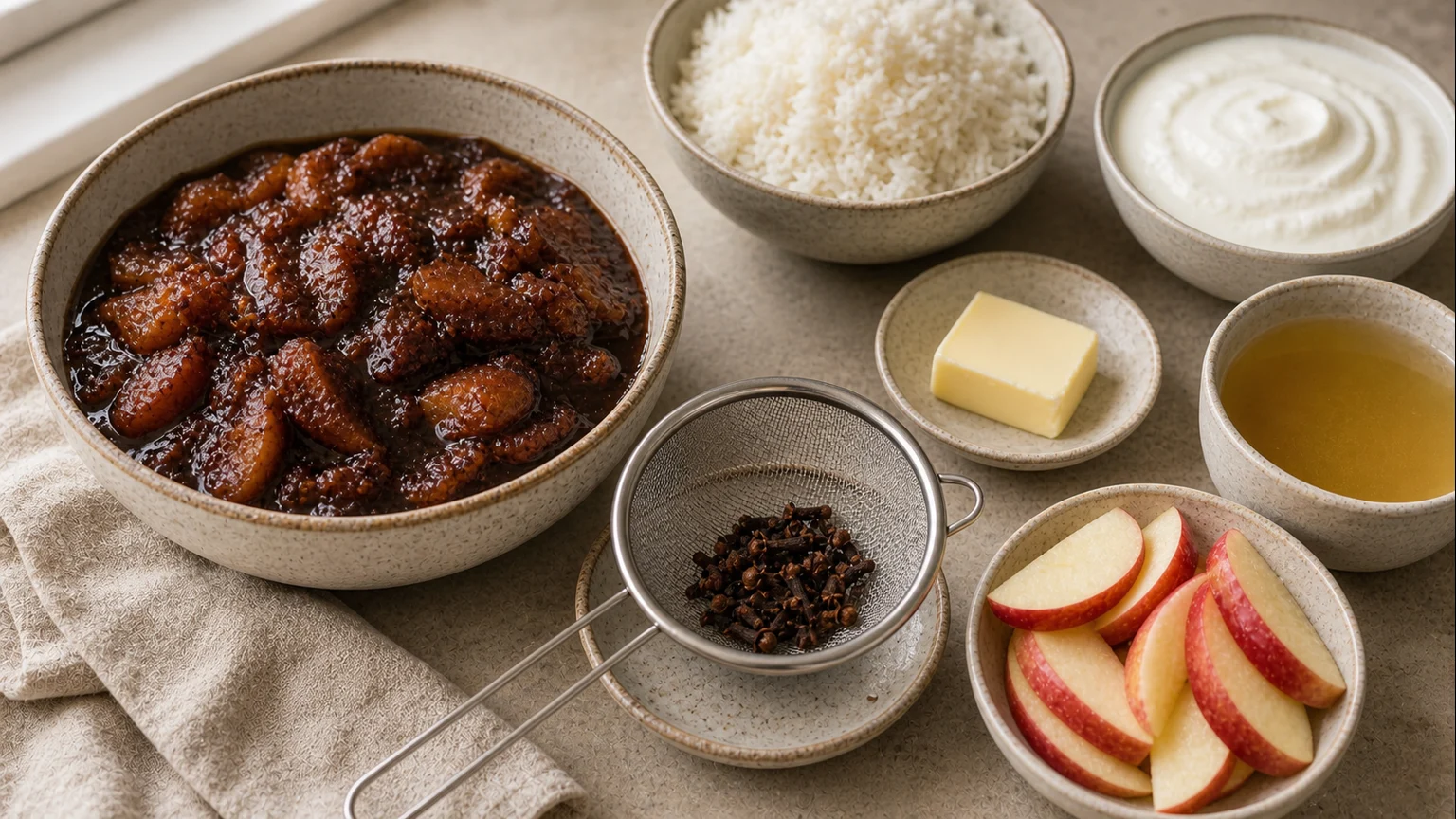
- Remove: Strain or fish out buds before pureeing or serving.
- Dilute: Rice, potato, fruit, stock, or unsalted base lowers concentration.
- Soften: Yogurt, cream, butter, or coconut milk can mute the edge.
- Delay acid: Citrus helps some desserts but sharpens thin sauces.
Clove mistakes get worse during holding time.
Pull whole buds as soon as the aroma is clear.
Ground clove repair is slower because every spoonful already contains spice. You need more base, not sharper seasoning.
Sugar can hide bitterness in desserts, but it will not remove numbness.
Fat and starch do more useful work.
If ground cloves dominate a dry spice mix, make a larger unsalted mix without cloves. Blend the strong batch into it slowly.
- Smell first: If clove is the first aroma, stop adding warm spices.
- Dilute wide: Add neutral bulk before adding new flavors.
- Add acid carefully: Citrus can brighten baking, but it can sharpen thin sauces.
- Rest briefly: Taste again after 10 minutes because clove keeps blooming in warm food.
The best repair is prevention.
Count whole cloves and measure ground cloves away from the pot.
For the next batch, write the bud count or ground amount next to the pan size. Clove mistakes repeat when the recipe only says a pinch.
When serving guests, remove cloves before the food reaches the table.
Nobody wants to discover one by biting it.
For blended sauces, strain before pureeing if whole cloves were used. Once blended, the clove cannot be found or removed.
For baking, write clove amounts in fractions on the recipe card. A clear note prevents repeat mistakes next season.
If the food is already baked, serve it with cream, yogurt, or plain fruit. Cold dairy softens clove better than extra sugar.
For savory food, add neutral bulk before acid. Acid can make the clove edge feel sharper in thin sauces.
That order keeps repair simple and controlled.