
What Is in Chinese Five Spice, and When Should You Use It?
Star anise leads the blend while cinnamon, fennel, clove, and pepper shape the finish.
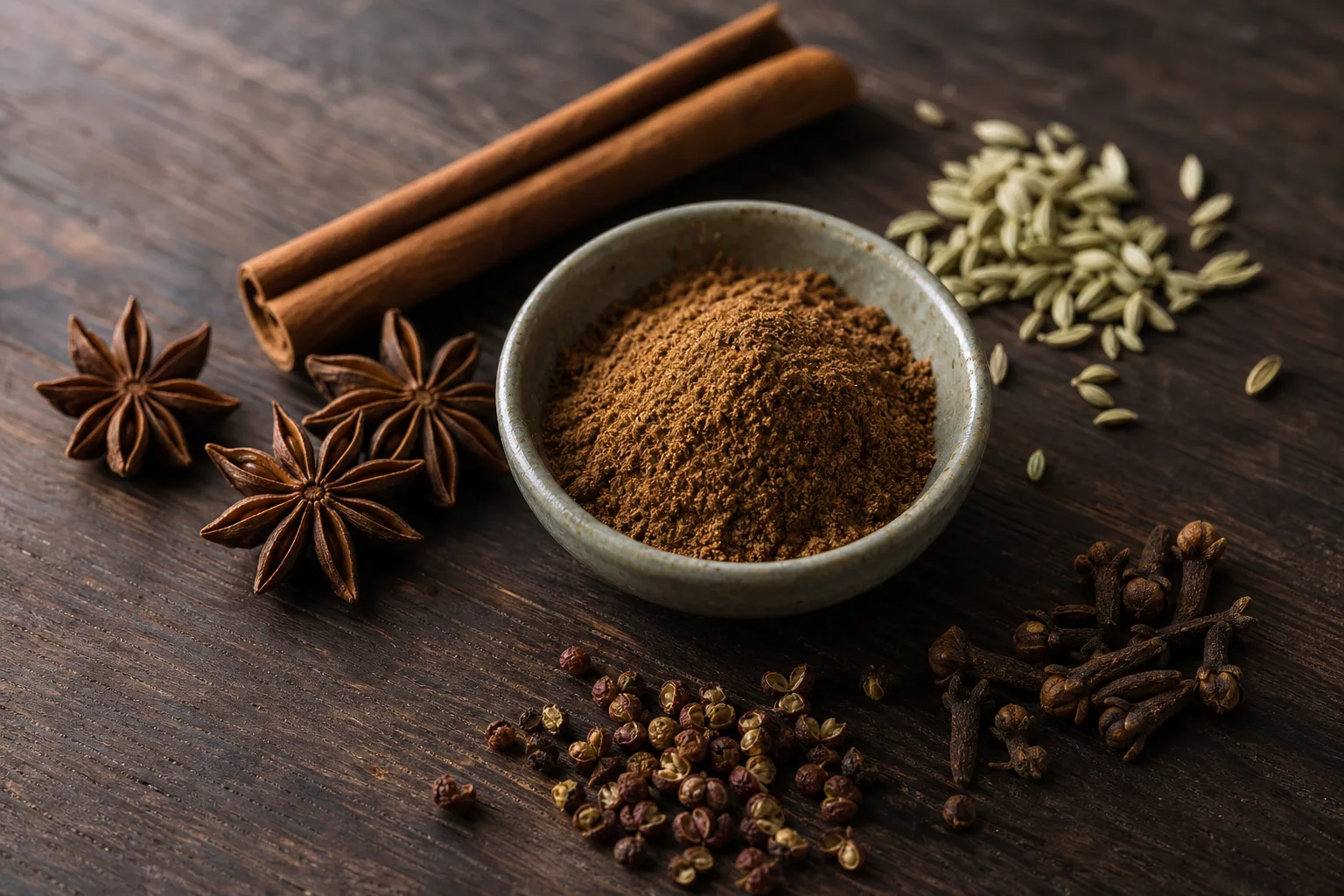
Chinese five spice is a strong blend led by star anise, not chile heat, with cinnamon, fennel, clove, and pepper shaping the finish. Use small amounts in braises, roast meats, tofu, noodles, glazes, and roasted vegetables where fat, soy sauce, sugar, or browning can carry it.
What does Chinese five spice taste like?
Chinese five spice tastes sweet, warm, woody, lightly numbing, and licorice-like in one small spoonful.
The blend is not meant to make food spicy. It gives dark aroma that feels bigger after browning or simmering.
Star anise usually speaks first, so the first mistake is using it like a mild background seasoning.
A small amount can season a whole pan because the licorice note travels through fat and steam.
That strength separates it from curry powder, which often brings turmeric color, coriander, cumin, and chile direction.
| Ingredient | Job in the blend | When it gets too loud |
|---|---|---|
| Star anise | Licorice top note and dark sweetness | The dish tastes medicinal |
| Cinnamon or cassia | Warm body under the anise | Savory food starts tasting like dessert |
| Fennel seed | Soft anise bridge and seed sweetness | The finish turns candy-like |
| Clove | Sharp warmth and depth | The food tastes bitter or numbing |
| Sichuan or white pepper | Tingle, lift, or dry bite | The blend feels buzzy or dusty |
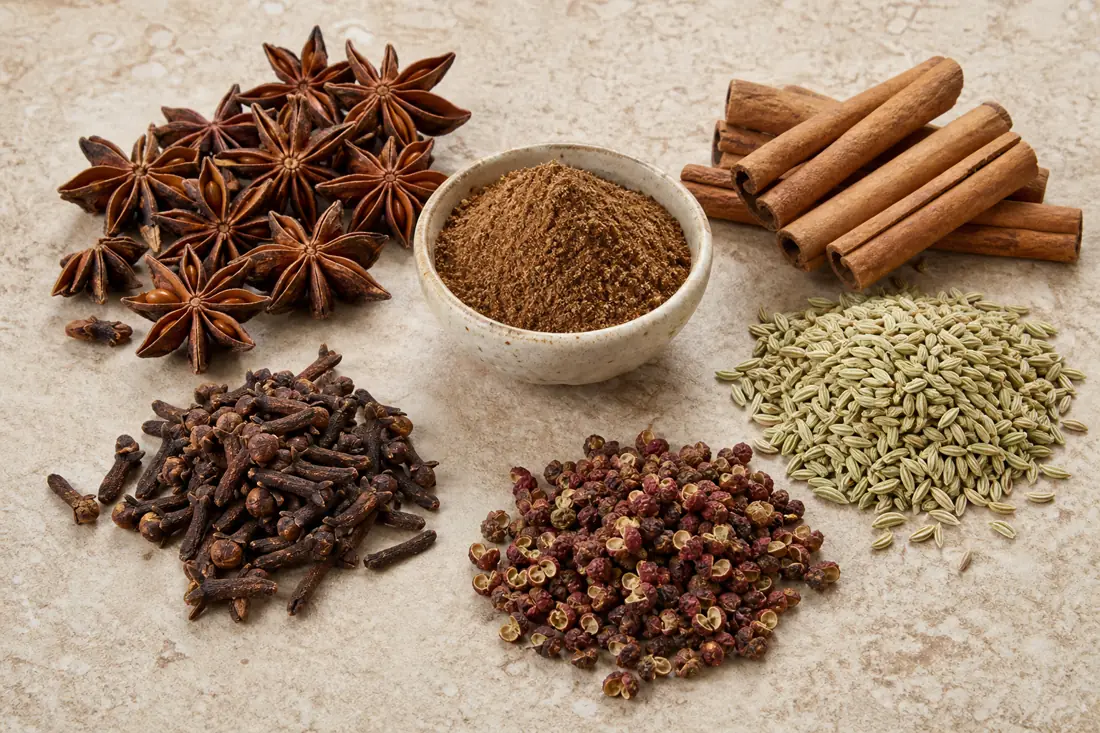
- Lead: Star anise
- Sweet warmth: Cinnamon and fennel
- Finish: Clove and Sichuan pepper
When a dish tastes wrong, name the loud note first. A licorice problem needs a different fix than a clove problem.
Which spices are in Chinese five spice?
A typical jar starts with one dark anise note, one warm bark note, one sweet seed, one sharp bud, and one peppery finish.
Some jars replace Sichuan pepper with white pepper, black pepper, ginger, anise seed, dried citrus peel, or galangal.
That variation is normal because the useful goal is balance across sweet, warm, sharp, and tingling notes.
Warm cinnamon or cassia gives the blend body. It should support star anise, not turn dinner into baking spice.
Whole cloves bring depth in tiny amounts. Too much clove makes the whole blend taste hard and bitter.
Black pepper or white pepper gives a drier finish when Sichuan pepper is missing.
- If star anise leads: use the blend with pork, duck, tofu, or soy glaze.
- If cinnamon leads: keep the dose lower in savory food.
- If pepper leads: use it where a dry bite helps rich meat.
- If clove leads: save it for braises, not quick noodles.
Read the ingredient list before cooking. Two jars can share the name and still season food differently.
What foods go best with Chinese five spice?
Five spice works best when fat, soy sauce, sugar, salt, or roasting gives the aroma somewhere to land.
That is why pork belly, duck, ribs, dark-meat chicken, mushrooms, tofu, nuts, and roasted squash can handle it.
A soy-sugar glaze makes star anise taste savory instead of candy-like. Browning also rounds the sharp clove edge.
For a dry rub, mix the powder with salt and a little sugar before it touches meat.
For tofu or mushrooms, add oil and enough salt. Lean food needs help because the blend has nowhere to spread.
| Food | How to use it | Why it works |
|---|---|---|
| Pork belly or ribs | Rub with salt and sugar before roasting | Fat carries star anise and clove |
| Duck or dark chicken | Use in marinade or glaze | Skin browning rounds the spice |
| Tofu or mushrooms | Mix with oil, soy sauce, and garlic | Savory liquid carries the powder |
| Roasted squash | Use a small pinch with oil and salt | Sweet flesh can handle warm spice |
| Noodles or fried rice | Bloom a pinch in oil first | The dose spreads before the starch enters |
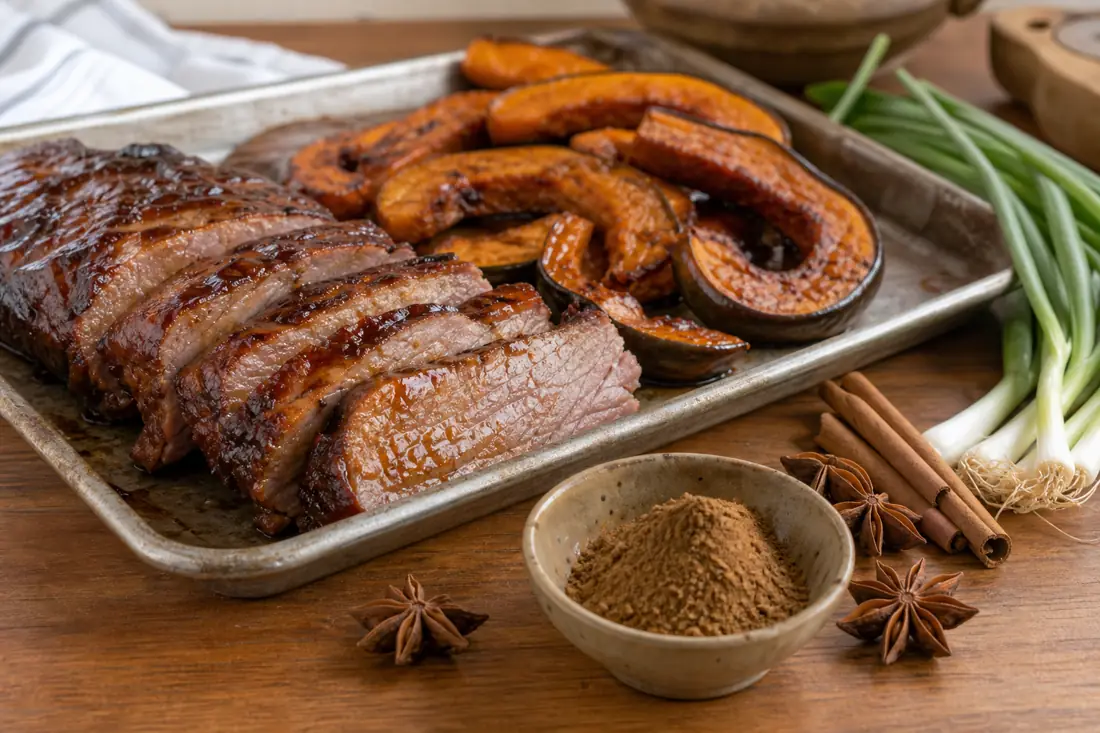
- Richness: Meat fat or cooking oil
- Sweet edge: Glaze or caramelized squash
- Balance: Salt keeps the blend savory
Avoid shaking it over plain steamed rice, light soup, or a finished salad. The raw powder will taste louder than the food.
When should you add Chinese five spice?
Five spice usually tastes better after brief heat because the powder loses its raw edge.
For braises, add it with oil, aromatics, browned meat, or sauce before the long simmer starts.
Soy sauce, Shaoxing wine, stock, brown sugar, garlic, and scallion all help the blend settle into the liquid.
For quick glazes, add the powder after liquid enters the pan. Fine spices can scorch in dry hot oil.
The same caution applies when layering spices. Strong base notes need a carrier before they meet high heat.
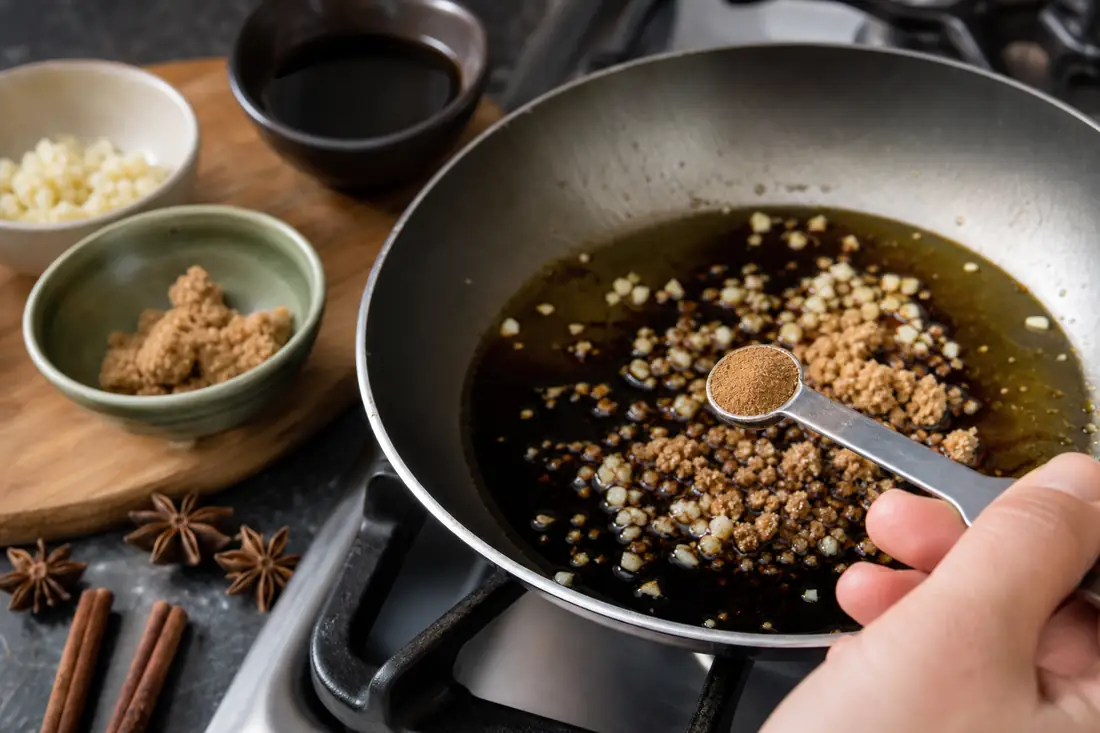
- Start small: Measure before adding
- Carrier: Mix into glaze or fat
- Stop cue: Food still smells like itself
- Braise: add early with sauce so the aroma softens over time.
- Roast: mix into a rub before the food enters the oven.
- Stir-fry: bloom a pinch briefly, then add food fast.
- Glaze: stir into liquid and keep the heat moderate.
If the pan smells bitter, stop cooking the spice directly. Add liquid and lower the heat before judging the flavor.
How much Chinese five spice should you use?
Start with 1/4 teaspoon per pound of meat, tofu, mushrooms, or vegetables for a mild background.
Use 1/2 teaspoon per pound only when soy sauce, sugar, fat, or long cooking can balance it.
For noodles, fried rice, nuts, or roasted vegetables, start with a pinch because every bite gets direct contact.
Clove and star anise do not fade politely. They keep showing up after salt, sugar, and fat are adjusted.
| Dish | Starting amount | Taste before adding more |
|---|---|---|
| Roast pork or ribs | 1/4 teaspoon per pound | After the rub rests |
| Duck or chicken glaze | 1/4 teaspoon per cup glaze | After the glaze simmers |
| Tofu or mushrooms | 1/8 teaspoon per block or pound | After browning starts |
| Noodles or fried rice | One small pinch for two servings | After soy sauce is mixed in |
| Spiced nuts | 1/8 teaspoon per cup nuts | After cooling slightly |
If you are using a new jar, cut the first dose in half. Fresh star anise can be much stronger than expected.
Taste after salt is correct. Under-salted food often makes five spice seem harsher than it really is.
What can you use instead of Chinese five spice?
No single pantry spice replaces Chinese five spice because the blend combines several jobs at once.
The fastest backup is star anise, cinnamon, fennel, and a tiny pinch of clove. Add pepper if the dish needs bite.
If star anise is missing, stop and ask what the dish needs. Cinnamon and clove cannot create the same licorice note.
Garam masala can help only when the dish can accept South Asian warmth. It will not copy the anise lead.
Fresh ginger can add warm bite in a marinade, but it does not replace fennel or star anise.
| What you have | Use it how | Watch for |
|---|---|---|
| Star anise plus cinnamon | Add fennel and tiny clove if possible | Too sweet without salt |
| Anise seed plus cinnamon | Use in light glazes or nuts | Less dark than star anise |
| Garam masala | Use less in roasted meat or vegetables | Different cuisine direction |
| Cinnamon plus clove | Use only as a last backup | Missing licorice and pepper |
| Curry powder | Skip for most five-spice uses | Turmeric and cumin change the dish |
A substitute should protect dinner, not prove a point. If the licorice note matters, choose another dish or buy the blend.
How do you make Chinese five spice at home?
Freshly ground five spice can taste clearer than an old jar, but small batches matter more than perfection.
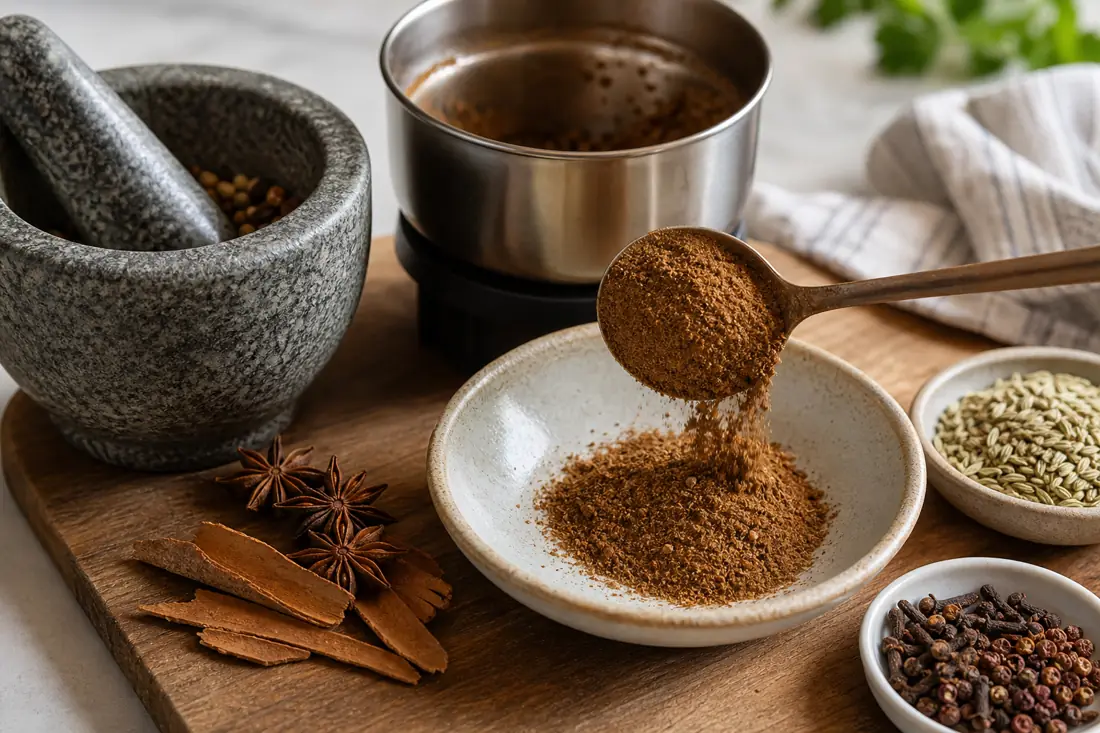
Toast whole fennel, peppercorns, cloves, and star anise gently, then cool them before grinding.
Cooling matters because hot spices trap steam. Steam makes powder clump and shortens storage life.
Use the same basic method as toasting spices, but stop before the star anise smells smoky.
Grind only what you can use within a few months. A big homemade jar still fades like a store-bought one.
- Batch size: Mix only what you will use soon
- Grind: Cool toasted spices first
- Store: Seal away from heat and light
A spice grinder gives the finest powder. A mortar works for small amounts if you sift out hard pieces.
For more control, use the full spice grinding method and add ground cinnamon after the hard spices are fine.
Five-spice is not interchangeable with every warm blend
Five spice can sit near other warm blends on the shelf, but it should not be treated like them.
Its licorice lead makes it behave differently from blends built around cumin, coriander, cardamom, turmeric, or chile.
Use that difference when choosing dinner. Five spice points toward soy glazes, braised meat, duck, tofu, and roasted sweet vegetables.
Garam masala points toward lentils, rice, yogurt, ghee, tomatoes, and toasted spice warmth.
Curry powder points toward turmeric color, coriander, cumin, fenugreek, and saucy bases that can take yellow spice.
| Blend | Lead signal | Best first use |
|---|---|---|
| Chinese five spice | Star anise, fennel, clove, pepper | Soy glazes, pork, duck, tofu, roasted squash |
| Garam masala | Toasted warm spice, cardamom, cumin | Lentils, rice, vegetables, meat curries |
| Curry powder | Turmeric, coriander, cumin, chile direction | Sauces, stews, vegetables, chicken |
That difference matters most when a recipe says warm spice. The right warm blend depends on the sauce, fat, and cooking tradition.
If the recipe already uses soy sauce and sugar, five spice fits more naturally than a turmeric-heavy blend.
If the recipe uses tomato, yogurt, coconut milk, or lentils, another warm blend may make more sense.
A fresh jar should smell of star anise before cinnamon
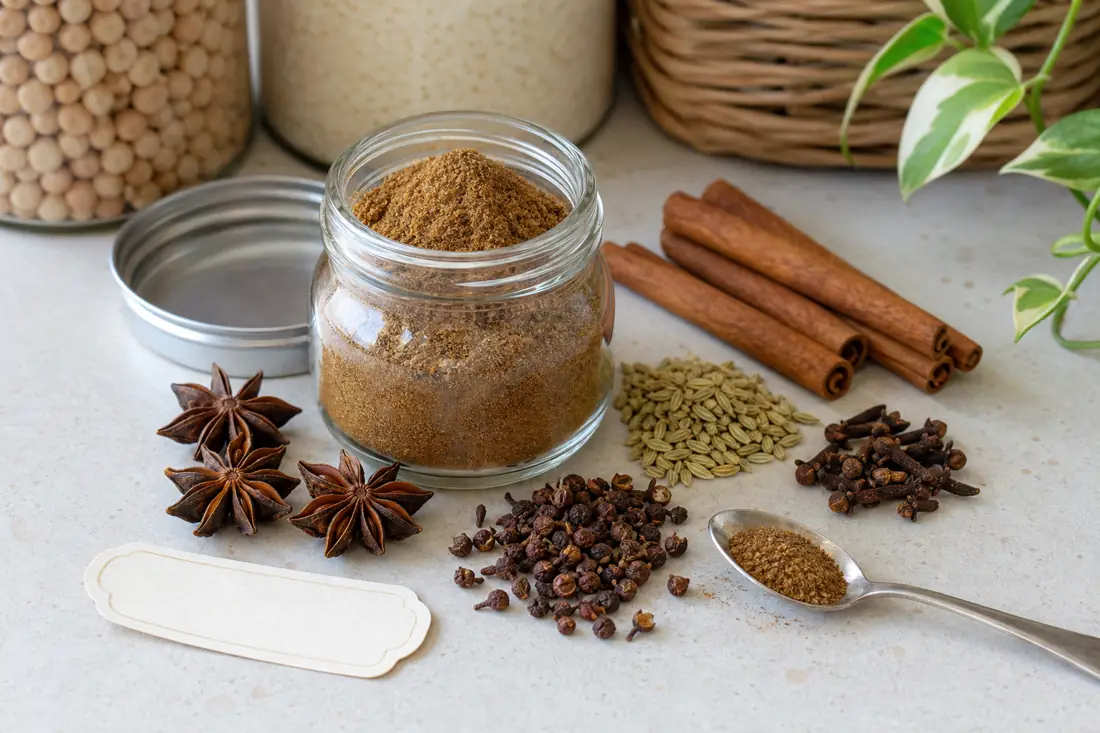
Good five spice should smell like star anise first, then warm bark, fennel sweetness, clove depth, and pepper lift.
If the jar smells like plain dust or dull cinnamon, it will push you to use too much.
Buy small jars unless you cook with the blend often. Ground spice blends lose their top notes before they look old.
Store it sealed, cool, dark, and away from steam. The whole versus ground rule is strict here.
- Fresh first note: Clear star anise
- Tired blend: Flat cinnamon dust
- Storage risk: Heat, steam, and a loose lid
If the dish tastes too licorice-heavy, add more base food, soy sauce, vinegar, rice wine, or broth.
If it tastes bitter, the powder may have scorched or the clove may be too strong. Add liquid before adding sugar.
If it tastes flat, check the jar before adding more. The spice freshness test may save the dish.
- Too licorice-heavy: dilute with more food, broth, soy sauce, or acid.
- Too bitter: add liquid and lower the heat before sweetening.
- Too sweet-warm: add salt, vinegar, scallion, ginger, or chile.
- Too weak: replace the jar if aroma is gone.
The best fix is prevention. Measure away from the pan and taste after the dish has enough salt.