
Is Curry Powder Actually Indian? How to Use It Well
It gives quick yellow warmth to weeknight cooking, but it tastes flat unless you bloom it and build fresh flavor around it.
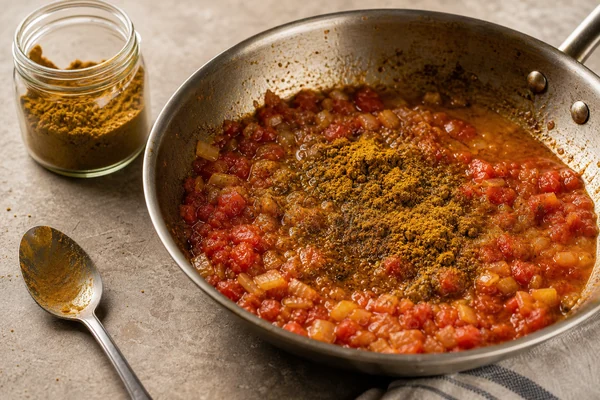
Curry powder is a British convenience blend that adds quick yellow color and mild warmth as an early base. Bloom it in oil to remove the dusty taste, then build fresh aromatics around it because the jar alone tastes generic.
Is curry powder actually Indian?
Not as one fixed Indian masala. The commercial all-purpose powder took shape for British cooks who wanted a shelf-stable blend that could suggest the sauces they had encountered in South Asia.
Indian cooking does not revolve around one standard curry powder. Cooks choose whole and ground spices for the dish, region, and household, so a supermarket blend cannot represent all of those combinations.
That does not make curry powder useless.
It is a genuinely handy shortcut, as long as you know what it is and treat it accordingly.
The word curry itself is a British catch-all, not an Indian one. Understanding that keeps your expectations honest and your cooking better.
Curry powder is not garam masala
The most useful thing to know is how curry powder differs from garam masala. They are built for opposite ends of the cook.
Curry powder leans on ground turmeric and goes in early, coloring and seasoning a dish from the start.
It needs heat and time to lose its raw edge.
A garam masala is a warm finishing blend, added near the end for aroma. Swapping one for the other puts the wrong flavor at the wrong stage.
So they are not interchangeable. Curry powder builds the savory yellow foundation, while garam masala perfumes the finished dish.
What is actually inside curry powder?
Most curry powders share a core of turmeric, ground coriander, and cumin.
Turmeric brings color and earthiness.
Coriander adds a citrus lift, while cumin supplies the darker roasted base.
From there, blends vary. Fenugreek adds a maple-savory depth, black pepper or chile brings heat, and ginger or cinnamon can round out the warmth.
The first ingredient matters because labels list ingredients by weight.
A turmeric-first blend usually gives stronger color than aroma.
A coriander-heavy blend tastes lighter and more citrusy.
More cumin pushes the jar toward a darker, earthier base.
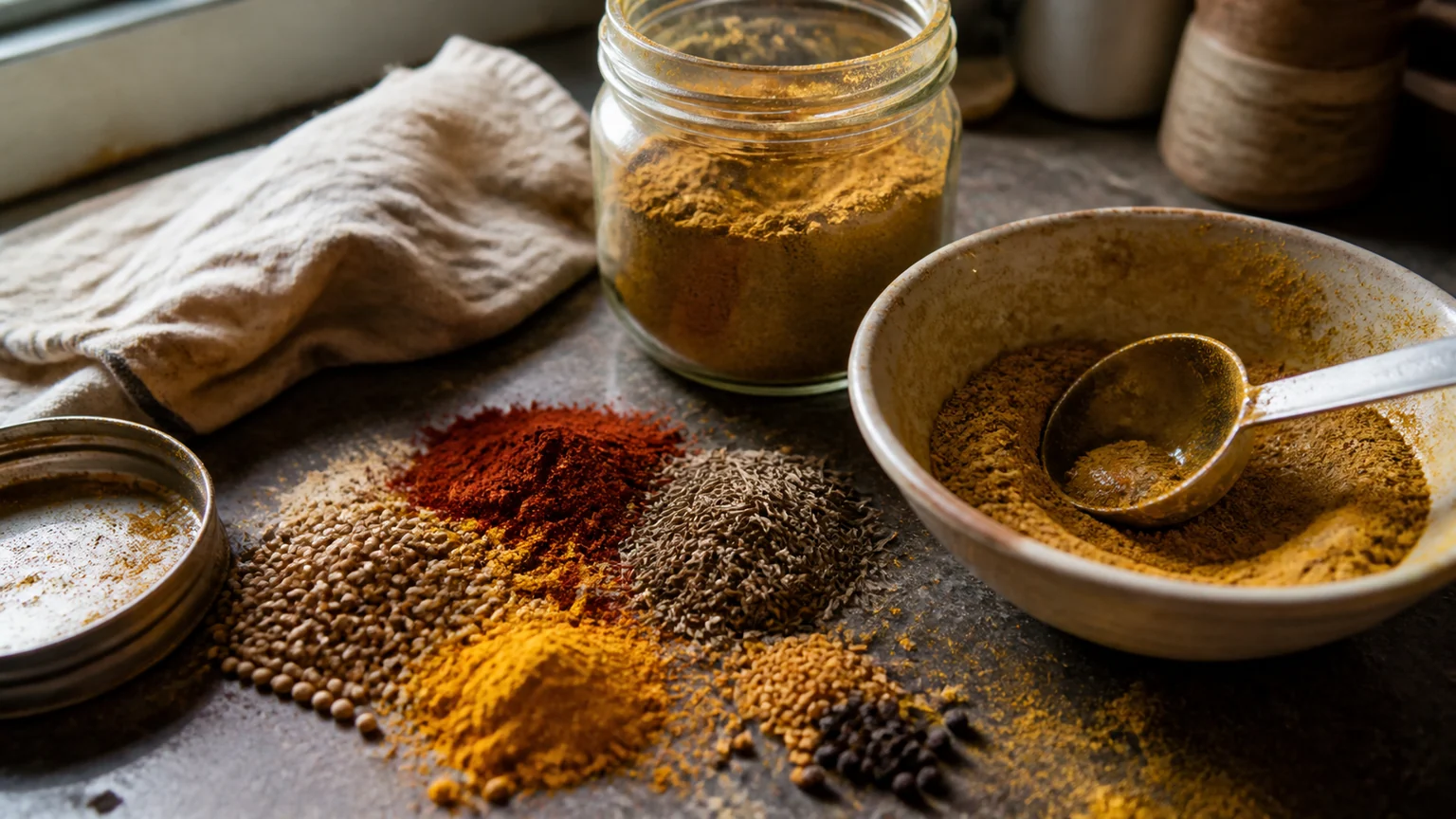
- Turmeric: Color, earthiness, and the yellow base.
- Coriander and cumin: The citrusy, warm backbone.
- Fenugreek and chile: Maple-savory depth and heat.
Madras on a British-style curry-powder label usually signals a hotter, redder blend with more chile. It does not guarantee one protected recipe, so compare the ingredient order as well as the heat word.
Check whether salt appears on the label before seasoning the food.
Some commercial blends include it, while many pure spice blends do not.
Fenugreek should smell savory and faintly maple-like, not dominate with bitterness.
A clove-heavy jar can overwhelm mild vegetables or eggs.
Knowing the parts explains the flavor. If a curry powder tastes flat, it is usually low on the toasted cumin that gives it life.
Which curry powder is actually in the jar?
Curry powder is a product name rather than a recipe, and at least four different products share it.
British-style mild is the default in most supermarkets. Turmeric leads, the heat is minimal, and it was built for a palate that wanted color and warmth instead of pungency.
Madras-style runs hotter and redder because chile takes a larger share. Move it into a recipe written for mild powder and the dish changes character, not just heat level.
Jamaican curry powder leans on allspice and usually more turmeric, which is why Jamaican curry goat tastes nothing like an Indian curry built on the same weight of powder.
Japanese curry powder sits furthest from the rest.
It carries more fenugreek and a rounder sweetness, and it was designed to work inside a roux rather than a wet masala.
Look for a style word on the label before you assume one jar can stand in for another. Two products both marked curry powder can differ from each other more than either differs from garam masala.
| Style | Leading note | Heat | Built for |
|---|---|---|---|
| British mild | Turmeric | Minimal | Everyday curry sauce, sandwich dressings |
| Madras | Chile over turmeric | Noticeable | Sauces that should bite |
| Jamaican | Allspice with turmeric | Mild to medium | Curry goat, curry chicken |
| Japanese | Fenugreek, rounder sweetness | Low | Roux-based curry over rice |
Why does curry powder taste raw unless you bloom it?
Sprinkled straight onto a finished dish, curry powder tastes dusty and raw. The ground spices need heat and fat to wake up and lose that powdery edge.
The fix is to bloom it. Cook the powder in oil or butter for a minute with onions before any liquid goes in, and the flavor deepens and rounds out.
Use medium heat and keep the powder moving.
Turmeric and fine chile can scorch before onions or garlic finish softening.
The useful cue is a strong warm aroma without smoke.
Add tomato, coconut milk, or broth as soon as the smell turns full.
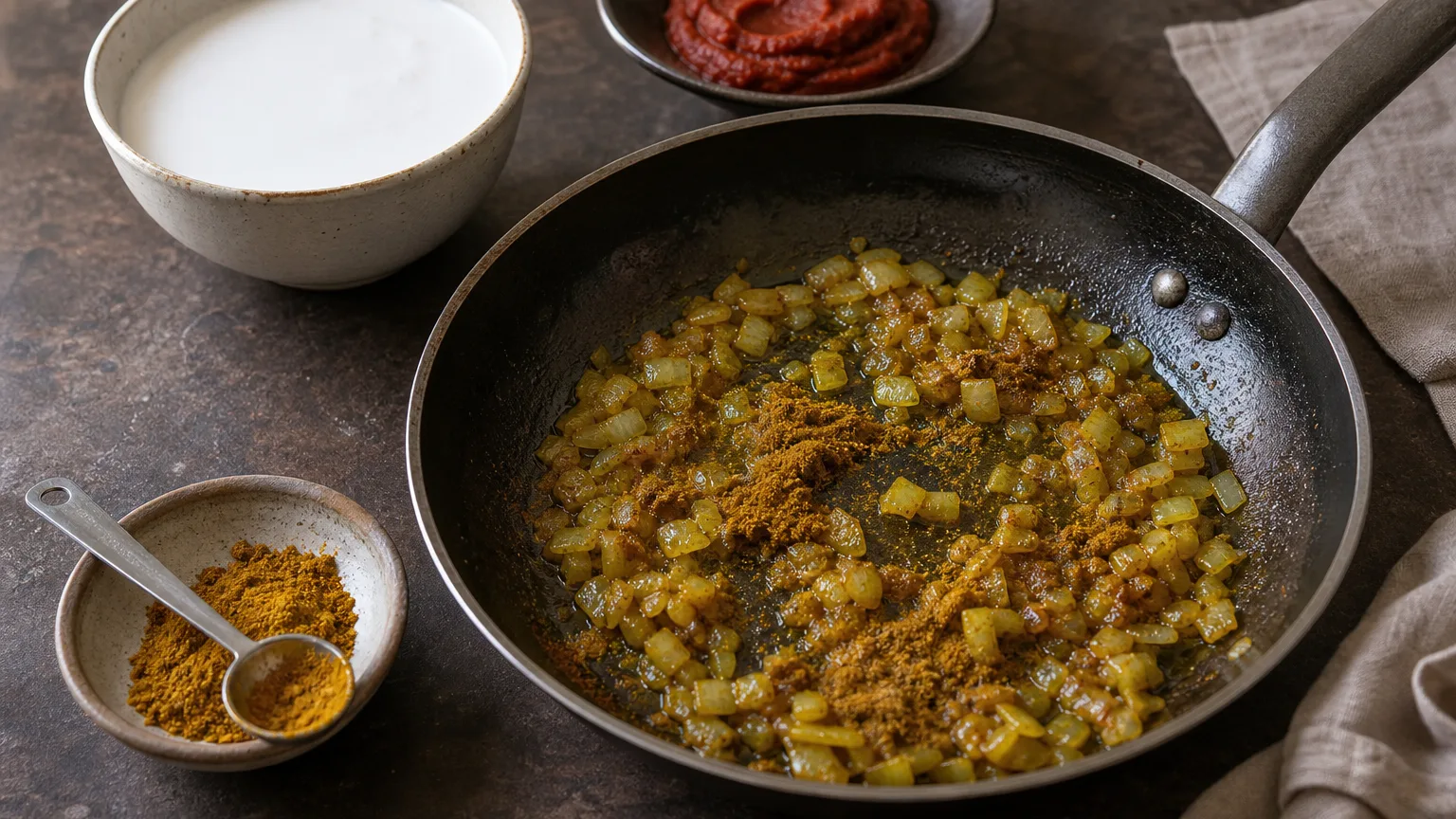
- Bloom first: Cook the powder in fat with onions before adding liquid.
- Watch the heat: Keep it moderate so the turmeric does not scorch.
- Then add liquid: Stock, tomato, or coconut milk once it smells fragrant.
This is the same move as blooming ground spices in oil. It is the single step that separates a flat curry-powder dish from a good one.
A dry pan is risky because mixed particles brown at different speeds, while fat spreads heat and carries the dissolved color through the dish.
Because it goes in early, curry powder reverses the usual timing for delicate seasonings. Added at the end like a garnish, it leaves a raw taste in the bowl.
Where does curry powder work best?
Curry powder works best where fat, starch, or a sauce can spread the fine blend and soften the bitter edge of turmeric and fenugreek, making it useful for quick chicken or chickpea curry, lentil soup, coconut rice, and roasted vegetables.
- Saucy bases: Tomato, broth, or coconut milk carries the color and gives the powder time to mellow.
- Beans and grains: Chickpeas, lentils, rice, and potatoes absorb the blend without letting one bitter note dominate.
- Dry roasting: Squash, cauliflower, and potatoes bring enough sweetness, provided oil coats the powder before high heat.
- Quiet mixtures: Egg salad, deviled eggs, mayonnaise, and cream need a small dose because their own flavors do not compete.
For four servings, begin with one to two teaspoons in a mild sauce or soup. A large pot of beans may take a tablespoon, but taste after the first dose has simmered because chile and fenugreek build slowly.
Eggs, mayonnaise, and cream need much less, so start with a quarter teaspoon and let the mixture rest for several minutes before adding more.
Butter rounds the blend in eggs and vegetables, while neutral oil keeps chile and turmeric clearer than a scattering of dry powder over finished food.
Curry powder falls short when a recipe names its spices individually. Whole mustard seed pops in oil, while an all-purpose jar cannot reproduce separate timing and texture choices for cumin, coriander, and chile.
It also fails as a dry finishing dust because raw turmeric and fenugreek can taste chalky when no heat or fat follows. Use curry powder for speed and convenience, then choose individual spices when the dish depends on a regional combination.
How do you make or replace curry powder?
A homemade blend gives you a fresher seed-spice aroma and a known heat level, but make a small batch because ground coriander and cumin lose their high notes faster than whole seeds.
Use a 3:2:1 base of coriander, cumin, and turmeric, then keep the forceful supporting spices smaller. Toast whole coriander, cumin, fenugreek, and pepper before grinding, but mix the turmeric and ground chile in afterward so the fine powders do not scorch.
| Spice | Rough share | What it brings |
|---|---|---|
| Ground coriander | 3 parts | Citrusy, mild backbone |
| Ground cumin | 2 parts | Warm, earthy depth |
| Ground turmeric | 1 part | Yellow color and earthy bitterness |
| Fenugreek, chile, and black pepper | About 1/4 part each | Savory depth, heat, and lift |
Toasting the whole seeds before you grind them at home wakes up the aroma that a supermarket tin has lost.
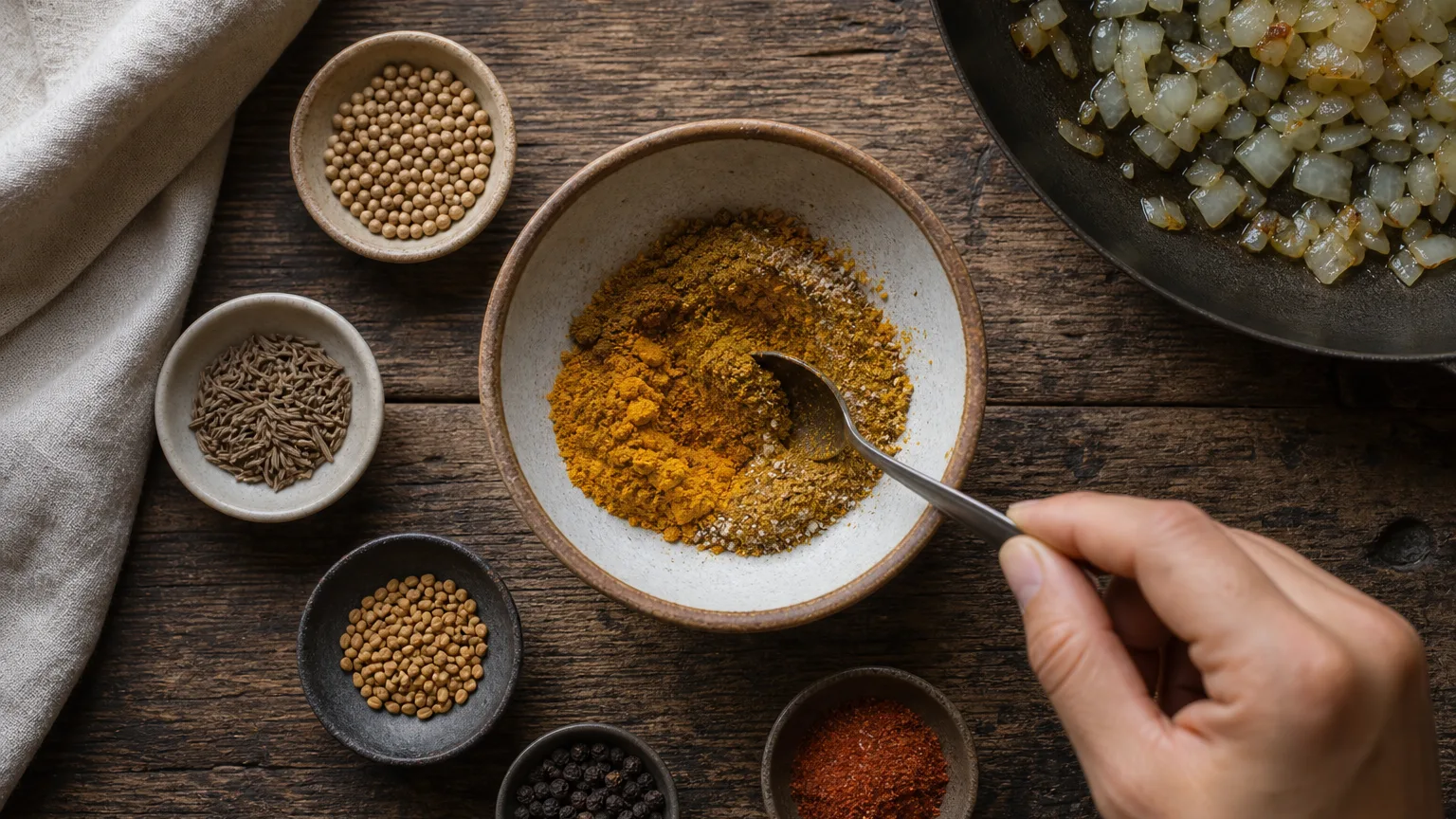
- Toast first: Warm whole seeds until fragrant before grinding.
- Balance it: Coriander and cumin lead; turmeric and chile support.
- Make small batches: Ground spices fade, so mix what you will use soon.
Adjust the chile for mild or Madras-hot, since controlling that ratio keeps a homemade blend from tasting as generic as a supermarket tin.
If a recipe needs two teaspoons of curry powder, a practical replacement is one teaspoon coriander, two-thirds teaspoon cumin, and one-third teaspoon turmeric, plus small pinches of chile and fenugreek. This rebuilds the blend's seed-spice body, yellow color, heat, and savory bitterness instead of matching only one note.
Garam masala can cover the warm-spice side in an emergency, but it is not an exact substitute. Add a little turmeric for color, bloom the mixture briefly rather than cooking it for a long sauce, and expect more clove, cardamom, or cinnamon aroma than a mild curry powder would give.
Do not swap curry paste measure for measure. A paste brings water or oil, fresh chile, garlic, and other aromatics, so it changes both the seasoning dose and the liquid balance of the recipe.
How do you buy and store curry powder?
Buy curry powder in small amounts, because a ground blend fades fast.
When you source spices online or in bulk, a huge tin is a false economy that goes stale before you finish it.
Judge it by smell. Fresh curry powder smells warm and fragrant through the lid, and a faint, flat smell means the spices have given up.
Color alone cannot prove freshness because turmeric stays yellow after much of its aroma fades. Smell the jar before trusting its brightness.
Choose a short ingredient list when you want control.
Added flour, starch, or salt changes how much blend the dish can handle.
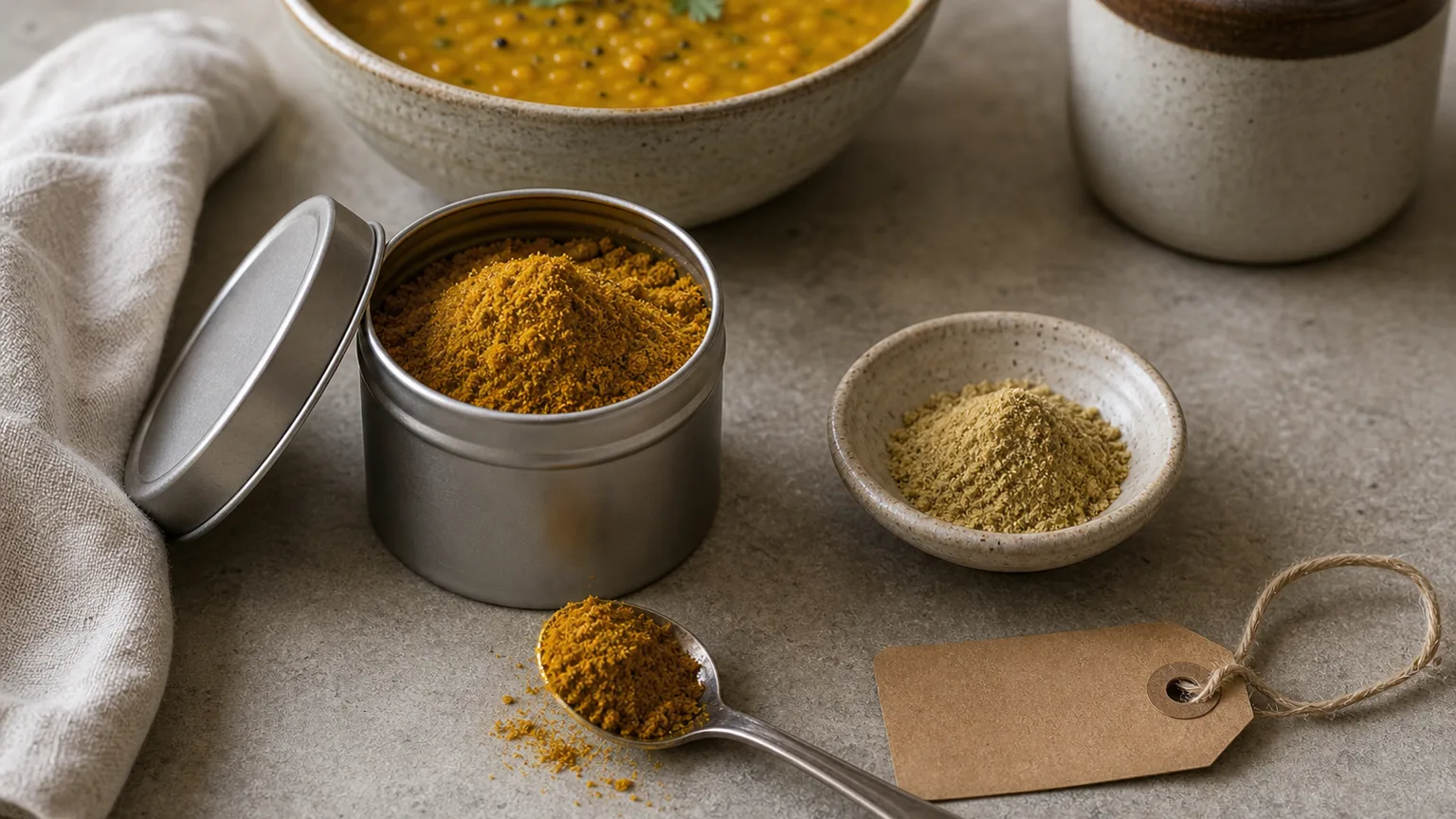
- Buy small: A ground blend loses aroma within a year.
- Store dark and airtight: Away from heat, light, and steam.
- Smell test: Warm and fragrant is fresh; flat and dusty is spent.
Keep it sealed away from the stove. Like any spice past its prime, curry powder should be replaced on smell, not on the printed date.
Steam entering the jar creates clumps and speeds flavor loss. Measure with a dry spoon away from the bubbling pot.
If the aroma is weak, replace the blend instead of doubling it.
More stale powder adds bitterness and dust without restoring missing top notes.
How do you make curry powder taste less generic?
The jar alone tastes one-note, so build fresh flavor around it. Start with real onion, garlic, and ginger, then bloom the powder in that base.
Layer in fresh aromatics the blend cannot provide. A squeeze of lime, fresh cilantro, or a spoon of yogurt lifts a curry-powder dish out of flatness.
For real depth, finish with a pinch of garam masala.
Curry powder builds the base, and the finishing blend adds the aroma the jar lacks.
When you have time, toast a few whole spices and add them too. Treating curry powder as a starting point, not the whole answer, is what makes it taste good.
- Build a base: Bloom the powder in onion, garlic, and ginger, not water.
- Add freshness: Lime, cilantro, or yogurt lifts a flat curry-powder dish.
- Finish with garam masala: A pinch at the end adds the aroma the jar lacks.
- Toast extras: A few whole spices deepen what the blend cannot.
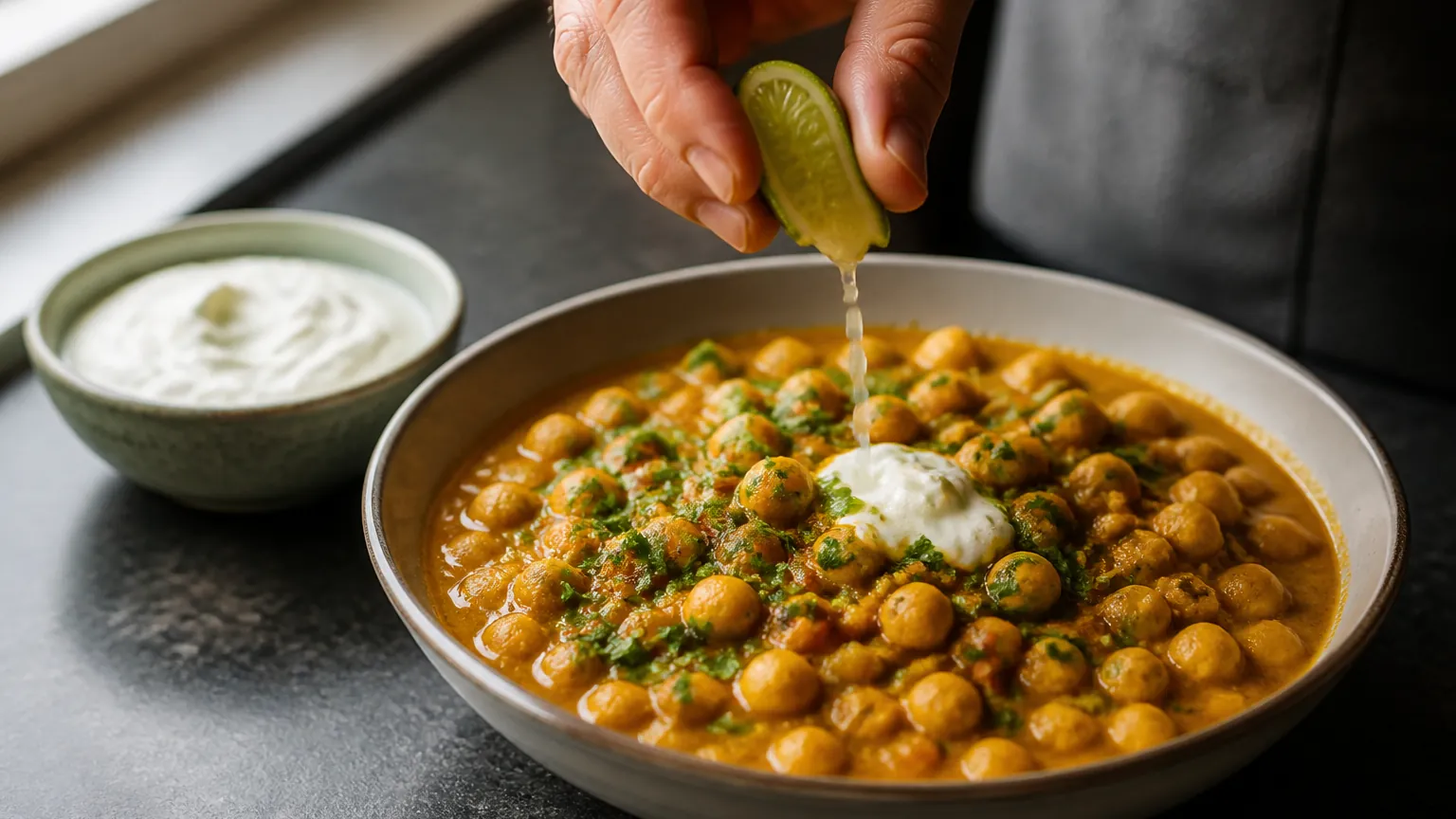
- Lime: Acid brightens the turmeric and seed-spice base.
- Cilantro: Fresh leaf aroma replaces the top notes lost during simmering.
- Yogurt: A small spoonful softens chile and bitter fenugreek without hiding the blend.
None of this is much work. A few minutes of real aromatics is the difference between a curry-powder dish that tastes homemade and one that tastes like a shortcut.