
Why Blooming Spices Needs Warm Oil, Not Smoking Oil
Use this technique when ground spices need depth, color, and roundness before liquid enters the pan.
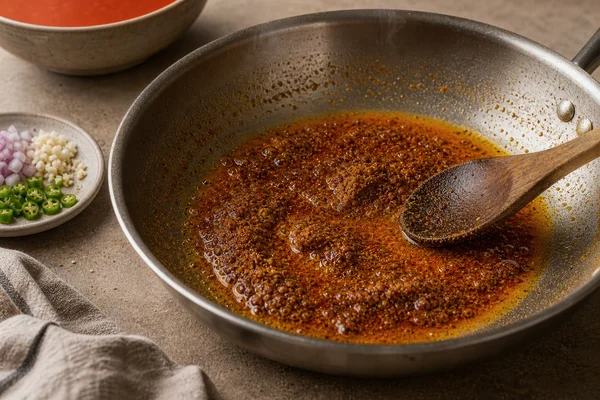
Blooming spices in oil means briefly heating spices in fat so their aroma compounds disperse before liquid dilutes the pan. Whole seeds may take 30 to 90 seconds; ground spices often need only 15 to 30 seconds. The goal is vivid aroma, not dark color, because burnt spices turn bitter fast.
What blooming spices changes
Blooming spices in oil makes ground spices taste rounder and less raw. Hot fat carries aroma compounds farther than water alone.
The technique matters most when spices enter a sauce, dal, stew, or curry base. It turns a powdery layer into integrated flavor.
The final dish changes when cooking order changes. Same spice, different sequence, different result.
- Better aroma: Fat captures volatile compounds before they escape or get diluted.
- Better color: Turmeric, paprika, and curry powder spread more evenly after oil contact.
- Less rawness: Coriander, cumin, and chile powder taste softer after brief heat.
The goal is fragrance, not frying the spice dark. When the aroma rises, the next ingredient should be ready.
Water pulls some flavor too, but it scatters and dilutes it. Fat grabs the fat-soluble aroma and coats every later ingredient with it.
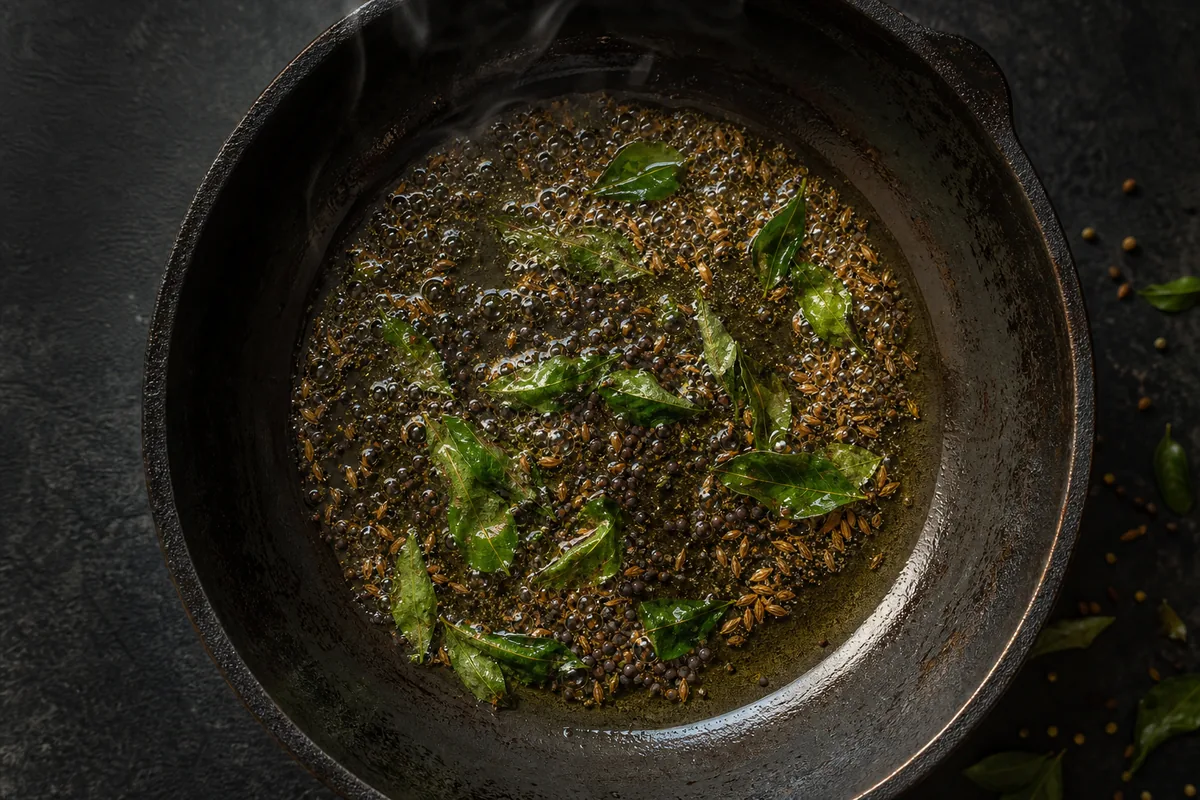
- Mustard seeds pop when the fat is hot enough.
- Curry leaves and cumin scent the ghee fast.
- This aromatic fat flavors everything added next.
The basic method
Start with the pan over medium heat and enough fat to coat the spices. Dry powder in a dry pan is toasting, not blooming.
Add whole spices first if using them, then ground spices later. Fine powders burn faster than seeds.
| Form | Time window | Ready cue |
|---|---|---|
| Whole cumin or mustard seed | 30-90 seconds | Seeds darken slightly or pop |
| Ground turmeric | 15-25 seconds | Oil turns golden and smells warm |
| Ground cumin or coriander | 20-30 seconds | Aroma turns nutty, not smoky |
| Paprika or chile powder | 10-20 seconds | Color blooms before bitterness |
| Curry powder | 20-30 seconds | Raw turmeric smell softens |
Keep onions, tomatoes, stock, coconut milk, or water beside the stove. Blooming fails when you search for liquid after the spices are ready.
Use a wider pan for dry spice blends so the powder spreads through fat instead of clumping in one hot spot.
Warm the fat for a few seconds before the spices go in. Cold oil delays the bloom and makes the timing harder to read.
Heat control matters most
Blooming should happen below the smoke point of the fat. If oil smokes before spices enter, the pan is too hot.
Ground spices are especially vulnerable because they have huge surface area. They can move from fragrant to bitter in seconds.
- Use medium heat: Medium gives you time to smell the change before burning starts.
- Stir constantly: Still powder scorches where it touches the pan.
- Add liquid quickly: Tomatoes, stock, yogurt, or coconut milk cool the pan and stop browning.
- Lower for paprika: Sweet paprika and chile powder burn faster than cumin or coriander.
If spices smell smoky or acrid, discard the fat and start again. Burnt spice bitterness spreads through the whole dish.
The rule shows up clearly with ground turmeric, where enough oil wakes it up but too much heat makes it dusty and bitter.
Listen as much as you look. A steady soft sizzle means the bloom is working, while sharp crackling or smoke means the heat is too high.
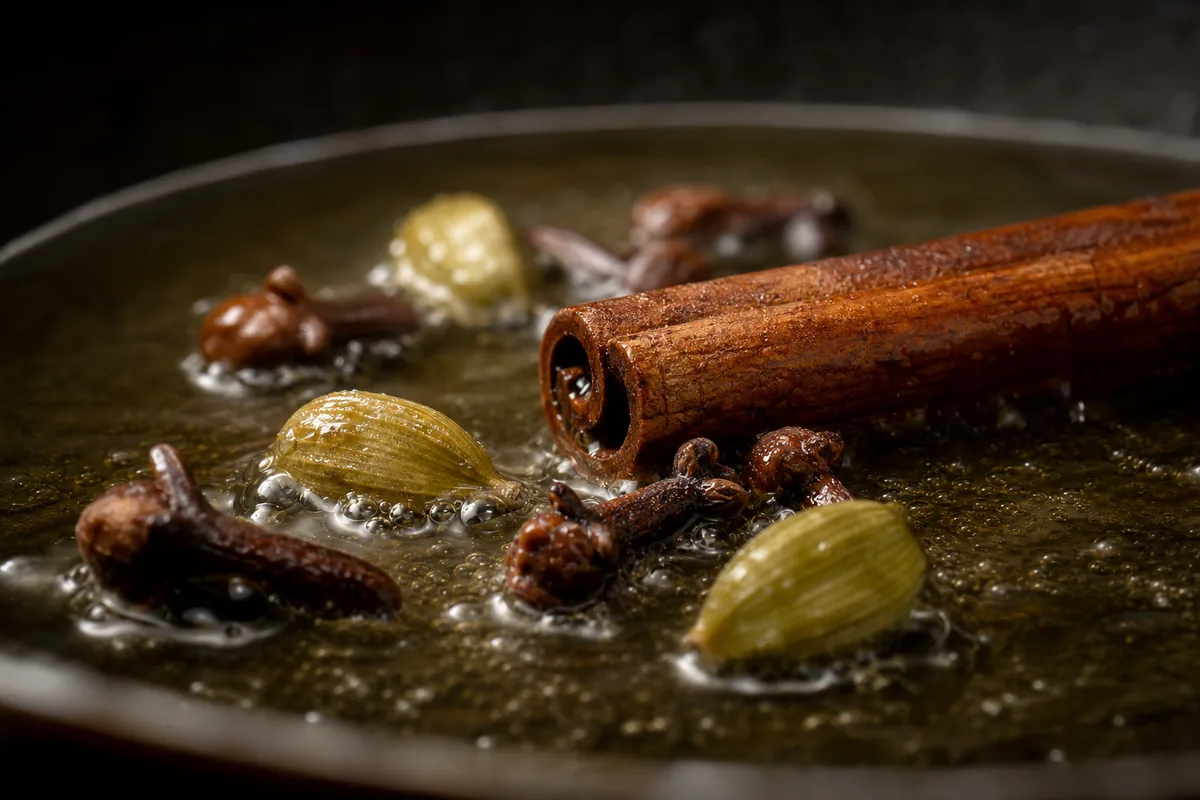
- Gentle bubbles signal a working bloom.
- No smoke should rise from the oil.
- Aroma peaks a moment before color darkens.
Which spices benefit most
Blooming helps spices with fat-soluble aroma or raw powder edges. It is less useful for delicate finishing spices that you want to smell fresh.
Cumin, coriander, turmeric, paprika, curry powder, chile powder, and mustard seed are strong candidates. Vanilla, saffron, and some herbs need different handling.
| Ingredient | Blooming fit | Reason |
|---|---|---|
| Cumin seed | Excellent | Seeds toast and perfume oil |
| Ground coriander | Good | Softens raw citrus edge |
| Turmeric | Excellent | Color and earthy flavor spread in fat |
| Curry powder | Excellent | Blend needs oil before liquid |
| Garam masala | Limited | Often better as a late finisher |
| Saffron | Poor | Blooms better in warm water or milk |
One of the best examples is curry powder, because turmeric and coriander need fat to taste integrated.
With garam masala, brief heat can help, but long blooming erases the roasted high notes.
Match the timing to the form, even inside one bloom. Drop whole seeds first, then add ground spice for the final seconds so the powder does not scorch.
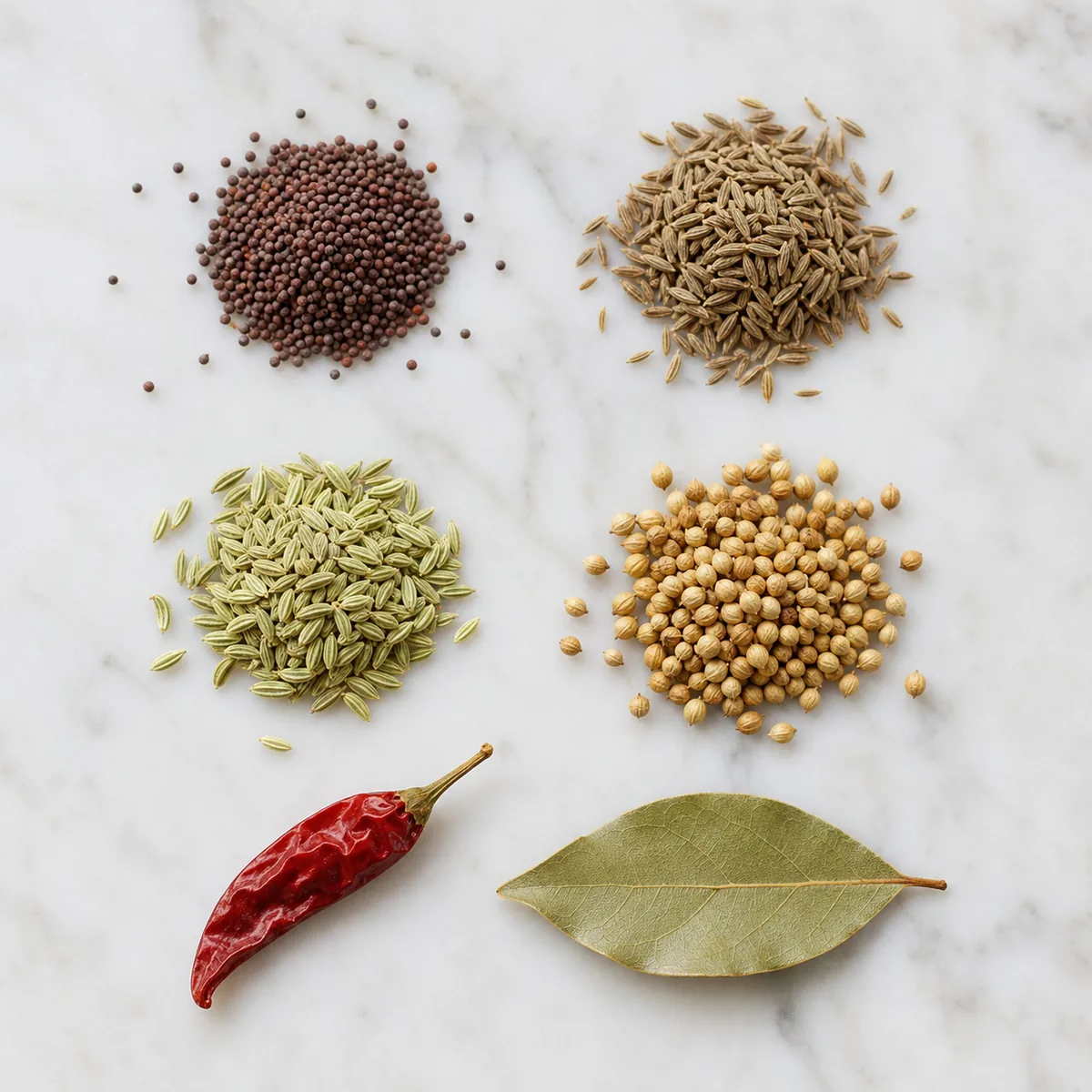
- Whole seeds toast and perfume the fat.
- Turmeric and paprika spread color in oil.
- Saffron and delicate herbs want a gentler route.
Common mistakes and fixes
Most blooming mistakes come from heat, timing, or moisture. The repair depends on which part failed.
A flat dish usually means the spices never met enough fat. A bitter dish usually means they met too much heat.
| Blooming problem | Likely cause | Fix next time |
|---|---|---|
| Bitter flavor | Oil too hot or time too long | Lower heat and add liquid sooner |
| Dusty texture | Powder clumped in dry pan | Use more fat and stir constantly |
| Flat aroma | Spices added after liquid | Bloom before stock or tomatoes |
| Burnt flecks | Fine powder sat still | Stir and remove pan from heat briefly |
If the spices are only slightly harsh, add fat and acid to balance them. If they taste burnt, do not try to hide the flavor.
Use your nose as the timer. Aroma is more reliable than any fixed second count.
Blooming in different fats
The fat changes both heat tolerance and flavor. Ghee, neutral oil, coconut oil, butter, and olive oil all bloom spices differently.
Ghee and neutral oil give more margin because they handle heat well. Whole butter browns and burns faster because milk solids scorch.
- Ghee: Best for South Asian spice bases because it tolerates heat and adds nutty richness.
- Neutral oil: Best when you want spice flavor without extra dairy or olive notes.
- Coconut oil: Useful for coconut curries because the fat reinforces the sauce.
- Butter: Use lower heat and shorter timing. Add spices after the foam settles.
- Olive oil: Works for Mediterranean dishes, but keep heat moderate.
Choose fat by dish, not by trend. The right fat should carry the spice without fighting the sauce.
In hot fat, cumin seeds often go in before other aromatics because their aroma blooms slowly.
Match the fat to its smoke point as well as its flavor. A delicate oil that smokes early gives you less room before the spices turn bitter.
Butter needs the most attention. Let the foam settle, keep the heat low, and pull the pan early because the milk solids brown fast.
When not to bloom
Do not bloom every spice automatically. Some ingredients lose their point when heated in fat.
Finishing spices, delicate herbs, and water-bloomed ingredients may need a different route. Technique follows the ingredient.
- Do not bloom saffron: Use warm water, milk, or stock so color and aroma spread gently.
- Do not over-bloom garam masala: Add it late unless the recipe specifically asks for early frying.
- Do not bloom dried herbs hard: Many turn bitter in hot oil unless protected by sauce.
- Do not bloom spice after liquid: That is simmering, not blooming, and it changes the result.
Blooming is a tool for ground spices and seeds that need fat contact. It is not a universal rule.
Once you learn the smell of a correctly bloomed spice, recipes become easier to adjust. Your nose becomes the timer.
When a recipe says to fry the masala, that is blooming by another name. The cue to cook until the oil separates is the finish line you are watching for.
Where blooming fits in recipe order
Blooming works best when the pan sequence is planned before heat starts. The next ingredient should already be measured.
Most saucy dishes move from fat, to aromatics, to spices, to liquid, then to acid or herbs. Skipping that order changes extraction.
The bigger question is when to add spices, because seeds, powders, and finishing blends need different moments.
| Stage | What happens | Cooking consequence |
|---|---|---|
| Fat warms | Creates a carrier for aroma | Spices spread instead of tasting dusty |
| Aromatics soften | Water cooks off and sweetness builds | Powder can touch oil instead of wet onion |
| Spices bloom | Powders and seeds release aroma | Cumin, turmeric, and paprika taste integrated |
| Liquid enters | Heat drops and flavor spreads | Tomato, stock, or coconut milk stops scorching |
| Finish adjusts | Freshness returns | Lemon, herbs, pepper, or garam masala stay vivid |
This differs from toasting spices, where dry heat touches the spice before fat. Use that route for whole seeds needing roasted depth.
Blooming becomes reliable when it is part of a planned sequence. You should never search for liquid while powder cooks.
Dish examples that change the bloom
Blooming is not one move repeated in every dish. Dal, chili, tomato sauce, and rice each change the moisture timing.
In a curry base, ginger and garlic should lose their raw smell before ground spices enter. Wet aromatics can protect spice or block fat contact.
In spice pastes, water must cook off before fat can carry the ground spices. Watch oil gather at the edges.
- Dal: Bloom cumin, mustard seed, chile, or asafoetida in a separate tadka, then pour it over cooked lentils.
- Tomato sauce: Bloom spices before tomatoes enter, because water and acid slow extraction.
- Rice pilaf: Bloom whole seeds in the fat before rice enters, then coat the grains before adding liquid.
- Yogurt sauce: Bloom spices separately and cool the fat briefly before mixing, or the yogurt may split.
- Bean dishes: Bloom spices before adding cooked beans so fat carries flavor into the starch.
For ground chile or sweet paprika, pull the pan from heat before adding powder. Residual heat often blooms it safely.
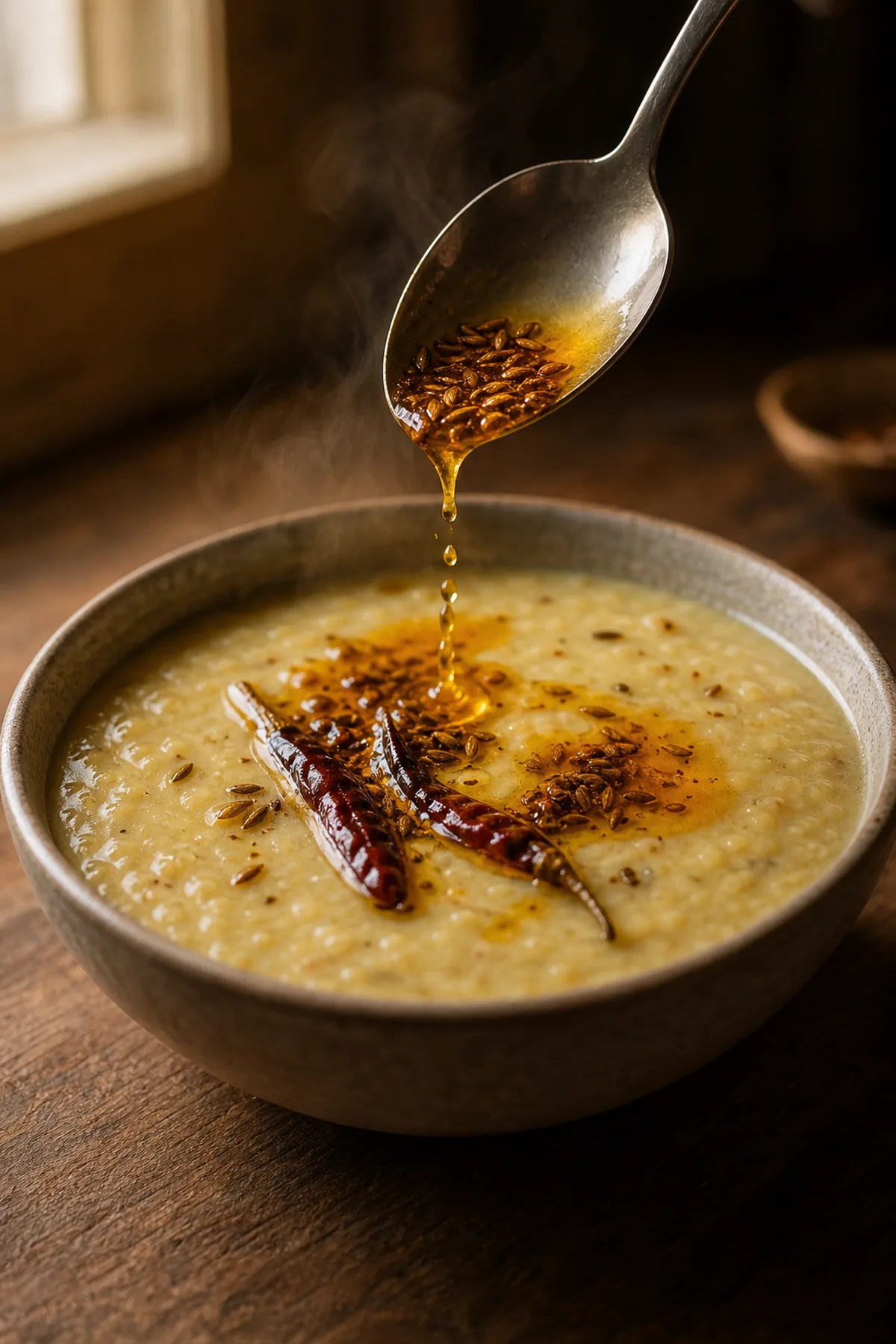
- Bloom the seeds in a small pan of hot fat.
- Pour the sizzling oil over the cooked dal.
- The fat carries aroma across the whole bowl.
The dish decides the bloom window. A thin skillet, dry powder, and chile need more caution than a deep pot of onions.
Rice and dal reward patience most. Bloom the seeds fully in the fat, because once liquid or grain enters, the window to rescue a weak bloom closes.
Thin, watery dishes give the least room. Bloom the spice before the liquid goes in, since you cannot bloom powder that is already floating in broth.
After blooming, balance the dish
Blooming extracts flavor, but it does not season the whole dish by itself. Salt, acid, and simmer time still matter.
Older jars need more caution because faded powder burns before it tastes vivid. Airtight spice storage protects that narrow window.
Taste after the liquid simmers, not the second it enters the pan. Fat-bloomed flavor needs a few minutes to spread.
| Result | What it means | Useful adjustment |
|---|---|---|
| Full aroma, flat taste | Extraction worked, seasoning is low | Add salt in small pinches |
| Warm but heavy | Fat carried flavor but needs lift | Add lemon, vinegar, yogurt, or tomato |
| Sharp and dusty | Powder scorched or stayed clumped | Lower heat and use more fat next time |
| Weak after simmering | Old spice or too much liquid | Use fresher spice and reduce before serving |
Blooming also teaches restraint. Once the oil smells vivid, more time usually removes the aroma you worked to create.
If a recipe still tastes thin, the missing piece may be salt or acid. Blooming extracts flavor, but it cannot balance alone.