
How Do Spice Pastes Work, and When Should You Fry Them First?
Use the least liquid your tool needs, then fry the paste until the steam fades and its aroma turns deep and rounded.
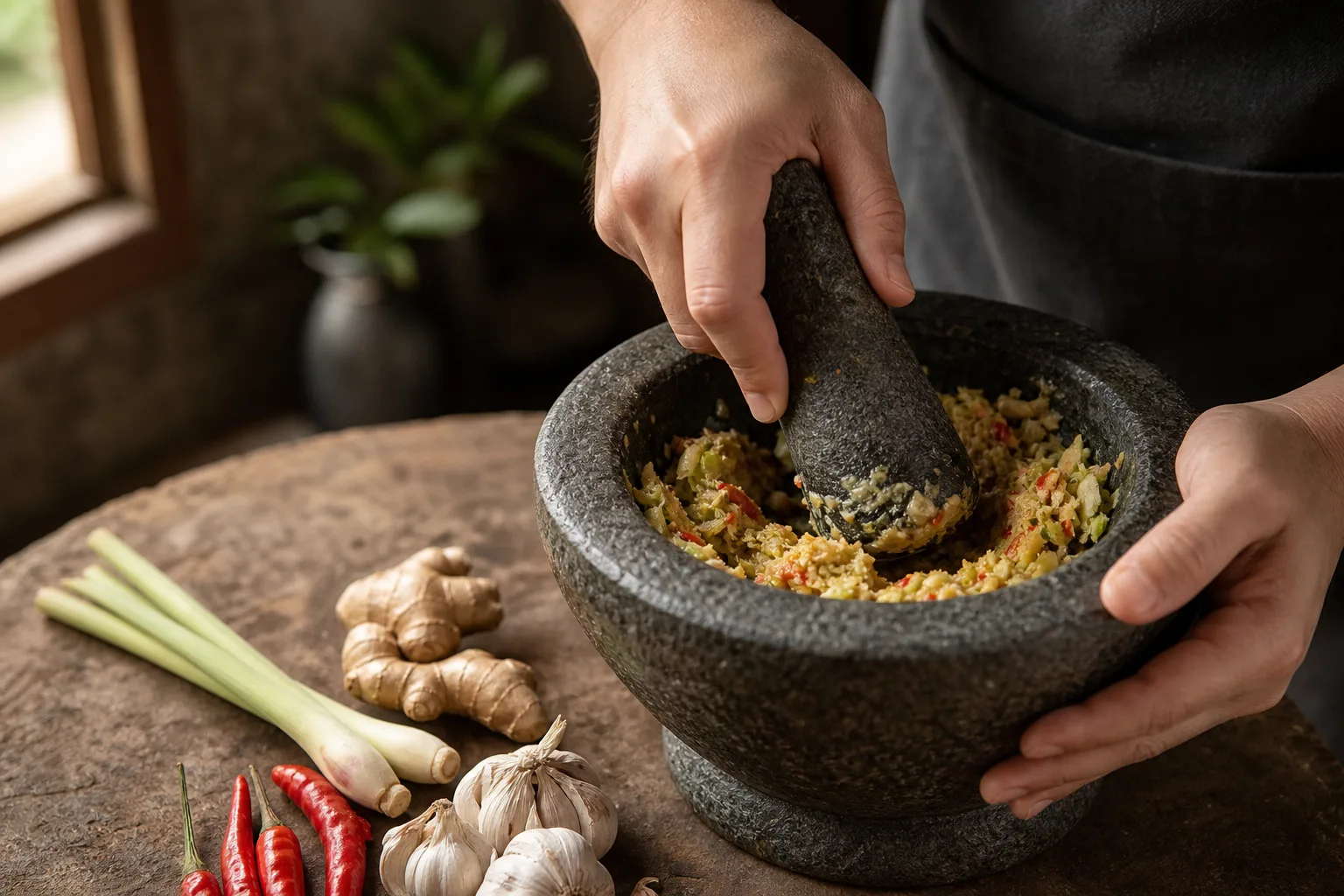
A cooking paste needs aromatic bulk, ground spice, and just enough liquid to become workable, followed by medium heat before the main liquid. Move on when the harsh smell fades, the paste darkens slightly, and oil appears around the edges without smoke.
What does a spice paste do in cooking?
A spice paste can build a cooked sauce, season food before cooking, or finish a dish with fresh aroma.
Those jobs need different textures.
A cooked base should be thick enough to fry without spreading like soup. A marinade can be looser because it must coat food evenly.
A raw herb or chile paste may never enter a hot pan. Frying would erase the fresh flavor that makes it useful.
| Job | Useful texture | Heat treatment |
|---|---|---|
| Cooked base | Thick, spoonable, slightly coarse | Fry before broth, tomato, or coconut milk |
| Marinade | Loose enough to coat | Cook with the food and discard raw leftovers |
| Fresh finish | Soft and spreadable | Keep raw unless the recipe says otherwise |
Name the job before choosing oil, water, vinegar, or citrus. The next cooking step decides what belongs in the blender.
How do you balance wet aromatics and dry spices?
Most cooked pastes need one main source of bulk.
Onion, shallot, fresh chile, or another juicy aromatic usually fills that role.
Garlic, ginger, galangal, or lemongrass adds a stronger supporting aroma. These fibrous ingredients should stay below the amount that the tool can grind evenly.
| Ingredient group | Main contribution | Common mistake |
|---|---|---|
| Onion, shallot, or fresh chile | Bulk, water, sweetness, or heat | Using so much that the pan only steams |
| Garlic, ginger, or fibrous roots | Sharp aroma and structure | Leaving pieces large enough to scorch |
| Cumin, coriander, turmeric, or pepper | Dry spice identity | Adding more powder than the wet base can carry |
| Oil or water | Movement and heat transfer | Pouring before scraping and pulsing |
| Salt, acid, or sugar | Balance and preservation only when tested | Assuming flavor additions make storage safe |
A chile-led paste may use fresh or soaked dried chiles as its bulk. An onion-led paste usually treats chile as heat, not structure.
Fine spices should remain a smaller part of the total mixture. Too much powder thickens the paste before the aromatics can grind smoothly.
- Choose one ingredient to provide most of the paste volume.
- Limit strong roots and garlic until their pieces can grind evenly.
- Add one dominant spice direction before filling small flavor gaps.
- Taste a cooked dab before adding extra salt, sugar, or acid.
Keep the first batch small when no tested recipe guides you. A small pan sample reveals bitterness, heat, and texture before the main dish is committed.
What order should you grind spice paste ingredients?
Hard seeds, fibrous roots, wet onions, and fine powders do not become smooth at the same speed.
Starting everything together leaves grit or mush.
Crush whole cumin seeds before juicy ingredients enter. Water lets small seeds skate around a blender instead of meeting the blade.
Treat coriander seed the same way when a smooth sauce matters. A mortar can keep a pleasant rough texture for rustic dishes.
- Break hard whole spices first, using a dry grinder or mortar.
- Cut ginger, galangal, lemongrass, and dried chiles across their fibers.
- Add shallot, onion, garlic, or fresh chile after the hard pieces are small.
- Stir fine powders into the wet mixture last so they do not coat the blades.
- Scrape the sides between short pulses instead of adding a large splash of water.
This order shortens blade time and limits heat buildup.
Warm blades can drive off the bright aromas you wanted from fresh ginger or chile.
Soak leathery dried chiles until flexible, then drain them well. Save the soaking liquid for later dilution instead of flooding the grinder.
For a larger dry-spice batch, use the full spice grinding method before combining it with aromatics. The paste tool should finish texture, not crush every seed.
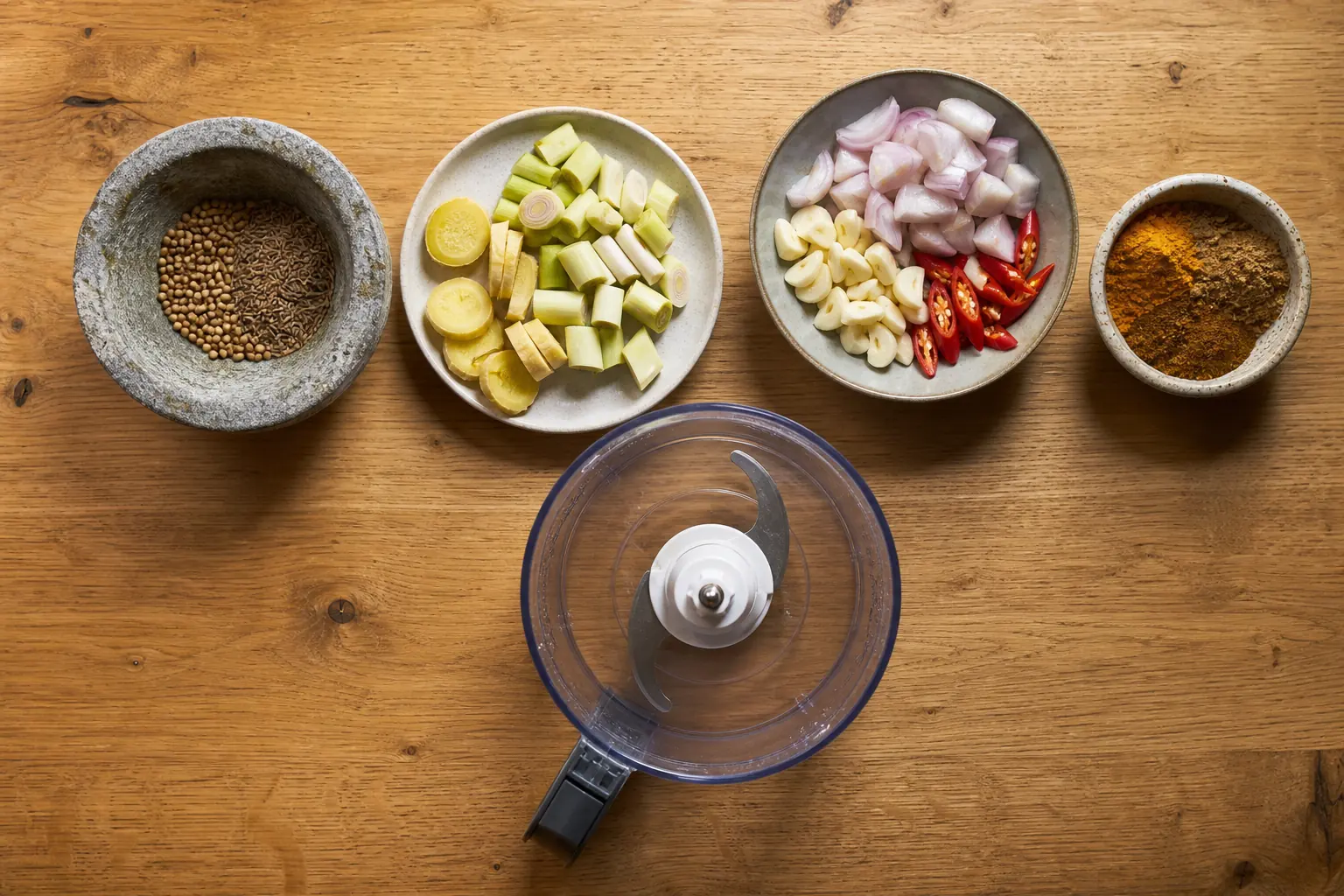
- First: Hard seeds and dry roots
- Second: Fibrous fresh aromatics
- Last: Juicy ingredients and powders
Stop once no tough strand or hard seed remains large enough to catch in the finished food. Perfect smoothness is optional.
How much liquid should you add to a spice paste?
Water makes a blender catch the ingredients, but every extra spoonful must later leave as steam.
Begin with moisture already inside onion or fresh chile.
Add water one tablespoon at a time only when the blade stalls. Pause and scrape before deciding the mixture needs more.
| Liquid | Best fit | What changes |
|---|---|---|
| Water | Cooked bases and lean mixtures | Blends easily but lengthens the frying stage |
| Neutral oil | Rich bases and dry ingredients | Helps movement and carries spice aroma |
| Vinegar | Sharp chile or mustard pastes | Adds tang and limits browning |
| Citrus juice | Fresh marinades and finishes | Brightens flavor but can turn bitter with long heat |
A cooked paste should hold a soft ridge when pushed with a spoon. A watery ring means the mixture will steam before it can fry.
Oil is a cooking medium, not a cure for coarse grinding. The mixture still needs even particles so small garlic pieces do not burn first.
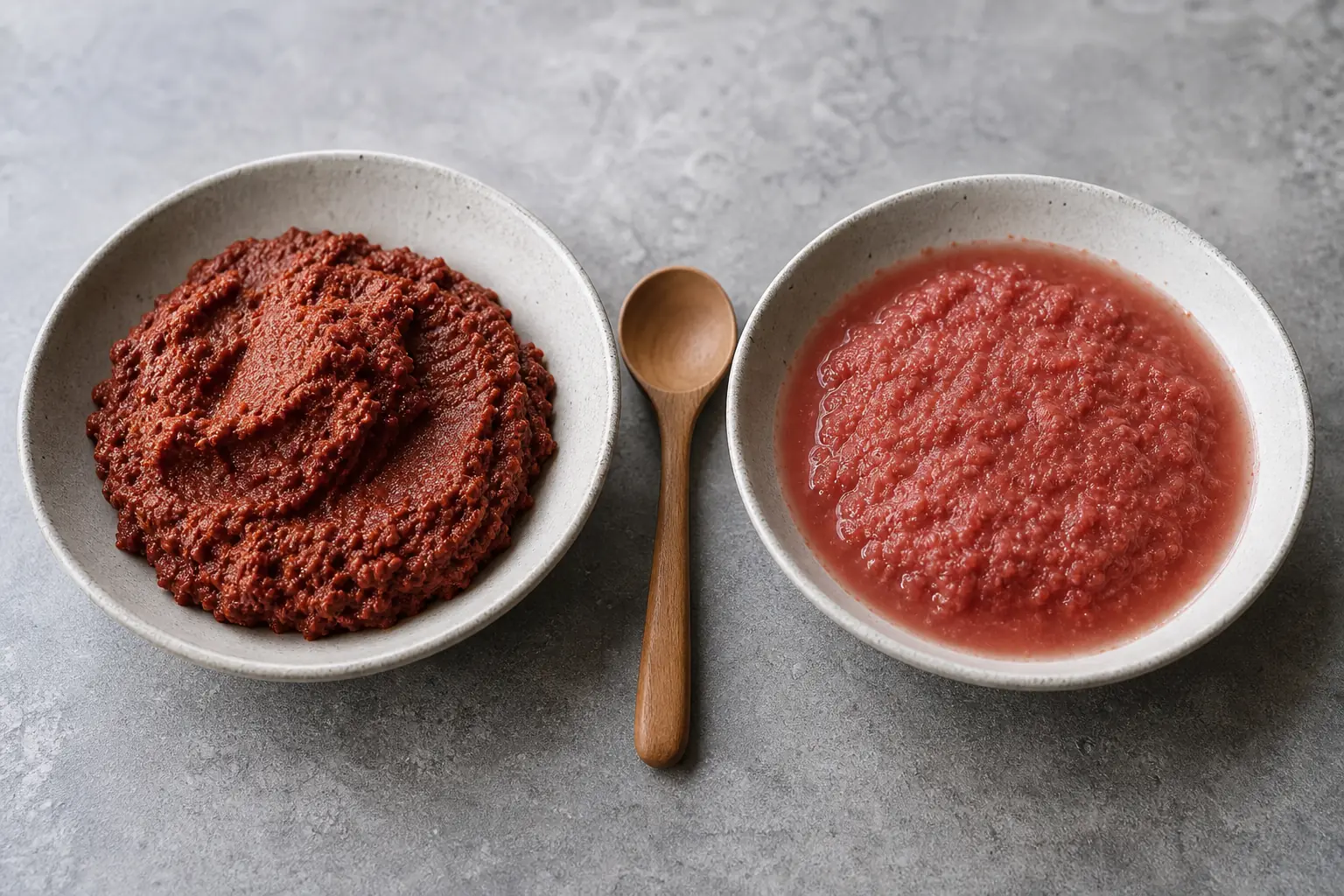
- Too dry: Crumbles and will not circulate
- Useful texture: Thick, cohesive, and spoonable
- Too wet: Water pools around the paste
When acid defines the flavor, follow a tested recipe instead of guessing. Extra acid changes taste, texture, browning, and storage behavior at once.
How long should you fry a spice paste?
Set a wide pan over medium heat and add enough oil to coat the base.
A wide surface lets moisture escape faster than a narrow pot.
The paste should sizzle gently on contact, not spit violently or sit silent. Strong splatter signals excess water or overheated oil.
Spread the paste into a thin layer, then stir often enough to expose fresh surface. Scrape the corners because sugar and fine particles collect there.
| Visible or aromatic cue | What is happening | Best response |
|---|---|---|
| Loud hiss and white steam | Water is still leaving | Keep medium heat and stir frequently |
| Smaller bubbles and deeper color | The paste is concentrating | Watch the pan more closely |
| Rounded aroma and glossy edges | Fat is carrying cooked aromatics | Prepare to add the next ingredient |
| Dark specks or bitter smoke | Solids are scorching | Lower heat and move the paste immediately |
Smell is more reliable than a fixed timer.
A small batch may change in minutes, while a wet onion paste can need much longer.
Ground turmeric powder can darken quickly, and garlic can turn bitter before onion loses all its water. Moderate heat protects both.
Some recipes call the glossy edge oil separation. It shows that water has reduced enough for oil to become visible again.
Fresh onion and chile pastes often need longer moisture reduction than pastes built from soaked dried chiles.
Judge each batch by its bubbles.
Ground nuts or seeds can make the mixture catch sooner. Stir those pastes more often and keep a small splash ready.
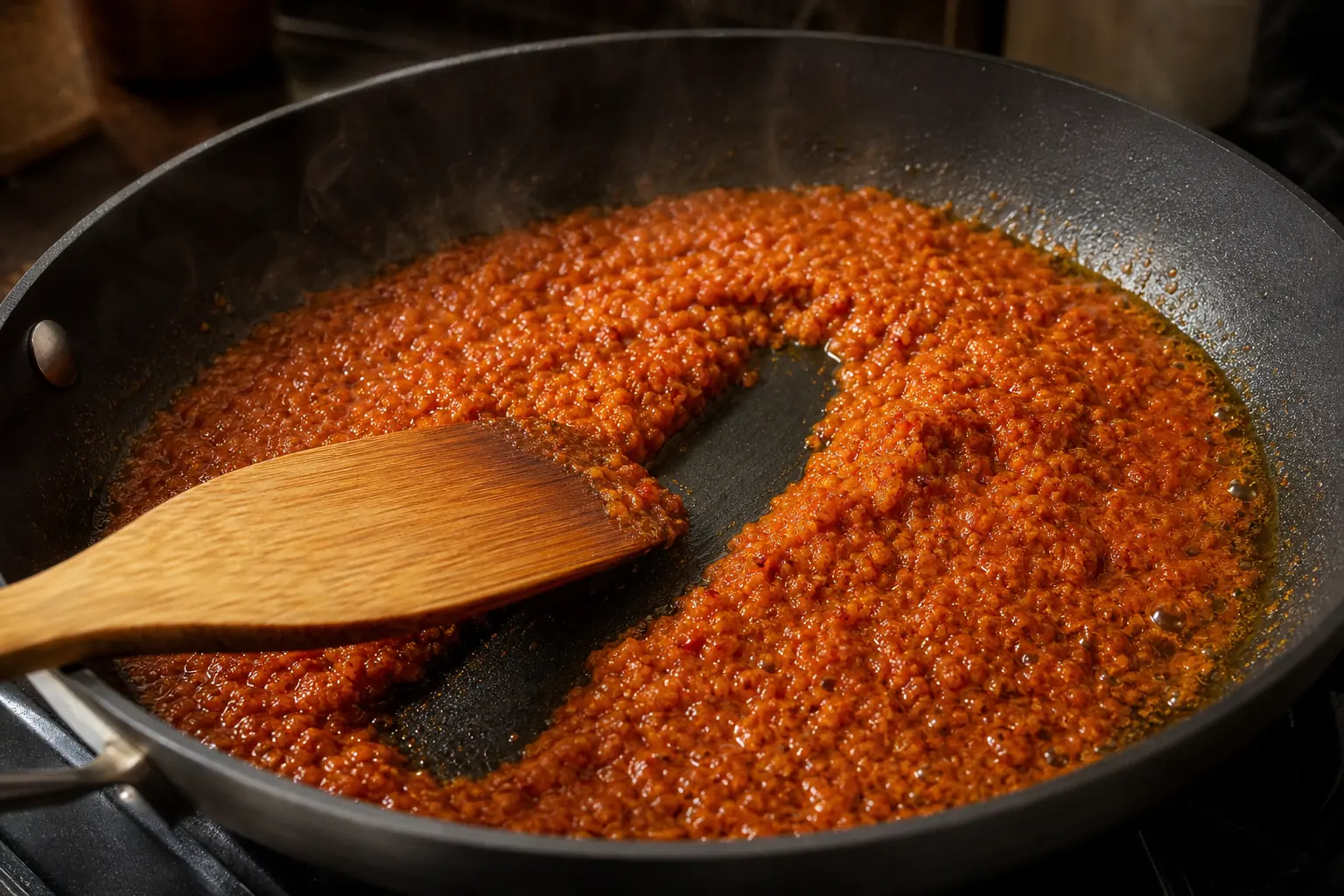
- Early: Wet steam and loose bubbles
- Middle: Thicker paste and sharper aroma
- Ready: Glossy edges and visible oil
This longer change separates paste frying from blooming ground spices. Do not copy a thirty-second timing rule from a dry powder technique.
Add the next ingredient as soon as the cooked aroma is full and clean. Waiting for heavy browning can trade complexity for bitterness.
When should you add the main cooking liquid?
Broth, coconut milk, tomato, or water cools the pan and stops active frying.
Add it only after the paste reaches its cooked cue.
Pour in a small splash first and scrape the browned film from the pan. That concentrated film belongs in the sauce if it smells sweet and savory.
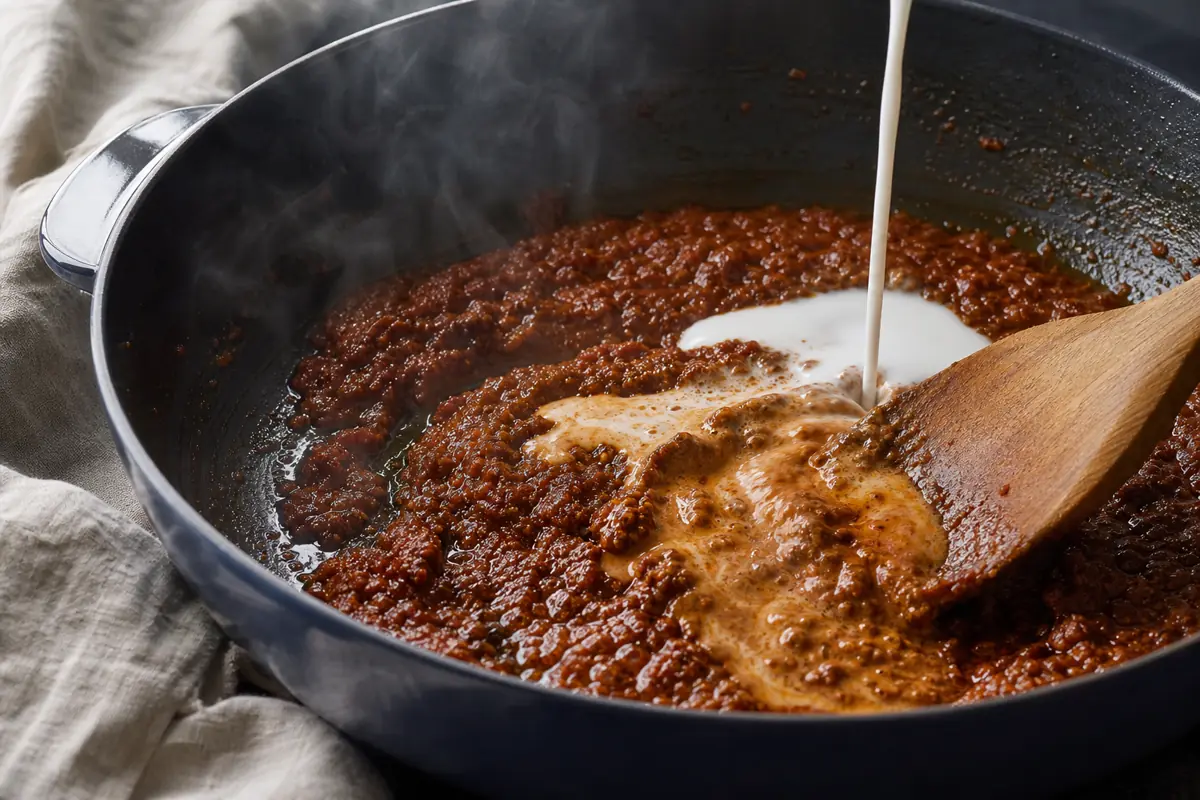
- Ready paste: Steam has eased and oil shows at the edge.
- First splash: Add only enough liquid to release the pan film.
- Fold: Stir until the thick paste and liquid become one sauce.
- Full pour: Add the rest only after no dry clumps remain.
- Use a small splash to loosen the pan before adding the full liquid.
- Stir thick coconut cream slowly so the paste disperses without clumps.
- Add tomato after the raw paste smell has faded, unless the recipe cooks them together.
- Simmer briefly before judging salt because the sauce is now less concentrated.
A paste can taste strong in the pan and disappear after a large pour. Build the sauce gradually so you can stop before dilution hides it.
The balance between oil and water carriers explains why some aromas spread after frying. Water alone cannot lift every aromatic compound from dry spice.
Protein and vegetables also release water. Sear them separately when browning matters, then combine them with the cooked paste and sauce.
Wait until the sauce returns to a simmer before making another flavor decision. Heat, salt, and fat need time to redistribute through the pot.
Which spice paste method fits the food?
A vegetable curry, dry stir-fry, braise, and grilled marinade do not need the same paste.
Moisture and cooking time change the best approach.
| Dish | Paste move | Reason |
|---|---|---|
| Curry or stew | Fry the paste, then add liquid | The base gets a full concentration stage |
| Dry stir-fry | Use a thin film and small paste amount | The pan stays hot enough to sear the food |
| Braise | Fry deeply before adding meat and stock | Long liquid cooking will soften the final aroma |
| Grilled marinade | Coat thinly and remove heavy clumps | Thick garlic pieces can burn before the food cooks |
| Fresh relish or finish | Keep raw or warm very briefly | Fresh chile, herb, and acid should remain clear |
A dry blend such as curry powder does not become a useful paste just because water was added. It lacks fresh aromatic structure.
You can still mix a dry blend with oil for a rub. Treat that as a coating unless onion, garlic, or another moist ingredient builds a base.
Adjust the amount before changing the ingredient list. A crowded paste is harder to diagnose because several bitter or sweet notes move together.
Use the recipe sequence when one is provided. Cultural paste traditions solve specific dishes, and their ingredient order carries practical knowledge.
How do you fix a spice paste in the pan?
Most paste problems show up as a texture, smell, or pan behavior before the finished dish tastes wrong.
Respond to that early signal.
| Problem | Likely cause | Repair |
|---|---|---|
| Paste stays watery | Too much blending liquid or a crowded pan | Widen the pan and cook uncovered |
| Aroma stays raw | Liquid entered before frying finished | Simmer uncovered with a little oil |
| Paste catches quickly | Heat is high or particles are uneven | Lower heat and add a small splash |
| Flavor tastes bitter | Scorched garlic, chile, or strong spice | Move clean paste to a new pan and dilute |
| Sauce tastes weak | Paste was diluted too fast | Reduce first, then add a fresh small batch |
| Texture feels gritty | Hard spices were not ground first | Strain a smooth sauce or accept a rustic texture |
A splash can stop scorching before black specks spread. It cannot remove a burned taste that already runs through the mixture.
Bitterness may also come from too much fenugreek seed or turmeric. Taste a cooled dab before blaming the pan.
A raw-tasting sauce needs uncovered cooking, not another spoonful of powder. Extra spice adds more material that still needs heat and fat.
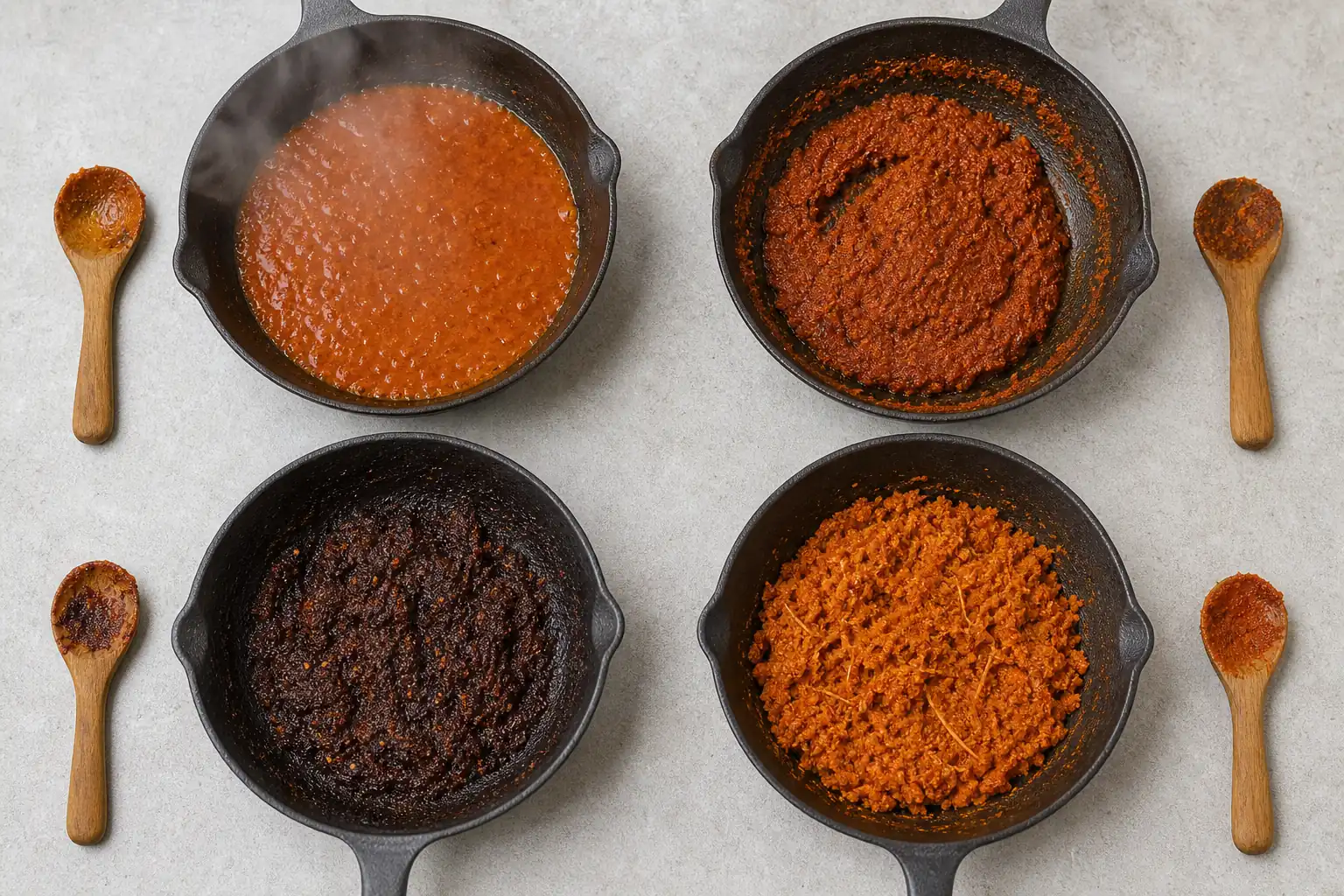
- Watery: Cook uncovered before adding fat
- Catching: Lower heat and add a small splash
- Scorched: Move the clean top layer to a new pan
- Gritty: Add moisture and cook longer
If the sauce tastes flat but not raw, correct salt and acid before adding more paste. Seasoning can reveal aroma that was already present.
Use spice substitute ratios only when one ingredient is missing. Rebuilding the entire paste around a random swap changes too many variables.
Keep notes when a repeat batch fails. Ingredient water content can change, so the useful cue matters more than yesterday’s exact minutes.
What makes a homemade paste unsafe rather than merely stale?
A wet paste is a different storage problem from a dry blend, and the risk does not announce itself as spoilage.
Garlic and chile held under oil at room temperature create low-acid, low-oxygen conditions, which is what Clostridium botulinum needs to grow. The bacteria produce no smell, no bubbles, and no warning taste.
Refrigerate a fresh paste and use it within a few days.
Freeze anything you want to keep longer, ideally in recipe-sized portions so you never thaw the whole batch to use a spoonful.
Commercial garlic-in-oil products are acidified for exactly this reason, so a stable shop jar is not evidence that your homemade version behaves the same way.
Frying the paste before storage helps, though it is not a substitute for cold. Cooking drives off raw water and gives you a cleaner starting point in the fridge.
Never leave a jar of raw garlic paste sitting under oil on the counter.
How should you cool and store homemade spice paste?
Fresh paste contains water, cut plant tissue, and often garlic. It is perishable even when oil covers the surface or the spices taste strong.
Cool cooked paste promptly in a shallow container, then refrigerate it. Use a clean spoon each time to limit contamination.
Freeze extra paste in recipe-sized portions when you need longer storage. Flat packets or small cubes thaw without exposing the whole batch.
- Label each portion with the paste name and freezing date.
- Leave room for expansion in rigid freezer containers.
- Thaw in the refrigerator or add a small frozen portion to a hot pan.
- Discard paste with mold, gas, leaking liquid, or an unusual fermented smell.
Do not use oil coverage as a safety test. Follow a tested preserving recipe for shelf-stable jars because ordinary frying does not make them safe.