
What Is Harissa, and How Do Paste and Powder Differ?
Read the label, choose the right form, and add this Tunisian chile blend without overpowering the food.
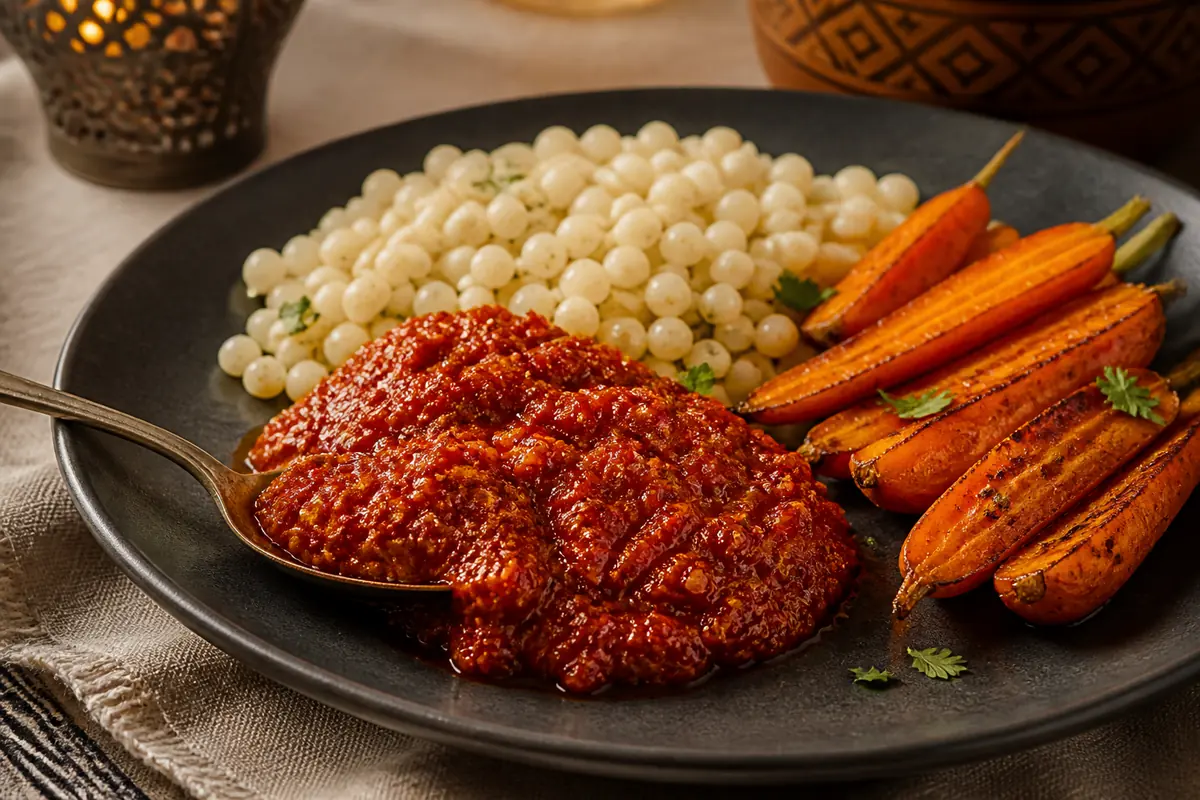
Harissa is a Tunisian red chile paste seasoned with garlic, caraway, coriander, cumin, acid, oil, and salt. Paste, powder, and sauce differ in moisture and concentration, so taste each product diluted and add it gradually instead of swapping the forms spoon for spoon.
What is harissa made of?
Harissa is a Tunisian red chile paste built from dried peppers, garlic, salt, oil, and acid, often with caraway, coriander, and cumin.
The peppers set the color, fruitiness, and heat. A paste made with mild red peppers can taste round and sweet, while a hotter chile makes the same spoonful much more forceful.
Garlic gives the paste a savory bite. It tastes sharper in uncooked harissa and softer after the paste has fried briefly in oil.
Caraway supplies a distinctive earthy, anise-like edge. It is often the note that separates harissa from a plain garlic chile paste.
Whole or ground coriander seed adds citrus and warmth, while earthy cumin gives a darker roasted base.
Vinegar or lemon sharpens the pepper flavor and loosens the mixture. Oil makes it spreadable and carries chile aroma across meat, grains, and vegetables.
| Ingredient | What it adds | What more of it changes | Label clue |
|---|---|---|---|
| Red chile | Fruit, color, heat | Makes heat or sweetness lead | Pepper variety may be named |
| Garlic | Savory sharpness | Makes raw paste more pungent | Often near the front of the list |
| Caraway | Earthy anise note | Creates a more distinct North African profile | May appear as seed or powder |
| Coriander and cumin | Citrus and roasted warmth | Builds spice depth beneath the chile | Order suggests their relative amount |
| Acid | Brightness | Makes the paste tangier and looser | Vinegar, lemon, or citric acid |
| Oil and salt | Texture and seasoning | Changes richness, concentration, and dosing | Compare sodium and serving size |
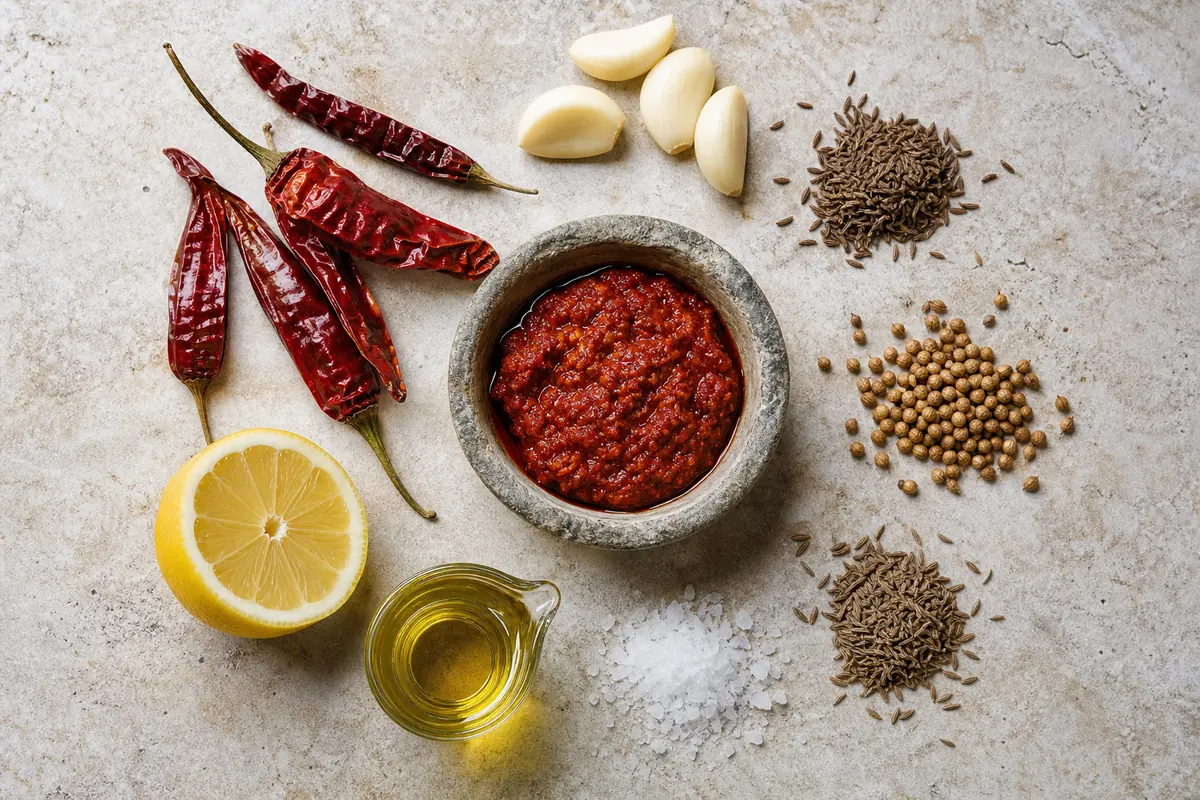
- Dried red chiles provide the body rather than serving as a small accent.
- Caraway, coriander, and cumin create the warm aromatic layer.
- Oil, acid, and salt determine how concentrated the finished paste feels.
There is no single universal ingredient list. Read the first few ingredients and sodium level to predict whether a jar will behave like dense pepper paste, salty seasoning, or a pourable condiment.
How are harissa paste, powder, and sauce different?
Harissa paste, powder, and sauce share a chile-spice profile, but they cannot be exchanged spoon for spoon because their water, oil, and salt levels differ.
Paste is the most useful cooking form. It already contains liquid and usually clings to a spoon, so it can be fried, spread, stirred into broth, or thinned into a dressing.
Harissa powder is a dry seasoning. It may contain ground chile, garlic, caraway, coriander, cumin, and salt, yet it lacks the moisture and cooked pepper body of jarred paste.
A bottled harissa sauce usually pours easily because it contains more water, oil, vinegar, or tomato. It may be designed for the table rather than for browning in a pan.
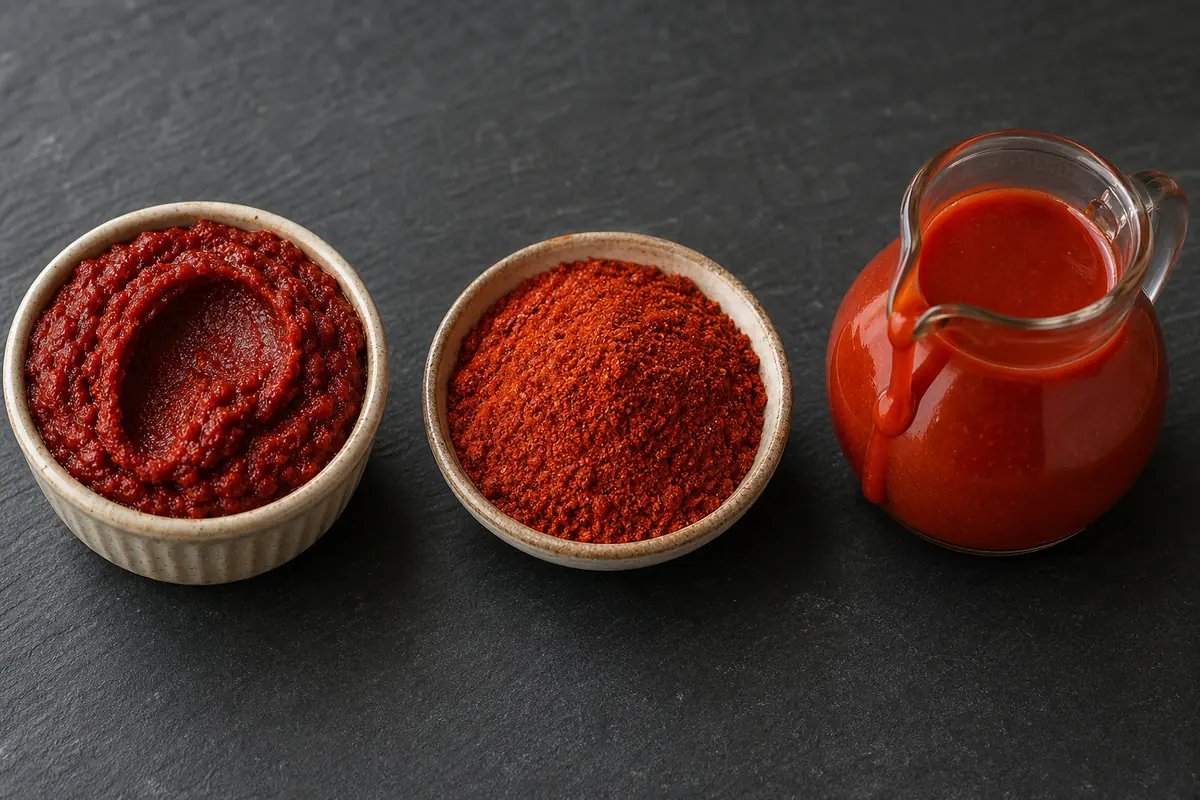
- Paste clings to food and can brown briefly in oil.
- Powder seasons dry surfaces or becomes paste after hydration.
- Sauce spreads quickly but may bring extra acid, salt, or tomato.
| Form | Texture | Best job | Swap caution |
|---|---|---|---|
| Paste | Dense and spoonable | Stews, marinades, roasted vegetables | Brands vary in salt and heat |
| Powder | Dry and free-flowing | Rubs, seasoning, controlled hydration | Needs water and oil to mimic paste |
| Sauce | Thin and pourable | Table condiment, drizzle, quick dressing | Extra liquid can loosen a recipe |
When a recipe asks for paste, begin with less powder than the stated paste amount, hydrate it, and taste. When using sauce, reduce another liquid only if the dish becomes too loose.
The label matters more than the package name. Compare ingredients, sodium, serving size, and texture before deciding how much belongs in the pan.
How spicy is harissa?
Harissa ranges from gently warm to very hot because producers use different peppers and different proportions of chile to oil, acid, and tomato.
Color is a weak heat clue. A vivid red paste can rely on mild sweet peppers, while a darker or paler product may contain a much hotter chile.
Do not judge the jar by tasting a full spoon. Stir a pea-size amount into a spoonful of broth, yogurt, or cooked beans so you can sense its heat at food strength.
Start a four-serving stew with one teaspoon of unfamiliar paste. Let it disperse, simmer for several minutes, and add more only after tasting the whole dish.
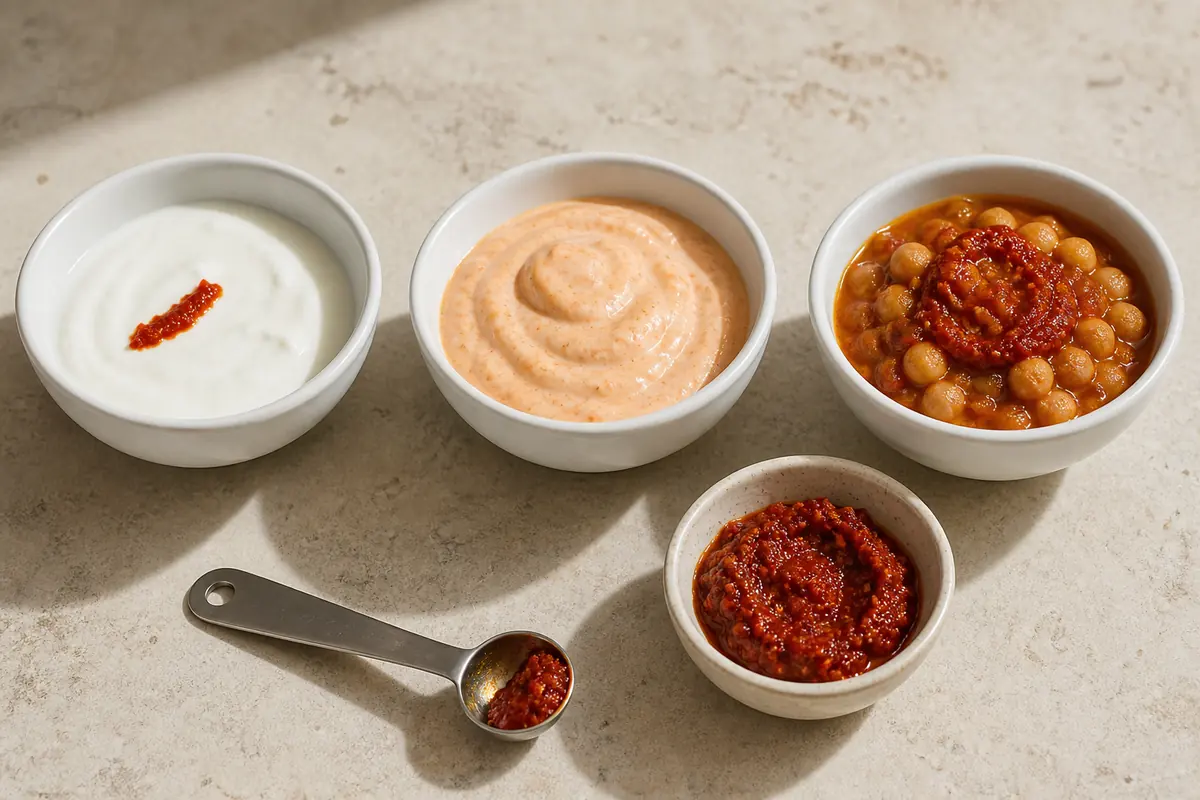
- Dilute a pea-size sample for the first taste.
- Use one teaspoon as a cautious starting point for four servings.
- Wait for the paste to disperse before deciding that the dish needs more.
- For less heat: Use less paste and preserve red-pepper flavor with sweet paprika.
- For more heat: Add a pinch of ground cayenne after the harissa flavor is balanced.
- For a hot marinade: Mix harissa with oil or yogurt before it touches the food.
- For table service: Offer the paste separately so each person controls the dose.
Dairy and fat spread capsaicin across the mouth and can soften its sharpest edge, but they do not remove it. A salty or acidic jar may still need dilution even when its heat is mild.
How does harissa sit among the world's other chile pastes?
Shoppers reach for harissa expecting sriracha and get something else entirely.
Sriracha is thin, sweet, garlicky, and vinegar-forward, so it works squeezed onto a finished plate. Harissa is thick, oily, and low in sugar, which is why it behaves like a cooking ingredient rather than a table sauce.
Gochujang brings fermented soybean and a noticeable sweetness. It builds savory depth where harissa builds warmth and roasted chile.
Sambal oelek is closest in texture and furthest in aroma, since it is largely chile and salt with none of the caraway and cumin that make harissa recognizable.
Chili crisp belongs to a different category again. Its whole point is crunch and fried aromatics, not a smooth paste that dissolves into a stew.
The useful test is whether a paste is built to cook or to finish.
Harissa can do both, though its spice base was built for heat and time.
How do you use harissa paste in cooking?
Use harissa paste as a concentrated seasoning, then choose whether the dish needs its garlic and spices browned, simmered, or kept bright at the table.
For soup, stew, or braised beans, fry the paste in a little oil after the onions soften. Thirty to sixty seconds removes a raw edge, but high heat can scorch the chile and garlic.
Stir in stock, tomatoes, or cooking liquid as soon as the paste smells fragrant. The liquid distributes the seasoning and stops the solids from darkening too far.
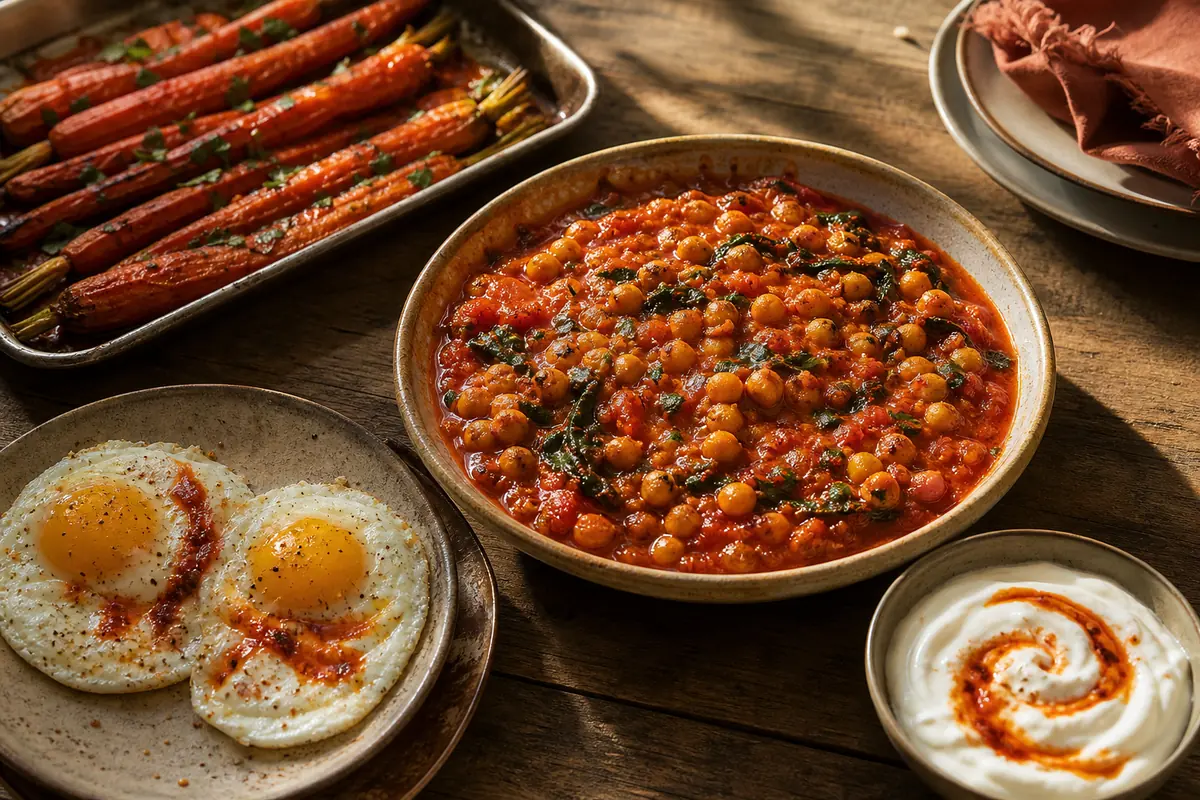
For roasted carrots, squash, cauliflower, or potatoes, thin harissa with oil and coat the vegetables lightly.
A little honey can balance bitter char. Honey also burns, so keep the heat moderate.
For chicken, lamb, or firm fish, combine paste with oil, lemon, and a measured amount of salt. Check the harissa label first so a salty jar does not over-season the marinade.
- Fry it briefly before adding stew liquid.
- Thin it with oil for vegetables and marinades.
- Stir it into yogurt or spoon it beside eggs after cooking.
- Soups and beans: Bloom a small spoonful in oil, then add liquid and simmer.
- Couscous and grains: Dissolve paste in warm cooking liquid so no hot pockets remain.
- Eggs: Add it to tomato sauce for shakshuka or serve a thin streak beside fried eggs.
- Sandwiches: Mix it into mayonnaise or yogurt rather than spreading a thick raw layer.
- Seafood: Use a light glaze and avoid covering delicate sweetness with garlic and salt.
The broad spice paste method applies here. A short, controlled fry opens the aroma, while prolonged dry heat turns the chile bitter.
Raw harissa tastes sharper and more acidic than cooked harissa. Reserve it for a finishing sauce when that bright bite helps rich food.
How do you thin paste or turn harissa powder into paste?
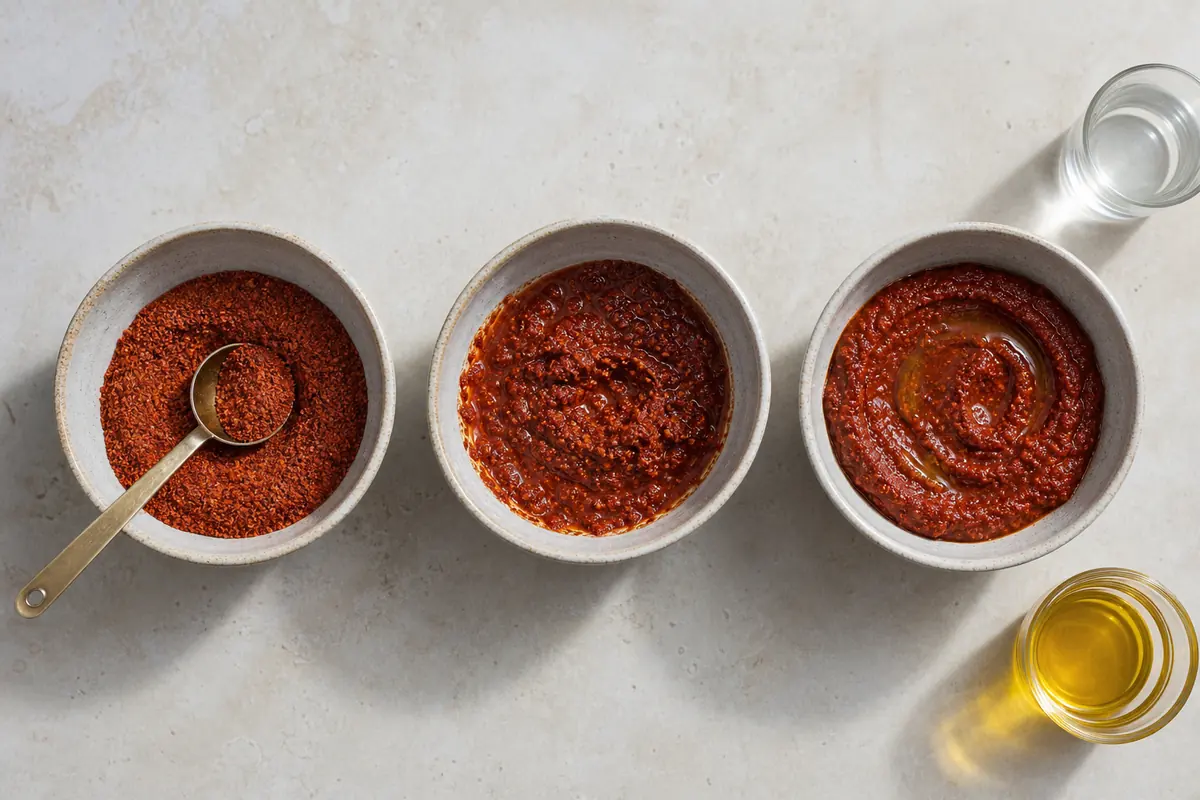
Turn harissa powder into paste by hydrating it with warm water first, resting it, then adding oil until the texture becomes smooth and spoonable.
Begin with one tablespoon of powder and one tablespoon of warm water. Stir well and wait five minutes because ground chile and garlic continue absorbing liquid.
Add one or two teaspoons of olive oil after the powder swells. Oil softens the dry texture and carries the aroma, but too much makes the mixture greasy.
- Start with equal parts powder and warm water by volume.
- Rest the mixture for five minutes before judging thickness.
- Add oil and acid only after the dry blend has absorbed its water.
Taste before adding salt because packaged powder may already contain plenty.
Lemon juice can brighten the paste, but replace some water with it rather than adding unlimited liquid.
Thin jarred paste with warm water for soup or olive oil for a glaze. Use yogurt for a cool sauce or lemon juice for a sharp dressing.
| Liquid | Best result | Useful for | Watch for |
|---|---|---|---|
| Warm water | Loose, clean pepper flavor | Soup, grains, beans | Can reveal excess salt |
| Olive oil | Glossy coating | Roasting, marinades | Too much separates |
| Yogurt | Cool creamy sauce | Grilled food, sandwiches | Acid and heat vary |
| Lemon juice | Bright thin dressing | Salads, fish | Can make a sour jar harsher |
This method creates a useful approximation, not an exact copy of a jarred product. Pepper type, salt, garlic, and grind still make every powder behave differently.
What can you substitute for harissa?
Harissa substitutes work best when they match the missing job.
Decide whether the dish needs chile heat, pepper body, warm spice, or a thick paste.
For a stew, combine tomato paste with paprika, a small pinch of cayenne, garlic, cumin, and crushed coriander. The tomato supplies body while the dry spices rebuild part of the profile.
For a marinade, use another unsweetened red chile paste and add ground caraway, coriander, and cumin. Begin with less because the substitute may be hotter or saltier.
A paprika and cayenne mixture works in a dry rub, but it will not add the moisture, garlic, or acid found in harissa paste.
| Substitute | Keeps | Changes | Starting approach |
|---|---|---|---|
| Tomato paste, paprika, cayenne, cumin | Body, color, controlled heat | Sweeter and more tomato-forward | Replace part of the paste, then taste |
| Unsweetened red chile paste plus spices | Chile body and paste texture | Pepper and salt profile | Use less first |
| Paprika plus cayenne | Dry pepper flavor and heat | No moisture, garlic, or acid | Use in rubs, not equal-volume paste swaps |
| Gochujang | Thick chile texture | Fermented sweetness | Use only when sweetness suits the dish |
| Red curry paste | Chile, garlic, concentrated form | Lemongrass and Southeast Asian aromatics | Use when the flavor change is welcome |
Gochujang and red curry paste solve the texture problem but change the dish clearly. They are useful alternatives, not flavor equivalents.
A little ground sumac can restore tartness to a dry pepper mixture, though it cannot replace the fermented or vinegary acidity of every jar.
Mix and test the substitute in a small portion of food first. That reveals whether you still need salt, acid, oil, or heat before changing the full recipe.
How long does opened harissa last?
Opened harissa paste belongs in the refrigerator unless its package gives a different instruction, and the printed label should control the storage time.
Use a clean, dry spoon so crumbs and cooking liquid do not enter the jar. Contamination shortens useful life even when the paste still looks red.
Some producers pack paste under oil, but adding your own oil layer does not make unsafe food safe. Keep the lid clean, close it tightly, and follow the stated refrigeration guidance.
Freeze extra paste in teaspoon or tablespoon portions when the label window is shorter than your cooking pace. Frozen harissa may separate slightly, but it remains useful in cooked food.
- Jar or tube: Refrigerate after opening and follow the producer's use-by direction.
- Clean utensil: Never dip a spoon that touched raw meat or wet food back into the container.
- Dry powder: Close it tightly and protect it from heat, light, steam, and humidity.
- Discard: Mold, swelling, gas, slime, or a clearly fermented odor means the paste should not be tasted.
Harissa powder follows the usual dry spice storage rules. It loses aroma gradually, while moist paste carries a separate spoilage risk.
Write the opening date on the lid if the jar will stay in the refrigerator. That simple mark is more reliable than guessing from color alone.
When a product smells merely dull but shows no spoilage, replace it for flavor rather than doubling the amount. Extra old paste often adds salt and bitterness before it restores aroma.