
Ancho Chili: More Fruit Than Fire, and How to Use It
Soak whole anchos for sauce, bloom powder gently for color, and choose substitutes by fruit depth first.
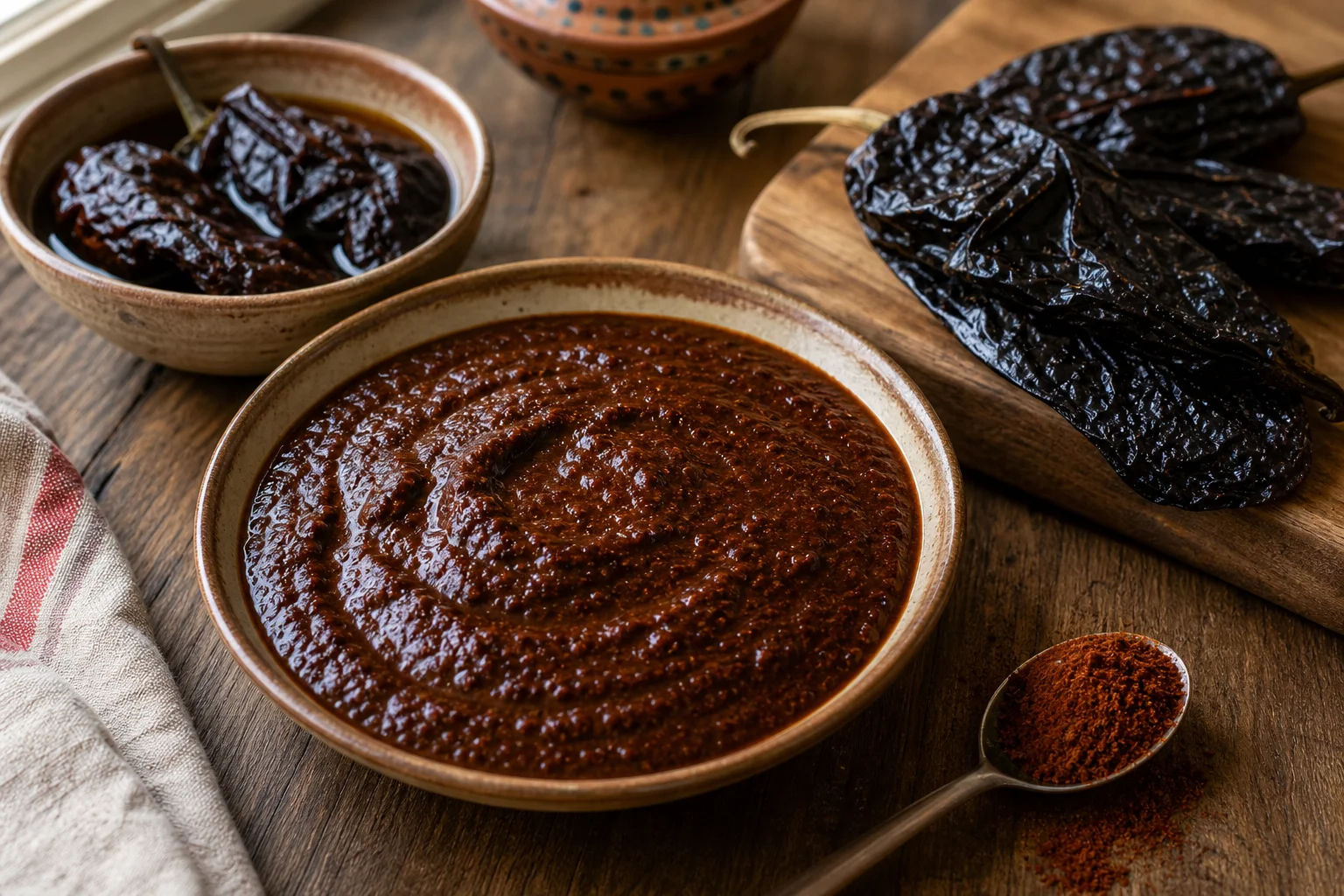
Ancho chili is a dried ripe poblano with mild heat, dark fruit flavor, and gentle earthy sweetness. Use whole dried anchos when a sauce needs body, and use ancho powder when a rub, chili, or quick sauce needs deep red chile flavor. It is not a cayenne substitute unless heat is not the main goal.
Why ancho tastes dark and fruity instead of sharp
Ancho chili is a dried ripe poblano. Drying turns its green pepper bite into raisin, prune, cocoa, and mild chile warmth.
Its mild heat means the Scoville number matters less than the dried fruit body it brings.
That fruit body is the reason ancho belongs in sauce work. It gives tomato and broth a darker middle without sharp burn.
The pepper is wide and thin, so the dried flesh softens into a sauce more easily than very leathery chiles.
That makes ancho a body spice more than a heat spice. It thickens the flavor of sauces and stews without taking over.
It sits closer to paprika and dark dried chiles than to cayenne.
Use ancho when the dish needs dried chile flavor that feels round. Do not use it when the only missing thing is sharp heat.
It is especially useful when tomato tastes bright but thin. Ancho gives the sauce darker middle notes.
Ancho also helps when a dish needs chile flavor for guests who do not want much heat. The sauce can taste complete without cayenne-level burn.
The flavor can turn muddy if nothing bright follows it. Onion, vinegar, lime, tomato, or fresh chile keeps the finish awake.
This is why ancho is not just a milder cayenne. It changes sauce weight, color, and finish, not only heat level.
That weight makes ancho useful when meat or beans need a darker sauce without much extra fat.
It also makes ancho easy to over-stack. Too many dark chiles can make a sauce taste muddy instead of deep.
Should you use whole ancho chiles or ancho powder?
Whole ancho chiles and ancho powder solve different jobs. Whole chiles build sauce texture, while powder seasons faster.
Choose whole chiles when the sauce itself needs chile flesh.
The soaked skin and pulp thicken enchilada sauce, adobo, and mole.
Choose powder when the dish already has body. Chili, beans, rubs, and barbecue sauce can use the flavor without blended flesh.
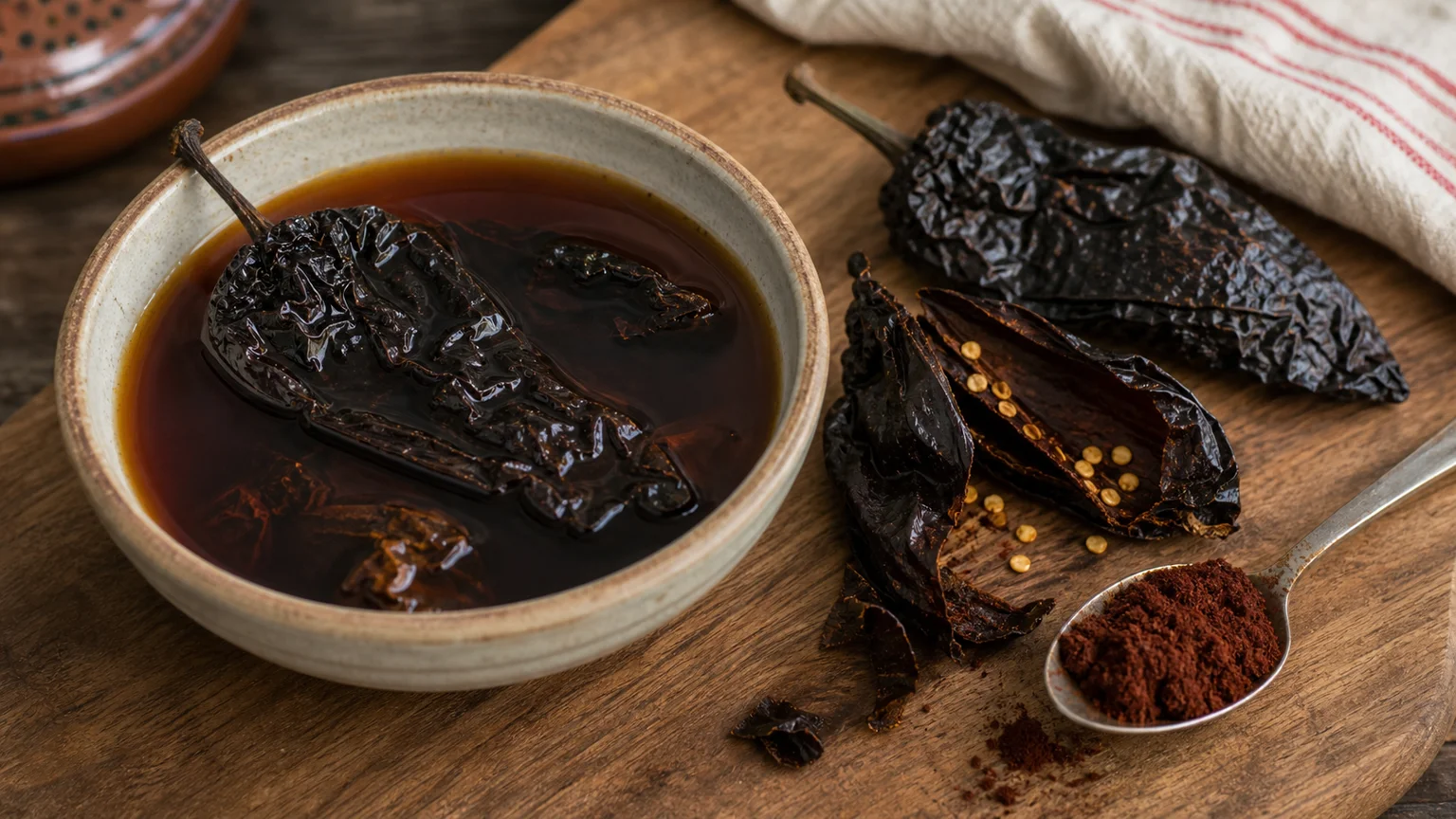
- Whole chile: Toast briefly, soak until pliable, then blend into sauce.
- Powder: Bloom gently in oil or stir into rubs and chili.
- Seeds: Remove most seeds when you want smoother flavor.
- Soaking liquid: Taste it before using because bitterness varies by chile.
| Form | Best use | Cooking consequence |
|---|---|---|
| Whole dried ancho | Mole, salsa, enchilada sauce, adobo | Adds body after soaking and blending |
| Ancho powder | Dry rubs, chili, beans, quick sauces | Spreads faster with less texture |
| Chile paste | Marinades, braises, barbecue sauce | Carries deeper color and cling |
Do not boil whole anchos hard. Gentle soaking softens the skin without pulling harsh notes too fast.
For powder, treat it like paprika.
Use gentle oil, stir briefly, and add liquid before the color darkens too far.
For whole chiles, remove stems and most seeds before soaking. The flesh gives the sauce more value than the seed pile.
Toast whole anchos only until they smell sweet and warm. If they smoke or blacken, bitterness has already started.
Taste the soaking liquid before blending it back.
Pleasant liquid adds depth, while harsh liquid can ruin the sauce.
If your blender is weak, soak longer and blend with hot liquid. Straining is normal for a smoother sauce.
Where ancho earns its place in real dishes
Ancho works best where dried chile body matters more than immediate burn. Think sauce, braise, beans, and rubs.
In mole, ancho acts like a dark base note.
Nuts, seeds, spices, chocolate, and fruit can sit on that base.
In chili, ancho powder gives depth before hotter chile enters. It helps the bowl taste cooked longer than it has.
- Mole and adobo: Blend soaked ancho with nuts, seeds, spices, tomato, or dried fruit.
- Chili: Use powder early with cumin, oregano, and tomato for dark base flavor.
- Salsa roja: Pair soaked ancho with garlic, onion, tomato, and a brighter chile.
- Meat rubs: Mix powder with salt, cumin, brown sugar, and a hotter chile if needed.
Ancho can make a dish taste slower-cooked than it is. That is useful in quick beans and weeknight chili.
If a sauce tastes heavy, add vinegar, lime, tomato, or a brighter chile.
Ancho brings bass, not sparkle.
That is why ancho often works with cumin, Mexican oregano, garlic, and tomato. Those partners keep the sauce moving.
Use ancho in a base layer, then finish with lime, vinegar, onion, or fresh chile if the dish needs lift.
For braised beef or pork, ancho helps the sauce cling to shredded meat. It adds color without making every bite fiery.
For vegetarian beans, ancho fills the gap that meat drippings would otherwise provide. Add fat, onion, and salt so it reads savory.
How do you build a smooth ancho sauce?
A smooth ancho sauce starts with pliable chiles, a short toast, a gentle soak, and enough liquid for the blender.
Remove stems first, then shake out most seeds. Seeds are not the main flavor, and too many can taste rough.
Toast the chile in a dry pan for seconds per side. The goal is aroma, not char.
Soak in warm water, stock, or tomato liquid until the flesh bends easily.
Hard centers make gritty sauce.
Blend with garlic, onion, tomato, cumin, oregano, or a little vinegar only after the chile softens. Raw aromatics need enough simmer time.
Strain when texture matters, especially for enchilada sauce. Leave it rustic for chili, beans, or a thick marinade.
Simmer the blended sauce with fat and salt.
- PrepPull the stems and shake out most of the seeds.
- ToastSeconds per side in a dry pan, stopping at aroma rather than char.
- SoakWarm liquid until the flesh bends without a hard center.
- BlendAdd garlic, onion, tomato, and spices once the chile is soft.
- StrainOnly where texture matters, such as enchilada sauce.
- SimmerCook with fat and salt so it becomes a sauce instead of a puree.
That final cook turns soaked chile into a sauce instead of a puree.
If the sauce tastes hollow, add salt before more chile. Dried chile flavor often needs seasoning to read clearly.
If the sauce tastes heavy, add a bright partner. Tomato, lime, vinegar, or a fresh chile can lift the finish.
If the sauce tastes thin, simmer it uncovered.
Ancho gives body, but water balance still decides cling.
Keep the first blend looser than the final sauce. A blender needs movement, while the pot can reduce the puree into clingy chile body.
If you add spices beside ancho, choose them for support. Cumin gives bass, Mexican oregano gives herbal bite, and clove can take over fast.
Strain only when the sauce feels gritty after blending.
A strong blender and a full soak often give enough smoothness without losing pulp.
What can replace ancho chili?
Replace ancho by matching dark fruit first and heat second. A hot chile alone will miss the point.
| Ancho substitute | Ratio | Best in |
|---|---|---|
| Mulato chile | 1:1 | Mole, dark sauces, braises |
| Pasilla chile | 1:1 | Sauces needing darker, leaner fruit |
| Mild chili powder | 1:1 | Chili, beans, rubs when blend flavor fits |
| Paprika plus cayenne | 2 parts paprika, tiny cayenne pinch | Color plus controlled heat |
Chipotle is not neutral. It adds smoke, so use it only when smoky flavor helps the dish.
If you substitute cayenne, use very little and add paprika or tomato paste for body.
In the dish, cayenne only covers heat. It cannot replace the raisin-like pulp that ancho gives a blended sauce.
In the dish, smoked paprika can help in rubs, but smoke changes mole and enchilada sauce quickly.
For chili, mild chili powder is often the easiest backup. Check the label because many blends already contain salt.
For enchilada sauce, a paprika blend may look right but taste shallow. Add tomato paste or a darker chile if available.
If whole anchos are brittle, toast them less or skip the toast. Old chile skins burn before they become fragrant.
If blended ancho sauce tastes gritty, strain it or blend longer with a little soaking liquid. The skin can stay tough in weak blenders.
If the sauce tastes muddy, brighten it instead of adding more chile. Lime, vinegar, tomato, or fresh onion usually fixes the finish.
For meat rubs, ancho powder needs salt and fat contact. Without both, it can taste like dry red dust on the crust.
A little oil in the rub helps the chile cling and darken evenly.
How do you buy and store dried ancho chiles?
A good ancho bends. A brittle one has already lost most of what you are paying for.
Press the chile between your fingers before buying. It should feel leathery and give slightly, with a deep brownish red color and a raisin smell when you bring it close.
Cracking, dusty skin means age. So does a pale, washed-out surface, which usually points to long storage under light.
Check the folds for white bloom or a musty smell, because dried chiles pick up mold when they are packed damp.
Store them airtight and away from light, and they hold useful aroma for around a year.
Whole chiles outlast ancho powder by a wide margin. If you buy more than one season needs, seal and freeze them, then soak or grind straight from frozen.
How to keep ancho from tasting bitter or dusty
Ancho bitterness usually comes from stale chiles, scorched powder, too many seeds, or harsh soaking liquid.
Stale chiles lose fruit first. What remains can taste leathery, tannic, or dusty even when the color looks deep.
Scorched powder tastes different from stale chile. It turns bitter fast and can darken the whole sauce.
- Toast briefly: A few seconds per side wakes aroma. Black patches taste bitter.
- Soak gently: Use warm water and stop when the flesh bends easily.
- Taste the liquid: Use soaking liquid only if it tastes pleasant.
- Bloom powder low: Paprika-like powders burn fast in hot oil.
Buy pliable dried chiles with a leathery feel and raisin-like smell.
Brittle, dusty chiles are already fading.
Store whole anchos airtight and dark. Freeze extra chiles if your kitchen is humid or hot.
If the package smells smoky, check the label. You may be holding chipotle or a mixed dried chile bag.
If powder smells flat, do not fix it with a bigger spoon.
Old powder adds color before it adds real depth.
Whole chiles should bend a little. If they shatter, plan to soak longer or choose a fresher bag.
Powder should smell like dried fruit and mild pepper. If it smells dusty, use it only as background color.