
What Does the Scoville Scale Actually Tell You?
Use pepper numbers for planning, then adjust for form, fat, dose, dish size, and tolerance.
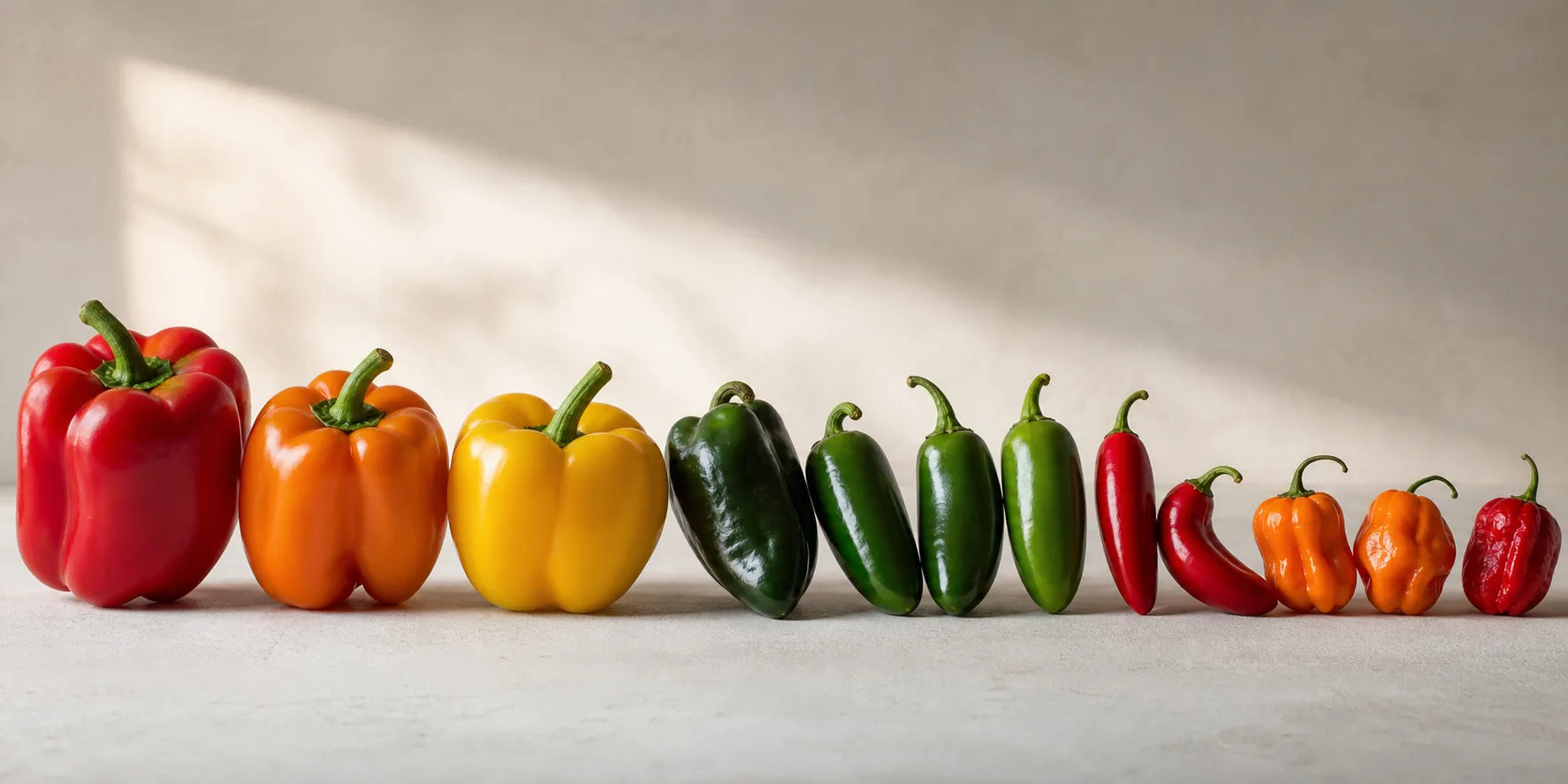
The Scoville scale estimates chile pepper pungency from capsaicinoid concentration. It does not measure fruitiness, smoke, vinegar, salt, or how hot a finished dish will feel. Use SHU to choose a heat lane, then control the dose with pepper form, dish volume, fat, starch, dairy, and table-side finishing.
What the Scoville scale measures
The Scoville scale measures chile pepper heat as pungency, not flavor. It tracks the burn from capsaicin-like compounds.
That distinction matters in cooking. A pepper can rank high while still tasting fruity, smoky, green, or floral.
| Question | SHU helps with | SHU misses |
|---|---|---|
| How hot is the pepper? | Heat lane and rough burn potential | Exact crop variation |
| How much should I use? | Starting dose and caution level | Dish volume, fat, and starch |
| Will it taste good? | Nothing beyond heat | Fruit, smoke, acid, salt, and aroma |
| Can I substitute it? | Relative heat warning | Texture, color, and chile flavor |
Pepper heat from capsaicin is only one lever, while pepper flesh supplies much of the flavor.
Use Scoville numbers to avoid surprise, then taste the food. The finished dish is the real measurement.
How the scale was built
Wilbur Scoville published his dilution method in 1912. Tasters judged when pepper extract stopped tasting hot.
Modern labs use chemical measurement instead of relying only on tasting panels. That makes results more repeatable than the original organoleptic test.
| Method | What happens | Kitchen consequence |
|---|---|---|
| Original dilution test | Extract is diluted until heat disappears | Useful history, but human panels vary |
| Modern lab testing | Capsaicinoids are measured directly | Better for product labels and comparisons |
| Pepper charts | Ranges are averaged or reported by source | Good for planning, not exact dosing |
| Hot sauce labels | May cite pepper, extract, or finished sauce | Read the label with skepticism |
The scale became famous because it gave cooks a shared language. It still needs cooking judgment.
What lab numbers like ASTA and HPLC mean
Modern heat testing does not involve tasting at all.
A lab runs ground pepper through high performance liquid chromatography, which reports how many parts per million of capsaicinoids the sample holds. That reading is then multiplied by roughly sixteen to give a Scoville figure.
A pepper measured at 500 ppm therefore lands near 8,000 SHU.
The multiplier is a convention rather than a law of nature, which is why two labs can quote the same sample at slightly different numbers. Treat any published figure as one reading of one batch.
Paprika sellers use a separate ASTA number, and it measures color rather than heat.
A high ASTA paprika is deeply red and may be completely mild. Reading that number as a heat rating is a common and expensive mistake.
The bite of black pepper comes from piperine, so no Scoville number covers it.
Piperine hits the front of the mouth quickly and fades, while capsaicin builds slowly and lingers.
| Number | What it measures | What it does not tell you |
|---|---|---|
| SHU | Capsaicinoid concentration, scaled | How hot the finished dish will feel |
| ppm capsaicinoids | The raw lab reading from HPLC | Anything about flavor |
| ASTA | Color intensity of paprika | Heat, at all |
| Piperine | The bite of black pepper | Anything on the Scoville scale |
How to read SHU ranges
A pepper range is more honest than one exact number. Genetics, weather, harvest stage, and stress can move the heat.
With chile powder, small measurement changes matter because a little capsaicin spreads through a whole pot.
- 0 SHU: Bell pepper gives sweetness and color without capsaicin heat.
- Low heat: Mild paprika and some fresh chiles add color before burn.
- Medium heat: Jalapeno-style peppers can season salsa, tacos, and eggs without taking over.
- High heat: Habanero-style peppers need tiny amounts because aroma and burn arrive together.
- Superhot heat: Extracts and superhot peppers are cooking hazards, not casual seasoning.
In mild red powders, paprika color often matters more than Scoville heat. A red powder can be mostly sweet or sharply hot.
If a recipe serves guests, start below the number you think you can handle. Heat can rise as the dish sits.
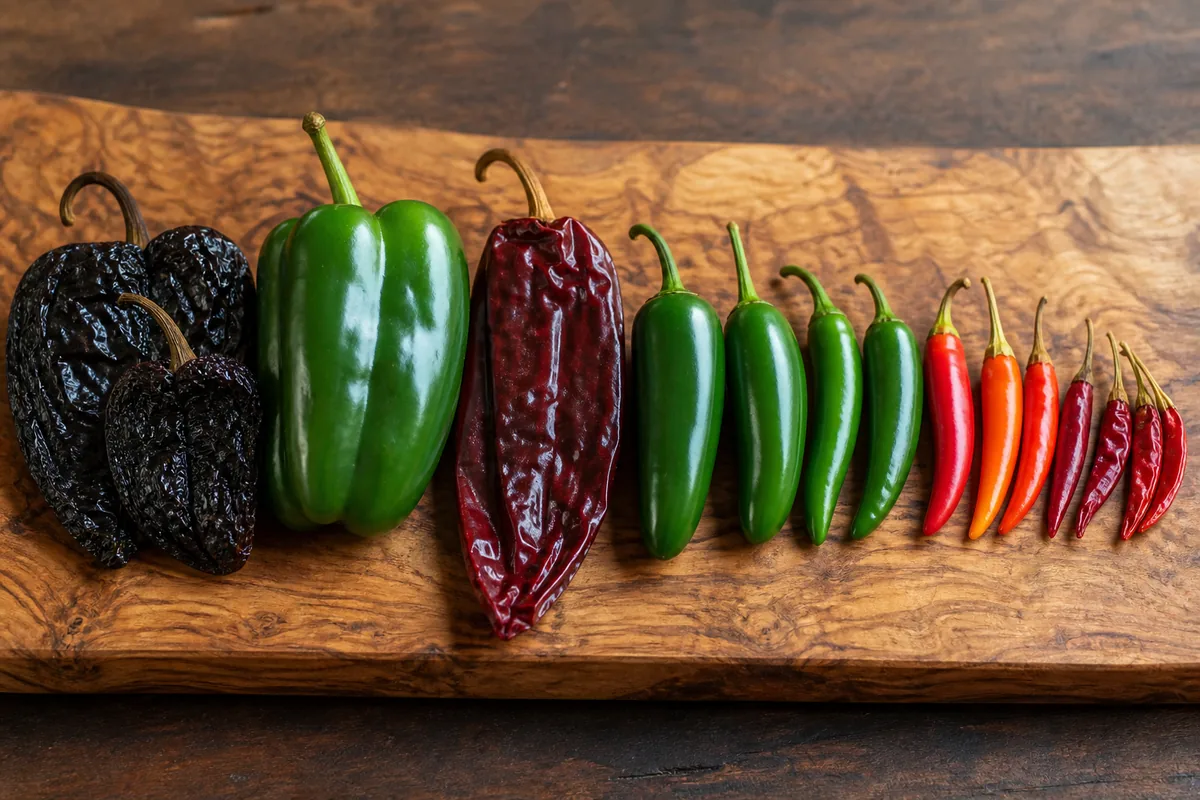
- Large and mild: Bell and ancho sit at the bottom of the scale.
- Middle: Jalapeno and serrano, where most everyday cooking happens.
- Small and fierce: Bird chiles and their relatives climb fast.
- The caveat: Weather, harvest stage, and stress move any one pod within its range.
Where the heat actually sits inside a chile
The burn does not live in the seeds.
Capsaicin forms in the pale spongy rib running down the inside wall of the pod, and the seeds only pick it up by resting against it. Scrape that rib out and most of the heat leaves with it.
Seeds taste hot because they were pressed against the source.
Rinsing them changes little, because capsaicin does not dissolve in water. Wiping the inside of the pod with a dry paper towel removes far more.
This is why two cooks can report different heat from the same variety.
One left the ribs in and one cut them out, and the pod on the chart was identical. A Scoville number describes the whole pepper, ribs included.
Deveining a jalapeno drops it into a much lower lane.
Leave the ribs in when the pod should carry the dish, and take them out when you want cayenne or jalapeno flavor without the burn.
- The rib: The pale spongy wall inside the pod is where capsaicin forms.
- The seeds: Hot only because they rest against the rib, not because they make it.
- Rinsing: Does almost nothing, since capsaicin will not dissolve in water.
- Deveining: Scraping the rib out drops a jalapeno into a much lower lane.
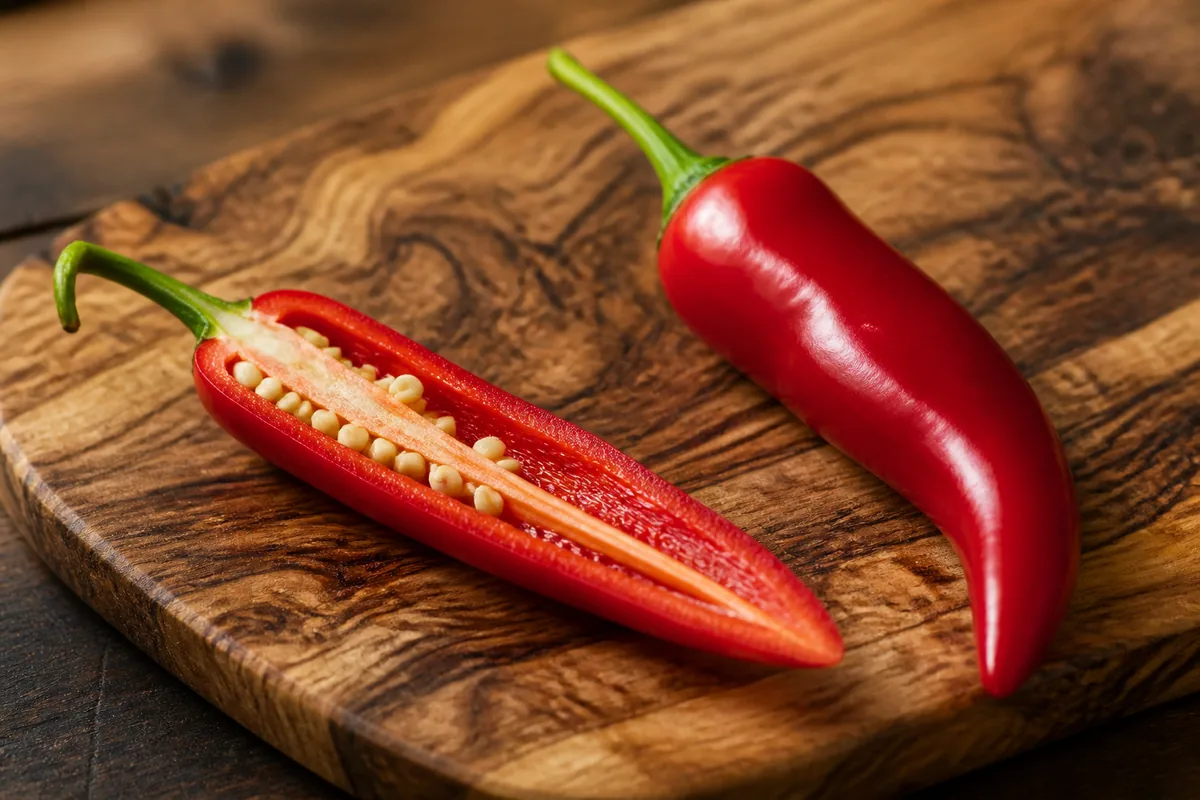
- The pale rib: Where capsaicin actually forms, running down the inside wall.
- The seeds: Pick it up by contact only, which is why removing them helps less than expected.
- Deveining: Scrape the rib out and the pod drops into a much lower lane.
- Rinsing: Does almost nothing, because capsaicin will not dissolve in water.
Why food feels hotter than the number
The same pepper can feel different in salsa, soup, oil, or dry rub. Food structure changes how heat reaches your mouth.
Capsaicin moves better through fat than plain water, so blooming chile powder in oil spreads heat quickly.
| Food factor | What it does | Cooking move |
|---|---|---|
| Fat | Carries capsaicin through the sauce | Use less chile when blooming in oil |
| Starch | Dilutes heat across rice, beans, or potatoes | Add bulk when the pot is too hot |
| Acid | Brightens chile flavor | Use lime or vinegar after heat is controlled |
| Sugar | Softens perceived burn slightly | Do not rely on sweetness alone |
Water does not pull capsaicin away very well. Milk, yogurt, starch, fat, and dilution work better in real food.
Use the number to choose the pepper, then use the dish to manage the burn.
Choosing pepper form by heat behavior
Fresh chiles, dried chiles, flakes, powders, sauces, and extracts behave differently. Form controls speed and spread.
Powder vanishes into the sauce, while chili flakes give visible finishing heat. That changes both taste and risk.
| Form | Best use | Watch for |
|---|---|---|
| Fresh chile | Salsa, garnish, stir-fries | Uneven heat from ribs and pieces |
| Dried whole chile | Sauces, stews, adobo | Flavor matters as much as SHU |
| Chile powder | Rub, chili, marinades | Fast spread and easy overdose |
| Hot sauce | Table heat and acid | Salt and vinegar change the dish |
| Extract | Industrial-style heat | Tiny errors become painful |
A useful contrast is smoked paprika, which can taste deep and smoky without acting like a superhot chile.
For family meals, cook mild and finish hot at the table. That keeps one pot useful for more people.
How to handle hot chiles without burning your hands
Capsaicin stays on skin long after the chile is gone.
Soap and water mostly move it around, because the compound dissolves in oil and alcohol rather than water. Rub your hands with cooking oil first, then wash with dish soap.
Wear thin gloves when you seed more than two or three hot pods.
Fingertip burn can take hours to fade, and it transfers to eyes, lips, and contact lenses long after your hands look clean. Cutting boards and knife handles hold it too.
Grinding dried chiles puts capsaicin into the air.
Keep your face away from the grinder lid when you open it, and give the dust a minute to settle. A lungful of cayenne powder is a genuinely painful mistake.
Milk works better than water on a burning mouth.
Fat and casein carry capsaicin away, which is why yogurt, lassi, and sour cream sit beside spicy food in so many cuisines.
- Hands: Rub with cooking oil first, then wash with dish soap. Water alone spreads it.
- Gloves: Wear them past two or three hot pods, since fingertip burn lasts hours.
- Surfaces: Boards and knife handles hold capsaicin after your hands look clean.
- Grinding: Keep your face back when you open the lid and let the dust settle.
- Burning mouth: Milk and yogurt carry it away, water does not.
Fixing a dish that got too hot
A too-hot dish needs dilution first. Add more food before chasing the burn with sugar or acid.
After a heat mistake, substitution logic also matters. Replacing cayenne with paprika changes heat, color, and pepper flavor.
- Add bulk: Rice, beans, potatoes, vegetables, broth, or a second batch lowers capsaicin concentration.
- Add fat or dairy: Yogurt, milk, cream, coconut milk, or butter can soften the burn.
- Add starch: Bread, tortillas, noodles, and rice give the mouth somewhere else to go.
- Adjust at the end: Salt and acid should come after the heat is back under control.
Do not keep adding water alone. You may thin the dish without reducing the burn enough.
Long simmering will not cook the heat away.
Capsaicin survives normal stove and oven temperatures, so a pot that tastes too hot at the start still tastes too hot an hour later. Only dilution, fat, or dairy changes the outcome.
When Scoville numbers mislead cooks
Scoville numbers mislead when a label hides context. A sauce may cite the pepper instead of the finished bottle.
In hot sauces and stews, spice timing can make heat feel sharper or softer. Early heat melts into the dish, while late heat stays obvious.
| Trap | Why it misleads | Better question |
|---|---|---|
| Exact number | Pepper crops vary naturally | What range is likely? |
| Extract rating | Extract is not normal food | How much is actually in the sauce? |
| Pepper-only label | Sauce has vinegar, salt, and sugar | How does it taste in food? |
| Heat contest thinking | More burn can hide flavor | What does the dish need? |
The best spicy food still has aroma, salt, acid, sweetness, texture, and restraint.
Heat is one seasoning, not the whole dish.
Use the scale as a map. Let the plate decide the route.
A practical pepper heat ladder
A practical heat ladder helps more than memorizing famous peppers.
It connects the number to a spoon, a dish, and a diner.
Use mild peppers when the dish needs pepper flavor first. Use hotter peppers when heat should be a visible part of the decision.
| Heat lane | Typical kitchen role | Safer first move |
|---|---|---|
| No heat | Color, sweetness, and pepper body | Use freely in eggs, rice, and rubs |
| Low heat | Background warmth | Start with a teaspoon in a family-size pot |
| Medium heat | Noticeable chile presence | Seed and rib removal changes the bite |
| High heat | Hot sauce, salsa, and chile-forward dishes | Start with a small portion and taste |
| Extreme heat | Novelty or specialist cooking | Use gloves, tiny amounts, and clear labeling |
This ladder also protects flavor.
If the dish only needs red pepper sweetness, a high-SHU pepper is the wrong tool.
When cooking for a group, build the base in the low lane. Offer flakes, chile oil, or hot sauce separately.
How to dose heat without guessing
Dose matters more than pride.
A very hot pepper used carefully can taste balanced, while mild powder can overwhelm by volume.
Start with measured pinches for powders and counted pieces for fresh chiles. Write down the result if the dish is a staple.
- For chili: Bloom a small amount of chile powder, add liquid, simmer, then adjust after the beans and tomato settle.
- For salsa: Add minced chile in stages because raw capsaicin spreads as the salsa rests.
- For soup: Keep heat low at first because broth carries chile quickly across every spoonful.
- For rubs: Balance chile with salt, sugar, and paprika so heat does not taste dry.
- For table heat: Use hot sauce or flakes so each eater controls the final burn.
A measured first batch becomes your house reference.
The next batch gets easier because you are adjusting from memory, not panic.
The safest heat plan leaves room at the end. Once capsaicin dominates, every other seasoning becomes harder to judge.
Pepper heat by recipe role
A pepper choice should match the recipe role before it matches a chart.
Heat can be background, accent, structure, or the main event.
Background heat belongs in food where beans, tomato, rice, or meat carry the burn. Accent heat belongs where each bite should notice chile.
| Recipe role | Pepper choice | Cooking consequence |
|---|---|---|
| Background warmth | Paprika, mild powder, or seeded jalapeno | The dish stays shareable and aromatic |
| Steady heat | Cayenne, serrano, or medium flakes | Heat follows every spoonful without becoming the headline |
| Fruit plus fire | Habanero-style pepper in tiny amounts | Aroma stays tropical while burn stays controlled |
| Smoky heat | Chipotle or smoked chile powder | Smoke changes the dish as much as heat |
| Table heat | Hot sauce, flakes, or chile oil | Each eater controls the final level |
This role-first approach prevents a common mistake: using a famous hot pepper when the dish only needed mild red chile depth.
It also keeps substitutions honest.
A hotter pepper can replace burn, but it may not replace smoke, sweetness, fruit, or color.
- For tacos: Use fresh chile or salsa so heat arrives in bursts, not as a hidden background.
- For chili: Use layered dried pepper flavor, then correct heat near the end.
- For curry: Bloom chile powder carefully because fat makes heat feel evenly distributed.
- For marinades: Keep heat moderate because raw chile can intensify during resting.
A Scoville chart cannot make that role choice for you. It can only warn how carefully to start.
That warning is useful because chile mistakes compound quickly.
A careful first spoon protects the whole pot.
It also protects aroma because extreme heat can hide fruit, smoke, salt, and acid.