
What Is Paprika, and Which Type Should You Use?
Sweet, hot, and smoked paprikas each do a different job, and all of them turn bitter the moment the pan gets too hot.
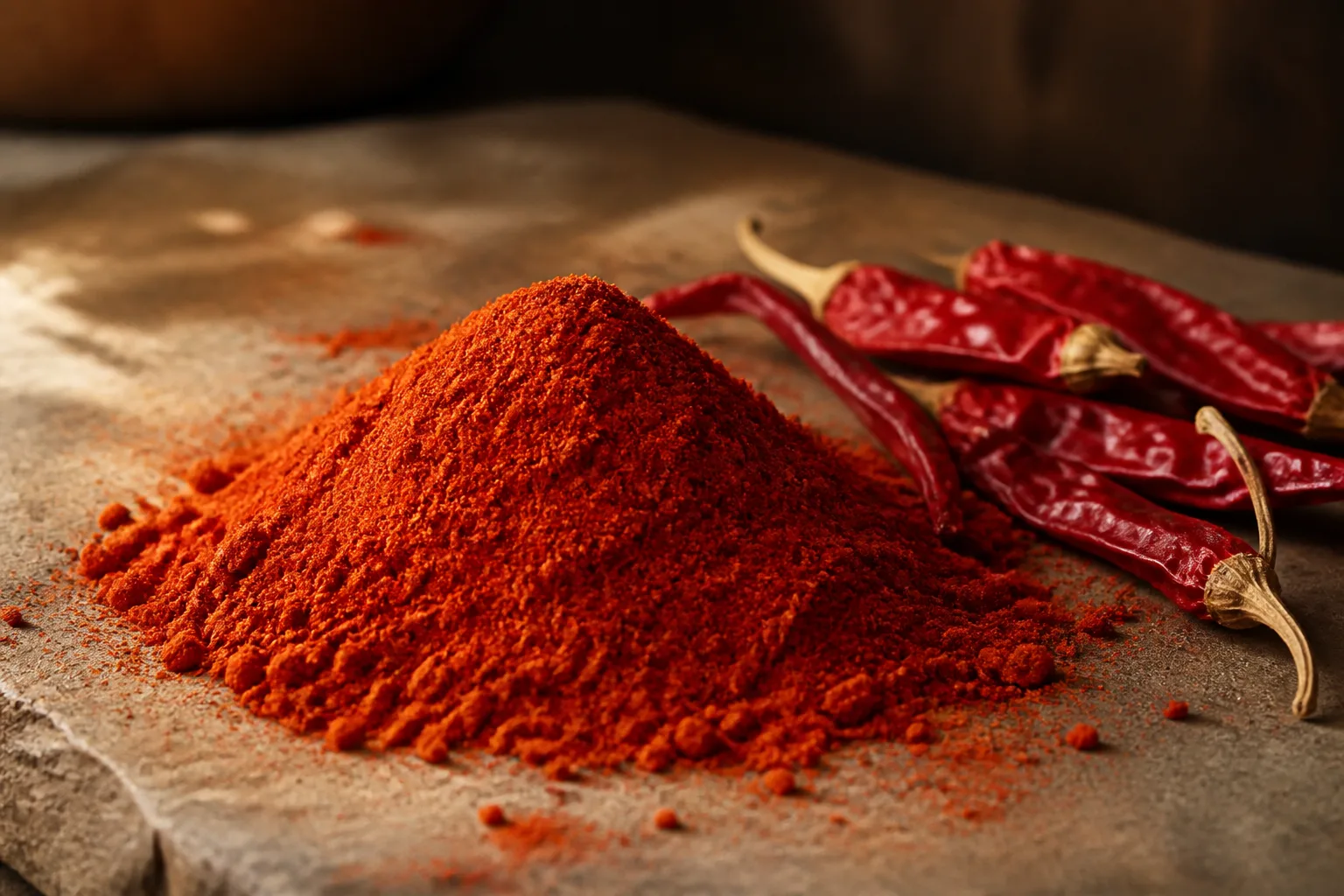
Paprika is ground dried red pepper, sold as sweet, hot, or smoked, with Hungarian and Spanish styles that taste different. It mostly adds color and gentle warmth, not heat, and it scorches easily, so bloom it in fat off high heat.
What is paprika, and which type should you use?
Paprika is simply dried red peppers ground into a fine powder.
It is not one flavor, but a family of powders that range from sweet and mild to hot and smoky.
The jar labeled just paprika is usually sweet paprika, the mild, bright red all-rounder. Use it when a recipe wants color more than bite.
Which paprika you want depends on the dish.
Sweet brings color and body, hot adds a chile kick, and smoked gives deep woody smoke.
That choice matters before heat enters the pan. Paprika is already ground, so it has no shell or seed coat to protect its color.
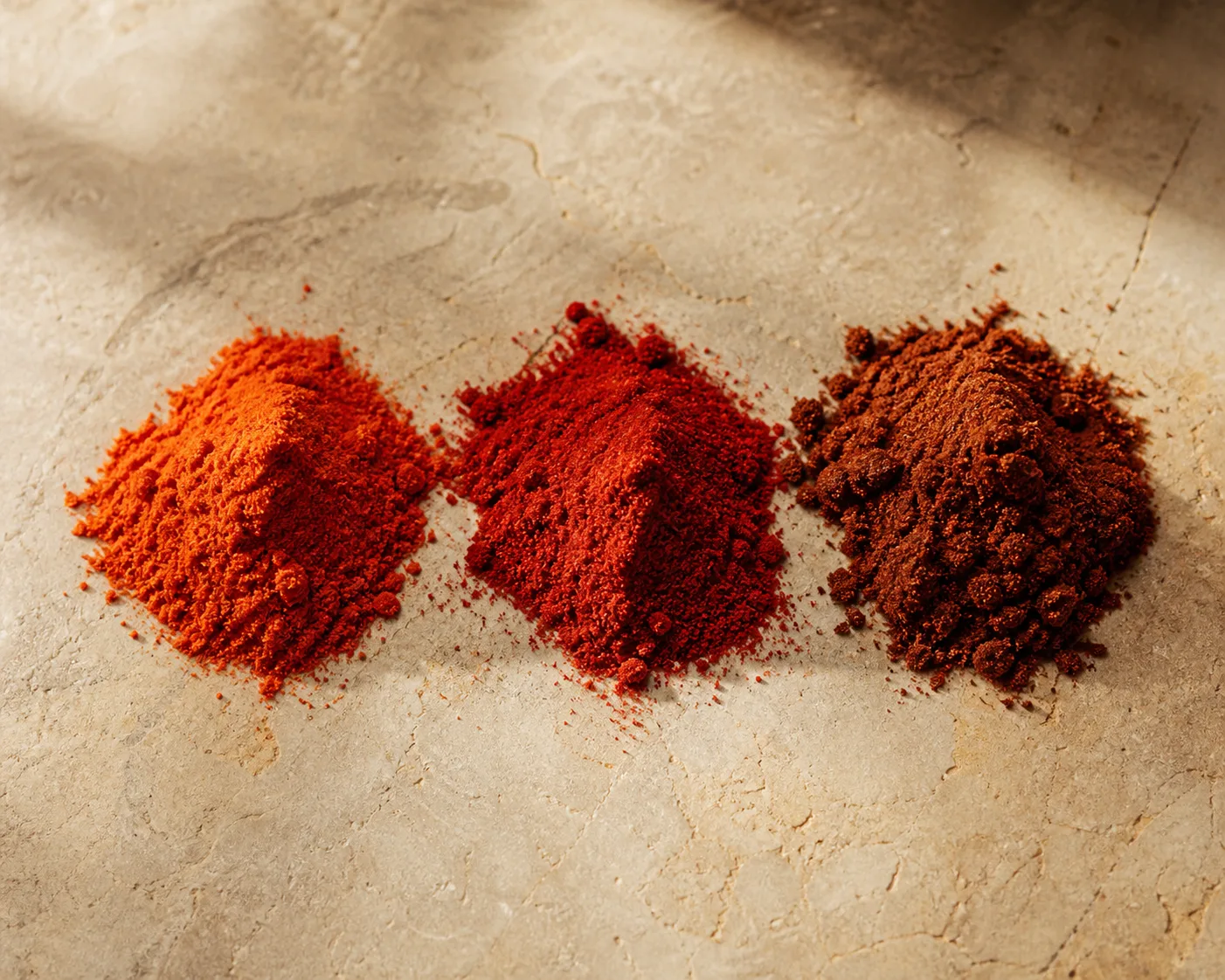
- Sweet: Mild, bright, for color and body.
- Hot: Adds a real chile kick.
- Smoked: Deep, woody smoke flavor.
Grabbing the wrong type changes the dish.
Sweet paprika will not add the heat a recipe wants, and smoked paprika can take over a delicate one.
If a recipe does not name the type, assume sweet paprika unless the dish clearly needs smoke or heat.
Sweet, hot, and smoked paprika each do a different job
Sweet paprika is the workhorse.
It brings red color and mild fruity pepper flavor to stews, rice, and roasted meat without adding heat.
Use it when the food needs redness, round pepper aroma, or a gentle background. It will not rescue a dish that needs sharp heat.
Hot paprika swaps some of that sweetness for a chile burn. It works when warmth and color need to arrive together.
Hot paprika is still broader and sweeter than ground cayenne. It spreads color while cayenne mainly pushes heat.
Smoked paprika is a different animal, made from peppers dried over oak smoke.
A little adds a grilled, woody depth that no sweet paprika can.
That smoke can dominate, so treat oak-smoked paprika as a seasoning of its own. Start with less than you would use of sweet paprika, then judge whether the dish needs more wood smoke.
When a dish uses tomato, beans, potatoes, eggs, or mild dairy, start with sweet paprika. Add the hotter or smoked type only after the base can support it.
What is the difference between Hungarian and Spanish paprika?
Origin matters as much as type.
Hungarian and Spanish paprika are the two great traditions, and they taste and behave differently.
Hungarian paprika is prized for pure, sweet pepper flavor and deep color, and it is graded from delicate to hot. It defines goulash and paprikash.
That tradition uses paprika as a main flavor, not a garnish. Onion, fat, meat, and broth give the powder room to soften.
| Style | Character | Where it shines |
|---|---|---|
| Hungarian sweet | Pure, sweet, deep red | Goulash, paprikash, stews |
| Hungarian hot | Sweet with a chile kick | Spicier Central European dishes |
| Spanish dulce | Mild, often lightly smoked | Rice, chorizo, sofrito |
| Spanish pimenton (smoked) | Woody oak smoke | Chorizo, beans, paella, rubs |
Spanish paprika, or pimenton, is often smoked, which is why the two cuisines taste distinct. A Hungarian stew and a Spanish rice use paprika for different ends.
Spanish paprika often sits beside garlic, olive oil, beans, rice, and sausage. It can taste wrong when the dish expects clean sweet pepper instead of smoke.
If a recipe names a country, follow it because Hungarian sweet in a paella or smoked Spanish in a paprikash pulls the dish in the wrong direction.
Why does paprika burn so easily?
Paprika is high in sugar and finely ground, so it scorches fast. Past a low heat threshold it turns from sweet and red to bitter and brown in seconds.
The fix is to bloom it gently in fat, not toast it dry in a screaming pan. Stir it into warm oil or butter off high heat, then add liquid quickly.
A brief bloom in warm oil carries paprika's color and flavor through the dish. The fat must stay below the scorch point, because bitter powder cannot recover in the pot.
Move the pan off the burner before the paprika goes in when onions or garlic are already browned. Residual heat is usually enough.
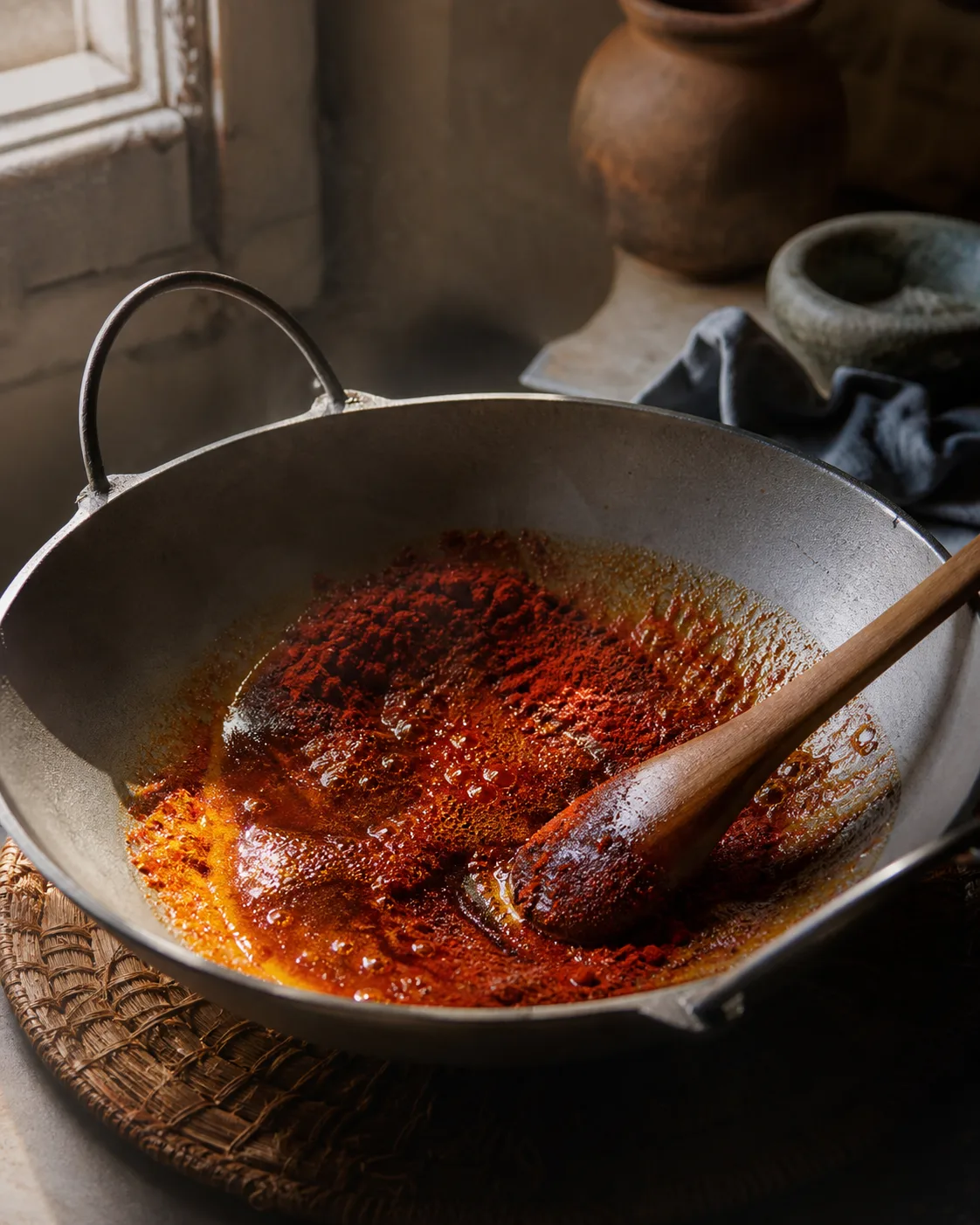
- Do: Stir into warm fat off the heat, then add liquid fast.
- Do not: Toast paprika dry in a hot, empty pan.
- Rescue: If it smells acrid, start over; burnt paprika ruins a dish.
Burnt paprika cannot be fixed.
Its bitterness spreads through the whole pot, so wipe the pan and start again if it scorches.
How much of paprika is color, and how much is flavor?
A lot of paprika's job is color. Sweet paprika turns a stew deep red and a deviled egg photogenic while adding only mild flavor.
That red comes from pepper pigments that dissolve better in fat than in plain water. Warm oil makes the color look richer.
That is a real use, not a cheat. The red glow of a Hungarian stew or a dusting on hummus is part of how the dish is meant to look.
Old paprika can look brown before it tastes completely flat, so color is an early freshness signal.
But do not rely on paprika for heat. If a dish tastes flat, sweet paprika adds body and color, while heat needs a hot type or a separate chile.
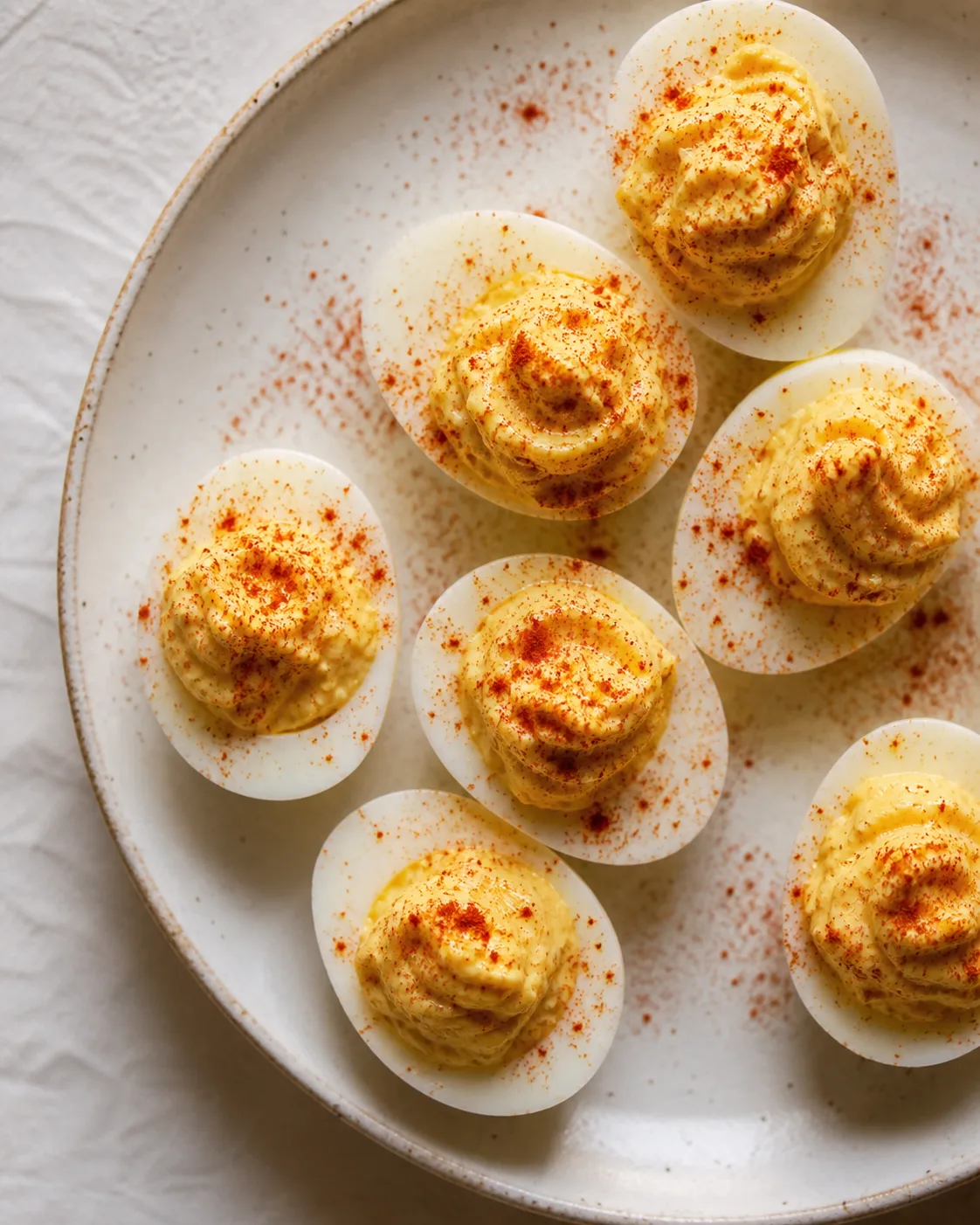
- Color work: A dusting reddens eggs, hummus, and potato salad.
- Body in stews: Sweet paprika deepens the color of a goulash.
- Not for heat: Reach for a hot type or chile when you want spice.
Fresh paprika has vivid color and a sweet smell. Dull, brownish powder that smells of nothing has lost both its flavor and its point.
Warmed briefly in fat, paprika also gives a dish a glossy red sheen. That colored oil is why a good goulash or a Spanish rice looks as rich as it tastes.
How much paprika should you use, and when should it go in?
Paprika amount depends first on type and then on whether it leads the dish or supports another seasoning. Sweet paprika can be used by the tablespoon in a paprika-led braise, while hot and smoked powders need smaller starts.
For a four-serving stew that is not built around paprika, start with 2 teaspoons of sweet paprika or 1/2 teaspoon of hot or smoked paprika.
For roasted vegetables, chicken, or a dry rub, 1 teaspoon per pound is a conservative starting point. Mix the powder with oil before high heat so that amount spreads as a thin coating rather than collecting in scorch-prone patches.
For deviled eggs, hummus, or potato salad, about 1/8 teaspoon makes a visible dusting across four servings without turning the garnish into the main flavor.
These are starting amounts because hot and smoked paprika vary by producer. Taste the cooked base before adding more.
Paprika changes with method because it is fine powder, not a whole seed or flake. The same spoonful can taste sweet, dusty, smoky, or bitter depending on heat and timing.
For stews, let paprika meet warm fat and onion before liquid enters. That gives the powder a base without exposing it to dry heat for long.
For roasted meat or potatoes, mix paprika with oil and salt before it touches the food. Dry powder scorches faster on a hot tray.
Oil turns the powder into a coating, so the paprika spreads before the surface heat arrives.
Salt helps the seasoning cling instead of falling into red patches.
| Use | Starting amount | Best timing | Risk to avoid |
|---|---|---|---|
| Goulash or paprikash | 1 tablespoon sweet per 4 servings, then adjust | Bloom briefly with onions, then add liquid | Letting the powder brown on the pan |
| Spanish rice or beans | 2 teaspoons sweet per 4 servings | Stir into oil and aromatics before stock | Using smoked paprika when the dish needs sweet |
| Roasted potatoes | 1 teaspoon per pound | Mix with oil before roasting | Dry clumps burning on the tray |
| Deviled eggs or hummus | About 1/8 teaspoon across 4 servings | Dust on after cooking | Expecting the garnish to add heat |
| Dry rub | 1 teaspoon per pound | Blend with salt and other spices | Using smoked paprika as the whole rub |
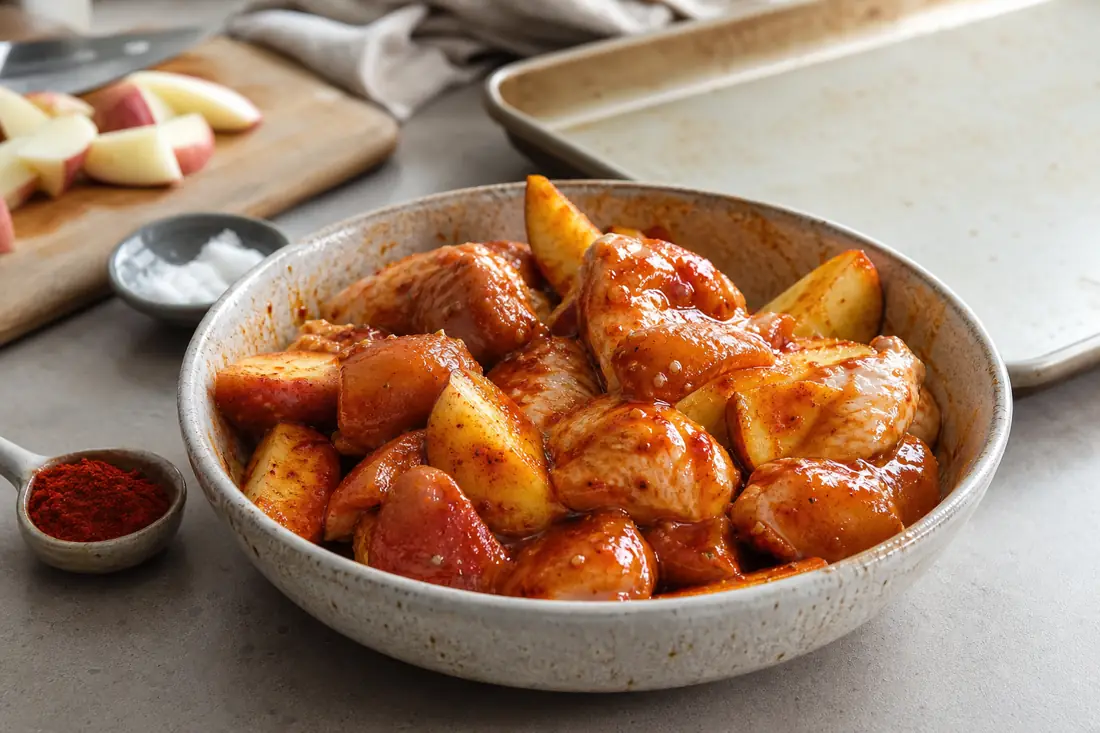
- Coat first: Mix paprika with oil before high heat
- Salt first: Season the food before the spice burns
- Spread first: Break up dry clumps before the tray enters the oven
Paprika in a rub works best when salt, sugar, garlic, or cumin supports it. On its own, it can taste dusty before the meat browns.
Sugar can help browning in a rub, but it also raises scorch risk. Keep the oven or grill moderate until the surface looks set.
As the food browns, the Maillard reaction builds savory flavors around mild paprika. Without that browned base, a heavy dry coating can taste dusty.
As a garnish, paprika is mostly visual, so use the freshest sweet paprika you have and add heat with another chile if the dish needs it.
A garnish should be added after steam slows. Heavy steam wets the powder and turns a clean dusting into red speckles.
This method split is why paprika can be both a stew foundation and a finishing dust. The powder is the same, but heat decides what it gives.
Where paprika belongs, and what can replace it
Sweet paprika anchors Central European stews, Spanish rice, and spice rubs. It also finishes deviled eggs, potato salad, and hummus with color.
In Mexican cooking, paprika is usually a supporting red powder, not the main chile identity. Dried chiles such as ancho do more flavor work.
| Paprika's job | Nearest match | What differs |
|---|---|---|
| Sweet paprika for color | A little tomato powder or mild chile | Less sweet, similar red |
| Hot paprika for heat | Sweet paprika plus a pinch of cayenne | You control the burn |
| Smoked paprika depth | A tiny pinch of chipotle or cumin | Smoky and earthy, hotter |
| Hungarian sweet in stew | Spanish dulce | Slightly different, still mild |
For heat specifically, build it from sweet paprika plus a little ground cayenne. That lets you keep paprika's color while dialing the burn to taste.
To fake smoked paprika, a tiny pinch of ancho chile powder or ground cumin adds darker earth. Both change the dish, so use a fraction of the amount.
When no single powder fits, decide whether you need color, heat, or smoke first because chasing all three from one substitute changes the dish in several directions.
In a Mexican spice mix, paprika can supply red color while ancho or another dried chile carries the main flavor. In a Spanish sofrito, the paprika type matters more because its smoke or sweetness stays exposed.
How do you buy and store paprika?
Buy paprika in small amounts because its bright color and pepper aroma fade quickly. A shop with fast stock turnover is more useful than a large bargain bag that will sit open for a year.
Ground spices have a shorter shelf life than intact seeds or pods because much more surface touches oxygen. Paprika shows that loss early as a duller red color and a weaker pepper aroma.
Color is your freshness cue. Vivid red powder is useful, and a faded brick color means it is on the way out.
Smell matters too. Fresh sweet paprika should smell fruity and peppery, while smoked paprika should smell like clean wood smoke.
- Buy small: Paprika loses color and flavor within a year.
- Judge by color: Vivid red is fresh; dull brown is stale.
- Store dark: Light fades the color fastest, so keep it in a closed cupboard.
- Label the type: Sweet, hot, and smoked look alike once opened.
Keep paprika in a dark cupboard rather than above the stove. Light and heat strip its color before they flatten its aroma.
A dull, faded jar is not dangerous, just pointless. It has lost the color and sweetness that were the reason to reach for paprika at all.
If it smells musty, clumps from moisture, or shows insects, treat it like any spoiled ground spice and discard it.
Because the three types look almost identical, mark the jars. A spoon of hot where you wanted sweet, or smoked where you wanted mild, can reshape the dish.