
Smoked Paprika: How to Add Smoke Without a Grill
Use it as a smoke seasoning first and a pepper seasoning second, because the wood aroma takes over faster than the heat.
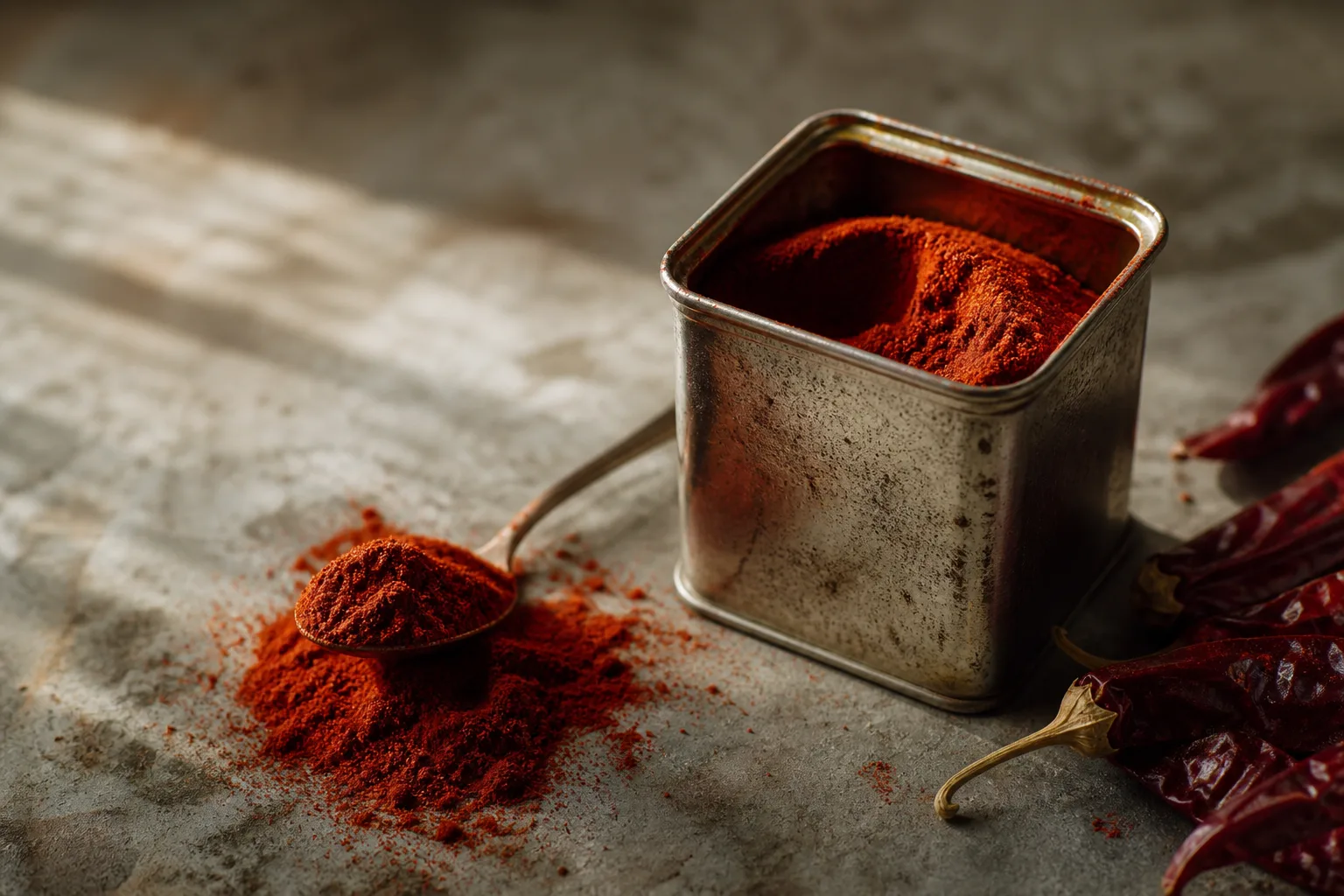
Smoked paprika gets its flavor from drying red peppers over oak smoke, so it adds grilled depth without a grill. Dulce is mild, agridulce has a warmer edge, and picante adds real chile heat, so use small amounts in beans, potatoes, rubs, rice, sausage, and tomato sauces.
Why smoked paprika tastes smoky before it tastes hot
Smoked paprika tastes smoky because ripe red peppers meet wood smoke before milling, so its drying method matters more than the shared paprika name.
In La Vera in western Spain, peppers dry slowly in smoke houses while an oak fire burns below the racks. The process can take about ten to fifteen days, allowing smoke to season the flesh as moisture leaves.
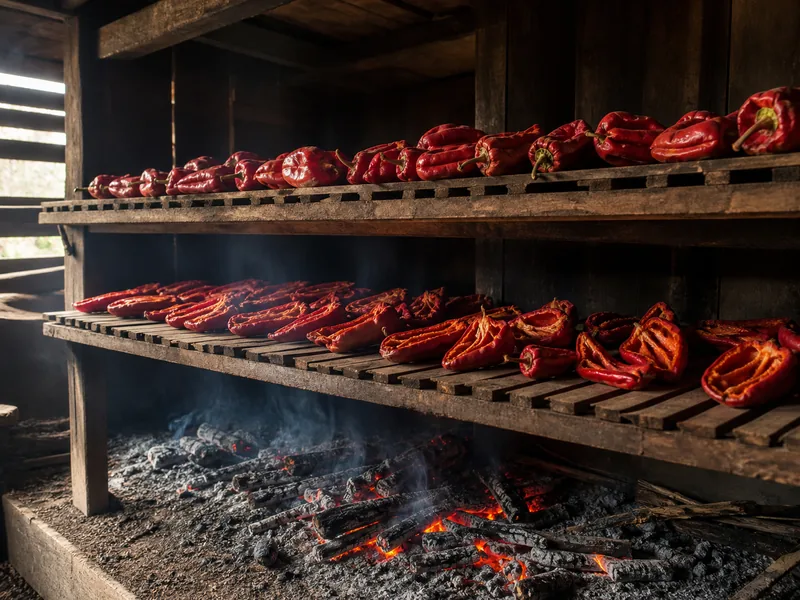
- Racks above: Peppers dry on slats rather than touching flame.
- Oak below: A low indirect fire supplies smoke and gentle heat.
- Slow drying: Moisture leaves over days while the flesh takes on wood aroma.
- Milling last: Only dried smoked peppers become pimenton powder.
Ordinary paprika is dried without that smoke, so it brings red color and pepper sweetness without making the dish taste grilled. Swapping the two changes the flavor direction, not merely the intensity.
| Decision | Smoked paprika | Ordinary paprika |
|---|---|---|
| Drying | Slow contact with oak smoke | Sun or hot-air drying without smoke |
| First impression | Wood smoke before pepper sweetness | Pepper sweetness and red color |
| Best role | Beans, rubs, rice, sausage, roasted vegetables | Delicate sauces, eggs, garnish, color |
| Swap boundary | Use only when smoke belongs | Use when the dish needs color without smoke |
Pimenton de la Vera carries a protected designation tied to that regional method. A generic smoked paprika can still work, but the label should not borrow the protected name without meeting its origin rules.
Smoke from the jar accumulates with char, cured meat, and chipotle, so count those flavors already present in the dish before an otherwise clean wood note becomes a heavy burnt impression.
Use smoked paprika as a specialist jar rather than a default red powder. A small amount can give stovetop beans or oven potatoes a grilled direction, while the same dose can overwhelm a pale cream sauce.
Choose dulce, agridulce, or picante by heat level
The label matters because smoked paprika is not always mild. Dulce, agridulce, and picante all bring smoke, but they do not bring the same heat.
Dulce is the safe starting point for most home cooking. It adds smoke and round pepper sweetness without turning the dish spicy.
Use dulce when the dish has beans, potatoes, chicken, eggs, or tomato. Those foods need smoke more often than they need extra chile burn.
Agridulce is useful with lamb, mushrooms, chickpeas, and lentils because its slight edge keeps rich food from tasting sweet.
| Grade | Heat level | Best for |
|---|---|---|
| Dulce (sweet) | None, just smoke | The default for most dishes |
| Agridulce (bittersweet) | Gentle warmth | When you want a little edge |
| Picante (hot) | A real chile kick | Chorizo, spicy stews, bold rubs |
Agridulce works when a dish needs a savory edge behind the smoke. Picante adds a chile kick, so treat it closer to mild cayenne powder than sweet paprika.
If a recipe simply says smoked paprika, assume dulce unless the dish clearly wants heat. Use picante for chorizo-style mixes, spicy stews, and bold rubs.
The grade also changes your dose. Too much dulce tastes smoky, but too much picante can make the food hot and smoky at once.
If the tin does not name the grade, treat it as dulce and start low. Heat can be added later with cayenne, but smoke is harder to undo.
When you cook for mixed heat tolerance, choose dulce and let chile oil or hot sauce handle the table heat.
That split keeps the smoke in the recipe while letting each person choose how hot the finished plate tastes.
Where smoked paprika makes a dish taste grilled
Smoked paprika works best when fat, starch, tomato, or broth can spread the wood aroma. A dry finishing dust often tastes raw, while a short contact with oil lets the powder season the whole base.
For Spanish rice or a paella-style dish, add it with softened onion and oil before the rice. Tomato soup and shakshuka-style eggs need the same brief warm-fat stage before liquid arrives.
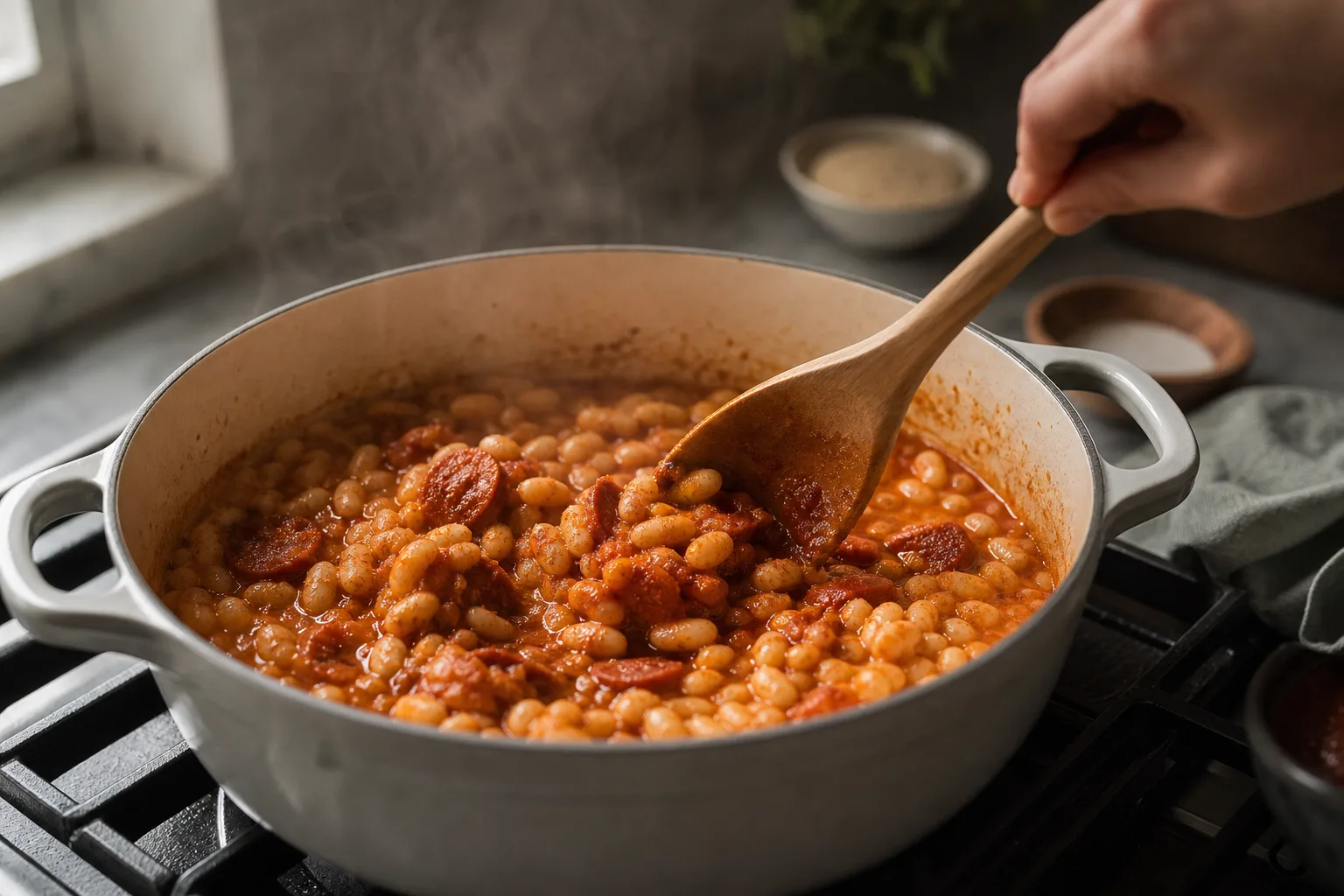
- Beans and stews: Broth spreads smoke through the pot.
- Chorizo and sausage: The pepper supplies both color and cured-smoke character.
- Rubs and marinades: Oil carries a thin layer across meat or vegetables.
The ingredient can create a cured, meaty impression in vegetarian food, but the carrier decides whether that impression feels integrated or dusty.
Use dulce for a slow-smoked backbone that broth and starch can carry.
Coat the powder in oil before roasting so smoke reaches each browned surface.
Warm it briefly with onion, then add liquid before the fine powder scorches.
Choose agridulce or picante when the food can carry both smoke and a sharper pepper edge.
It also belongs in spice pastes when garlic, oil, and tomato need a smoky base. Add liquid after the brief frying stage so the paste does not turn bitter.
Real charcoal or heavily smoked meat needs less from the jar. Layering a heavy paprika rub over strong fire smoke can turn a deep flavor into an acrid one.
Use a small dose and protect it from high heat
Start with less than you think. A quarter to half a teaspoon can season a whole pot because smoke spreads faster than sweetness.
Taste before adding more. You can always build smoke in layers, but you cannot pull it back once the dish tastes dusty or acrid.
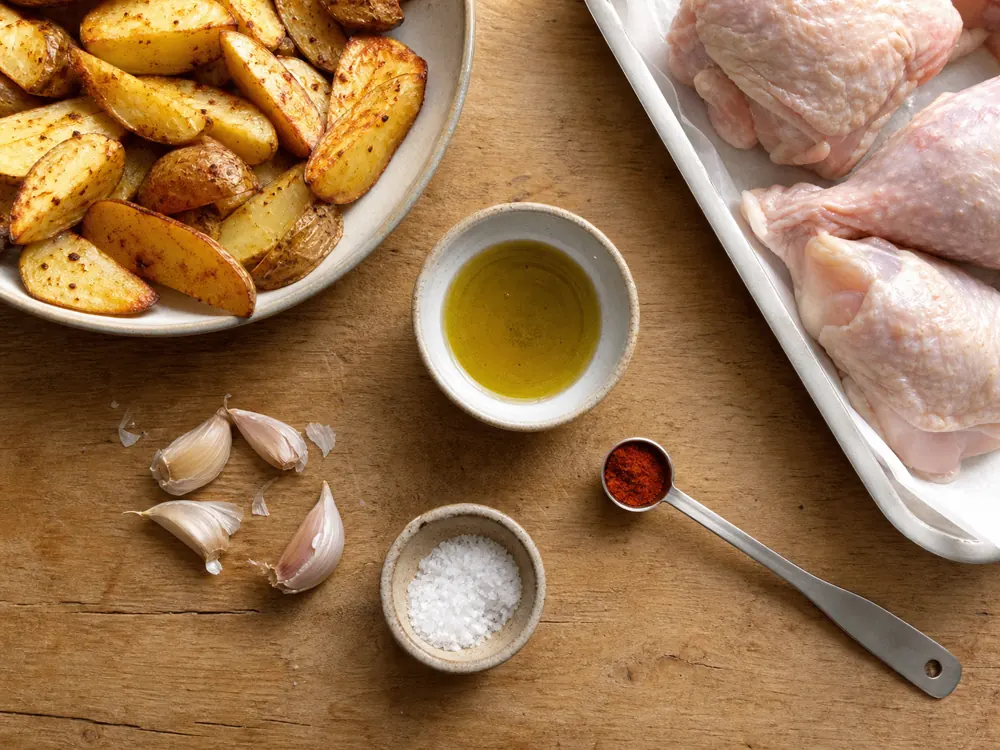
- Start small: A measured spoon keeps smoke from taking over.
- Use fat: Oil carries the aroma across potatoes, meat, and beans.
- Taste late: Add a final pinch only if the smoke fades.
Warm fat helps the flavor bloom, but high heat ruins it quickly. Use the gentle timing behind blooming spices in oil, then add moisture.
If the pan is already smoking, pull it from the heat before adding the powder.
Balance the smoke with onion, tomato, oil, beans, or potato. Those foods give the aroma somewhere to land instead of letting it sit sharp on top.
For rubs, mix it with salt, garlic, and a little sugar or oil. Sugar and fat round the wood note before the oven heat hits it.
| Cooking job | Starting dose | How to add it |
|---|---|---|
| Bean pot or stew | 1/4 to 1/2 tsp | Bloom with onion, then simmer |
| Roasted potatoes | 1/2 tsp per tray | Mix with oil before roasting |
| Chicken or pork rub | 1 tsp per pound | Blend with salt and garlic |
| Finishing pinch | Tiny pinch | Add off heat and taste |
If the food tastes flat after cooking, add a tiny pinch at the end instead of another full spoon. Late additions smell louder and need less powder.
If the food tastes smoky but thin, do not add more paprika first. Add salt, acid, tomato, or browned onion so the smoke has support.
Cold dips need even more care because the powder has no hot fat to soften its raw edge.
Smoke is also the first thing to go as a jar ages.
The sweet pepper base and the red color outlast it by a long way, so an old tin can still look right and still taste faintly of pepper while the reason you bought it has quietly gone.
Open the tin and smell it before you commit it to a dish that depends on smoke.
The tin is not packaging vanity either. Light degrades the pigment and the aroma together, which is why the good Spanish producers have always sold this one spice in metal rather than glass.
When should you skip smoked paprika or substitute it?
Skip smoked paprika when a dish needs only red color, mild pepper sweetness, or clean chile heat. Smoke is a separate flavor decision, and delicate fish, pale soup, soft eggs, or cream sauce often tastes clearer without it.
Choose the replacement by the missing job. Sweet paprika covers color, chipotle covers smoke with extra heat, ancho adds dark fruit, and a measured drop of liquid smoke can join ordinary paprika when both color and smoke matter.
| The dish needs | Use | Starting move | What changes |
|---|---|---|---|
| Red color and sweetness | Sweet paprika | Same amount | No smoke |
| Smoke with chile heat | Chipotle powder | About half as much | Hotter and earthier |
| Dark chile body | Ancho chile | Start near the same amount | Fruity rather than smoky |
| Color plus controlled smoke | Sweet paprika and liquid smoke | Measure liquid smoke by the drop | Easy to overdo |
Do not double smoke already present from charcoal, smoked meat, or chipotle, because more chile powder makes the dish hotter without cleaning up a heavy wood taste.
If too much smoked paprika is already in the pot, dilute with beans, potato, rice, tomato, or unsalted stock. A little acid can make the result feel brighter, although it cannot remove smoke.
Serve a stubbornly smoky dish with something plain instead of stacking on more spices. Bread, rice, or unseasoned vegetables lower the intensity without creating another competing flavor.
How to buy and store smoked paprika so the smoke lasts
Look for Spanish pimenton, ideally labelled de la Vera, when you want the classic oak-smoked style. A metal tin is better than a clear jar because light fades color and aroma.
Good powder smells like clean wood smoke when you open it. A dusty, faint, or cardboard smell means the best part has already faded.
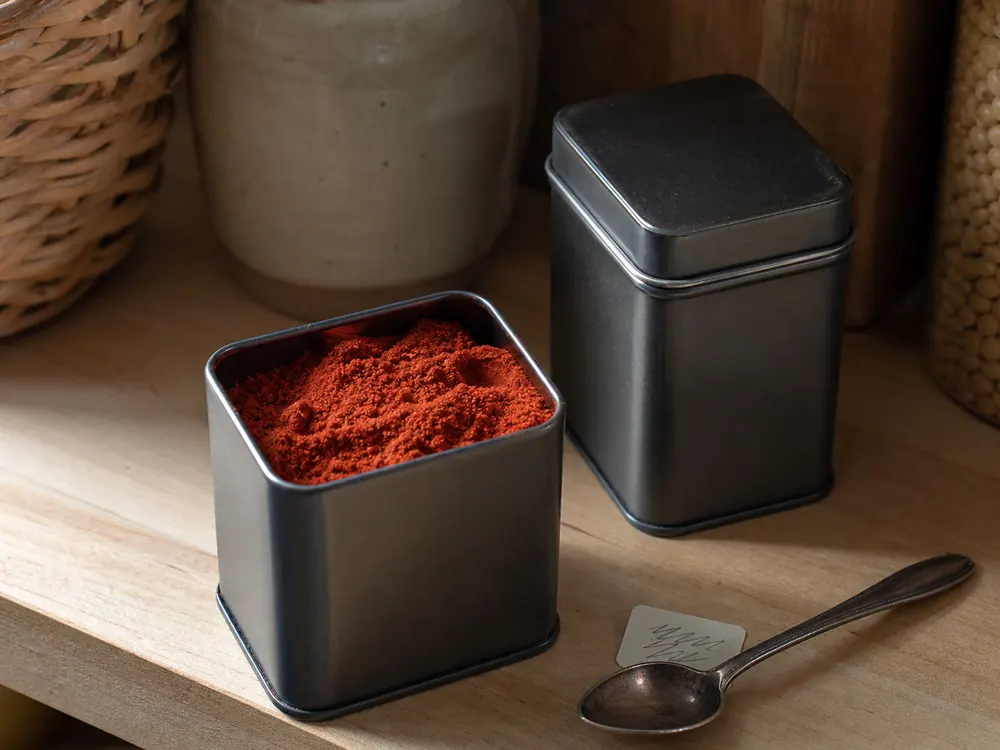
- Choose tins: Dark metal blocks the light better than glass.
- Check aroma: Fresh powder smells smoky before it smells dusty.
- Buy small: Ground paprika fades faster than whole spices.
A date on the tin helps more than guessing. The spice shelf-life chart is a useful baseline, but smoked paprika often loses its point before it becomes unusable.
Avoid jars that sit in sunlit displays or smell mostly like dust. Light and time dull paprika faster than many darker whole spices.
A good tin should smell smoky before you even think about heat.
- Buy a tin: Light dulls smoked paprika fast, so avoid clear jars.
- Check the grade: Dulce, agridulce, or picante should be on the label.
- Smell for smoke: Strong smoke aroma means it is still alive.
- Buy small: Replace it sooner if the aroma turns flat.
Store it sealed, away from heat, steam, and light. The basic rules for how to store spices matter more here because color and smoke fade together.
Replace it when the powder smells flat even if it looks red. That is the same practical test you use for spice past its prime, but the nose matters most.
Do not save a flat tin for rubs. Rubs expose the powder directly to heat, so stale smoke turns dusty on the surface of food.
If you cook with it often, keep one small tin near the stove and one sealed backup in a cooler cabinet.