
How to Store Spices So They Stay Fresh Longer
Build a cool, dark, dry, airtight pantry system that matches how fast you cook.
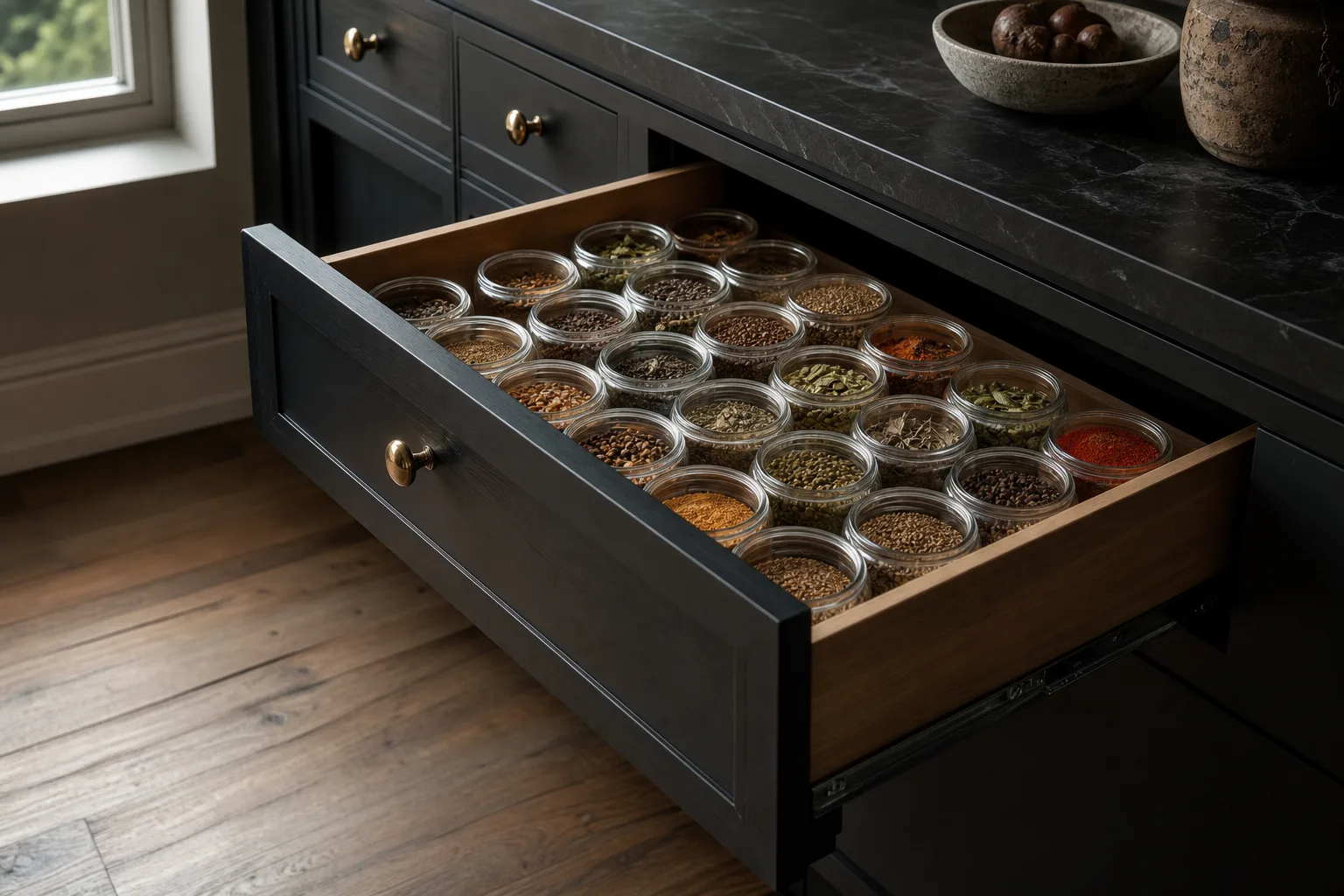
Store spices in airtight containers in a cool, dark, dry place away from the stove, sink, dishwasher, sunlight, and steam. Whole spices keep aroma longer than ground spices, while old dry spices are usually weak before they are unsafe, though mold, pests, wet clumps, or musty odor mean discard.
Where is the best place to store spices?
Store spices in airtight containers inside a cool, dark, dry drawer or closed cabinet. Choose a spot away from the stove, oven, sink, dishwasher, and sunny windows.
The right place protects aroma until the jar is finished without hiding the spices so well that you forget to use them.
| Location | Result | Verdict |
|---|---|---|
| Drawer away from stove | Dark, stable, easy to reach | Best everyday choice |
| Closed pantry shelf | Good if cool and dry | Strong choice |
| Counter rack near window | Light fades color and aroma | Avoid |
| Cabinet over stove | Heat and steam rise into jars | Avoid |
| Refrigerator door | Condensation risk and temperature swings | Usually avoid |
Convenience matters because hidden spices go unused. The storage system should protect flavor and still invite cooking.
If you cook daily, keep a small working jar nearby and a sealed reserve farther from heat.
Why do heat, light, air, and moisture ruin spices?
Spices lose quality through light, heat, oxygen, and moisture. Each enemy changes the jar in a different way.
Warmth speeds aroma loss, light fades pigments, repeated opening releases volatile oils, and moisture causes clumps that can support mold.
- Light: Sunlight fades red spices, green herbs, and delicate aroma faster than a dark cabinet.
- Heat: Stove, dishwasher, oven, and refrigerator-top heat speed flavor loss.
- Oxygen: Repeated opening lets volatile oils escape and stale aromas develop.
- Moisture: Steam causes clumping and can make mold or pests more likely.
Never shake spices over a steaming pot. Spoon them into a dish or your hand away from the steam.
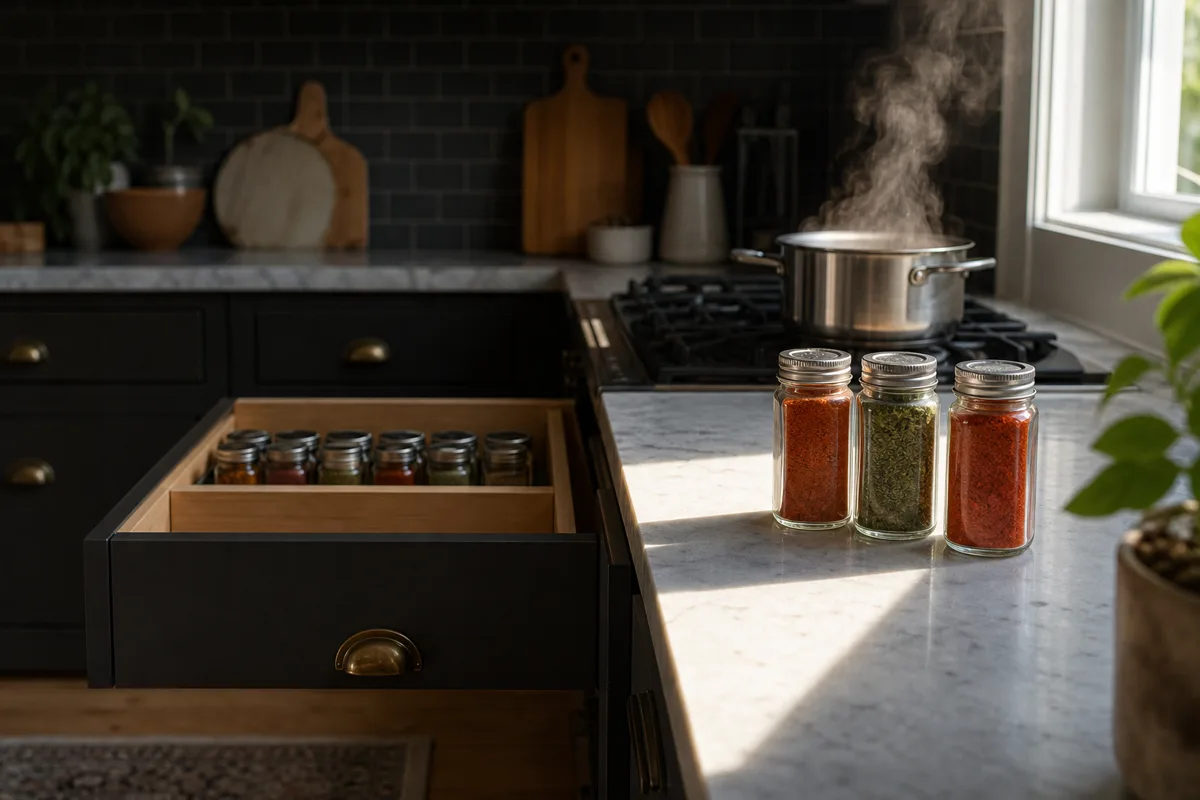
- Sunlit rack: Light fades red powders and dried green herbs.
- Stove edge: Heat speeds the loss of delicate aroma.
- Steam path: Moisture enters when a lid is open or loose.
- Closed drawer: Darkness and distance protect the same jars.
What are the best containers for spices?
A good spice container seals tightly, stays dry inside, and limits light exposure. It also opens cleanly while you cook.
Inside a drawer, cool, dry, dark storage can make clear glass work well.
| Container | Best use | Watch for |
|---|---|---|
| Clear glass jar | Drawer or dark cabinet | Light exposure on open shelves |
| Tin | Open shelving or red spices | Hidden contents need labels |
| Resealable pouch | Short-term refill storage | Weak seal after repeated use |
| Original bulk bag | Reserve only if tightly sealed | Air leaks and pantry clutter |
| Plastic shaker | Fast-use blends | Odor transfer and weaker seal |
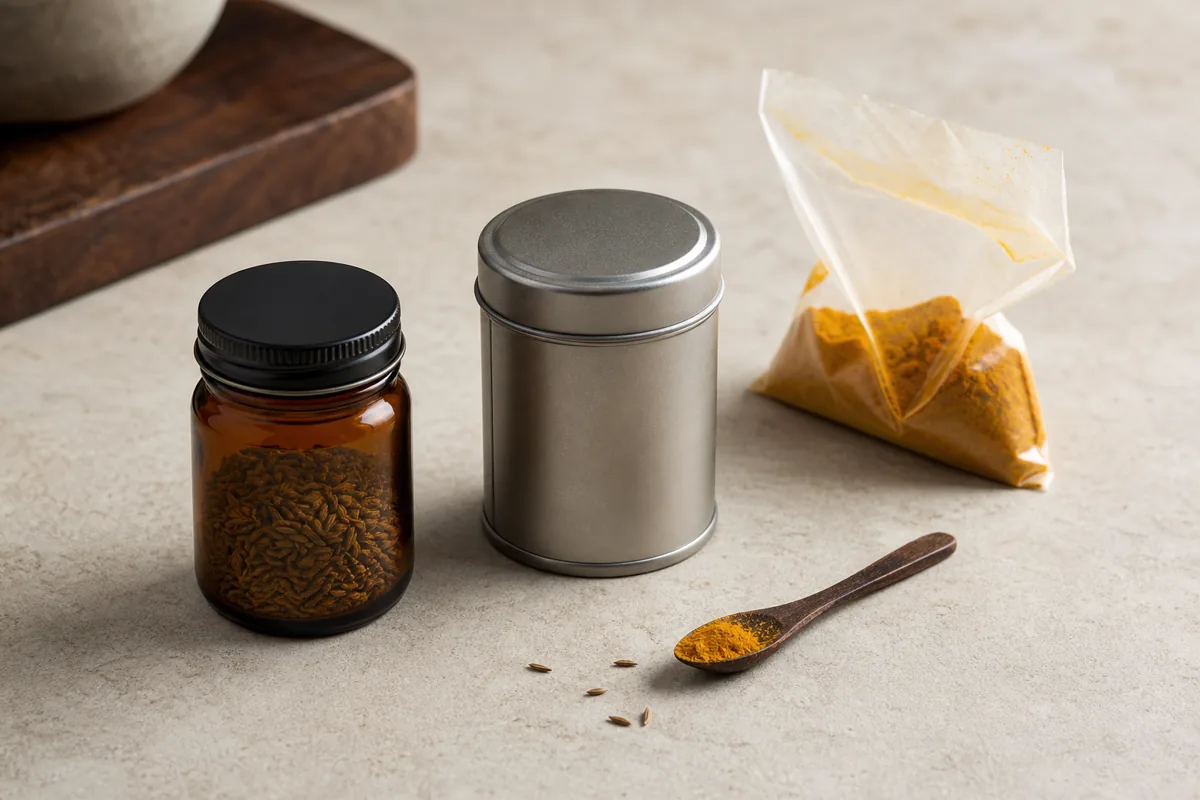
- Tight lid: A screw top or snug tin lid slows air and moisture exchange.
- Light control: Amber glass and opaque metal protect spices kept on open shelving.
- Small volume: A container close to the amount you use leaves less stale air inside.
- Clean transfer: Move refills with a dry spoon and close the reserve package immediately.
Label the opening month when a spice is expensive or rarely used. Memory is a poor freshness system.
Do not refill a jar that smells like the last spice. Cumin, clove, and smoke linger.
Should whole and ground spices be stored differently?
Whole spices keep aroma longer because their structure protects volatile oils. Grinding opens the spice to air.
For hard seeds and pods, whole spice storage is especially useful for peppercorns, cumin seed, coriander seed, nutmeg, cloves, and cardamom.
| Form | Why it lasts | Kitchen move |
|---|---|---|
| Whole seed or pod | Less exposed surface area | Grind or toast close to use |
| Ground spice | Convenient but exposed | Choose a jar you can finish soon |
| Dried leafy herb | Fragile leaf aroma | Use sooner than hard spices |
| Blend | Weakest ingredient sets the pace | Replace when the blend smells flat |
Fresh grinding gives aroma that pre-ground pepper loses quickly, which whole peppercorns show clearly.
Ground spices still belong in a real kitchen. They just need smaller jars and faster rotation.
Grinding an old whole spice helps, but only up to a point.
A peppercorn that smells faint on the outside can still hold usable oil inside, while a seed that feels light and hollow has nothing left to release. Grind one and smell the powder before you commit the jar to a dish.
How long do properly stored spices keep their flavor?
Most dry spices lose strength before they become unsafe. A best-by date estimates quality, not the day flavor disappears.
Your nose beats a printed date, even though whole spice shelf life usually outlasts ground spice shelf life.
- Keep: A dry spice that smells clean but weak can still color or lightly season food.
- Replace: A spice with almost no aroma will force you to overuse dull powder.
- Discard: Mold, wet clumps, pests, musty odor, or contaminated packaging are safety problems.
- Refresh: Toast whole seeds briefly only when they still have some aroma to wake up.
Weak aroma, muddy color, dustiness, clumping, or musty smell are practical stale spice signs.
Do not compensate forever by adding more. Too much stale spice can make food dusty without making it flavorful.
Should you refrigerate or freeze spices?
Routine refrigerator storage is usually a trap because cold jars collect condensation. Moisture hurts dry spices faster than warmth alone.
In fresh herbs, trapped moisture can turn preserved leaves into moldy leaves.
| Situation | Use cold storage? | Condition |
|---|---|---|
| Normal dry pantry | No | Cabinet or drawer is better |
| Very hot humid kitchen | Maybe | Use airtight jars and warm before opening |
| Oil-rich seeds | Sometimes | Sesame or poppy may benefit when sealed |
| Dried leafy herbs | Sometimes freezer | Only airtight and protected from condensation |
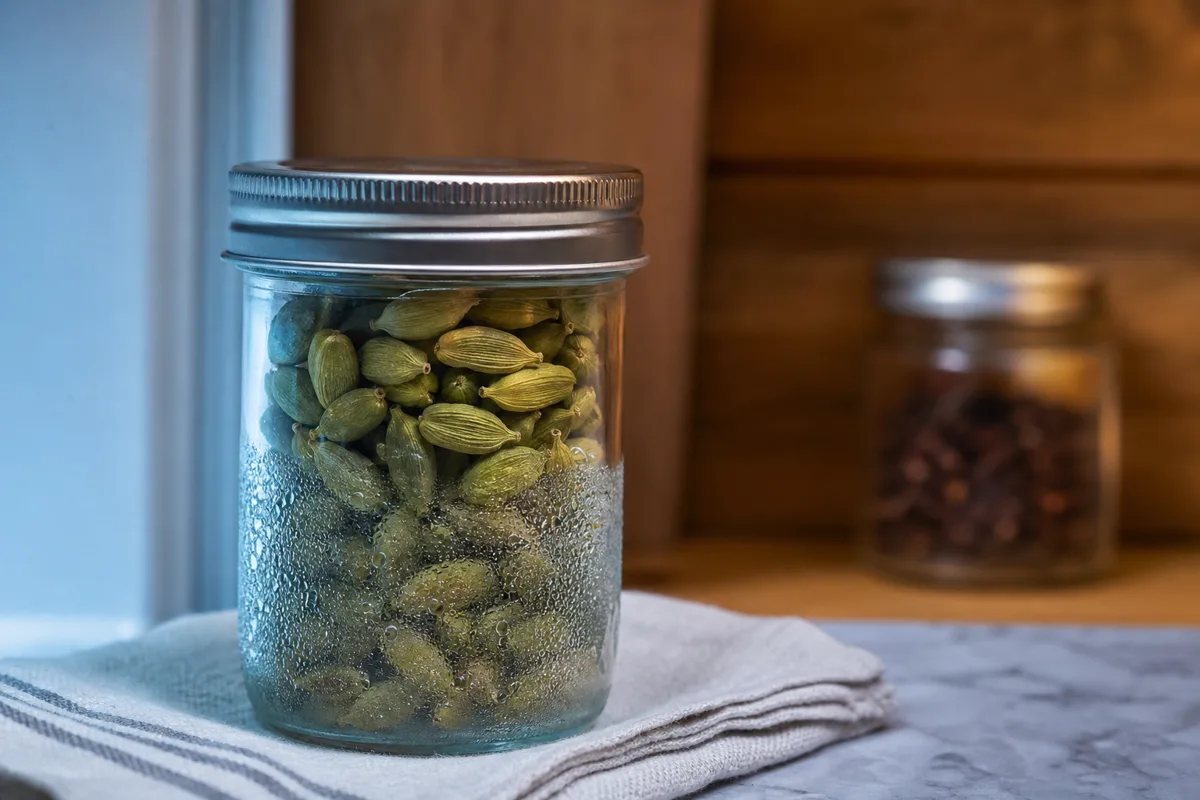
- Cold jar: Move only the amount you need from long-term storage.
- Closed lid: Keep humid room air away from the cold spice.
- Room temperature: Open the jar after the glass no longer feels cold.
- Frequent use: Keep a small working jar in the pantry instead.
Drying and storage need real airflow first because fresh basil and mint are high-moisture tender herbs.
In humid kitchens, open jars briefly and close them fast. The smallest habit can prevent clumping.
How should you store bulk spices and refills?
The best system separates working jars from reserve storage. It keeps daily cooking fast and bulk spices protected.
For larger orders, bulk spice buying works only when the reserve stays sealed and the working jar stays small.
- Working jar: Keep one small jar near your prep zone but away from heat and steam.
- Reserve jar: Store extra spice in a sealed dark container in a cooler pantry spot.
- Opening label: Write the month on ground spices, blends, paprika, and dried herbs.
- Quarterly check: Smell rarely used jars before planning a dish around them.
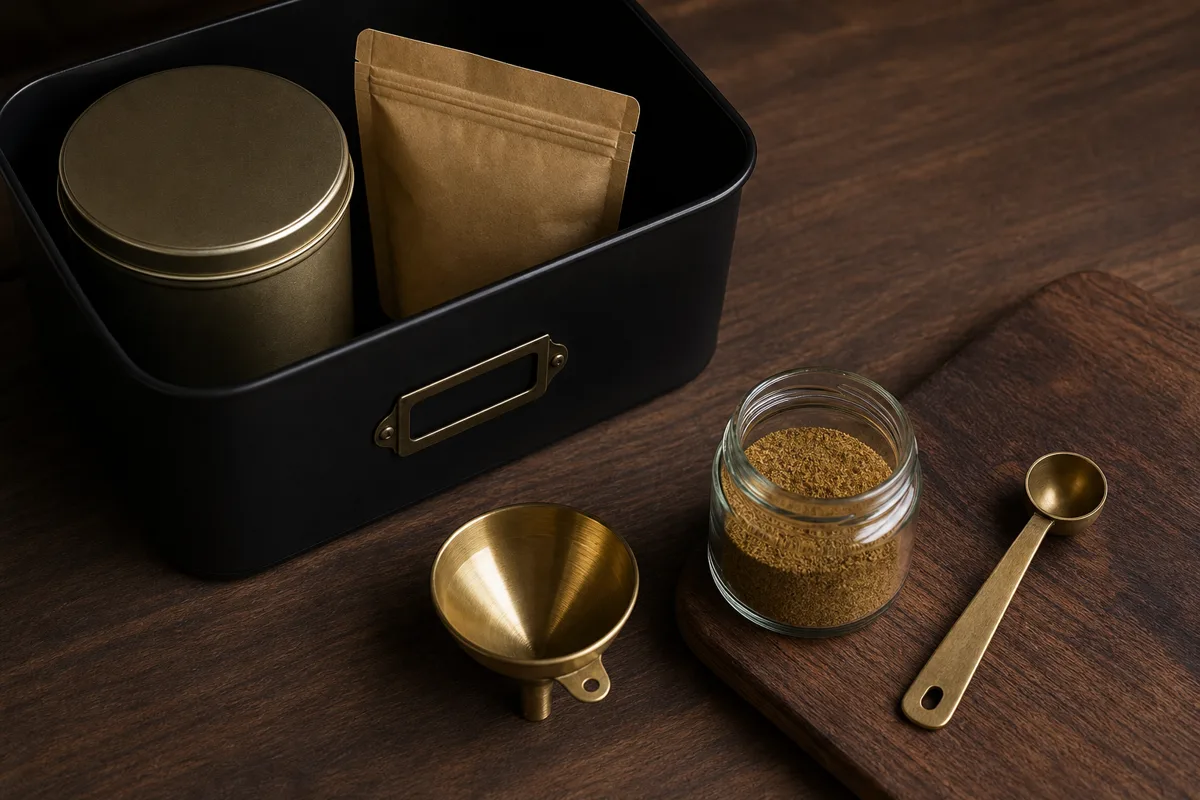
- Working jar: Fill only the amount you expect to use soon.
- Reserve container: Keep the main supply sealed between refills.
- Clean transfer: Refill only a dry jar that has no stale odor.
- Purchase month: Date the reserve so older stock gets used first.
Near cooking time, toasting whole spices can bring back some aroma only if they still have oils left. It cannot rescue dusty, spent spices.
A good spice pantry is not huge. It is fresh enough that each jar still has a job.
How should you store blends and spices you grind yourself?
A blend ages at the speed of its weakest component, not its average.
Ground garam masala fades while the salt and dried garlic beside it stay unchanged for years. Buy blends in the smallest jar you will actually finish.
A large tin of za'atar tastes flat long before it looks empty.
Spices you grind at home need faster rotation than anything from a factory jar. Commercial powders carry anti-caking agents and were sealed under low oxygen, and your mortar gives neither.
Grind what one week needs and leave the rest whole.
That habit is the point of grinding spices at home, and it disappears the moment you fill a large jar. Label the jar with the date you filled it.
Two identical grey powders on a shelf become guesswork within a month.
Keep home-ground powder away from the whole seed it came from. If the powder takes on moisture, the untouched reserve is still yours.
- Blends: Age at the speed of their weakest part, so buy the smallest jar you will finish.
- Home-ground: No anti-caking agent and no low-oxygen seal, so grind one week at a time.
- Labels: Write the fill date, because two grey powders become guesswork within a month.
- Separation: Keep home-ground powder away from the whole seed it came from.
How can you organize spices in a small kitchen?
The best storage spot changes with the kitchen. A small apartment, hot climate, and busy family kitchen need different systems.
Start by tracing heat and steam. The cabinet that feels convenient may sit directly above the dishwasher or beside the oven wall.
| Kitchen problem | Better setup | Why |
|---|---|---|
| Tiny kitchen | One drawer insert with small jars | Limits light and keeps spices visible |
| Hot climate | Dark pantry plus small working jars | Reduces heat exposure from daily opening |
| Humid kitchen | Tight lids and no pot-side shaking | Prevents clumps and wet powder |
| Large pantry | Alphabetized working shelf plus reserve bin | Stops duplicates and forgotten jars |
| Frequent cooking | Small active set near prep zone | Keeps flavor protected but reachable |
The goal is not a perfect photo. The goal is a setup that keeps you from buying duplicates or using dead jars.
If a spice keeps expiring untouched, move it into a visible cooking plan or stop buying it.
Can you rescue a clumped or caked jar?
Clumping means water has already reached the powder.
What you do next depends on whether the jar still smells clean. Break a clump against the side with a dry spoon, and powder that crumbles back to loose grains is still usable.
Spread it on a plate for an hour in a dry room before you reseal it.
Skip the oven. Even low heat drives off the aroma you are trying to save.
A clump that stays hard, looks darker at the center, or smells sour is finished. Mold in ground spice hides inside the lump where you cannot see it.
Salt-heavy blends cake faster than plain powders because salt pulls water out of the air.
Seasoned salt, taco seasoning, and curry powder often harden months before their aroma fades. The cake tells you about humidity, not about strength.
The wet spoon is the usual culprit.
Keep one dry measuring spoon for the spice drawer. Never dip a spoon that has touched the pot.
| What you find | What it means | What to do |
|---|---|---|
| Crumbles back to loose grains, smells clean | Humidity, not spoilage | Spread on a plate for an hour, then reseal |
| Hard lump, darker at the centre | Moisture has been in there a while | Discard, mould hides inside the lump |
| Sour or musty smell | Spoiled | Discard |
| Salt-heavy blend caked solid, smells fine | Salt pulling water from the air | Break it up and keep using it |
How can you check spice freshness before cooking?
Test spices before they enter the pan, especially when the dish depends on one jar. A stale spice is easier to replace early.
Rub a pinch between your fingers to warm the oils. Then smell for a clear ingredient note, not dust.
- Cumin: Look for warm, savory aroma before using it as the base of chili or dal.
- Paprika: Smell for sweet pepper or smoke, not only red color.
- Cinnamon: Expect sweet bark aroma before using it in baking or rice.
- Dried herbs: Crush a leaf and smell for herb identity, not dry grass.
- Blends: Check whether one stale ingredient has made the whole mix muddy.
If the spice smells faint but clean, use it in a low-stakes dish. If it smells musty, discard it.
Good storage pays off at this moment. The jar should still know what it is.
Which spices go rancid instead of just fading?
Most spices get weaker with age, but oil-rich seeds spoil in a different way.
Poppy seed, sesame seed, and ground nutmeg carry enough fat to turn rancid. Rancid fat smells like old crayons or stale nuts.
That smell does not fade with toasting, and it carries straight into the finished dish.
This is the one case where the freezer earns its place. Seal the seeds in a small airtight jar, freeze the jar whole, and let it reach room temperature before opening it.
Opening a cold jar in a warm kitchen pulls condensation onto the seeds.
Twenty minutes of waiting costs nothing and keeps the batch dry. Split a bulk bag of poppy or sesame seed the day it arrives.
Freeze most of it and keep a few weeks of supply in the cabinet.
Taste one seed before you use an old bag. Rancidity is obvious on the tongue well before the smell in the jar gives it away.
| Spice | How it fails | Does the freezer help |
|---|---|---|
| Poppy seed | Fat turns rancid | Yes, sealed and warmed before opening |
| Sesame seed | Fat turns rancid | Yes, split a bulk bag on arrival |
| Ground nutmeg | Fat turns rancid | Yes, in a small airtight jar |
| Most dried spices | Aroma fades | No, cold cycling adds moisture |
Which spices need the most protection?
Some spices punish bad storage faster than others. Red powders, dried herbs, blends, and oil-rich seeds need the most discipline.
Hard whole spices are more forgiving, but they still lose aroma after repeated air exposure. The difference is time, not immunity.
| Spice type | Why it fades | Best habit |
|---|---|---|
| Red powders | Color and aroma suffer from light and oxygen | Use tins or dark cabinet storage |
| Dried leafy herbs | Fragile leaf oils fade quickly | Buy small jars and crush before smelling |
| Ground blends | Many exposed ingredients age together | Label opening month and replace when muddy |
| Oil-rich seeds | Rancidity can matter more than aroma loss | Buy small amounts and seal tightly |
| Whole hard spices | Oils stay protected longer | Grind or toast close to use |
This is why one pantry rule never fits every jar. Paprika, dried basil, and whole nutmeg do not age at the same pace.
If space is limited, protect the fragile jars first. Whole spices can tolerate a little more imperfection.
- Move red powders: Keep paprika and chile powder away from glass counter racks.
- Date blends: A stale blend is hard to fix because you cannot refresh one ingredient.
- Smell herbs often: Dried herbs can look intact after their aroma is gone.
- Keep steam away: Moisture turns powders from flavor into clumps.
Give fragile powders and dried herbs the coolest, darkest part of the pantry. Hard whole spices can take the less perfect spots when space is tight.
Review the fragile group every few months. Use faint but clean jars in soups or braises, and discard any jar with moisture, mold, pests, or a musty smell.