
Fresh vs Dried Herb Conversion: What Actually Changes?
Use the 3:1 rule as a starting point, then adjust by herb type, heat, and moisture.
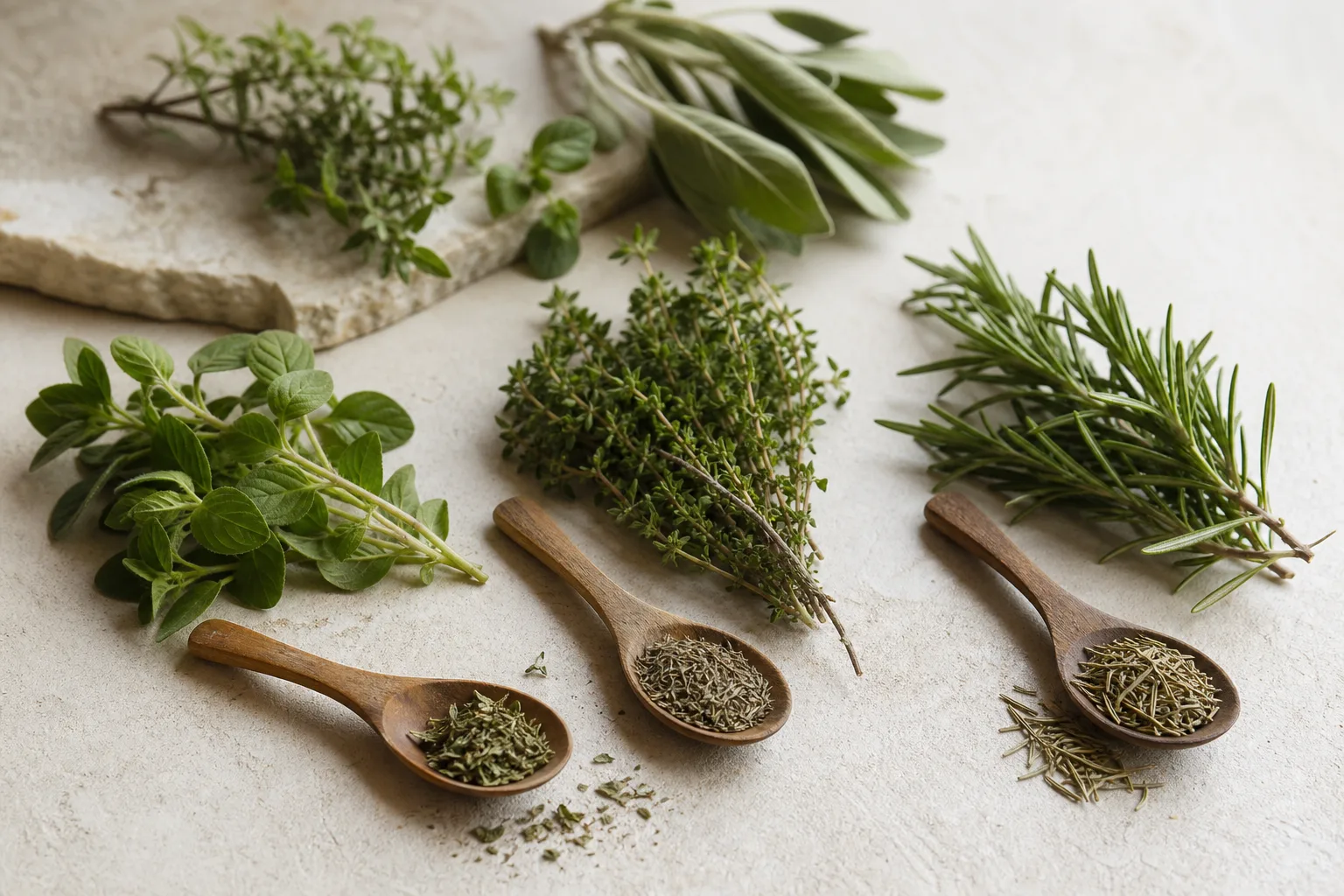
Use 1 teaspoon dried herbs for 1 tablespoon chopped fresh herbs when the herb is a background seasoning. Do not use that ratio when fresh leaves provide texture, garnish, or raw aroma. Tender herbs usually need fresh leaves late, while woody herbs can move into dried form earlier in cooking.
Start with the 3 to 1 rule, then question it
Fresh vs dried herb conversion starts at 3 parts fresh to 1 part dried by volume. That ratio works when the herb seasons the food, not when leaves are part of the bite.
The rule breaks fastest with tender herbs.
Basil, mint, cilantro, parsley, and dill lose texture and bright aroma when reduced to dried flakes.
| Recipe asks for | Use instead | Only works when |
|---|---|---|
| 1 tablespoon chopped fresh oregano | 1 teaspoon dried oregano | Sauce, beans, or meat has moisture and time |
| 1 tablespoon fresh thyme leaves | 1 teaspoon dried thyme | The dish simmers or roasts long enough |
| 1 tablespoon chopped fresh basil | Use fresh if visible | Dried basil is only background seasoning |
| 1 tablespoon chopped fresh mint | Use fresh for garnish | Dried mint works in yogurt soup or rubs |
| 1 tablespoon fresh cilantro | Do not convert directly | Use parsley, lime, or change the herb job |
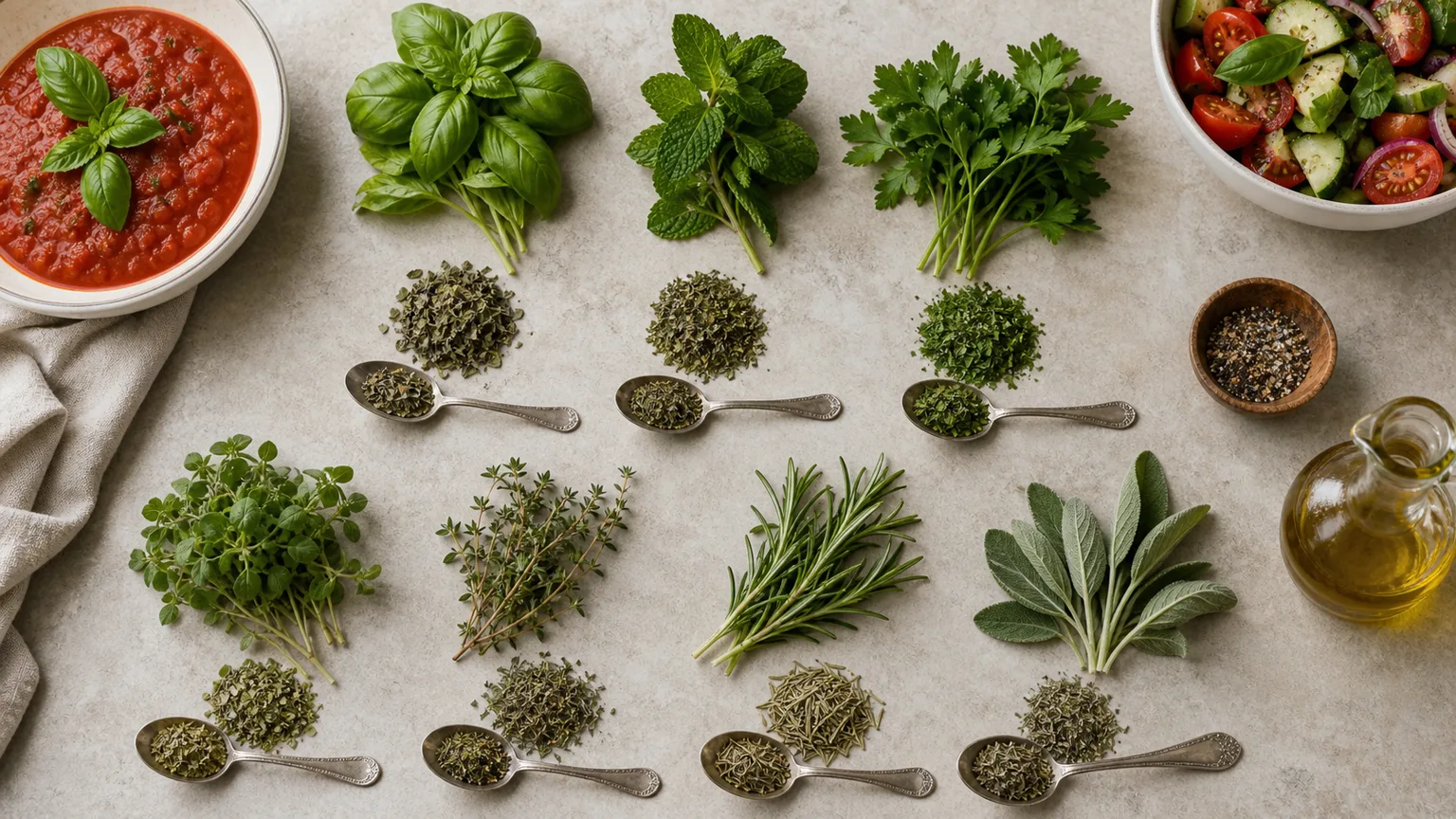
- Tender leaves: Keep fresh when the leaf is visible or raw.
- Woody herbs: Convert more safely when the dish cooks long enough.
- Wet dishes: Soup, sauce, and beans can hydrate dried leaves.
- Raw dishes: Salad and garnish need fresh texture, not a smaller spoon.
Think about the job first. If the recipe needs green leaf presence, the conversion chart should tell you to stop.
That stop signal matters more than the arithmetic.
A tomato sauce can accept dried oregano because the herb disappears into heat and liquid.
A cucumber salad needs a fresh bite. Dried flakes cannot rebuild that texture after the leaves are gone.
That is why equal volume never works.
Dried herbs are smaller, lighter, and louder in the wrong parts of the flavor.
Dried herbs need moisture and time
Dried herbs taste dusty until liquid or fat softens them. Add them early when soup, sauce, beans, or braise can carry the flavor.
This is the same timing logic behind when to add spices.
Harder, drier ingredients need more time than fresh leaves.
| Dish | Dried herb moment | Fresh herb moment |
|---|---|---|
| Tomato sauce | With onion and garlic | Last 2 minutes or off heat |
| Beans or lentils | Before simmering | After seasoning is balanced |
| Roast chicken | In rub before cooking | Chopped over carved meat |
| Salad | Usually skip | At mixing or serving |
| Yogurt sauce | Hydrate first | Stir in just before serving |
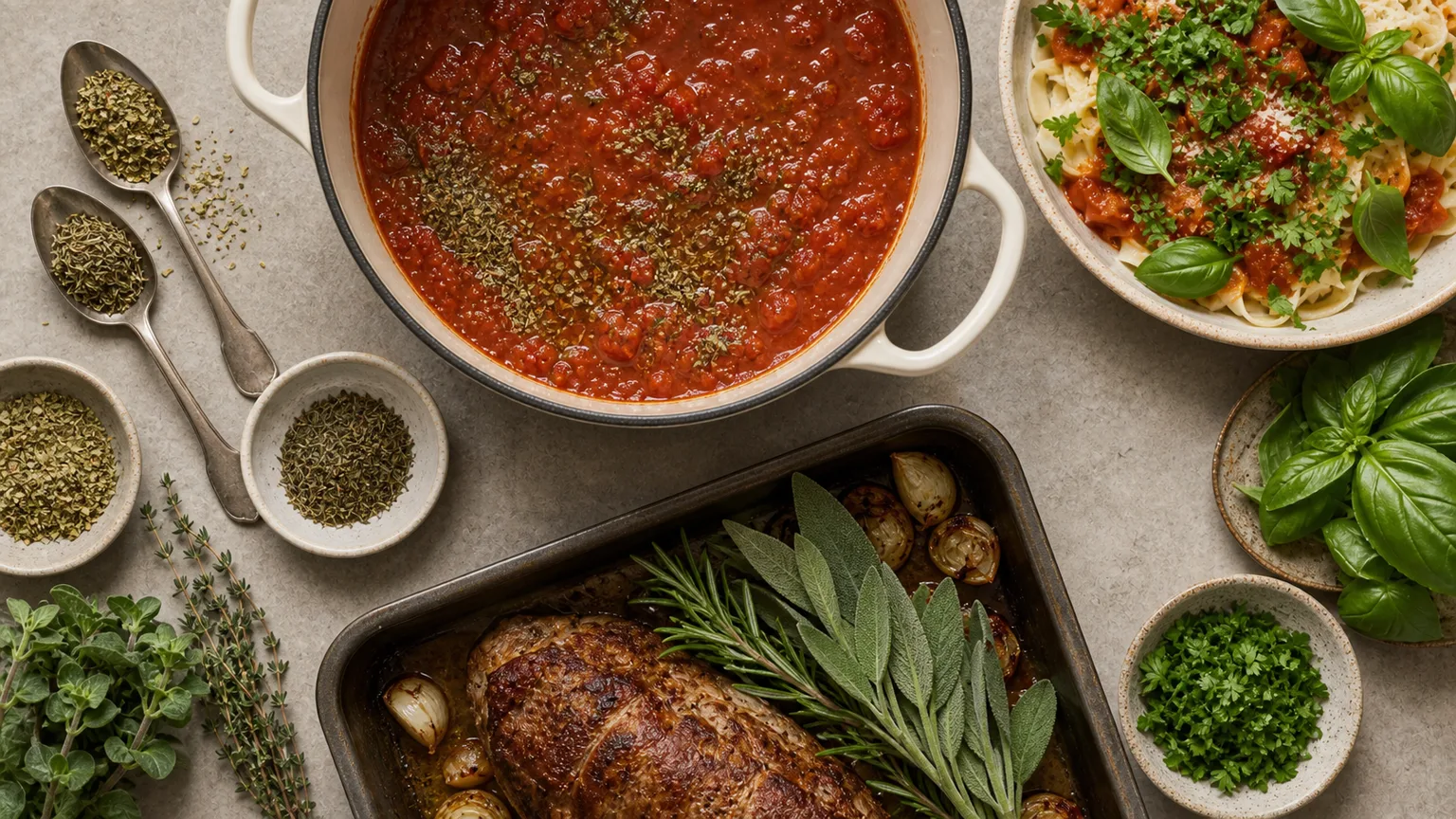
- Sauce: Dried oregano or thyme can enter before simmering.
- Roast: Tough herbs can cook with fat and meat juices.
- Pasta finish: Fresh basil or parsley lands after heat softens.
- Cold food: Hydrate dried herbs first or choose fresh leaves.
If dried herbs hit a finished dish cold, they stay separate. Rub them between your fingers, then give them liquid contact.
A dry rub is different because meat juices and surface fat hydrate the herb.
Even there, coarse rosemary needs chopping.
Timing also changes perceived strength. A teaspoon of dried thyme tastes integrated after 30 minutes in simmering liquid.
The same teaspoon scattered over finished soup tastes woody and louder.
- Soup: Add dried thyme or oregano before simmering so the flavor spreads through the broth.
- Pan sauce: Add dried herbs before deglazing so hot fat wakes them first.
- Salad dressing: Let dried oregano sit in vinegar and oil for 10 minutes before tossing.
- Garnish: Use fresh herbs because dried flakes feel papery on the tongue.
A conversion that ignores timing is not a conversion.
It is just a smaller spoonful.
Tender herbs rarely convert cleanly
Tender herbs carry their value in fresh aroma and leaf texture. Drying changes basil, cilantro, dill, parsley, and mint more than it preserves them.
With herbs, fresh and dried herbs split by structure. Soft leaves behave differently from woody stems and small resinous leaves.
| Herb | Dried version does well | Dried version fails |
|---|---|---|
| Basil | Background tomato sauce | Caprese, pesto, fruit, garnish |
| Mint | Yogurt soup, lamb rub, tea blend | Fruit, chutney, tabbouleh |
| Cilantro | Almost never as a direct swap | Salsa, chutney, tacos, pho |
| Dill | Pickles, potatoes, creamy sauces | Fresh fish garnish or salad |
| Parsley | Soup background only | Green bulk, tabbouleh, finishing lift |
When a tender herb names the dish, buy fresh or change the dish.
Dried flakes will not give the same result.
For missing cilantro, use parsley plus lime before using dried cilantro. The dish needs green brightness more than the same label.
Use freeze-dried chives or dill for convenience, not for a fresh salad promise.
They work best after brief moisture contact.
Woody herbs are safer to convert
Woody herbs keep more useful flavor after drying because their leaves are already tough and aromatic. Oregano, thyme, rosemary, sage, and marjoram convert best.
That does not mean they are equal.
Dried rosemary can feel like needles unless it is crushed or cooked long enough.
- Oregano: Use 1 teaspoon dried for 1 tablespoon fresh in tomato sauce, chili, beans, and marinades.
- Thyme: Use the same 3 to 1 ratio, but reduce if the dish is delicate fish or eggs.
- Rosemary: Crush dried leaves first. Start with 1/2 teaspoon dried for 1 tablespoon fresh.
- Sage: Use less dried sage in butter sauces because its musky edge grows quickly.
- Marjoram: Convert gently because dried marjoram can taste sweet and dusty when overused.
With herbs, oregano is the safest dried herb for many tomato, bean, and meat dishes. It keeps a clear identity after drying.
With herbs, thyme is also reliable because tiny leaves hydrate well. It is easier to distribute than dried rosemary.
Strength control changes by herb.
Oregano and thyme tolerate the full 3 to 1 ratio better than rosemary or sage.
If rosemary gets too strong, remove large pieces if possible. If sage gets too loud, add dairy, squash, potato, or beans.
The best conversion is conservative.
You can add more dried herb after it hydrates, but you cannot remove dustiness easily.
Measure by role, not just volume
A tablespoon of chopped herbs can mean garnish, sauce body, marinade aroma, or cooked seasoning. Each role needs a different decision.
Use substitution logic after naming the herb job. Replace the job before replacing the ingredient name.
Fresh herbs win when the job is finishing color or raw green bulk.
Dry flakes look dull and feel papery there.
Dried herbs win when the job is long sauce seasoning or a dry rub. Moisture and fat help rebuild usable aroma.
For pesto, chimichurri, tabbouleh, and salsa verde, do not convert.
Those foods need leaf mass, not background seasoning.
For soup, stew, chili, and roast meat, dried herbs can be better. They spread evenly and survive longer heat.
- Leaf is visible: Treat fresh herbs as an ingredient, not a seasoning.
- Herb disappears: Dried herbs can work if the dish has moisture.
- Herb finishes the dish: Add fresh herbs late so aroma lands on top.
- Herb cooks for 30 minutes: Dried herbs often make more sense than fresh.
The spoon ratio is useful only after that role check. A chart cannot see the dish for you.
Storage changes the conversion
Old dried herbs make every conversion look wrong.
If the jar smells like hay, adding more only adds more hay.
Dried leaves need the same cool, dark, sealed storage used for stored spices. Heat above the stove shortens their useful life.
- Bright smell: Rub the dried herb first. If aroma wakes up, start at the normal ratio.
- Faint smell: Replace the jar or use fresh herbs. A bigger spoon will not restore top notes.
- Dusty smell: Do not increase the dose. Oxidized leaf makes food taste older.
- Clumped leaves: Discard if the jar smells musty or shows moisture damage.
Buy small jars if you cook with dried herbs rarely.
A large bargain jar becomes expensive when most of it fades.
During storage, buying dried herbs from high-turnover sellers matters more than brand design. Aroma disappears before the label looks old.
This storage check belongs before the ratio. A stale teaspoon is not equal to a fresh teaspoon.
Write the open date on the jar.
Replace delicate dried herbs sooner than hard whole spices.
When the chart should say no
A useful conversion chart has to refuse some swaps. Dried herbs cannot replace every job that fresh leaves perform.
| Recipe job | Why dried fails | Better move |
|---|---|---|
| Pesto body | Fresh basil is the bulk of the sauce | Choose another sauce or buy fresh basil |
| Tabbouleh volume | Parsley is a main ingredient | Use fresh parsley or change the salad |
| Salsa or chutney finish | Cilantro gives raw green aroma | Use parsley, lime, or omit |
| Caprese garnish | Basil leaves are visible and soft | Use fresh basil only |
| Fresh dill over fish | Leaf aroma lands at serving | Use fresh dill or lemon and parsley |
That refusal helps the reader more than a fake ratio.
A teaspoon of dried basil does not become pesto because the math looks tidy.
The swap becomes safer when the herb disappears into sauce, soup, beans, or meat juices. Heat and moisture do the work.
- Say yes: The herb cooks early, loses visibility, and seasons a wet dish.
- Say maybe: The herb sits in dressing or yogurt long enough to hydrate.
- Say no: The herb provides leaf volume, garnish, crunch, or raw aroma.
- Change plan: Replace the role with acid, fresh parsley, lemon zest, or another fresh herb.
Green bulk and raw aroma are no-conversion jobs.
Tabbouleh, herb salad, salsa, chutney, and noodle garnish need fresh leaves.
Cooked background seasoning is different. Tomato sauce, bean soup, rubs, and rested yogurt sauce can use dried herbs.
This role check should happen before the spoon comes out. Measuring first makes the chart look too certain.
The same herb can move categories.
Mint in tea, mint in tabbouleh, and mint in yogurt sauce need different answers.
- Mint tea: Dried mint can work because hot water extracts aroma.
- Tabbouleh: Dried mint cannot replace the fresh leaf bulk.
- Yogurt sauce: Dried mint can work after resting in moisture.
- Fruit salad: Fresh mint is the better texture and aroma choice.
Use the chart as a judgment tool, not a promise. Some herbs keep their job only when they stay fresh.
Fixing a bad herb conversion
Too much dried herb usually tastes dusty, bitter, or medicinal.
Do not fix it by adding the fresh version on top.
First dilute the concentration. Add tomato, broth, beans, potatoes, yogurt, oil, or pasta, depending on the dish.
- Too much oregano: Add tomato, olive oil, or lemon, then simmer briefly.
- Too much rosemary: Remove large pieces, add starch, and avoid more heat.
- Too much dried mint: Add yogurt, cucumber, lemon, or more unsalted base.
- Too much sage: Add butter, squash, potato, cream, or mild beans.
Acid can help when the herb tastes flat. Fat helps when the herb tastes harsh or separate.
When cooking, blooming spices in oil is useful for many powders, but dried leafy herbs burn fast.
Use moderate heat.
- Dusty dried basil: Add fresh basil at the end instead of more dried basil.
- Harsh dried thyme: Add more liquid and simmer before reaching for raw lemon.
- Papery garnish: Remove what you can and finish with fresh leaves.
- Weak dried herb: Replace the jar instead of doubling the amount blindly.
A failed conversion teaches the real rule. Match the herb form to heat, moisture, and texture before measuring.