
Basil Substitutes That Do Not Take Over the Dish
Choose the replacement by leaf form, cooking time, and the flavor job basil was meant to do.
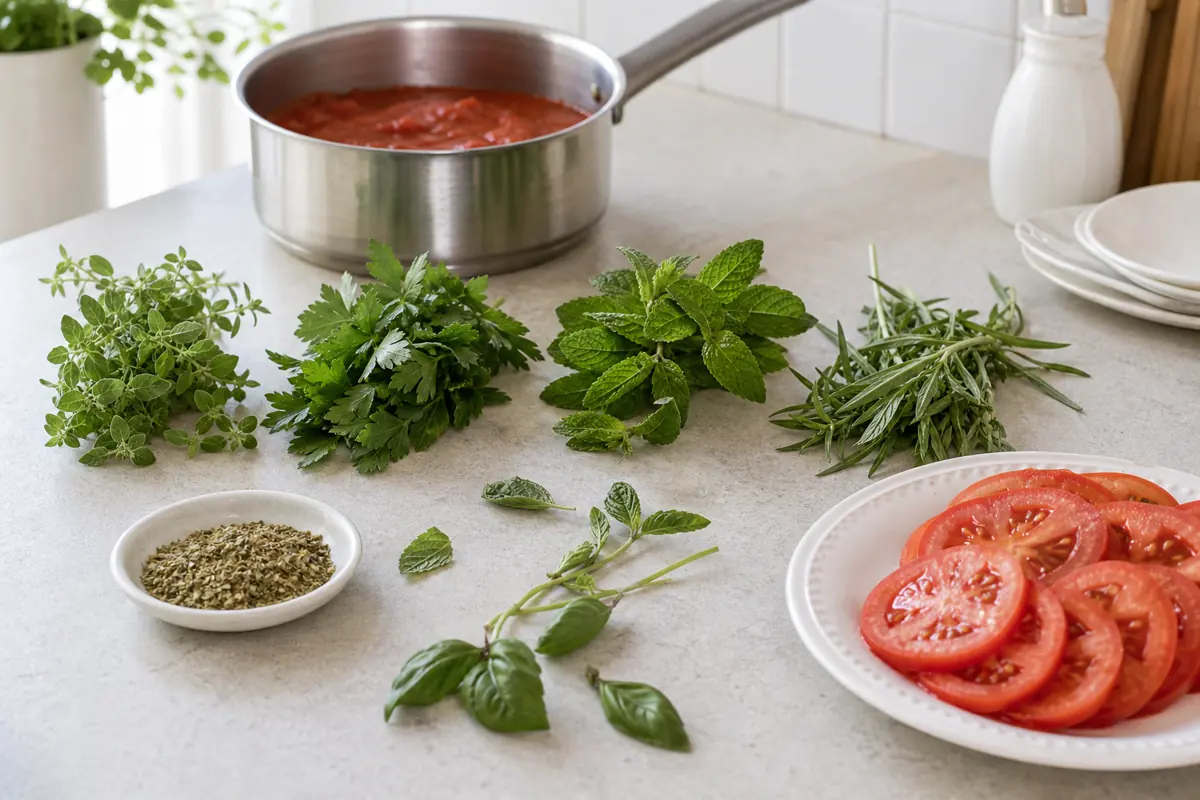
For cooked tomato sauce, start with half as much oregano as fresh basil, or one-third as much dried oregano as dried basil. For pesto, salad, or a raw finish, parsley is a safer source of green leaf bulk, while mint or tarragon should be chosen only when their cooling or anise character fits the food. Decide whether the recipe needs a herb that can simmer, a soft green leaf that stays raw, or the sweet clove-anise aroma that makes basil recognizable.
Five Basil Substitutes Sorted by Cooking Job
Oregano is the broadest replacement when basil was meant to cook in tomato sauce, beans, or baked vegetables. It is stronger, woodier, and more peppery, so equal volume usually makes it the main flavor.
Italian seasoning, parsley, mint, and tarragon solve narrower problems. One supplies a ready-made dried herb base, one preserves green bulk, and the other two replace a specific sweet or anise-like edge rather than basil as a whole.
| Number | Substitute | Starting ratio | Best use | Main drift |
|---|---|---|---|---|
| 1 | Oregano | 1/2 fresh volume or 1/3 dried volume | Tomato sauce, beans, baked vegetables | More peppery and woody |
| 2 | Italian seasoning | 1/3 tsp per 1 tsp dried basil | Soup, baked pasta, long-cooked sauce | Several woody herbs arrive together |
| 3 | Parsley | Equal fresh volume | Pesto-style sauce, salad, eggs, finishing | Green bulk without basil sweetness |
| 4 | Mint | 1/2 fresh volume | Salad, peas, yogurt, fruit, fresh noodles | Cooler and sweeter |
| 5 | Tarragon | 1/2 fresh or 1/4 dried volume | Chicken, eggs, cream sauce, vinegar | Stronger anise and less clove warmth |
Fresh ratios use loosely packed chopped leaves, while dried ratios use ordinary crumbled leaf rather than stronger powdered herbs.
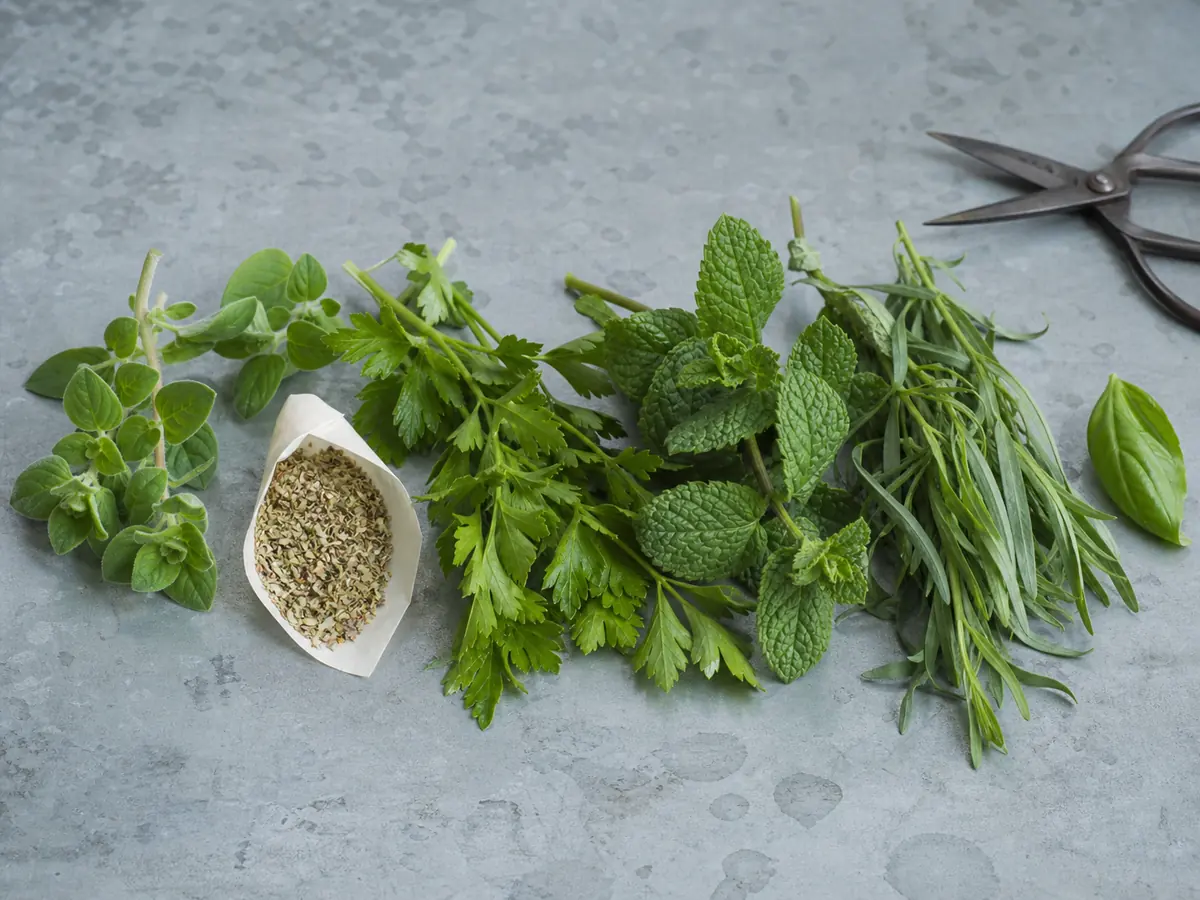
- Oregano: Small leaves carry more pepper and resin than basil.
- Italian seasoning: Mixed dried flakes belong in cooked food.
- Parsley: Use the leaf mass when color and texture matter.
- Mint and tarragon: Add less and keep their distinct aroma deliberate.
1. Oregano
Use one-half tablespoon fresh oregano for each tablespoon of fresh basil in a cooked dish. When both herbs are dried, begin with one-third teaspoon dried oregano for each teaspoon of dried basil.
- Starting ratio
- 1/2 fresh volume or 1/3 dried volume
- Best for
- tomato sauce, beans, pizza sauce, braised vegetables, and baked pasta
- Main tradeoff
- sharper pepper, resin, and bitterness with less sweet clove aroma
- Adjust
- add dried oregano early, but hold fresh oregano until the middle of cooking
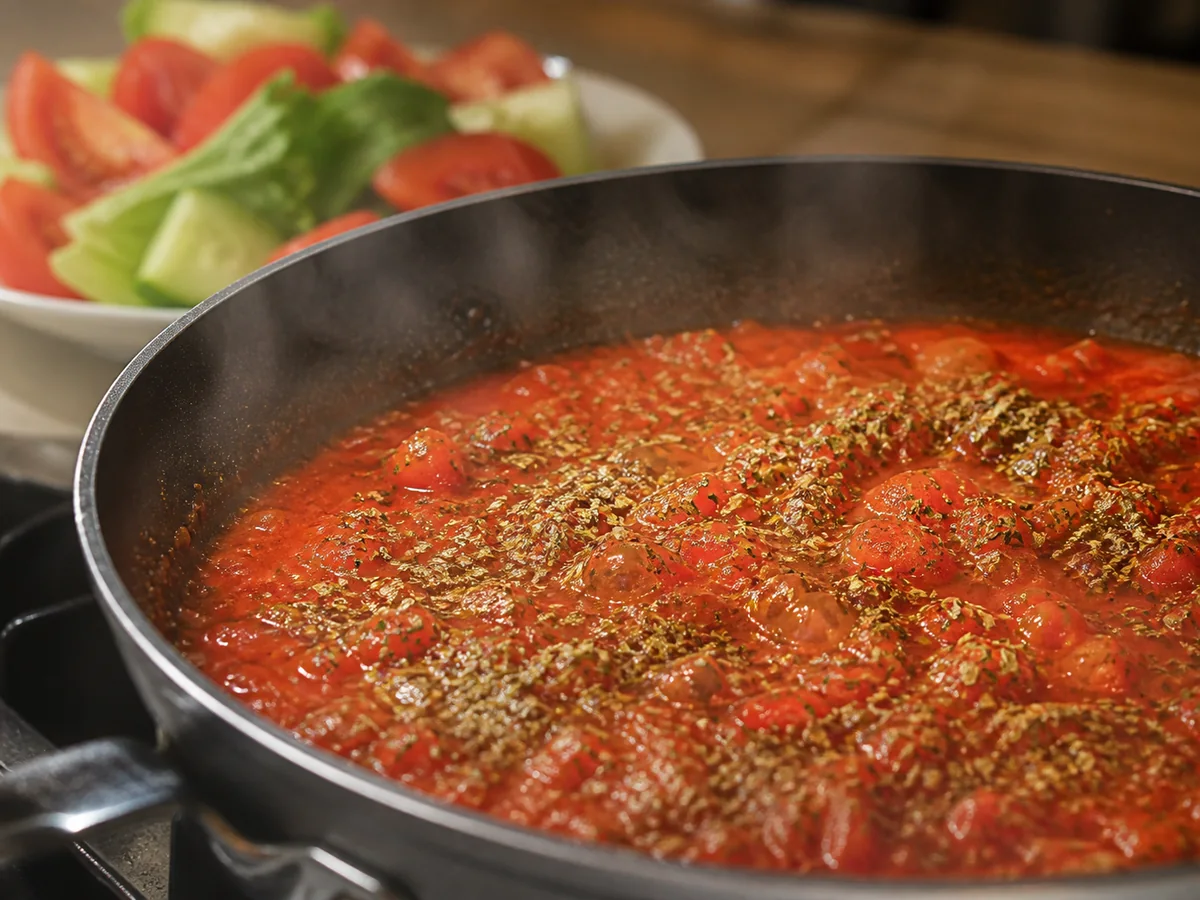
- Tomato simmer: Softens and distributes the dried herb.
- Cooked foundation: Can carry oregano's pepper and resin.
- Ungarnished salad: Avoids replacing tender basil with bitter raw oregano.
Oregano tolerates a simmer better than fresh basil and belongs naturally with tomato, olive oil, beans, and browned vegetables. That makes it useful when the herb line is part of a cooked foundation rather than a final green accent.
The same strength becomes a problem in salad or pesto. Raw oregano leaf is firmer and more bitter, and its resinous aroma can cover cheese, nuts, and delicate vegetables before it provides enough leafy body.
Taste the sauce after ten minutes when heat, tomato, and oil have rounded and dispersed the oregano. Jar aroma overstates oregano before hydration and gives no useful reading of how it will sit behind tomato.
If the recipe already contains oregano, do not add a second full oregano measure to replace basil. Increase the existing amount by one-quarter first, then finish the dish with parsley or leave the missing fresh note alone.
2. Italian Seasoning
Start with one-third teaspoon Italian seasoning for every teaspoon of dried basil.
Use it only where oregano, thyme, and rosemary already make sense together.
- Starting ratio
- 1/3 teaspoon per 1 teaspoon dried basil
- Best for
- soup, baked pasta, tomato sauce, meatballs, and roasted vegetables
- Main tradeoff
- a mixed woody-herb profile instead of one soft sweet herb
- Adjust
- inspect the label for sage, marjoram, red pepper, and salt before dosing
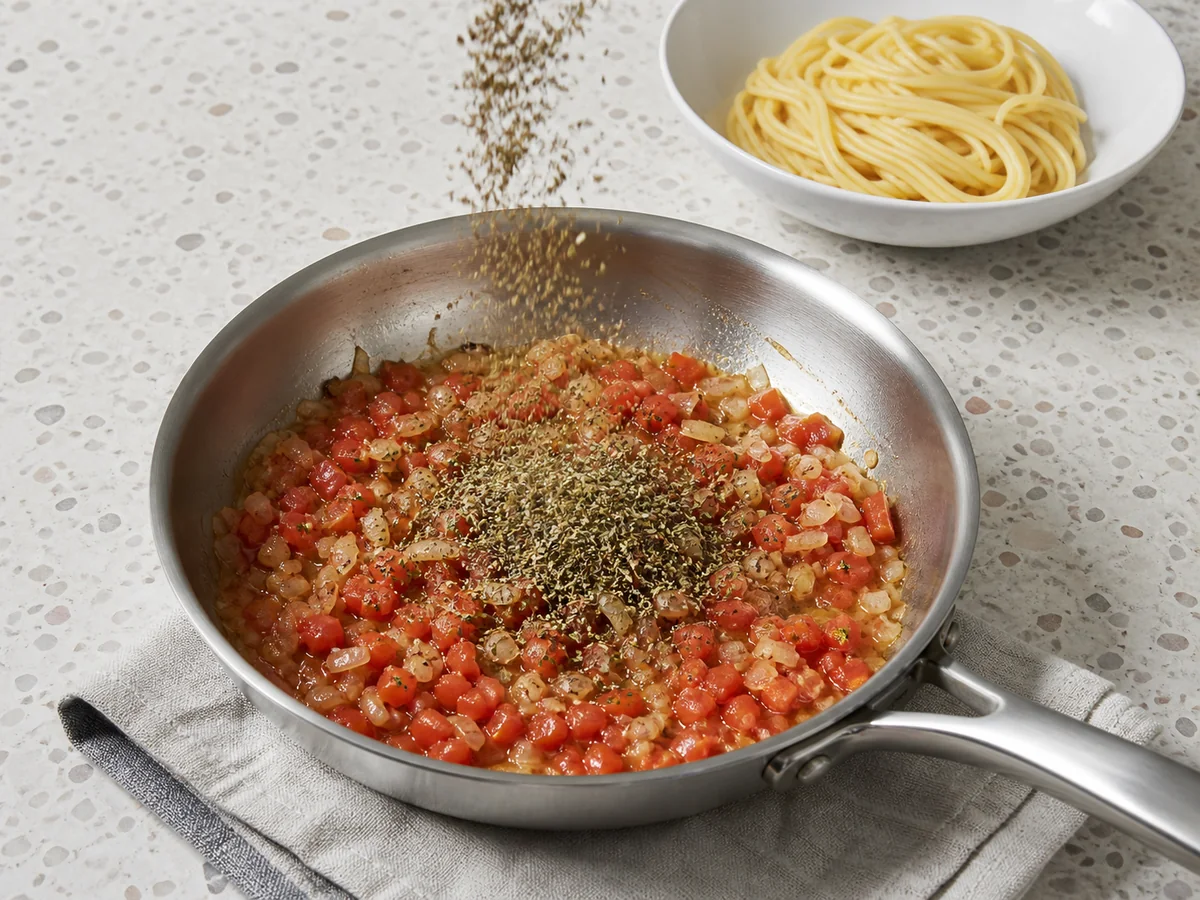
- Soft onion and tomato: Hydrate several dried herbs together.
- Early addition: Gives woody leaves time to soften.
- Plain pasta behind: Keeps the blend out of the final garnish job.
This is a convenience replacement, not a close flavor match. It works because many long-cooked Italian-American dishes can absorb a broader dried herb background without depending on fresh basil as a distinct top note.
Read the ingredient list before adding it. A simple oregano-thyme-rosemary blend behaves differently from one containing sage, garlic, chile, or salt, and those additions may duplicate other lines in the recipe.
Add Italian seasoning with the onions or sauce so its dried leaves hydrate before serving. A finished-plate sprinkle leaves stiff fragments and makes rosemary feel sharper than the same measured blend cooked into sauce.
3. Parsley
Use parsley at equal fresh volume when the recipe needs green leaf bulk more than basil aroma. It is especially useful in a pesto-style sauce, salad, egg dish, sandwich, or final garnish.
- Starting ratio
- equal loosely packed fresh volume
- Best for
- green sauces, salads, eggs, cheese fillings, sandwiches, and finishing
- Main tradeoff
- clean grassy freshness without basil's sweet clove and anise notes
- Adjust
- add a small amount of another compatible aromatic only when the dish needs it
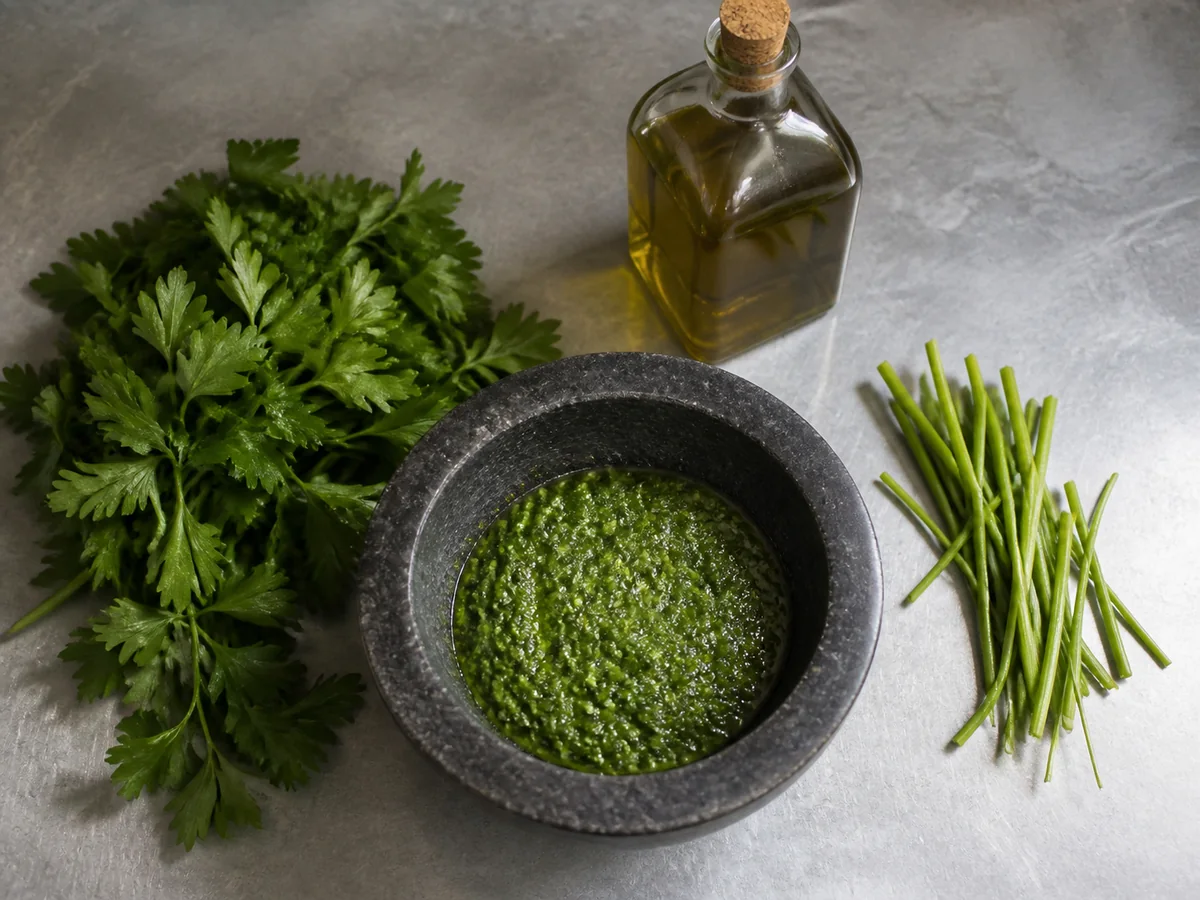
- Leafy tops: Provide soft texture and bright green volume.
- Thick stems: Stay fibrous and are removed before grinding.
- Stone mortar: Shows the sauce as parsley and nuts, not basil pesto.
Parsley keeps the texture and color of a fresh herb without imposing mint, oregano, or tarragon on the food.
That is valuable when a cup of basil leaves provides physical mass, as it does in pesto.
The finished sauce will be parsley and nut sauce rather than basil pesto. Keep the cheese, garlic, nuts, oil, and acid in balance, but do not chase missing basil by adding more garlic because stronger garlic only hides the gap.
Flat-leaf parsley gives a softer texture than curly parsley in blended sauces. Remove thick lower stems before processing, since they can leave fibrous strands when the herb is used in large volume.
Let a parsley-based sauce stand for five minutes before correcting oil or acid because the broken leaves continue to release water. That pause prevents a cook from thinning the first thick texture into a sauce that later runs off pasta or bread.
4. Mint
Begin with one-half tablespoon fresh mint for each tablespoon of fresh basil.
Choose spearmint rather than peppermint when you want a gentler culinary note.
- Starting ratio
- 1/2 fresh volume
- Best for
- tomato and fruit salads, peas, yogurt, soft cheese, and fresh noodle dishes
- Main tradeoff
- cooler sweetness and less clove-like warmth
- Adjust
- tear or slice it at the end because long heat flattens the bright aroma
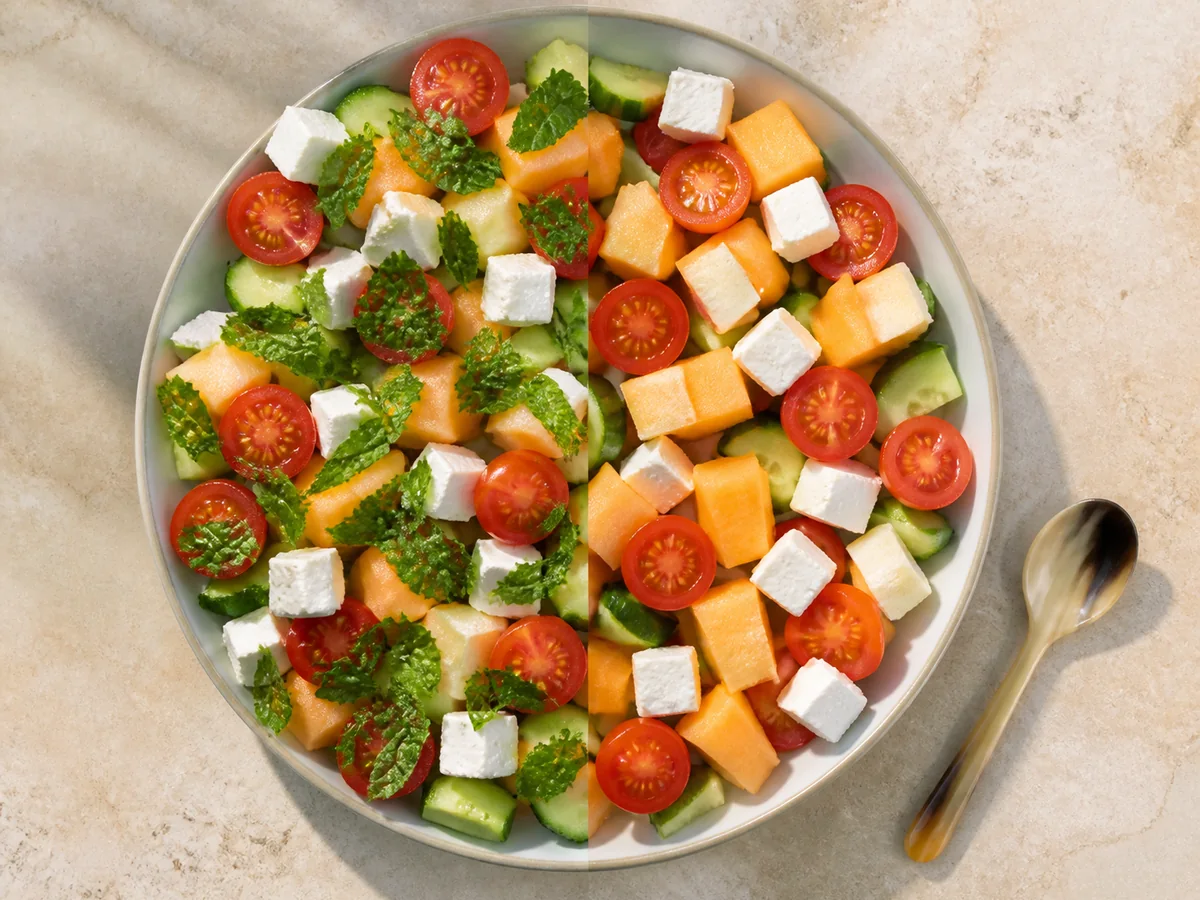
- Minted half: Tests the substitute at serving strength.
- Plain half: Preserves a direct comparison.
- Fresh salad: Suits spearmint better than a long tomato simmer.
Mint works where basil provides a fresh sweet lift and the rest of the dish can accept a cooling finish. It can make tomatoes, melon, peas, cucumber, yogurt, and salty cheese feel brighter without pretending to taste identical.
It is a poor default for a long tomato simmer. The cooling signal can make a familiar sauce taste detached from garlic and browned onion, especially after the leaf loses its fresh top note.
Use mint in a Southeast Asian herb plate only when the recipe already welcomes its cooling aroma.
Sweet basil, Thai basil, and mint occupy different aromatic roles even when all three arrive as fresh green leaves.
5. Tarragon
Use one-half tablespoon fresh tarragon for each tablespoon of fresh basil in chicken, eggs, cream sauce, or a vinegar-led dressing. For dried herbs, start with one-quarter teaspoon dried tarragon per teaspoon of dried basil.
- Starting ratio
- 1/2 fresh volume or 1/4 dried volume
- Best for
- chicken, eggs, cream sauce, fish, tomato salad, and vinaigrette
- Main tradeoff
- focused anise with less pepper and clove warmth
- Adjust
- add late and stop when anise becomes the first aroma
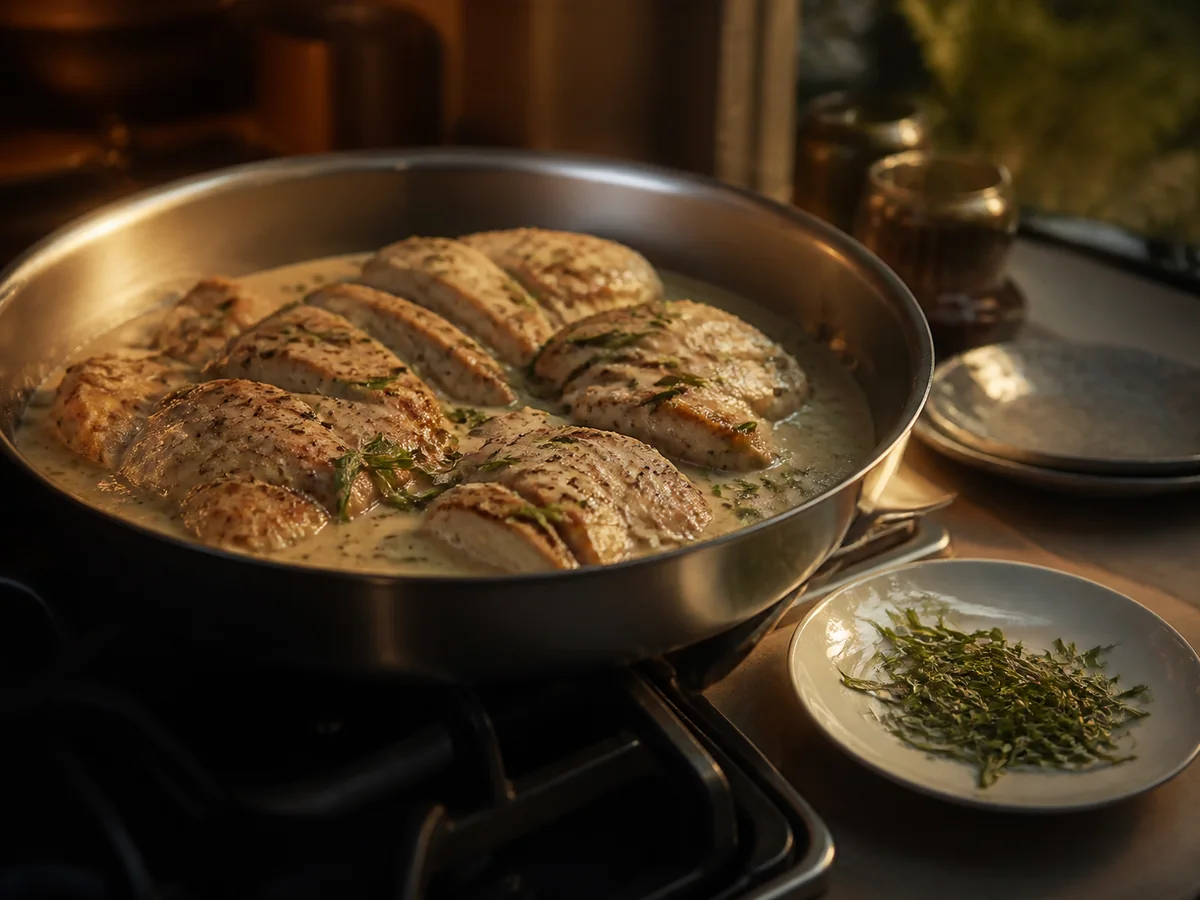
- Small pan scatter: Keeps the anise note in proportion.
- Side saucer: Makes restraint visible before the dish is committed.
- Low heat: Protects the late herb aroma without boiling the cream.
Tarragon is useful when basil's anise-like side matters more than its leafy sweetness. Butter, cream, egg, chicken, and vinegar carry that note well, which is why the swap belongs in a narrow French-leaning branch.
It is much easier to overuse than parsley.
A heavy dose makes the whole dish taste of anise, and neither extra acid nor black pepper removes that monotony.
Add fresh tarragon off the heat or in the final minutes. Dried tarragon needs several minutes to rehydrate, but it should still enter later than oregano in a long sauce.
Do not use tarragon broadly in pesto or a large raw salad where its narrow aroma grows with the leaf volume. A small accent can echo basil's anise edge, but a full cup makes tarragon the identity of the dish.
Fresh and Dried Basil Are Different Ingredients
A cup of fresh basil performs two jobs at once. The leaves supply aroma and enough water-rich plant material to create visible green volume.
Dried basil performs only the seasoning job. Drying removes most of the water and some of the volatile top notes, so a spoonful is concentrated in mass but flatter in aroma.
Pros
- Fresh parsley can replace leaf bulk without dominating a raw sauce.
- Fresh mint or tarragon can target one compatible aromatic direction.
- Dried oregano and Italian seasoning can survive a long simmer.
Cons
- Dried herbs cannot recreate the soft texture of torn fresh basil.
- Equal dried oregano can overwhelm the amount of dried basil requested.
- Rehydrating dried basil changes texture but does not restore fresh aroma.
When a recipe calls for dried basil, choose another dried herb and start below equal volume. The herb will hydrate in sauce, soup, or cooking fat, and its flavor will spread gradually.
When a recipe calls for a handful of fresh basil, solve leaf bulk and aroma separately. Parsley can supply most of the volume, while a smaller amount of mint or tarragon can add a compatible accent if the dish welcomes it.
Do not convert a full cup of basil into a cup of fresh oregano. That change multiplies a stronger, firmer leaf until texture and bitterness become more obvious than the missing basil.
A five-minute warm-water soak can soften dried leaves for a cold dressing without turning them into fresh herbs.
Drain the leaves thoroughly so the soaking water does not dilute the dressing while the herb remains flat in aroma.
Tomato Sauce, Pesto, and Thai-Style Dishes Need Different Answers
Tomato sauce can accept oregano because simmering, oil, garlic, and acidity support its woody edge. Begin low, let it cook, and decide whether the finished sauce still needs a fresh green note.
Pesto depends on much more leaf mass. Parsley is the practical base because it blends smoothly and does not fight the nuts, cheese, garlic, and oil.
Use dried oregano or Italian seasoning early. Finish with parsley only if the sauce needs fresh color.
Use parsley for most of the volume. Add mint or tarragon only when that direction suits the meal.
Use a small amount of mint or parsley, or leave the basil out. Do not cover good tomatoes with dried herbs.
Match the recipe's named basil variety when possible. Mint or tarragon changes the dish and should be chosen deliberately.
Tarragon can replace the anise side of basil at half volume.
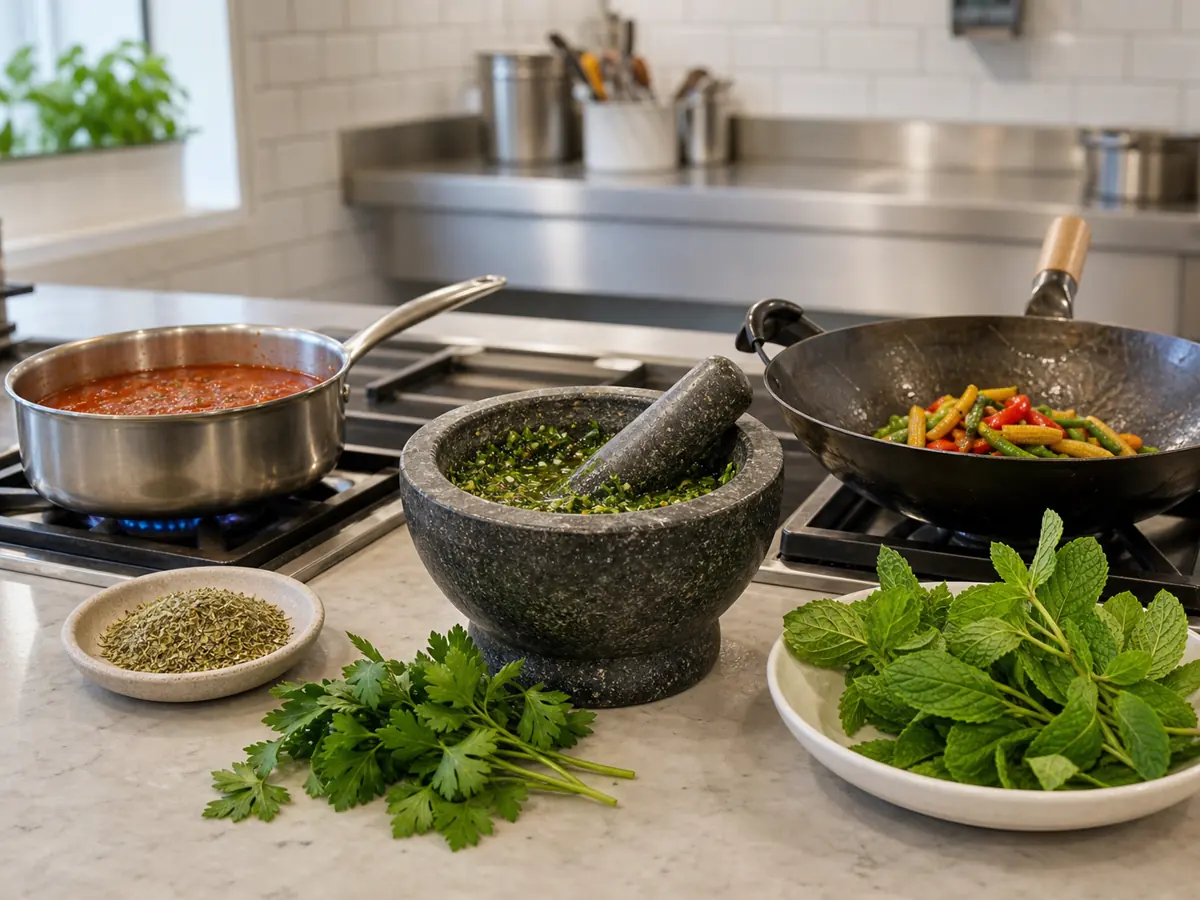
- Tomato sauce: Let the dried herb hydrate and soften.
- Green sauce: Build volume first, then add a compatible accent.
- Wok finish: Keep tender leaves bright and add them late.
- Identity check: A named basil dish becomes a variation when the herb changes.
Thai basil adds anise, pepper, and a firmer leaf that holds up to brief heat. Sweet basil is already an imperfect replacement, and oregano moves even farther away.
If the dish is a hot curry, add a compatible fresh herb at the end rather than simmering it into silence. If the named basil defines the dish, changing the herb creates a variation and should be treated as one.
In raw tomato dishes, use fewer replacement leaves and let accurate salt and oil seasoning carry the tomatoes.
Add Delicate Replacements at the Right Time
Dried oregano and Italian seasoning need moisture and time, so add them after the onions soften or when the cooking liquid enters. Crushing the leaves between your fingers exposes fresh surfaces before they hydrate.
Fresh parsley, mint, and tarragon lose their brightest aroma with steam. Divide the amount when the dish needs both a cooked background and a fresh finish.
- Identify the form the recipe requested and the time it would have entered.
- Add dried oregano or Italian seasoning early enough to hydrate in liquid or fat.
- Cook only half of a fresh parsley measure when the sauce needs a green background.
- Add mint or tarragon during the final two minutes or after the heat is off.
- Wait one minute, stir, and taste away from the rising steam before adding more.
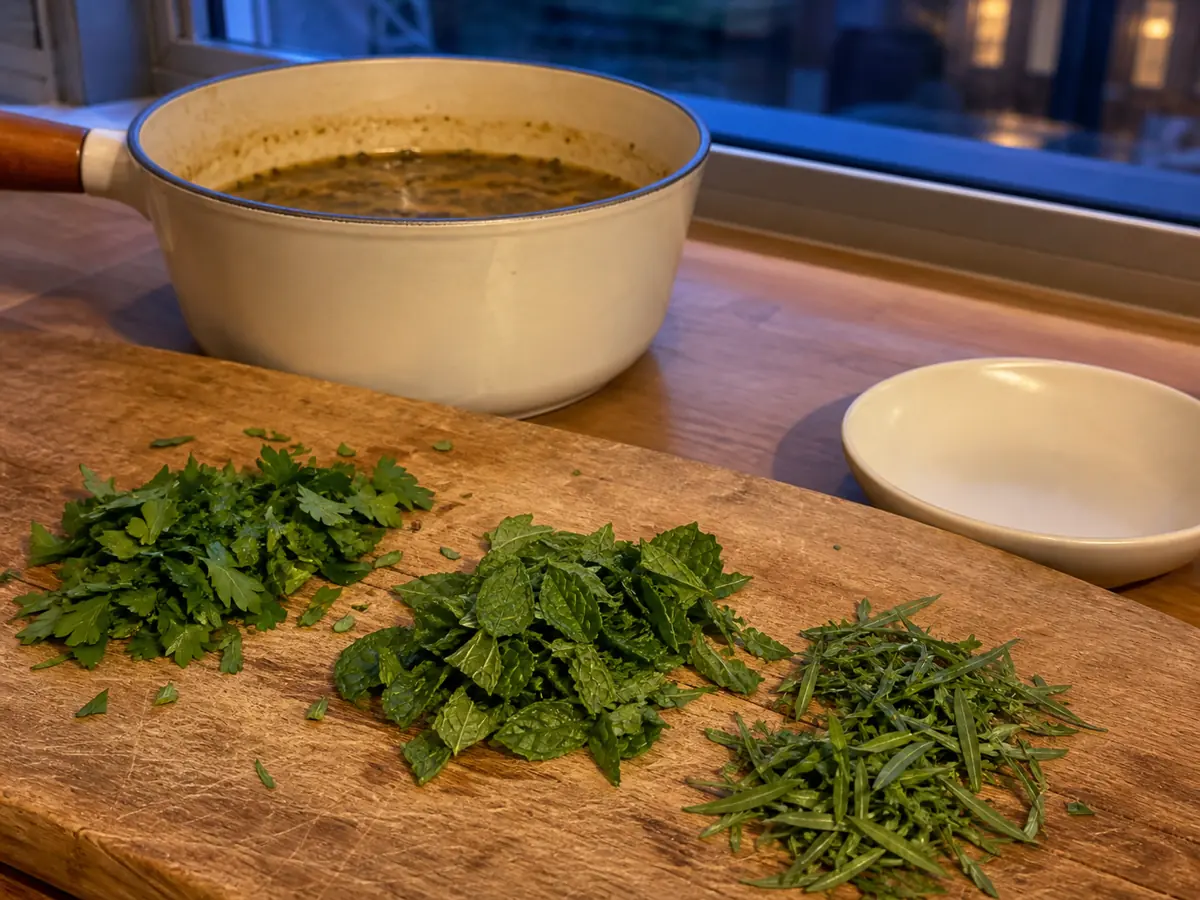
- Early: Dried oregano and Italian seasoning need moisture.
- Middle: A little parsley can soften into the sauce.
- Late: Mint and tarragon keep more recognizable aroma.
- After heat: Taste again when steam no longer masks the balance.
Steam carries volatile aroma away from the surface and into the room. A pot that smells strongly of herbs can still taste flat because the aroma has escaped instead of remaining in the food.
Fat slows that loss by dissolving aromatic compounds, but high heat still changes them. Stir tender herbs through oil, butter, cheese, or yogurt near the end rather than frying them until dark.
For a baked dish, put dried herbs in the sauce and save any fresh replacement for serving.
Fresh leaves scattered before a long bake darken and contribute less aroma than the same amount added after the oven.
Leave Basil Out When the Substitute Would Rename the Dish
Basil can be a background herb in soup and a defining ingredient in pesto or caprese. Omission is usually safer in the second group than a large amount of an unrelated herb.
Check what the recipe already provides before replacing it. Tomato, garlic, olive oil, cheese, chile, citrus, and other herbs may leave the dish complete even when the basil note is absent.
- Name the job: Decide whether basil supplied cooked seasoning, fresh aroma, or leaf bulk.
- Check the existing herbs: Do not duplicate oregano, thyme, rosemary, mint, or tarragon already present.
- Protect dish identity: Treat pesto, caprese, and named basil dishes as variations when the main herb changes.
- Correct structure first: Replace green bulk, fat, acid, or salt before chasing aroma with a stronger herb.
- Taste one portion: Test a late fresh addition in the serving bowl before changing the whole pot.
Leaving basil out of a complex braise usually creates a smaller change than replacing it with too much rosemary or tarragon. The remaining onions, browned food, liquid, and spices still build a complete sauce.
A well-seasoned tomato with enough salt, olive oil, and acid needs less herbal camouflage than weak produce covered with the wrong leaf.