
What Does Sage Taste Like, and When Should You Add It?
Use small amounts with butter, poultry, beans, squash, and stuffing.
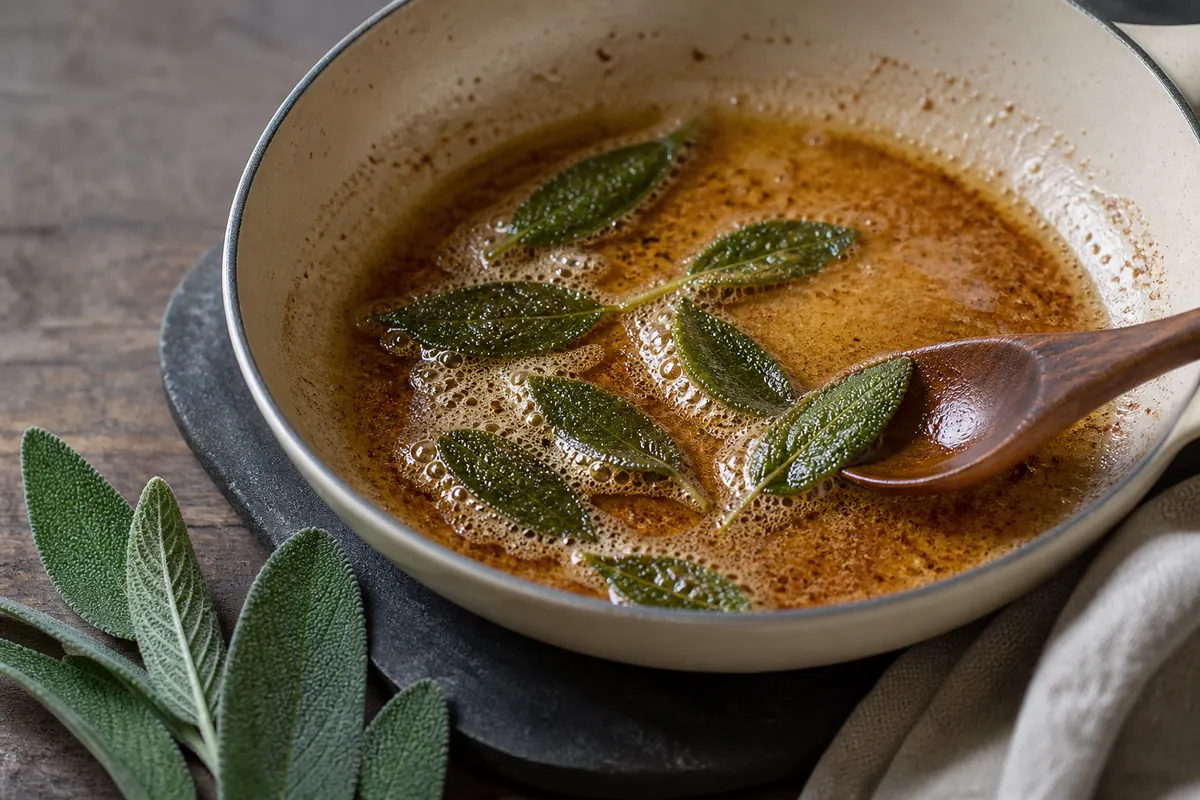
Sage is a strong woody herb that works best with fat, starch, poultry, beans, squash, pork, and brown butter. Fresh sage can be fried or softened in butter, while dried rubbed sage should be used in smaller amounts and cooked into the dish. If you need a substitute, choose thyme, rosemary, marjoram, or poultry seasoning by the food underneath.
What does sage taste like in food?
Sage tastes piney, savory, and slightly camphor-like. It works best when fat or starch gives that aroma somewhere to land.
Work out the dried sage for your dish
That is why sage fits poultry, pork, butter, beans, potatoes, squash, and stuffing better than raw delicate salads.
The herb is strong because the leaf is leathery and resinous. Treat it like a cooking herb, not a finishing herb.
| Food | Sage job | Risk |
|---|---|---|
| Brown butter | Adds savory edge to nutty fat | Burnt leaves taste bitter |
| Poultry stuffing | Cuts bread, onion, and fat | Too much tastes medicinal |
| White beans | Adds structure to mild starch | Raw sage stays harsh |
| Squash or pumpkin | Balances sweetness | Heavy dried sage tastes dusty |
Sage is not a green garnish herb. It needs cooking, fat, or a strong base to stay pleasant.
Fresh sage leaves are edible, but whole raw leaves are coarse and strongly resinous.
If a dish will not heat them, slice one or two leaves into very thin ribbons. Mix them with oil, cheese, or another rich ingredient.
Fresh or dried sage: which should you use?
Fresh sage gives leathery leaves, strong aroma, and a flavor that can be crisped in fat. Dried rubbed sage spreads faster.
With herbs, fresh versus dried herbs matters sharply here because sage does not lose all force when dried.
With herbs, fresh herbs often need late timing, but fresh sage can take brief butter heat. That makes it unusual.
Rubbed sage is fluffy, so a spoon can hold more herb than it looks like. Measure it before shaking.
| Form | Starting amount | Best use |
|---|---|---|
| Fresh leaves | 4 to 6 leaves for 4 servings | Butter sauces, roasts, bean dishes |
| Rubbed dried sage | 1/4 to 1/2 teaspoon | Stuffing, sausage, poultry seasoning |
| Ground sage | Pinch to 1/4 teaspoon | Smooth mixtures where leaf texture fails |
| Fried leaves | Few whole leaves | Garnish for squash, pasta, beans |
Use less dried sage than fresh chopped sage. The dried herb form can look harmless and still dominate the dish.
How should you cut fresh sage leaves?
Sage leaf texture matters because the leaf is firm and slightly fuzzy. Big raw pieces can feel tough.
Whole leaves work when fried. Thin ribbons work in butter or beans.
Rubbed dried sage works when texture should disappear into bread, sausage, or poultry seasoning.
| Cut | Best use | Why |
|---|---|---|
| Whole leaf | Fried garnish or butter infusion | Easy to remove or crisp |
| Thin ribbons | Pasta, beans, potatoes | Softens without becoming leaf chunks |
| Finely chopped | Stuffing or sausage | Spreads through a dense mixture |
| Rubbed dried | Poultry seasoning and bread stuffing | Disappears into the base |
Do not chop sage like parsley and throw it on top. The herb needs a texture decision before it needs a flavor decision.
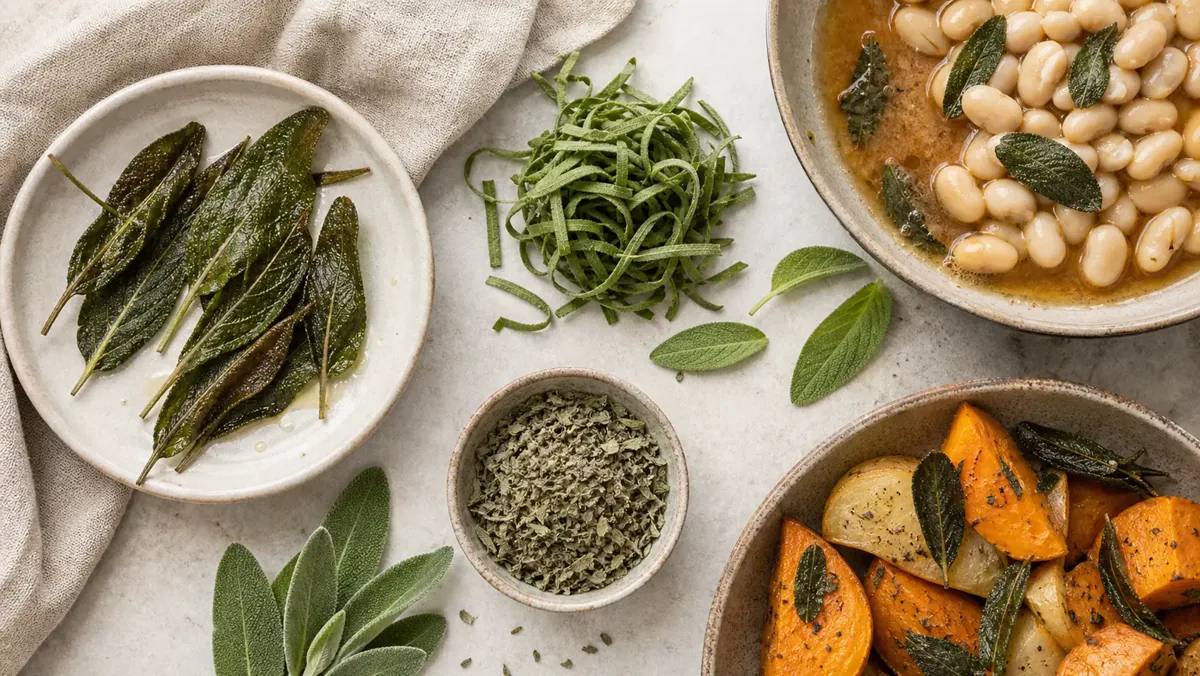
- Whole leaf: Crisp garnish or removable infusion.
- Ribbons: Butter, beans, potatoes, and pasta.
- Fine chop: Stuffing, sausage, and dense mixtures.
- Rubbed dried: Disappears into poultry seasoning.
For a first test, use ribbons in hot fat and whole leaves only when you want a visible crisp garnish.
If you want only aroma, infuse the leaves in butter and remove them. That gives control without leathery bites.
When should you add sage to butter?
Butter softens sage and carries its aroma evenly. Brown butter also gives nutty depth that can handle the herb.
Add fresh leaves as butter foams, then pull the pan when the leaves crisp and smell savory. Black leaves are too far.
The useful cue is smell, not leaf color alone. Sage can taste bitter before it looks fully burnt.
- For pasta: Fry leaves in butter, then toss with pasta water and cheese.
- For squash: Use brown butter and a small amount of sage to balance sweetness.
- For beans: Cook sage with oil, garlic, and beans so harsh edges soften.
- For poultry: Mix dried sage into stuffing or sausage where fat spreads it.
This is a timing issue as much as a flavor issue. The broader spice timing rule applies to herbs too.
What foods go best with sage?
Sage often tastes better when you add starch or fat instead of more leaves. Potato, beans, bread, pasta, and squash absorb its edge.
This is why stuffing can take dried sage but salad cannot. Bread, onion, stock, and fat spread the aroma.
| Base food | Why sage works | Amount cue |
|---|---|---|
| Potatoes | Starch softens resinous aroma | A few fried leaves for 4 servings |
| White beans | Creamy texture carries sage oil | One sprig or 4 leaves |
| Stuffing | Bread and fat dilute dried sage | 1/2 teaspoon for a small pan |
| Squash | Sweetness needs a savory edge | Brown butter plus 3 to 5 leaves |
If the dish has no starch, fat, or sweetness, use thyme first. Sage needs something to push against.
How much sage belongs in stuffing?
Stuffing is where many cooks overuse sage because the dry bread looks like it can take more.
Start with the amount in the recipe, then smell the warm onion and butter mixture before adding extra.
- Bread cube stuffing: Add sage to warm fat and onion before stock enters.
- Sausage stuffing: Use less extra sage because sausage may already contain it.
- Cornbread dressing: Balance sage with black pepper and celery seed.
- Vegetarian stuffing: Add mushrooms or butter before adding more dried herb.
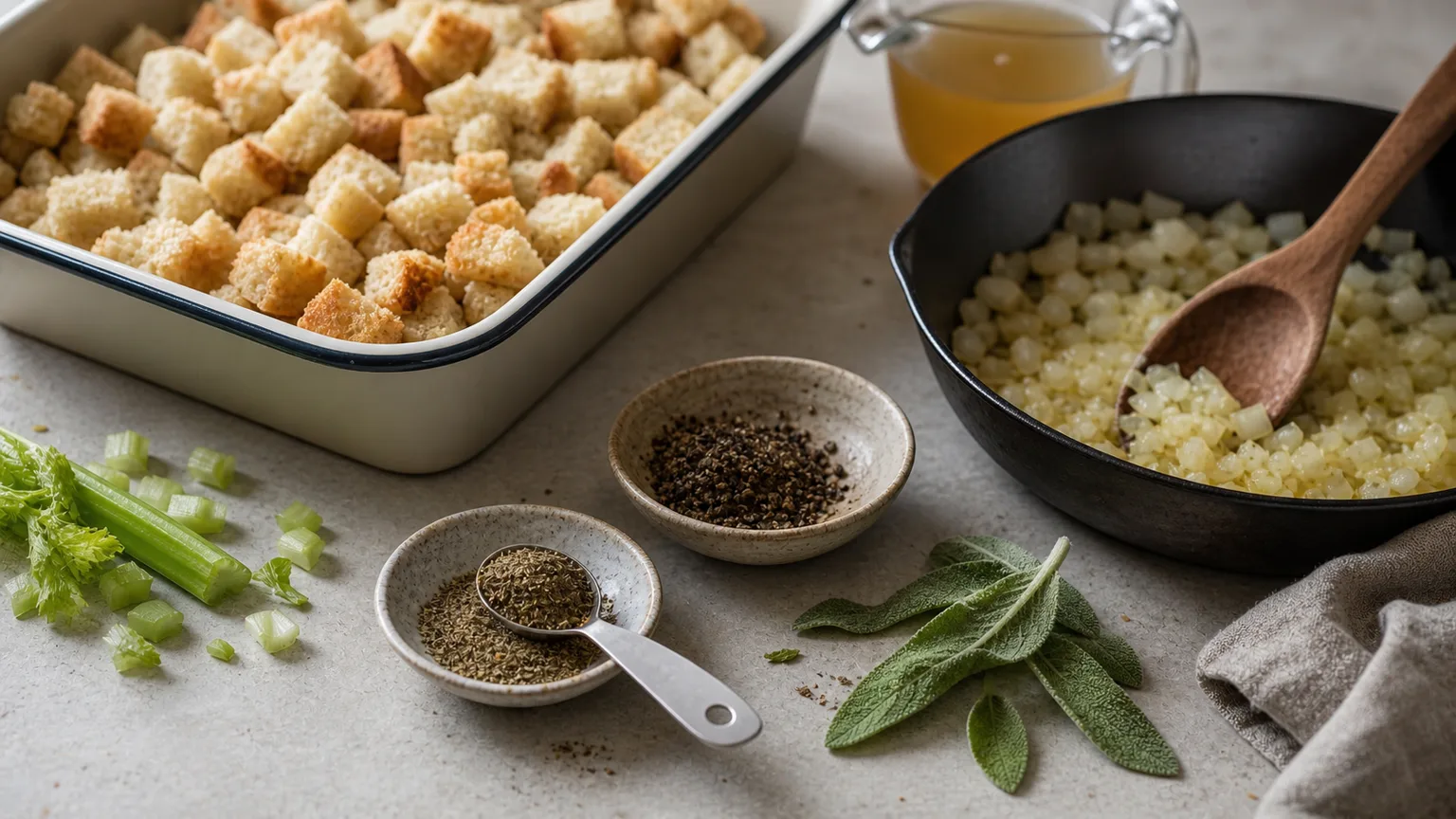
- Measure first: Dry bread hides how strong sage will taste after resting.
- Smell the fat: Onion butter shows the herb more clearly than dry cubes.
- Add stock: Moisture spreads sage, so taste after the bread softens.
- Hold back: Sausage, celery seed, and pepper may already fill the same space.
The key is dilution. Bread absorbs aroma slowly, so stuffing can taste mild before baking and strong after resting.
Taste a small spoonful after moisture is added. Dry bread crumbs are a bad judge of final sage strength.
| Checkpoint | What to judge | Best move |
|---|---|---|
| Warm onion and butter | Does sage smell clean or dusty? | Add a measured pinch only if the fat still smells flat |
| After stock enters | Does bread taste seasoned or sharp? | Wait two minutes before adding more |
| Before baking | Does sausage or celery seed already lead? | Reduce extra sage and use pepper for lift |
| After resting | Did sage get louder? | Correct with bread, stock, onion, and fat, not sugar |
Make-ahead stuffing needs even more restraint. Sage keeps moving through the bread while the pan sits, so a mix that tastes perfect on Wednesday can taste louder on Thursday.
If you prepare the pan early, season the onion butter first and hold back a small portion of sage. Add that reserved pinch only after the bread has absorbed stock and cooled enough to taste.
When reheating, refresh dry stuffing with warm stock, butter, black pepper, or parsley before adding more sage. Those fixes restore moisture and lift without pushing the herb into a bitter edge.
For the next batch, note the final sage amount beside the pan size. That record prevents the same holiday guess from repeating.
How do you use sage with beans, squash, and poultry?
Sage is not one timing rule. Beans, squash, and poultry each need the herb at a different moment.
Beans want sage softened in oil. Squash wants sage in butter.
Poultry often wants dried sage inside the seasoning base, where salt and fat can spread it.
| Food | Best form | Best timing |
|---|---|---|
| White beans | Fresh leaves or sprig | Cook in oil before broth |
| Butternut squash | Fresh leaves | Crisp in brown butter |
| Roast poultry | Dried rubbed sage | Mix with salt before roasting |
| Pork sausage | Ground or rubbed sage | Blend into fat before cooking |
| Potatoes | Fresh ribbons | Add to hot butter after boiling |
This keeps sage from becoming a holiday-only herb. The same leaf can season a bean pot or a pasta sauce.
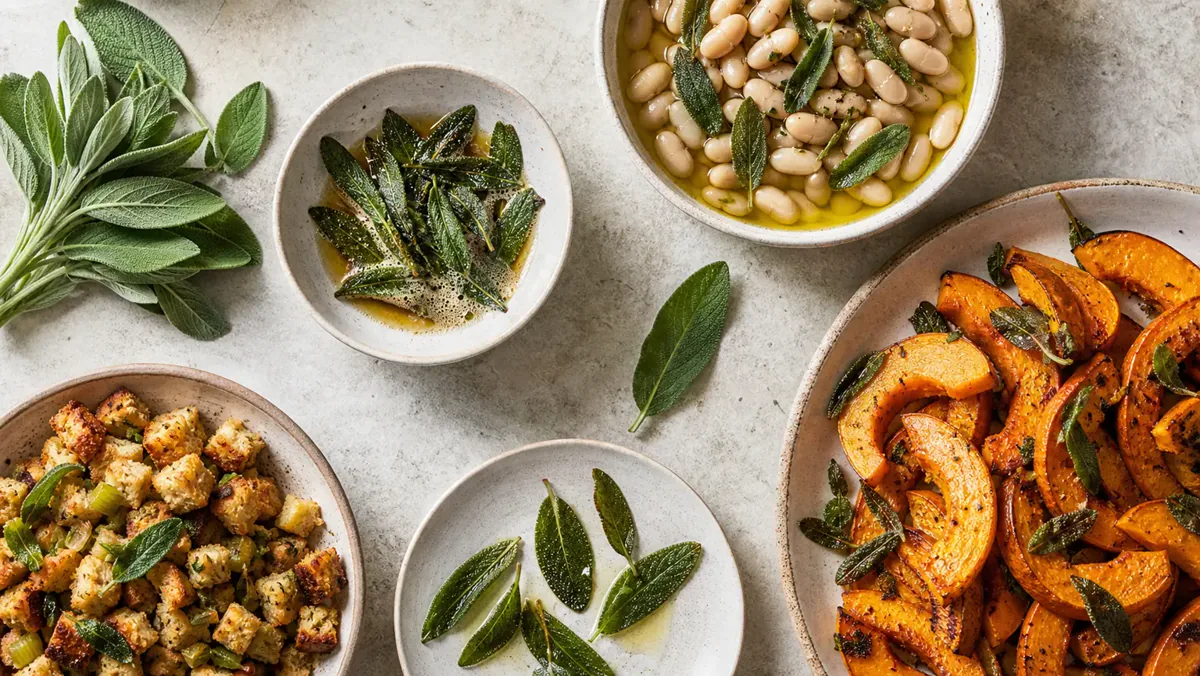
- Beans: Oil and broth soften the leaf.
- Squash: Sweetness needs brown butter and sage.
- Poultry: Dried sage spreads through salt and fat.
- Potatoes: Hot butter carries ribbons evenly.
The difference is the carrier. Oil, butter, pork fat, and starchy water each soften sage in a different way.
If the food is lean and watery, use less sage. Without fat, its resinous edge stays exposed.
If the food is rich, sage can lead. That is why pork, butter, and squash tolerate it better than plain broth.
- Bean pot: Fry leaves gently with garlic before adding beans and liquid.
- Squash pasta: Brown butter first, then crisp the leaves and remove them if needed.
- Poultry rub: Mix dried sage with salt so it seasons the meat evenly.
- Potato side: Add sage to hot butter after draining, not to boiling water.
These examples matter because sage can taste correct in one carrier and harsh in another.
When testing a new dish, keep sage visible or measurable. Hidden excess is harder to repair.
A sprig in beans can be removed when the broth tastes right. Ground sage in sausage cannot be pulled back.
Brown butter gives another control point. Remove the leaves when they crisp, then season the food with the butter.
For poultry, mix sage with salt before it touches the meat. That prevents one bitter patch under the skin.
For beans, a whole sprig also keeps the broth cleaner. Chopped leaves can cling to skins and taste uneven.
For squash, visible fried leaves are useful because diners can move them aside. Hidden dried sage gives no escape.
What can you use instead of sage?
A sage substitute should replace savory weight and resinous aroma. Parsley can add green color, but it cannot do that job.
Choose the substitute by the food underneath. Poultry, pork, beans, and squash do not need the same backup herb.
| Substitute | Ratio | Best use |
|---|---|---|
| Thyme | 1:1 fresh, smaller dried amount | Poultry, beans, vegetables |
| Rosemary | 1:2 | Pork, potatoes, roasted squash |
| Marjoram | 1:1 | Stuffing, sausage, lighter poultry |
| Poultry seasoning | 1:1 | Stuffing when sage is only one note |
With herbs, fresh thyme is the safest swap when the food is mild. Fresh rosemary is stronger and more needle-like.
If sage names the dish, change the dish direction rather than pretending the swap is identical.
Why does sage taste bitter or medicinal?
Too much sage tastes bitter, dusty, or medicinal because the herb is already assertive. More heat will not always fix it.
- Too much in stuffing: Add more bread, onion, stock, and fat before adding another herb.
- Too much in butter: Strain the leaves and add fresh butter, lemon, or pasta water.
- Too much in beans: Add beans, broth, olive oil, and acid to dilute the edge.
- Burnt leaves: Start the butter again because burnt sage keeps tasting bitter.
Do not hide strong sage with sugar. Use dilution, fat, acid, or a larger food base.
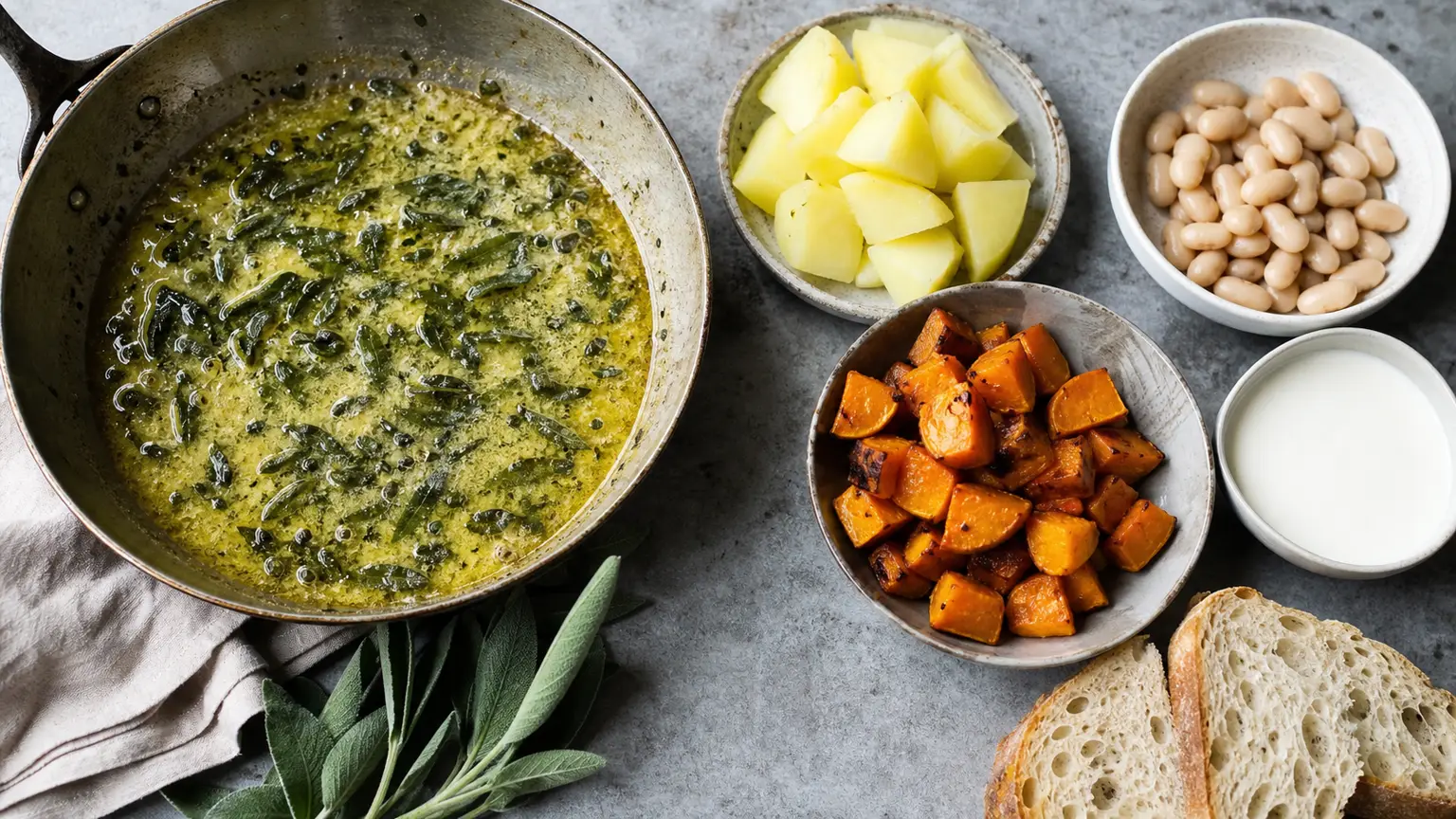
- Bitter butter: Strain or restart before it coats the food.
- Dusty stuffing: Add bread, onion, stock, and fat.
- Sharp beans: Add broth, oil, and acid after softening.
- Burnt leaves: Remove them; bitterness will not cook out.
If the flavor is dusty instead of bitter, the jar is probably stale. Replacing the sage will work better than increasing it.
How do you store fresh and dried sage?
Buy fresh sage with firm gray-green leaves and no wet black spots. Limp leaves can still flavor butter, but they make poor garnish.
Wrap fresh sage loosely and keep it dry in the refrigerator. Store dried sage with your dried herbs away from heat.
During storage, storage heat hurts sage because the dried leaf already starts with rough edges. Warm cabinets make that worse.
Small jars matter because rubbed sage fades into dustiness. A large holiday jar often lasts too long.
Smell dried sage before using it in stuffing. If it smells like hay, it will not improve in the oven.
For fresh leaves, buy only what you can cook within a week. Sage lasts longer than basil, but the top aroma still fades.