
Rosemary: The Herb You Have to Hold Back
Its piney resin stands up to roasting and fat, but a heavy hand turns food sharp and medicinal.
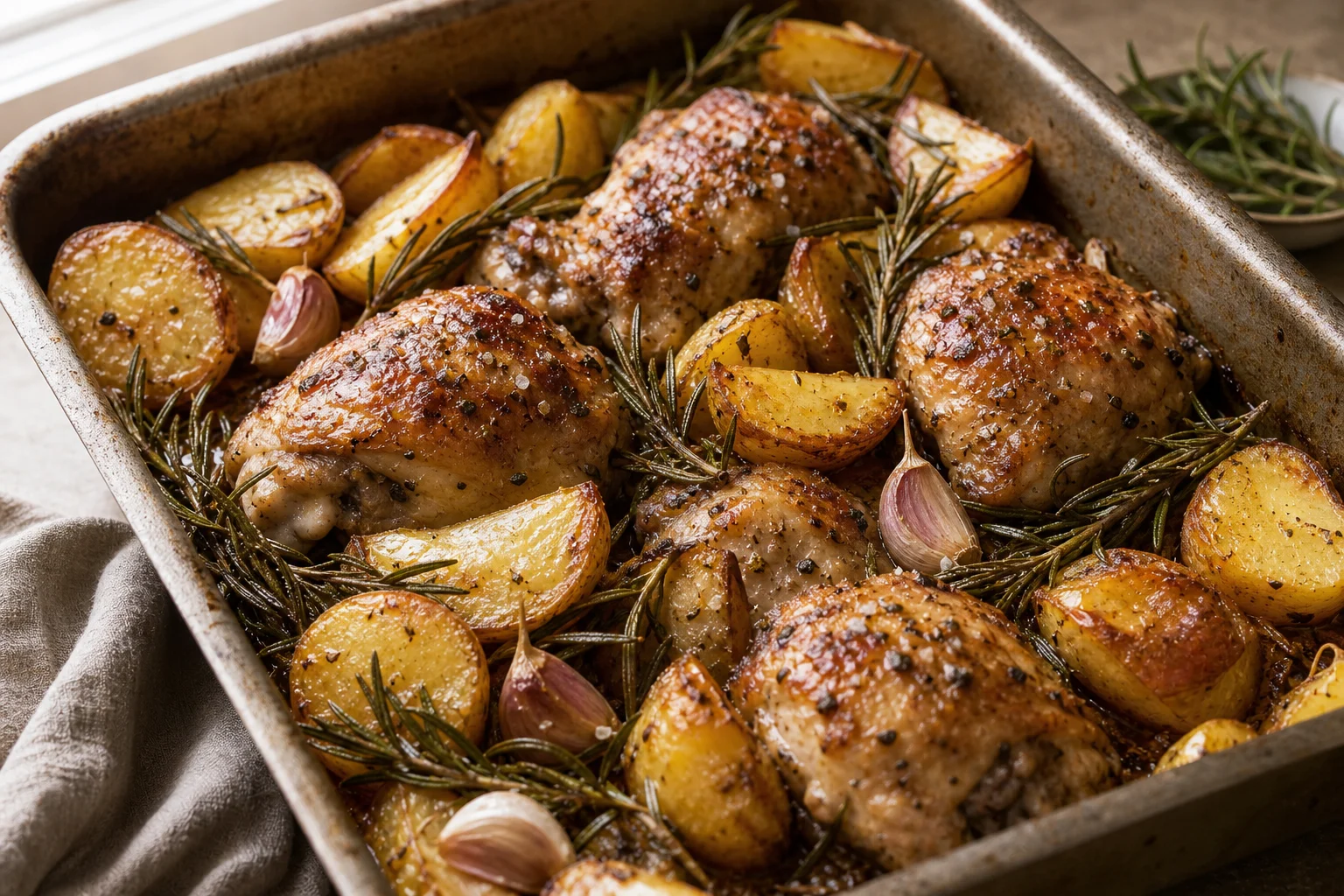
Rosemary is a strong, resinous herb that a heavy hand can push into medicinal, perfumey territory. Use it sparingly, and control the tough needles by chopping them fine or using whole sprigs you remove later. It stands up to high heat and long roasting, which makes it ideal for potatoes, lamb, and bread.
Rosemary is an evergreen leaf built for long heat
Rosemary is the aromatic leaf of Salvia rosmarinus, an evergreen Mediterranean shrub in the mint family. Cooks use the narrow leaves for seasoning and the woody branch as a removable infuser or skewer.
Fresh rosemary behaves more like a sturdy cooking aromatic than a soft finishing herb. The leaves can stay in roasting fat for an hour without collapsing, while a mature branch remains too fibrous to eat.
The plant therefore gives you two separate tools. Chopped leaves spread flavor through food, while an intact stem carries them through a long cook and gives you a handle for removal.
Why is rosemary so easy to overdo?
Rosemary is one of the most powerful herbs in the rack. A little brings a piney, resinous warmth, but a little too much takes over the plate.
Work out the dried rosemary, at half the usual ratio
Push it too far and rosemary turns sharp and medicinal.
The same aromatic oils that smell wonderful in small doses read as perfume or pine cleaner in large ones.
This makes restraint the main skill. Where you can be generous with thyme, rosemary asks you to add less than you think you need.
One or two sprigs is plenty for a tray of potatoes or a chicken.
Start there, taste, and add more only if the dish can carry it.
The flavor is bold, piney, and slightly camphor-like, with a resinous edge. It leans savory and woody rather than fresh and green.
Chop it, use whole sprigs, or infuse and remove
Rosemary's other challenge is texture. The needles are tough and stay firm even after cooking, so a whole leaf in a bite is unpleasant.
Choose the form by whether the needles should remain in the food.
- Chopped fine: Spreads rosemary through food without leaving long, tough needles.
- Whole sprig: Carries flavor through a roast or braise, then lifts out before serving.
- Infused and removed: Warms the aroma into oil or butter without leaving any needles behind.
For most dishes, chop the needles as fine as you can. Strip them from the stem first, then run your knife through them until they are almost a powder.
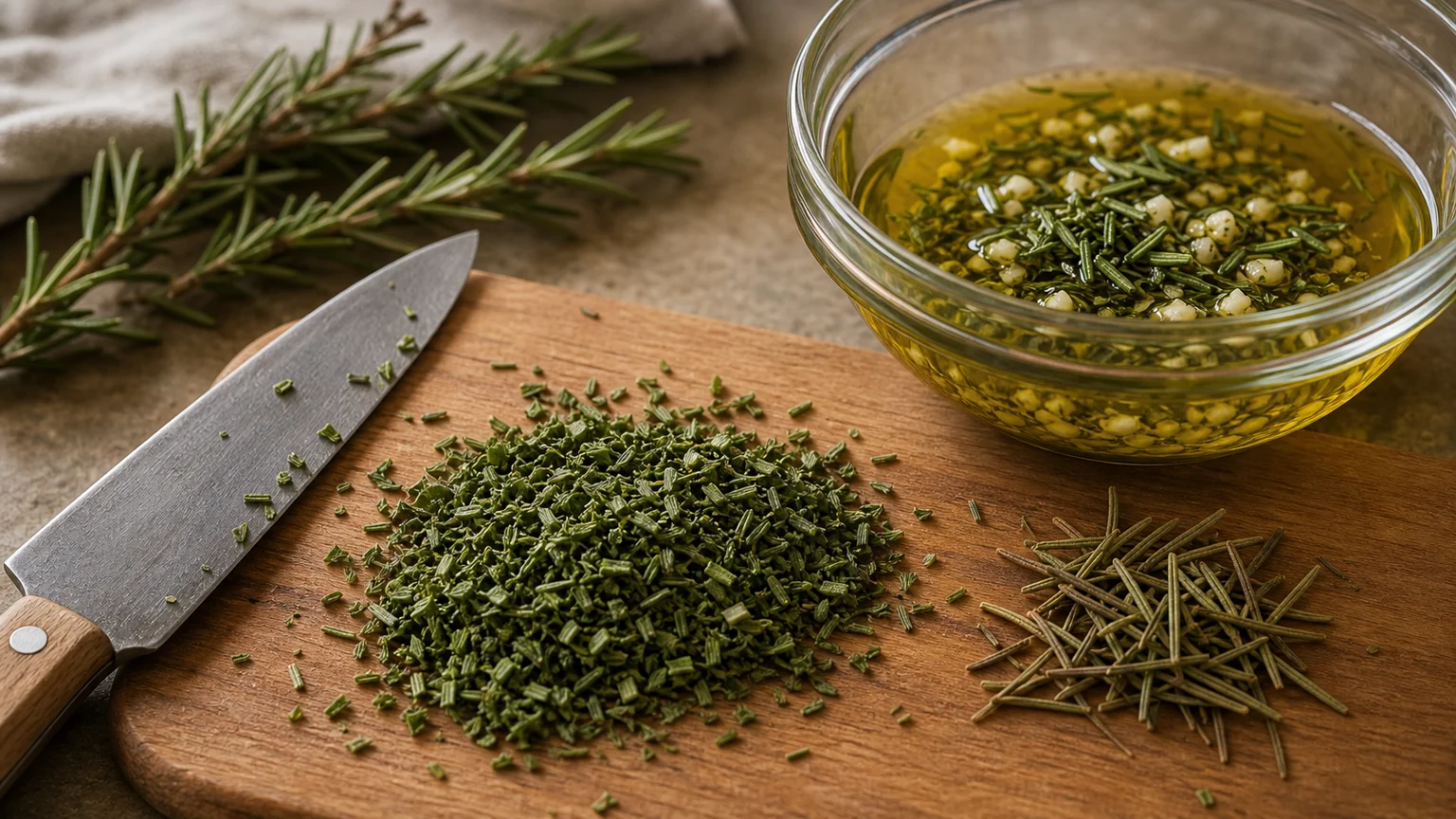
- Chop fine: Best when rosemary stays in the dish, as in focaccia or a rub.
- Whole sprigs: Drop them into a braise or roast, then lift them out.
- Infuse and strain: Warm sprigs in oil or butter, then discard the woody stems.
Whole sprigs work well in a roast or a slow braise.
The needles soften and flavor the fat, and you fish the bare stems out before serving.
Infusing is the gentlest option. Warm a sprig in olive oil or butter, then pull it out, and you get the aroma with no needles at all.
The woody stems themselves are useful.
Strip a sprig and use the bare branch as a skewer for lamb or vegetables when you cook over fire.
How much rosemary keeps pine from turning to perfume?
Measure rosemary after deciding whether it will stay in the food. A whole sprig is a removable infusion, but a spoonful of chopped needles remains in every bite, so the two forms do not produce equal intensity.
For a cooked dish, replace 1 tablespoon of finely chopped fresh rosemary with 1/2 teaspoon of crushed dried rosemary. That conservative six-to-one conversion is lower than the common three-to-one herb rule because dried rosemary loses some green aroma while keeping a forceful resinous edge.
The conversion is not a universal dose. A small sprig here means one tender tip about 3 to 4 inches long, not a thick branch cut from the base of a plant.
| Dish | Fresh rosemary | Dried rosemary | Control point |
|---|---|---|---|
| 1 1/2 to 2 lb roast potatoes | 1 to 2 tsp finely chopped, or 1 small sprig | 1/4 tsp crushed | Coat with oil before roasting |
| Whole chicken or lamb roast | 1 to 2 small sprigs | 1/4 to 1/2 tsp in a rub | Remove stems before carving |
| Stew or beans, 4 servings | 1 small sprig | 1/4 tsp crushed | Taste halfway and pull the sprig when clear |
| Focaccia or pan bread | 2 tsp very finely chopped | 1/4 tsp ground | Distribute through oil so no hard needles collect |
Surface area matters as much as serving count. Potatoes spread across a sheet pan expose more food to the herb than the same weight packed into a stew, while ground dried rosemary extracts faster than intact fresh leaves.
Once the dish smells perfumey, stop extraction before trying to rebalance it. Pull out whole sprigs, strain loose needles from a broth or sauce when practical, and move roasted food away from any dark, scorched herb.
- Soup or stew: Add more unsalted broth, beans, potatoes, or the same unseasoned base.
- Pan sauce: Divide it and extend one half with the original liquid and fat.
- Roast: Brush off loose needles and serve the meat or vegetables with a plain starch.
- Bread or rub: Rosemary mixed into dough or crust cannot be removed, so pair it with unseasoned food or remake it when the flavor is medicinal.
Lemon, sugar, and extra salt can shift the balance, but they do not remove rosemary oil. Dilution works because it lowers the amount of rosemary in each bite.
Can rosemary handle high heat and long cooking?
Unlike delicate herbs, rosemary thrives with heat and time. Its sturdy needles hold their flavor through roasting, grilling, and long braises.
This means you can add it early.
Toss rosemary with potatoes before they roast, or tuck sprigs around a chicken at the start of cooking.
It is the opposite of a finishing herb. Where you add basil or mint at the end, rosemary wants the early, hot part of the cook to mellow its sharp edge.
That reverses the usual timing for delicate leaves. Rosemary rewards a long stay in the heat rather than a last-second scatter.
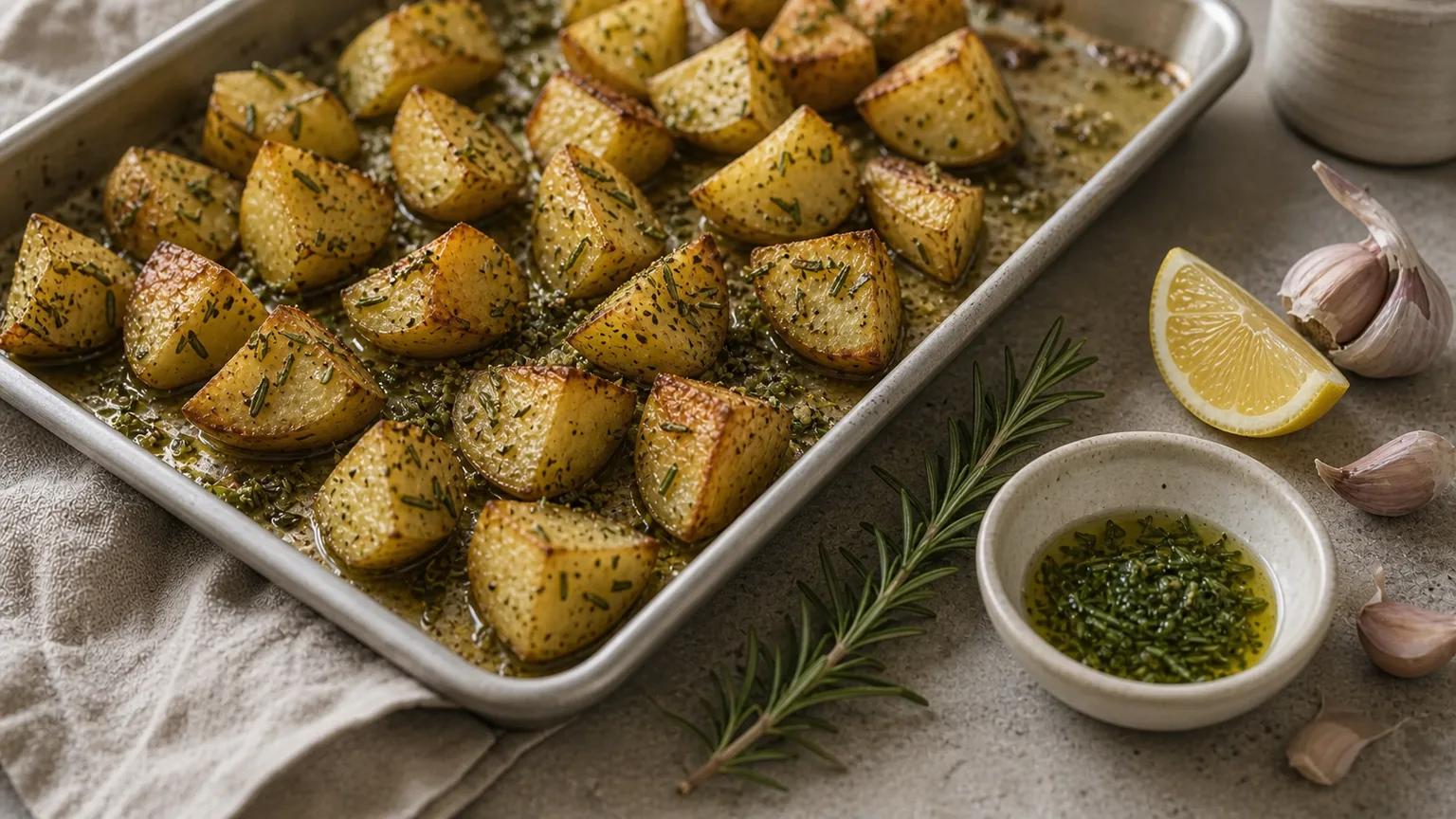
- Roast potatoes: Toss with oil and rosemary before they go in the oven.
- Roast chicken and lamb: Tuck whole sprigs in at the start of cooking.
- Slow braise: Add a sprig early and let the heat round off the pine note.
Fat is rosemary's best friend.
Olive oil, butter, and roasting juices carry its oil-soluble aroma through a dish far better than water alone.
That is why rosemary and oil are a classic pair. Warming a sprig in fat wakes up the flavor before the other ingredients go in.
Where rosemary belongs: potatoes, lamb, and bread
Rosemary suits hearty, fatty, and starchy food that can stand up to its strength. It shines against lamb, potatoes, bread, and beans.
| Dish | Form and amount | Why it works |
|---|---|---|
| Roast potatoes | Chopped or sprigs, sparing | Pine note cuts the starch |
| Roast lamb | Whole sprigs or a rub | Stands up to rich, fatty meat |
| Focaccia and bread | Chopped fine, on top | Aroma survives the hot oven |
| White beans and stew | One sprig, removed later | Savory depth without bitterness |
| Infused oil or butter | Sprigs, then strained | Clean flavor, no needles |
The common thread is weight.
Rosemary needs a dish with enough fat, starch, or char to stand up to it, or the herb simply takes over.
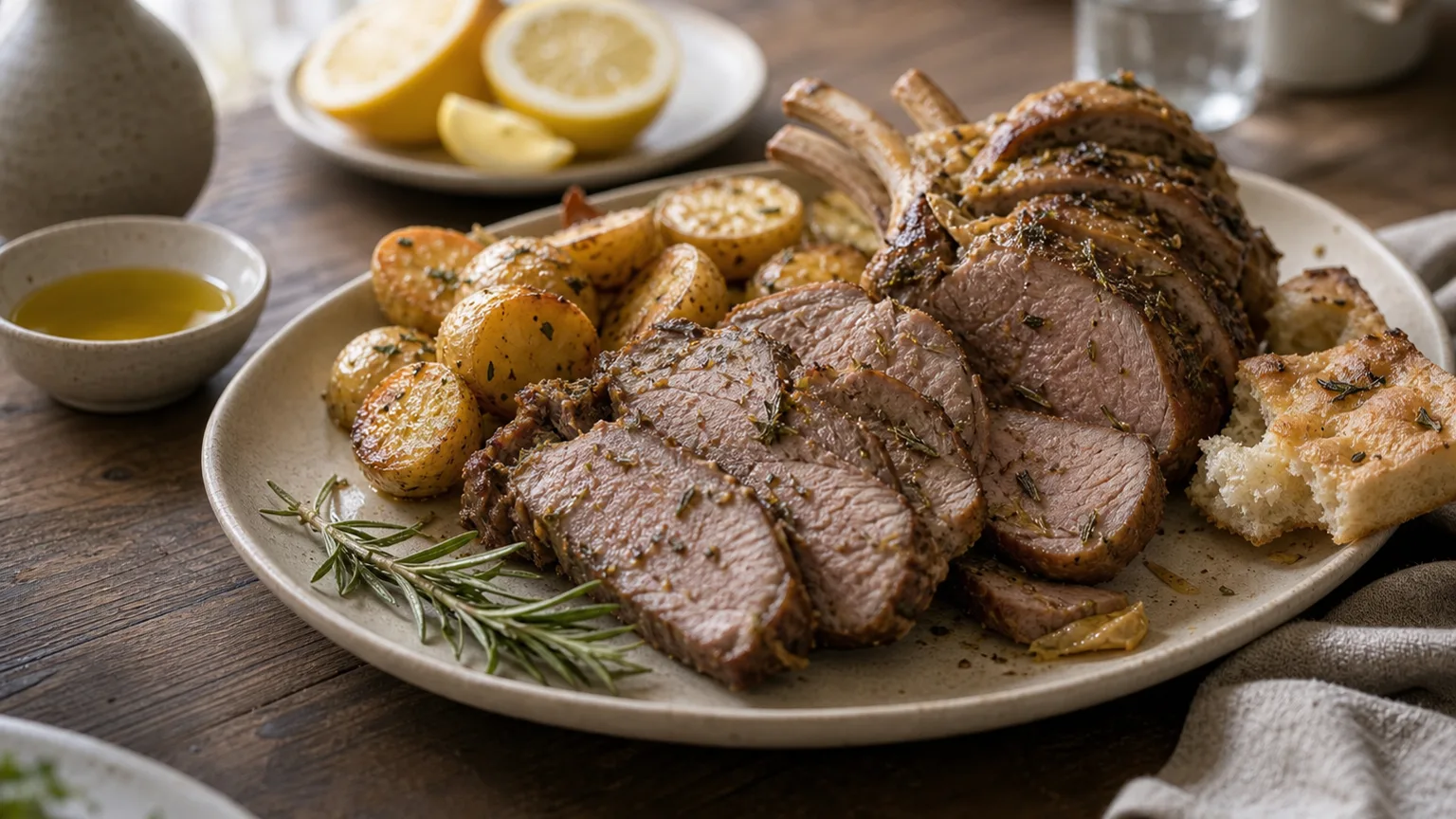
- Lamb and game: Rosemary is the classic partner for rich red meat.
- Potatoes and root veg: The pine note lifts starchy, oily roasts.
- Bread and beans: A little rosemary runs through focaccia and Tuscan bean dishes.
It pairs naturally with garlic, lemon, olive oil, and black pepper. A rub of rosemary, garlic, and oil is most of what a leg of lamb needs.
Those pairings follow simple flavor pairing logic. Rosemary needs fat to carry it, acid to lift it, and something hearty to anchor it.
Keep it away from delicate food.
Rosemary bulldozes mild fish, eggs, and light sauces, so save it for dishes with real backbone.
Fresh sprigs and dried needles
Rosemary is one of the herbs that dries reasonably well, because its oils are sturdy. Dried rosemary keeps much of the piney character fresh sprigs have.
The catch is texture.
Dried needles are even harder and spikier than fresh ones, so they need grinding or long cooking in liquid to soften.
Crush or grind dried rosemary before adding it. Whole dried needles scattered on a finished dish stay sharp and stab at the tongue.
For a rub or a bread, grind dried rosemary to a powder.
For a stew, a whole dried sprig can go in early and be fished out later.
- Fresh, chopped fine: Best for focaccia, rubs, and anything raw-finished.
- Fresh, whole sprigs: Ideal for roasts and braises you can pull them from.
- Dried, ground: Use in rubs and breads, never as a whole-needle garnish.
- Dried, whole sprig: Add early to a long stew, then remove before serving.
Fresh rosemary is easy to keep alive, and even easy to grow, so many cooks default to fresh. The fresh to dried conversion holds up better here than with soft herbs.
Buy and store rosemary
Good fresh rosemary has firm, deep green needles on woody stems. Skip bunches that look dull, yellowed, or dried out at the tips.
Fresh rosemary is one of the longest-lasting herbs.
Wrapped loosely in the fridge, a sprig can hold for two weeks or more.
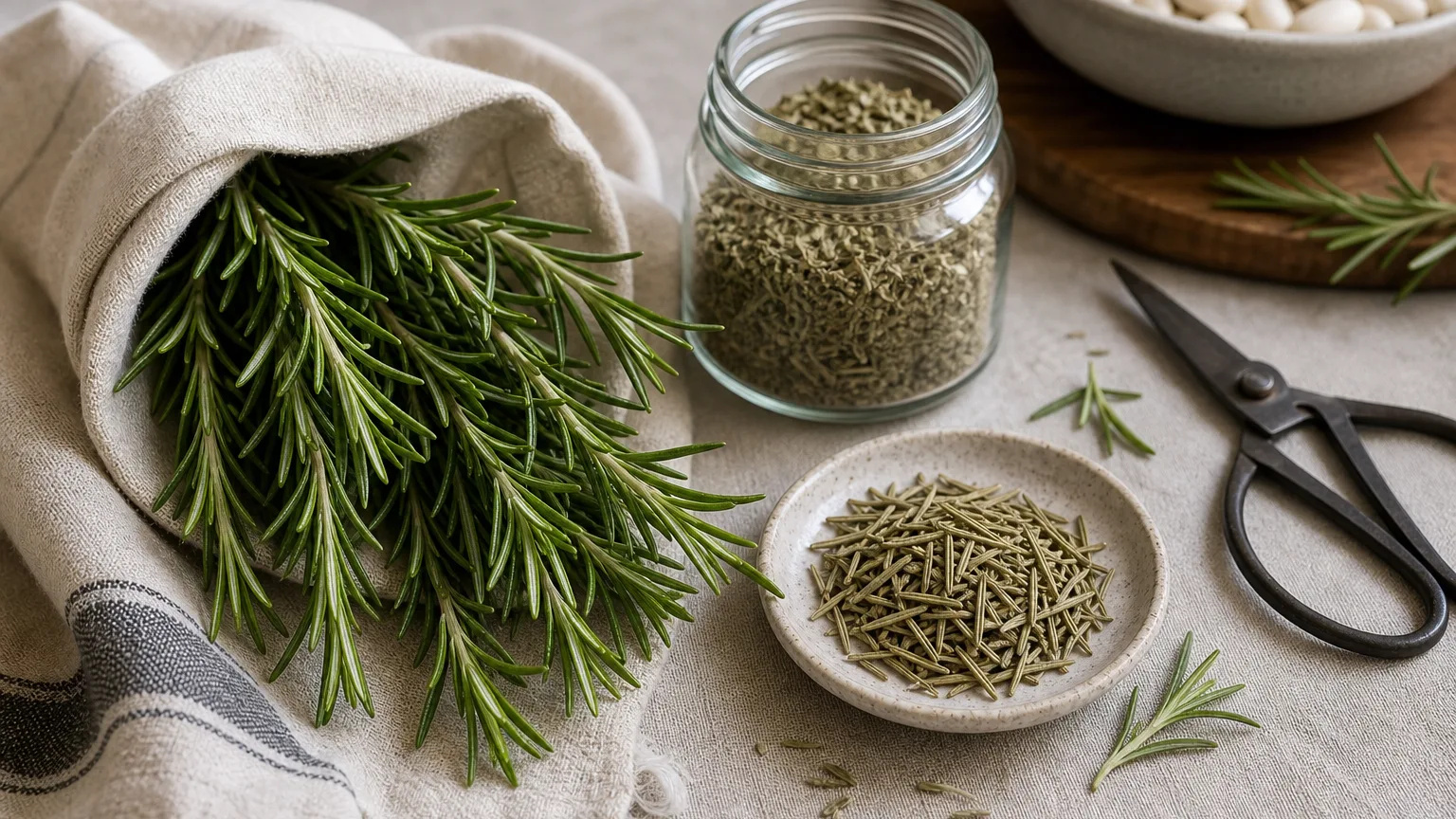
- Fresh storage: Wrap sprigs loosely and keep them in the fridge for a couple of weeks.
- Freezing: Freeze whole sprigs or chop into oil for later roasts.
- Drying: Hang sprigs to dry, then strip and store the needles in a jar.
Because it grows easily, a small pot of rosemary gives you fresh sprigs year round. It is one of the simplest herbs to keep on a windowsill.
Store dried rosemary away from heat and light. Like other dried herbs and spices, it fades over a year and is worth replacing when the pine smell goes faint.
Substitutes for rosemary's pine
A rosemary substitute needs to match its piney strength and its ability to survive cooking.
Soft herbs simply cannot fill that role.
Thyme is the most reliable stand-in for savory roasts and braises. It is gentler, so you can use a bit more without the medicinal edge rosemary can bring.
| Rosemary role | Substitute | Amount to use |
|---|---|---|
| Roast lamb or chicken | Thyme, or thyme plus sage | Use a little more; less sharp |
| Potatoes and root veg | Thyme or oregano | Milder pine, add to taste |
| Focaccia and bread | Thyme or a herb blend | Loses some of the pine punch |
| Bean stew | A bay leaf plus thyme | Savory depth, no resin |
A pinch of sage alongside thyme gets closer to rosemary's weight for lamb and poultry.
Sage brings the savory heft that thyme alone lacks.
When a dish is built on rosemary, such as rosemary focaccia, a swap only approximates it. The substitute-by-job approach keeps the dish balanced when rosemary runs out.