
Thyme: The Backbone Herb You Can Barely Overdo
It melts quietly into stock, beans, and roasts, but stems and stale jars are what trip most cooks.
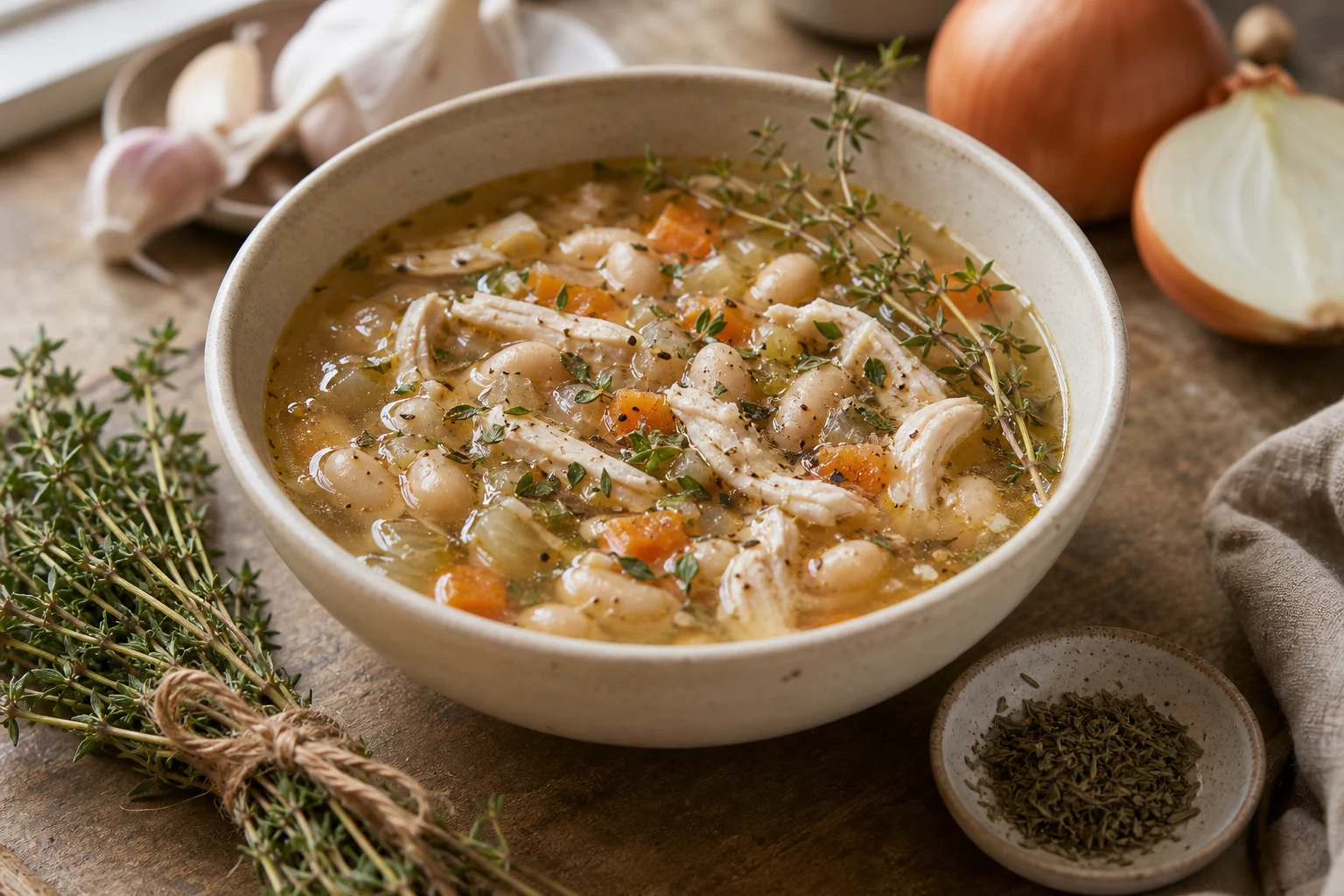
Thyme is a forgiving background herb that blends into soups, beans, stock, and roasts without taking over. Add it early so the tiny leaves soften into the dish, and decide how to handle the woody stems. The main risks are twiggy stems in the food and a stale jar with no aroma left.
Thyme is nearly impossible to overdo
Thyme is the safest herb in the rack. Its leaves are tiny and its aroma is gentle, so it blends into a dish instead of shouting over it.
Work out the dried thyme for your recipe
Where rosemary or sage can take over a pot in seconds, thyme settles into the background.
You can add a generous amount and still taste the food underneath.
That makes thyme a workhorse for savory cooking. It threads through stock, beans, braises, and roasts as a quiet, meaty depth.
The flavor is earthy and faintly floral, with a slight pine note. It rarely announces itself, which is exactly why cooks reach for it so often.
Because it is so forgiving, thyme is a good first herb to cook with.
The two things worth learning are its stems and its shelf life.
It is also one of the most useful herbs to keep on hand. Few savory dishes are hurt by a little thyme, from a Sunday roast to a Tuesday pot of lentils.
The stems are the real decision
The one thing thyme demands is a plan for its stems.
The thin stalks turn woody and unpleasant if they end up in the food.
You have three clean options.
Strip the leaves off, drop in whole sprigs to remove later, or bundle thyme into a herb parcel.
To strip leaves, hold the top of a sprig and run your fingers down against the growth. The little leaves pull off in one pass.
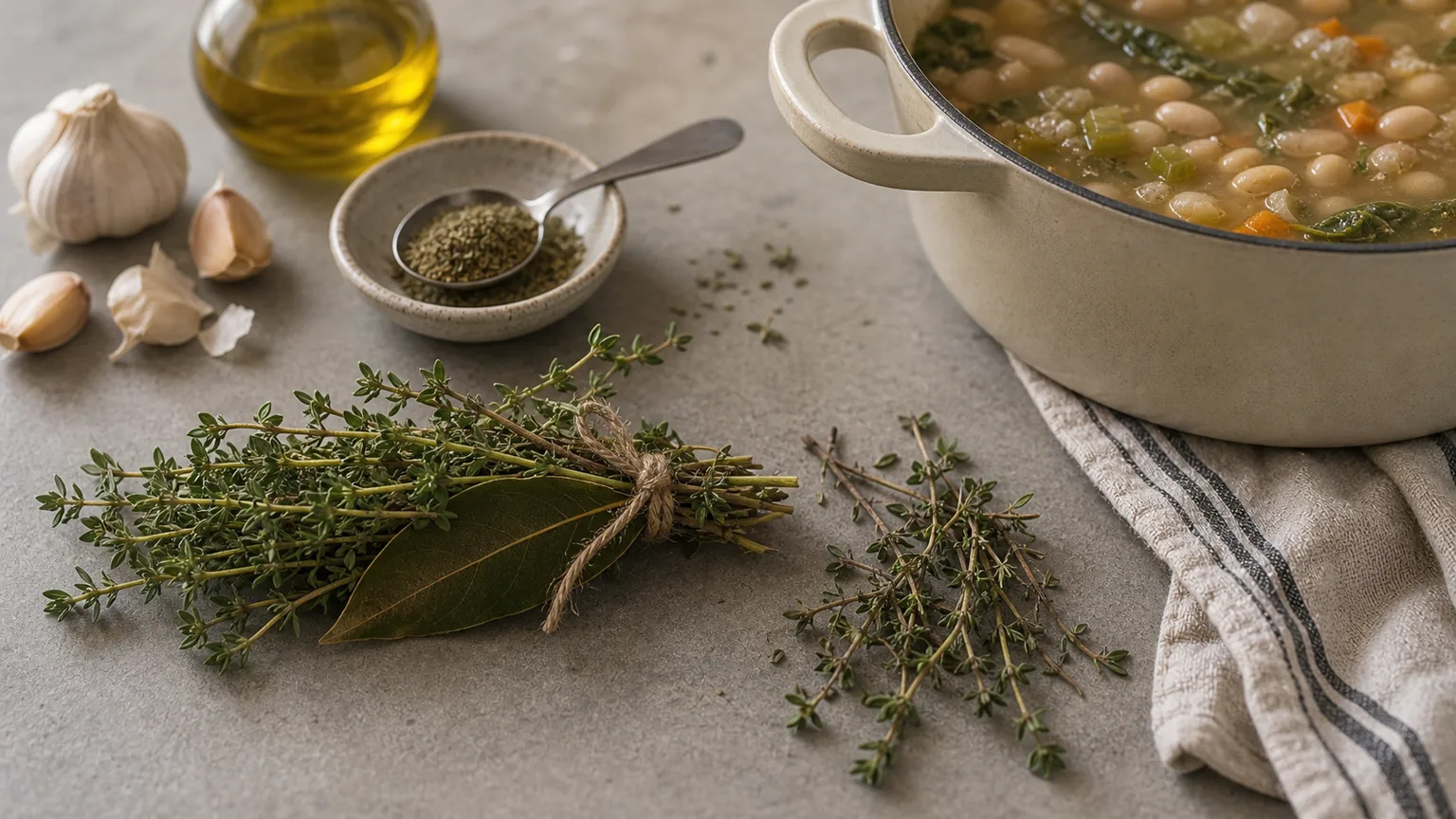
- Strip the leaves: Best when the thyme should stay in the finished dish.
- Whole sprigs: Drop them in, then fish out the bare stems before serving.
- Bouquet garni: Tie thyme with bay and parsley for long simmers, then lift the bundle out.
For a long braise or stock, whole sprigs are easiest. The leaves fall off into the liquid and the bare stems are simple to pull out.
For a quick saute or a dressing, strip the leaves first.
Nobody wants to chew a woody stem in a pan of mushrooms.
How many sprigs is a matter of feel, not a strict count. Four or five sprigs suit a pot of stew, and a couple are enough for a pan of vegetables.
Very tender young thyme is the exception.
If the whole sprig is soft, you can chop it stem and all without a problem.
What does one sprig of thyme mean in a recipe?
A thyme sprig is one small branching stem with its leaves attached, not one bare stalk and not the whole cluster from a supermarket pack. Recipes use sprigs when the herb will infuse the food and the stem can come back out.
Choose a branch about the length of your index finger with several leafy side shoots as an average sprig.
Sprig size is never exact because a compact garden branch can carry several times the leaves of a thin shop stem. If the recipe gives a spoon measure of leaves, strip the thyme and fill the spoon instead of trying to convert that measure back into a number of stems.
| Recipe wording | What to use | What happens to the stem |
|---|---|---|
| 1 sprig | One small branching stem with several leafy shoots | Remove the bare stem after cooking |
| 1 teaspoon fresh thyme leaves | Strip and measure the leaves | No mature stem enters the dish |
| Thyme bundle or bouquet garni | Tie 4 to 6 sprigs so they lift out together | Remove the whole bundle |
| Dried thyme for 1 average sprig | Start with 1/4 teaspoon | Dried leaves stay in the food |
A recipe that counts sprigs usually values easy removal more than laboratory precision. One extra small sprig rarely changes a stock, braise, or pot of beans, while a forgotten woody stem changes the texture of the finished spoonful.
Keep track of loose sprigs as they go into the pan. For a large pot, tie them with kitchen twine or tuck them into cheesecloth so you can remove every stem at once instead of searching through hot broth.
A quick dish needs a different approach because there is no long infusion or easy removal step. Strip the leaves for mushrooms, eggs, dressings, and pan sauces, then chop only the tender green tip if it bends without snapping.
When fresh thyme is unavailable, start with one-quarter teaspoon of dried thyme for each average sprig. Dried leaf remains in the dish and releases faster than a whole fresh branch, so taste after it has cooked before adding a second measure.
Do not crumble a dry woody sprig directly into food. The brittle stem breaks into sharp pieces that are much harder to find than one intact fresh stalk.
When should you add thyme, early or late?
Thyme rewards patience.
Its flavor spreads slowly, so it works best added early where it has time in heat and liquid.
Drop thyme in with the onions and garlic at the base of a soup or stew. By the time the dish is done, it has dissolved into the background.
This is the opposite of a finishing herb, and the reverse of how you time delicate leaves near the end.
Thyme wants the long, slow part of the cook.
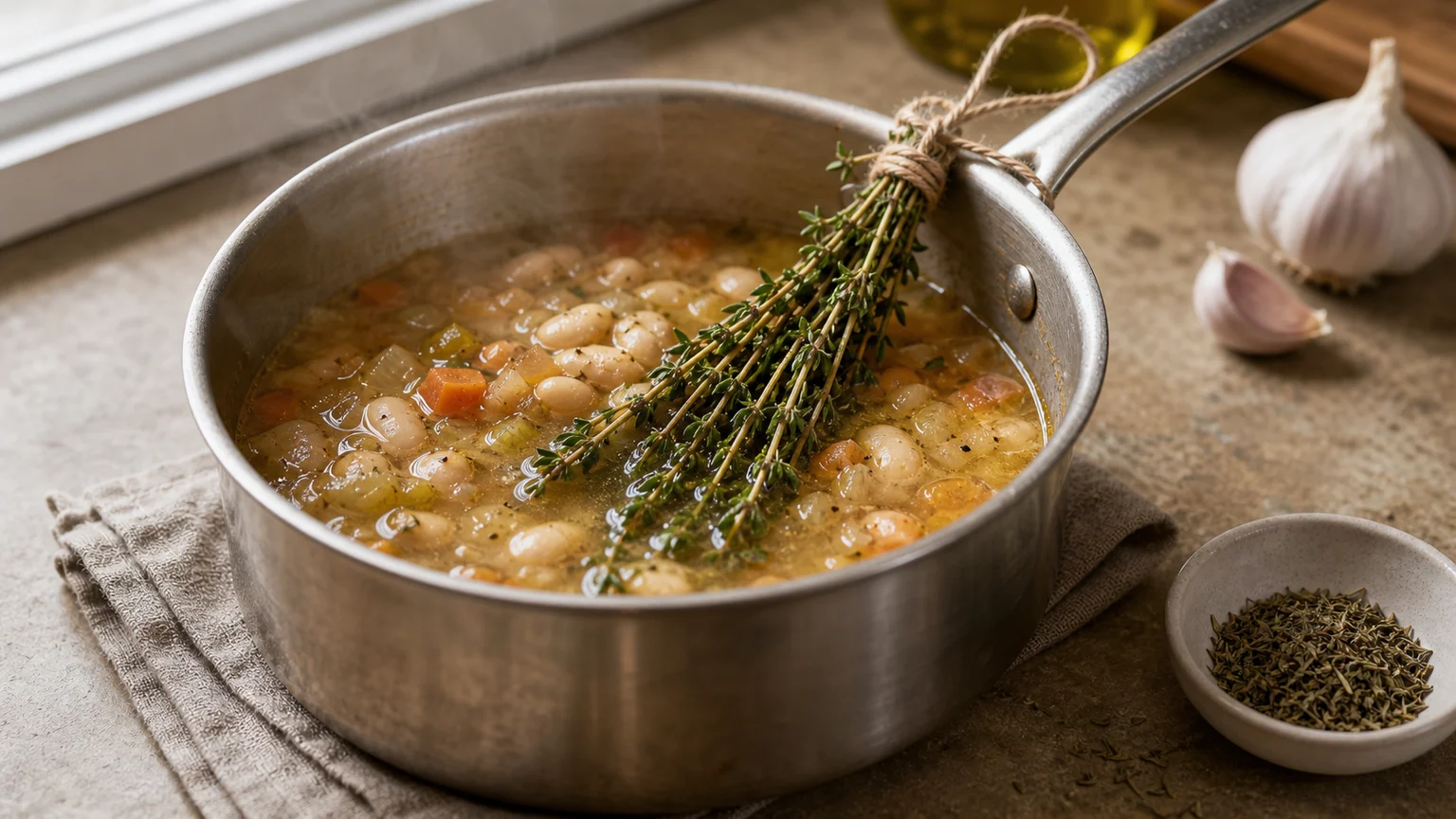
- Soups and stews: Add thyme at the start so it spreads through the broth.
- Roast chicken: Tuck sprigs into the cavity and under the skin before roasting.
- Pan sauce: Add thyme when you deglaze so the hot liquid pulls out the aroma.
Dried thyme is one of the better dried herbs, because its flavor holds up. Give it moisture and time, and it melts in almost like fresh.
A rough guide is one teaspoon of dried thyme for one tablespoon of fresh. The fresh to dried conversion is reliable here because thyme dries so cleanly.
Where thyme works quietly: stock, beans, mushrooms, and roasts
Thyme belongs to slow, savory, brothy food.
It is the herb you barely notice until you leave it out and the dish tastes flat.
| Dish | Form and timing | What it does |
|---|---|---|
| Chicken or vegetable stock | Whole sprigs, whole cook | Deep savory base |
| Braised beans or lentils | Bouquet garni, early | Meaty background without meat |
| Mushroom pan sauce | Stripped leaves, mid-cook | Earthy lift that matches fungi |
| Roast chicken | Sprigs in cavity and skin | Aroma through the whole bird |
| Fish and chowder | Stripped leaves, gentle | Savory note that does not fight the fish |
Notice the through-line. In every case thyme supports the main ingredient rather than competing with it, which is why it turns up in so many recipes.
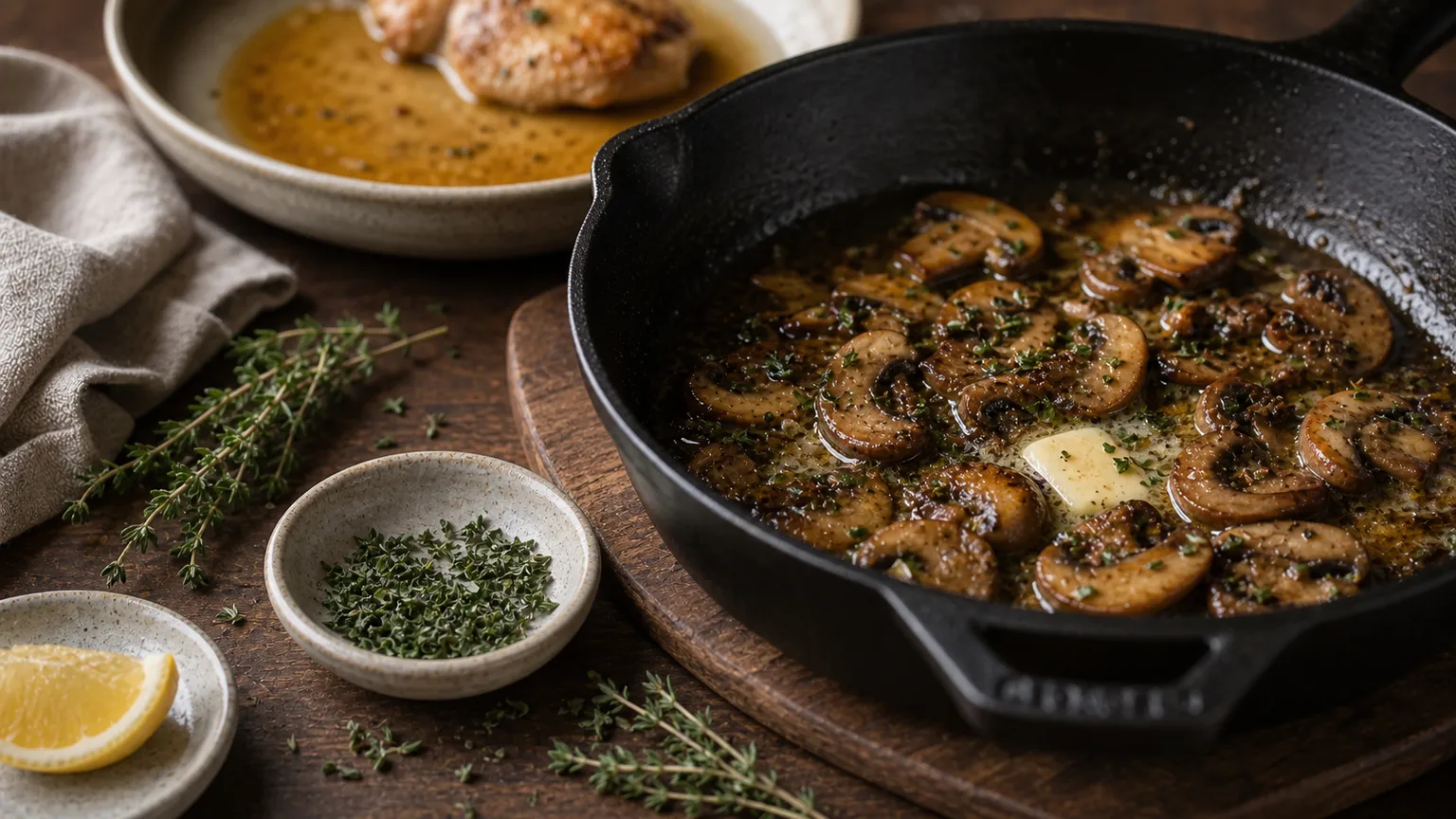
- Mushrooms: Thyme and fungi share an earthy note that reinforces each other.
- Beans and lentils: It supplies a savory backbone that reads almost like meat.
- Eggs and cheese: A few stripped leaves lift a quiche or gratin without dominating.
It also plays well with others.
Thyme sits under bay, garlic, and wine without fighting them, which is why it anchors so many French braises.
Thyme is a natural partner to black pepper and lemon. That trio seasons roast chicken and fish with almost nothing else needed.
The pairing follows simple flavor pairing logic. Thyme supplies the savory floor, pepper adds bite, and lemon lifts the whole plate.
Lemon thyme and picking the right type
Common thyme is the default, but a few types are worth knowing.
The most useful is lemon thyme, which adds a citrus note to the usual savory base.
Use lemon thyme with fish, chicken, and vegetables where a little brightness helps. It does the work of thyme plus a squeeze of lemon in one herb.
French thyme and English thyme are close cousins with slightly different leaf shapes. For cooking, you can treat them the same way.
- Common thyme: The savory all-rounder for stock, beans, and roasts.
- Lemon thyme: Thyme plus citrus, best with fish, chicken, and vegetables.
- French and English thyme: Culinary standards you can use interchangeably.
- Ornamental thymes: Pretty in a garden, but often too medicinal for the pot.
Avoid ornamental or heavily scented varieties for food.
If a thyme smells strongly of camphor or medicine, keep it in the garden, not the pot.
Buy thyme fresh, test the jar, and strip for storage
Good dried thyme still smells green and savory through the jar. If it smells like dust or nothing at all, it has already given up.
Fresh thyme should have firm, deep green leaves on flexible stems. Skip bunches with blackened leaves or dry, brittle stalks.
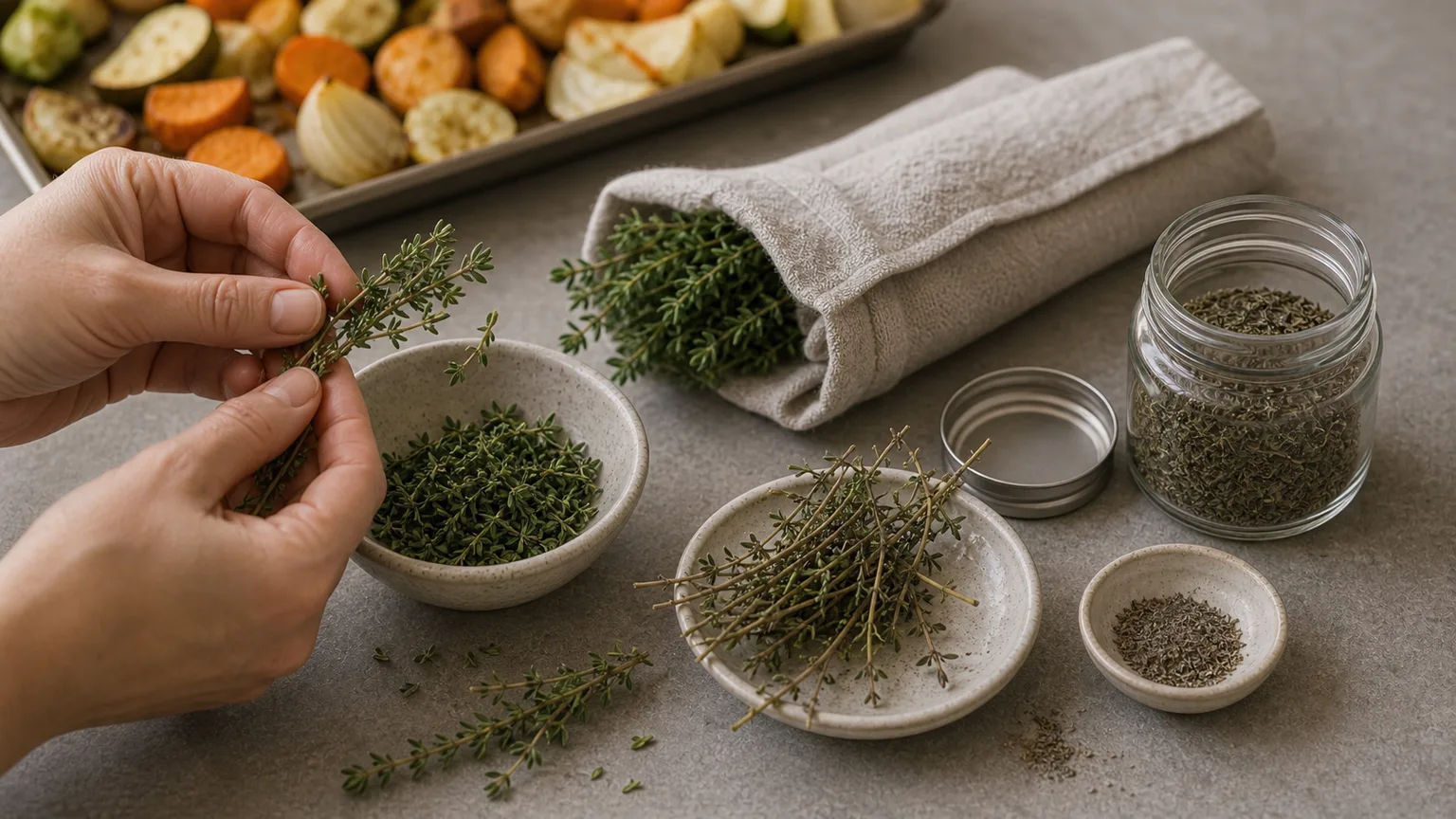
- Fresh storage: Wrap the bunch loosely and keep it in the fridge for a week or two.
- Freezing: Strip leaves and freeze them in oil for later braises and stocks.
- Dried jars: Keep them away from the stove and replace once the smell fades.
Fresh thyme lasts longer than most soft herbs.
Wrapped loosely in the fridge, it holds for a week or two rather than a couple of days, longer than the usual herb storage window.
To keep a glut, strip the leaves and freeze them in oil. Frozen thyme is fine for cooked dishes, if not for a fresh garnish.
Store dried thyme away from heat and light. Like other spices that lose their punch, it fades within a year and is worth replacing on smell, not on the date.
Substitutes that keep thyme's restraint
A thyme substitute needs to match its restraint.
The risk is reaching for something louder that then takes over the dish.
Marjoram and oregano are the closest matches for savory food. Use a little less, because both are stronger and more assertive than thyme.
| Where you used thyme | Stand-in | Watch for |
|---|---|---|
| Stock and braise | Marjoram or a bay leaf | Use less; taste as it cooks |
| Roast chicken | Rosemary, lightly | Go easy; rosemary is much stronger |
| Fish and light dishes | A little oregano | Add slowly to avoid bitterness |
| Mixed herb blend | Herbes de Provence | Already thyme-forward |
For the finish, treat the swap by job rather than by name. The substitute-by-job approach keeps the dish balanced when thyme runs out.
If you only have rosemary, use a fraction of the amount.
It is far more assertive, so a heavy hand turns a gentle dish sharp and piney.
When you only need the savory background, a bay leaf plus a pinch of another dried herb often covers it. Thyme is easy to approximate because it never dominated in the first place.