
What Is Za'atar, and Why Does It Taste Bright?
Choose the jar, carrier, and timing that keep za'atar tart, herbal, nutty, and crisp.
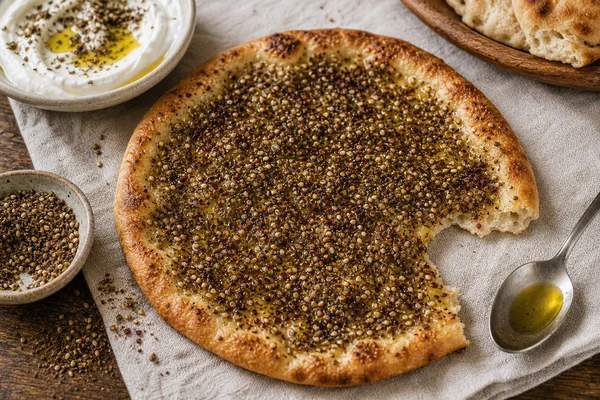
Za'atar can mean an aromatic herb or the Middle Eastern seasoning built from dried herbs, sumac, sesame, and salt. In the blend, each part has a separate job: herbs supply the savory aroma, sumac brings tartness, sesame adds nutty crunch, and salt sharpens the whole mixture. The most useful way to cook with it is to choose a jar for the food, give the particles something to cling to, and protect them from harsh heat.
What is za'atar, the herb or the blend?
Although the word za'atar can refer to a regional herb, a family of related herbs, or the prepared seasoning, a recipe asking for a spoonful almost always means the blend, while a discussion of plants, harvesting, or agriculture may mean the herb.
No single ingredient list governs the blend, although most jars combine a dried thyme-like herb with tart sumac, toasted sesame, and salt in proportions that change by maker and region.
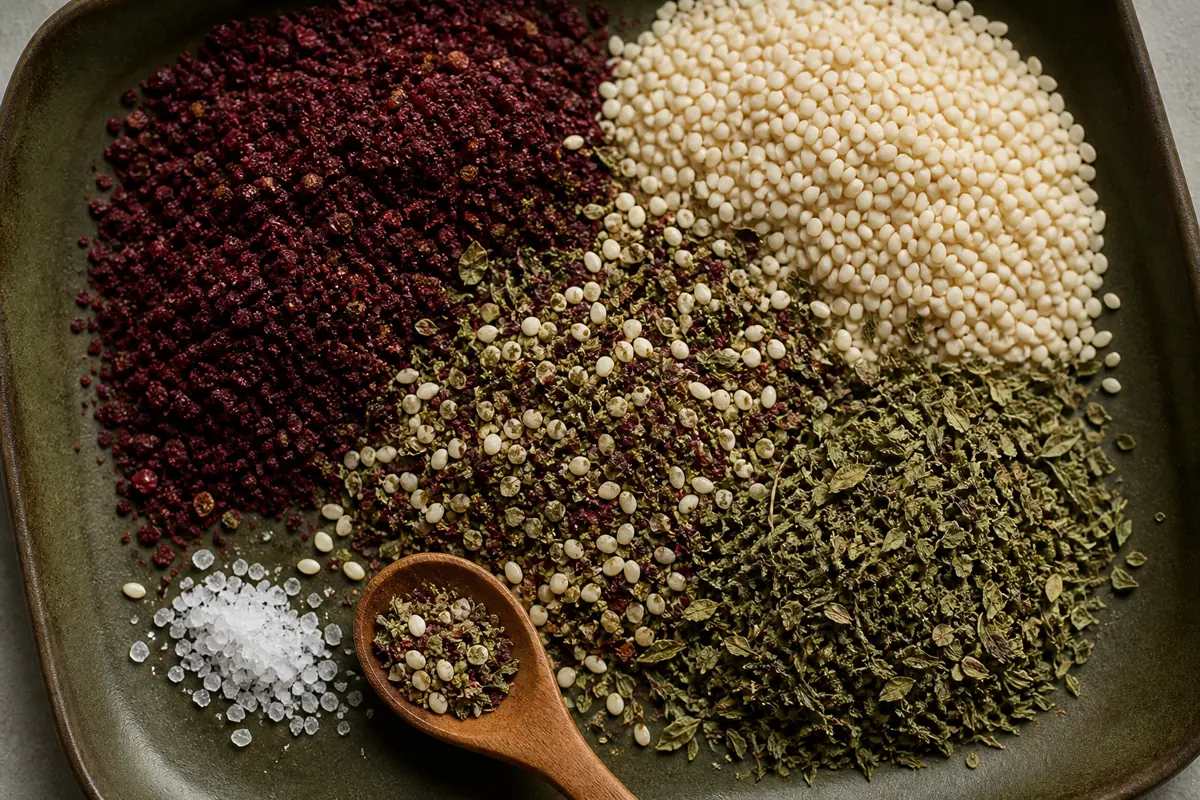
- Herbs: Supply the savory, resinous aroma.
- Sumac: Brings fruit-like tartness without liquid.
- Sesame: Adds nutty flavor, oil, and crunch.
- Salt: Sharpens the blend and changes how much the cook should add.
Those four jobs explain why za'atar behaves differently from a finely ground masala: it is a coarse surface seasoning whose texture should survive, so long simmering usually erases the qualities you bought it for.
Texture changes how flavor arrives. A fine powder spreads evenly through sauce, while za'atar leaves small pockets of tart sumac, toasted seed, and dried herb on the tongue as a deliberate part of the experience.
A finish or a gentle crust is the useful model for za'atar, with bread as the important exception because olive oil anchors the blend and the dough bakes before the seeds and herbs scorch.
Why does one za'atar jar taste different from another?
Za'atar is a family of blends rather than one protected formula, so two good jars can disagree: one may be red and sharply tart, another green and herb-led, and another pale with a strong toasted-sesame character.
That variation becomes useful when you taste before seasoning because a sumac-forward jar wakes up labneh, tomato, cucumber, and eggs, while a sesame-heavy jar gives bread or roasted vegetables more body.
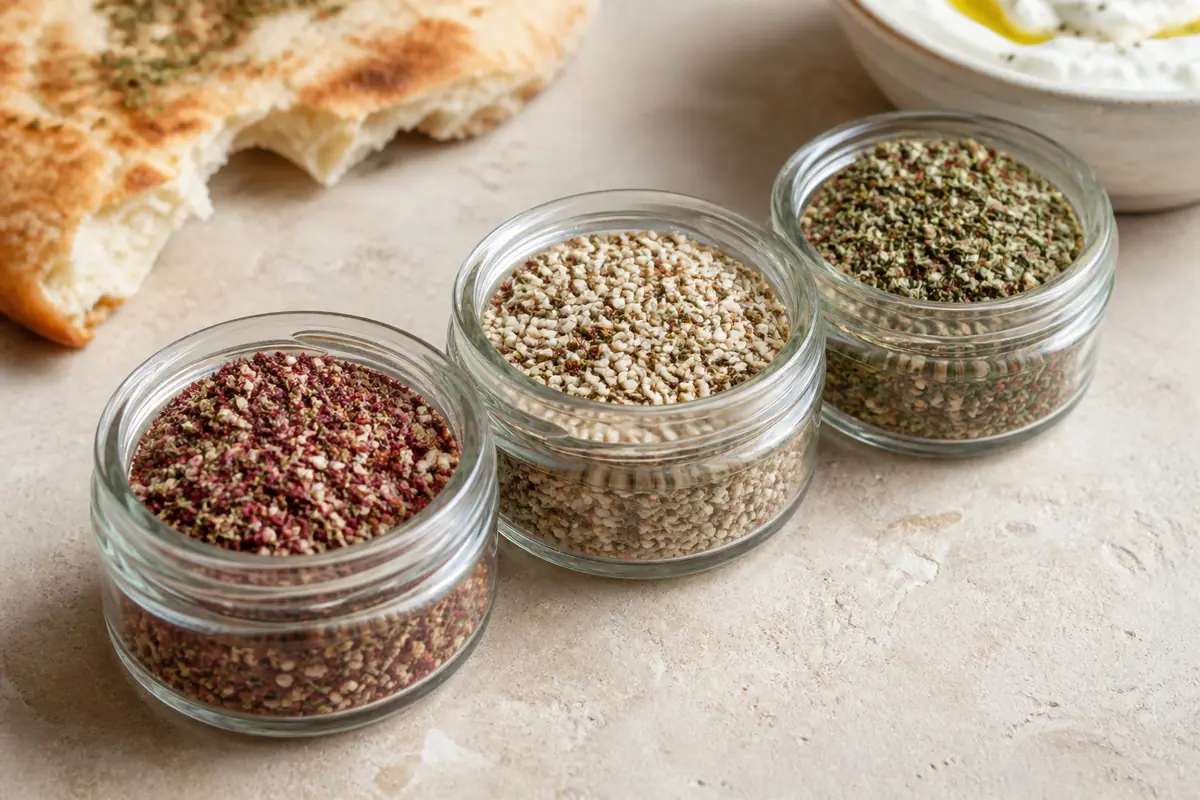
- Red and tart: Pair with creamy or juicy foods.
- Pale and nutty: Use where sesame crunch can stay visible.
- Green and herbal: Match with eggs, potatoes, chicken, or cheese.
- Very salty: Reduce other salty ingredients before adding more blend.
Ingredient order provides a second clue. Sesame listed first predicts a nuttier, milder spoonful, sumac near the front usually means more acidity, and an unnamed “herb” makes the aromatic profile harder to judge.
Regional labels can suggest a style, but makers choose different herb sources, sesame roasts, grind sizes, salt levels, and sometimes extra ingredients, so the open jar remains the final authority.
Taste a pinch on plain yogurt or olive oil before using a new brand. That neutral test reveals whether the dish needs less salt, more acid, or a larger spoonful than the last jar required.
A fresh pinch should release a clear herbal aroma before salt reaches the palate.
This test is especially helpful for breakfast plates, where labneh, olives, tomato, and cheese already bring different amounts of salt and acid and can make an untested spoonful seem much stronger than it tasted straight from the package.
When should za'atar go on food?
Add za'atar late when direct heat is fierce. Dried leaf fragments can turn bitter and sesame can darken before meat, fish, or vegetables finish browning, so early application on a dry hot surface carries the greatest risk.
Gentle baking is different. On flatbread, a thin paste of za'atar and olive oil spreads heat, keeps loose particles in place, and gives the sesame enough time to toast without sitting bare against a pan.
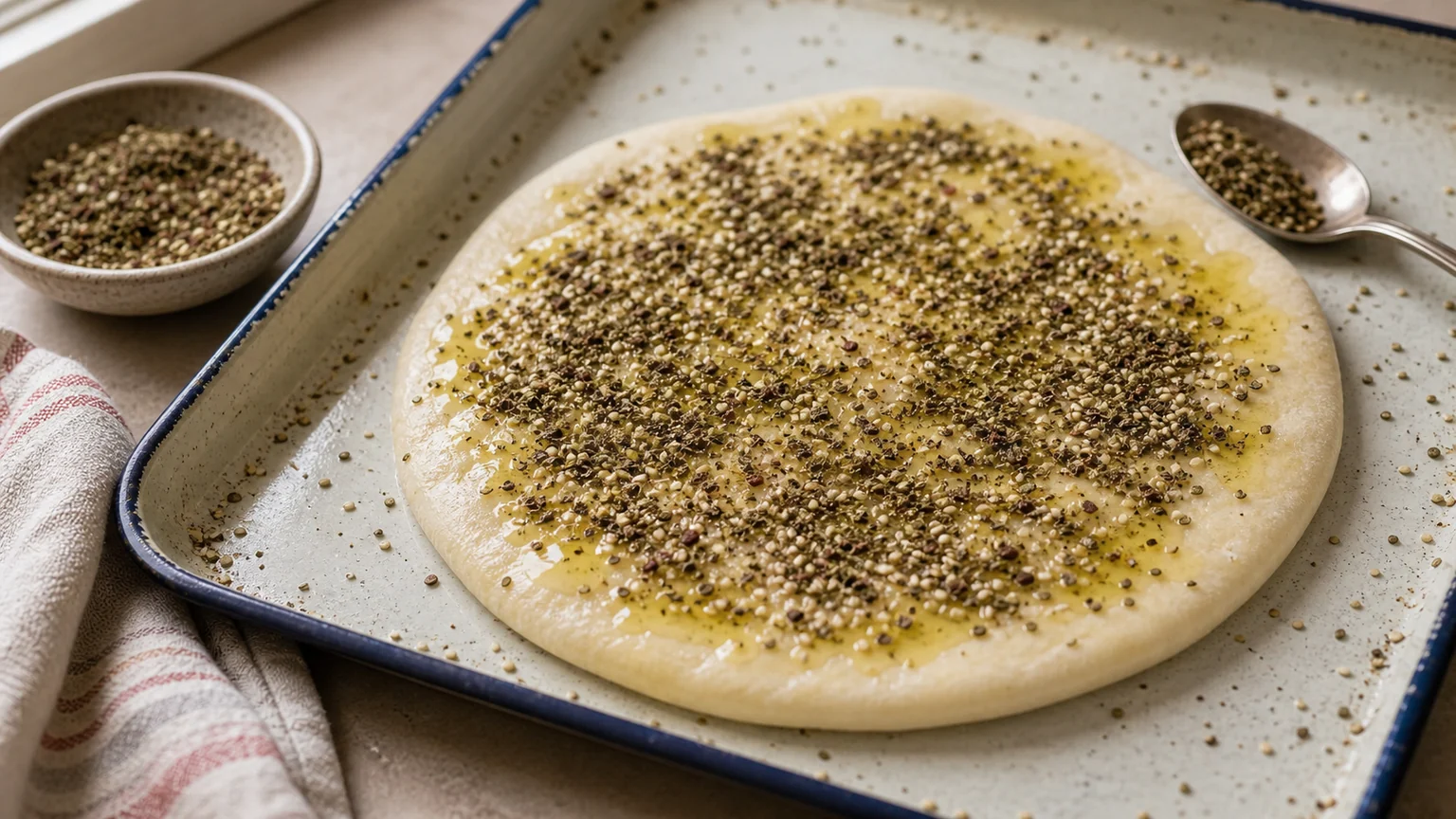
- Flatbread: Apply an oil paste before a moderate bake.
- Roasted vegetables: Toss with za'atar after roasting or in the final few minutes.
- Grilled meat: Finish after searing, or protect the blend in yogurt or oil.
- Eggs and dips: Sprinkle at the table when no more heat is needed.
The visual cue matters more than a rigid minute count: stop heating when the sesame smells nutty and the herbs smell warm, before dark seeds, smoke, or a dry bitter scent signals too much direct heat.
The same logic sits behind the broader guide to when to add spices. Whole seeds can endure a different heat window, whereas za'atar combines leaves, seed, acid, and salt in one spoonful.
Use heat to warm the blend, not to make it dark. Add a fresh pinch after cooking when the food needs more aroma.
For a marinade, separate adhesion from exposure: yogurt or oil helps the blend cling, but any particles sitting above the coating can still scorch, so wipe away thick ridges before grilling and reserve clean za'atar for a final layer.
Which foods and carriers make za'atar work?
Za'atar needs a surface that can hold coarse particles. Oil is the classic carrier because it catches the herbs and sesame, spreads aroma across the food, and rounds the dry edge of sumac.
Thick yogurt or labneh offers a different balance: dairy softens salt and tartness while the blend stays visible on top. Stirring every speck into a wet dip makes the sesame less distinct, so leave part of the seasoning at the surface.
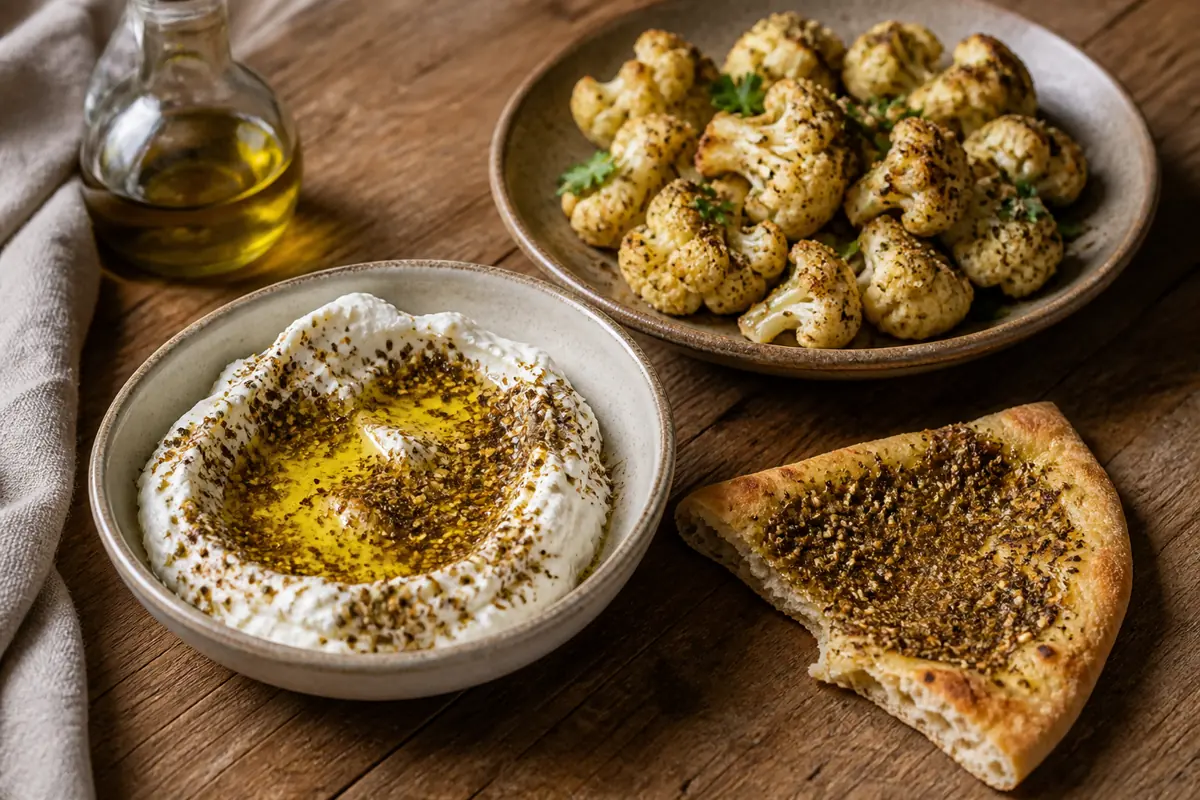
- Olive oil: Best for bread, tomatoes, beans, and finishing plates.
- Yogurt: Best for dips, chicken marinades, and tart blends.
- Hot roasting oil: Best for coating vegetables after they leave the oven.
- Butter or pan juices: Best for eggs, potatoes, rice, and warm grains.
Dry food plus a dry sprinkle often tastes dusty even from a fresh jar, so add oil, melted butter, yogurt, or cooking juice and season while the surface is tacky.
Make a shallow well, pour in olive oil, and scatter za'atar over the top so each spoonful gets creaminess, oil, and crunch.
Roast until browned, then toss with za'atar while the tray oil is hot enough to release aroma but no longer scorching.
Season fried eggs or a soft scramble after the pan leaves the burner because the residual fat carries the blend without frying it hard.
Use yogurt for an early coating, or add za'atar with olive oil after grilling when the browned surface can hold it.
Dress first, then add za'atar so the oil catches the herbs and the sumac remains clear against the produce.
The blend also works on beans, rice, popcorn, fries, and fish when the same rule is followed. Choose the fat or moisture already natural to the dish rather than adding za'atar to a bare surface and hoping it sticks.
Acid is a partner rather than a carrier. Add oil to hold sesame on bread or potatoes, then use lemon only if the finished plate still needs a sharper edge.
How much za'atar should you use?
Salt and sumac levels vary too much for one volume to fit every jar. For eggs, yogurt, salad, or vegetables, start with about 1 teaspoon per person, taste with the finished food, and add more only if the blend remains quiet.
Bread can carry more because the seasoning spreads over a larger, oily surface. Mix the blend with just enough olive oil to form a loose, brushable paste, since a pool of oil makes the topping heavy and a crumbly mixture sheds before baking.
| Food | Practical starting point | Adjustment cue |
|---|---|---|
| Labneh or yogurt | 1 teaspoon per serving | Add more only after tasting the salt together |
| Eggs or vegetables | 1 teaspoon per serving | Increase if aroma disappears against fat or browning |
| Flatbread | 1 tablespoon for a small round | Add oil until the paste spreads without running |
| Chicken or fish | 2 teaspoons per 450 g / 1 lb | Use more as a finish rather than a thick pre-cook crust |
Measure less around feta, olives, brined cheese, or heavily salted meat because a salty jar can overshoot before its herbs and sumac become prominent.
If the food tastes salty but still lacks brightness, add separate sumac or lemon. If it tastes tart but thin, olive oil or sesame can round it without increasing the salt.
Adjusting the missing taste is more reliable than memorizing one master ratio for every jar and plate.
Serving style changes the calculation too. A shared bowl with za'atar at the table lets each eater build intensity gradually, while a pre-seasoned tray needs a cautious first pass because every extra spoonful also adds salt to the entire dish.
For a large batch, seasoning one spoonful or one piece first catches a salty jar before it affects the whole tray and reveals whether the blend needs more oil instead of a larger dose.
Taste after mixing, then wait a moment for the oil and food moisture to soften the herbs before deciding that the first measured amount was too timid.
What can replace za'atar?
A useful substitute must rebuild the blend's jobs, not merely swap in oregano. Start with dried thyme or oregano for the herbal base, toasted sesame for texture, sumac for tartness, and a restrained amount of salt.
| Ingredient | Starting amount | Job |
|---|---|---|
| Dried thyme or oregano | 2 tablespoons | Savory herbal base |
| Toasted sesame seeds | 1 tablespoon | Nutty body and crunch |
| Sumac | 1 tablespoon | Dry tartness and red color |
| Fine salt | 1/2 teaspoon | Seasoning, reduced for salty food |
Mix, taste, and change one part at a time: more sumac suits yogurt and tomato, more sesame suits bread, and extra herb helps on chicken, potatoes, and eggs.
Lemon zest can stand in when sumac is unavailable, but add it close to serving because its fresh citrus oils behave differently from dried sumac. Do not use lemon juice inside a storage jar, since moisture shortens its life and softens the sesame.
The broader spice substitution guide helps when one component is also missing. A warm blend such as baharat cannot replace za'atar cleanly because its sweet spices and pepper solve a different cooking problem.
The best substitute should still deliver herbs, tartness, sesame, and salt in the same bite. If the plate supplies one job already, such as lemon on fish, build only the parts that remain missing.
Fresh thyme is not a direct jar ingredient because its water and tender leaves change the mixture, but it can join a same-day garnish with sesame, sumac, and salt when the cook wants a greener, softer result rather than a shelf-stable copy.
Keep any homemade dry mixture whole enough to preserve sesame texture. Pulverizing everything into one fine powder makes it easier to distribute, but it removes the little contrasts in tartness, herb, and crunch that distinguish za'atar from an ordinary seasoning salt.
How do you buy and store za'atar?
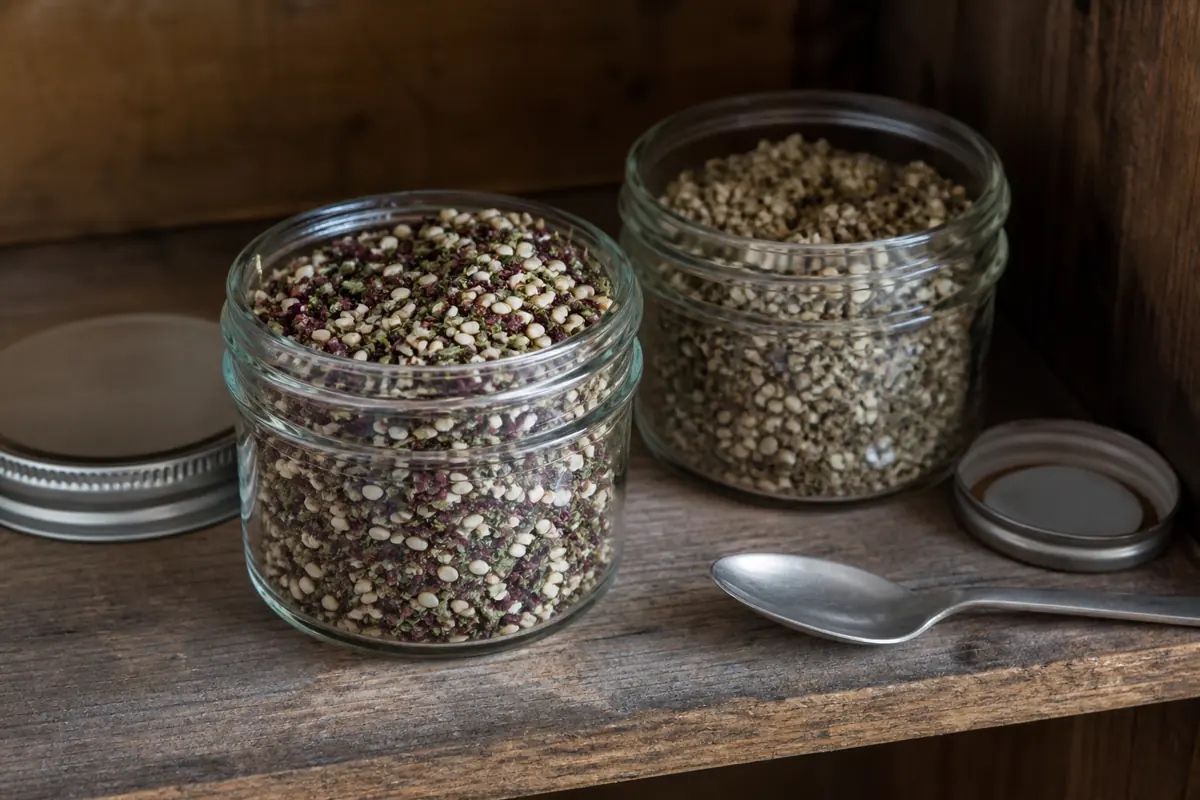
Buy a small amount from a shop with steady turnover. A clear ingredient list, visible sesame, distinct herb pieces, and an aroma that reads tart, nutty, and green are more useful signs than an expensive package.
Avoid jars that smell mostly of salt or faint dry hay. Excess powder at the bottom can indicate rough handling or age, although a little settling is normal and can be corrected by shaking the closed jar.
- Herbs: Lose their vivid, savory aroma.
- Sumac: Becomes muted and less tart.
- Sesame: Develops a stale-oil or paint-like smell when rancid.
- Whole blend: Tastes dusty or salty before it tastes complex.
At home, keep the jar airtight, cool, dark, and away from steam. The spice storage guide explains why a cupboard away from the stove protects aroma better than a rack above it.
- Buy enough for the next few months, not the largest bag on the shelf.
- Use a dry spoon so moisture does not enter the jar.
- Smell the blend before seasoning mild food such as eggs, yogurt, or bread.
- Discard it when sesame smells rancid because lemon and salt cannot repair spoiled oil.
- Date the jar when opened if several blends share the same cupboard.
Color alone cannot prove freshness because recipes begin with different proportions. Aroma is the better test, followed by a small taste in oil or yogurt.
Shake the closed jar before that test because fine sumac and salt settle below the lighter herbs and sesame, making the first spoonful a poor sample of the blend.
After shaking, the spoonful should show seeds and leaf fragments rather than one uniform powder, which signals that the blend can still provide texture.
If you are unsure whether a dull jar is merely weak or actually spoiled, use the specific gone-bad test. Weak herbs waste flavor, while rancid sesame requires discarding the blend.