
What Is Baharat Spice Blend, and How Should You Use It?
Control the pepper, cumin, and sweet spice balance before choosing a substitute.
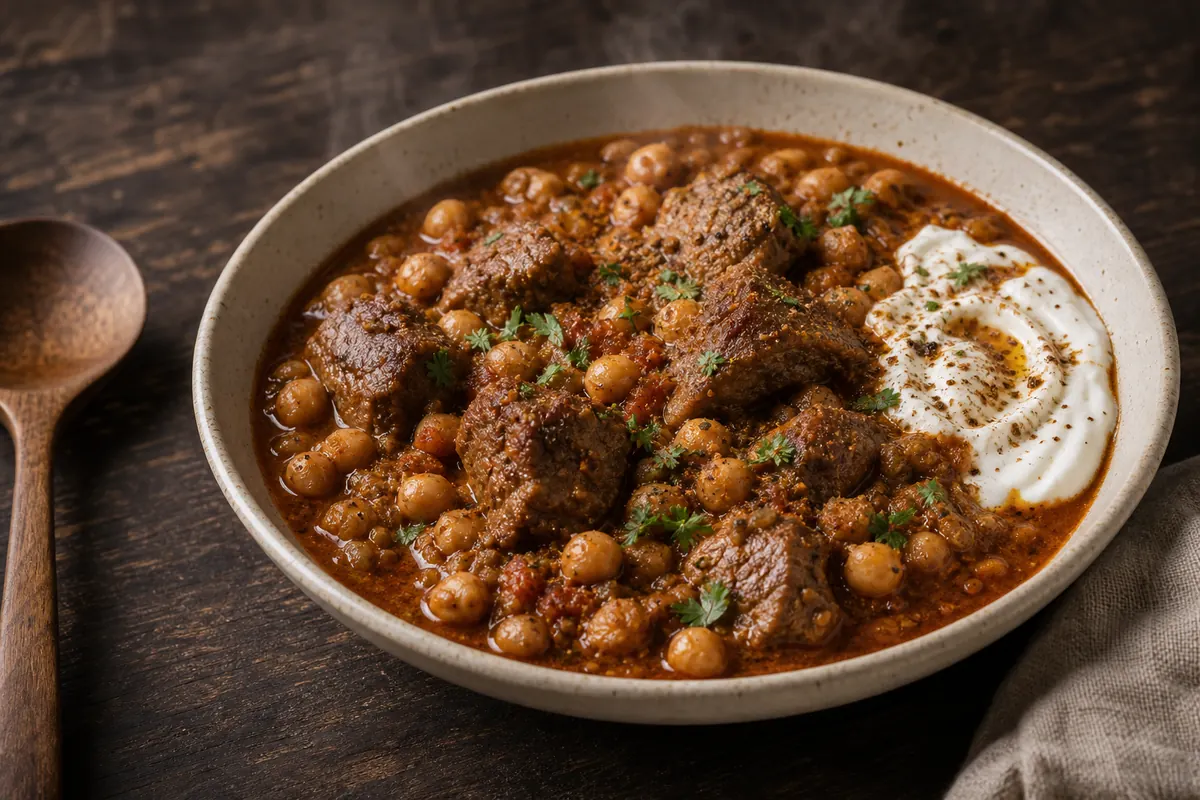
Baharat is a Middle Eastern spice blend built around black pepper, cumin, coriander, cinnamon, cloves, cardamom, and paprika in many versions. Use it where meat, rice, beans, and stews need warm savory depth, not dessert-like sweetness. If you need a substitute, build one from cumin, coriander, black pepper, paprika, and a small pinch of cinnamon or allspice.
What does baharat taste like?
Baharat seasons food with peppery warmth first. The cinnamon, clove, and cardamom should round meat and rice, not make them taste sweet.
That difference matters because garam masala and baking blends can share spices with baharat. The ratio decides the cuisine signal.
The blend leans on black pepper bite. Sweet paprika color helps keep the warmth savory.
| Ingredient group | What it does | When it goes wrong |
|---|---|---|
| Black pepper and paprika | Lead with warmth and color | Stale pepper tastes dusty |
| Cumin and coriander | Hold the blend in savory food | Too much cumin makes rice heavy |
| Cinnamon and clove | Add rounded sweetness | Too much makes meat taste like dessert |
| Cardamom or nutmeg | Adds lift in small amounts | Too much turns perfume-like |
A good jar smells warm, peppery, and slightly sweet. If cinnamon is the first thing you smell, use less in savory food.
Why does baharat change from one region to another?
Baharat is not one fixed formula. A Gulf-leaning blend may taste warmer and sweeter than a pepper-forward Levantine jar.
That variation changes where the blend belongs. Sweet-leaning baharat fits rice and lamb, while pepper-heavy baharat handles grilled meat better.
| Jar smells most like | Likely cooking fit | Adjustment |
|---|---|---|
| Black pepper and paprika | Kofta, kebabs, chicken, roasted vegetables | Add coriander if it tastes too sharp |
| Allspice and cinnamon | Rice, lamb, stuffed vegetables | Use less on lean chicken |
| Cardamom and clove | Braises, rich stews, holiday stuffing | Keep the dose small |
| Cumin and coriander | Beans, lentils, tomato sauces | Add pepper if it tastes flat |
This is why a recipe amount cannot be trusted blindly. Smell the jar, then decide which spice family leads.
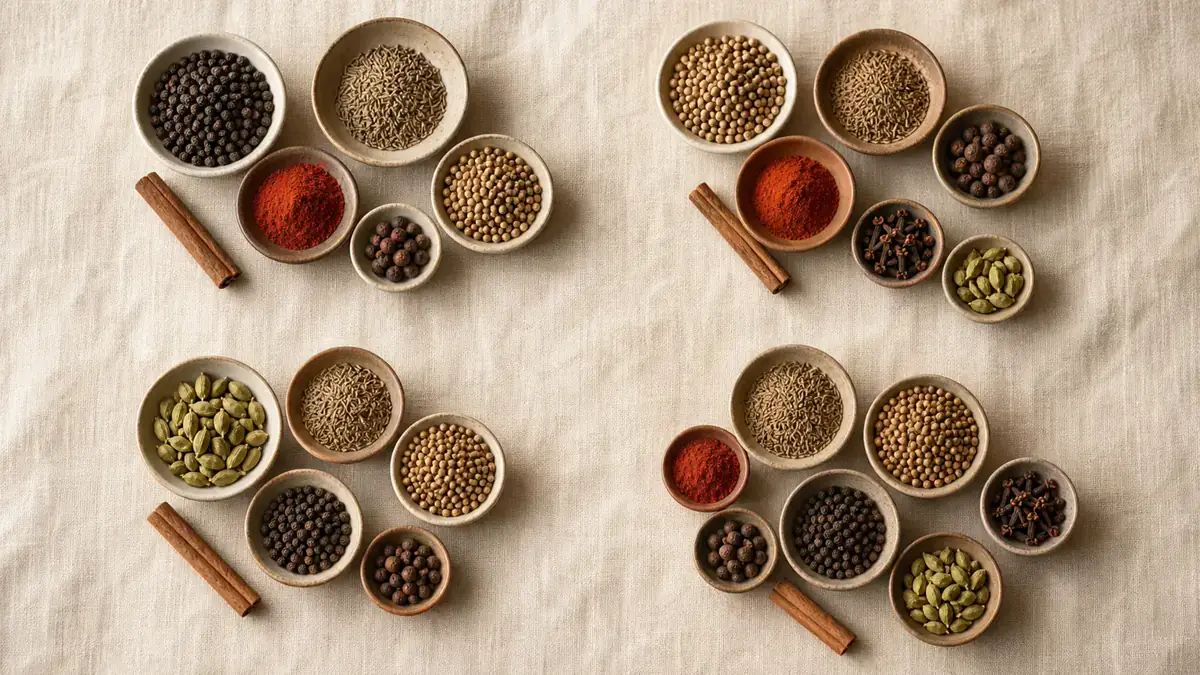
- Pepper first: Use for grilled meat, kebabs, and roasted vegetables.
- Allspice first: Use for rice stuffing, lamb, and braised food.
- Cardamom first: Keep the dose small and choose richer dishes.
- Cumin first: Use for beans, lentils, and tomato sauces.
Regional names help only when they change what you cook. Choose the jar by the aroma that reaches you first.
How much baharat should you use?
The right amount depends on the food under the spice. Baharat behaves differently on fatty lamb, lean chicken, rice, and chickpeas.
Fatty food can carry pepper and clove. Lean food exposes them, so the same spoonful tastes louder.
| Food base | Starting dose | Why it works |
|---|---|---|
| Ground lamb or beef | 1 teaspoon per pound | Fat carries pepper and sweet spice |
| Chicken thighs | 3/4 teaspoon per pound | Skin and juices soften the blend |
| Chicken breast | 1/2 teaspoon per pound | Lean meat exposes clove faster |
| Cooked chickpeas | 1/2 teaspoon per 2 cups | Starch needs oil before powder |
| Rice pilaf | 1/2 teaspoon per 4 servings | Steam spreads aroma without heavy bite |
Salt changes the reading too. Under-salted food makes baharat seem dusty because spice cannot replace seasoning.
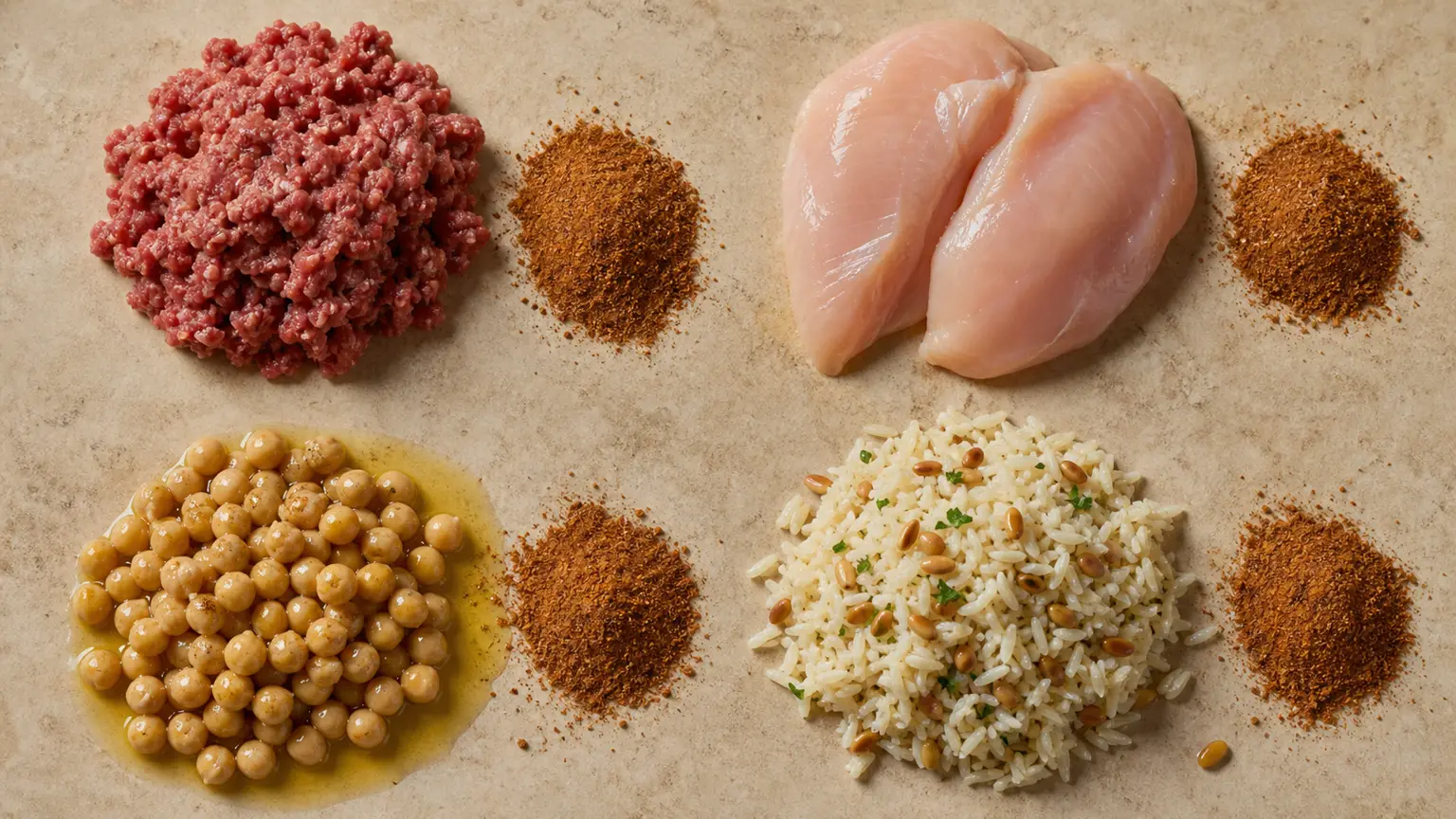
- Lamb or beef: Fat carries pepper and clove without harshness.
- Chicken breast: Lean meat exposes sweet spice quickly.
- Chickpeas: Oil must coat the starch before powder lands.
- Rice: Steam spreads aroma, so the dose can stay smaller.
For dry rubs, mix baharat with salt first. For stews, add salt separately so the blend does not become the only adjustment.
Baharat needs a dose matched to the food because pepper levels vary sharply between jars.
What foods are best with baharat?
Baharat needs fat, steam, or roasting juices to spread through food. Sprinkle it dry at the end only when the blend is fresh.
For lamb, beef, chicken, eggplant, chickpeas, or rice, start with 1 teaspoon baharat per pound of protein or 4 servings.
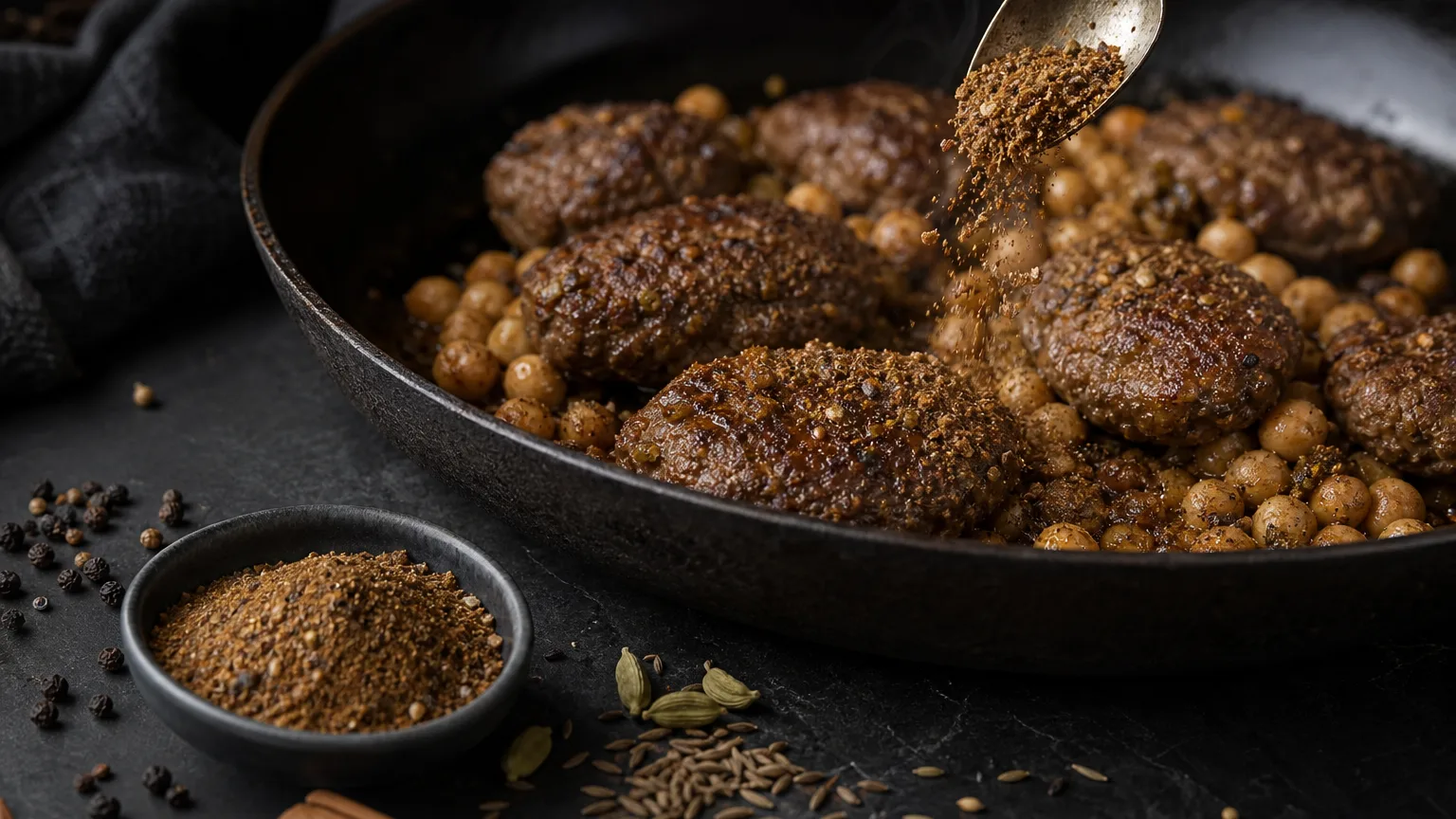
- Fat first: Oil or meat juices spread pepper, cumin, and clove before they taste sharp.
- Lean foods: Chicken breast and plain vegetables need oil before the blend lands.
- Starchy foods: Chickpeas and rice hold baharat better after fat coats the surface.
- Late use: Finish only with a tiny pinch when the jar still smells vivid.
Blooming baharat briefly follows the same logic as blooming spices in oil. Pepper and cumin open faster in fat than in water.
For marinades, mix baharat with oil before yogurt or lemon. Fat grabs the pepper and cumin before acid thins the paste.
- Kofta or meatballs: Mix 1 teaspoon per pound with salt, onion, garlic, and parsley.
- Rice pilaf: Bloom 1/2 teaspoon in butter or oil before adding rice and stock.
- Roasted vegetables: Toss with oil first, then add baharat so powder does not scorch.
- Tomato stew: Add early with onion so the sweet spices soften into the sauce.
If the dish tastes flat after cooking, add salt or acid before adding more baharat. Extra blend can make the base murky.
If the food tastes sweet but not savory, add black pepper or cumin. If it tastes hot but hollow, add coriander or paprika.
When should you add baharat?
Baharat timing changes with moisture. A dry rub, a rice pot, and a stew do not release the blend the same way.
For a dry rub, mix baharat with salt and oil before it touches meat. Dry powder falls off and scorches faster.
| Dish | When to add | What to watch |
|---|---|---|
| Dry rub | Before cooking with salt and oil | Keep sweet spices from burning |
| Rice pilaf | Before stock enters | Let fat coat the grains first |
| Tomato stew | After onion softens | Cook powder before long simmer |
| Bean dish | With oil and garlic | Give starch enough fat to carry aroma |
| Finishing pinch | Only at the end | Use fresh blend and tiny amounts |
This is where many baharat dishes fail. The same blend tastes clean in oil and dusty when shaken onto finished food.
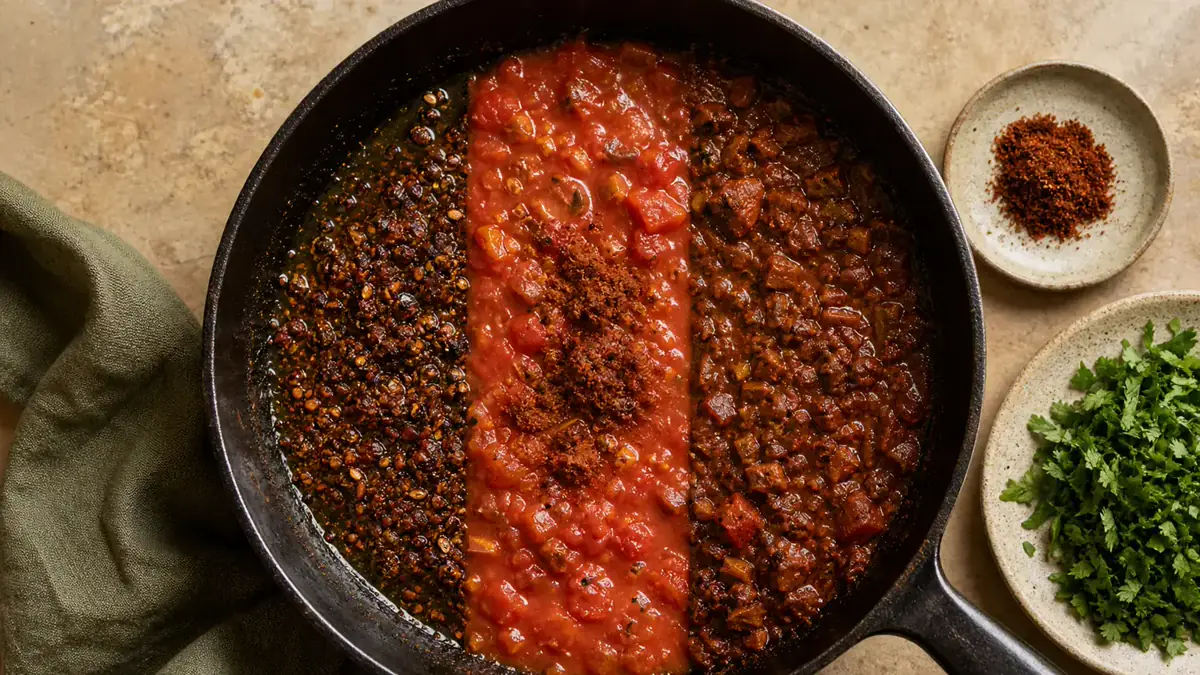
- Dry rub: Salt and oil before heat.
- Pilaf: Fat before stock.
- Stew: Onion before simmer.
- Finish: Tiny pinch only when fresh.
If you want a final aroma, finish with black pepper or parsley first. Add more baharat only when the jar smells fresh.
For leftovers, add baharat during reheating only if the sauce tastes thin. Otherwise add pepper and acid instead.
Rice and beans also hold spice after cooling. Taste again before adding a second spoon the next day.
How do you make baharat at home?
Homemade baharat is best when you control black pepper and sweet spice. Those two axes change the dish fastest.
Start with a small batch because whole-spice freshness is the advantage. A large jar gives that advantage away after a few months.
| Spice | Amount | Reason |
|---|---|---|
| Black pepper | 2 teaspoons | Gives the blend its savory heat |
| Cumin | 2 teaspoons | Anchors meat, beans, and rice |
| Coriander | 2 teaspoons | Keeps the blend from tasting too dark |
| Paprika | 2 teaspoons | Adds color and gentle sweetness |
| Cinnamon | 1 teaspoon | Rounds edges without leading |
| Clove or allspice | 1/4 teaspoon | Adds dark sweet-spice warmth in a tiny amount |
| Cardamom | 1/2 teaspoon | Adds lift if the dish can handle perfume |
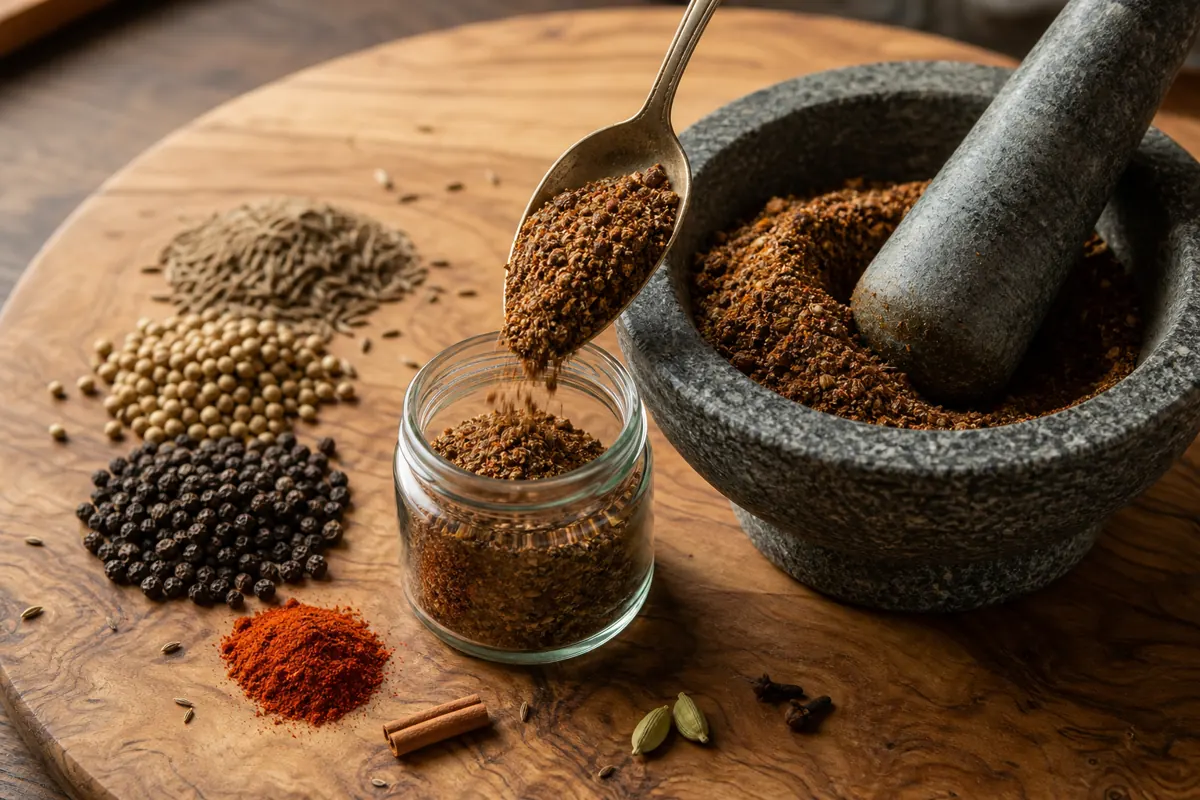
- Savory base: Let black pepper, cumin, coriander, and paprika set the direction.
- Sweet support: Keep cinnamon, clove, and cardamom below the savory spices.
- Fresh grind: Toast cumin and coriander, cool them, then grind before mixing with powders.
- Small jar: Make only enough to keep the pepper aroma vivid for the meals ahead.
Toast whole cumin and coriander first when possible. Fresh grinding gives the blend more lift than adding extra powder later.
The cumin base note grounds the blend. Coriander citrus aroma adds lift more reliably than chasing a perfect ingredient list.
Leave paprika and cinnamon as powders. They scorch and clump if you treat them like whole seeds.
What can you use instead of baharat?
A baharat substitute should protect the savory base. Do not replace it with pumpkin spice or plain cinnamon.
Use 1 teaspoon substitute for 1 teaspoon baharat, then adjust after the food cooks for five minutes.
| Use case | Best substitute | What to watch |
|---|---|---|
| Meatballs or kebabs | Cumin, coriander, pepper, paprika, allspice | Add cinnamon lightly |
| Rice | Cumin, coriander, paprika, cardamom | Keep pepper moderate |
| Tomato stew | Ras el hanout in a smaller amount | May taste sweeter |
| Vegetables | Cumin, paprika, black pepper, cinnamon pinch | Oil first prevents scorching |
The broader spice substitution rule applies here: replace the job, not every ingredient name.
If you only have curry powder, use another direction instead. Turmeric and fenugreek change the dish signal.
Ras el hanout can work in braises, but it often tastes more floral. Use less and add pepper if the dish needs bite.
How do you fix baharat that tastes too sweet or dusty?
Most weak baharat can be adjusted with one or two spices. Do not rebuild the whole jar during dinner.
If the blend tastes sweet, add black pepper and coriander. If it tastes thin, add cumin and paprika.
- Too sweet: Add black pepper, cumin, and coriander before adding more salt.
- Too peppery: Add paprika and coriander, then use the blend in wet food.
- Too dusty: Bloom it in oil with fresh cumin instead of adding more dry powder.
- Too floral: Use it in lamb or stew, not lean chicken or plain rice.
These repairs preserve the baharat direction. Curry powder, chili powder, and pumpkin spice send the dish somewhere else.
If the jar needs repair every time, replace it with a smaller batch. Bad ratio control is not a storage problem.
How can you choose a good store-bought baharat?
A store-bought jar can be useful, but the label rarely tells you the ratio. Your nose gives better information.
Open the jar before planning the dish. If it smells like cinnamon candy, do not use it as the main meat seasoning.
- Good meat jar: Pepper, cumin, paprika, and allspice arrive before cinnamon.
- Good rice jar: Coriander, cardamom, and sweet spice feel rounded rather than sharp.
- Weak jar: The first smell is brown dust, not one clear spice family.
- Too-sweet jar: Save it for rice stuffing, not a lean chicken rub.
- Too-hot jar: Mix with coriander and paprika before using on vegetables.
This audit helps after the reader already bought a jar. Most baharat problems are ratio problems, not mystery problems.
How long does baharat stay fresh?
Baharat fades when pepper aroma fades. Buy small amounts or mix small batches if you cook with it only sometimes.
Keep the jar sealed, dark, and dry with your other stored spices. Heat near the stove dulls pepper and paprika quickly.
- Fresh jar: Smells peppery, warm, and distinct before cooking.
- Stale jar: Smells mostly brown, dusty, or cinnamon-heavy.
- Best batch size: Mix enough for one to two months if grinding at home.
- Rescue move: Add fresh black pepper and toasted cumin when the blend tastes tired.
Storage is part of the recipe. A stale blend pushes you to add more, which makes the dish muddy.
If the jar is old, use it in wet dishes first. Stews forgive fading better than kebabs or rice.