
What Is Cardamom, and Why Are Green and Black Pods So Different?
Green and black cardamom come from different plants and belong in completely different dishes. 1,8-cineole explains why the same pod reads as floral in chai and bread-like in Nordic buns.
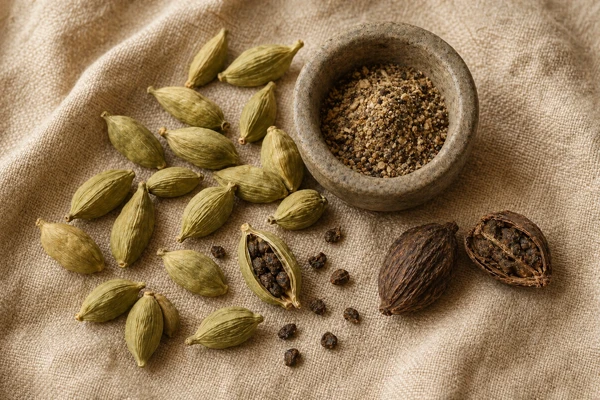
Green and black cardamom are completely different plants with incompatible flavors, never substitute one for the other. Always buy whole pods and grind seeds fresh, because pre-ground loses 50–70% of its character within months. The active compound 1,8-cineole explains why the same pod reads as floral in chai and bread-like in Nordic pastry, and one crushed pod per cup makes a legitimate centuries-old cardamom coffee worth trying.
The cardamom most people know, and the one they do not
In most Western spice aisles, cardamom means green cardamom, small, pale pods with an intensely floral, citrusy, slightly eucalyptus-like flavor.
This is the cardamom in chai, in Scandinavian buns, in Arabic coffee, and in Indian sweets. It is one of the most expensive spices by weight, behind only saffron and vanilla.
Black cardamom (Amomum subulatum) is a different plant entirely, larger, dark brown-black, dried over fire rather than sun. The flavor is smoky, camphor-like, with mentholated depth and none of the floral quality of green.
| Green Cardamom | Black Cardamom | |
|---|---|---|
| Plant | Elettaria cardamomum | Amomum subulatum |
| Flavor | Floral, citrus, eucalyptus, sweet | Smoky, camphor, menthol, savory |
| Drying method | Sun-dried or shade-dried | Dried over fire (smoked) |
| Best in | Desserts, chai, coffee, rice dishes | Meat braises, biryanis, savory blends |
| Substitute? | No, flavor is incompatible | No, flavor is incompatible |
Using black cardamom in a dessert or chai would be a serious mistake. The smoke and camphor would overwhelm everything.
Green cardamom in a meat braise would taste soapy and wrong.
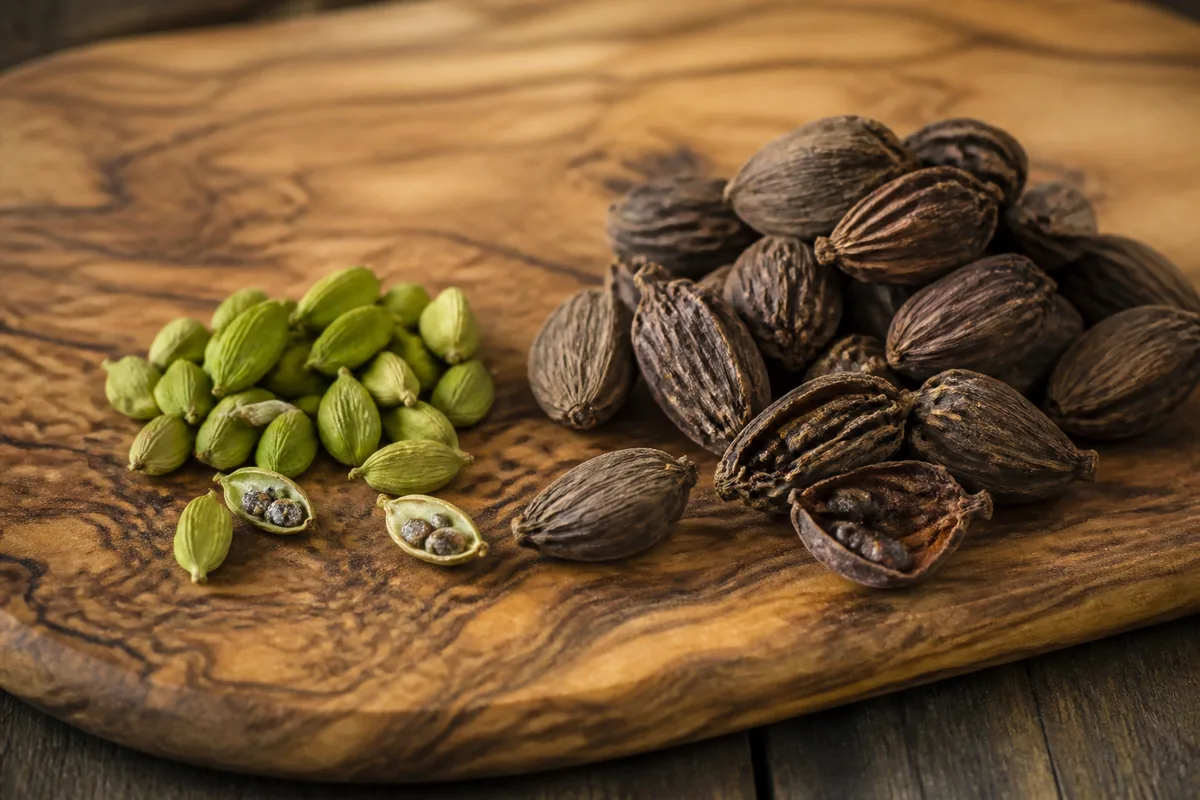
- Green pods: Small, pale, finely ribbed, with a papery husk that splits easily.
- Black pods: Two to three times larger, dark brown, with a coarse wrinkled husk.
- Split open: Both hold clusters of sticky black seeds, which is where the flavor lives.
- Buying: A recipe saying only cardamom means green, every time.
Why Scandinavians and South Asians both claim it as essential
Green cardamom originated in the forests of South India and Sri Lanka. It reached the Arab world through spice trade, then moved into Scandinavian baking.
Swedish cardamom buns (kardemummabullar) treat it as the dominant flavor, not a background note. Nordic baking uses cardamom the way French baking uses vanilla: as the thing the other ingredients exist to support.
In South Asian chai, cardamom pairs with cinnamon as the floral top note above the warming base spices.
It also pairs directly with ginger in masala chai, cardamom's floral-eucalyptus character reads as complementary against ginger's sharp heat rather than competing with it.
In garam masala, cardamom adds the floral complexity that lifts an otherwise earthy blend of warming spices above one-dimensional.
The blend also relies on cloves for deep woody base notes, cardamom's role is the top note that prevents the blend from reading as flat.
The paradox: the same compound (1,8-cineole) that reads as "floral" in chai reads as "bread-like" in a Scandinavian bun. Context changes everything about how a spice is perceived.
Kerala's highland growing regions are the traditional home of premium Indian cardamom.
The same humid terroir that concentrates oils in cardamom pods also produces high-curcumin turmeric in the surrounding lowland farms.
Is white cardamom the same as green?
White cardamom is green cardamom that has been bleached.
The pods are the same species, treated with sulphur dioxide or sunlight until the husk loses its color. Producers do it because pale pods disappear into white doughs and pale sauces.
Bleaching costs aroma.
A white pod smells noticeably flatter than a green one of the same grade, so the trade is appearance for flavor.
Buy white pods only when the color of the finished dish genuinely matters.
Some Scandinavian and Chinese recipes ask for them for that reason, and in a dark braise the choice makes no sense at all.
If a recipe says cardamom without qualifying it, it means green.
Reaching for white because it looks cleaner on the shelf quietly weakens every dish you use it in.
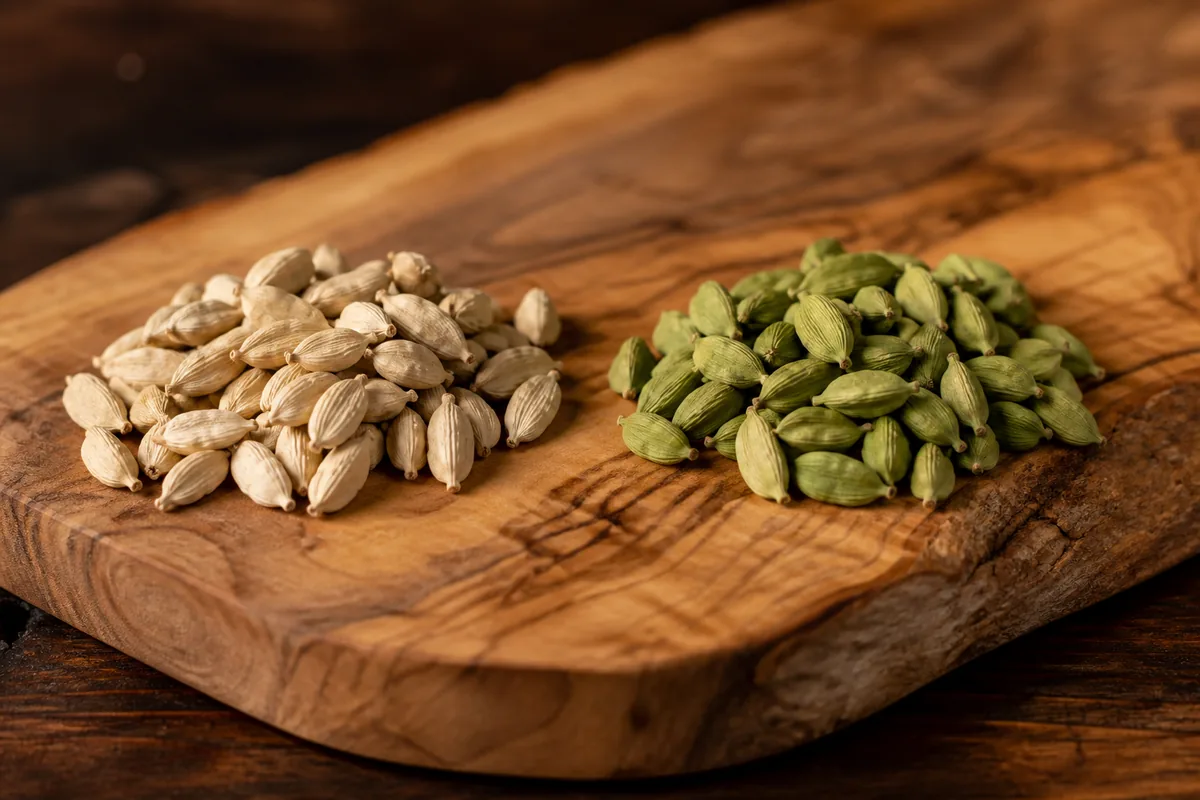
- Same plant: White pods are Elettaria cardamomum, treated until the husk pales.
- Why it exists: Pale pods disappear into white doughs and pale sauces.
- The cost: A white pod smells flatter than a green pod of the same grade.
- When to buy: Only when the color of the finished dish genuinely matters.
Pods, seeds, or ground, which to buy
Buy pods. The husk protects the seeds, and the seeds are where all the flavor lives.
Once ground, cardamom loses 50–70% of its volatile aroma compounds within two to three months.
Pre-ground from a jar that has been open for six months delivers almost nothing.
The technique: split a pod with the flat of a knife. Remove the seeds, 15–20 per pod.
Grind seeds fresh.
Keep or discard the husk, it adds mild flavor to rice and tea if added whole.
- Whole pod: Use for chai, pilaf, coffee, and braises where you can remove it later.
- Fresh seeds: Grind for buns, cookies, custards, and spice blends that need full aroma.
- Pre-ground: Use only when convenience matters more than flavor intensity.
For dishes requiring the pod whole, chai, pilaf, braised meats, lightly crush the pod first. This cracks the husk and lets flavor escape without releasing loose seeds into the dish.
If you have been underwhelmed by cardamom in the past, stale pre-ground is the most likely explanation.
The same staling issue affects any pre-ground spice.
The coffee question
Arabic coffee (qahwa) is flavored with cardamom. So is Saudi, Yemeni, and much of the Gulf region's coffee tradition.
The Yemeni hawaij blend extends this further.
Cardamom, black pepper, ginger, and turmeric season both coffee and savory stews.
The combination works because cardamom's eucalyptus notes mirror aromatic compounds already present in good coffee, amplifying rather than competing with them.
People come to me saying they want more complex coffee. My first suggestion is always cardamom, not some exotic single-origin bean. One pod, the right grind, and they have never gone back. The complexity was always available; they just did not know to add it.
Omar Al-RashidSpecialty coffee roaster, Dubai
The technique: add one lightly crushed pod per cup when brewing, or grind a few seeds with the coffee beans. Start with less than you think, cardamom in coffee is stronger than you expect.
How many pods make a teaspoon of ground cardamom?
Ten to twelve green pods grind down to about one teaspoon of ground seed.
The spread is real, because a large Guatemalan pod holds noticeably more seed than a small one. Count on the low end first and grind more if the dish still needs it.
Each pod holds fifteen to twenty seeds, so a teaspoon is roughly two hundred seeds.
That number explains why a recipe asking for a teaspoon of ground cardamom wants far more than the three or four pods most cooks reach for.
Recipes written in pods and recipes written in spoons rarely mean the same amount.
A chai with four crushed pods is seasoning gently, while a bun dough with two teaspoons of ground seed makes cardamom the lead flavor. Work out which one you are following before you scale it.
If a recipe gives grams, use about one and a half grams of seed per teaspoon.
Weighing removes the guesswork, and a cheap scale pays for itself on a spice this expensive.
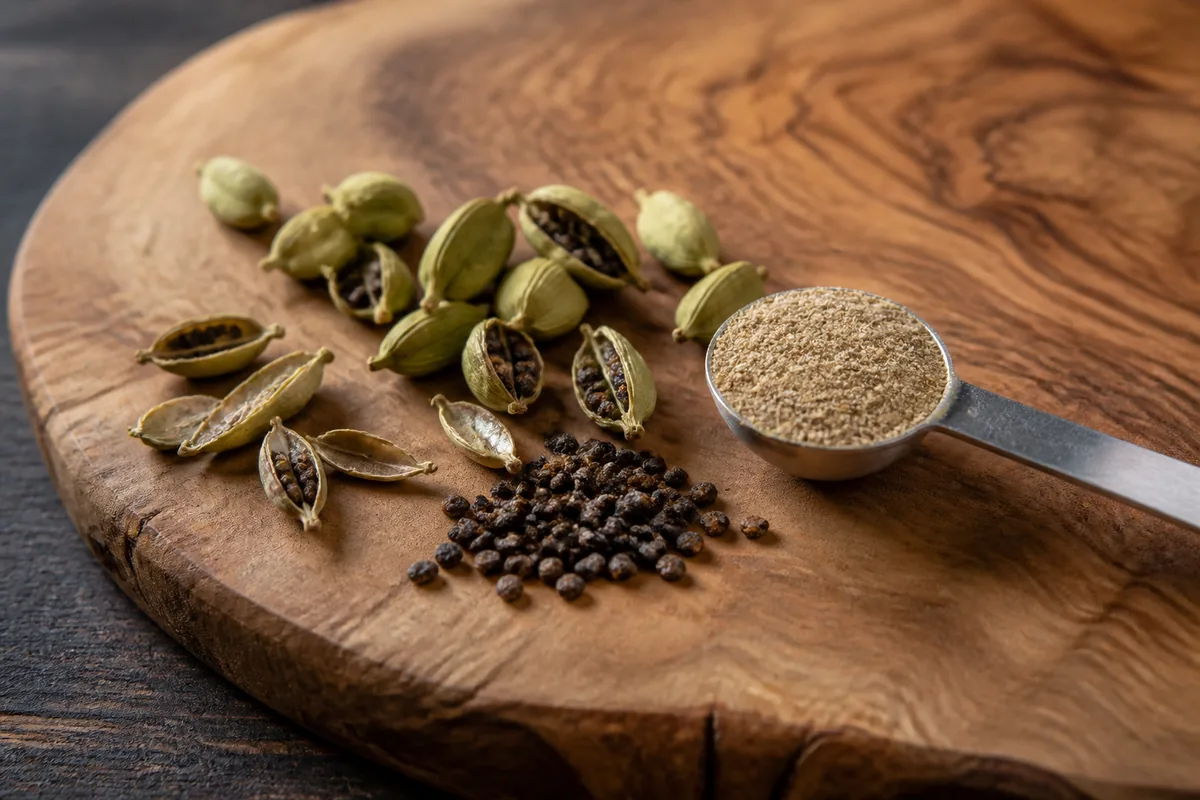
- One pod: Fifteen to twenty seeds inside a papery husk.
- One teaspoon: Ten to twelve pods, or roughly two hundred seeds.
- By weight: About one and a half grams of seed per teaspoon.
- Why it matters: Four pods in chai season gently, two teaspoons in dough lead the flavor.
How much cardamom to use
Cardamom tastes generous until it suddenly tastes perfumed. Measure by pods first, not by spoonfuls of stale powder.
Use more in dairy, dough, and rice. Use less in coffee, where the aroma amplifies quickly.
- Chai: Use 2 lightly crushed green pods per cup. Add ginger if the drink needs heat, not more cardamom.
- Scandinavian buns: Use 1 teaspoon freshly ground seeds for 3 to 4 cups flour. Grind just before mixing.
- Arabic coffee: Use 1 pod per cup for a clear cardamom note. Use half that amount for a background aroma.
- Biryani or pilaf: Use 3 to 5 whole green pods for a family-size pot. Crush them lightly before adding.
- Black cardamom: Use 1 large pod for a meat braise. More can make the pot taste smoky and medicinal.
If a dish tastes soapy, you probably used green cardamom where black cardamom belonged, or you used too much ground seed.
Do you eat cardamom pods, or take them out?
Whole pods are not meant to be eaten.
The husk stays fibrous however long it simmers, and biting one releases a burst that overwhelms the mouthful. Treat pods the way you treat a bay leaf.
Fish them out before serving whenever you can reach them. In a pilaf or a braise that is easy at the end of cooking, and in chai a fine strainer does the job as you pour.
Some dishes make removal impractical, and that is acceptable.
A rustic curry with four pods lost somewhere inside it will not hurt anyone, though it is worth warning whoever is eating that a pod may turn up.
The seeds inside are always edible. Ground seed, crushed seed, and loose seed in a sauce all belong in the finished dish, which is why deseeding matters when the pod cannot be retrieved.
Chewing a whole pod on purpose is a different act entirely. Across South Asia a green pod is a common breath freshener after a meal, which is why a diner may recognise the taste without ever expecting to meet it inside the food.
- Soup, braise, or pilaf: Fish the pods out at the end of cooking, while they are still easy to see.
- Chai and infusions: Pour through a fine strainer so no pod reaches the cup.
- Rustic curry: Leave them when retrieval is impractical, but warn whoever is eating.
- Ground or crushed seed: Nothing to remove, because the seed belongs in the dish.
Cardamom in savory cooking
Green cardamom is not only a dessert spice. It works in savory rice, korma, and slow-cooked sauces when the dish has enough fat to carry it.
Black cardamom belongs to deeper savory cooking. Its smoke fits lamb, lentils, and long rice dishes where green cardamom would taste floral and misplaced.
| Dish | Use this form | Why |
|---|---|---|
| Masala chai | Green pods | Milk and ginger soften the eucalyptus note |
| Kardemummabullar | Fresh-ground green seeds | Butter-rich dough carries floral aroma |
| Biryani | Whole green plus black if savory | Steam distributes aroma through rice |
| Lamb braise | Black pod | Smoke and camphor support meat |
| Arabic coffee | Lightly crushed green pod | Coffee mirrors the clean aromatic top note |
The deciding question is not sweet versus savory. It is whether the dish needs floral lift or smoky depth.
How do you fix a dish with too much cardamom?
Too much cardamom tastes soapy and perfumed, and it does not cook off.
More heat or time will not reduce it, so dilution is the only real move. Increase the unseasoned base first, whether that is rice, dairy, stock, or dough.
Fat and dairy blunt the perfume faster than water does. A splash of cream in a korma or extra milk in chai pulls the aroma back toward the background where it belongs.
Do not chase it with sugar.
Sweetness sits beside the perfume rather than covering it, and the dish ends up cloying and soapy at once.
Remove any whole pods still sitting in the pot. They keep releasing aroma for as long as they stay in hot liquid, so pulling them out stops the problem growing while you fix what is already there.
Check whether the real mistake was the wrong cardamom.
Green cardamom in a meat braise reads as soapy at any dose, and no amount of dilution turns it into black cardamom.
- Dilute first: Add more unseasoned rice, dairy, stock, or dough before trying anything else.
- Reach for fat: Cream in a korma or extra milk in chai blunts the perfume faster than water.
- Skip the sugar: Sweetness sits beside the perfume instead of covering it.
- Pull the pods: Any pod left in hot liquid keeps releasing aroma while you work.
- Check the jar: Green cardamom in a meat braise reads as soapy at any dose.
Grinding cardamom without wasting half the flavor
Cardamom aroma escapes the moment the seeds are crushed. Grind only what the recipe needs right now.
- Crack first: Press the pod with the flat of a knife until it opens. Do not pulverize the husk unless the recipe asks for it.
- Toast only briefly: Warm seeds for 20 to 30 seconds if you want deeper aroma. Longer heat dulls the floral edge.
- Use a mortar: A mortar crushes seeds into uneven pieces that bloom well in dough, rice, and tea.
- Separate the husk: Use seeds for clean pastry flavor. Save husks for tea, rice, or slow infusions.
- Smell immediately: Freshly crushed cardamom should hit fast. If it smells faint, the pods are old.
- Use fewer pods in coffee: Coffee magnifies cardamom. Start with one pod for two cups if unsure.
- Remove pods before serving: Whole pods are aromatic but unpleasant to bite. Count them before they go in.
- Buy small amounts: Even whole pods fade after opening. A tiny fresh bag beats a large stale jar.
The husk can flavor tea or rice when used whole. For pastries and coffee, use the seeds only.
For the cleanest flavor, grind seeds right before they touch fat, milk, coffee, or dough. Waiting even 30 minutes costs aroma.
Fresh grinding also lets you adjust texture. Fine powder disappears into dough, and a coarse crush perfumes rice and coffee more slowly.
What can you use instead of cardamom?
No single spice rebuilds green cardamom, which carries floral, citrus, and eucalyptus notes at once.
The nearest practical answer is a blend. Equal parts ground cinnamon and nutmeg cover the warm sweetness, though the high floral note stays missing.
For chai and other spiced drinks, lean on ginger and cinnamon and accept a different drink.
The result tastes good without tasting like chai, so decide which matters before you start. A cup that is honestly gingery beats one that fails at being cardamom.
In Scandinavian baking there is no substitute worth making.
A cardamom bun without cardamom is a plain sweet roll, and calling it anything else misleads whoever eats it.
Black cardamom is a separate problem.
Smoked paprika with a single clove gets nearer its smoke and camphor than green cardamom ever will, and green cardamom is the one swap guaranteed to be wrong.
Ground coriander is the quiet option when cardamom sat in the background.
It brings citrus lift without the perfume, which is enough when cardamom was one voice among six rather than the lead.
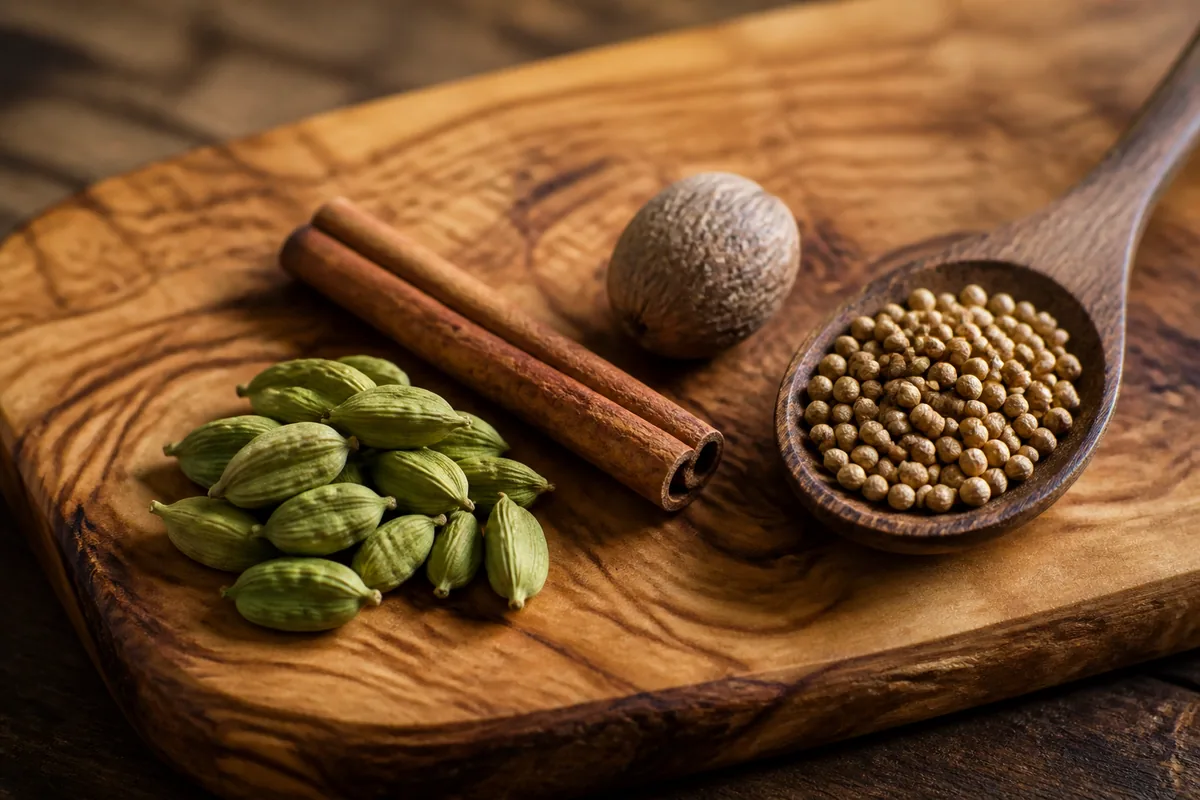
- Cinnamon and nutmeg: Equal parts cover the warm sweetness, but not the floral top note.
- Coriander: Brings citrus lift without perfume, enough when cardamom sat in the background.
- Ginger and cinnamon: Makes a good spiced drink that is honestly not chai.
- Baking: A cardamom bun without cardamom is a plain sweet roll.
Storage and sourcing
Whole green cardamom pods last 2–3 years in an airtight container away from light. The husk is a natural preservation system, do not crack pods until the moment you use them.
Quality check: squeeze a pod. Fresh pods are slightly flexible.
Old pods are brittle and hollow-feeling. Open one and smell the seeds, fresh cardamom is explosive and immediate.
Old cardamom is flat and faintly medicinal.
For black cardamom, look in South Asian specialty grocery stores. It is rarely in general supermarkets.
Larger pods typically indicate higher grade.
For green cardamom, Guatemalan-grown and Indian (Kerala Malabar) are both quality benchmarks. Most specialty spice retailers stock one or both.
Store tightly sealed in a dark cabinet. Ground cardamom degrades fastest, grind only what you need for each use.