
What Is Hawaij? The Yemeni Blend for Soup and Coffee
Know which version you have before adding it to soup, chicken, coffee, or cake.
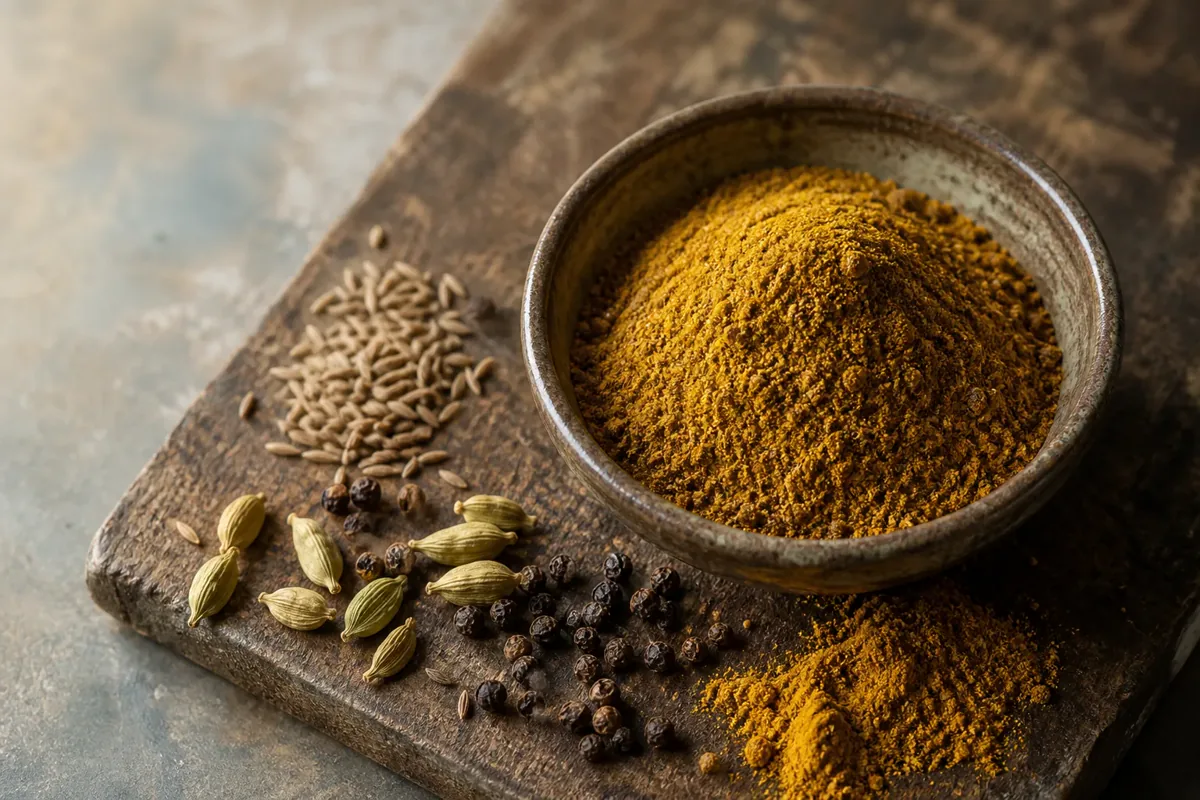
Hawaij can mean a savory Yemeni blend or a sweeter coffee blend, and the version decides the food. Savory hawaij often uses cumin, coriander, turmeric, black pepper, and cardamom while coffee hawaij leans ginger, cinnamon, cardamom, and clove.
Why are there two kinds of hawaij?
Hawaij is confusing because the same name can point to two different Yemeni spice blends.
One version seasons soup, chicken, rice, and vegetables. The other perfumes coffee, tea, cakes, and sweet dough.
Read the label before measuring because turmeric and cumin change dinner differently than ginger and cinnamon.
| Version | Usual spice direction | Best use |
|---|---|---|
| Savory hawaij | Cumin, coriander, turmeric, black pepper, cardamom | Soup, stew, chicken, rice, vegetables |
| Coffee hawaij | Ginger, cinnamon, cardamom, clove, sometimes nutmeg | Coffee, tea, cake, cookies, oatmeal |
| Unlabeled hawaij | Depends on color and first aroma | Smell and test before adding |
A yellow jar that smells earthy and peppery usually belongs in savory food. A brown jar that smells gingery belongs with drinks and sweets.
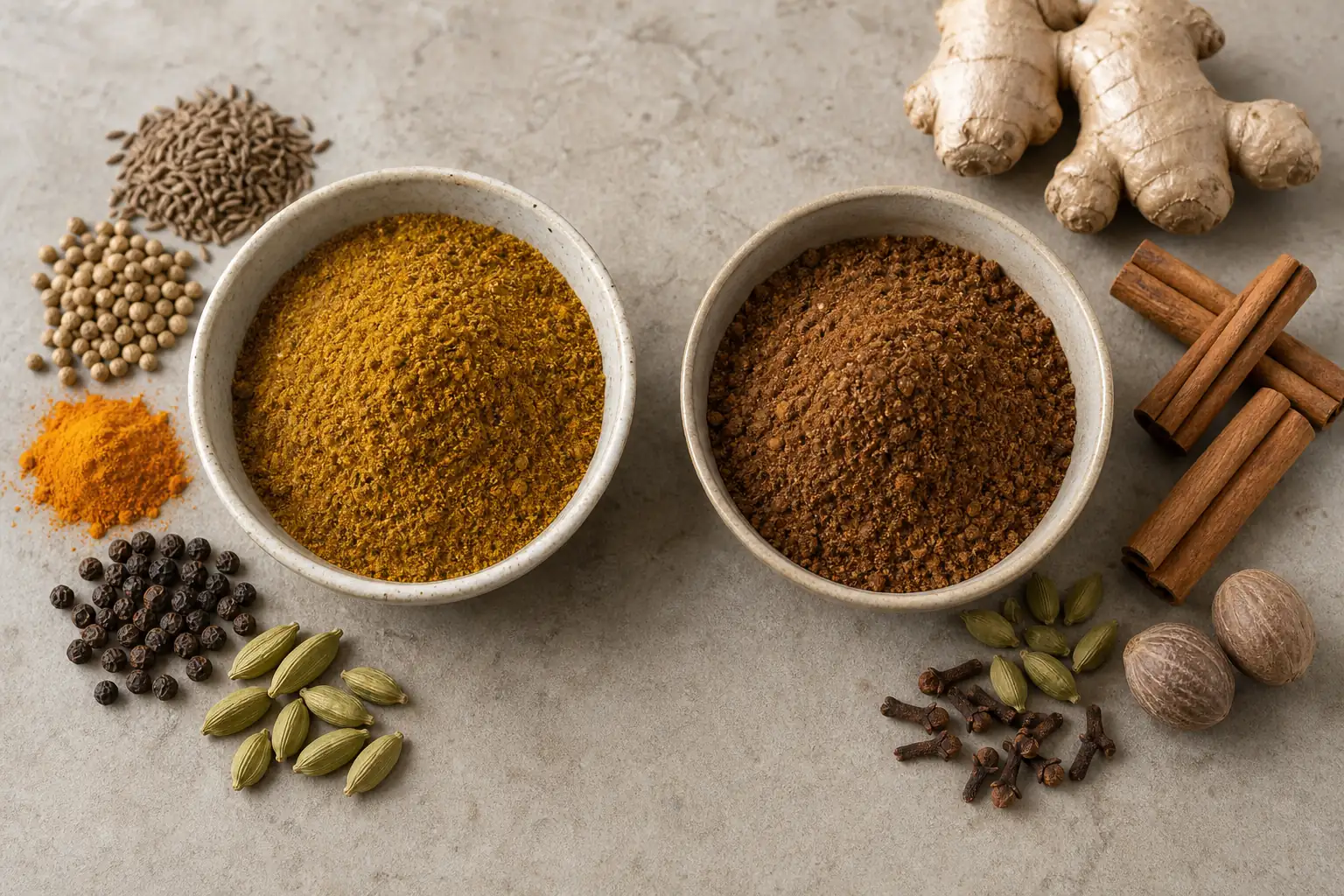
- Savory hawaij: Turmeric, cumin, coriander, pepper
- Coffee hawaij: Ginger, cardamom, cinnamon, clove
- Do not swap: Their lead flavors serve different dishes
If the jar gives no clue, test a pinch in hot water or warm oil before using a full spoonful.
Hot water reveals ginger, cinnamon, and cardamom quickly. Warm oil reveals cumin, turmeric, pepper, and clove more clearly.
Use the version that smells right in that test, not the version you hoped the label meant.
How do you use savory hawaij?
Savory hawaij works best when cumin, coriander, turmeric, pepper, and cardamom can spread through moisture.
That is why it fits soup, lentil stew, chicken, rice, roasted roots, and vegetables better than a dry garnish.
| Spice group | What it does | Watch for |
|---|---|---|
| Cumin and coriander | Earthy base with citrus lift | Too much can taste dry |
| Turmeric | Golden color and ground warmth | Raw powder can taste chalky |
| Black pepper | Warm bite without chile heat | Old pepper loses aroma first |
| Cardamom and clove | Lift and sweet edge | Heavy use can taste perfumed |
Start with about 1 teaspoon for four servings of soup, stew, rice, or vegetables.
Use less in a dry rub because the powder sits on the surface and tastes stronger.
The turmeric in savory hawaij behaves like ground turmeric on its own. It needs heat, fat, or simmering liquid to taste rounded.
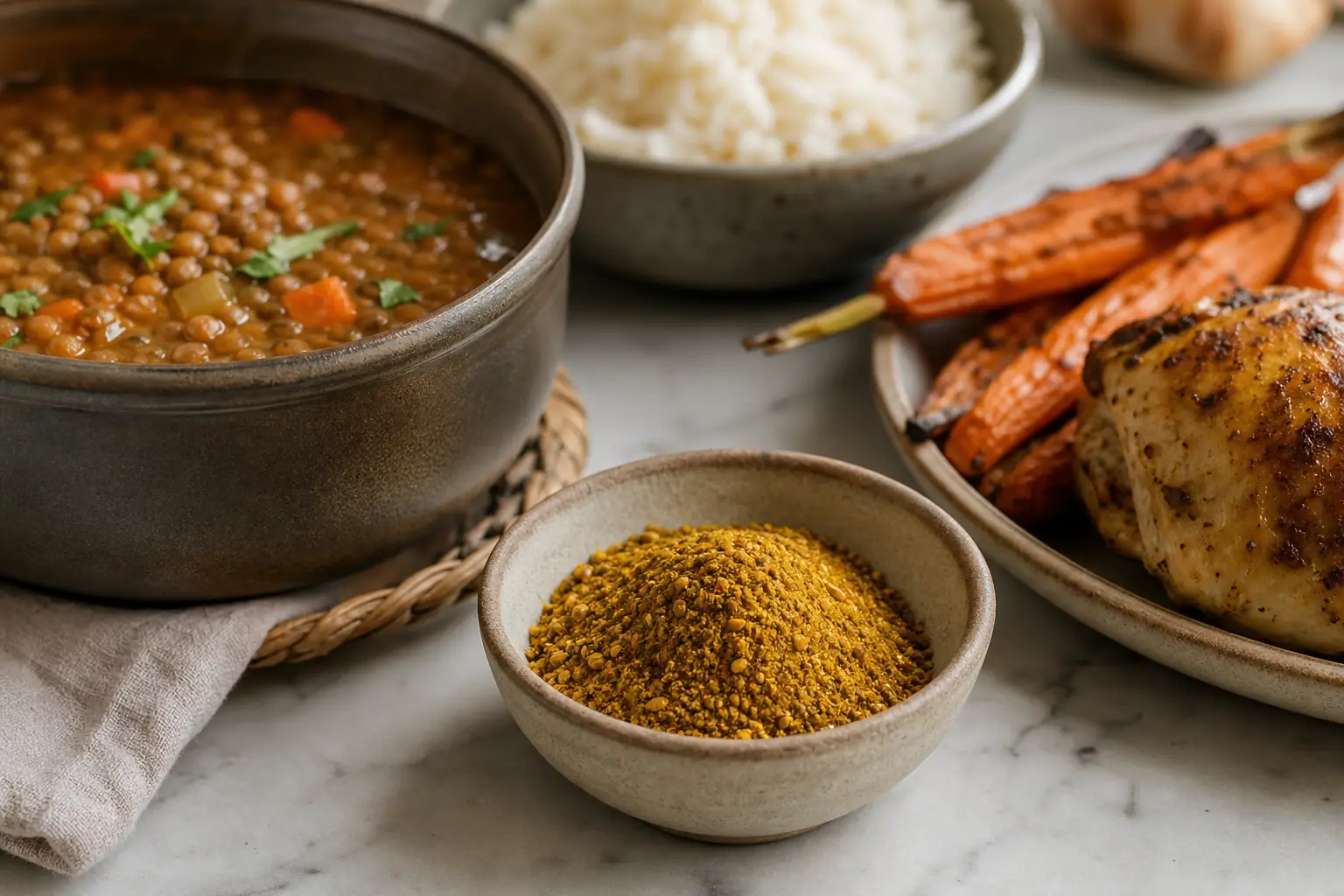
- Soup: Stir into the wet base
- Rice: Disperse through cooking liquid
- Vegetables: Use oil plus surface moisture
When the dish has no sauce or steam, mix hawaij with oil first so the powder can cling evenly.
How do you use hawaij in coffee?
Coffee hawaij is closer to a warm baking blend than a savory masala.
Ginger, cinnamon, cardamom, and clove should scent the cup without turning it bitter or gritty.
- Start with 1/8 teaspoon per cup of coffee or tea.
- Add it to grounds before brewing when you want a rounder aroma.
- Stir it into a finished cup only when the grind is very fine.
- Use a smaller pinch in cakes or cookies when the recipe already has cinnamon.
Cardamom usually gives the first lift, while ginger supplies warmth after the sip.
Ground cinnamon and clove become harsh when the dose climbs too fast, especially in black coffee.
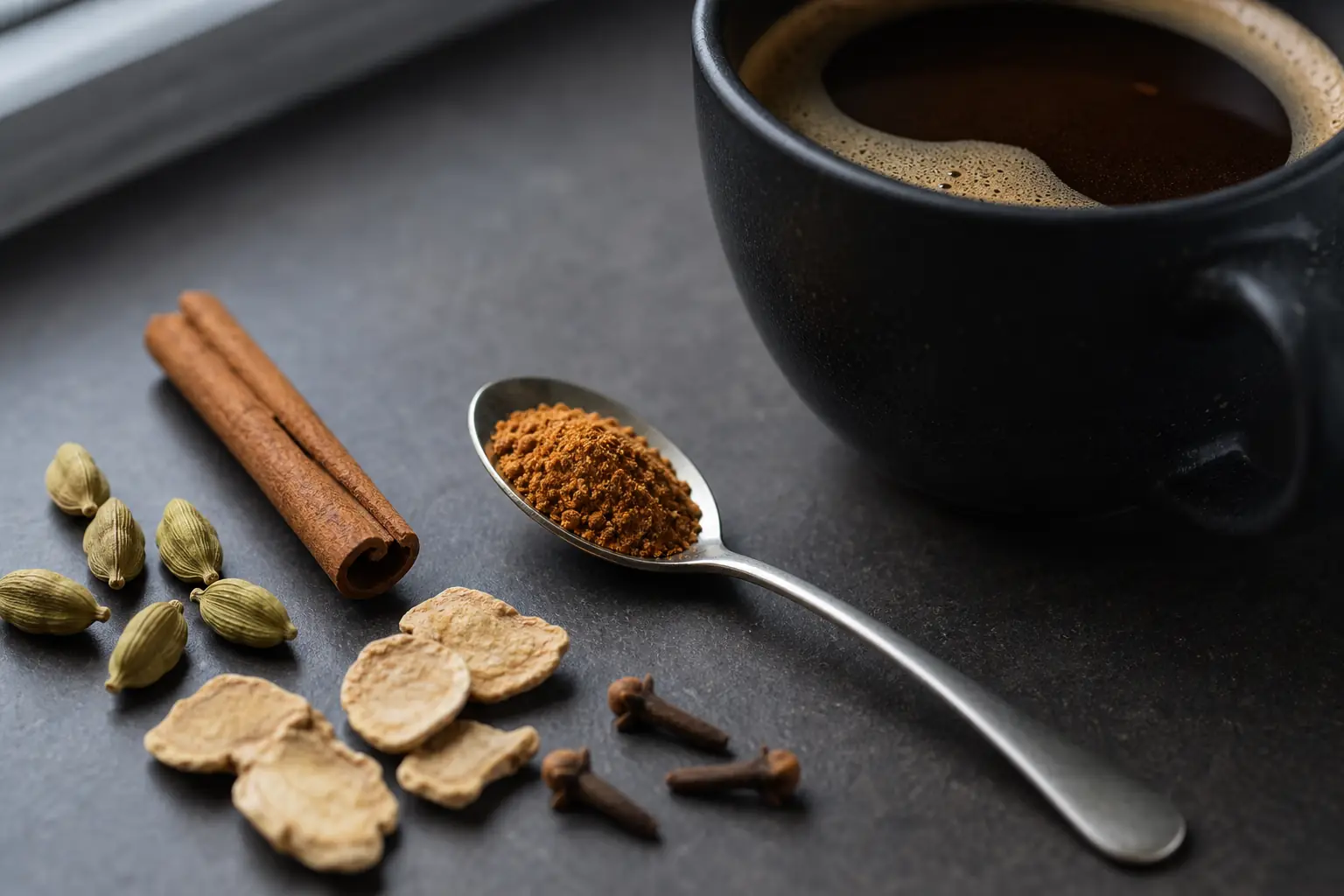
- Start: Use one small pinch
- Taste cue: Coffee remains the main flavor
- Too much: Bitter, dusty, or gritty cup
If the drink tastes dusty, brew the spice with the grounds next time instead of stirring more into the cup.
When should you add each type of hawaij?
Savory hawaij usually goes in early enough for turmeric and cumin to lose their raw edge.
Coffee hawaij usually needs gentler heat because its sweet spices fade or turn bitter faster.
| Use | Best timing | Reason |
|---|---|---|
| Soup or stew | Bloom briefly with oil and onions before liquid | The powder loses chalkiness before simmering |
| Rice or grains | Stir into fat before water enters | Color and aroma spread evenly |
| Chicken or vegetables | Mix with oil before roasting | The blend coats the surface without dry patches |
| Coffee or tea | Brew with grounds or steep gently | Sweet spices smell cleaner under mild heat |
| Cake or cookies | Mix into dry ingredients | The spice distributes before fat and liquid bind |
For savory pots, use the same basic logic as blooming spices in oil.
Keep the heat moderate because turmeric, clove, and fine pepper can scorch before onions finish softening.
For drinks, do not boil the blend hard after brewing. Long heat makes clove dominate and cardamom disappear.
The general spice timing rule still applies. Ground bases need earlier cooking, while fragrant finish notes need restraint.
How do you make hawaij at home?
A useful homemade hawaij starts with the version you need, then controls the lead note.
For savory use, let cumin and coriander carry the blend before turmeric sets the color.
For coffee, let ginger and cardamom lead before cinnamon and clove add depth.
| Version | Lead note | Support notes |
|---|---|---|
| Savory and earthy | Cumin plus coriander | Turmeric, black pepper, cardamom |
| Savory and brighter | Coriander plus cardamom | Cumin, turmeric, black pepper |
| Coffee and gingery | Ginger plus cardamom | Cinnamon, clove, nutmeg |
| Coffee and sweet-spiced | Cinnamon plus cardamom | Ginger, clove, tiny nutmeg |
Use whole cumin and coriander seed when possible, then grind only a small amount.
The spice grinding method matters because cardamom and clove can overpower a batch if they grind too fine.
Leave salt out of the blend. Salt belongs in the dish, where you can adjust it after simmering or brewing.
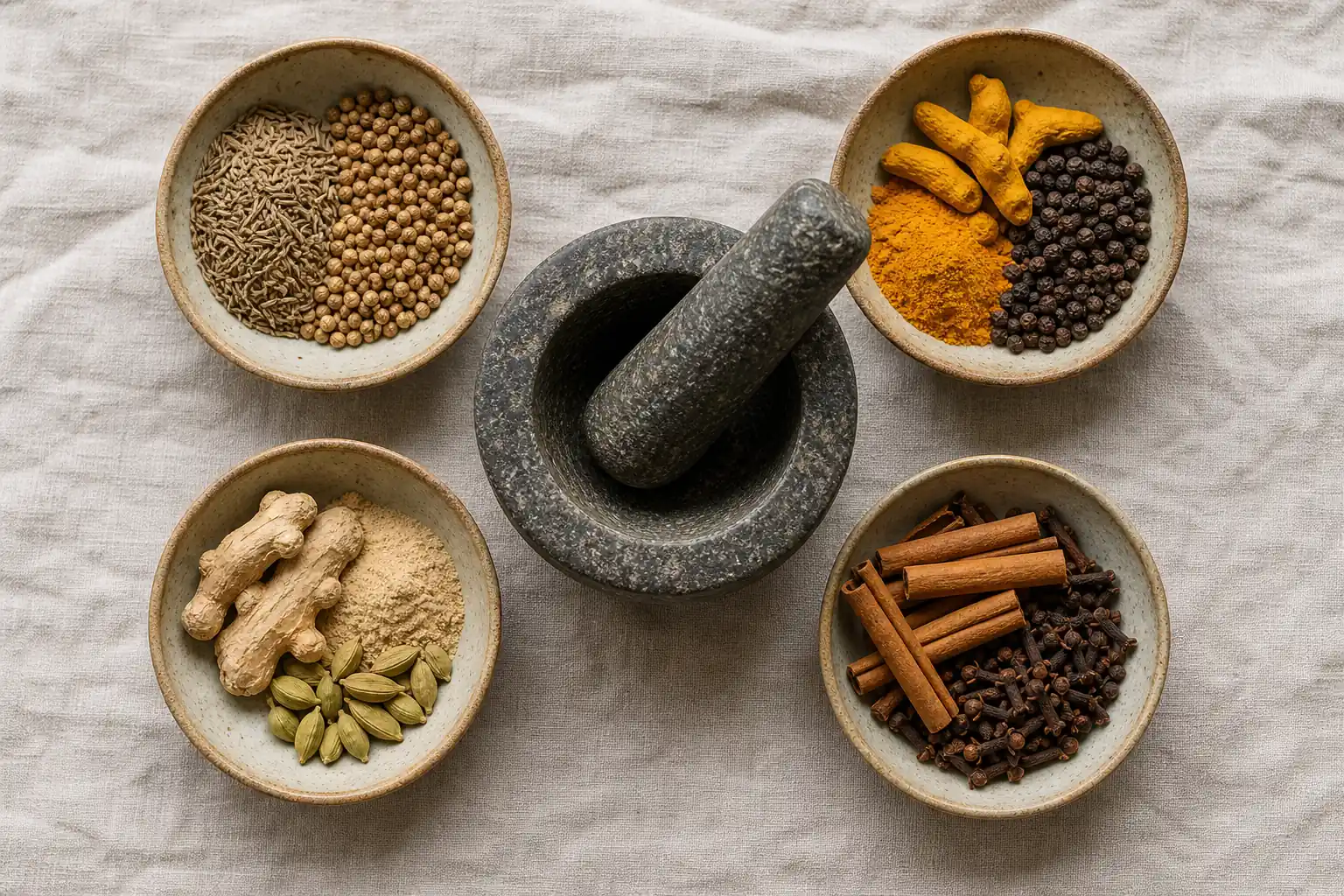
- Savory lead: Cumin or turmeric
- Coffee lead: Ginger or cardamom
- Supporting rule: Keep clove restrained
Write the version on the jar right away. A brown coffee blend and a mild savory blend can look similar in dim light.
What can you use instead of hawaij?
A hawaij substitute fails when it copies warmth but ignores the savory or coffee split.
Choose the replacement by the dish first, then adjust color, heat, and sweetness.
| Missing blend | Best quick substitute | What to avoid |
|---|---|---|
| Savory hawaij in soup | Cumin, coriander, turmeric, black pepper, cardamom | Plain cinnamon or pumpkin spice |
| Savory hawaij in chicken | Mild curry powder plus extra cumin and cardamom | Hot curry powder with strong chile |
| Coffee hawaij in drinks | Ginger, cinnamon, cardamom, clove | Savory turmeric blends |
| Coffee hawaij in baking | Cinnamon, ginger, cardamom, tiny clove | Too much nutmeg |
Curry powder can help in a stew only when turmeric and coriander make sense.
It is a poor substitute in coffee because fenugreek, chile, or garlic notes can taste wrong in a drink.
Garam masala can cover warm aroma in a savory dish, but it usually lacks turmeric color.
Baharat blend can work with meat or rice when you want peppery warmth instead of a yellow Yemeni profile.
For sweets, a baking spice blend can help only after you add enough ginger and cardamom.
Is hawaij the same as garam masala or baharat?
Hawaij shares spices with several warm blends, but it should not disappear into that whole group.
The savory version has a clear Yemeni soup-and-stew job because turmeric, cumin, pepper, and cardamom work together.
That makes it different from a finishing blend built mainly for late aroma.
| Blend | Main direction | Best decision |
|---|---|---|
| Savory hawaij | Yellow, earthy, peppery, lightly floral | Use early in soups, rice, stews, and chicken |
| Coffee hawaij | Ginger-cardamom warmth for drinks | Use in coffee, tea, oatmeal, and baking |
| Ras el hanout | Variable North African warmth, sometimes floral | Choose for tagines, couscous, lamb, and roots |
| Baharat | Peppery Middle Eastern savory warmth | Choose for meat, rice, fillings, and tomato stews |
| Garam masala | Roasted late-stage aroma | Use near the finish, not as a yellow base |
Ras el hanout blends can be sweeter, more floral, or more complex than hawaij.
That does not make them better substitutes when the dish needs turmeric color and a clear cumin backbone.
Garam masala usually works later in cooking, so using it early like savory hawaij can flatten its cardamom and clove.
When the recipe says hawaij, first ask whether the yellow base or the coffee aroma is the reason.
How long does hawaij stay fresh?
Hawaij fades because it is already ground, and the most noticeable loss is usually cardamom.
Fresh savory hawaij should smell earthy, peppery, warm, and slightly floral as soon as the lid opens.
Fresh coffee hawaij should smell clearly of ginger, cardamom, cinnamon, and clove before it reaches hot liquid.
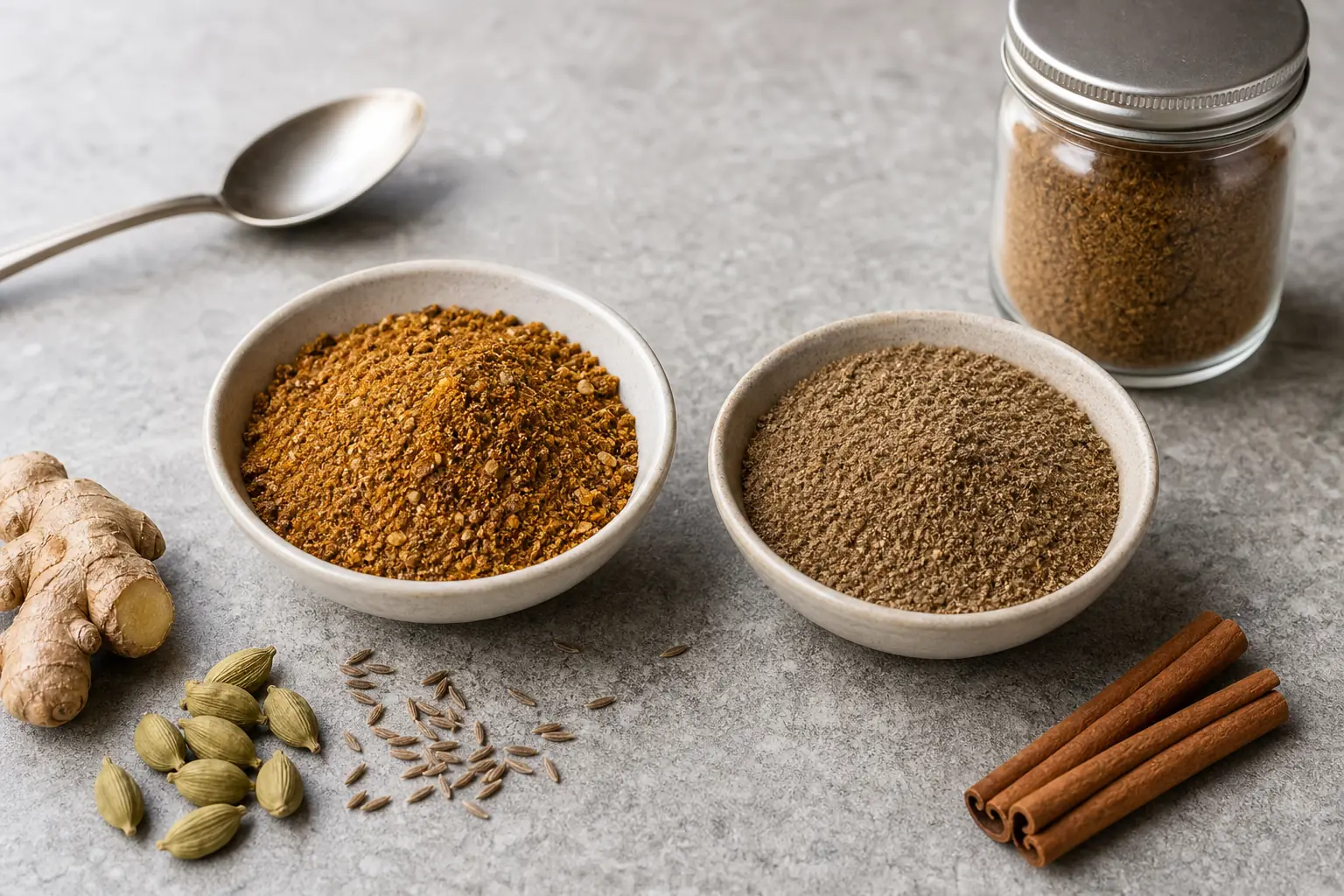
- Fresh savory blend: Clear cumin and pepper aroma
- Fresh coffee blend: Bright ginger and cardamom
- Replace when: Color remains but aroma is faint
Buy small jars from shops with steady spice turnover, or mix a small batch at home.
Keep the jar sealed, dark, dry, and away from steam. A spoon held over soup can push moisture into the powder.
Use the same smell-first rule you would use for whole versus ground spices.
- Replace savory hawaij when the pepper and cardamom vanish.
- Replace coffee hawaij when ginger smells dusty instead of sharp.
- Do not double a stale jar to fix weak aroma.
- Label homemade blends with the mixing date and version.
More stale hawaij usually adds bitterness and powder, not the missing top aroma.
How do you fix food with too much hawaij?
Most hawaij problems come from using the wrong version, the wrong timing, or too much powder.
Correct those first before reaching for another spoonful.
| Problem | Likely cause | Better move |
|---|---|---|
| Soup tastes chalky | Savory blend entered too late | Simmer longer with a little oil |
| Coffee tastes bitter | Dose is high or clove dominates | Dilute and use less next cup |
| Chicken tastes dusty | Dry powder sat on the surface | Mix the blend with oil first |
| Dish tastes like curry powder | Substitute leaned too turmeric-heavy | Add cumin, pepper, and cardamom |
| Blend tastes muddy | Cardamom faded or jar is old | Replace the jar instead of adding more |
If the savory dish tastes flat, adjust salt and acid before adding more blend.
If the coffee tastes thin, brew the spice with the grounds instead of stirring powder into the finished cup.
If you cannot identify the jar by smell, use it in a low-risk test batch first.