
What Exactly Is Turmeric, and Why Does It Taste Dusty?
Buried under wellness marketing, what turmeric actually does in the kitchen.
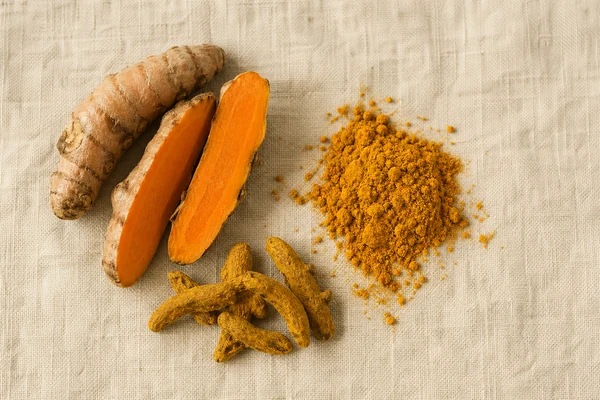
Turmeric is a deeply practical cooking spice that works best when bloomed in fat, and fresh and dried behave as different ingredients. Health claims exist, but dietary amounts are unlikely to replicate supplement-level effects without black pepper. Buy the Alleppey variety for maximum potency, and replace ground turmeric every 6 months.
What turmeric actually contributes to a dish
Turmeric is a bass note that happens to stain, which is why so many cooks meet the stain first and never find the note. Its flavor sits low and earthy, closer to damp bark than to anything bright, and it works by giving the louder spices a floor to stand on rather than by announcing itself.
The clearest way to hear that floor is to remove it.
Build a curry base without turmeric and the chili reads sharper while the coriander reads thinner. The pot tastes like something structural went missing, which is exactly what happened.
Cooks usually diagnose that dish as needing salt.
They add more salt and it still tastes wrong, because what left was the earth.
Because the job is structural rather than decorative, turmeric turns up in daily cooking systems instead of in occasional showpiece dishes. In an Indian pantry it goes into dal, rice, and vegetable fries almost by reflex, and the reason is not that any of those dishes taste of turmeric but that each of them tastes flatter without it.
The color is a second job, and it needs naming separately because it runs on a much smaller budget than the flavor does. Curcumin, the pigment in Curcuma longa, stains a pot of rice at quantities far below anything you could taste, so a quarter teaspoon will turn four servings gold while contributing almost nothing you would recognize as flavor.
Those two budgets pulling apart is the practical problem with this spice, and most of the decisions in this article come back to it.
Reach for color and you will sit under the flavor threshold without knowing it. Reach for flavor and you climb toward the point where turmeric stops paying in depth and starts paying in bitterness, which is the version most people meet long before they meet the good one.
| What you are reaching for | How much it takes | What goes wrong |
|---|---|---|
| Color | A small amount, curcumin stains at low dose | You sit under the flavor threshold without knowing it |
| Flavor | Noticeably more, the earthy floor needs volume | You climb toward the point where turmeric turns bitter |
| Both at once | The two budgets do not line up | The dish tastes flat and gets salt it did not need |
Why does turmeric taste dusty or bitter?
Turmeric's most common failure tastes dusty, chalky, and faintly medicinal.
It is worth splitting into three causes, because each one has a different fix.
| Cause | How it tastes | What fixes it |
|---|---|---|
| Too much | Harsh bitterness arriving with plenty of color | Dilute with unseasoned base, then fat and acid |
| Raw starch | Chalk on the tongue while the flavor stays mild | Give it fat and heat earlier in the cook |
| Scorched | An ashy edge present from the first minute | Start the tempering again in a clean pan |
The likeliest by far is simply too much, and cooks overshoot because the pot gives no warning. Color keeps deepening well past the point where the flavor has turned, so the dish looks like it is heading the right way when it is already past the line.
A cook who tastes something flat and answers with another spoon walks further into the problem they were trying to solve.
The second cause is raw starch, which follows from what is actually in the jar.
Ground turmeric is a dried rhizome milled to powder, so most of its bulk is starchy plant tissue rather than aromatic compound.
That tissue needs fat and heat before it turns into anything. Stir it into a watery pot in the last few minutes and it never gets either, so it stays on the tongue as chalk.
The third is scorching, and unlike the other two it happens in seconds.
Curcumin degrades within twenty to thirty seconds in fat at frying temperature. A pan hot enough to brown onions is hot enough to take turmeric past its window while you reach for the next ingredient.
What comes out tastes acrid rather than merely dusty, and no simmering brings it back, so this is the one failure you cannot cook your way out of.
Telling them apart takes one taste.
Chalk on the tongue while the flavor stays otherwise mild means the starch never opened, whereas a harsh bitterness that arrived alongside plenty of color means the quantity was wrong. If instead there is an ashy edge that was already there in the first minute, the pan was too hot.
They also compound, which is why some dishes taste worse than any single mistake would explain. A cook who adds turmeric late and generously commits the starch error and the quantity error together, and the combination produces exactly the medicinal flavor that convinces people they dislike the spice itself.
Fix the timing first, and the quantity usually turns out to have been closer to right than it seemed.
Fresh root and ground powder are not the same ingredient
They can be swapped, but not silently. Roughly one inch of fresh root stands in for a teaspoon of ground turmeric, and that ratio holds up in everyday cooking as long as you expect the dish to change character rather than stay the same.
What changes is the top of the flavor, because drying takes it.
Fresh turmeric carries a citrus lift and a raw gingery bite, no surprise in a close relative of ginger.
Those notes are volatile, so drying strips them away. What survives is warmer, rounder, and much more muted.
| Fresh root | Ground dried | |
|---|---|---|
| Flavor | Sharp, citrus lift, gingery bite | Warm, earthy, muted |
| Aroma | Bright and peppery, fades fast | Woody and stable |
| Color | Deep orange, stains aggressively | Golden yellow, stains moderately |
| Best in | Pickles, chutneys, pastes, quick curries, juices | Dals, rice, braises, dry rubs, long-cooked dishes |
| Conversion | 1 inch root | about 1 teaspoon ground |
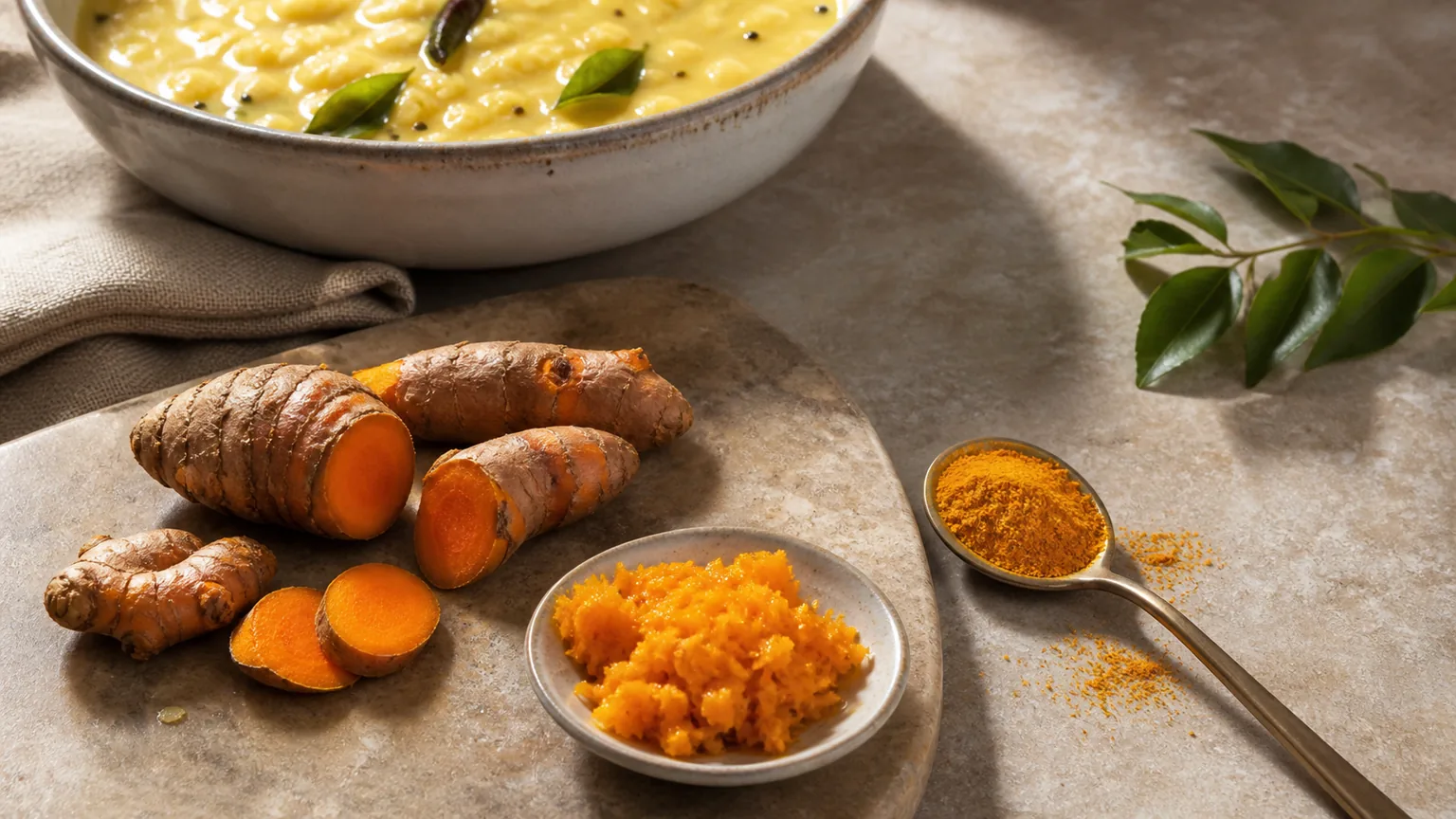
That volatility is also why the swap fails in both directions.
Put fresh turmeric in a long braise and the citrus is gone inside fifteen minutes, leaving you an expensive version of the powder. Go the other way, and ground turmeric in a fresh pickle or a dressing never gets the chance to shed its starch, so it reads gritty where the root would have read bright.
Fresh root also costs you something the powder does not, and it is worth knowing before you buy a bag. It stains hands, wooden boards, and plastic within seconds and far harder than the dried spice does, so grate it on a ceramic plate or wear gloves if you cook for a living.
It keeps about two weeks refrigerated and several months frozen, and since it grates more cleanly from frozen than fresh, the freezer is the better default.
None of which makes the powder a compromise.
For the dishes most people cook on a weeknight, the dried spice is the correct choice, not the convenient one. A dal or a braise needs the stable warm floor that drying produces, and it would have burned off the root's citrus lift in the first few minutes anyway.
How do you bloom turmeric without burning it?
Warm fat, twenty to thirty seconds, off a hard boil, then in with the aromatics. The technique is that short, so everything that goes wrong here is timing rather than method.
Fat is not optional the way it is with many spices, and the chemistry explains why.
Curcumin is fat soluble and barely dissolves in water. Stir turmeric into a watery pot and it stays suspended as particles instead of dispersing, and that suspension is most of what people taste when they call late-added turmeric powdery.
Blooming it in oil or ghee first puts the flavor into the medium that carries it through the whole dish, the same principle behind how spice solubility works across the rack.
Watch the color rather than the clock, since pans vary more than recipes admit. At around twenty seconds the powder darkens from pale yellow toward deeper orange and the oil takes the color with it.
That is the moment to move.
Wait longer and the edges brown and a sharp toasted smell rises, which means the window has already closed.
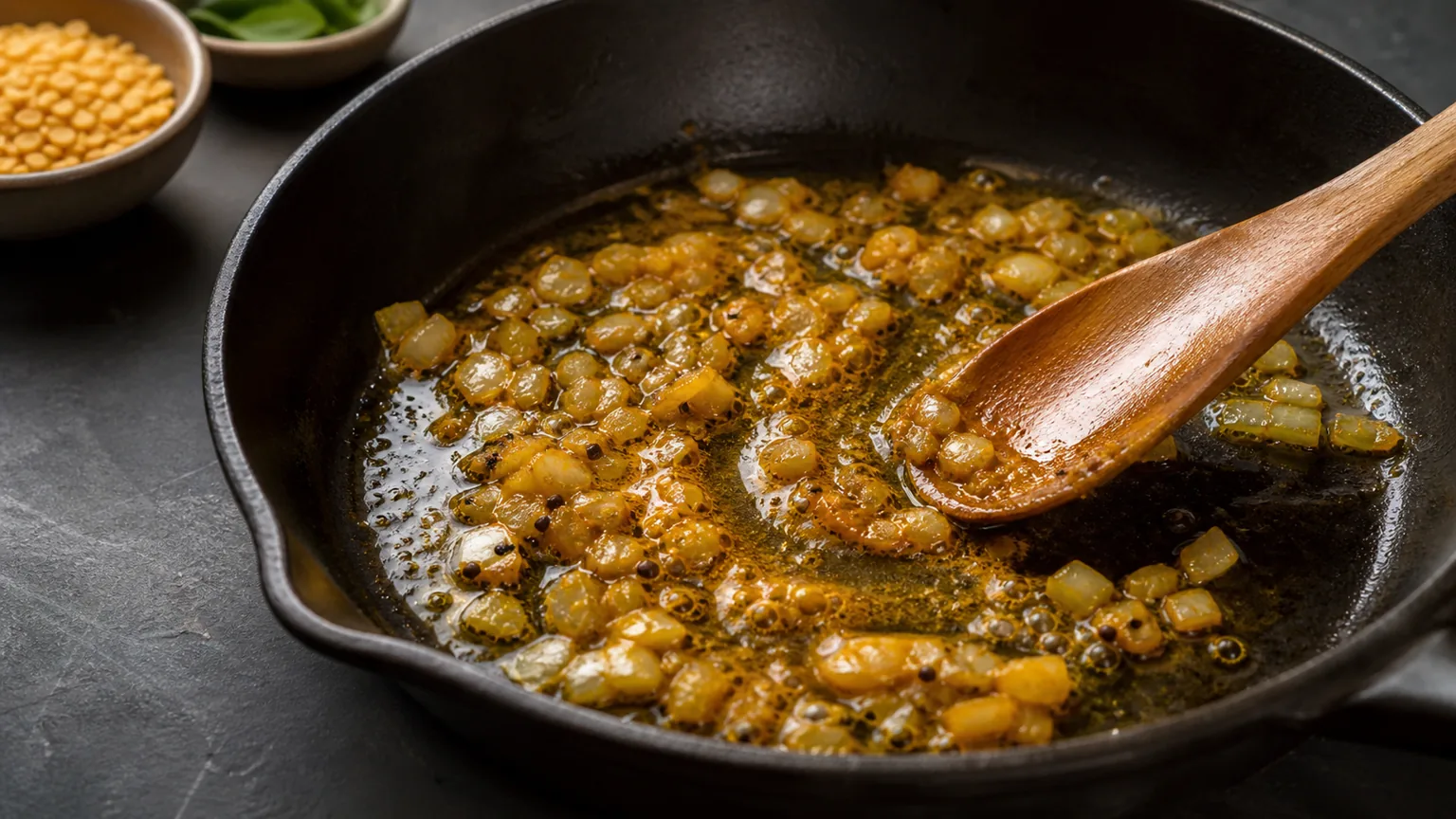
The margin is easy to buy back.
Pull the pan off the direct heat before the turmeric goes in, and most cooks stop burning it entirely. In a South Indian tadka the turmeric goes in last, after the mustard seeds have popped, for that same reason.
Two situations call for skipping the bloom altogether.
When turmeric is doing color work only, as in a pot of rice, stirring it into the cooking water is fine, because you are not asking the flavor to travel anywhere. And in a raw preparation there is nothing to bloom, which is precisely where the fresh root belongs instead.
The black pepper question comes up constantly and deserves a plain answer rather than a hedge.
Piperine does increase curcumin absorption. That result comes from supplement-scale doses studied for health outcomes rather than from cooking amounts, and the pepper absorption discussion handles it properly.
Pepper belongs in most dishes that contain turmeric because it tastes right there. That is reason enough without borrowing a claim the kitchen cannot support.
How much turmeric should you actually use?
Start from a quarter teaspoon in a pot of rice or dal for four, which buys color and effectively nothing else. Double it and the flavor begins to register, so half a teaspoon is where most daily cooking should sit.
Push to a full teaspoon per pound of protein or vegetables and turmeric becomes something the eater can name.
That rung is also where the trouble starts, because the bitterness waits immediately above it.
- Color only, no detectable flavor: 1/4 teaspoon per four servings of rice, potatoes, or lentils.
- Background depth, the usual daily amount: 1/2 teaspoon per pound of vegetables or protein.
- Forward and identifiable, for dishes built around it: 3/4 to 1 teaspoon per pound.
- Past 1 teaspoon per pound: bitterness climbs faster than either color or depth.
- Fresh root equivalents: about 1 inch of root per teaspoon called for.
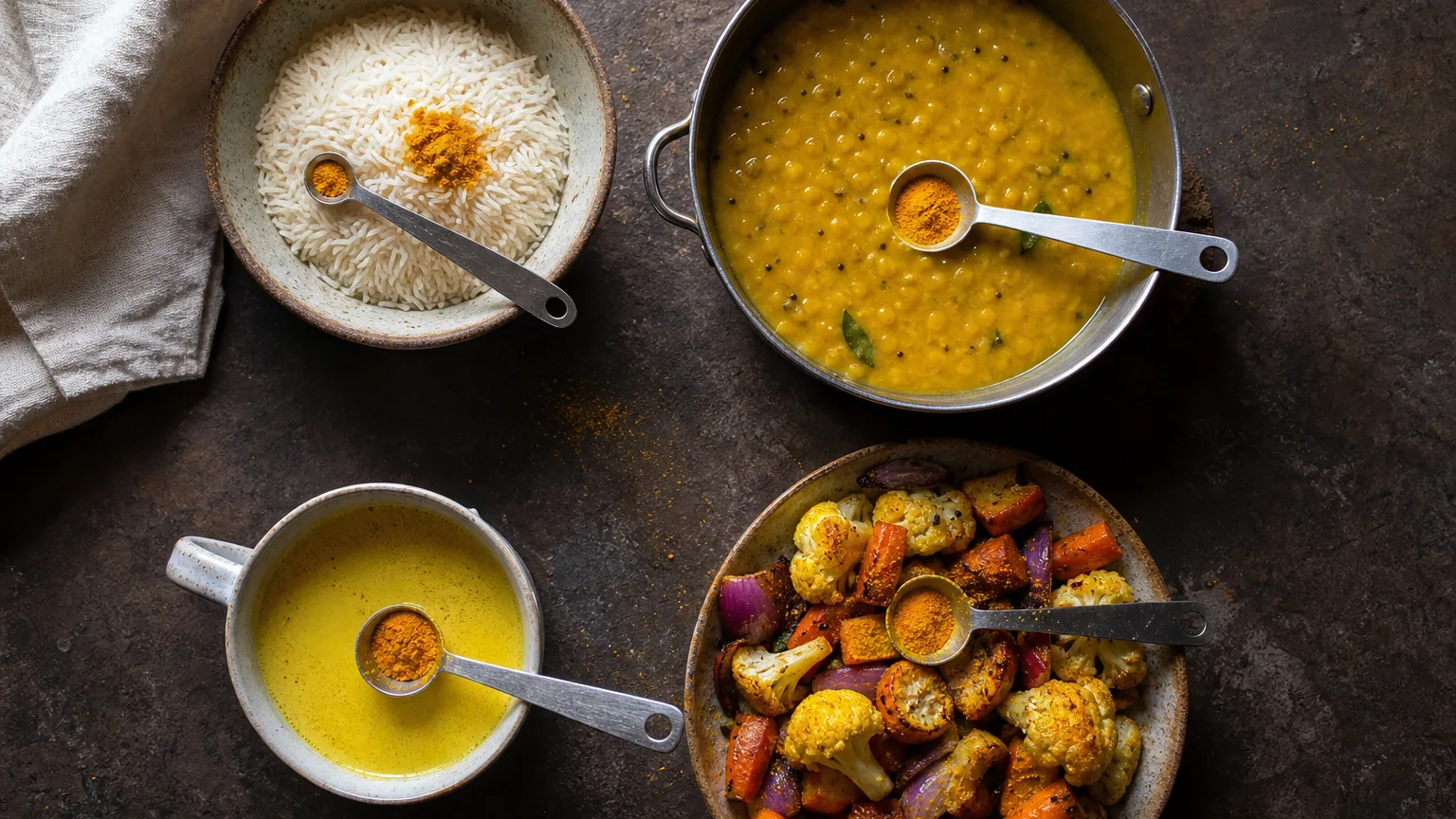
The ceiling sits lower than instinct expects, and the shape of the curve is the reason. Turmeric's bitter compounds rise with quantity in a straight line, while the earthy depth flattens out early.
So every extra half teaspoon past the useful range buys less flavor than the one before and more of the medicinal edge. That inverts the usual rule that an underpowered spice just needs more of itself.
What the dish is made of moves that ceiling further than most cooks realize.
Fat and dairy blunt bitterness directly, so a coconut milk curry or a yogurt marinade takes more turmeric than a thin tomato broth of the same volume before anything turns medicinal. Acid does similar work from the other side.
That leaves a watery dal with the least room of anything here, which is unlucky given how often it is the dish being seasoned.
Scaling up is where the ladder breaks if you follow it literally, because bitterness is a concentration effect while your perception of the earthy depth saturates. Triple a recipe and triple the turmeric and you will overshoot, so multiply by roughly two thirds of the factor instead, then taste at the end of blooming and adjust from there.
If the finished dish still reads flat, more turmeric is almost never the answer.
Reach for fat, salt, or acid first, since a flat curry base is far more often short of one of those. If it genuinely wants more earth, cumin carries that weight with much more headroom, and you can push it well past the point where turmeric would have turned on you.
What can you use instead of turmeric?
The question only becomes answerable once you decide which of turmeric's two jobs you are replacing, because nothing on a normal rack does both. Ask whether this dish wanted color or wanted earth, and the shortlist narrows immediately.
| Substitute | Ratio | Covers | Falls short |
|---|---|---|---|
| Annatto | 1/2 tsp per 1 tsp turmeric | Color, warmer and more orange | No earthy bass at all |
| Saffron | A large pinch per 1 tsp | Color, plus its own aroma | Costly, and takes the dish somewhere else |
| Curry powder | 1 to 1.5 tsp per 1 tsp | Both, since it already contains turmeric | Brings cumin, coriander, and fenugreek with it |
| Mustard powder | 1/2 tsp per 1 tsp | The bitter, pungent edge | Adds sharpness, contributes almost no color |
| Ground ginger | 1/2 tsp per 1 tsp | Warmth and a related aromatic family | Sweeter and brighter, no depth or color |
In practice the blend disappoints least, and the table shows why. A mild curry powder already contains turmeric alongside the cumin and coriander that normally sit beside it, so it arrives with the base largely intact instead of covering one job and abandoning the other.
The cost is that it settles several seasoning questions on your behalf, which is fine in a weeknight dal and wrong in a dish whose spice balance you were building deliberately.
The color-only case is much easier, and it is worth separating out so you do not overthink it. If turmeric was going into rice or potatoes purely to make them gold, annatto does that cleanly and a pinch of saffron does it beautifully.
Nobody at the table will miss an earthy floor the dish was never carrying. Save the harder thinking for the pot where turmeric was structural.
Two common swaps are worth naming as mistakes rather than options.
Paprika gets recommended constantly on the strength of being orange. It brings a sweetness and a fruit note that fight the savory floor turmeric was holding, so in a dal it reads as an error.
Ground cinnamon shows up in some lists on the strength of the word warm. That word describes a completely different warmth and will push a savory dish toward dessert.
Whatever you choose, accept that you are trading rather than replacing. If the dish was built on turmeric's depth, a color substitute leaves it thin no matter how right the pot looks.
Better to raise the cumin and let the dish be visibly paler than to chase the color and lose the base.
Buying turmeric that still has color left
Tip a little onto a white plate and look at it in daylight, because with this spice the color is the whole test.
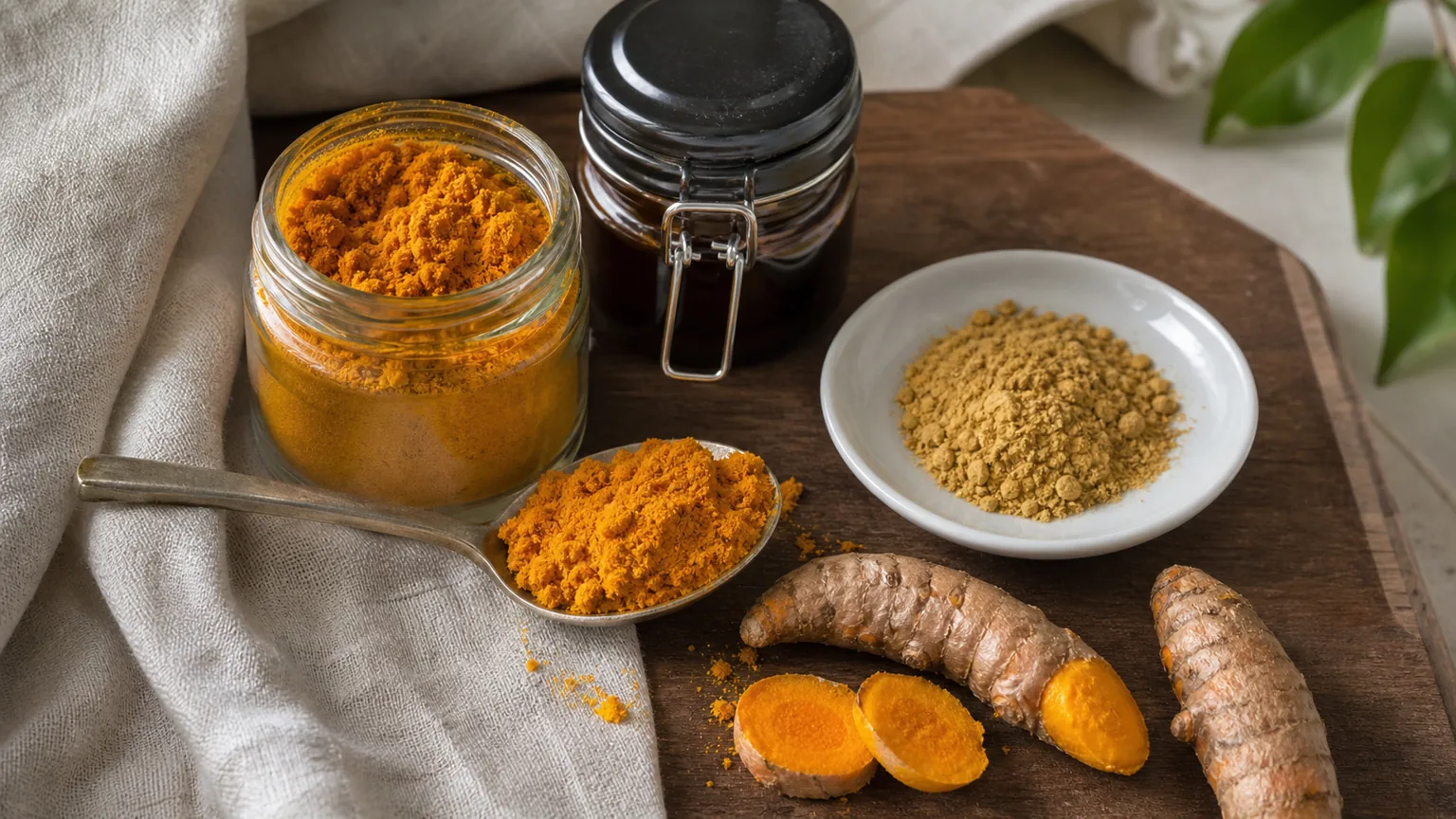
Living turmeric reads deep and faintly orange, and warming a pinch between your fingers brings up wood and earth. When the plate shows a pale flat yellow and the pinch smells of almost nothing, the jar has already gone, which is where most cupboard turmeric quietly sits.
That fading is not cosmetic, which is what makes the test trustworthy. Curcumin is both the pigment and the thing you are buying, and it is light sensitive.
So a clear jar on a sunny shelf loses color, and the flavor tied to it, far faster than the same spice in a tin at the back of a cupboard. The two go together, which makes turmeric one of the few spices that tells you honestly when it has expired.
Two grades are worth knowing by name, because the difference is large enough to notice in a pot.
Alleppey turmeric runs higher in curcumin and reads distinctly orange, so it is the better buy when you want the spice to carry weight in dal or rice. Madras is yellower and gentler, and it suits dishes where turmeric should stay in the background.
If you are willing to grind, whole dried fingers hold their color far longer than powder, the same tradeoff that applies to whole versus ground across the rack.
Given how fast the light gets at it, plan on replacing ground turmeric roughly every six months rather than treating it as a pantry permanent. Keep it dark and sealed and it will hold most of that window.
The general rules for storing spices and for judging when a jar has gone bad apply here too, with the color doing the work that guesswork does elsewhere.
Where the health story stops and the cooking starts
Most of the confusion clears up once you see the size of the gap between culinary turmeric and studied turmeric.
| The jar in your kitchen | The material in the trials | |
|---|---|---|
| Form | Ground rhizome, roughly 2 to 5 percent curcuminoids | Standardised extract, commonly around 95 percent curcuminoids |
| Amount in play | Half to one teaspoon across a dish for four | 500 to 2,000 mg of curcumin a day |
| Absorption | Poor from food, and never the reason to cook with it | Raised deliberately, often by formulation or added piperine |
That gap is why the health conversation runs on concentrated extracts rather than on the jar in your cupboard.
That does not make the research meaningless, but it does mean the research is not what should get you cooking. The National Center for Complementary and Integrative Health treats the evidence as unsettled rather than settled either way, and the full picture belongs with the turmeric and inflammation discussion where the studies can be weighed properly.
What survives all of that is the part that was never in dispute.
Turmeric earns its place because dal, rice, and vegetable dishes taste structurally better with it and noticeably flatter without it, and that was true for several thousand years before anyone measured a curcuminoid. Buy it for the dal, and treat anything else it turns out to do as a bonus you were not paying for.