
Mustard Seed Turns Nutty or Sharp by How You Use It
Choose the seed color, then control heat and moisture before the flavor moves in the wrong direction.
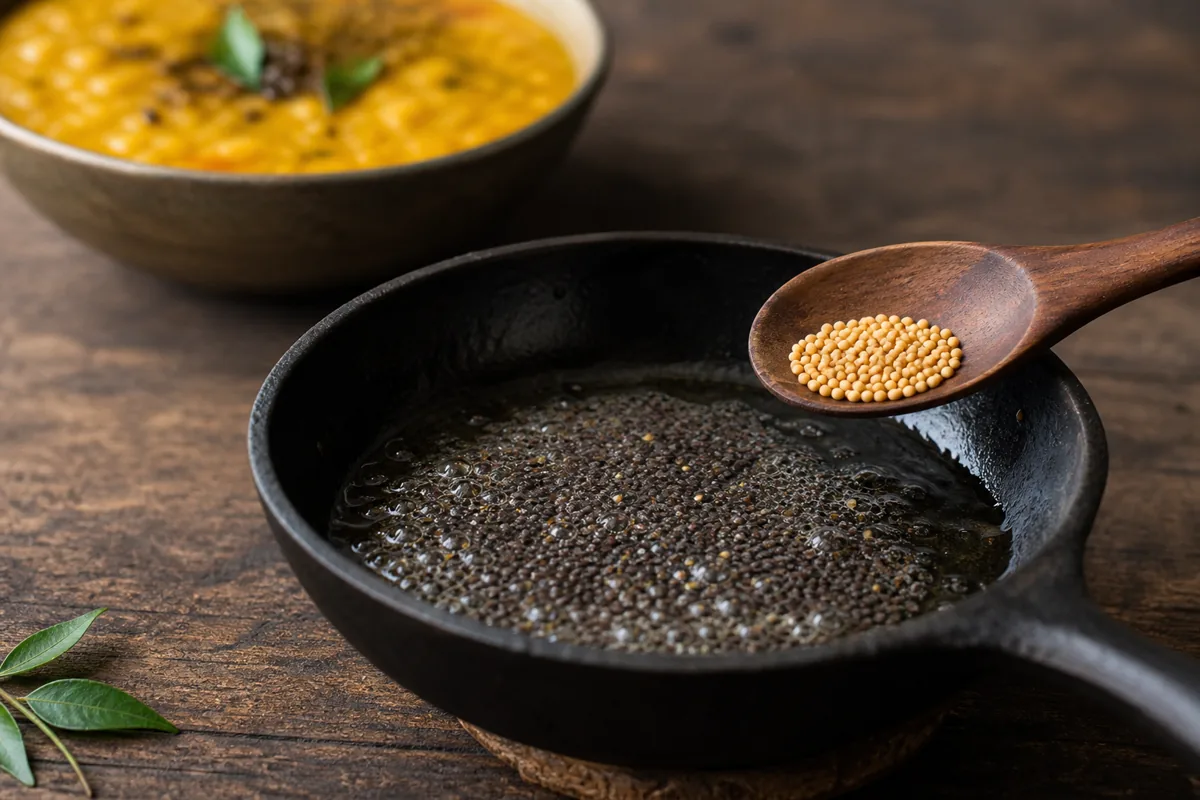
Keep mustard seed whole and pop it in hot oil for a nutty tempering, or crush it with cool liquid for sharp mustard flavor. Yellow seeds are mildest, brown seeds are hotter, and black seeds give the strongest bite, but heat softens pungency and burnt seeds cannot be rescued.
What do mustard seeds taste like?
Mustard seed can taste toasted and nutty or nasal-sharp, depending on whether you keep it whole or break it. The seed itself starts surprisingly quiet.
Whole seeds need hot fat to crackle and release a rounded roasted aroma suited to vegetables, dal, rice, and pickles.
Crushing the seed exposes glucosinolates and the enzyme myrosinase. Water lets them react and form pungent mustard compounds.
The same flavor chemistry explains why dry powder smells mild until moisture reaches it. Hot water and long cooking weaken the sharp reaction.
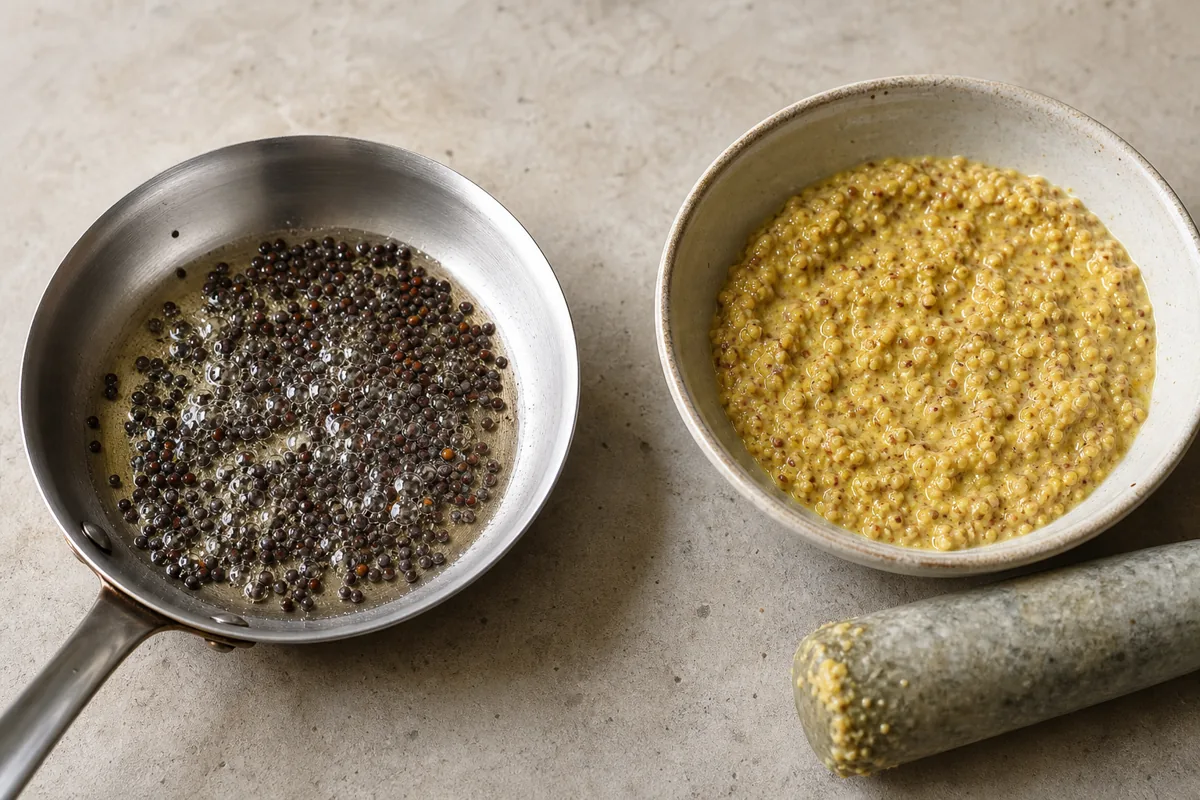
- Whole and dry: The seed remains mild, hard, and easy to store.
- Whole in oil: Brief frying adds toastiness and a light nutty bite.
- Crushed with water: Pungency rises as the damaged seed hydrates.
- Cooked after mixing: Heat softens the sharp edge and leaves a gentler mustard note.
Taste tells you which path succeeded. Popped seed should be crisp and nutty, while hydrated powder should smell sharp before it tastes bitter.
Do not expect dry whole seed to season food immediately. It needs heat, crushing, or time in a brine before its character becomes clear.
Which mustard seed color should you use?
Use yellow mustard seed for mild pickling and prepared mustard, brown seed for stronger pungency, and black seed for assertive hot-oil tempering.
Yellow seeds are the largest and palest, with gentle heat that suits brines, cabbage dishes, and coarse mustard.
Smaller brown seeds bring a clearer bite to Indian dishes, spicy mustard, rubs, and pickles.
Black seeds are tiny and commonly used for tempering. Their aroma stands up to curry leaves, dried chile, turmeric, and rich cooking fat.
| Seed | Heat | Best use | Watch for |
|---|---|---|---|
| Yellow or white | Mild | Pickles, cabbage, coarse mustard | Can disappear in strongly spiced food |
| Brown | Medium to hot | Curries, rubs, spicy mustard | Ground seed becomes sharp quickly |
| Black | Hot and aromatic | Hot-oil tempering, dal, vegetables | Tiny seeds burn fast after popping |
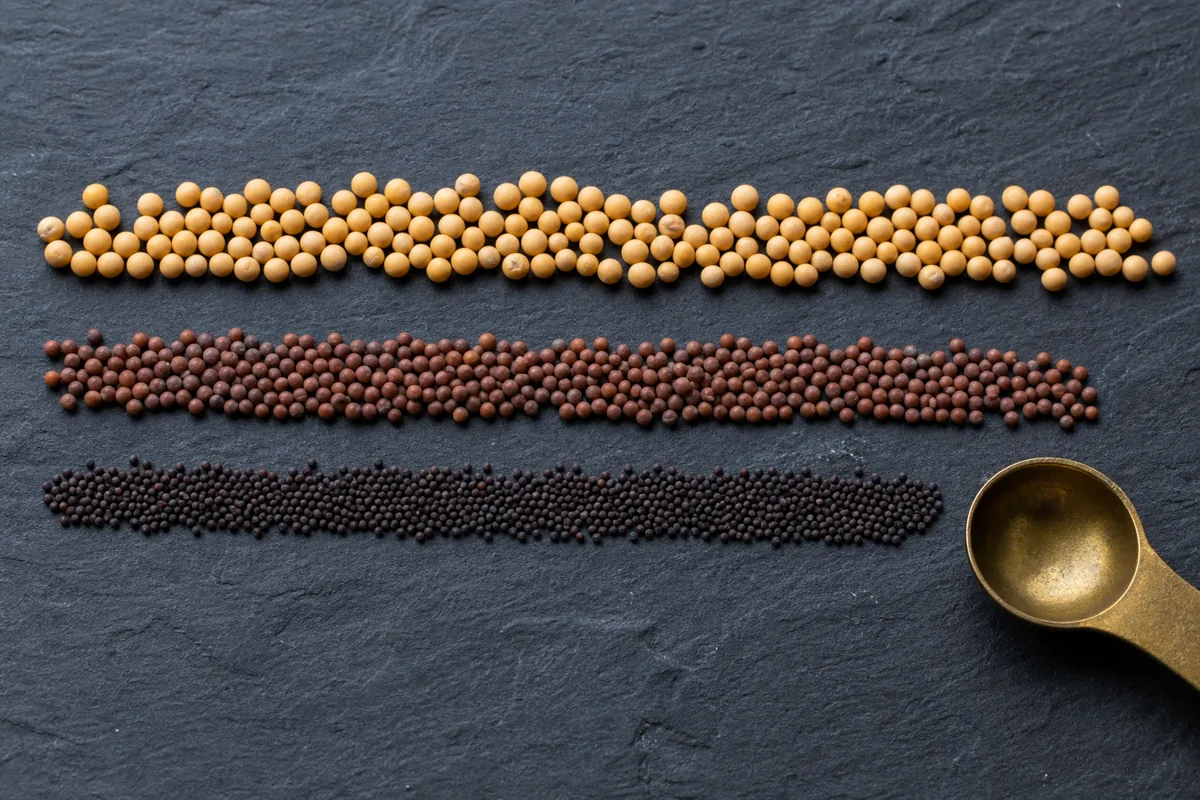
- Yellow: Large pale seeds make a mild starting point for brines and condiments.
- Brown: Smaller brown seeds bridge prepared mustard and savory cooking.
- Black: The smallest seeds give a bold pop and dark specks in finished food.
- Seller labels: Brown and black names sometimes blur, so compare size, color, and stated origin.
Brown and black seeds can often replace each other in a cooked tempering. Reduce black seed slightly when the dish has little fat or liquid to soften it.
Why do mustard seeds pop in hot oil?
Mustard seeds pop because heat builds pressure inside the seed until the coat cracks. The crack exposes flavor and changes the texture from hard to crisp.
Heat the oil until it shimmers, then add a few seeds as a test. They should sizzle and begin moving within seconds.
Use a small pan with a lid or splatter screen, then lower the heat once the popping becomes active.
- Oil too cool: Seeds sit on the bottom, absorb fat, and keep a raw bitter center.
- Oil ready: Test seeds fizz, spin, and pop without smoking the oil.
- Useful window: Add the next ingredient when most seeds have popped and the aroma turns nutty.
- Too far: Smoke and an acrid smell mean the seeds have burned and the fat needs replacing.
This is a focused form of blooming spices in oil. Whole mustard needs a hotter start than fine turmeric or ground chile.
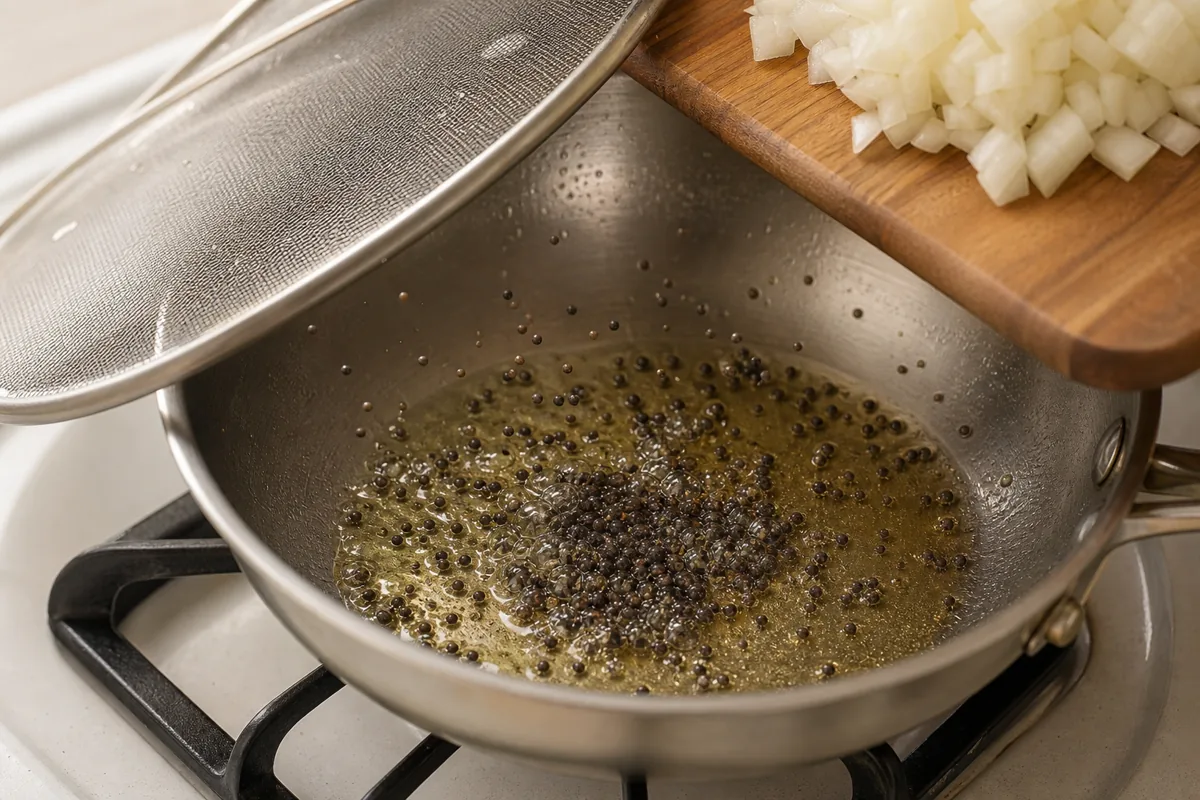
- Shimmer: The oil surface moves before any smoke appears.
- Crackle: Seeds jump and expose their toasted aroma.
- Contain: A lid held partly over the pan stops escaping seeds.
- Follow fast: Onion, lentils, vegetables, or liquid cool the pan and stop the roast.
Add wet ingredients carefully because hot fat can spit. Dry onion, cooked lentils, or drained vegetables are easier to control than water poured straight in.
Mustard seed often shares the fat with whole cumin seeds, but the two do not always finish together. Add the slower or larger seed first.
How do you make mustard seed taste sharp?
Crush mustard seed and mix it with cool water when you want sharpness. The damaged seed and moisture start the reaction that creates mustard pungency.
A coarse grind gives texture and slower extraction. A fine powder hydrates quickly and spreads a stronger bite through the whole mixture.
Cool water preserves more enzyme activity than hot water. Let the mixture stand briefly before adding heat or acid if maximum pungency is the goal.
| Treatment | Flavor result | Use it when |
|---|---|---|
| Cool water after grinding | Strong, rising pungency | You want a sharp paste or marinade base |
| Hot water after grinding | Milder and flatter | You want mustard flavor without much bite |
| Acid after activation | Slows later flavor change | Vinegar or lemon belongs in the final mixture |
| Long cooking | Soft, integrated mustard note | The seed should support a sauce or braise |
This behavior separates mustard from ordinary whole and ground spices. Grinding changes surface area, but water also starts an enzyme reaction.
Add vinegar too early only when you want a gentler result. Acid changes the reaction before the sharpness has fully developed.
Cooking will not restore sharpness once heat has removed it. Add a small freshly hydrated portion late if a finished sauce tastes too quiet.
Do not taste a large spoonful of fresh mustard mixture. Start with the tip of a spoon because the heat reaches the nose before the tongue adjusts.
What dishes use whole mustard seeds?
Whole mustard seeds work best where the food can catch their toasted aroma and occasional crisp bite. Wet dishes and chopped vegetables distribute them well.
In South Asian cooking, black or brown seeds often start dal, potatoes, cabbage, okra, chutney, and rice. They commonly meet ground turmeric after popping.
Yellow seeds suit cucumber pickles, beans, relishes, braised cabbage, and fish. Brine softens them, but they remain visible and pleasantly firm.
The Indian spice pantry uses mustard as a timed whole seed, not a background powder in every curry. Its place depends on region and dish.
| Dish | Seed move | Result |
|---|---|---|
| Dal or beans | Pop black or brown seed in fat | Nutty aroma spreads through the liquid |
| Potatoes or cabbage | Temper before adding vegetables | Crisp seeds punctuate soft pieces |
| Pickles or relish | Add yellow seed to the brine | Mild mustard develops during storage |
| Fish or pan sauce | Crush yellow seed lightly | Gentle mustard supports butter and acid |
You can eat properly cooked whole seeds. Raw dry seeds are safe as a spice, but their hard texture and uneven bitterness rarely improve a finished dish.
A seed-heavy dry dish can feel gritty. Use less seed or add enough onion, vegetables, or sauce to spread each bite.
How much mustard seed should you use?
Start with one-half teaspoon of whole mustard seed for four servings when tempering dal, vegetables, or rice. Increase only after you know the seed color.
One teaspoon usually suits a broad pan of cabbage or potatoes. A small pot may need only one-quarter teaspoon of black seed.
- Four-serving tempering: Start with one-half teaspoon of brown or black seed.
- Large vegetable pan: Use one teaspoon when the food can spread the seeds widely.
- One liter of brine: Start with one to two teaspoons of mild yellow seed.
- Ground mustard: Begin with one-quarter teaspoon because fine powder reaches every bite.
A level spoon measurement matters with tiny black seeds. A heaped spoon can double the amount without looking dramatic.
Adjust by cooking method, not courage. Popped whole seed tastes milder than the same amount freshly ground and hydrated.
When the pan contains too many whole seeds, add more base food or liquid. Picking them out after popping is rarely practical.
What can you substitute for mustard seed?
Choose a mustard seed substitute by the missing job. Whole-seed crackle, sharp pungency, and acidic prepared mustard need different replacements.
Brown and black mustard seed can usually swap one for one in cooked food. Yellow seed is milder, so it may need a little more.
Prepared mustard can replace ground seed in a sauce, but it also adds vinegar, salt, and water. Reduce other acidic or salty ingredients first.
| Missing job | Best move | Starting point | What changes |
|---|---|---|---|
| Black-seed tempering | Brown mustard seed | Use one for one | Slightly less assertive pop |
| Brown seed in a brine | Yellow mustard seed | Use one for one | Milder heat |
| Ground mustard in sauce | Prepared mustard | Use three times the volume | Adds acid, salt, and liquid |
| Nutty whole-seed texture | Cumin seed | Use half as much | No mustard pungency |
The broader spice substitution rule is to replace the flavor job, not the ingredient name. Cumin gives toastiness but cannot create mustard heat.
Omit mustard seed when it is a minor garnish and no suitable seed is available. A poor swap can redirect the whole dish.
Do not add prepared mustard directly to very hot oil. Its water can spit, and its vinegar changes the sauce before the other ingredients arrive.
How can you tell whether mustard seed is fresh?
Fresh mustard seed should produce a clear nutty smell in hot oil or a sharp aroma after crushing and moistening. Old seed often adds only grit.
Crush five seeds with the back of a spoon, add one drop of water, and wait a minute. A useful batch should smell distinctly mustard-like.
A hot-oil test gives another answer. Fresh whole seeds pop readily, although oil temperature and seed moisture also affect the timing.
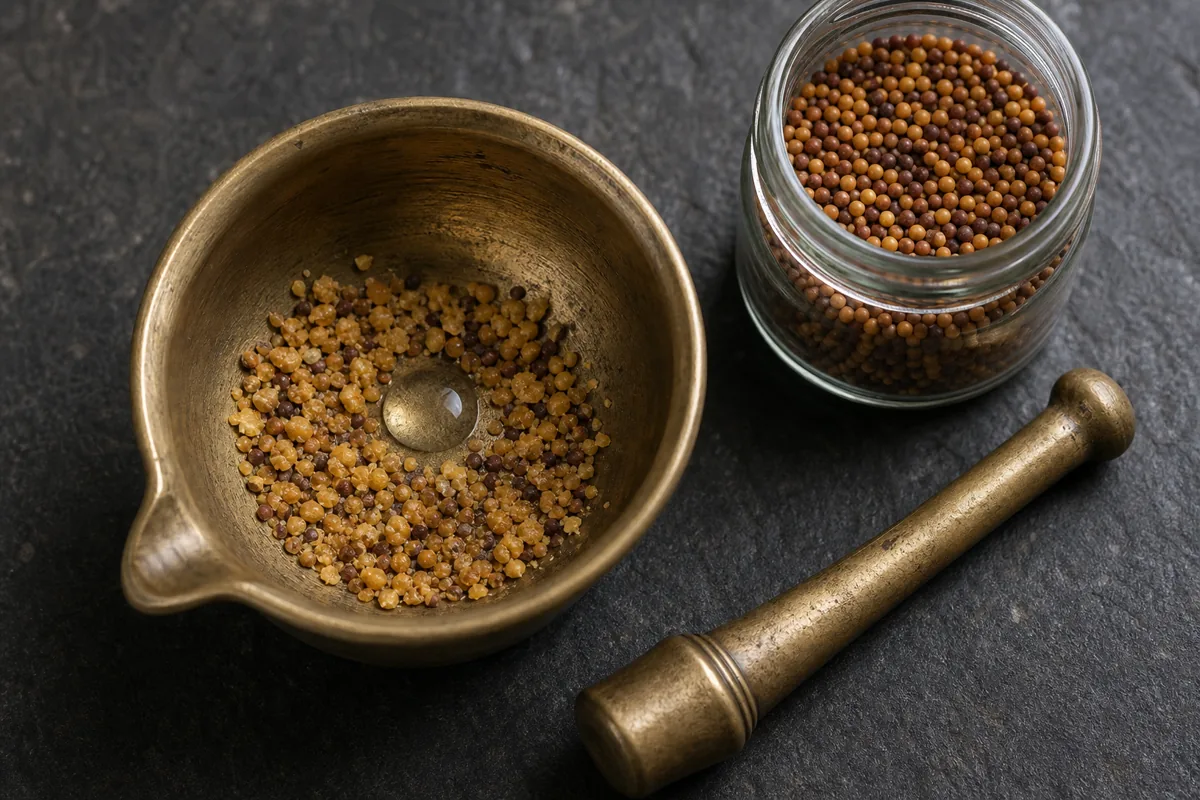
- Dry seed: Look for firm grains without damp clumps, webbing, or pantry dust.
- Crushed aroma: Moist seed should become pungent rather than smell like plain bran.
- Oil test: Whole seeds should crackle once the oil reaches the correct heat.
- Storage: Keep the jar sealed, dark, and away from stove steam.
Whole seed keeps its oils protected longer than ground mustard. Follow dry spice storage and grind only what you expect to use soon.
Discard seeds with mold, insects, damp clumps, or a musty odor. Weak but clean seed is a quality problem, while moisture introduces a safety concern.
When buying online, choose a seller that identifies the seed color and pack date. Those freshness signals matter more than decorative packaging.
Buy black seed in smaller amounts if you use it only for occasional tempering. A compact fresh jar performs better than a large silent one.