
What Are Nigella Seeds, and Are They Black Cumin?
Identify the right black seed, then use heat and texture to place its sharp aroma.
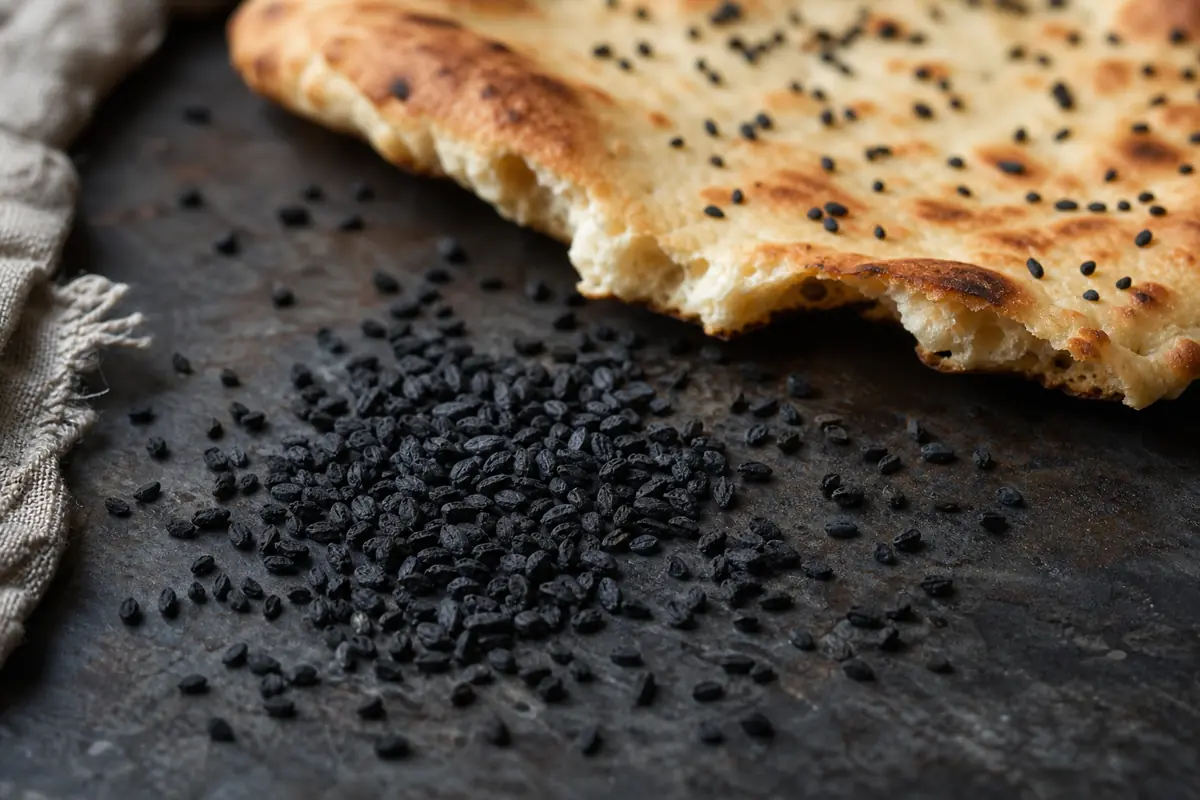
Nigella seeds are small, angular Nigella sativa seeds with peppery, onion-like, herbal flavor and a dry crunch. Toast or fry them only until fragrant, use about one teaspoon per 500 grams of bread flour, and keep whole seeds airtight. Black sesame can copy their color, but no single substitute recreates both their aroma and texture.
What are nigella seeds, and are they black cumin?
Nigella seeds are the dried seeds of Nigella sativa, a flowering plant in the buttercup family. Cooks use the tiny black seeds as a spice, bread topping, and pickle seasoning.
Kalonji and black seed usually mean Nigella sativa in South Asian and Middle Eastern food shops. Black onion seed is another market name, although the plant is unrelated to onions.
The seed itself is matte black, rough, and angular, with several flat faces and pointed edges.
Black sesame is smoother, shinier, oval, and flatter.
True black cumin may refer to Elwendia persica, also sold as Persian cumin or kala jeera. Its seeds are narrow and curved rather than chunky and triangular.
| Ingredient | Shape | Aroma | Cooking result |
|---|---|---|---|
| Nigella seeds | Rough, angular, and pointed | Pepper, onion, and dry herbs | Sharp aroma with a crisp bite |
| Black sesame | Smooth, flat, and oval | Nutty and gently sweet | Rich sesame flavor and softer crunch |
| Persian black cumin | Slender, ridged, and curved | Earthy and cumin-like | Warm cumin direction without nigella bite |
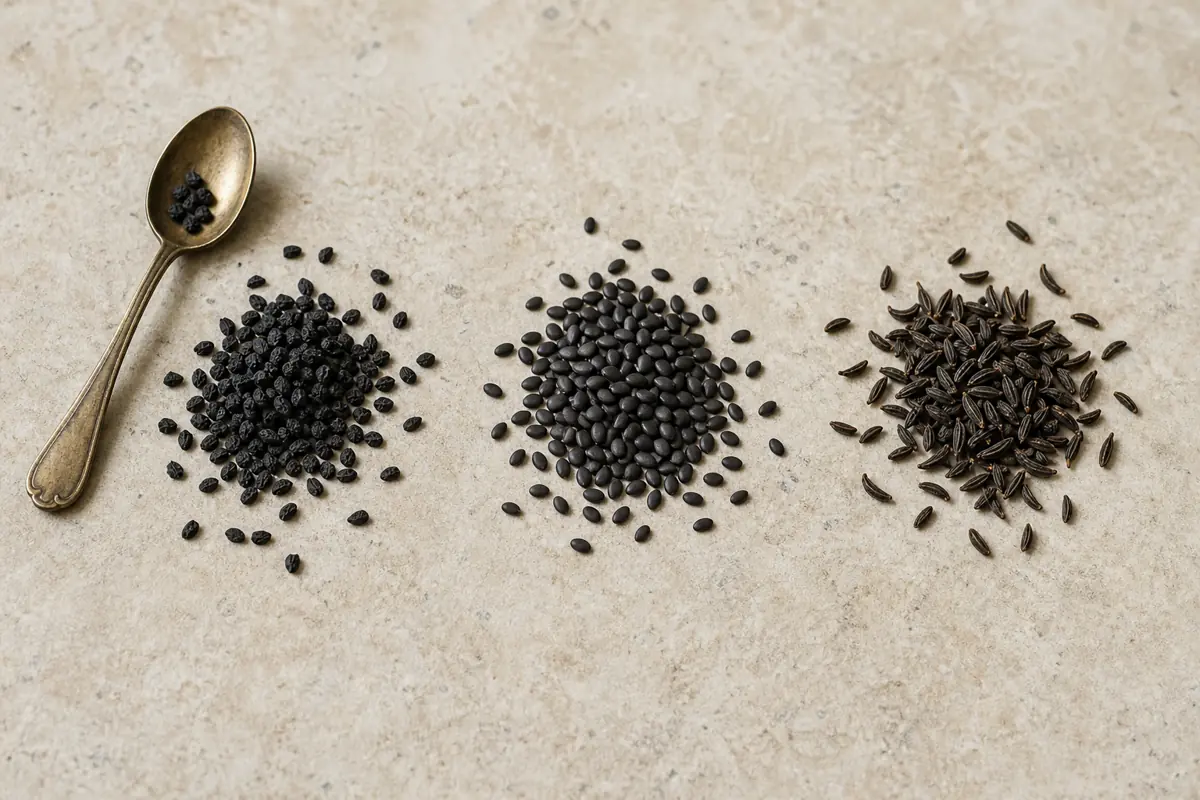
- Nigella: Rough, matte seeds have uneven teardrop and blunt wedge shapes.
- Black sesame: Smooth oval seeds look flatter and more uniform.
- Persian cumin: Long curved seeds carry clear ridges.
- Scale: A teaspoon shows how small true nigella seeds are.
A package that says black cumin is not specific enough by itself.
Check for Nigella sativa on the ingredient line and inspect the seed shape through a clear window.
Black seed oil and capsules are concentrated products with a different purpose. A culinary jar should contain recognizable whole or ground seed for measured food use.
What do nigella seeds taste like?
Nigella seeds taste peppery, onion-like, herbal, and lightly bitter. The aroma can suggest dried oregano, toasted onion, and a faint smoky edge without matching any one of them.
A whole raw seed begins quiet, then releases a sharper flavor when chewed.
Its hard shell adds a dry crunch that remains noticeable on soft bread or tender vegetables.
Crushing exposes more aromatic oil at once, so the herbal and pepper notes arrive faster. Fine powder also spreads the bitter edge through every bite.
Brief heat makes the aroma rounder and more savory. Too much heat leaves a scorched bitterness that tastes harsher than the pleasant bitter finish of a fresh seed.
Fresh seeds smell clearly peppery when rubbed or crushed.
A dusty jar with almost no aroma will still add black flecks, but little useful flavor.
Should you toast nigella seeds or fry them in oil?
Toast nigella seeds briefly when you want a dry, nutty edge, or fry them in oil when their aroma must spread through a dish. Both methods need moderate heat and close attention.
For dry spice toasting, warm a pan over medium heat and add one even layer. Shake for 30 to 60 seconds, then remove the seeds when they smell peppery and savory.
The black color makes visual browning difficult to judge.
Aroma and the first light movement in the pan are safer cues than waiting for a dramatic color change.
For blooming in oil, add nigella to warm oil or ghee before wet ingredients. Ten to 20 seconds is often enough for the oil to carry the aroma.
- Dry pan: Use for a topping, seed mix, or last-minute crushed seasoning.
- Warm fat: Use when vegetables, lentils, or a sauce need the aroma distributed.
- Bread surface: Add raw seeds before baking because the oven will toast them.
- Wet simmer: Add after a brief fat step so water does not trap the seeds at raw flavor.
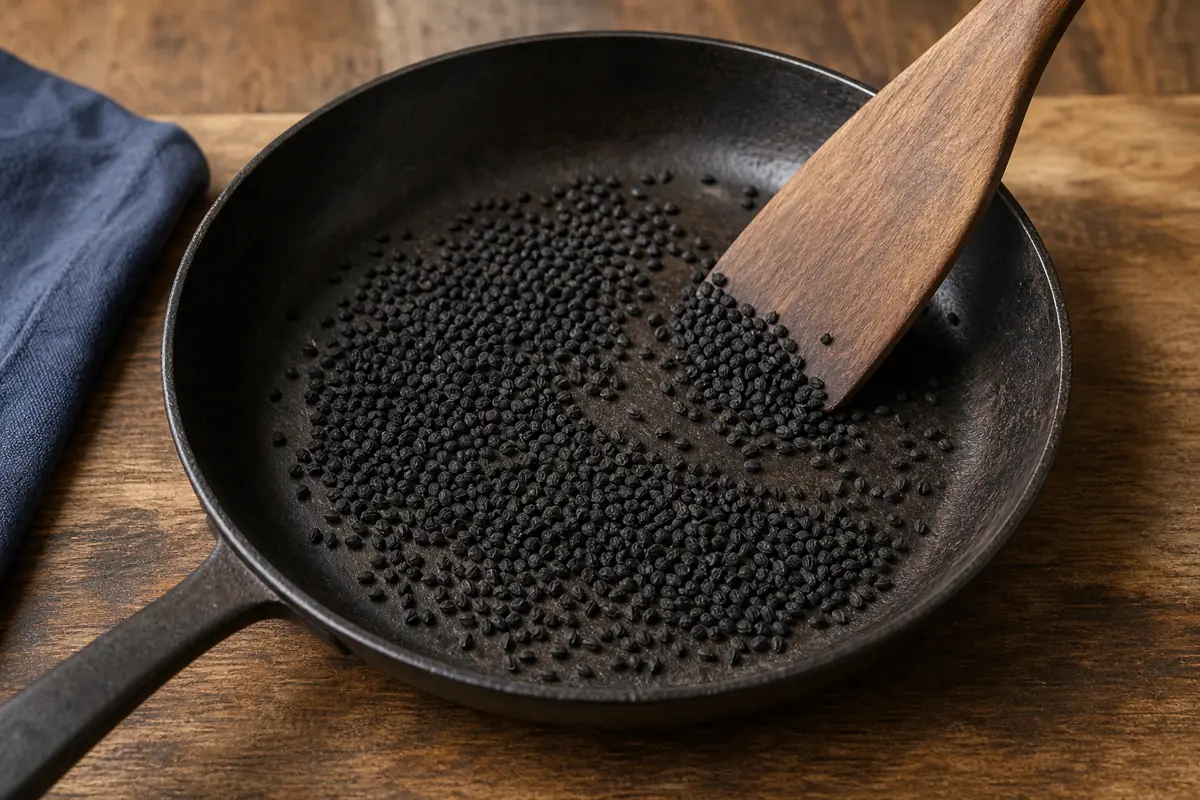
- One layer: Crowding makes the small seeds heat unevenly.
- Moderate heat: The pan should warm the oils without smoking.
- Constant movement: A spatula prevents one dark patch from scorching.
- Aroma cue: Peppery fragrance tells you to leave the pan.
Do not wait for nigella to pop like mustard seed. A few seeds may shift, but vigorous popping is the wrong stopping signal.
Burned nigella gives oil a bitter smell and cannot be repaired with liquid.
Discard the small batch of seeds and oil, then restart at lower heat.
How much nigella seed should you use?
Start with one teaspoon of nigella seeds for 500 grams of bread flour. That amount makes the topping or crumb recognizable without turning each bite bitter.
For four servings of vegetables or lentils, begin with one-half teaspoon. Use up to one teaspoon when the dish contains enough starch, fat, or sweetness to soften the sharp edge.
A quart of pickle brine usually needs only one-half to one teaspoon, especially when mustard, fennel, or fenugreek joins the mixture.
Acid keeps nigella tasting bright.
| Food | Starting amount | Best placement | Too much tastes like |
|---|---|---|---|
| Bread with 500 g flour | 1 teaspoon | Surface or dough | Dry bitterness in every bite |
| 4 servings vegetables | 1/2 teaspoon | Briefly fried in fat | Harsh herbal flecks |
| 4 servings lentils | 1/2 teaspoon | Warm oil at the finish | Medicine-like aftertaste |
| 1 quart pickle brine | 1/2 to 1 teaspoon | Whole in the brine | Bitter seed dominance |
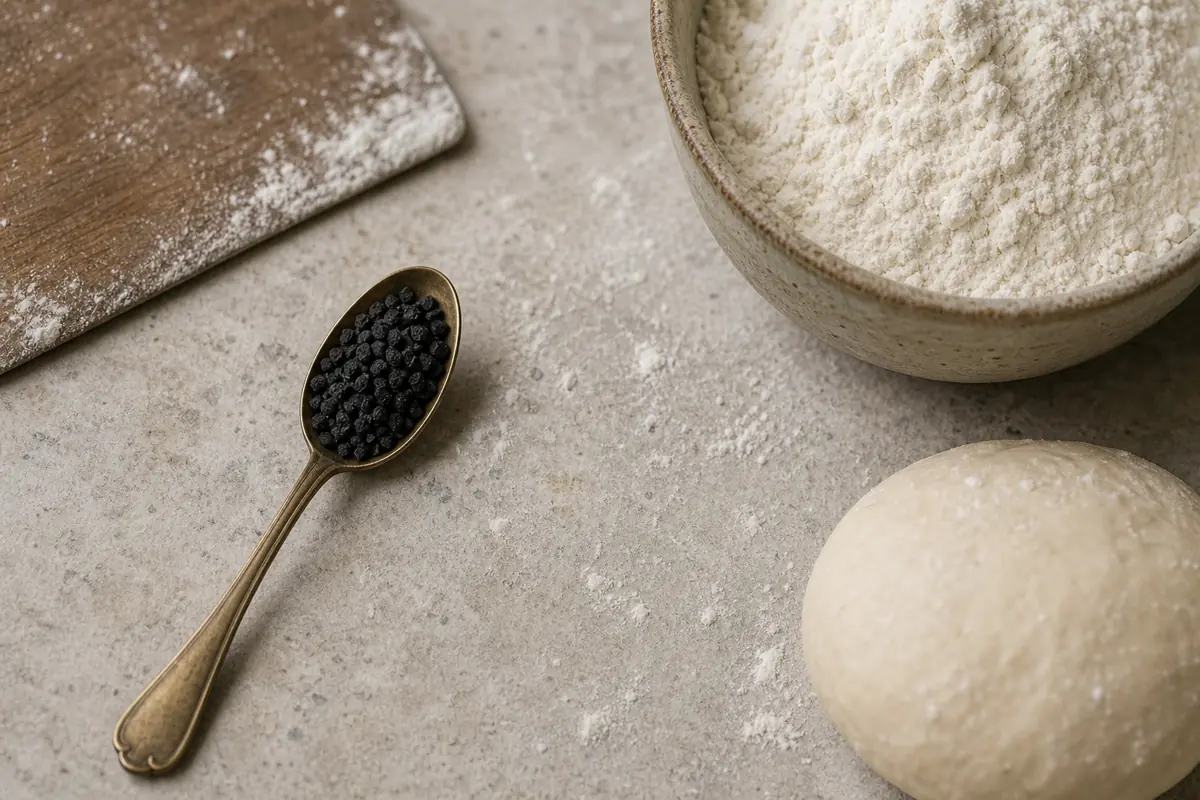
- Level spoon: Sweep away the mound instead of judging a heap.
- Flour reference: One teaspoon suits about 500 grams of flour.
- Test dough: A small first batch reveals how strongly the jar seasons.
- Placement: Surface seeds taste stronger than the same amount mixed inside.
Use a level spoon measurement for the first batch and record where the seeds went. Surface seeds taste more concentrated than the same amount mixed through dough.
If a cooked dish has too much nigella, increase the unseasoned vegetables, lentils, or sauce.
Sugar alone will not remove the peppery bitterness.
Which dishes use nigella seeds best?
Flatbreads are the clearest home for nigella because the blistered surface toasts the seeds and leaves their aroma exposed. Naan, Turkish breads, and several Middle Eastern loaves use them this way.
Press the seeds onto damp dough, egg wash, or a thin film of oil before baking.
Loose seeds added after baking fall away and taste raw.
Potatoes, carrots, squash, cabbage, cauliflower, and eggplant balance nigella with sweetness or browned edges. Fry the seeds first, then add the vegetables before the aroma turns bitter.
Lentils and beans take nigella well when the seeds bloom in a small spoonful of oil poured over the finished pot. This keeps the aroma clearer than a long simmer.
Pickles use the whole seed for sharp aroma and visual contrast.
Vinegar, salt, and crisp vegetables give the hard seed enough texture around it.
In the Indian spice pantry, Bengali panch phoron combines nigella with four other whole seeds. Nigella supplies a dark, peppery note rather than the entire flavor.
- Flatbread: The oven toasts exposed seeds while the soft crumb catches loose aroma.
- Sweet vegetables: Caramelized surfaces calm the bitter edge.
- Lentils: A small hot-fat finish spreads the spice across a mild base.
- Pickles: Acid keeps the aroma brisk and the whole seeds visible.
- Soft cheese: Creamy fat cushions the peppery bite on a bread or salad.
Nigella can also season rice, eggs, salad, and roasted nuts, but it needs a defined role.
Random black flecks do not guarantee that the flavor fits.
Can you grind nigella seeds?
You can grind nigella seeds, but coarse crushing usually gives better control than a fine powder. Broken seeds release aroma while preserving small crisp flecks.
Use a mortar for a spoonful, or follow the home spice grinding method with short pulses.
Long grinding warms the oily seed and makes powder cling.
Grind immediately before mixing into dough, a spice paste, or a dry seasoning. The same whole versus ground tradeoff makes exposed nigella fade faster.
Keep the seeds whole for pickles, bread toppings, and visible seed blends. Fine powder makes sense only when the dish cannot tolerate a hard seed texture.
What can you substitute for nigella seeds?
No single nigella substitute reproduces its onion-like aroma, herbal bite, dark color, and crisp shell. A substitution by function starts with the feature that matters most.
Black sesame is the easiest visual substitute on bread, but it tastes nutty and mild.
Add a small pinch of dried oregano when aroma matters more than strict simplicity.
Cumin works in lentils, vegetables, and meat when an earthy seed note is acceptable. Start with half the nigella amount because cumin becomes dominant quickly.
Mustard seed fits pickles and hot-fat cooking, yet it brings a cleaner mustard bite and different texture. It may pop in oil, so the cooking cue changes.
| Dish need | Best option | Starting swap | What changes |
|---|---|---|---|
| Dark bread topping | Black sesame plus oregano | Equal sesame plus a pinch | Nuttier with less pepper bite |
| Cooked vegetable aroma | Cumin plus oregano | Half cumin plus a pinch | Earthier and less onion-like |
| Pickle seed | Mustard seed | Use an equal amount | Sharper mustard flavor |
| Soft dish without seed texture | Dried oregano | Use one-quarter amount | Herbal aroma without crunch |
Omit nigella when a substitute would redirect a delicate dish.
A plain bread is better than one that unexpectedly tastes strongly of cumin or mustard.
How should you buy and store nigella seeds?
Use the same online spice buying checks for nigella, including clear identity and recent packing. Whole seeds should look matte, angular, and mostly free of dust.
Crush two seeds before buying from an open bin when permitted. Fresh nigella gives a clear peppery, onion-like smell instead of a flat dusty odor.
Good dry spice storage keeps nigella in an airtight jar inside a dark, cool cabinet.
A shelf beside the stove adds repeated heat and steam.
- Correct shape: Choose rough, angular seeds rather than smooth oval sesame.
- Clear aroma: A crushed seed should smell peppery and savory.
- Small package: Buy an amount you can use while the aroma remains vivid.
- Dry container: Keep steam and wet spoons away from the jar.
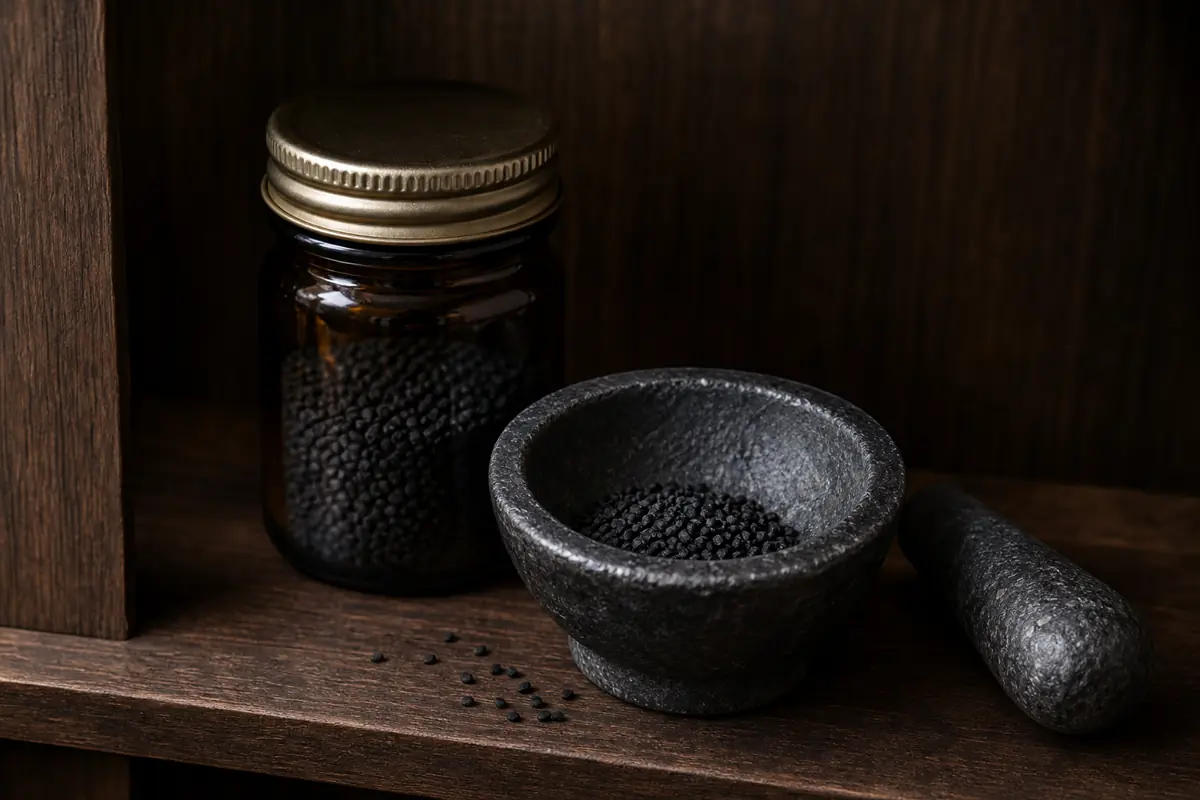
- Whole reserve: Intact seeds expose less aromatic oil to air.
- Tight lid: The jar blocks humid kitchen air.
- Dark shelf: Cabinet shade limits repeated light exposure.
- Crush test: Bruise only a few seeds and check for a peppery smell.
Whole seeds keep their useful aroma longer than powder, but no calendar date can replace a crush test. Replace the jar when the inside smells only dusty.
Freeze a tightly sealed bulk supply when you use nigella slowly. Let the closed container warm before opening so humid air does not condense on cold seeds.
Discard seeds with mold, insects, moisture clumps, or a rancid oily smell.
More toasting cannot restore damaged flavor.