
What Do Fennel Seeds Taste Like, and How Do You Use Them?
Fennel seeds can taste honeyed and herbal or dark and medicinal. Toasting, form, dose, and cooking context decide which side reaches the plate.
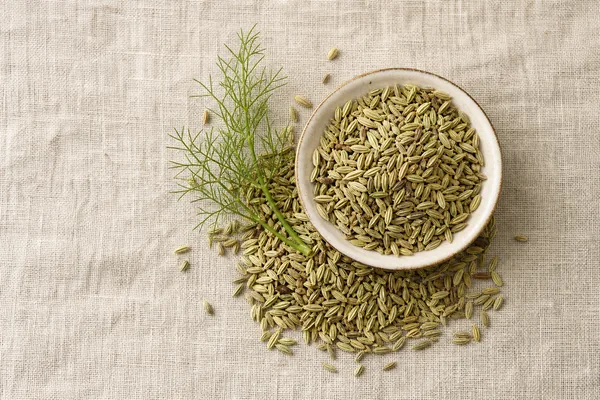
Fennel seeds bring sweet anise aroma, citrus, and a faint green bitterness to pork, fish, bread, vegetables, and spice mixtures. Gentle heat makes that aroma clearer, while hard toasting or a heavy dose can turn it medicinal. Learn the fragrance cue, choose whole, crushed, or ground seed for the dish, and start with an amount you can still adjust.
What fennel seeds actually taste like
Fennel seeds taste sweet, anise-like, lightly citrusy, and herbal. Their aroma resembles licorice candy, yet the spice is less sugary and more complex, with green, peppery, and slightly camphor-like notes behind the sweetness.
The plant is Foeniculum vulgare, a member of the Apiaceae family alongside dill, cumin, coriander, and caraway. What cooks call seeds are technically the dried fruits of the fennel plant, and their ridged shells hold aromatic oil.
Three aroma compounds do most of the work, and knowing which one you are smelling tells you what the packet still has left.
- Trans-anethole
- The sweet licorice note most people name first, and the one toasting spreads most evenly through fat
- Fenchone
- A cooler, camphor-like edge that stops the sweetness turning candied, and the note that dominates when seed is old
- Limonene
- A small citrus lift, clearest in bright green seed and the first thing an open packet loses
The ratio of those compounds varies by fennel type, origin, maturity, and storage. That is why one packet may smell honeyed and bright while another seems sharper even before either reaches the pan.
Raw whole fennel tastes greener and releases its aroma slowly. Bite through one seed and the first impression is mild, followed by a concentrated sweet burst as the shell breaks.
Toasting reduces the green edge, brings nutty warmth forward, and spreads the anise aroma more evenly through fat, dough, meat, or vegetables.
There is a limit. Dark seeds can taste bitter and medicinal because the sweet aroma no longer covers the harsher notes created or exposed by excessive heat.
Sweet anise, citrus, and cool herbs are useful tasting cues. If the packet smells mainly dusty or the cooked seed tastes charred, adding more will increase roughness rather than restore freshness.
Why does toasting change fennel seeds?
Dry-toasting warms the aromatic oil and opens the seed structure, which makes fennel smell stronger before it has even been crushed. Use a dry skillet over medium-low to medium heat, keep the seeds moving, and follow fragrance rather than a timer alone.
A small batch often reaches its best point in 1 to 2 minutes. The seeds should smell distinctly sweet and anise-like, with only a slight change from pale green to warm gold.
Color lags behind aroma. Waiting for obvious brown color can carry the seeds past their cleanest stage, especially in a dark pan where scorching is hard to see.
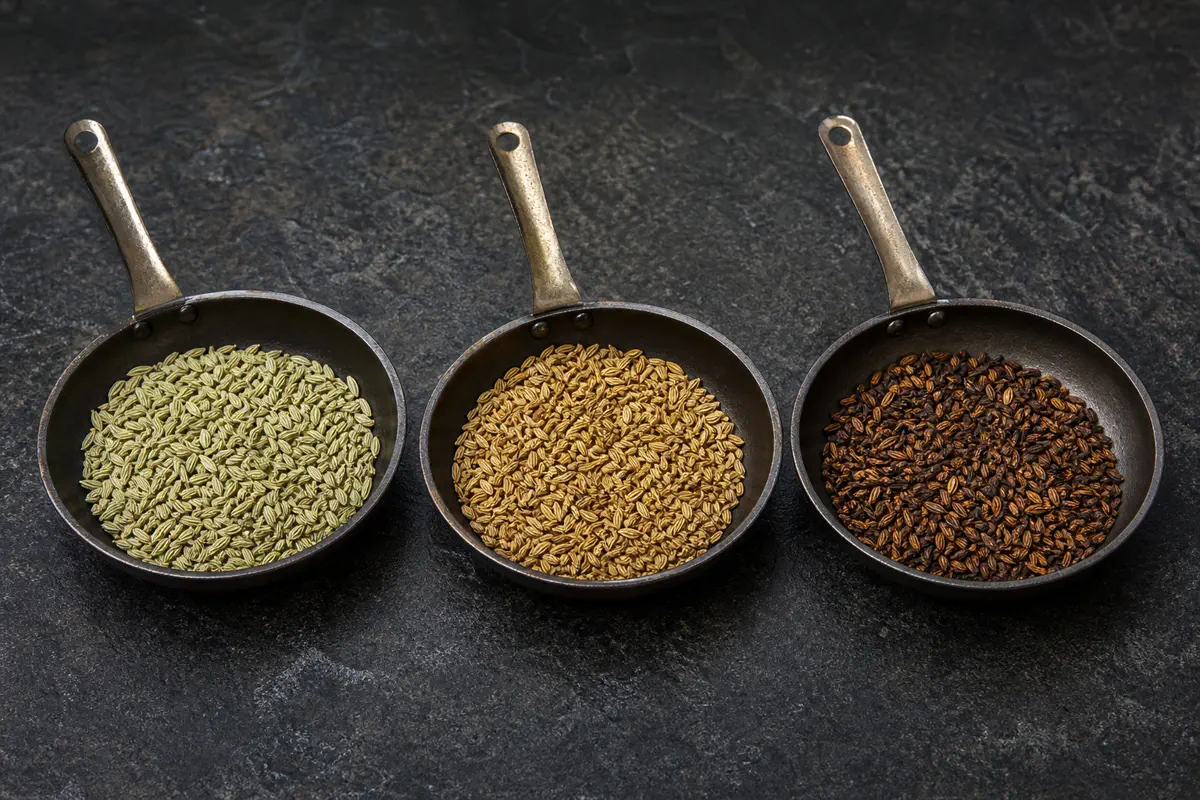
Transfer toasted seeds to a cool plate as soon as the aroma rises because a heavy skillet keeps cooking them after the burner is off.
Let the seeds cool before grinding. Warm seeds release fragrant steam, and a closed grinder can trap moisture that makes the powder clump and stale faster.
Skip dry-toasting when a recipe blooms the seeds in hot oil, bakes them on a crust, or needs their raw green character in a pickle. Each method already supplies heat or preserves a deliberate contrast.
Should you use fennel seeds whole, crushed, or ground?
Use whole seeds when you want slow extraction and occasional aromatic bursts. Choose crushed seed when the spice needs to spread across a surface, and use ground fennel when the flavor must disperse evenly through meat, dough, sauce, or a fine spice mixture.
Whole seeds hold their aroma longest because the shell protects much of the oil, which suits oil blooming, pickles, braises, seeded breads, and sausages built around concentrated bites.
Crushing creates a practical middle ground. A mortar, rolling pin, or the flat side of a knife can split the seeds enough to release oil without turning them into fast-extracting powder.
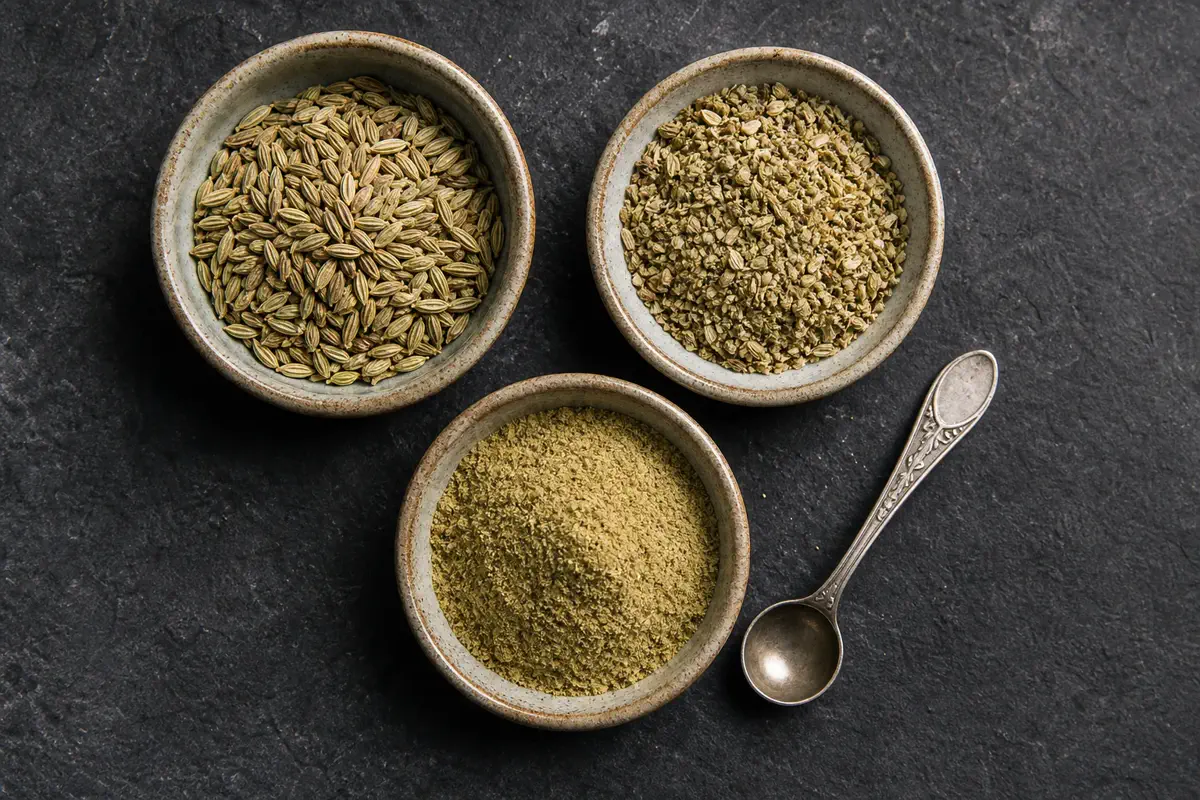
A coarse crush works well on roast pork, fish, carrots, flatbread, and focaccia. The exposed pieces cling to oil and salt, while their remaining structure prevents every bite from tasting identical.
Ground fennel belongs in smooth sausage seasoning, dry rubs, cakes, biscuits, and sauces where whole seed texture would distract, but it scorches quickly enough to need moist aromatics or lower pan heat.
One teaspoon of whole seeds does not equal one teaspoon of powder in effect. Grinding fills the spoon differently and exposes much more surface, so begin with about half as much freshly ground fennel when replacing whole seed by volume.
Grind only what you need. The powder loses its best aroma faster than intact seed, and the scent can cling to a shared grinder strongly enough to perfume the next spice.
What are fennel seeds good for in cooking?
Fennel seeds are especially useful where sweet aroma can cut through fat, soften bitterness, or connect browned food with citrus and herbs. Pork sausage is the famous example, but fish, bread, tomato sauce, cabbage, and root vegetables each use a different part of the spice.
In sausage, fennel offsets rich pork and joins garlic, black pepper, chile, and salt. Start with 1 teaspoon of lightly crushed seed per pound of meat for a recognizable but controlled flavor, then adjust the next batch rather than tasting raw sausage mixture.
Fish needs less. A half teaspoon of coarse fennel with salt and lemon zest can season a pound of salmon, sardines, or firm white fish without making the surface taste like candy.
Dense bread and crackers carry fennel well because toasted grain supports the anise note, while whole seeds create distinct bites and ground fennel spreads a more even aroma through rye or wheat dough.
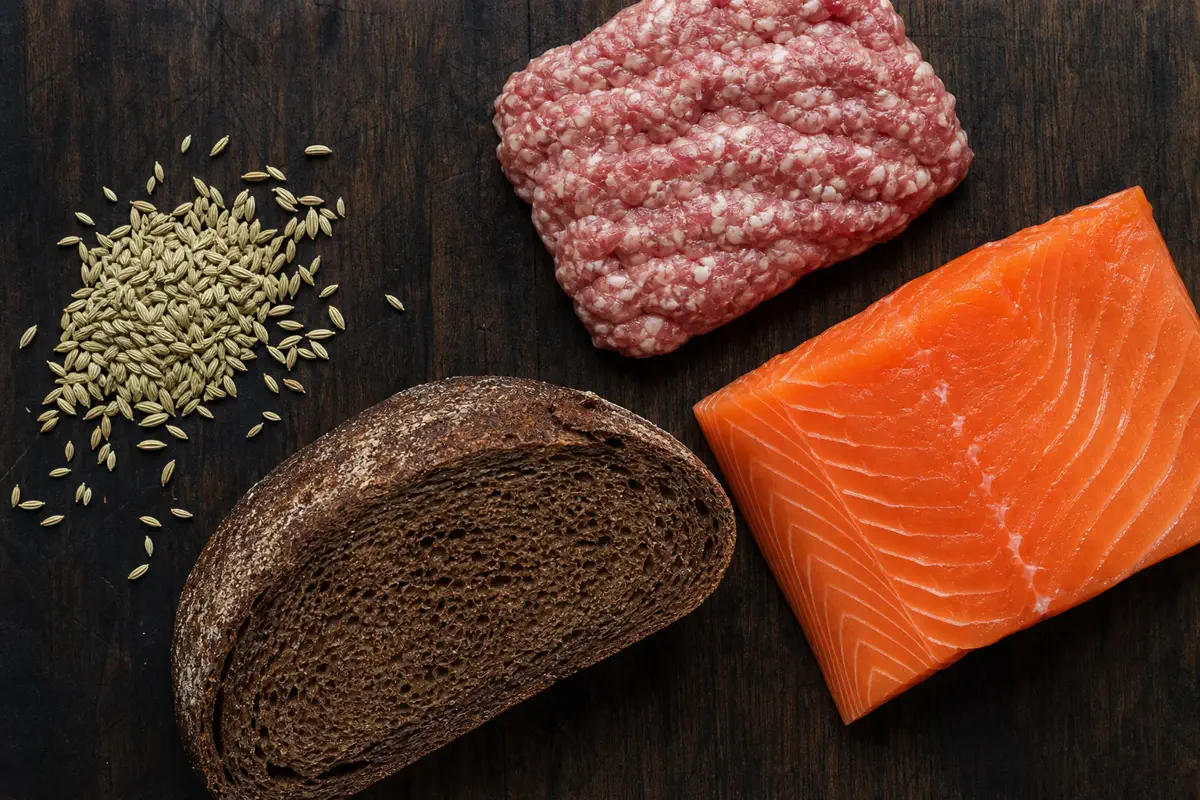
- - Pork sausage or meatballs. Start with 1 teaspoon crushed seed per pound of meat.
- - Fish for four. Start with 1/2 teaspoon coarse seed with citrus zest and salt.
- - Bread or crackers. Start with 1/2 to 1 teaspoon whole or crushed seed per 2 cups of flour.
- - Roast carrots or parsnips. Use 1/2 teaspoon crushed seed for one sheet pan and add it before roasting.
- - Tomato sauce. Bloom 1/4 to 1/2 teaspoon crushed seed with the aromatics for a pot serving four.
- - Cabbage or beans. Use a small whole-seed dose when sweetness needs a dry herbal counterpoint.
South Asian cooking may bloom fennel with cumin, mustard, fenugreek, or nigella, depending on the dish and region. Bengali panch phoron uses whole fennel as one of five seeds, so replacing it changes both the aroma and the visual texture of the tempering.
The spice also works in sweet food. Orange, apple, pear, honey, and chocolate can support a small amount, but grind the seed finely so hard fragments do not interrupt a tender cake or custard.
Are fennel seeds and anise seeds the same thing?
Fennel, Foeniculum vulgare, and anise, Pimpinella anisum, are different plants with overlapping aroma from the same Apiaceae family.
Anise seed usually tastes sweeter, cleaner, and stronger in the licorice direction. Fennel is milder and more herbal, with citrus and camphor-like edges that make it easier to use in savory food.
Star anise is more distant botanically. It is the star-shaped fruit of Illicium verum from the Schisandraceae family, and its intense anethole aroma can dominate a dish at a much smaller dose.
Caraway looks close to fennel because both are ridged, curved fruits from the carrot family. Its flavor is earthier, pepperier, and led by carvone, so it suits rye bread, cabbage, and pork but cannot recreate fennel's clean sweetness.
| Ingredient | Main flavor | Relative starting strength | Best fit |
|---|---|---|---|
| Fennel seed | Sweet anise, citrus, herbs, cool finish | Baseline | Sausage, fish, bread, vegetables, spice mixtures |
| Anise seed | Cleaner and sweeter licorice aroma | Start with 1/2 to 3/4 as much | Baking, sweets, liqueur-style flavor |
| Star anise | Strong sweet anise with warm wood | Start with a small pinch of ground spice | Broths, braises, poaching liquid |
| Caraway | Earthy, peppery, lightly anise-like | Start near equal only when the flavor shift fits | Rye, cabbage, pork, sauerkraut |
Do not identify these spices by a shared licorice description alone because their texture, intensity, botanical source, and supporting flavors decide whether a swap will disappear or remake the dish.
For Italian sausage, anise can replace some sweetness but will make the result more candy-like. In rye bread, caraway may taste more traditional than fennel even though it is not the closer aromatic match.
When the recipe features fennel in its name, substitution will be obvious. When one teaspoon supports several other spices in a large pot, a careful replacement has more room.
How much fennel should you use?
Begin with 1/2 teaspoon of whole or lightly crushed fennel seeds for a dish serving four when the spice should stay in the background. Use about 1 teaspoon per pound of meat when fennel should be recognizable, as in many sausage mixtures.
A forward fennel flavor can reach 1 1/2 to 2 teaspoons per pound in a tested recipe. Do not jump to that range in an improvised dish because fresh, crushed seed can taste much stronger than old whole seed.
- - Bare background. Use 1/4 teaspoon ground or 1/2 teaspoon whole for four servings.
- - Clear supporting flavor. Use 1/2 teaspoon ground or 1 teaspoon whole for four servings.
- - Fennel-led sausage. Begin with 1 teaspoon crushed seed per pound of meat.
- - Sheet-pan vegetables. Use 1/2 teaspoon crushed seed for a standard pan.
- - Bread dough. Use 1/2 to 1 teaspoon seed for every 2 cups of flour.
The form changes the dose because ground fennel spreads into every bite. Begin with half the whole-seed volume, then taste a cooked sample when the mixture allows it.
For sausage, cook a teaspoon-sized patty before filling casings or shaping the full batch so you can judge salt, pepper, chile, and fennel together without tasting raw meat.
For soup or sauce, wait several minutes after adding crushed or ground seed. The aroma needs time to move through the liquid and fat, and an immediate second spoonful is the easiest route to a medicinal finish.
Large batches do not always need a perfectly linear spice increase. Begin with about three quarters of the mathematical scale-up, let the mixture cook, then decide whether the remaining fennel is justified.
If the dish is too strong, remove visible whole seed when possible and dilute with an unseasoned portion of the same base. Acid can brighten a heavy result, but it cannot remove excess anethole.
What can you substitute for fennel seeds?
Anise seed is the closest common substitute when the dish needs sweet licorice aroma. Start with half to three quarters of the fennel amount because anise often reads more sharply, then increase only if the cooked food still needs it.
Caraway is better when the recipe needs a savory seed texture in rye, cabbage, pork, or sauerkraut. It brings earth and pepper rather than fennel's clear sweetness, so the result is a deliberate variation.
Dill seed works in pickles, cabbage, fish, and bread where a dry herbal seed note matters more than anise aroma, but its greener bitterness does not suit a fennel-led sweet dish.
Ground star anise requires the most restraint. Begin with about 1/4 teaspoon for each teaspoon of fennel, use it in a wet braise or broth, and expect a warmer, more forceful flavor.
| Missing job | Substitute | Conservative start | Main difference |
|---|---|---|---|
| Sweet anise aroma | Anise seed | 1/2 to 3/4 teaspoon for 1 teaspoon fennel | Sweeter and sharper |
| Savory seed in bread or cabbage | Caraway | 3/4 to 1 teaspoon | Earthier and pepperier |
| Pickling or fish seasoning | Dill seed | 3/4 teaspoon | Greener and less sweet |
| Long wet braise | Ground star anise | 1/4 teaspoon | Stronger and warmer |
| Fresh green finish | Fennel fronds | 1 tablespoon chopped | Fresh texture, much lower concentration |
Fresh fennel bulb cannot replace seeds by volume. It adds water, bulk, and a milder vegetable sweetness, so use it only when the dish can accept those structural changes.
Omission is often the best answer when fennel is a quiet background spice and the available substitute would become a new lead flavor. Add another ingredient only when you can name the missing job it will perform.
Buying fennel seeds that still have their sweetness
Buy whole fennel seeds with a green to yellow-green color, clear ridges, and an immediate sweet aroma when rubbed. Very pale, gray, or dusty brown seed may be old, overheated, or poorly stored.
Crush three seeds between your fingers before judging a packet. The inside should smell strongly of anise and herbs within seconds, not only after you push the sample directly under your nose.
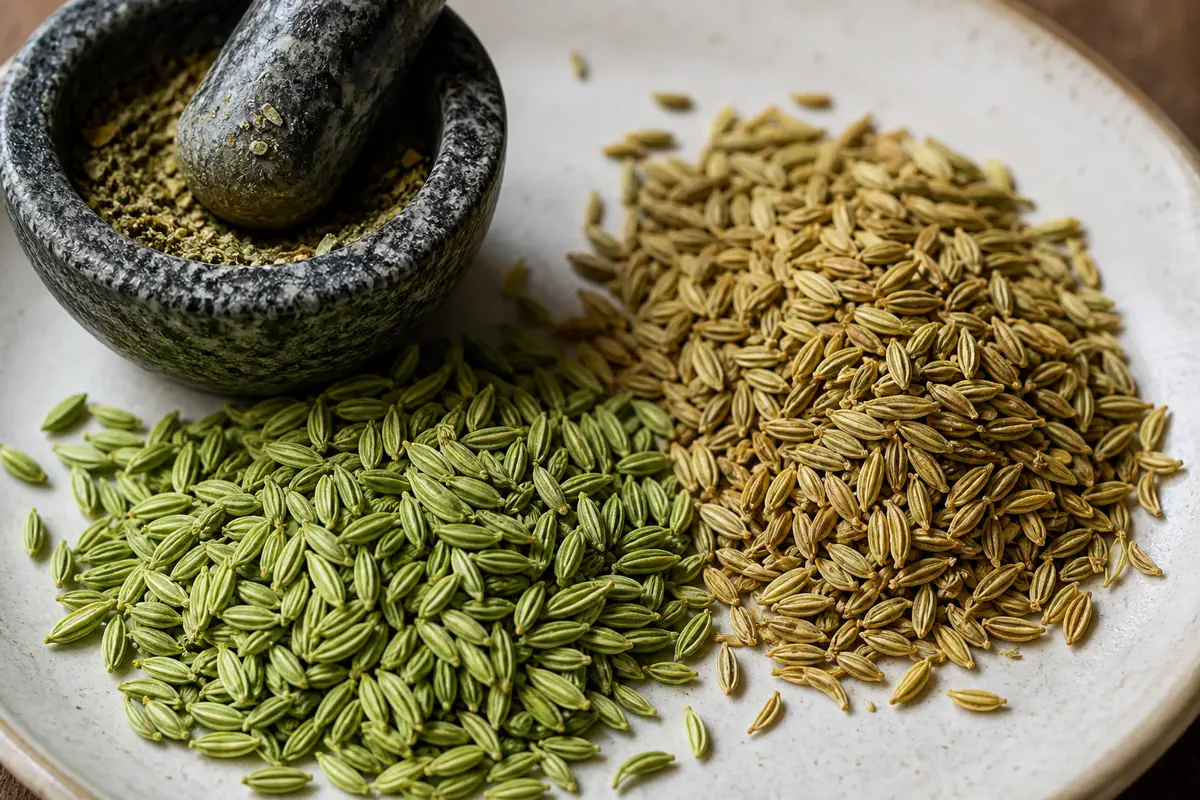
Because less oil is exposed to air, whole seed can remain lively for roughly 18 to 24 months in a well-sealed jar, while ground fennel may fade noticeably within six months.
Those are quality windows, not safety deadlines. Heat beside the stove, steam from an open pot, clear packaging in bright light, and frequent opening can shorten them sharply.
- - Buy whole seed when possible and grind only the amount needed.
- - Choose small packets with a harvest or packing date when available.
- - Keep the jar tightly closed away from heat, light, and steam.
- - Use a dry spoon so moisture never enters the container.
- - Replace the jar when crushed seed smells faint, dusty, or mainly woody.
Do not double stale fennel to recover the missing sweetness. Extra old seed adds shell, bitterness, and texture without restoring the volatile aroma that has already escaped.
Toast only the portion needed for the current meal. Toasted seed smells vivid now but has a shorter storage life because heat and broken surfaces accelerate aroma loss.
The final test happens in food. If a normal dose disappears after proper toasting and crushing, replace the packet before changing every recipe around a weak ingredient.