
Dill Loses Its Grassy Lift If You Add It Too Early
Fresh fronds belong at the end, dried dill needs a few minutes in moisture, and dill seed has its own warmer flavor.
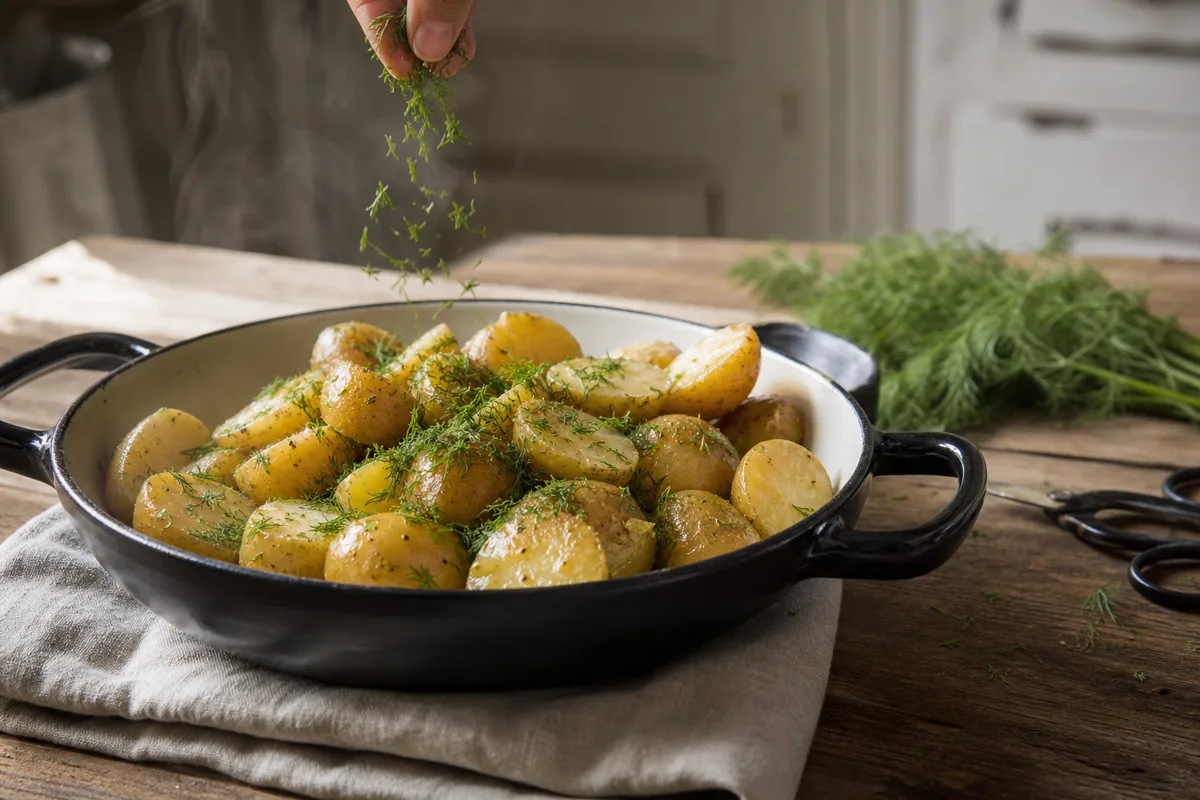
Dill loses much of its leafy aroma when it simmers for too long. Add fresh fronds near the end, give dried dill a few minutes in moisture, and treat dill seed as a separate spice.
What does dill taste like?
Dill tastes grassy, citrusy, and lightly anise-like. Its sweetness stays quiet, so it feels greener and less licorice-like than fennel.
The leaves carry a quick, high aroma. Alpha-phellandrene, limonene, and dill ether are among the volatile compounds associated with that familiar leafy scent.
The dried fruit sold as dill seed has a different balance. Carvone is more prominent there, which helps explain why the fruit tastes warmer, sharper, and closer to caraway than the fronds do.
That difference matters in food.
Fresh leaves lift a cool yogurt sauce or a plate of potatoes, while dill fruit gives a brine or bread a firmer spice note.
Heat changes the leaves quickly because their aroma depends on volatile compounds.
A long simmer does not make fresh dill deeper. It leaves a quieter herbal background and removes much of the character you bought it for.
Think of fresh dill as a finishing herb. It can soften against hot food, but it should not spend the whole cooking time bubbling in the pot.
Fat helps the aroma spread across the palate. Butter, sour cream, yogurt, cream cheese, oily fish, and egg yolk all give dill enough body to taste clear without making it heavy.
Freshness is easy to read before you cook.
Good fronds look green and springy, smell distinct when rubbed, and do not collapse into wet clumps.
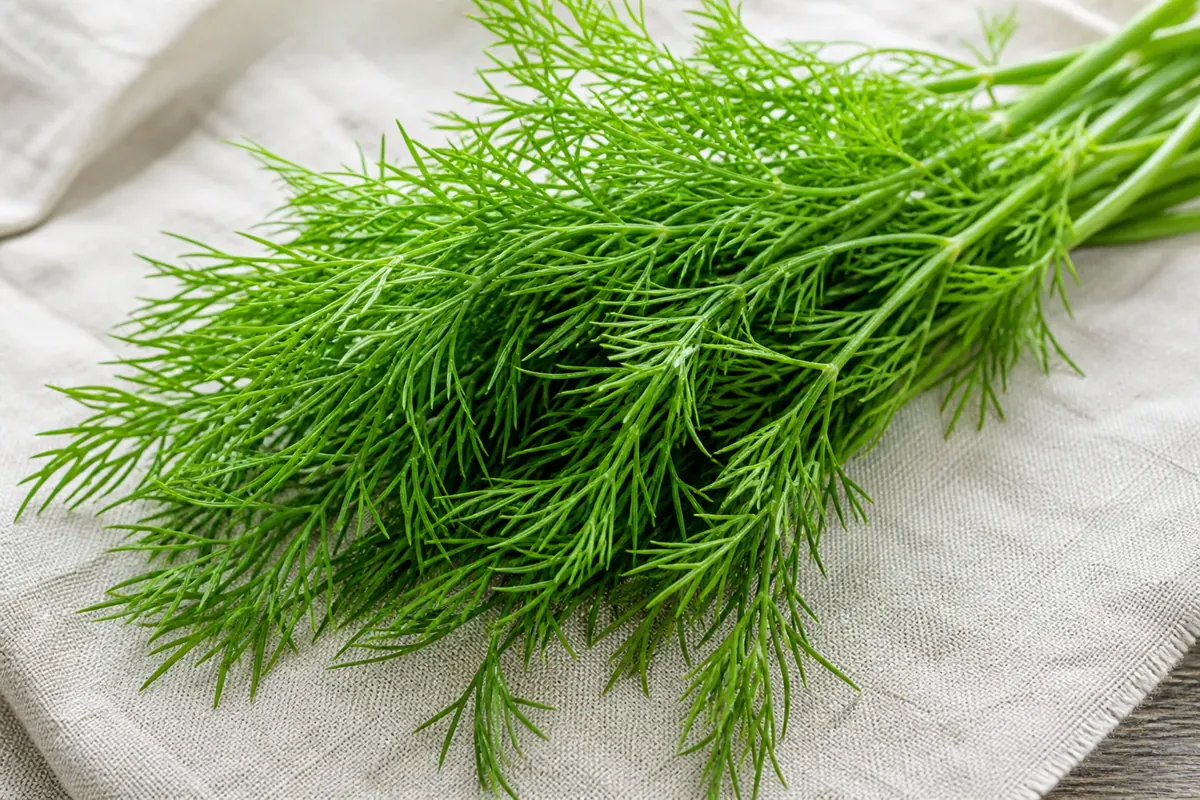
- Fine leaves: The narrow branches should look green and separate rather than matted.
- Clean aroma: A rubbed frond should smell grassy and lightly citrusy.
- Tender stems: Thin stems can be chopped with the leaves, while thick stalks need finer cutting.
- Fresh finish: Add the chopped fronds where their color and aroma remain noticeable.
When should you add fresh dill?
Add fresh dill after the pan leaves the burner, or during the final moments when the food is no longer boiling hard. That timing protects the leaf aroma while allowing the herb to settle into the dish.
Residual heat is usually enough.
Dill stirred into hot potatoes, scrambled eggs, soup, or melted butter will soften and perfume the food without needing a separate cooking stage.
A thick soup may need two additions. A small amount near the end gives a background note, then a fresh handful at serving restores the recognizable grassy finish.
This split works because the two additions do different jobs. The first becomes part of the broth, while the second remains close to the aroma of the raw leaf.
Dried dill behaves differently.
Give it several minutes in a moist sauce, soup, or stew so the flakes can hydrate and release their remaining aroma.
Cold food needs time rather than heat.
Mix dill into yogurt sauce, sour cream dip, cucumber salad, or egg salad before serving, then let the mixture rest in the refrigerator long enough for the flavor to spread.
Curing is another no-heat path. Dill pressed against salmon during a gravlax cure perfumes the surface over time, while dill placed in a pickle jar seasons the surrounding liquid and vegetables.
Those uses do not mean fresh dill benefits from an hour of simmering. They show that time can carry aroma when high heat is absent.
- - Soup and stew Stir fresh dill in after the heat is off, then keep a little for the bowl.
- - Eggs Add it when the eggs are almost set so the fronds stay green and distinct.
- - Warm potatoes Toss with butter first, then fold in chopped dill just before serving.
- - Cold sauce Mix it ahead and chill so the flavor can spread through the dairy.
- - Dried dill Add it during the last several minutes of a moist preparation.
If early dill has disappeared, do not keep simmering more of it.
Finish the dish, remove it from the heat, and add a fresh portion before adjusting salt or acid.
How much dill should you use?
Fresh dill often needs a larger volume than cooks expect because the fronds are light and full of air.
A loose tablespoon is a restrained finish, not a strong herb presence.
For four servings of potatoes, soup, eggs, or fish, start with two to four tablespoons of chopped fresh dill when the herb should be clearly recognizable. Use less when several other fresh herbs share the dish.
A cup of yogurt or sour cream can usually carry two or three tablespoons. Herb-led sauces, salads, and rice dishes may use a quarter cup or more because dill is part of the food's structure rather than a final speck of green.
Traditional recipes are the best guide when dill is central. A Persian herb dish or an Eastern European soup may use far more than a garnish without tasting harsh because the leaves are balanced by eggs, grains, stock, dairy, or other herbs.
Dried dill takes much less space. North Dakota State University Extension uses one teaspoon dried for one tablespoon fresh as a practical starting conversion.
That ratio measures concentration, not equality.
Dried flakes can replace background herb flavor, but they do not supply the color, soft texture, or high leafy aroma of chopped fresh fronds.
Dill fruit follows spice measurements instead. A recipe that asks for dill seed may need a teaspoon or tablespoon according to the batch, but that amount cannot be translated from a bunch of fresh leaves.
| Recipe job | Useful starting point | When to adjust |
|---|---|---|
| Light finish for four servings | 1 to 2 tablespoons fresh | Add more if the herb disappears behind butter, stock, or eggs |
| Clear dill flavor for four servings | 2 to 4 tablespoons fresh | Taste after the food leaves the heat |
| Yogurt or sour cream sauce | 2 to 3 tablespoons fresh per cup | Rest the sauce before adding more |
| Replace fresh with dried | 1 teaspoon dried per tablespoon fresh | Accept a softer, less leafy result |
| Dill-led herb dish | Follow the named recipe | Do not reduce a large herb quantity to garnish level |
Fresh dill gives you a useful safety margin because it enters late.
Add most of the planned amount, fold it through, wait a minute, and taste before using the rest.
What dishes bring out dill best?
Dill is easiest to notice against rich, cool, mild, or starchy food. These backgrounds give the leaves room to speak without asking them to compete with smoke, heavy chile, or a dense spice blend.
Rich fish is a classic match. Dill lightens salmon, trout, herring, shrimp, and crayfish with a green aroma, while lemon or vinegar can handle any acidity the dish needs.
Gravlax shows the pairing without cooking the leaves.
The dill rests against the salmon during curing, then fresh fronds can return at serving for color and a cleaner top note.
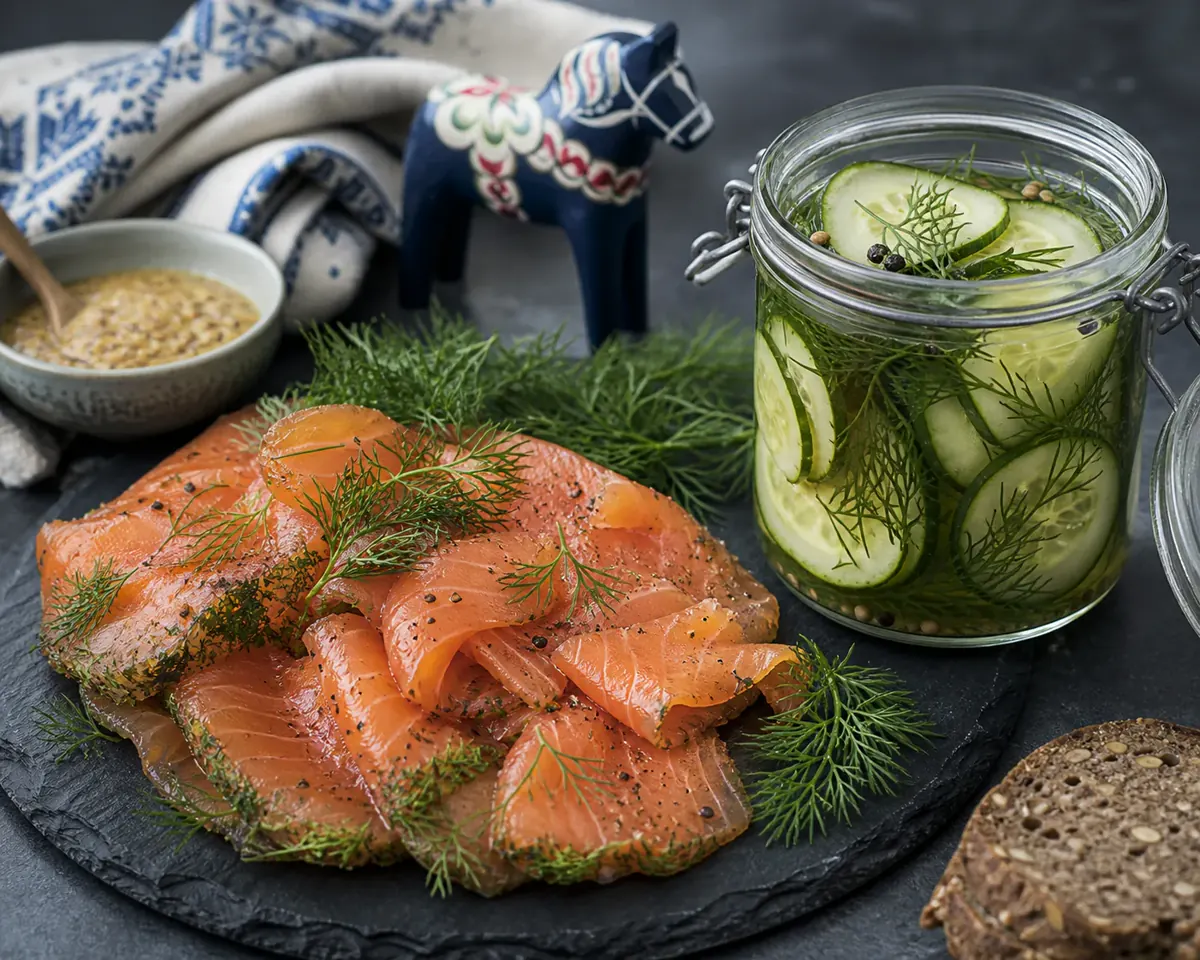
- Cured salmon: Dill stays in contact with the fish while salt and sugar change the texture.
- Fresh finish: New fronds restore a leafy aroma at serving.
- Cucumber pickles: Dill seasons a cool, crisp vegetable through the surrounding liquid.
- Different jobs: Leaves and dill fruit can both appear in pickling, but they do not taste identical.
New potatoes are another strong partner. Butter or sour cream carries the aroma, and the potato provides enough starch to make a generous handful taste balanced.
Eastern European soups use dill with beets, cabbage, potatoes, dumplings, and cultured dairy.
In that setting, the herb can be part of the bowl rather than a decorative pinch.
Cucumber and yogurt give dill a cooler stage. Tzatziki variations, cucumber salads, cold soups, and simple dips expose the leafy note because none of the main ingredients is aggressive.
Persian cooking uses dill in rice and herb-rich egg dishes. In kuku sabzi, dill can join parsley, cilantro, chives, and fenugreek in a mass of greens held together by egg.
Dill also works with boiled eggs, omelets, soft cheese, peas, green beans, beets, and cabbage.
The common thread is a mild base plus enough fat or moisture to carry the aroma.
- - Choose late heat Use dill in potatoes, soup, rice, or eggs when you can add it near serving.
- - Choose cool food Yogurt, cucumber, sour cream, and soft cheese keep the leafy character exposed.
- - Choose rich food Salmon and butter gain contrast without needing extra sourness.
- - Choose herb-led dishes Let a named recipe decide when dill should appear by the handful.
- - Avoid a flavor fight Heavy smoke and intense chile can bury fresh fronds before you notice them.
The best pairing is therefore not a single ingredient.
It is a dish where dill can remain late, moist, and easy to smell.
Are dill weed and dill seeds interchangeable?
No. Dill weed means the leafy fronds, while the product called dill seed is the dried fruit of the same plant.
The naming causes trouble because a recipe may shorten dill weed to dill.
When a recipe simply asks for fresh dill or chopped dill, it means the leaves.
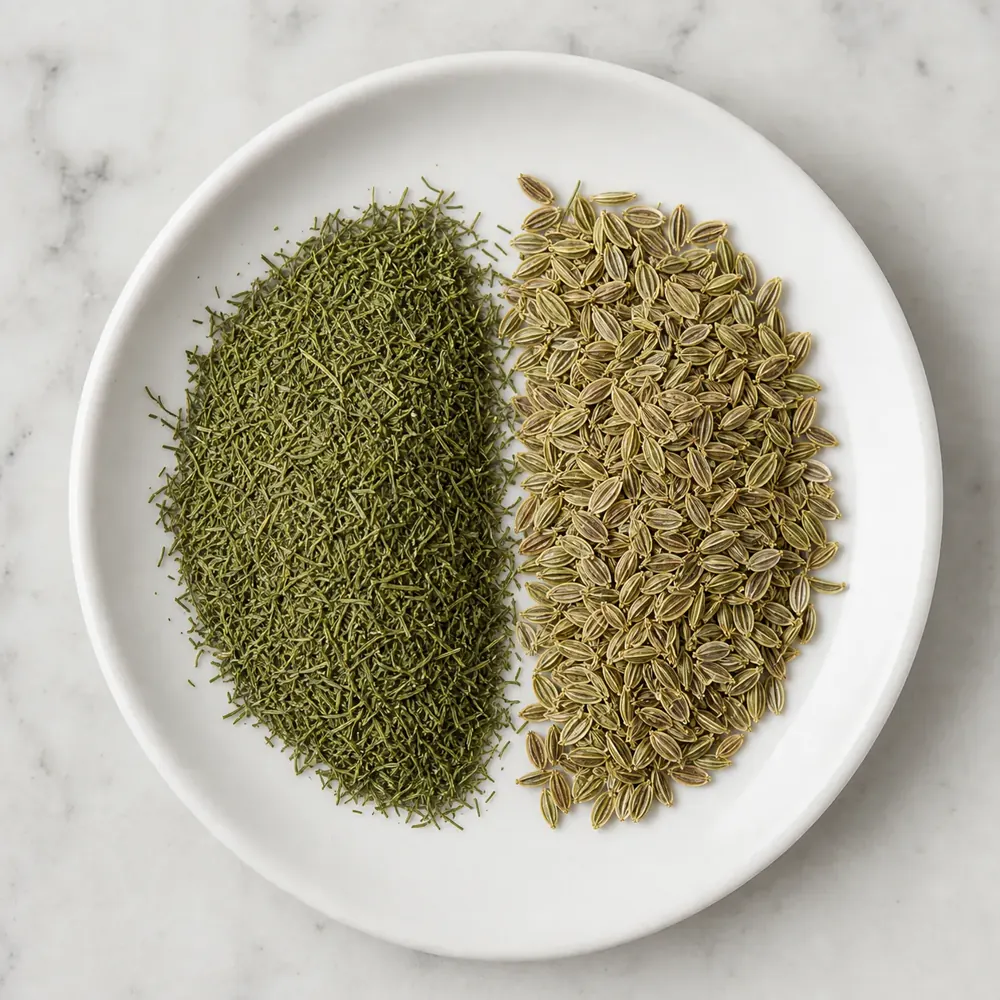
- Dill weed: Dried green leaf pieces support soups, dips, and sauces.
- Dill fruit: Whole ridged pieces season brines, bread, and some spice mixtures.
- Flavor contrast: The fruit has a more prominent carvone note and less leafy freshness.
- No direct swap: Matching the volume does not make the two products perform the same job.
Dill fruit tastes more pungent and more caraway-like than the leaves. It lacks the tender green aroma that makes fresh dill useful in yogurt sauce, potatoes, fish, or eggs.
Whole dill fruit suits cucumber brine, pickled vegetables, bread, and other preparations that need a durable spice.
Gentle crushing exposes more aroma, but the pieces can become intrusive in soft food.
Fresh or dried leaves belong where the herb should blend into the food. Use the fruit only when the recipe names it or when its warmer spice character genuinely fits.
Read the ingredient line literally. Dill, fresh dill, and dill weed point to leaves.
Dill seed points to the fruit sold in the spice aisle.
Can dried dill replace fresh?
Dried dill can replace fresh when dill supports the dish, but the result will be softer and less leafy.
It works best in moist food where the flakes can hydrate.
Fresh dill is difficult to replace in gravlax, cucumber salad, herb butter, cold soup, or a finishing sauce. Those preparations depend on the leaf's color, texture, and high aroma.
Dried dill is more comfortable in a soup, casserole, bread, dressing, or dip where several ingredients share attention.
It can also season a quick pan sauce when you give it a few minutes in liquid.
Use one teaspoon dried for each tablespoon fresh as a starting point. Then judge the dish after the flakes hydrate because an old jar may contribute far less than a recently opened one.
| Form | Best use | Timing | Main limitation |
|---|---|---|---|
| Fresh fronds | Finishing, cold food, cured fish, herb-led dishes | At the end or before a cold rest | Wilts and loses aroma quickly |
| Dried dill | Soup, dressing, dip, bread, supporting herb role | During the last several minutes | Lacks fresh color and leafy top notes |
| Frozen dill | Soup, sauce, butter, cooked potatoes | Add late from frozen | Soft texture does not garnish well |
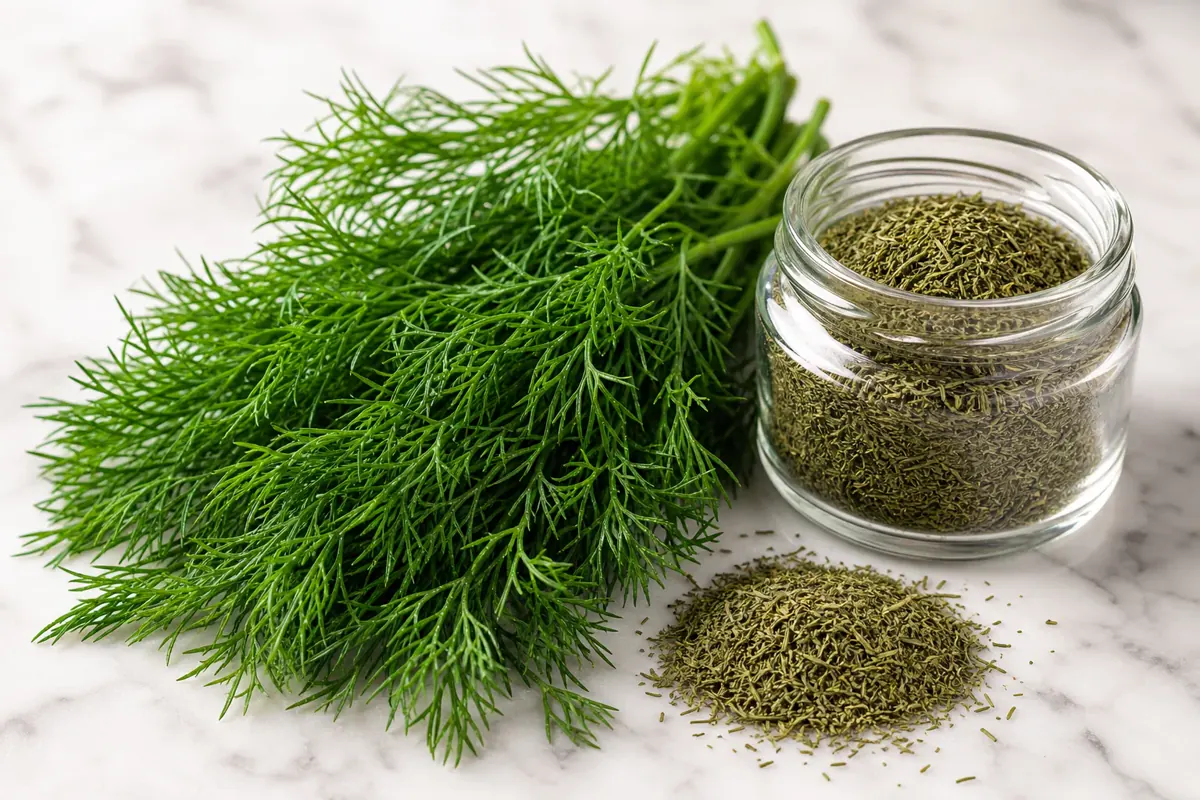
- Fresh fronds: Choose them when dill defines the finished dish.
- Dried leaves: Give them moisture and a short time to open.
- Frozen portions: Keep them for cooked food and blended sauces.
- Aroma check: Replace a jar that smells like hay or dust.
Freezing is the useful middle path.
Chopped dill loses its crisp shape after thawing, yet it keeps more of the leafy direction than a dried jar.
Pack it in small portions so one meal does not thaw the whole supply. A frozen portion can go straight into hot soup, potatoes, butter, or sauce near the end.
What can you substitute for dill?
No substitute is invisible. Choose one by the job dill was meant to do, then accept the flavor shift.
Fresh tarragon can work with fish, eggs, cream, and yogurt because it also carries an anise direction.
It tastes sweeter and stronger, so start with about half the amount and add more only after tasting.
Fennel fronds are gentler. Their fine texture looks similar to dill, and their mild anise note suits fish, potatoes, cucumber, and salad without taking over.
Parsley replaces the green herbal lift when a dish does not need the dill identity.
Chives can do the same while adding a mild onion note, which works especially well with potatoes, eggs, and sour cream.
Caraway belongs only in the seed conversation. It can stand in for dill fruit in bread or a brine when a warmer, earthier result makes sense, but it cannot replace fresh leaves.
| Missing form | Practical substitute | Starting amount | What changes |
|---|---|---|---|
| Fresh dill with fish or cream | Fresh tarragon | Half the dill amount | Sweeter and more anise-forward |
| Fresh dill in salad or potatoes | Fennel fronds | Equal amount | Milder and less citrusy |
| Fresh dill used for green lift | Parsley or chives | Equal amount | Dill aroma disappears |
| Dill fruit in bread or brine | Caraway | Half to equal amount | Earthier and more assertive |
| Dill-led cold dish | Wait for fresh or frozen dill | No close match | The central flavor changes |
A cold cucumber soup, gravlax cure, or dill-heavy sauce makes substitution obvious because the herb is the point. In those cases, a different herb can still taste good, but it creates a different dish.
For a supporting role, substitution is easier.
Match fresh leaf with fresh leaf and durable spice with durable spice instead of chasing the name alone.
How do you keep fresh dill from wilting?
Store dill dry enough to avoid slime but protected from the refrigerator's drying air.
Surface water and a tightly sealed wet bag can ruin the fronds faster than mild wilting.
If the bunch is damp, spread it on a towel until the visible water is gone. Wrap it loosely in a barely damp paper or cloth towel, place it in a bag or container, and leave enough room that the fronds are not crushed.
A vase method also works when the stems are long.
Trim the ends, stand the bunch in a small amount of water, and cover the top loosely before refrigerating.
Check the dill every day or two.
Replace a soaked towel, refresh cloudy water, and remove yellow or slimy pieces before they affect the rest of the bunch.
For freezing, chop clean, dry fronds and portion them into a tray with a little water. Once solid, move the portions to an airtight freezer container.
Frozen dill belongs in soup, sauce, potatoes, eggs, or a blended dip where soft texture is harmless.
It will not return to the crisp shape needed for a fresh garnish.
You can also freeze chopped dill in a thin layer inside a sealed bag. Break off what you need and add it late without thawing the whole packet.
Keep dried dill away from heat, light, and steam.
A best-before date is less useful than the aroma test because a jar stored beside the stove can fade long before an unopened one in a cool cupboard.
Crush a pinch between your fingers. If it smells green and recognizable, it still has a job.
If it smells mainly of hay or dust, replace it rather than doubling the amount.