
Tarragon: Why the Plant You Bought Has No Flavor
French against Russian, the seed-packet trap, and how much anise a dish can actually take.
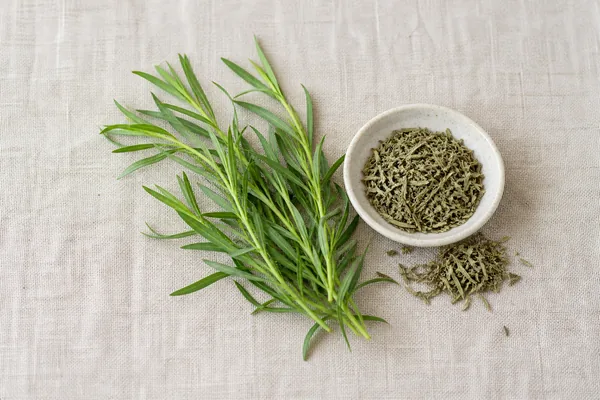
Two different plants are sold as tarragon, and only French tarragon carries the sweet anise flavor the herb is known for. French cannot be grown from seed, so a seed packet or a cheap seedling is almost certainly the near-flavorless Russian kind.
Is French or Russian tarragon right for cooking?
This is the single most useful thing to know about tarragon, and almost nothing on a shop shelf tells you.
French tarragon is the one every classic French recipe means. It carries the sweet anise flavor the herb is famous for.
Russian tarragon carries a varietal name that translates roughly as scentless, which turns out to be a fair description.
It grows taller, coarser and paler, and it tastes faintly grassy with a bitter edge and very little anise. People who conclude that they dislike tarragon have usually met this one.
| French tarragon | Russian tarragon | |
|---|---|---|
| Botanical name | A. dracunculus var. sativa | A. dracunculus var. inodora |
| Flavor | Sweet, strong anise | Faint, grassy, slightly bitter |
| Leaf | Narrow, smooth, deep green | Broader, coarser, paler |
| Growth | Sprawling and fussy | Tall, vigorous, very hardy |
| Sold as | A named plant or cut sprigs | Seed packets and cheap seedlings |
The distinction is not just marketing, and there is a botanical reason it holds.
French tarragon almost never sets viable seed. It is propagated by division or cuttings, which is why a genuine plant costs more and is sold by name at a nursery rather than as an anonymous herb seedling.
Russian tarragon grows readily from seed. So a seed packet labelled simply tarragon, and most of the cheap seedlings in a supermarket, are Russian by default.
The kitchen test is quicker than the botany. Crush a leaf and smell it, and French tarragon announces itself immediately as aniseed while Russian smells mostly of green.
Buy a plant in leaf where you can, and smell it before you pay.
What does French tarragon taste like?
The dominant note is anise, close to fennel and liquorice, and it arrives sweeter than either.
Behind it there is a faint pepperiness and something almost grassy, but the anise carries so strongly that most people register nothing else.
The compound doing most of the work is estragole, also called methyl chavicol, which is the same molecule that gives basil and fennel part of their character.
That family resemblance is worth holding onto when you are substituting, because it points at what actually stands in and what does not.
Tarragon also has a mild numbing quality on the tongue if you chew a leaf, faint but noticeable, which is unusual among the soft herbs.
Why is tarragon essential to Bearnaise and French cooking?
If one recipe justifies keeping tarragon, this is it.
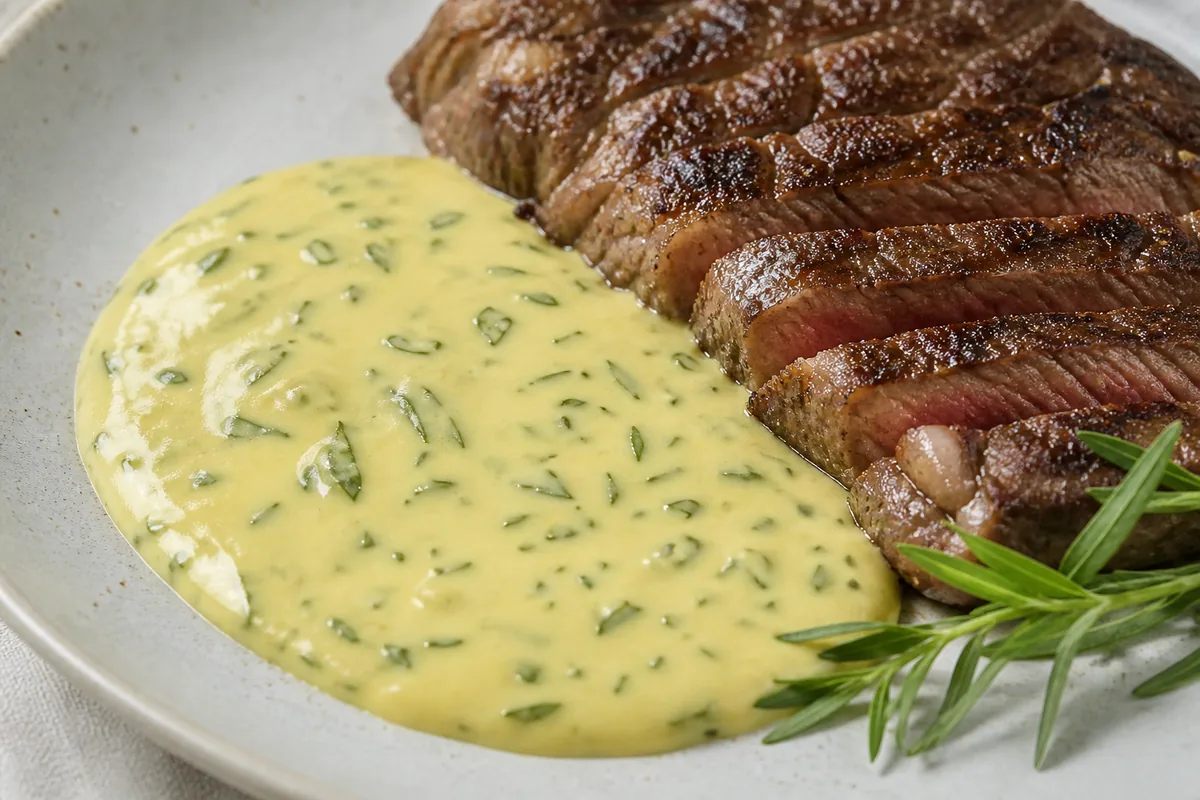
- In the reduction: Stalks and stems, simmered with vinegar and shallot.
- At the end: Fresh chopped leaf, stirred through off the heat.
- The result: Anise carried by butter, which suits it better than anything else.
The technique is worth noticing because tarragon goes in twice. The stalks flavor a vinegar and shallot reduction, and fresh chopped leaf is stirred in at the end.
That split is a general lesson rather than a quirk of the sauce. Long contact extracts the deeper notes while the fresh addition restores the top ones that cooking drove off.
Tarragon has a narrow but reliable range, and it does not go with everything.
Chicken is the classic pairing, from roast birds to fricassee. Eggs are the second, which is why tarragon sits in fines herbes alongside chives, parsley and chervil.
Fish takes it well, particularly in a cream or butter sauce where the anise has fat to carry it.
Tomato is the one vegetable it genuinely lifts. Beyond that it tends to fight rather than complement, and it is out of place in most Mediterranean and almost all Asian cooking.
Tarragon is one of a small group of herbs that classical French cooking treats as structural rather than optional.
It sits in fines herbes, in bearnaise, in sauce ravigote and in a long list of chicken dishes, which is a lot of load for one flavor to carry.
Part of the reason is that it pairs with butter, cream and egg, the three things that classical French sauce work is built on. An anise note is one of the few things that cuts through all three without adding acid.
The other part is availability. It grows well enough across much of France and holds its flavor in the two preservations that kitchens relied on before refrigeration, which are vinegar and fat.
| Dish | Fresh tarragon | Note |
|---|---|---|
| Roast chicken, serves 4 | 1 tbsp chopped, plus sprigs in the cavity | Add the chopped leaf at the end |
| Bearnaise, serves 4 | 2 tsp in the reduction, 2 tsp fresh at the end | The herb is the sauce |
| Cream sauce for fish | 2 tsp per 200 ml | Off the heat |
| Egg dishes and omelettes | 1 tsp per portion | Part of fines herbes |
| Tomato salad | 1 tsp, torn not chopped | Very easy to overdo here |
How much tarragon should you use?
Tarragon is one of the herbs that punishes a heavy hand, and it does it quickly.
A tablespoon of chopped leaf is generous for a dish serving four. Double that and the anise stops being a flavor and becomes the only flavor.
The failure is not bitterness, which is what people expect. It is monotony, where everything on the plate tastes of aniseed and nothing else registers.
Start with half of what you think, taste, and add the rest only if the dish is asking for it.
When should you add tarragon?
The anise notes are volatile, and they leave with steam like most aromatics.
Tarragon simmered for half an hour turns quiet and slightly hay-like, keeping a background presence but losing the thing you added it for.
So it goes in near the end for most dishes, or twice if the recipe allows, in the way bearnaise does it.
The exception is infusion into fat or acid. Sprigs left in warm butter, cream or vinegar give up their character slowly and hold it, because neither steam nor high heat is involved.
Is fresh or dried tarragon better, and how can you preserve it?
This is the classic preservation route and the most useful thing to do with a glut.
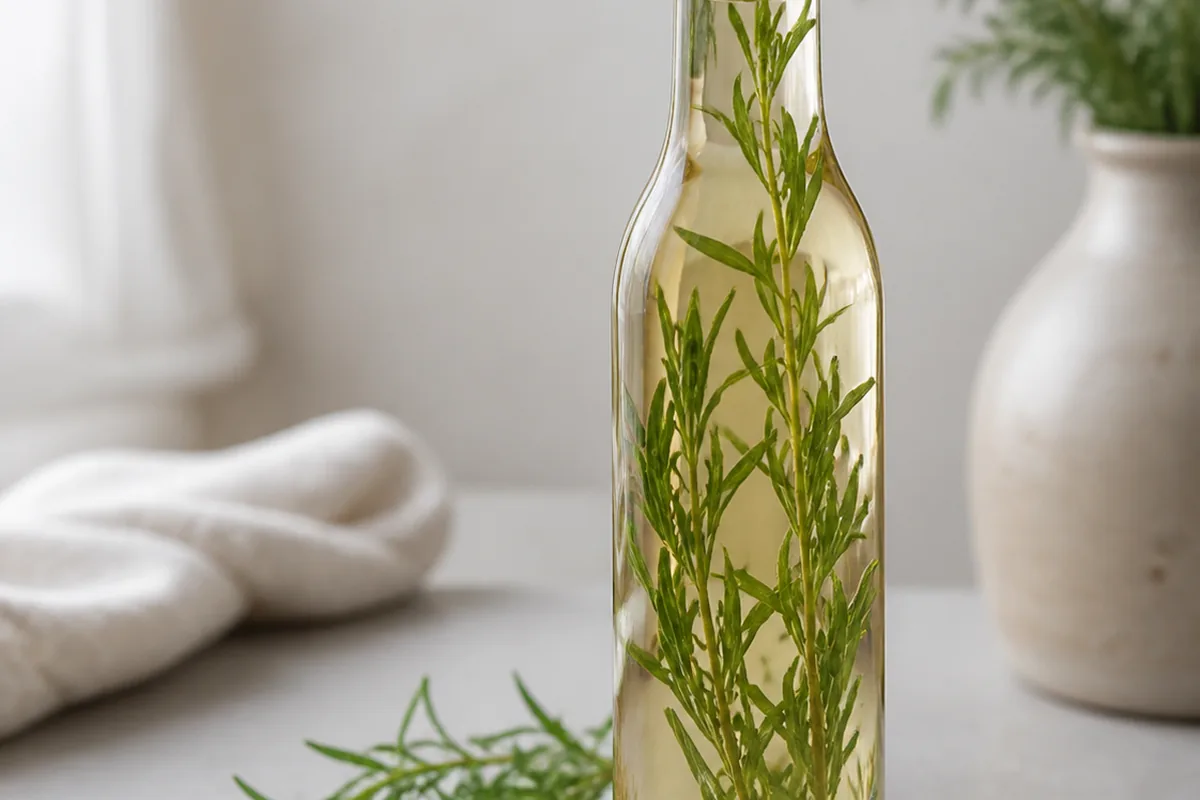
- Ratio: Two or three long sprigs to a 500 ml bottle.
- Time: Two weeks before it tastes of anything, better at a month.
- Use: Bearnaise reductions, vinaigrettes, and deglazing a chicken pan.
Use white wine vinegar rather than malt or cider, because the point is to keep the tarragon audible rather than to add a competing flavor.
Push the sprigs fully under the surface. Anything above the liquid line will eventually spoil and cloud the bottle.
Most soft herbs are pointless dried. Tarragon is the exception worth knowing about.
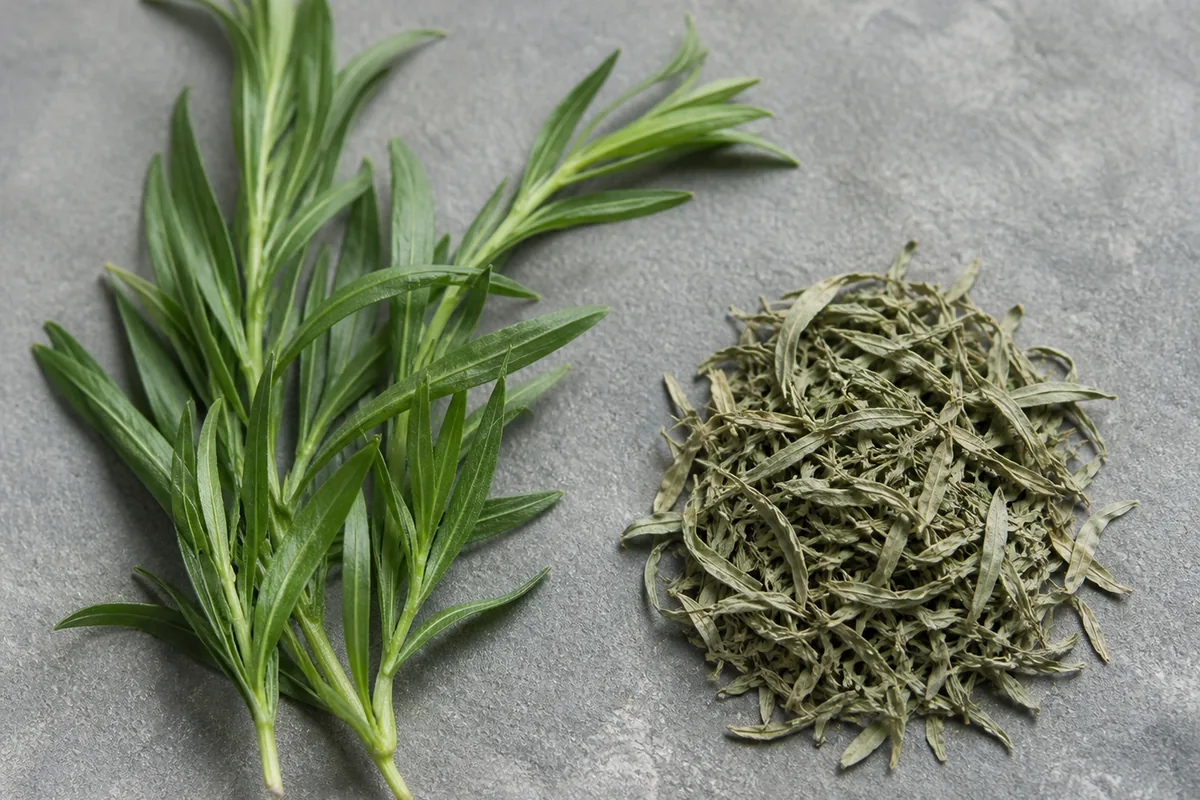
- Keeps: Most of the anise, and the color.
- Loses: The fresh green top note and the faint pepper.
- Ratio: About a third of the fresh amount, since drying concentrates it.
It holds a fair share of its anise because estragole is relatively stable, where the compounds behind basil and chives are not.
Use around a third of the fresh quantity, and add it earlier than you would fresh so it has time to rehydrate.
It is not a full replacement. The bright top note is gone and what remains is deeper and slightly flatter, which suits a sauce or a braise more than a salad.
A healthy plant gives more than a kitchen needs, and most of it is wasted every year.
Vinegar is the first route and the best keeper. Butter is the second, and it suits tarragon particularly well because fat carries the anise better than water does.
Blend the leaves into softened butter with a little salt and lemon, roll it in paper, and freeze it in a log to slice off as needed. On chicken or fish it does most of what a sauce would.
Freezing the leaf plain works too. Strip the leaves from the stems, freeze them flat on a tray, then bag them, and use them straight from frozen in anything cooked.
Do not bother trying to dry it at home. Commercial drying is fast and controlled in a way a warm kitchen is not, and slow home drying is where the anise escapes.
How do you buy and grow French tarragon?
Fresh tarragon is sold in small packets because a little goes a long way, and that is the right size to buy.
Look for firm sprigs with unbroken deep green leaves. Blackening at the leaf tips means it has been cold-damaged, and those spots spread.
Stand the stems in a little water, cover loosely, and keep it in the fridge door. Handled that way it lasts about a week.
Freezing works better than drying for keeping the fresh character. Strip the leaves, freeze them flat, and use them straight from frozen in anything cooked.
Having established that you need a plant rather than a seed packet, the next problem is keeping it alive.
French tarragon wants sharp drainage above everything else. It comes from dry ground and it will rot in a heavy soil that stays wet through winter.
Cold on its own rarely kills it. Cold plus wet feet does, which is why gardeners in mild damp climates lose plants that would survive a much harder frost in gravel.
Grow it in a pot if your soil holds water, use a gritty compost, and move the pot somewhere sheltered rather than somewhere warm over winter.
- Drainage first: Gritty compost or a raised bed, never heavy soil that stays wet.
- Pot it if unsure: A pot you can move beats a border you cannot drain.
- Divide every three years: Vigour and flavor both fall away after that, so lift the clump in spring and replant the healthy outer pieces.
- Cut back in late summer: The regrowth is more tender and better flavored than the woody stems it replaces.
- Shelter, not warmth: Overwintering it dry matters far more than overwintering it warm.
French tarragon dies back completely in winter and looks dead for months.
That catches people out badly, because a pot of bare stems in February is indistinguishable from a pot of dead plant, and a great many perfectly healthy tarragons get thrown away every spring.
Leave it alone until May before deciding. It is one of the last herbs to break dormancy, well after chives and mint have filled out.
The corollary is a supply gap. From roughly November to April there is no fresh tarragon from your own plant, which is exactly the period when the vinegar and the frozen leaf earn their place.
Shop supply does not follow the same pattern, since commercial tarragon is grown under cover, so a packet is available all year at a price.
Is concentrated tarragon safe?
Culinary tarragon is not a concern, and the amounts in this article are food amounts.
Estragole, the compound behind the anise, has been assessed by European food safety bodies in its concentrated form, and essential oils and strong extracts are treated differently from the herb on a plate.
The same compound appears in basil and fennel, and the same distinction applies to both. Eating the herb is not the situation those assessments are about.
The practical version is simple. Cook with the leaf freely, and treat tarragon essential oil as something with its own rules rather than as a stronger version of the herb.
What can replace tarragon?
The substitution question is really about the anise, since that is the whole contribution.
Chervil is the closest herb, sharing both the aniseed direction and the delicacy, though it is milder and needs roughly double the quantity.
Fennel fronds are the next best and are often free with a fennel bulb. They are greener and less sweet, so they work better in fish and vegetable dishes than in a sauce.
| Instead of tarragon | Use | What changes |
|---|---|---|
| Chervil | Double the amount | Milder, more delicate, same direction |
| Fennel fronds | The same amount | Greener and less sweet |
| A pinch of anise seed plus parsley | 1/4 tsp seed to 1 tbsp parsley | Approximates the note, misses the softness |
| Basil | Equal amount | Shares estragole, but reads as Italian rather than French |
Is Mexican tarragon a true substitute?
Worth a mention because it turns up in seed catalogues and confuses people further.
Mexican tarragon is Tagetes lucida, a marigold rather than an Artemisia, so it is not related to either of the others.
It carries a genuine anise flavor, sometimes stronger than French tarragon, and it thrives in heat and humidity where French tarragon sulks and dies.
In hot climates it is the practical answer rather than a compromise. Use it in the same amounts and expect a slightly sharper, more floral version of the same idea.
It is a perennial in frost-free places and grown as an annual elsewhere, and unlike French tarragon it comes readily from seed.
That is worth stating plainly, because it reverses the rule at the top of this page. A seed packet labelled Mexican tarragon is the real thing, while a seed packet labelled tarragon is not.
The leaves are also broader and softer than either Artemisia, so chop rather than tear them, and add them at the end as you would the French kind.