
Basil: The Herb Heat Destroys, So Timing Is Everything
Genovese, Thai, and holy basil are different herbs, and all three lose their aroma the moment they overcook.
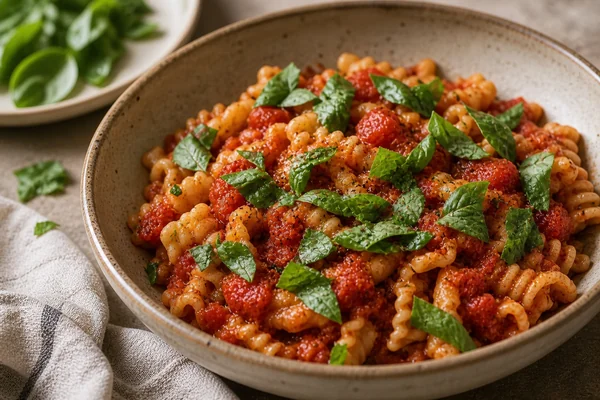
Basil is a heat-fragile herb, so add it raw or in the last seconds of cooking, or its sweet aroma turns to dull, bitter grass. Genovese, Thai, and holy basil are not interchangeable, so match the variety to the dish. Pesto and a warm-room storage spot are the best ways to keep basil alive.
Why does heat turn basil black and bitter?
Basil is one of the most fragile herbs in the kitchen. Its sweet, green, clove-like aroma comes from oils that cook off almost instantly.
Drop fresh basil into a boiling sauce and it collapses. The bright top note vanishes and what is left tastes flat, dark, and faintly bitter.
This is the opposite of a sturdy herb like thyme, which melts happily into a long simmer.
Basil has to be protected from the heat, not cooked in it.
The same fragility shows up on the cutting board. Sliced basil bruises and blackens where the blade crushes it, so it browns faster than firmer leaves.
Everything about cooking with basil follows from this one fact. Get the timing and handling right, and the rest is easy.
What is the difference between Genovese, Thai, and holy basil?
Basil is not one flavor. The common types taste distinct enough that swapping them changes the whole dish.
Genovese basil is the sweet Italian one, all clove and pepper, made for pesto and tomato.
It is what most shops mean by plain basil.
Thai basil is sturdier, with an anise and licorice edge that holds up better in a hot wok. It is built for Thai stir-fries and curries.
Holy basil, or tulsi, is peppery and almost clove-hot, and it turns up in fiery Thai stir-fries. It is not a swap for the sweet Italian kind.
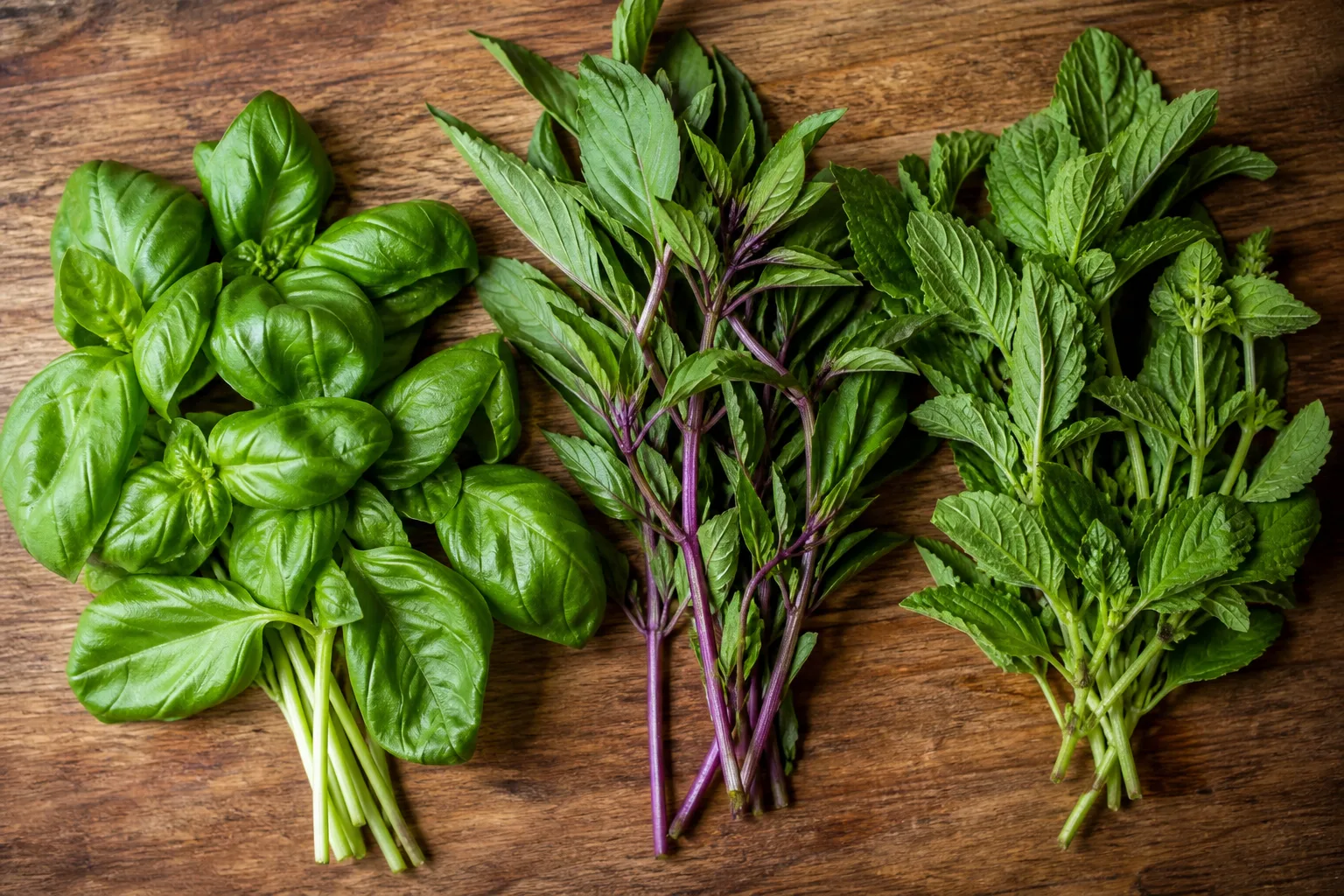
- Genovese: Sweet and clove-like. Pesto, caprese, tomato sauce.
- Thai: Anise and licorice, heat-tolerant. Stir-fries and coconut curries.
- Holy basil (tulsi): Peppery and hot. Spicy Thai and Southeast Asian dishes.
The mistake is treating them as one ingredient.
Genovese basil in a Thai stir-fry tastes wrong, and Thai basil in pesto throws off the balance.
When a recipe just says basil with no cuisine clue, it almost always means Genovese. Reach for Thai or holy basil only when the dish names it.
How much basil should you use?
Basil is measured in handfuls rather than spoons, and that is not vagueness. Fresh leaf is mostly water, so a cup of loosely packed leaves cooks down to almost nothing.
A large handful, roughly a cup of loose leaves, finishes a dish for four.
That is enough to be tasted in every mouthful of a pasta sauce or a tomato salad without turning the dish green.
Pesto runs at a completely different scale.
A standard batch takes two to three packed cups for four servings, because there the basil is the dish rather than a seasoning of it.
Dried basil is not measured on the same scale at all. The usual one-to-three rule for dried against fresh does not hold, because drying strips the fresh green top note and leaves something closer to dried mint.
Start low when the basil is going in hot.
Heat concentrates what survives and destroys the rest, so a dish that tastes balanced raw can taste both weaker and harsher after ten minutes on the stove.
| Use | Amount for four | Note |
|---|---|---|
| Finishing a sauce or salad | One large handful, about a cup loose | Add off the heat |
| Pesto | Two to three packed cups | The basil is the dish, not the seasoning |
| Infusing oil or cream | A handful, removed after steeping | Bruise, do not chop |
| Dried basil | Not a direct swap at any ratio | Reads closer to dried mint than to fresh basil |
When should you add basil to a dish?
Because heat destroys it, basil belongs at the very end. Treat it as a finish, not a base note you build the dish on.
Tear or add whole leaves off the heat, or in the last thirty seconds of cooking. Long exposure to heat is what turns basil dark and lifeless.
This is the far end of the timing scale, the opposite of how you cook hardy spices early. Basil is one of the last things to hit the pan.
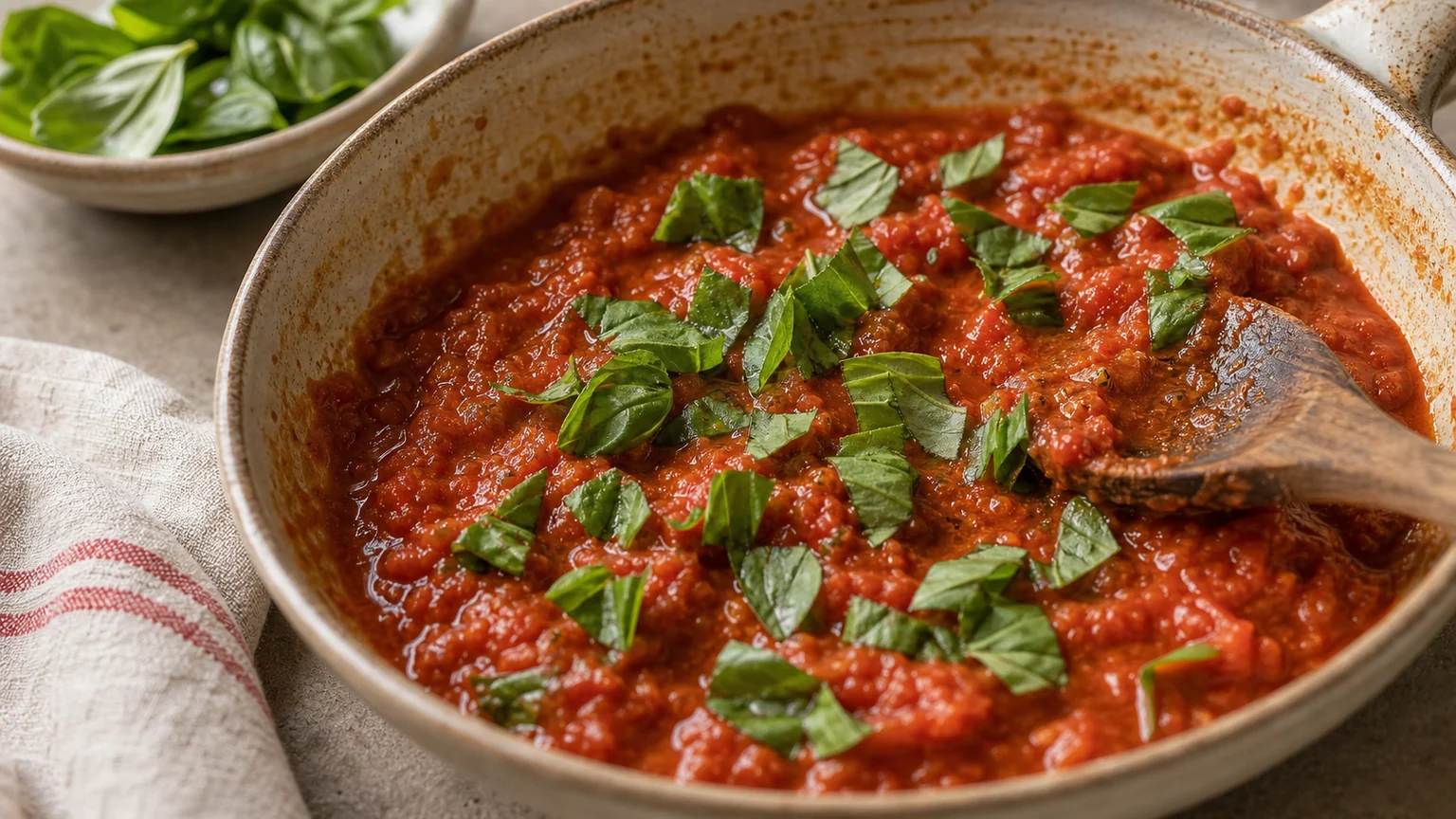
- Tomato sauce: Stir torn basil in after the pan leaves the heat.
- Pizza: Add fresh leaves in the last minute or after it comes out of the oven.
- Stir-fry: Thai basil goes in at the end, wilting just enough in the residual heat.
Tear basil rather than chopping it when you can. A sharp knife bruises the cut edges, which speeds up browning and can taste faintly metallic.
If you must slice it, stack the leaves, roll them, and cut thin ribbons quickly.
Use them at once rather than letting them sit and darken.
Thai basil is the one exception to the gentle rule. It survives a brief blast in a hot wok, which is exactly why stir-fries use it.
Pesto is basil preservation, not just a sauce
Pesto is the smartest thing you can do with a glut of basil. Blending the leaves with oil locks the fragile aromas away from air and heat.
The oil coats the crushed leaves and slows the browning that ruins fresh basil. That is why pesto keeps for days when raw leaves fade in hours.
Classic pesto is Genovese basil, pine nuts, garlic, hard cheese, and olive oil. It is one of the best known herb and spice pastes.
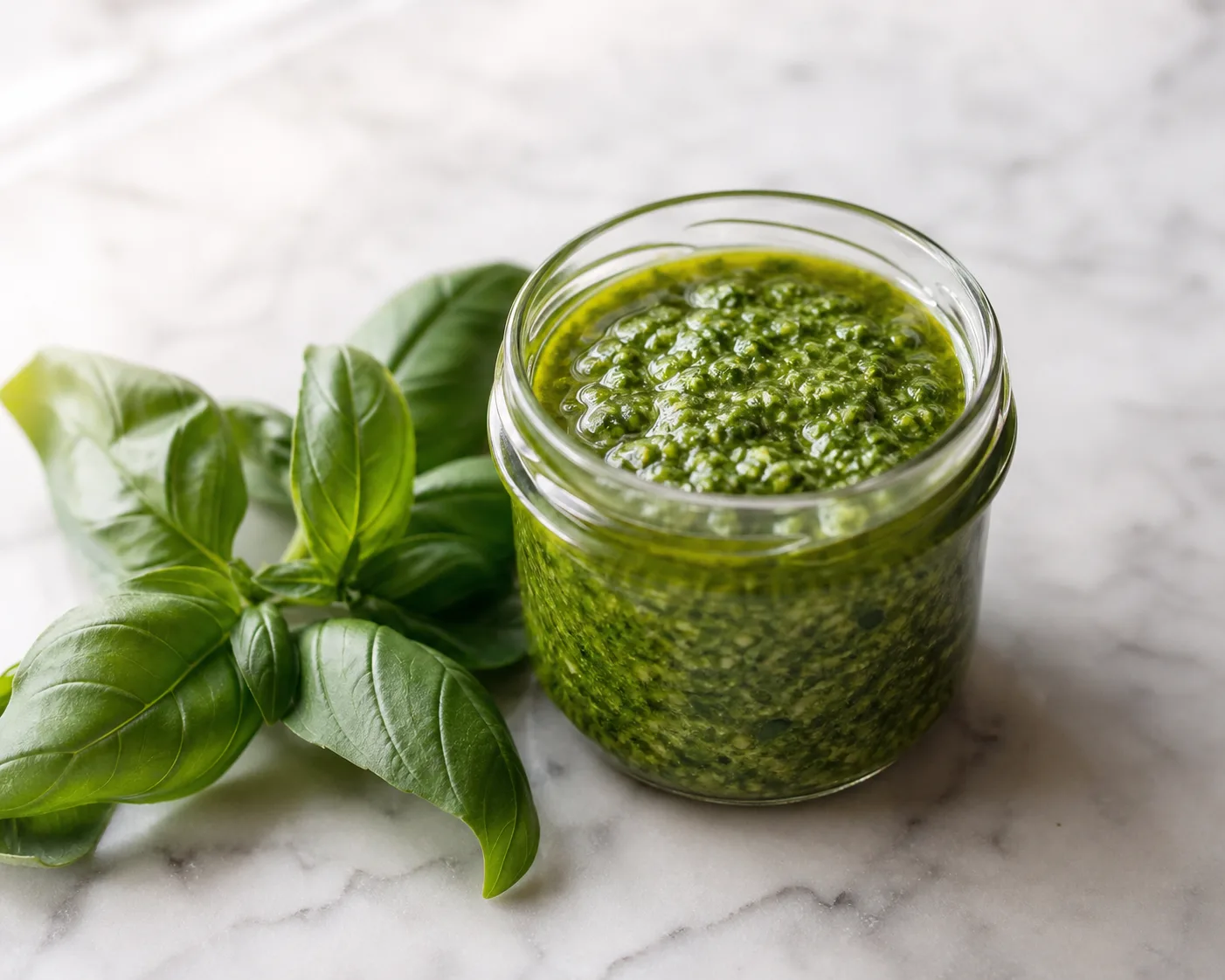
- Blend with oil: The oil coats the crushed leaves and slows browning.
- Cap with oil: A film on top seals out the air that darkens the surface.
- Toss off the heat: Stir pesto into hot pasta away from the burner.
Keep pesto raw and unheated.
Toss it into hot pasta off the heat, so the residual warmth carries the flavor without cooking the basil.
To store it, press the pesto flat and film the top with oil. A cap of oil blocks the air that turns the surface brown.
You can also freeze basil as a rough paste for later. Blitz the leaves with a little oil and freeze in cubes for cooked dishes down the line.
Can you freeze basil?
Freezing basil raw turns it black, and the black is not the problem people think it is. The leaf is bruised and discolored rather than spoiled, and the flavor largely survives.
The texture does not survive at all.
A thawed leaf is limp and watery, so frozen basil belongs in cooked dishes and never on a plate where anyone will look at it.
Freezing it in oil works far better than freezing it dry.
Blitz the leaves with just enough olive oil to make a loose paste, spoon it into an ice-cube tray, and each cube drops straight into a sauce or a soup. The oil keeps air off the cut surfaces, which is what limits the blackening.
Blanching first is the other route.
Five seconds in boiling water then straight into iced water fixes the green color, and the leaves freeze flat afterwards without turning dark.
Do not freeze whole sprigs loose in a bag. They shatter, oxidise, and end up as black dust that tastes of very little.
- In oil: Blitz to a loose paste, freeze in cubes. The best everyday method.
- Blanched: Five seconds boiling, then iced water. Keeps the color green.
- Cooked dishes only: Thawed basil is limp, whatever method you used.
- Not loose and dry: Whole leaves shatter into black dust in a bag.
- Not for garnish: Nothing frozen goes back on a plate raw.
Where each basil belongs
Match the variety to the cuisine and the dish falls into place.
The wrong basil is not inedible, but it pulls the flavor sideways.
| Dish | Which basil | How to use it |
|---|---|---|
| Pesto and caprese | Genovese | Raw, blended or whole |
| Margherita pizza | Genovese | Add late or after baking |
| Tomato pasta sauce | Genovese | Stir in off the heat |
| Thai drunken noodles | Holy or Thai | Toss in at the end of the wok |
| Vietnamese pho garnish | Thai | Pile in raw at the table |
| Green coconut curry | Thai | Stir in during the last minute |
Genovese basil loves tomato, mozzarella, garlic, and olive oil. That short list covers most of Italian summer cooking.
Thai basil wants fish sauce, chile, garlic, and coconut. It stands up to bold Southeast Asian flavors that would flatten the sweeter Italian kind.
Both types pair beautifully with fruit and mild heat. A little basil over strawberries or peaches works the way mint does with melon.
Thai basil also shines as a raw table garnish. Piled onto a Vietnamese herb plate, it lifts pho and grilled pork without any cooking at all.
Why does supermarket pot basil die so fast?
A pot of basil from a supermarket is not one plant. It is twenty or thirty seedlings crammed into a pot that would comfortably hold one, grown fast under glass to look full on the shelf.
They are competing for the same small volume of soil.
Roots tangle, water runs straight through, and within a week or two the whole pot collapses at once no matter how carefully it is watered.
Splitting the pot is what saves it.
Tip it out, tease the mass into three or four clumps, and plant each in its own pot with fresh compost. Losing a few seedlings in the process is the price of keeping the rest.
Water from below and never from above.
Standing the pot in a saucer for twenty minutes lets it drink what it needs, while water poured over the leaves invites the grey mould that finishes most indoor basil.
Pick from the top, always above a pair of leaves.
That is where the plant branches, so harvesting correctly makes it bushier while stripping the lower leaves makes it leggy and slow.
Buy a plant with visible soil between the stems if the shop has one, because that is the sign of a pot grown to live rather than to look full. A pot that looks like a dense green cushion was bred for the shelf and rarely lasts a fortnight at home.
- Split it: Tease the root mass into three or four clumps and repot each one.
- Water from below: Stand it in a saucer, never pour over the leaves.
- Pick from the top: Harvest above a leaf pair so the plant branches.
- Expect losses: A supermarket pot holds twenty or thirty seedlings fighting for one pot of soil.
Never refrigerate basil, and how to store it
Basil develops black cold-injury patches in a refrigerator, so keep a fresh bunch on the counter.
Treat basil like cut flowers instead. Stand the stems in a glass of water on the counter, away from direct sun, and it stays green for days.
This is the opposite of the usual herb advice, where cold, damp storage helps. Basil is the herb that breaks the standard storage rule.
- Counter, in water: Stems in a glass, loosely covered, out of the fridge.
- Do not wash early: Water on the leaves speeds up black spots.
- Freeze as paste: Blitz with oil and freeze for cooked dishes, not garnish.
- Dry as a last resort: Dried basil is a faint shadow of fresh, useful only in cooked sauces.
Dried basil deserves low expectations. Drying strips out the fresh top note, so it works only as a background herb in a long-cooked sauce.
The fresh to dried conversion is a genuine downgrade for basil. When a recipe leans on basil's aroma, buy fresh or change the plan.
Why does pesto go brown, and how do you stop it?
Pesto browns because cutting basil exposes the leaf to air and an enzyme does the rest. It is oxidation, the same process that browns a cut apple, and it changes the color long before it changes the taste.
A food processor makes it worse than a mortar does.
Steel blades bruise and heat the leaf while whipping air through the whole batch, which is why hand-pounded pesto holds its color noticeably longer.
Blanching the leaves is the reliable fix.
Five seconds in boiling water, then straight into iced water, deactivates the enzyme without cooking the basil. Squeeze the leaves dry before they go in the mortar.
Acid slows it down without stopping it.
A squeeze of lemon helps. Enough lemon to prevent browning entirely is enough to taste, so treat acid as a delay rather than a cure.
Cover the surface with oil in the jar. Pesto browns from the top down where it meets air, and a thin oil layer over the surface keeps a jar green in the fridge for days rather than hours.
- Blanch: Five seconds boiling, then iced water. The reliable fix, it stops the enzyme.
- Mortar over machine: Steel blades bruise, heat, and whip air through the batch.
- Acid: A squeeze of lemon delays browning, it does not prevent it.
- Oil on top: Pesto browns from the surface down, so cover it in the jar.
- Color first: Browning changes the look well before it changes the taste.
Substitutes by basil type
A basil substitute depends on which basil you meant, because sweet Genovese and anise-edged Thai need different backups.
| Basil job | Swap in | Trade-off |
|---|---|---|
| Genovese in pesto | Parsley plus a little mint | Less sweet, still fresh and green |
| Genovese in tomato sauce | A pinch of dried oregano | Savory instead of sweet |
| Thai basil in stir-fry | Holy basil, then regular basil late | Loses some anise punch |
| Fresh garnish | Mint or cilantro | Different aroma, same raw lift |
For pesto without basil, a mix of parsley and a little mint keeps it green and fresh. It will not taste like classic pesto, but it works as a sauce.
In a cooked tomato sauce, a pinch of dried oregano covers a basil gap. It shifts the dish savory rather than sweet, but it survives the heat that basil cannot.
When basil is the whole point, such as caprese or a basil pizza, do not fake it. The substitute-by-job approach only goes so far before you should change the dish.