
What Is Mint, and Should You Cook With Spearmint or Peppermint?
Cooling menthol resets rich, spicy, or over-sweet food, but only when it goes in fresh and late.
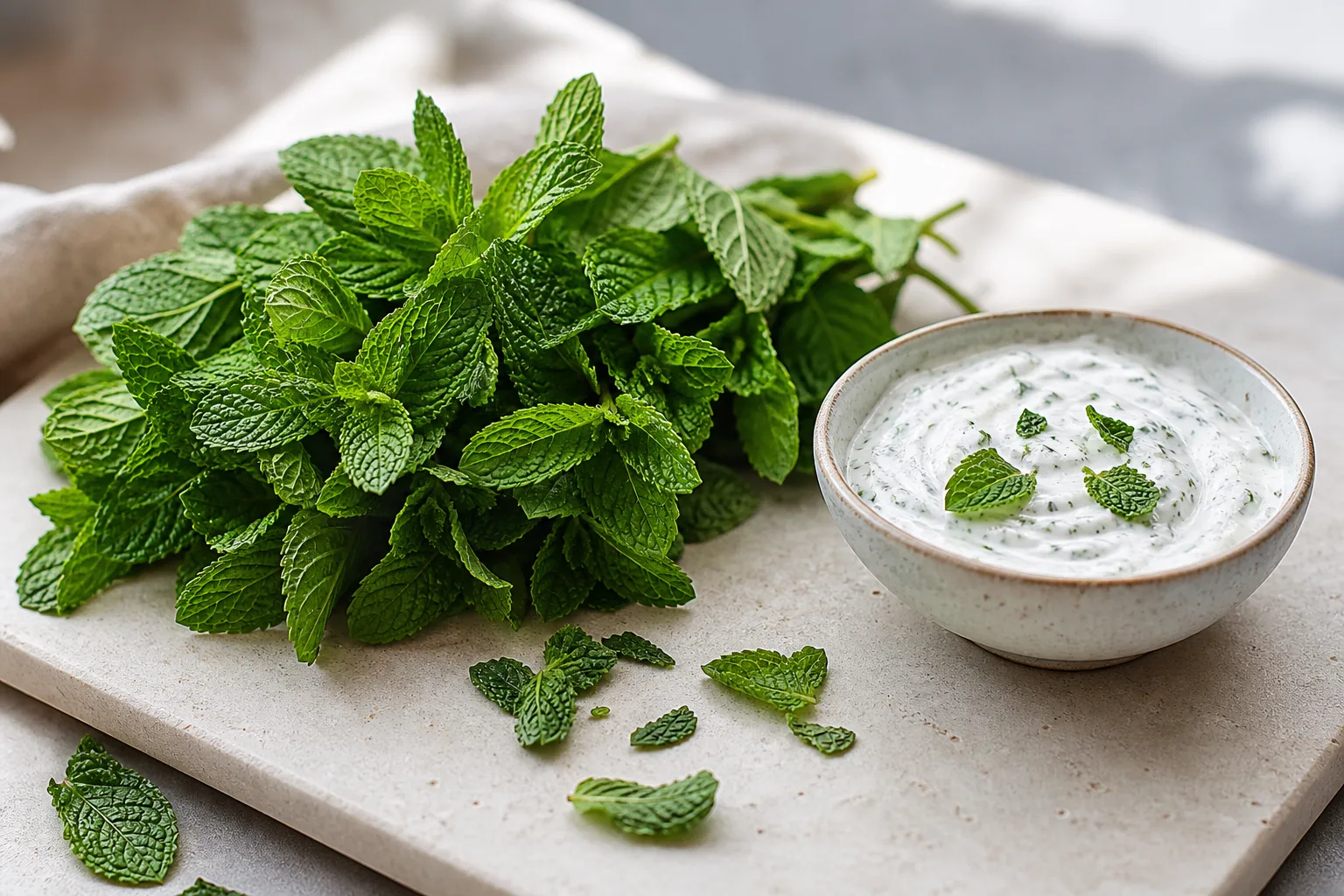
Use mint to cool and lift food that feels heavy, hot, or over-sweet, not as a base flavor. Choose spearmint for almost all cooking and keep peppermint for drinks and desserts. Add fresh leaves raw or in the final minute, because long heat destroys the cooling note.
What is mint, and which type should you cook with?
Mint is a cooling, aromatic herb, and the two types you will actually meet are spearmint and peppermint. For cooking, reach for spearmint.
Its softer, sweeter cooling suits yogurt sauces, lamb, peas, tabbouleh, and mojitos.
Peppermint is the one you keep for sweets and drinks.
Spearmint is the mint you almost always want in the kitchen. Its menthol is gentle enough to season savory food without taking over.
Peppermint is a different tool. It carries far more menthol, so a savory dish seasoned with it can taste like toothpaste.
Keep peppermint for chocolate, ice cream, hot tea, and syrups, where that icy punch is the point.
It fights most dinner food.
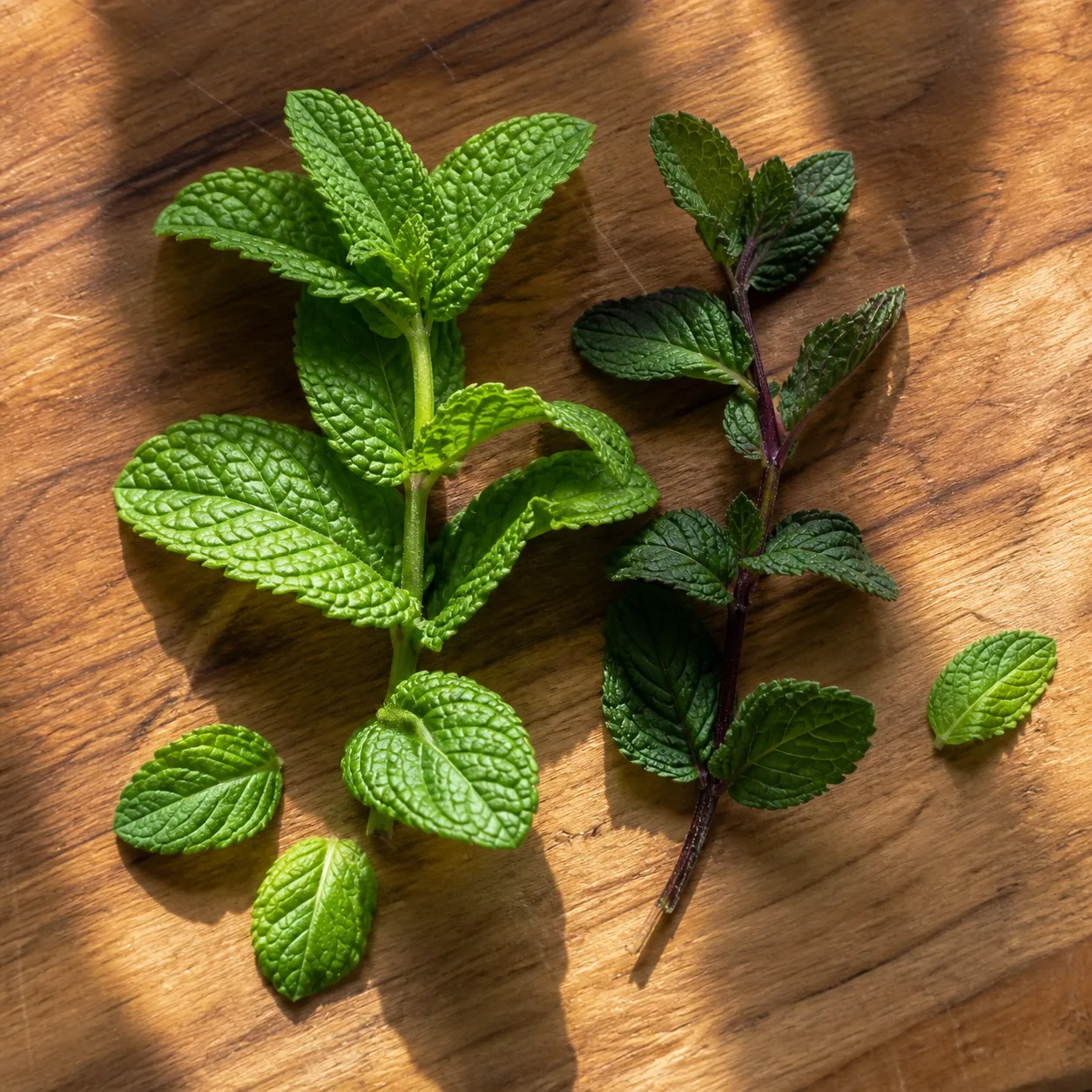
- Spearmint: Bright green, crinkled leaves and a sweet, grassy smell.
- Peppermint: Darker leaves, a purple-tinged stem, and a sharp icy hit.
- The kitchen default: If a bunch is unlabeled, cook with it as spearmint.
Most grocery bunches sold as plain mint are spearmint. Shops rarely mark the type, so you often have to judge it yourself.
Crush one leaf and smell it. A sweet, grassy smell means cook with it, and a sharp, icy smell means treat it like peppermint.
Mint belongs to the Lamiaceae family, alongside basil, oregano, and rosemary. Like those herbs, its aroma sits in fragile oils that fade with heat and time.
| Mint type | Use it in | Keep it out of |
|---|---|---|
| Spearmint | Yogurt sauce, tabbouleh, peas, lamb, mojito | Strong peppermint desserts |
| Peppermint | Chocolate, hot tea, ice cream, syrups | Savory yogurt or grain salads |
| Chocolate or apple mint | Fruit, drinks, light desserts | Anything needing clean spearmint |
| Unlabeled bunch | Treat as spearmint for cooking | Delicate desserts that need control |
The novelty mints, such as chocolate mint and apple mint, are fun in drinks and fruit.
They rarely improve a savory dish that a clean spearmint would handle better.
Cooling is a correction, so give it something to push against
Mint does its best work as a counterweight. Cooling menthol makes fat feel lighter, chile feel rounder, and sugar feel less flat.
That is why mint rarely leads a dish on its own. It needs richness, heat, or sweetness in front of it to correct.
A bowl of plain mint rice tastes thin. The same mint stirred into a fatty lamb dish suddenly has a real job to do.
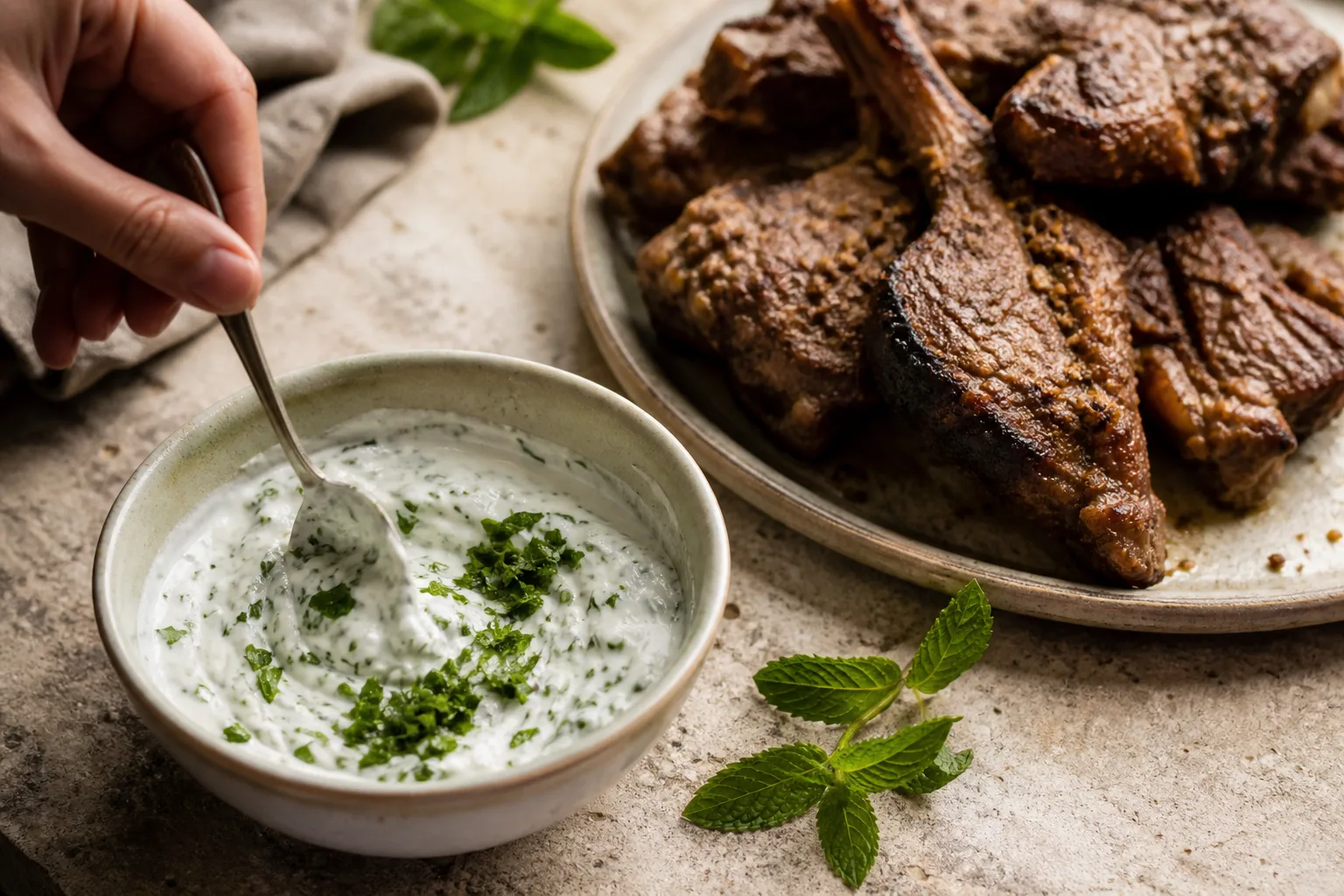
- Against fat: Mint in yogurt cuts the coating richness of lamb or mutton.
- Against heat: A cool raita softens a spicy curry without dulling the spice.
- Against sweetness: Torn mint sharpens flat, over-ripe melon and berries.
Stir it into yogurt beside a hot curry and the burn softens.
Serve it with lamb and the fat stops coating your mouth.
A rough guide for raita is a small handful of chopped spearmint per cup of yogurt.
Add lemon or salt to keep it from tasting flat.
Sweetness works the same way. A few torn leaves over ripe melon or strawberries make the fruit taste brighter, not minty.
This is the cooling side of balancing heat, sweet, and sour. Mint is one lever you pull when a plate tips too far into richness.
When should you add mint to a dish?
Heat is mint's enemy. Long simmering drives off the volatile menthol and leaves a dull, grassy taste behind.
Ten minutes in a boiling sauce is enough to flatten fresh mint. What survives tastes more like cooked spinach than a cool herb.
Add fresh mint raw, steeped off the heat, or in the last minute. The later it goes in, the more lift you keep.
Treat mint as a finish, the same way you time other delicate aromatics near the end of cooking.
It is a garnish with a job, not a base note.
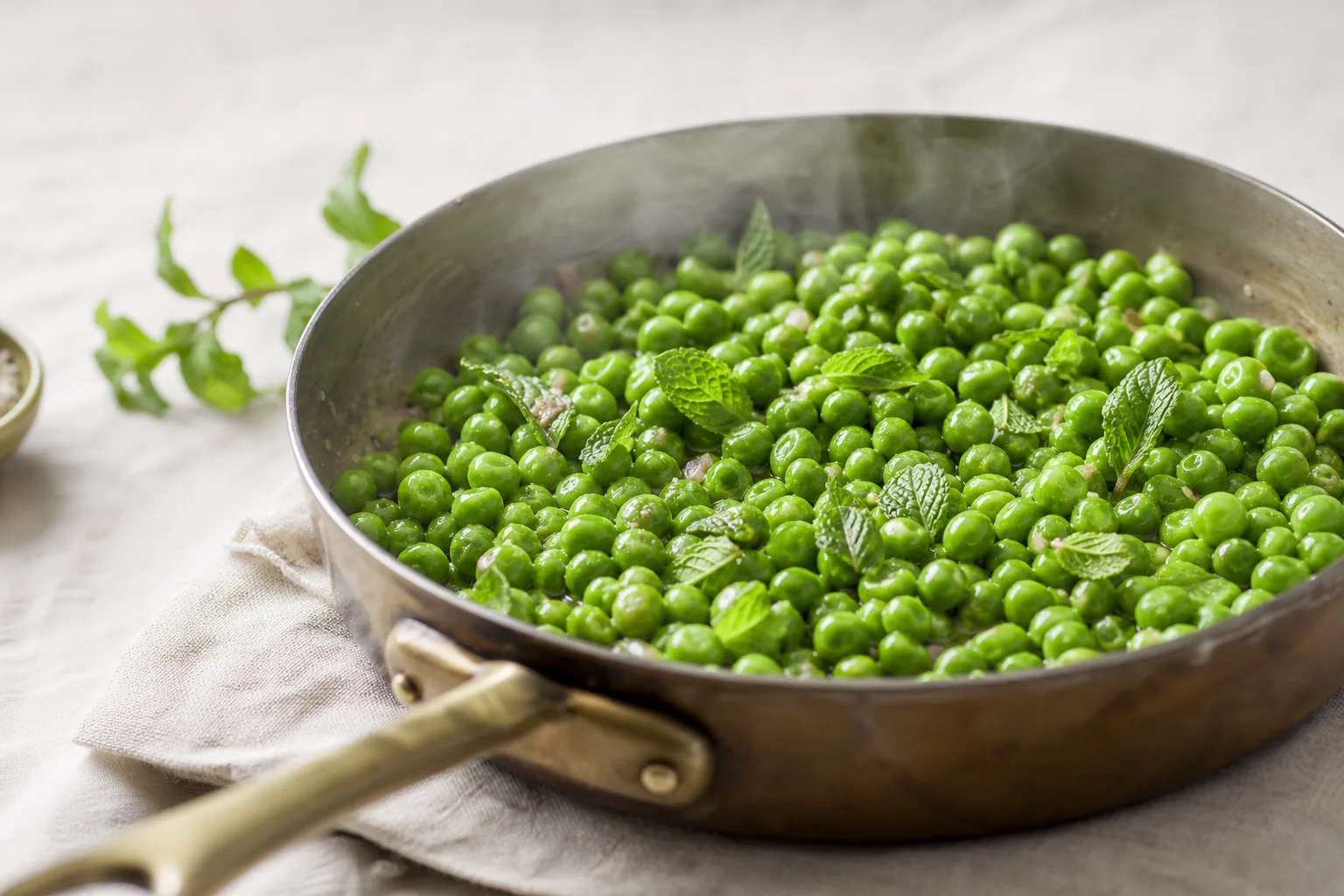
- Peas and beans: Fold torn leaves in after the pan leaves the heat.
- Yogurt and raita: Stir mint in cold so the cooling note stays sharp.
- Grain salads: Add mint at the final toss with lemon and oil.
- Hot tea: Steep whole sprigs three to four minutes, then lift them before they turn bitter.
Chop mint at the last second. Cut leaves bruise and lose aroma within minutes once they sit exposed on the board.
Whole leaves last longer than chopped ones.
For a garnish that has to wait, tear the mint by hand just before it hits the plate.
To keep summer mint, freeze chopped leaves in an ice cube tray topped with water or oil.
Frozen mint is for cooked uses, not for a fresh garnish.
Some classic dishes break the raw rule on purpose.
British mint sauce simmers chopped mint briefly with vinegar and a little sugar, then rests to sharpen against roast lamb.
Even there, the cooking is short and the acid protects the flavor. That is the exception, not a license to boil mint into a stew.
Match mint to the problem it fixes
Think of mint as a fix for a dish that is too much of one thing.
Match the problem in front of you to the move.
| Dish problem | Add mint as | Why it works |
|---|---|---|
| Rich, fatty lamb | Chopped through a yogurt sauce | Cooling cuts the coating fat |
| Too-spicy curry | Stirred into raita on the side | Menthol softens the chile burn |
| Flat, over-sweet melon | Torn over the fruit raw | Cool contrast resets the sweetness |
| Heavy grain salad | Tossed through at the end | Fresh lift breaks up the starch |
| Fried, greasy snacks | Blended into a green chutney | Acid and cool cut through oil |
The pattern crosses cuisines. Mint chutney does this for fried snacks, and an Indian pantry leans on that cooling contrast constantly.
Greek cooks fold spearmint into lamb keftedes and yogurt.
Vietnamese cooks pile raw mint into herb plates for pho and noodles to lighten pork and broth.
Sweet uses run the same logic. Moroccan mint tea and cooling drinks use spearmint so the flavor reads as refreshing rather than medicinal.
English cooks lean on mint with new potatoes and peas, where the sweetness of the vegetable meets the cool herb.
Thai larb throws raw mint over spiced minced meat for the same lift.
Know when to stop. Mint overpowers gentle flavors, so keep it away from mild white fish, soft cheese, and subtle broths.
It also clashes with other strong herbs. Pairing spearmint and rosemary in one dish usually muddies both instead of layering them.
How much mint should you use when every bunch tastes different?
Mint hybridizes freely, so two bunches sold under the same name can deliver different menthol strength. Peppermint itself crosses spearmint with water mint, while garden plants continue to interbreed when several mints grow close together.
Season changes the dose too. Outdoor mint gathered in summer usually carries more essential oil than a winter greenhouse bunch, so an amount that tasted gentle in January can dominate the same dish in August.
Tear and smell one leaf before measuring. Sweet, grassy spearmint can be used more freely, while a sharp icy bunch needs a smaller start and may belong in tea or dessert instead of dinner.
For four servings, use these as conservative spearmint starting points rather than fixed rules.
- Yogurt sauce: Start with two tablespoons finely chopped mint per cup of yogurt, then rest it before tasting.
- Peas or potatoes: Fold in one to two tablespoons chopped mint per pound after the pan leaves the heat.
- Grain salad: Begin with a loosely packed quarter cup for four servings when mint shares the bowl with parsley or other herbs.
- Mint tea: Steep one small sprig per cup for three to four minutes, then remove it before bitterness builds.
Peppermint may need half those fresh-leaf amounts or less because its cooling hit arrives faster. Novelty mints also vary, so the smell test matters more than the cultivar name on a garden tag.
Taste after mint has met the food, not straight from the cutting board. Fat and starch soften it, while water and quiet dairy can expose every sharp note.
What can you use instead of mint?
No herb copies menthol, so a mint substitute has to target the job, not the leaf. Decide whether you need cooling, green bulk, or a sweet note.
For a cooling finish, a little basil with lime zest gets closer than any dried herb. The lime supplies the lift that basil alone cannot.
For green volume in something like tabbouleh, extra flat-leaf parsley fills the space. You lose the cool top note, but the salad still eats fresh.
| What mint was doing | Closest swap | What you give up |
|---|---|---|
| Cooling lift in yogurt | Basil plus lime zest | Some of the icy edge |
| Green bulk in tabbouleh | Extra flat-leaf parsley | The cool top note |
| Sweet-cool note on fruit | Basil or lemon balm | Menthol sharpness |
| Savory rub for lamb | Dried mint or oregano | Fresh brightness |
The same trap catches cilantro, whose raw citrus aroma no dried version rebuilds.
When a dish is named for the herb, change the recipe instead of faking it.
A mojito without mint is a different drink, and mint chutney without mint is just green sauce. Accept the swap changes the dish, or keep mint on the shopping list.
For roast lamb, mint jelly or a quick mint sauce does the cooling job when fresh leaves run short. Both keep the sweet and cool contrast that plain gravy misses.
Store mint cold, and know what dried mint is for
Fresh mint bruises fast and blackens where the leaf is crushed.
Handle it gently and slice with a sharp knife, not a dull one.
A bunch kept stem-down in a glass of water with a loose bag over the leaves holds about a week in the fridge.
Do not wash mint until you use it. Water left on the leaves speeds up the black, slimy spots that end a bunch early.
- Fresh and usable: Firm, bright green leaves with a clean, cool smell.
- Getting tired: Wilted edges that a short soak in cold water can revive.
- Past saving: Blackened, slimy, or sour-smelling leaves go in the bin.
Dried mint is not weaker fresh mint because drying trades the cool note for a deeper, savory, tea-like taste.
For a cooked soup, sauce, or rub, one teaspoon dried mint can replace one tablespoon chopped fresh mint as a starting point. Add the dried form earlier so liquid or fat has time to soften it.
Use dried mint where that shift helps: lamb rubs, yogurt soups, and Middle Eastern spice blends. Do not expect the one-to-three conversion to cool a fresh salad, garnish a dessert, or stand in for leaves in a mojito.
Plant homegrown mint in a pot because its underground runners can crowd out a garden within a season or two.
The freshness checks that flag spices that have gone bad apply to dried mint too. If it smells like dust instead of mint, it has nothing left to give.