
What Spices Belong in Tea, and How Should You Brew Them?
Match cardamom, ginger, cinnamon, clove, pepper, fennel, or star anise to the drink you want.
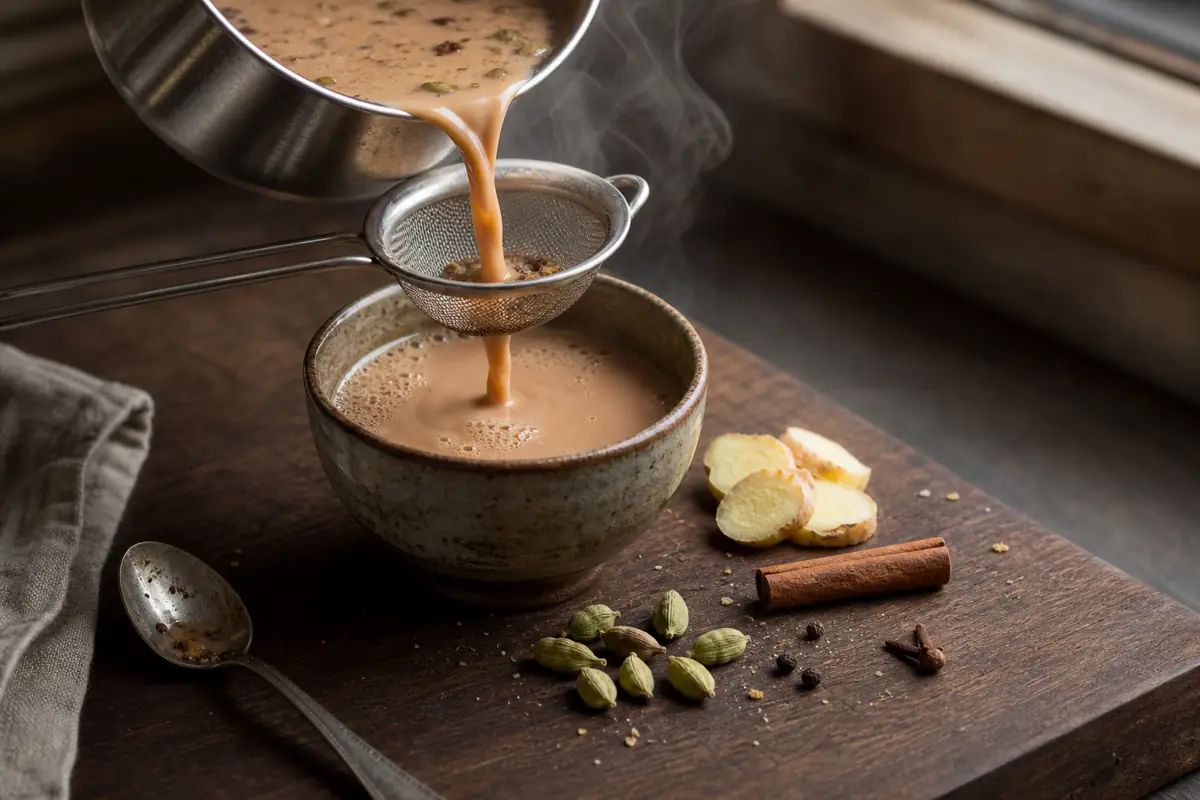
The best spices for tea are cardamom, ginger, cinnamon, cloves, black pepper, fennel, and star anise, but a balanced cup rarely needs all seven. Simmer bruised whole spices before adding tea leaves, then strain promptly so the drink stays clear and smooth.
What spices are good in tea?
Spices for tea work best when each one supplies a different note, such as perfume, sweetness, heat, or a cooling finish.
Green cardamom pods give a floral, citrusy aroma that rises above milk and strong black tea.
Fresh ginger heat arrives quickly and feels juicy, while dried ginger tastes hotter, drier, and more concentrated.
A piece of cinnamon bark adds perceived sweetness and a woody base without adding sugar.
Clove and star anise are much stronger. One clove or one point from a star can shape an entire cup.
Fennel seed gives a soft licorice note, while black pepper leaves a dry prickle at the back of the throat.
| Spice | Main contribution | Best with | Easy mistake |
|---|---|---|---|
| Green cardamom | Floral citrus lift | Black tea, milk tea, mint | Leaving pods closed |
| Fresh ginger | Bright, juicy heat | Black tea, lemon, milk | Boiling thick pieces too briefly |
| Cinnamon | Sweet woody base | Black tea, rooibos, fruit | Using too much powder |
| Clove | Dark, numbing intensity | Milk tea, apple, hibiscus | Adding several per cup |
| Black pepper | Dry finishing heat | Strong black tea, ginger | Grinding it too finely |
| Fennel seed | Soft anise sweetness | Mint, green tea, milk tea | Crushing it into dust |
| Star anise | Bold licorice aroma | Black tea, citrus, pear | Using a full star in one cup |
Start with two or three spices, then decide what the cup lacks. Adding every spice usually hides the tea under one brown, sweet aroma.
What spices are in masala chai?
Masala chai commonly combines black tea with green cardamom, ginger, cinnamon, cloves, and black pepper, but no single mixture defines every household.
Masala means a spice mixture, while chai means tea. The finished drink also depends on water, milk, sweetener, and the tea itself.
Green cardamom and ginger often lead because they remain clear beside milk. Cinnamon builds the base, while clove's numbing aroma darkens it.
Strong Assam or CTC black tea can hold its character after simmering with milk. Delicate leaves may disappear beneath the same spice load.
A restrained two-cup mixture might use four bruised cardamom pods, three ginger coins, a short cinnamon piece, and one clove.
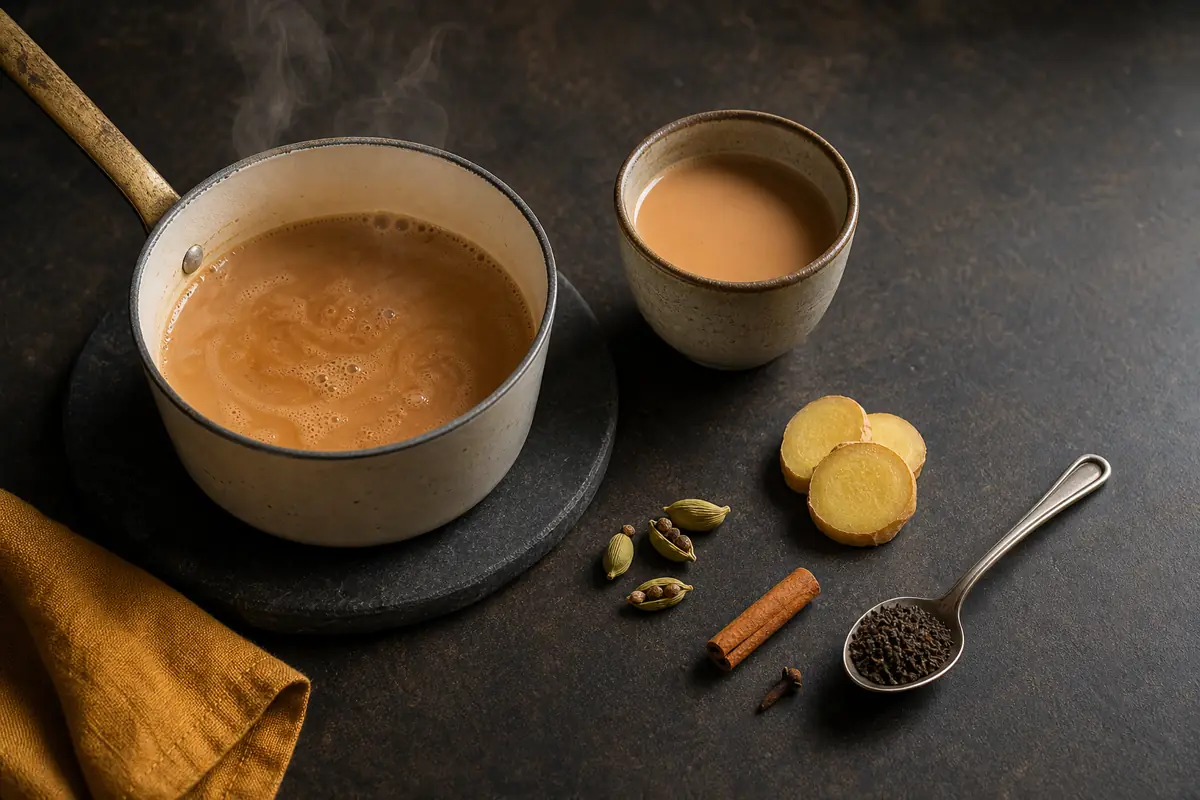
- Cardamom and ginger can carry the blend without a long ingredient list.
- Black tea supplies tannin and body that milk and sugar soften.
- Clove, pepper, fennel, or star anise are accents rather than mandatory ingredients.
Build the drink around the tea you have instead of copying a large spice list. A lighter tea needs fewer and gentler additions.
Which spices fit black, green, and herbal tea?
Tea spices should match the strength and brewing temperature of the base, because a black tea and a green tea tolerate different treatment.
Black tea supports ginger, cardamom, cinnamon, clove, and pepper. Its tannin and roasted notes remain noticeable beside assertive spices.
Milk tea can carry extra ginger or pepper because fat and sweetness soften their sharp edges. Clove still needs restraint.
Green tea suits cardamom, fennel, mint, or a thin ginger slice. Simmer the spices separately, then steep the leaves below boiling.
A caffeine-free mint infusion gains sweetness from fennel or cardamom without losing its cooling finish.
Hibiscus and fruit infusions accept cinnamon, clove, ginger, and star anise because acidity keeps those dense aromas lively.
| Tea base | Good starting spices | Brewing approach | Watch for |
|---|---|---|---|
| Strong black tea | Cardamom, ginger, cinnamon, pepper | Simmer spices, then add tea | Long tea boil and harsh tannin |
| Milk tea | Cardamom, ginger, cinnamon, one clove | Add milk after spice extraction | Scorched milk and muted aroma |
| Green tea | Fennel, cardamom, mint, thin ginger | Infuse spices first, steep leaves later | Boiling the leaves |
| Rooibos | Cinnamon, ginger, soft vanilla, cardamom | Steep together or simmer gently | Too much sweet spice |
| Hibiscus or fruit | Cinnamon, clove, star anise, ginger | Simmer hard spices with fruit | Clove covering the acidity |
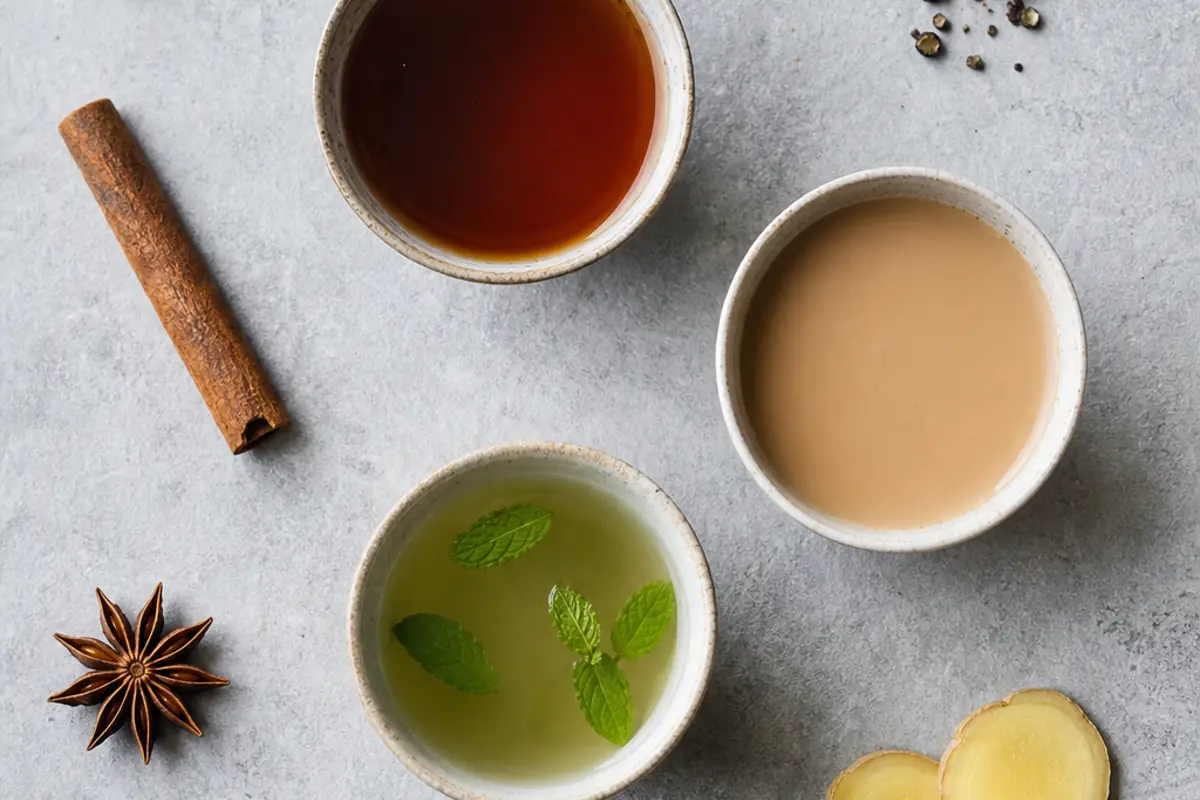
- Black tea can support ginger, cinnamon, clove, and pepper.
- Milk softens sharp heat but can also mute delicate perfume.
- Mint and lighter infusions need restrained cardamom, fennel, or ginger.
Match intensity before matching tradition. A spice combination that suits malty black tea can flatten a grassy green tea.
Should you use whole or ground spices in tea?
Whole spices usually make cleaner tea because you can bruise them, simmer them, and remove them before they release rough or dusty notes.
Crack cardamom pods until the seeds show. Break cinnamon into short pieces, and press fennel or pepper just enough to split them.
Ground spices extract faster, but they also float, settle, and cling to the cup. Ground cinnamon never fully dissolves in water.
Fine powder can work in a cloth bag or paper filter. Use less than the whole-spice amount because more surface touches the water.
Fresh ginger is a useful exception to the dry-spice choice. Thin coins strain cleanly and release more vivid flavor than dried powder.
A small infuser can contain seeds and bark, but crowded pieces may extract unevenly. Give the ingredients room to move.
| Form | Control | Cup texture | Best use |
|---|---|---|---|
| Bruised whole spice | Easy to taste and remove | Clear after straining | Stovetop tea and larger pots |
| Coarsely crushed spice | Fast but manageable | Some fine sediment | Short infusions and tea bags |
| Ground spice | Changes quickly | Cloudy or gritty | Filtered blends and quick single cups |
| Fresh sliced ginger | Easy to adjust by thickness | Clear after straining | Black tea, green tea, and lemon infusions |
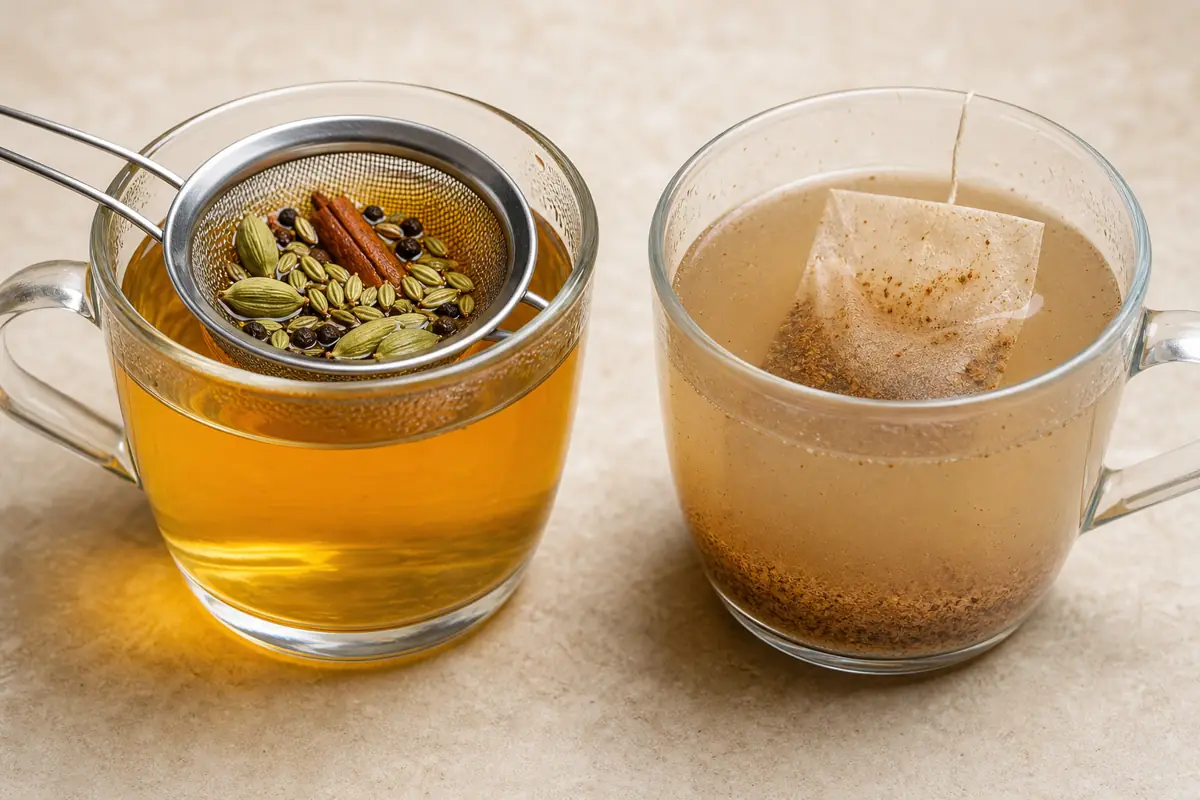
- Open cardamom pods so water reaches the aromatic seeds.
- Keep crushed pieces large enough for a fine strainer to catch.
- Contain powder in a filter when a clear cup matters.
The broader whole versus ground choice follows the same rule. Surface area trades longer storage for faster extraction.
How do you brew spices without overcooking the tea?
Brew tea spices in stages, giving hard bark, pods, and roots a head start before the tea leaves enter the water.
Bruise the dry spices first. Use a small saucepan so the water stays deep enough after several minutes of simmering.
Simmer whole spices gently for five to ten minutes. Use the shorter end for crushed spices and the longer end for thick bark.
Add black tea near the end and brew only until it reaches the strength you want. Prolonged boiling pulls harsher tannin.
Add milk after the spice water develops a clear aroma. Keep the heat controlled so proteins do not catch on the pan.
For green tea, remove the pan from heat and let the water cool slightly before adding leaves. Do not simmer them with cinnamon.
- First: Bruise whole spices and simmer them in water until the aroma is clear.
- Next: Add black tea for a short final brew, or cool the water before adding green tea.
- Then: Add milk only when the drink needs it, and keep the pan below a hard rolling boil.
- Finish: Strain every solid promptly because extraction continues while spices and leaves remain in the pot.
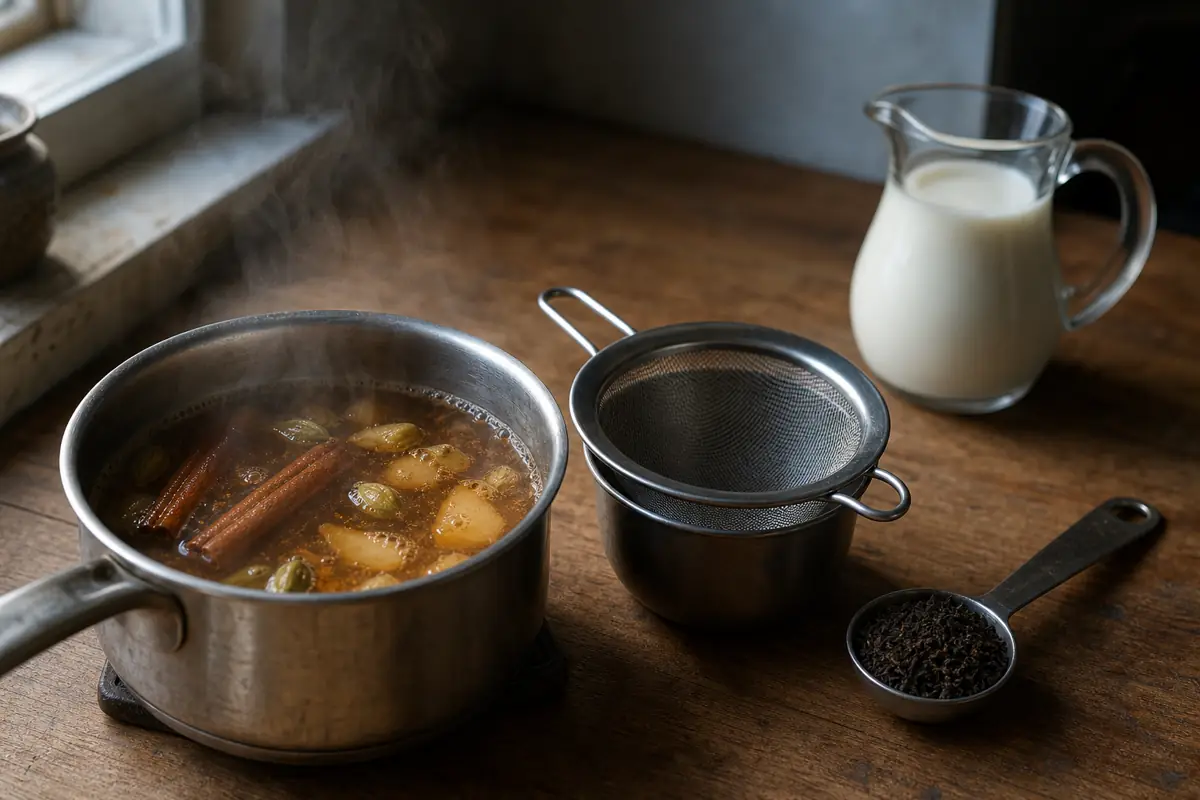
- Spice water should smell defined before tea leaves enter.
- Black tea darkens quickly once added to the concentrated liquid.
- A final strain stops leaves, powder, and cracked seeds from getting stronger.
If the spices remain weak, simmer them longer in the next batch. Do not extend the tea-leaf time to compensate for under-extracted bark.
How much spice should you add per cup?
Tea spices vary in freshness and size, so start with a conservative one-cup amount and record what you change.
Two green cardamom pods or one thin ginger coin provide a noticeable flavor without taking over most black teas.
Use a two-inch cinnamon shard, one clove, or three cracked black peppercorns. For star anise, break one point from a whole star.
A half teaspoon of lightly crushed fennel seed gives sweetness without turning the drink into a licorice infusion.
| Spice | Starting amount | Increase when | Reduce when |
|---|---|---|---|
| Green cardamom | 2 bruised pods | Milk hides the aroma | The cup tastes medicinal |
| Fresh ginger | 1 thin coin | The tea needs brighter heat | Heat covers the leaves |
| Cinnamon | 1 short shard | Using a large pot | Sweet woodiness dominates |
| Clove | 1 whole clove | Rarely needed | The mouth feels numb |
| Black pepper | 3 cracked peppercorns | Strong milk tea tastes flat | The finish feels dry |
| Fennel seed | 1/2 teaspoon | Mint needs sweetness | Anise flavor lingers |
| Star anise | 1 broken point | Fruit tea is very tart | Licorice covers everything |
Scale strong accents more slowly than water. A four-cup pot may need four cardamom pods, but rarely needs four cloves.
Taste after straining, then adjust the next brew. More sweetener can soften heat, but it cannot reveal tea buried under clove.
Why does spiced tea taste bitter, muddy, or flat?
Spiced tea turns bitter from overcooked leaves, muddy from excess powder, and flat from stale ingredients or too many competing aromas.
Harsh dryness usually comes from black or green tea brewed too hot or too long. Remove the leaves earlier in the next batch.
A burnt dairy smell means milk proteins caught on the pan. Transfer unburned liquid carefully or restart if the flavor has spread.
Cloudy tea often contains ground cinnamon, ginger, or cardamom. Pass it through cloth or a paper filter instead of adding more water.
Clove can numb the tongue, while star anise can make every sip taste like licorice. Dilute a mild excess with plain tea.
Stale spice gives weak aroma but a dusty finish. Old powder rarely improves when you simply add a larger spoonful.
- Bitter and drying: Shorten the tea-leaf time while keeping the separate spice simmer.
- Cloudy or gritty: Filter the drink and switch to bruised whole spices next time.
- Too medicinal: Reduce clove, cardamom, or star anise before changing the tea base.
- Weak and dusty: Replace stale spice instead of doubling the amount.
A lightly over-spiced cup can take more plain tea or milk. A scorched cup needs a clean pan and a fresh start.
How should you store a tea-spice mixture?
Tea-spice mixtures keep their useful aroma longest when the ingredients remain whole until shortly before brewing.
Store cardamom, cinnamon, cloves, fennel, pepper, and star anise in a small airtight jar away from kettle steam.
Keep fresh ginger outside the dry mixture. Moist slices can spoil the entire jar and cannot share pantry storage.
Crush only one or two weeks of mixture at a time because opened cardamom seeds and broken bark lose aroma faster.
Use the aroma and color checks before brewing. Replace a blend that smells dusty even after crushing.
Small batches also make adjustment easier. You can reduce clove or add fennel without wasting a large jar of fixed powder.