
What Is Allspice, and How Should You Cook With It?
Crack one berry, then choose the cooking job before reaching for the spoon.
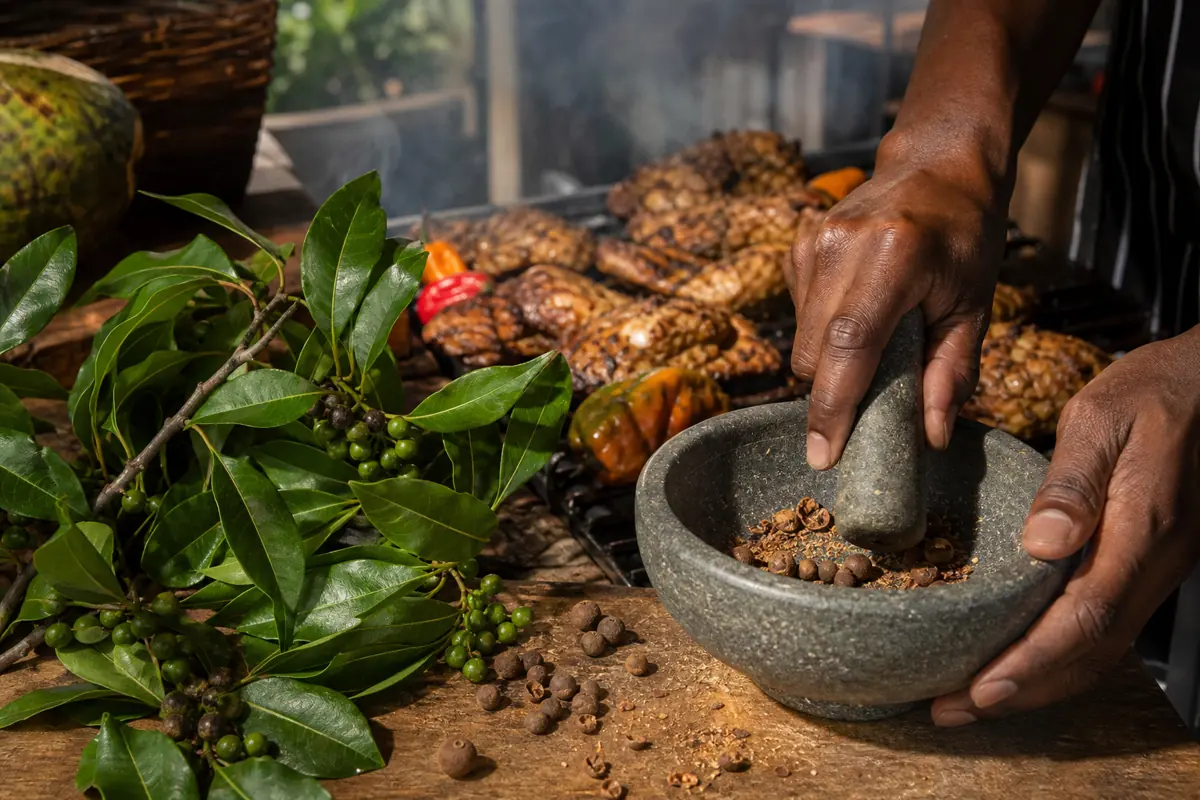
Allspice is one dried unripe Pimenta dioica berry with clove-led, woody, peppery aroma, and Jamaican pimento is central to jerk cookery. Whole berries suit slow liquids and removal, ground spice suits coatings and mixtures, and substitutes must change by dish because cinnamon and clove cannot copy the dry finish.
Allspice is one berry, not a spice mixture
Allspice comes from one plant. The jar holds dried unripe berries from Pimenta dioica, unlike a prepared spice blend.
Growers pick the berries while green, then dry them until they become brown and hard. Their size and round shape can resemble oversized peppercorns.
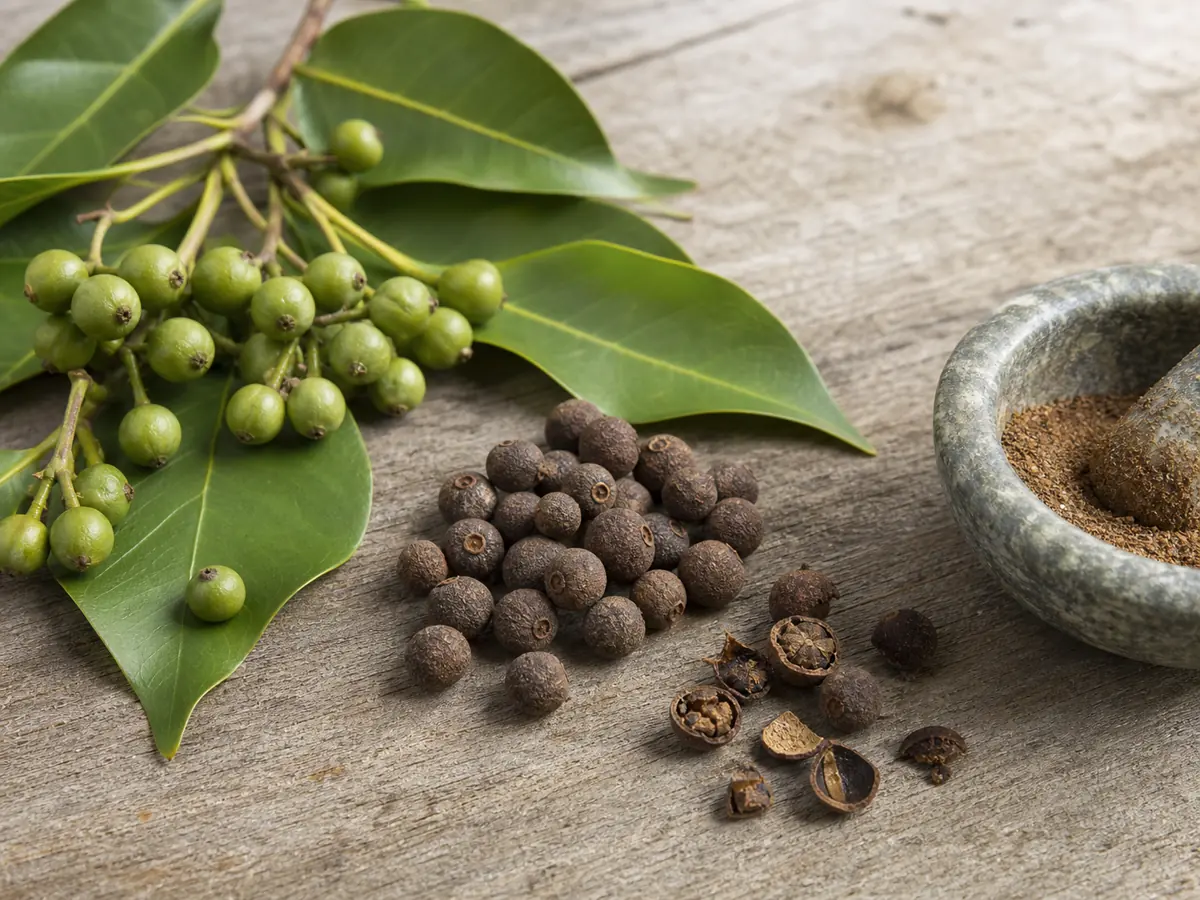
- Fresh: Green berries grow in clusters on the tree.
- Dried: Whole brown berries protect aroma until cracked.
- Ground: More exposed surface releases aroma quickly and fades faster.
English speakers named it for an aroma that suggested several familiar imports at once. That name describes perception, not the ingredient list.
The botanical name also gives a clue about the tree.
Dioica refers to male and female flowers occurring on separate plants.
This identity matters when shopping. Mixed spice and Chinese five-spice are blends, while allspice is a single fruit.
The dried berry should feel dense for its size. Hollow, broken, or dusty lots expose more surface and usually lose aroma sooner.
Size alone does not prove quality. Crack one berry and judge the immediate aroma before paying extra for an origin or grade claim.
Why the name allspice keeps causing shopping mistakes
The word travels badly, and the confusion costs people money at the till.
In Britain, mixed spice is a baking blend that contains allspice among several others, so a recipe asking for mixed spice is not asking for allspice on its own.
Spanish sets a harder trap. Pimienta means pepper, pimentón means paprika, and pimienta de Jamaica is the allspice you actually want.
American shoppers meet a different one. A pimento in a jar of olives is a sweet red pepper with no relationship to the berry at all.
Jamaican pimento, confusingly, is exactly allspice.
Read the botanical name whenever a label leaves you guessing. Pimenta dioica is the berry, and anything with a similar-sounding name belongs to another plant entirely.
What does allspice actually taste like?
Clove is the clearest reference, but allspice is rounder and drier. It also carries woody warmth, peppery grip, and a faint ripe-fruit note.
Eugenol helps explain the resemblance to clove aroma. The same compound appears strongly in cloves, yet the rest of the berry changes the finish.
| Reference spice | Shared quality | What allspice does differently |
|---|---|---|
| Clove | Eugenol-led perfume | Less piercing with more dry berry warmth |
| Cinnamon | Sweet wood | Less bark-like and more peppery |
| Nutmeg | Warm rounded aroma | Drier with less creamy sweetness |
| Black pepper | Dry finish | More fragrant and less sharply hot |
Taste one berry by cracking it, smelling first, then touching a crumb to the tongue. Compare the finish with fresh black pepper, not only sweet spices.
Temperature changes the order of perception.
Warm food releases clove-like aroma first, while the dry peppery edge often remains after swallowing.
Sugar emphasizes the round woody notes. Salt and acid expose the berry’s drier edge, so the same jar can suit cake and braised meat.
Ground allspice spreads the clove note quickly. In a pale custard or simple broth, even a small excess becomes obvious.
Fat and long simmering soften the first impact but carry the aroma across every bite. That reach is useful and easy to overdo.
Jamaican pimento belongs at the center of the story
Pimenta dioica is native to the Caribbean, southern Mexico, and Central America. Jamaica became especially identified with the crop and its high-aroma berries.
In Jamaica, the tree and spice are commonly called pimento. This meaning differs from the red pimento pepper named on many other food labels.
Allspice is foundational in Jamaican jerk cookery, where it works beside chile, thyme, scallion, garlic, ginger, salt, and acid. It is not a decorative pinch.
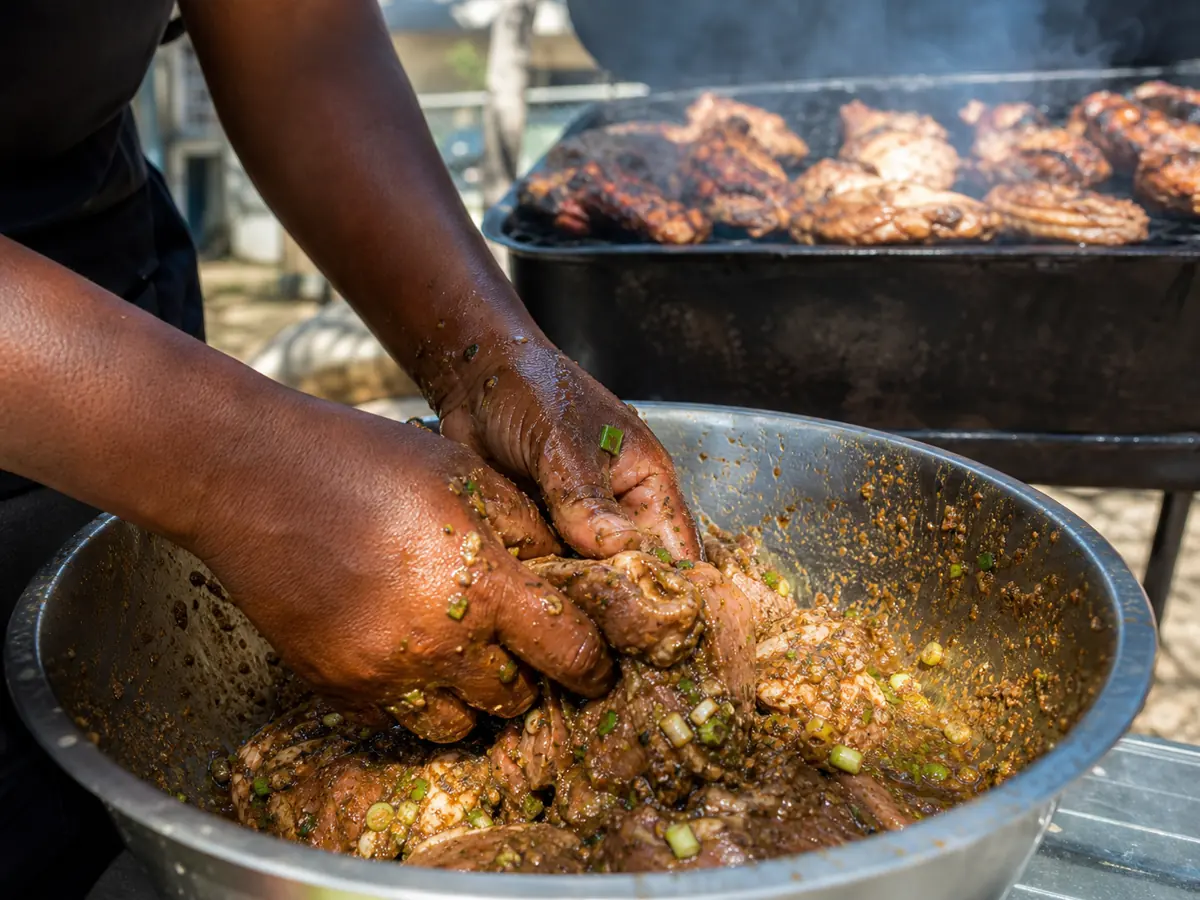
- Chile: Supplies direct heat that differs from allspice warmth.
- Thyme and scallion: Add green and savory notes.
- Smoke: Deepens the dry woody side of the berry.
Jerk traditions vary by cook, place, fuel, and meat. A fixed internet ratio cannot define the whole practice.
Pimento wood and leaves also appear in accounts of jerk cooking.
Wood smoke contributes a separate aroma from the crushed berry. Using berry alone seasons the meat, but it cannot reproduce the cooking fuel.
Availability outside Jamaica makes berries the practical route for most home cooks.
That limitation should stay visible in a home adaptation. Name the change instead of presenting oven smoke or bottled flavor as the same method.
Centering this context corrects the holiday-spice stereotype. Allspice can lead a savory system with confidence.
Whole berries and ground allspice solve different jobs
Choose whole berries when liquid has time to extract aroma and you want removal. This follows the wider choice between whole and ground spice.
| Dish | Better form | Reason |
|---|---|---|
| Pickling brine | Whole | Slow extraction and easy removal |
| Long braise | Whole or cracked | Flavor develops through the liquid |
| Mulled drink | Whole | Keeps sediment out of the cup |
| Jerk seasoning | Freshly ground | Coats meat with other aromatics |
| Sausage or meatball | Ground | Disperses through the mixture |
| Cake or fruit filling | Ground | Even flavor without hard pieces |
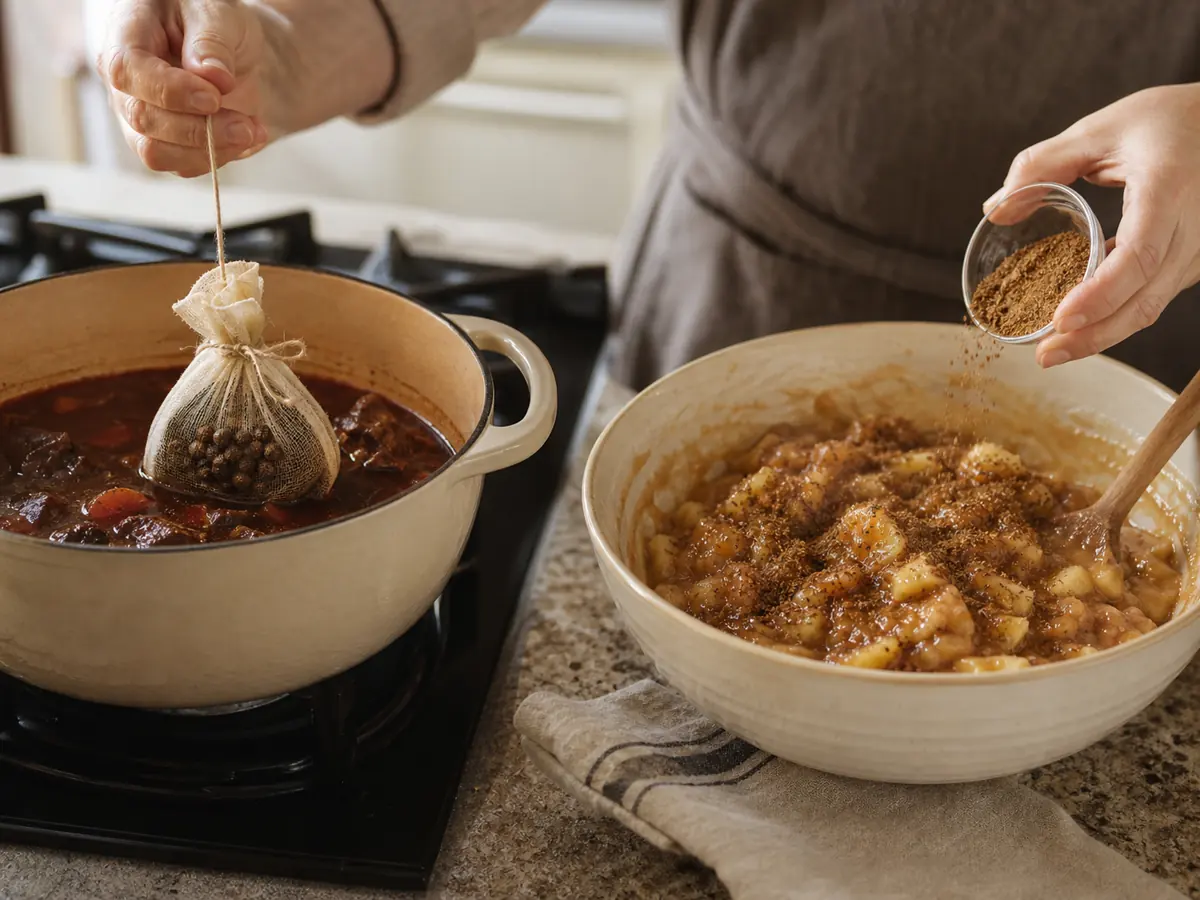
- Liquid: A cloth bag prevents a surprise bite in a dark braise.
- Filling: Ground spice needs even mixing before heat develops its aroma.
- Finish: Whole berries come out, while ground allspice remains in every serving.
Cracking a berry creates a useful middle ground. The broken surface extracts faster than whole fruit without becoming dusty powder.
A mortar handles small amounts well.
The same grinding control used for peppercorns prevents allspice from becoming uneven dust.
For brine, count berries so removal is easy. For minced meat, weigh or level the ground measure because visual guessing is unreliable.
Tie whole berries in cloth when a dark sauce makes them hard to find. Biting one by accident is much stronger than tasting the surrounding liquid.
Ground spice should enter dough, mince, or marinade with enough mixing to prevent concentrated pockets.
How much allspice should you start with?
Start below the amount you think you need. Ground allspice grows more obvious as it hydrates, warms, and spreads through fat.
| Food amount | Starting allspice | Adjustment cue |
|---|---|---|
| Four cups stew or beans | 1/8 to 1/4 teaspoon ground | Taste after simmering |
| One pound ground meat | 1/4 teaspoon ground | Increase only with strong aromatics |
| One cake or pie filling | 1/4 to 1/2 teaspoon ground | Reduce if clove is also present |
| One quart brine or drink | 3 to 5 whole berries | Remove when aroma is clear |
These are calibration points, not universal recipe rules. A chile-heavy jerk paste can hold more allspice than a plain cream sauce.
Scale from food weight, not spoon count alone.
Doubling a watery stew may need less than double the ground spice after reduction.
Long cooking increases extraction from whole berries. Ground spice follows a faster timing curve, so adding more before tasting can overshoot.
Cold marinades need time because aroma diffuses slowly without heat. Grind the berry finely enough to spread, then let salt and acid contact the food.
Taste cooked marinade separately from the raw mixture.
Raw garlic, chile, and alcohol can hide the allspice balance before heat changes them.
A fatty mixture can hold more aroma than plain water. That does not justify a larger first dose because every serving carries the dissolved spice.
If the dish smells medicinal, do not add more sweet spice. Increase the unseasoned base, salt carefully, and restore acid or fresh herbs.
Savory dishes need a structure around allspice
Allspice stays savory when another ingredient establishes the direction.
Salt, chile, onion, acid, smoke, tomato, or browned meat can take that role.
- Jerk and grilled meat: Pair ground berry with chile, thyme, scallion, garlic, acid, and smoke.
- Braise and stew: Use whole berries beside onion, browned meat, stock, tomato, or wine.
- Beans and lentils: Use a small ground dose with chile, garlic, thyme, or coconut.
- Pickles and brines: Use whole berries with vinegar, salt, mustard seed, or bay.
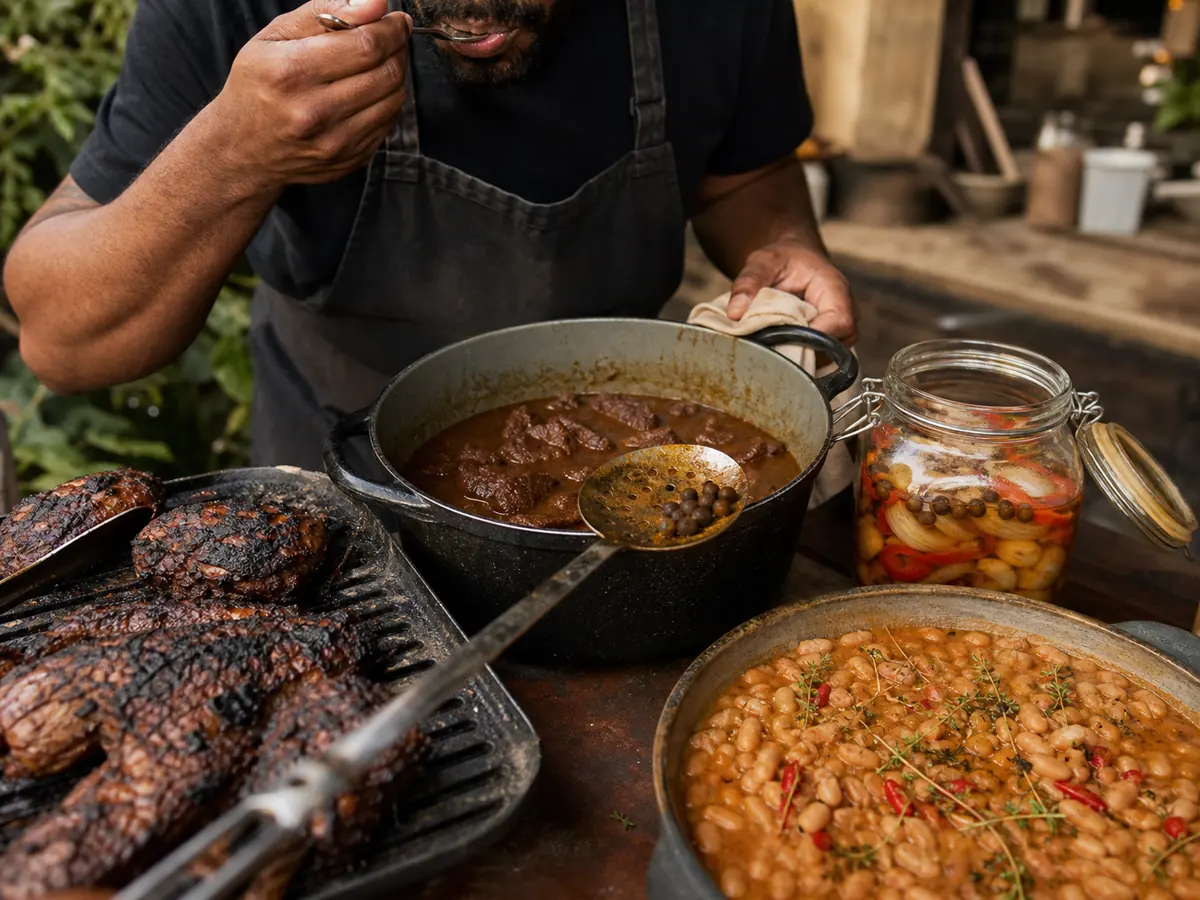
- Remove: Whole berries leave the braise after extraction.
- Balance: Acid, chile, thyme, and smoke prevent one-note sweetness.
- Direction: The carrier decides whether allspice reads as smoky, braised, pickled, or hot.
The strongest mistake is stacking allspice with full amounts of clove, cinnamon, and nutmeg. Their shared notes can erase the food underneath.
In meat, grind it with black pepper when you want more dry bite. In beans, measured chile heat or thyme keeps the aroma from reading sweet.
Acid changes the finish.
Lime, vinegar, or tomato cuts through the berry’s round warmth and makes salty food feel more focused.
Choose one leading counterweight before adding more spice. Bright lime suits grilled meat, while tomato and browned onion fit a long braise.
Timing follows form. Whole berries enter early, while a small fresh-ground finish can restore aroma after a long braise.
Remove whole berries before reducing the liquid hard.
Reduction concentrates their extracted clove note even after the berries leave the pot.
For more control, apply the same logic used when layering spices by cooking stage. Build the base first, then decide whether the finish needs more.
A substitute can cover one note, not the whole berry
There is no exact substitute because allspice joins several notes inside one berry. The best replacement depends on the dish.
| Use | Try | What will be missing |
|---|---|---|
| Cake or fruit | Equal cinnamon and nutmeg plus a tiny pinch of clove | Dry peppery finish |
| Savory braise | Black pepper plus a very small pinch of clove | Rounded berry sweetness |
| Pickling liquid | Peppercorn, clove, and bay | Single integrated aroma |
| Jerk-style seasoning | Black pepper, clove, nutmeg, thyme, and chile | True pimento character |
Clove is the danger in every blend.
Start with less than ground cinnamon or pepper because it can become medicinal quickly.
A baking substitution should not move unchanged into meat. Cinnamon that feels natural in pie can make a salty marinade taste misplaced.
For a clear broth, avoid ground substitutes that cannot be strained. Whole peppercorn and one clove keep sediment low and allow early removal.
When allspice leads the dish, such as jerk, replacement is a compromise.
Fresh nutmeg supplies round warmth but cannot recreate pimento character.
Test the substitute in a spoonful of sauce before changing the whole pot. The correct blend for cake can push a braise toward mulled wine.
Keep the berries whole until you need their aroma
Buy whole berries when possible and grind small amounts. Their intact surface protects aroma better than a jar of powder.
- Look: Whole berries should be brown, dry, and mostly intact, not dusty or damp.
- Crush: A fresh berry should release a clear clove-like and peppery aroma immediately.
- Store: Use an airtight jar away from stove heat, sunlight, and steam.
- Replace: Discard moldy berries, but replace merely faded spice when aroma no longer changes food.
Ground allspice loses its top notes faster because more surface touches oxygen.
Date the jar and buy a small amount that matches real use.
Steam is the quiet storage problem.
Shaking powder over a bubbling pot sends moisture into the jar and starts clumping.
Move the amount you need into a dry spoon first. The extra step protects both texture and aroma.
Keep a few berries for the crush test. A jar that looks fine but releases no aroma no longer earns space in an active pantry.
A working pantry does not need a large bottle. A few whole berries and a mortar give more control across brines, braises, marinades, and baking.