
What Spices Shape Middle Eastern Cooking?
Build the cabinet by cooking job, from tart finishers to warm meat blends and rice aromatics.
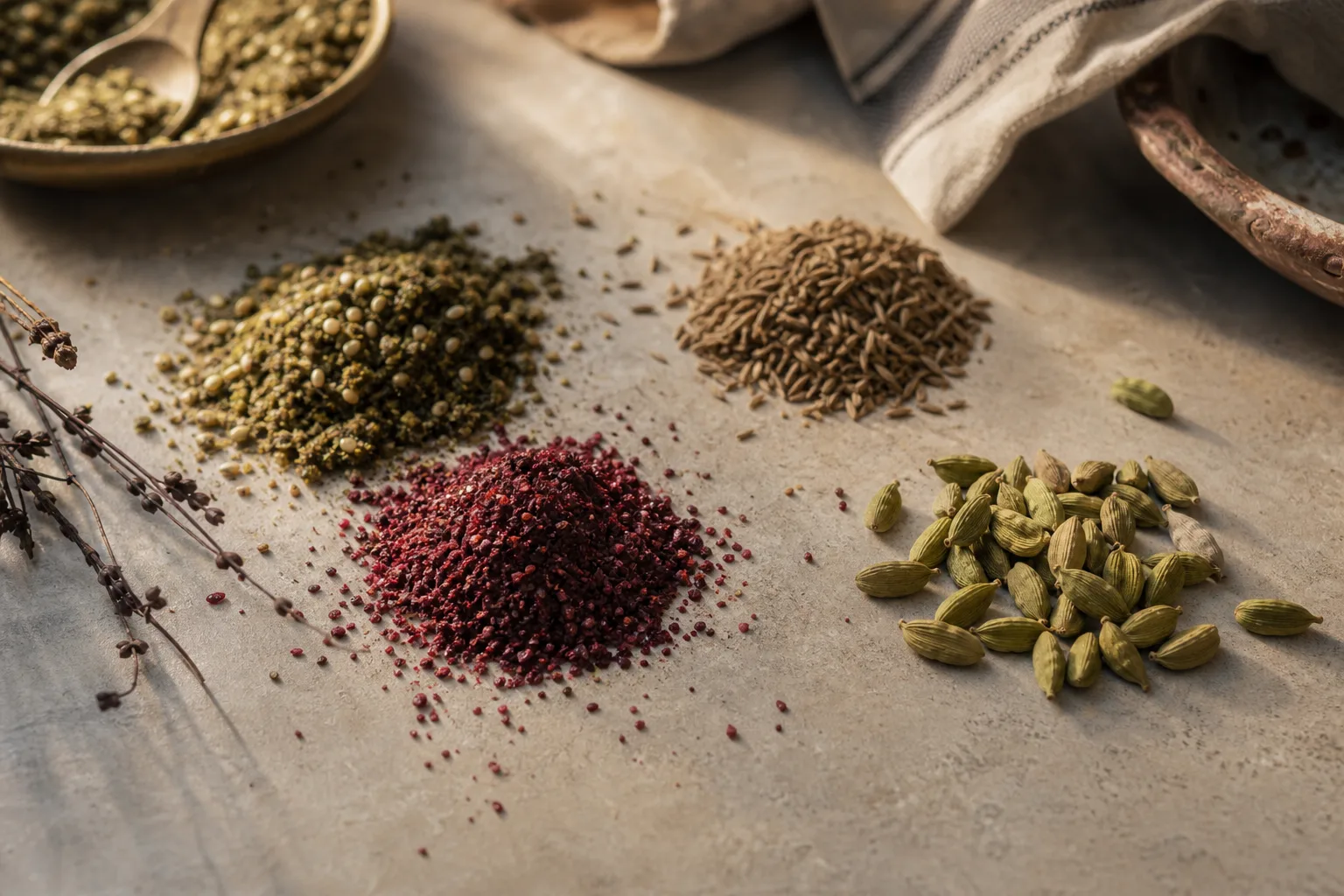
A useful Middle Eastern spice cabinet is not a long regional checklist. Start with tart sumac, herb-sesame zaatar, cumin, coriander, baharat, cardamom, cinnamon, saffron, and a gentle chile such as Aleppo pepper, then match each jar to how you cook.
Which Middle Eastern spices should you buy first?
A Middle Eastern spice cabinet should help you finish, deepen, perfume, and warm food. It should not become a shelf of jars you rarely open.
The region is broad, so no single list fits every kitchen. A Levantine breakfast table, a Persian rice pot, and a Gulf meat stew ask for different jars.
Start with jobs instead. Keep one tart finisher, one herb blend, one warm blend, a few base seeds, and one gentle chile.
That set covers more dinners than ten unfocused jars.
This differs from an Indian spice pantry, where hot fat timing often drives the whole system. Here, table finishers and rice aromatics matter just as much.
| Cabinet job | Core jars | What they change |
|---|---|---|
| Tart finish | Sumac, dried lime | Adds dry acidity without more liquid |
| Herb and sesame finish | Zaatar, mint, oregano | Turns bread, yogurt, eggs, and vegetables savory |
| Warm base | Cumin, coriander, baharat | Gives meat, lentils, rice, and stews depth |
| Rice and coffee aroma | Cardamom, cinnamon, saffron, clove | Adds perfume without turning the dish sweet |
| Gentle heat | Aleppo pepper, Urfa pepper, harissa | Adds fruity warmth instead of blunt burn |
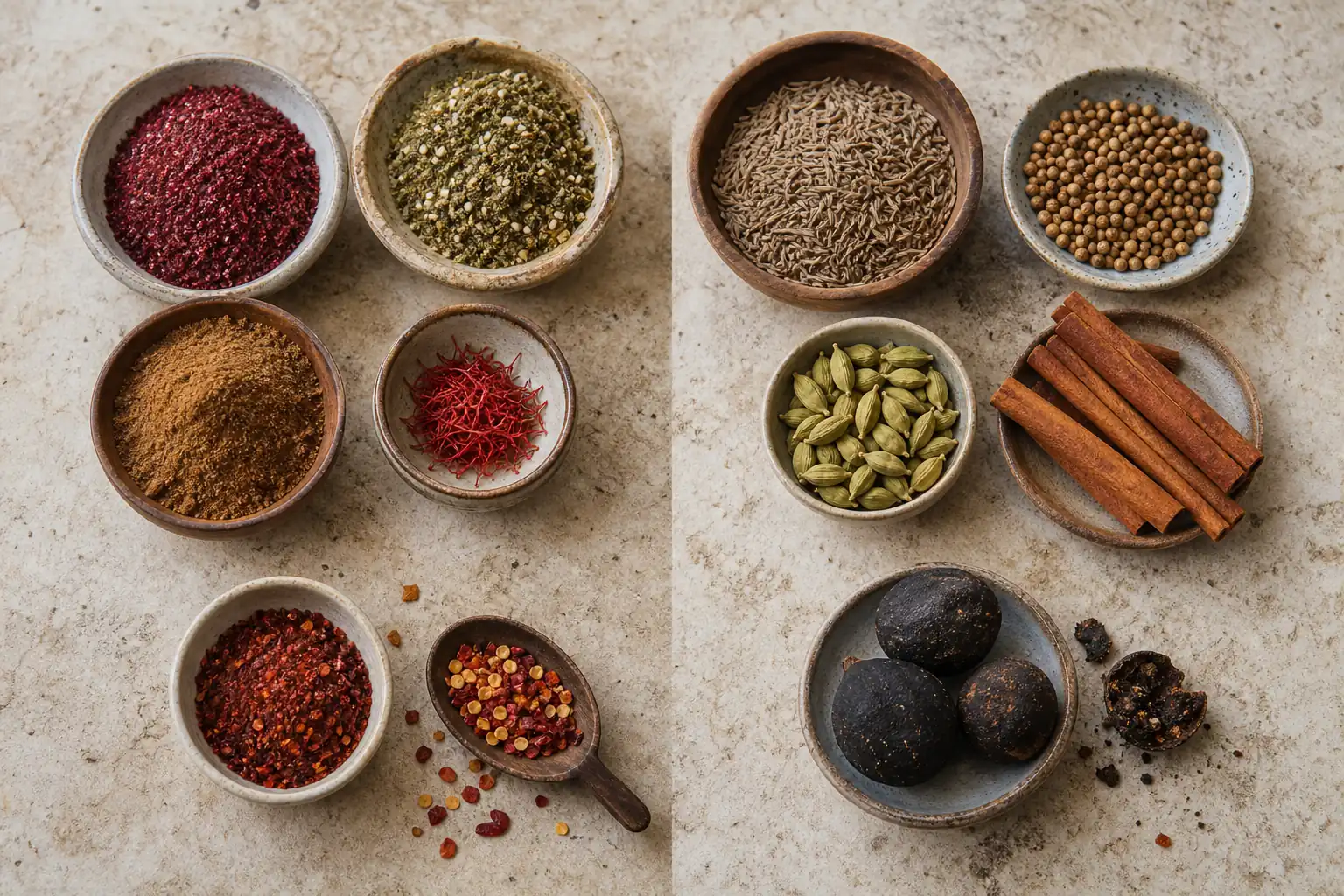
- Sumac and zaatar finish food after cooking.
- Cumin, coriander, and baharat build savory depth.
- Cardamom, saffron, and cinnamon perfume rice and stews.
Build the cabinet around the dishes you repeat. Labneh, flatbread, rice, lentils, kofta, chicken, and roasted vegetables each teach a different jar.
If those foods are not in your week, buy more slowly. A cabinet should follow your cooking before it follows a map.
How do you use sumac and zaatar?
Sumac brings dry tartness, so it works where lemon would brighten food but extra juice would make it wet. It is especially useful on onions, fattoush, grilled meat, and yogurt.
A zaatar blend usually combines a thyme-like herb, sesame, sumac, and salt. Some blends are greener, while others taste more sour or nutty.
Use zaatar after cooking or with gentle heat. Sesame can brown fast, and the herb note fades if it sits in a hard simmer.
Mix it with olive oil for bread, or sprinkle it at the table where the herbs stay clear.
Labneh, eggs, flatbread, salads, roast chicken, tomatoes, and roasted vegetables are the easiest places to learn these jars. Taste them at the table, not only in the pan.
A finished plate tells you whether the dish needed tartness, herbs, sesame, or salt. That feedback is clearer than tasting a dry spoon.
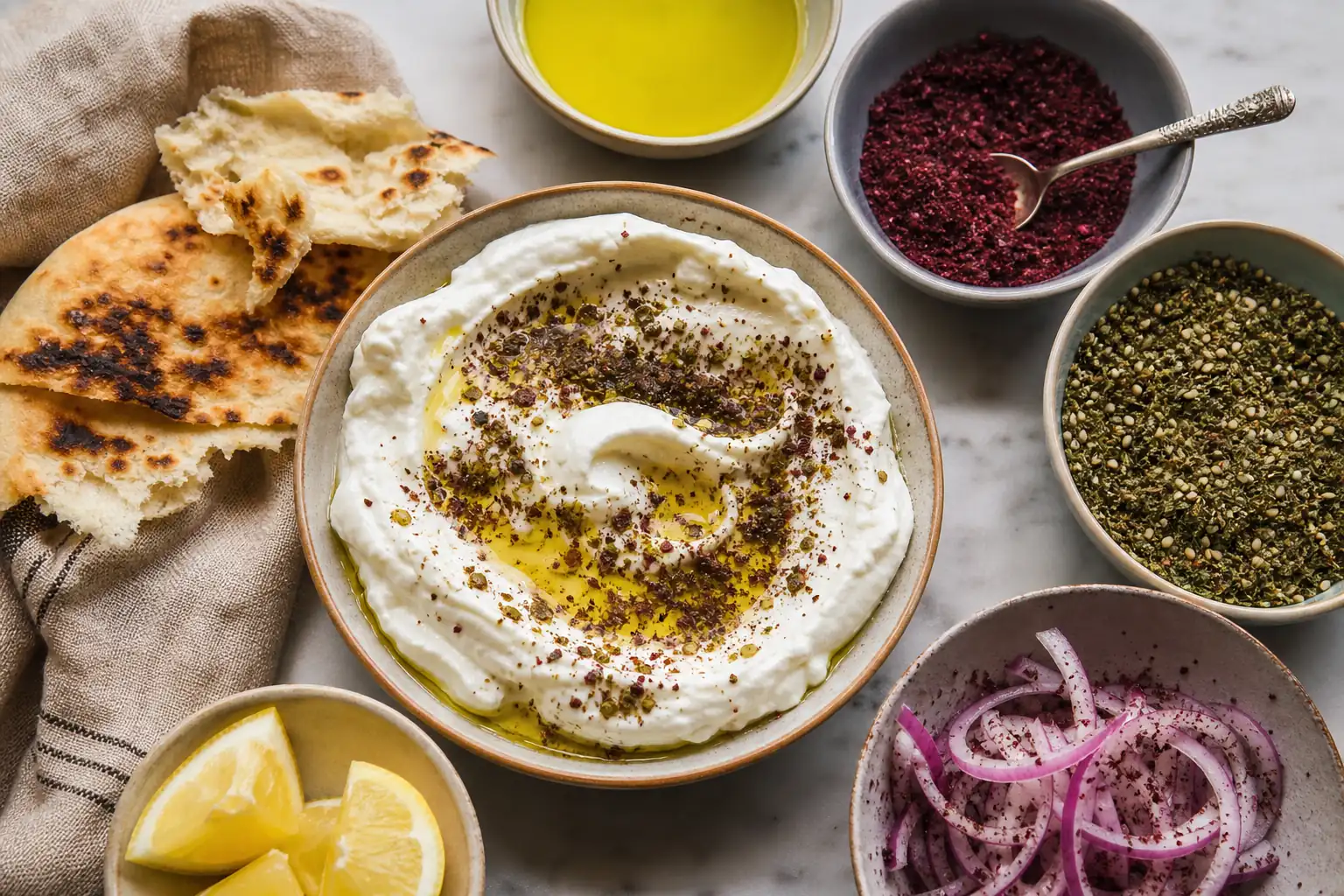
- Sumac replaces some lemon when you need dry tartness.
- Zaatar works with olive oil, bread, labneh, eggs, and vegetables.
- Keep direct high heat short because sesame and herbs darken fast.
What do cumin, coriander, and baharat do?
Whole cumin gives chickpeas, lentils, rice, grilled meat, and yogurt sauces an earthy base. Toasted seeds taste cleaner than old ground powder.
Ground coriander adds citrusy warmth and body. It softens cumin and helps meat or legumes taste rounded without heavy heat.
This cumin-coriander pair is useful in falafel mix, lentil soup, chickpeas, and kofta. It gives shape before any blend joins.
A baharat blend moves the cabinet toward warm meat, rice, and stew flavors. Common versions use pepper, allspice, cumin, coriander, cinnamon, cloves, nutmeg, or cardamom.
Use these spices earlier than sumac or zaatar. They need contact with onion, fat, meat juices, tomato, or broth to lose raw edges.
A dry sprinkle tastes gritty because the ground spices never join the base.
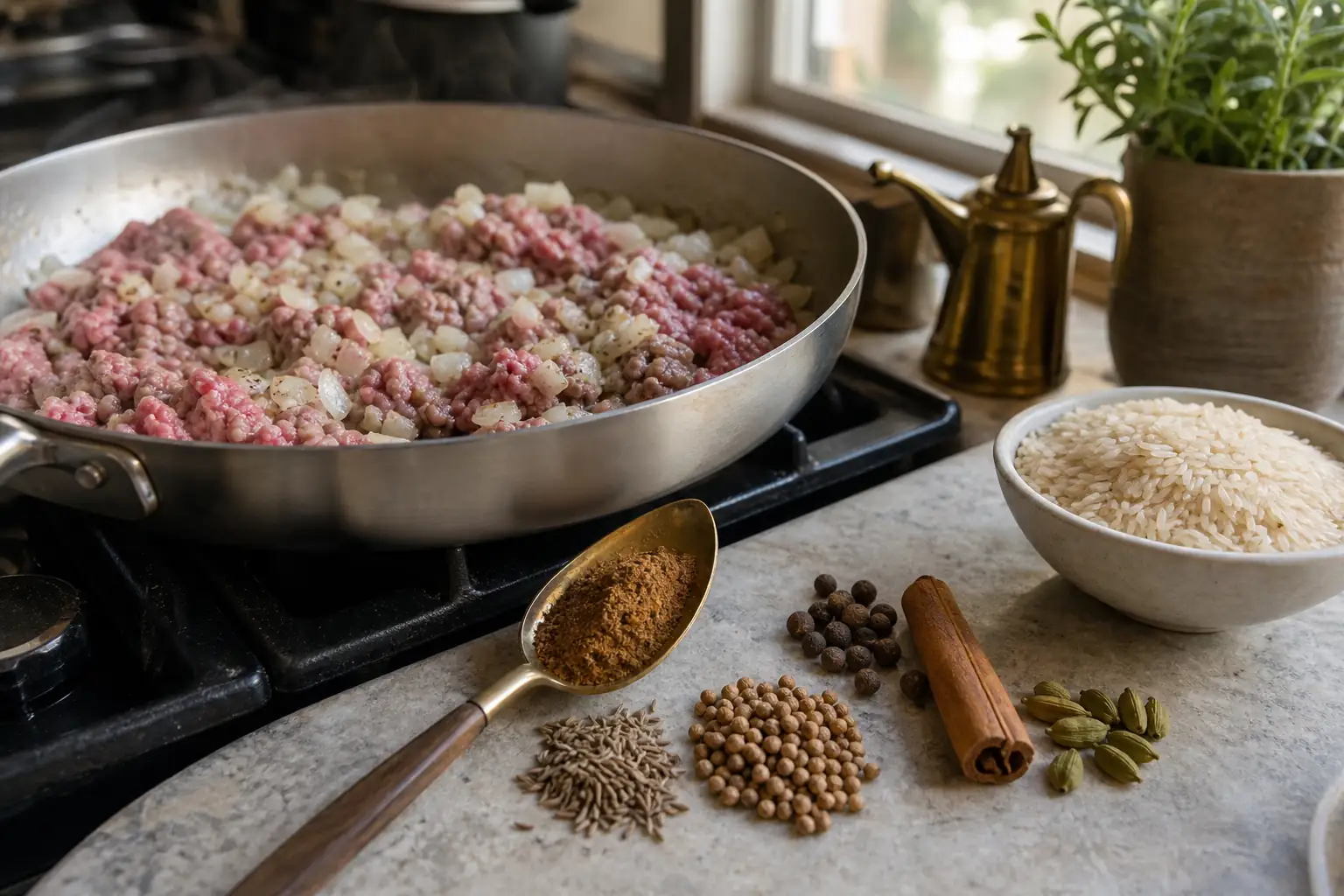
- Use cumin and coriander as the savory floor.
- Let baharat touch fat or meat juices before liquid.
- Keep sweet spices small unless the dish has enough salt and onion.
A brief oil bloom helps ground cumin, coriander, and baharat taste fuller. Keep the heat moderate because cinnamon and paprika scorch quickly.
If the dish tastes dusty, the blend probably went in too late or met liquid too soon.
Next time, cook it with the onion base first.
If the same blend tastes bitter, lower the heat and add liquid sooner. Warm blends need aroma, not hard browning.
Which spices perfume rice, coffee, and stews?
Green cardamom belongs in coffee, rice, sweets, and some stews, but one pod can lead a whole pot. Crack it lightly before simmering.
Black cardamom is a different move because it is smoky and heavier.
Save it for long meat dishes rather than coffee.
Savory cinnamon works when salt, onion, fat, and meat keep it grounded. In a small rice pot, one short stick is often enough.
Saffron threads need warm liquid before they meet rice. A tiny pinch gives color and aroma better than a dry scatter over grains.
Clove, allspice, rose, orange peel, and mahlab can help, but they are not first-week purchases for most kitchens. Buy them when a dish repeats.
Allspice is especially useful in Levantine meat and rice.
Mahlab is more specific and belongs closer to baking.
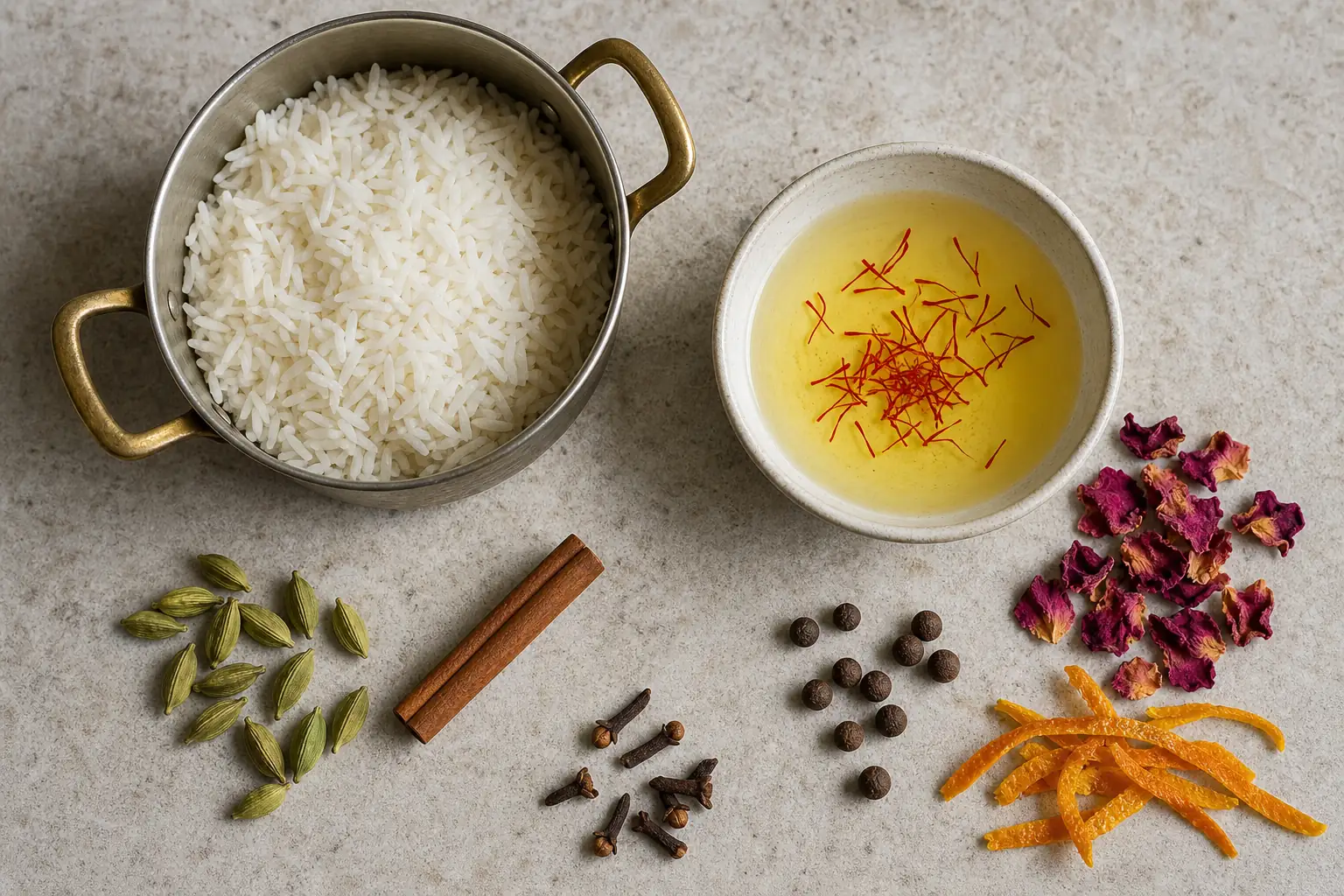
- Bloom saffron before adding it to rice.
- Use cardamom and clove in small numbers.
- Let salt and fat keep sweet spices savory.
Think of these jars as perfume, not bulk seasoning. They should be noticed when missing, not dominate the first bite.
Which chiles add fruit, smoke, or slow warmth?
Middle Eastern chile use often favors warmth and fruit over raw burn.
Aleppo-style flakes taste rounder than many generic crushed red pepper blends.
That makes them easier to use generously on eggs, lentils, and grilled vegetables.
Urfa pepper brings darker raisin-like depth, while harissa adds chile, garlic, oil, and regional spice in paste form. These are not one-for-one swaps.
Harissa also changes texture because it is usually a paste. Use it in marinades, soups, and roasted vegetables before using it as a dry chile substitute.
Use chile with the job of the dish. Lentils may need warmth, grilled chicken may need fruitiness, and a yogurt sauce may need only a red finish.
| Chile choice | Best use | Watch for |
|---|---|---|
| Aleppo-style flakes | Eggs, kebabs, lentils, vegetables | Mild heat can build after simmering |
| Urfa pepper | Meat, eggplant, yogurt, butter sauces | Dark sweetness can feel heavy |
| Harissa paste | Marinades, soups, roasted vegetables | Salt, garlic, and oil may already be included |
| Generic chili flakes | Emergency heat only | Sharper seeds can crowd out sumac and herbs |
Taste the chile alone before adding it to a blend. Heat level matters less than whether it tastes fruity, smoky, bitter, or dusty.
If it tastes harsh, use it in oil or tomato instead of sprinkling it raw over labneh or salad.
How do you match Middle Eastern spices to dishes?
The best pantry is the one that solves repeat meals. Pick jars after naming the dishes you actually cook, not after reading a regional list.
Pairing by aroma helps here. Tart sumac lifts fat, cumin grounds legumes, cardamom perfumes steam, and baharat deepens browned meat.
| Dish or meal | Jars to practice | What you learn |
|---|---|---|
| Labneh and flatbread | Zaatar, sumac, olive oil | Table finishing and dry tartness |
| Mujaddara or lentils | Cumin, coriander, allspice | Earthy warmth without heavy heat |
| Kofta or meatballs | Baharat, cumin, cinnamon | Warm spice in meat and onion |
| Rice pilaf | Cardamom, cinnamon, saffron | Aroma carried by steam |
| Roast chicken | Zaatar, sumac, Aleppo pepper | Finishers plus gentle heat |
| Chickpeas or beans | Cumin, coriander, dried lime | Savory base plus acidity |
If you cook mostly dips and salads, buy sumac and zaatar first. If you cook stews and meat, buy cumin, coriander, and baharat first.
If you cook both, keep the finishers separate from the cooked spices. That habit stops every dish from tasting the same.
If you cook rice every week, cardamom and saffron earn their space sooner. If not, they can wait until the dish needs them.
- First three jars: Sumac, zaatar, and cumin teach tart finish, herb finish, and savory base.
- Next three jars: Coriander, baharat, and Aleppo-style pepper cover stews, meat, rice, and vegetables.
- Rice upgrade: Add cardamom and saffron only when rice or coffee shows up often.
- Regional upgrade: Add dried lime, Urfa pepper, mahlab, or rose only after a repeated dish asks for it.
This keeps the cabinet useful. Every new jar should answer a dish, not just complete an imagined collection.
After three repeat meals, the missing jar becomes obvious. Until then, freshness matters more than range.
Does the same blend mean the same thing across the region?
Middle Eastern is a shipping label rather than a single spice cabinet.
Baharat is the clearest example. A Levantine version leans on black pepper, allspice, and cinnamon, while a Gulf version often adds dried lime and more cumin.
Zaatar shifts the same way, with Palestinian mixes usually carrying more sumac and sesame than the herb-heavy blends sold elsewhere.
Persian cooking sits further out again. It reaches for saffron, dried rose, and turmeric where a Levantine kitchen would reach for sumac.
Read the origin on the jar before you decide a blend is wrong.
A mix that tastes off for your recipe is often exactly right for somewhere else, and the fix is matching the region to the dish rather than adding more spice.
How should you buy and store Middle Eastern spices?
Sumac, zaatar, Aleppo pepper, and baharat fade fast when they sit near heat or light. Buy from shops with real turnover.
Fresh sumac should smell tart and fruity, not dusty. Fresh zaatar should smell herbal and nutty before olive oil touches it.
Fresh baharat should smell warm in layers, not like plain cinnamon powder. If pepper and allspice are gone, the blend is tired.
Whole cumin, coriander seed, cardamom pods, cinnamon sticks, and allspice berries last longer than powders. That is the same logic behind ground spice storage.
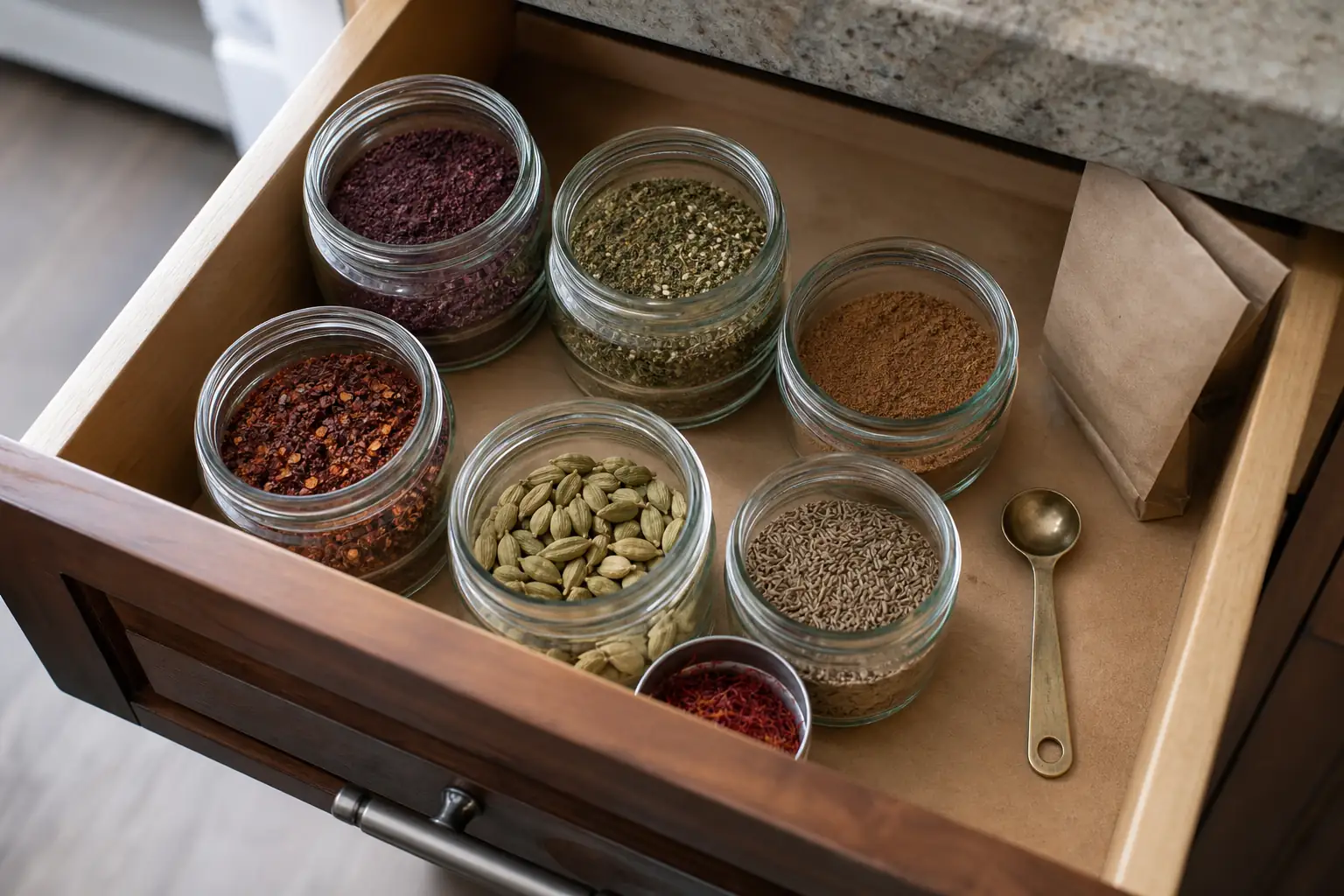
- Buy smaller amounts of ground blends.
- Keep whole seeds for longer storage.
- Store jars away from stove heat and steam.
Do not shake jars over a steaming pot. Moisture clumps powders and makes sesame-heavy blends taste stale sooner.
Spoon spices away from steam instead, then close the jar before the pan returns to a boil.
If a jar smells flat but not rancid, use it in a cooked stew and support it with a fresher spice. Do not use it as a table finisher.
Old sumac and old zaatar are the least forgiving because their whole job is top-note brightness.
Why does Middle Eastern food taste flat or muddled?
The first mistake is using finishers like base spices. Sumac and zaatar lose their point when they simmer too long.
The second mistake is making every dish sweet-warm. Cinnamon, clove, allspice, and cardamom need salt, acid, onion, or fat to stay savory.
The third mistake is treating every blend as interchangeable. Baharat, zaatar, ras el hanout, hawaij, and harissa each solve a different problem.
Use the blend name as a clue, then smell for the job. Sweet, herbal, sour, smoky, and hot blends need different food.
| Problem | Likely cause | Best fix |
|---|---|---|
| Food tastes dusty | Ground spice added too late | Bloom a fresh pinch in oil next time |
| Food tastes too sweet | Too much cinnamon or clove | Add salt, lemon, sumac, or tomato |
| Zaatar tastes dull | Old herbs or no fat | Use fresh zaatar with olive oil |
| Sumac tastes harsh | Too much dry tartness | Add yogurt, oil, or more base food |
| Chile hides everything | Sharp flakes or too many seeds | Use less and add sumac after cooking |
A good cabinet gives you different levers. Use tartness, herbs, warm depth, perfume, and chile separately before you combine them.
Start small, cook the same few dishes twice, and replace the jar that empties first. That pattern builds a cabinet you will actually use.