
What Should an Indian Spice Pantry Include First?
Stock fewer jars, learn their timing, and build dal, sabzi, rice, and curry bases with confidence.
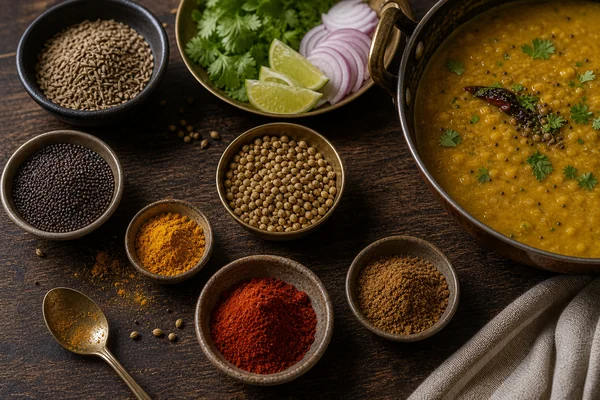
Start an Indian spice pantry with whole cumin and mustard seed, ground coriander, turmeric, a chile powder you understand, and a small jar of garam masala. Those six cover the base, color, heat, and finish of many dals, sabzis, rice dishes, and curries. Add curry leaves, asafoetida, amchur, fenugreek, or whole warm spices only when the dishes you repeat call for them.
What belongs in a six-jar Indian spice pantry?
A useful Indian spice pantry begins with whole cumin seed, whole mustard seed, ground coriander, turmeric, chile powder, and garam masala.
Start with six starter jars to practice whole-spice tempering, a ground masala base, controlled heat, and a fragrant finish before regional specialties fill the shelf.
Cumin and mustard seed earn the whole-spice places because hot fat changes them in ways a powder cannot reproduce. Cumin turns nutty and deep, while mustard seed loses its raw edge as it pops.
Ground coriander supplies citrusy body in larger amounts than most assertive spices. Turmeric brings earthiness and color, and chile should be chosen by its actual heat rather than by how red the packet looks.
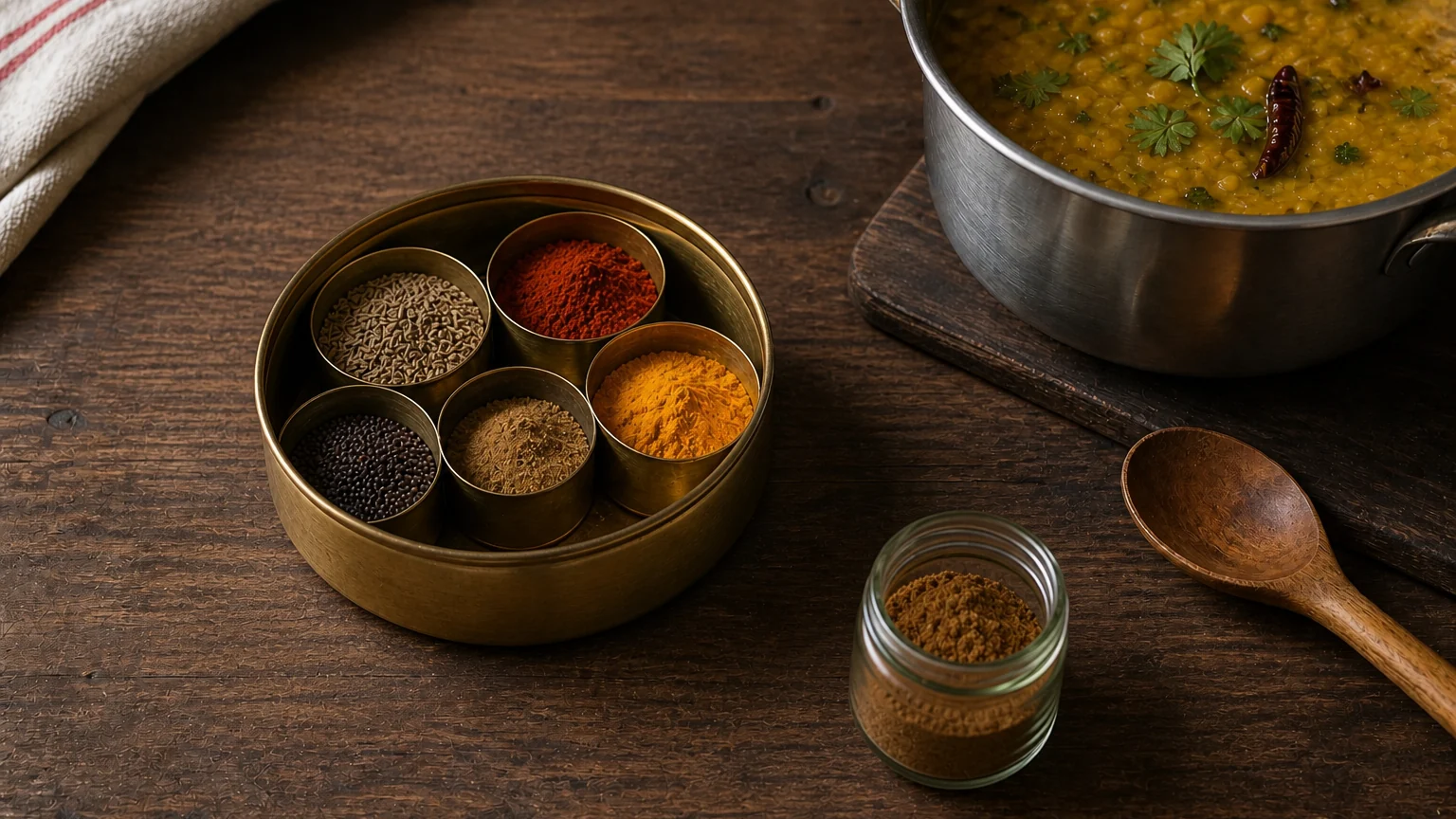
- Whole starters: Cumin and mustard seed release aroma directly into hot fat.
- Ground base: Coriander and turmeric spread through onions, tomato, lentils, or vegetables.
- Heat control: One known chile powder is more useful than several mystery blends.
- Late finish: A small fresh jar of garam masala restores aroma near serving.
| Jar | Best first form | Main job | First dish to notice it |
|---|---|---|---|
| Cumin | Whole seed | Nutty base aroma | Jeera rice or dal |
| Mustard seed | Whole seed | Sharp tempering note | Dal or cabbage |
| Coriander | Ground | Citrus warmth and body | Chana masala |
| Turmeric | Ground | Earthiness and color | Dal or dry sabzi |
| Chile powder | Ground | Heat, fruit, and color | A familiar curry |
| Garam masala | Small ground jar | Warm top aroma | Dal or gravy at the finish |
Kashmiri-style chile powder is usually chosen for color and gentler warmth. A hotter powder needs a smaller starting pinch, so the label and your own taste matter more than one universal spoonful.
Salt, ginger, garlic, onion, tomato, and cooking fat are outside this six-jar count because they answer a different pantry question. They still shape the meal, and extra spice cannot rescue an under-salted dal or an onion base that never cooked down.
This set is a beginner bridge across several common dishes, not a national standard. Mustard seed may be more central in one household and cumin in another.
Six fresh jars will improve more dinners than twenty stale ones. Let the next dish you plan to repeat choose the seventh jar.
Should you buy whole or ground spices?
Buy a spice whole when you want to temper it, grind it fresh, remove it after a long simmer, or preserve its aroma for longer storage.
Choose ground spice when the dish needs even dispersion and the whole form would leave an unpleasant bite. Turmeric and everyday chile powder are practical ground purchases because most recipes use them that way.
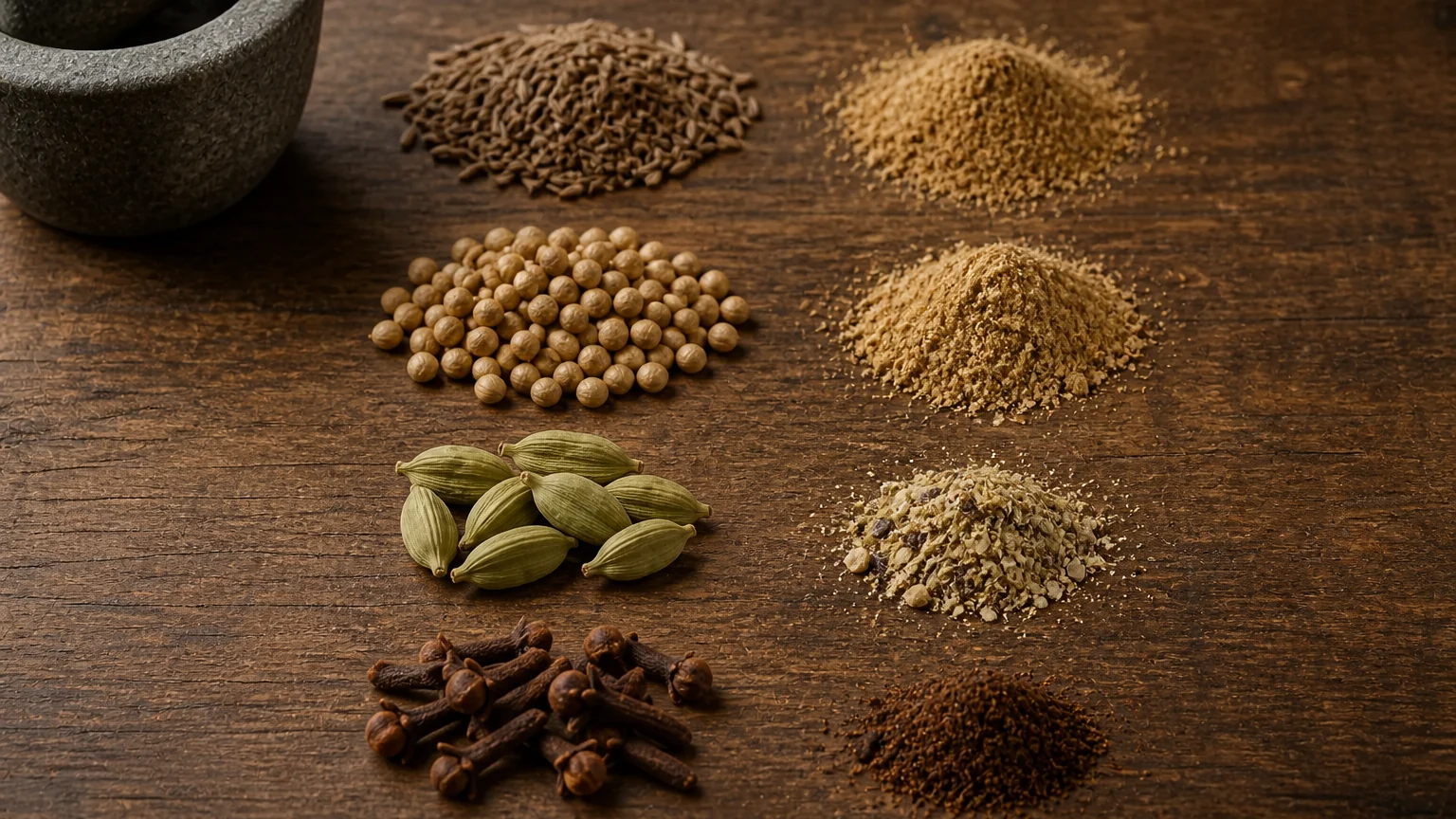
- Cumin: Keep seed for tempering, then grind a spoonful when a recipe needs powder.
- Coriander: Ground is convenient for everyday bases; whole seed is a later upgrade.
- Cardamom: Pods protect the seeds and suit rice or long cooking.
- Cloves: Whole cloves perfume a pot and can be removed; powder is easy to overdo.
Keep cumin, mustard seed, cardamom, cloves, cassia, and black pepper whole when you actually use them. Buy turmeric, everyday coriander, and your main chile already ground in small quantities.
Whole cumin remains useful even if you never own a grinder because a seed tempering is a finished technique. Whole coriander becomes valuable later when you roast and grind blends or want cracked seed in a pickle.
Cardamom and cloves need restraint for another reason. Their intact forms release slowly and can be counted or removed, while too much powder disperses through the entire pot.
Do not buy fresh turmeric root merely to obey a whole-is-better slogan. It is a separate perishable ingredient with moisture, preparation, and staining consequences.
A whole spice and its powder may occupy different volumes after grinding. Follow the recipe's stated form or check the whole-versus-ground guide before converting a spoon measure.
When does each spice go into the pan?
Indian recipes often layer spice across four moments instead of adding every jar together.
Whole seeds meet hot fat first. Ground powders cook briefly with a moist aromatic base, sturdy whole aromatics can simmer, and volatile blends or herbs finish the dish.
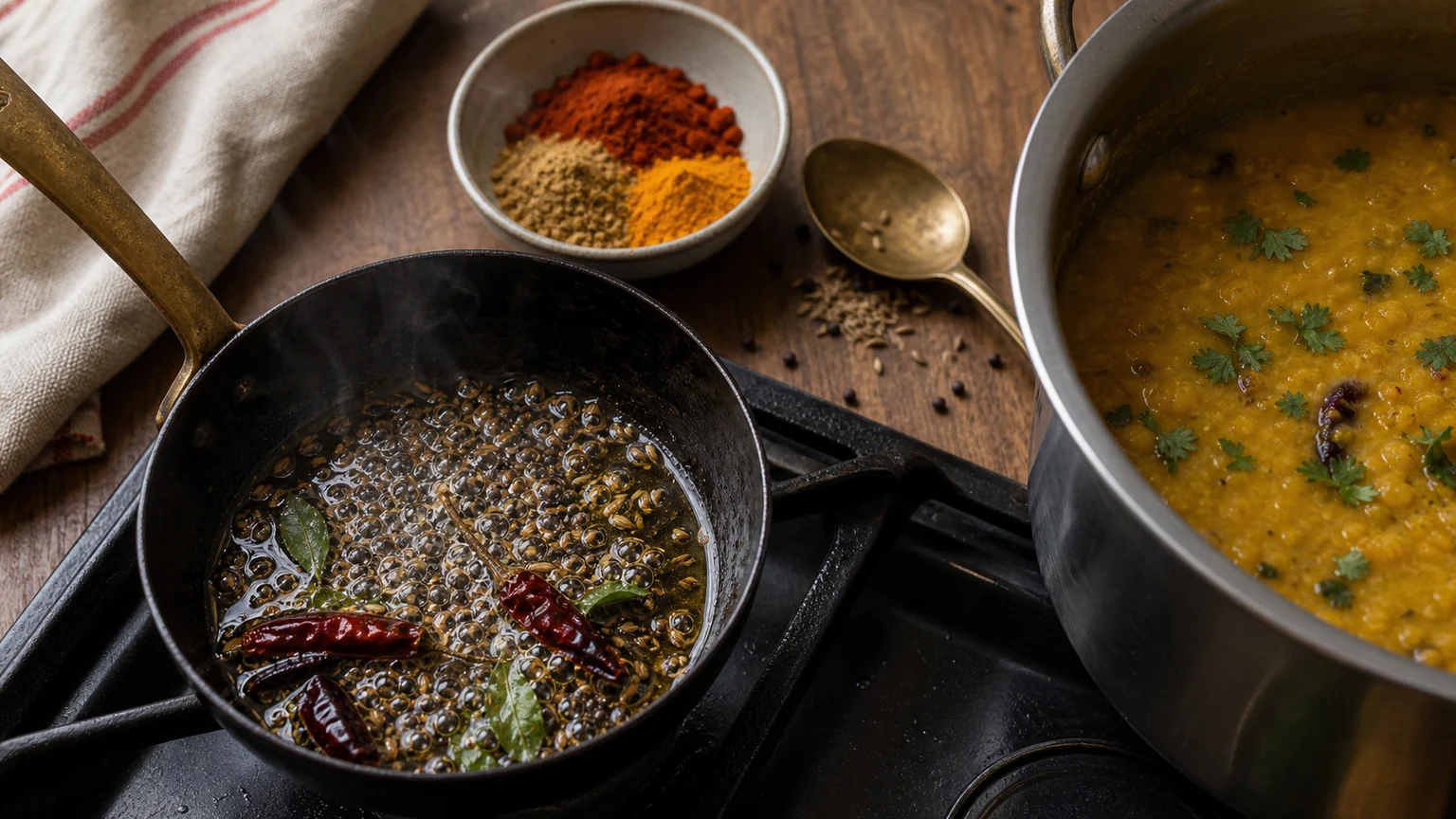
- Tempering: Whole seeds sizzle or pop in hot oil or ghee.
- Base masala: Ground spices cook briefly with onion, tomato, yogurt, or another moist buffer.
- Simmer: Cassia, bay, and black cardamom perfume liquid slowly.
- Finish: Garam masala, kasuri methi, black pepper, or a fresh tadka restores top aroma.
- Heat the fat: Use medium heat and have the next ingredient ready.
- Temper whole spices: Let mustard seed pop and cumin darken slightly without blackening.
- Build the moist base: Lower the heat for ground spices, then add tomato, onion, yogurt, or a splash of water before they scorch.
- Finish deliberately: Taste after the simmer, then add only the late blend, herb, acid, or second tempering the dish needs.
The general blooming method explains why fat carries spice aroma. Tadka and tempering covers the Indian hot-fat sequence and the pour-over finish in full.
A finishing tadka differs from the beginning version because it lands on cooked food and keeps its volatile aroma near the surface.
Ground spices need enough fat to wet them and enough moisture to slow the temperature rise. Tomato, yogurt, cooked onion, or a spoonful of water can provide that buffer, though each choice changes the base.
Large whole aromatics tolerate a simmer because extraction happens gradually in liquid. Remove pods, bark, and leaves at serving when their texture would interrupt a bite.
Garam masala often enters late, but late can mean the final minutes rather than raw powder at the table. A brief covered rest carries the warm aroma into the sauce without a long simmer flattening it.
Keeping liquid or cooked aromatics within reach prevents more burnt masala than memorizing a clock.
Which additions match the dishes you cook?
India has no universal spice shelf because sambar, Punjabi rajma, biryani, and chaat pull the second wave in different directions.
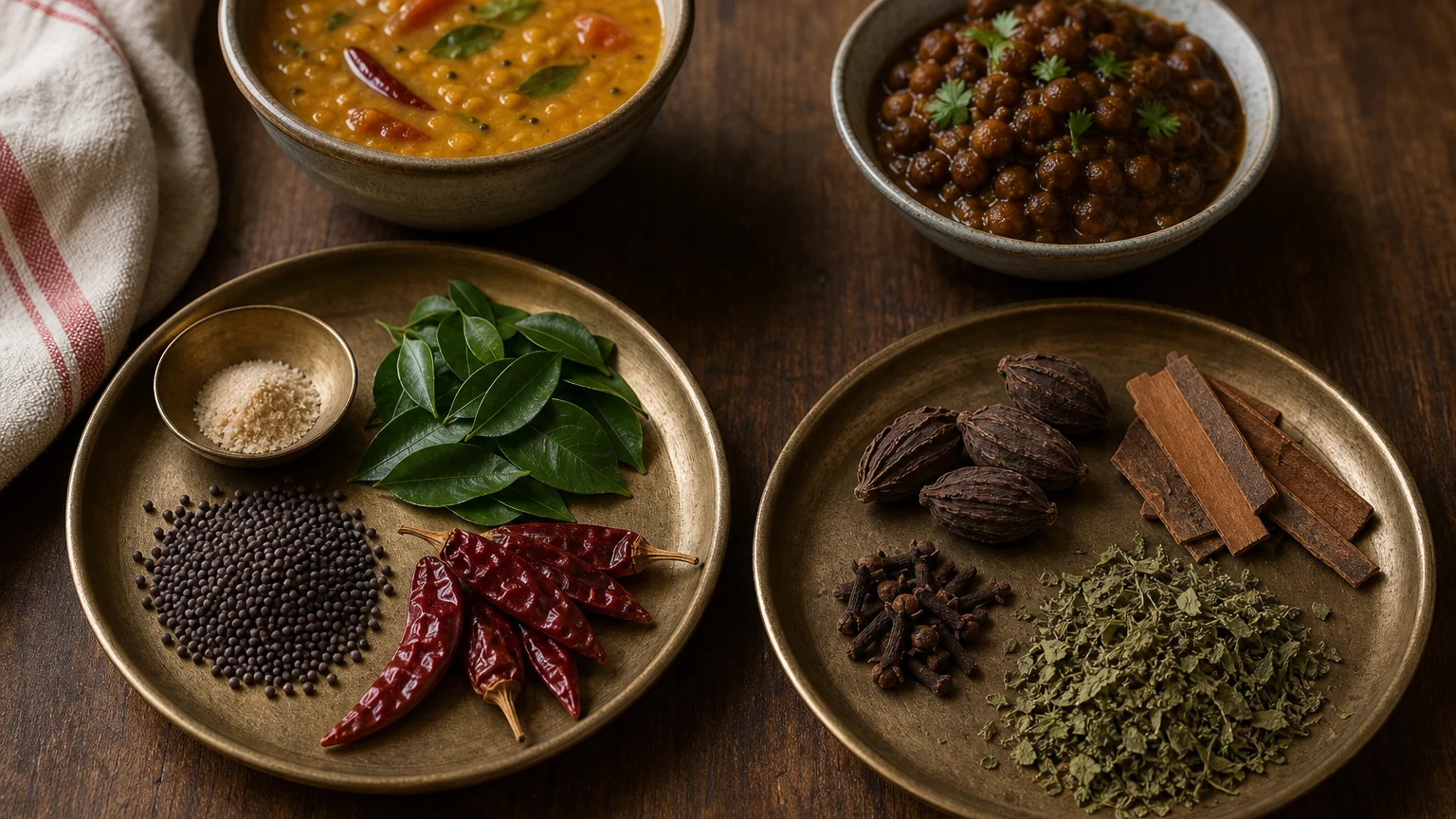
- South Indian tempering: Mustard seed, curry leaves, dried chile, and asafoetida support many dals and vegetable dishes.
- North Indian long cooking: Black cardamom, cassia, cloves, and kasuri methi suit rice, chickpeas, meat, and rich gravies.
- Fresh-leaf constraint: Curry leaves are best bought fresh or frozen.
- Recipe-first rule: Let repeated sambar, rajma, biryani, or chaat earn the next ingredient.
Add curry leaves, fenugreek seed, dried chile, and asafoetida after mustard seed.
Add amchur, black salt, roasted cumin, and chaat masala for sourness without extra liquid.
Add green cardamom, cloves, cassia, bay, and perhaps mace or saffron for long fragrant cooking.
Add black cardamom, kasuri methi, and a suitable garam masala once those dishes recur.
Curry leaves and asafoetida transform the dishes that call for them, but neither proves a pantry is complete.
Fenugreek needs the same restraint. Its seed and dried-leaf forms perform different jobs and can turn bitter or medicinal when treated as interchangeable.
The two trays shown are examples rather than borders. Bengali panch phoron, Kashmiri fennel and dried ginger, Gujarati sesame and ajwain, or coastal kokum can lead another pantry in a sound direction.
Availability changes the sensible form, since fresh curry leaves freeze better than they dry while black cardamom and cassia can wait sealed for a long-cooked dish.
Use recipe frequency to choose package size too. Weekly sambar can justify a larger mustard-seed refill, while two biryanis a year call for a few cardamom pods rather than a catering bag.
Dish-led shopping also prevents false substitutions. Bay leaf cannot create curry-leaf aroma, ordinary salt cannot reproduce black salt, and ground fenugreek seed cannot replace leafy kasuri methi.
A repeated recipe should pull a new jar into the pantry. This keeps the collection regional, fresh, and understandable.
Do you need garam masala or other blends?
One fresh garam masala gives a beginner a reliable late aromatic layer without replacing the cumin, coriander, turmeric, or chile underneath.
| Blend | Main job | Usual timing | Check before using |
|---|---|---|---|
| Garam masala | Warm finish | Late simmer or off heat | Strength and freshness |
| Sambar powder | Lentil-stew body | During simmering | Chile level and salt |
| Chaat masala | Sour salty contrast | At serving | Black salt and added salt |
| Tandoori masala | Marinade direction | Before cooking | Salt, color, and chile |
| Curry powder | Convenient spice base | Early with fat or aromatics | Ingredient list and origin |
Masala means a mixture, not one standard formula.
A blend may be whole, ground, wet, dry, homemade, commercial, mild, hot, salted, or unsalted. Its name never removes the need to taste it and read the package.
Check salt before copying a recipe's full seasoning amount because chaat and tandoori blends may contribute acid, color, or tenderizing ingredients that plain garam masala does not.
The ingredient order reveals what will dominate. A blend led by coriander behaves differently from one led by chile or salt even when both packages carry the same dish name.
Curry powder can supply a convenient early base, but it is not a universal stand-in for Indian masalas.
When one blend is missing, replace its jobs such as warmth, heat, sourness, salt, or aroma instead of reaching for a random equal spoonful. The substitution guide explains that approach.
Commercial blends help most when they make a recurring meal easier. A sambar powder used weekly is a working tool, while six dish-specific boxes opened once are future stale powder.
What should you cook first with this pantry?
Start with dishes that expose timing clearly and tolerate repetition.
Dal is the strongest first lesson because a plain pot lets you taste raw cumin, a clean tadka, restrained turmeric, controlled chile, and a late aromatic finish.
- Dal: Practice whole cumin or mustard seed in fat, a small ground-spice base, and an optional finishing tadka.
- Jeera rice: Learn when cumin is fragrant enough for rice and water to enter without burning the seed.
- Dry sabzi: Use potatoes, cauliflower, cabbage, or okra to see how ground spice becomes gritty when moisture is too low.
- Chana masala: Combine coriander body, cumin warmth, chile, sourness, and a late blend in one repeatable dish.
Repeat one dish before expanding the shelf. On the next cook, change one variable such as cumin timing, chile amount, or finishing blend so you can taste what the jar changed.
Keep a note only when it will affect the next attempt. Record which chile you used, whether cumin darkened before liquid arrived, or whether garam masala disappeared during the simmer.
These observations turn a vague needs-more-spice reaction into one controlled adjustment.
Taste after the ground-spice base cooks, after the main simmer, and after the finish when the dish allows it. Those points reveal raw powder, salt and heat balance, then the strength of the aromatic top.
Dry sabzi and rice are honest teachers because little sauce blurs an error.
Dal is more forgiving, which makes it useful for comparing a beginning tempering with a finishing one. A boxed blend can also help when the alternative is buying many unfamiliar ingredients, provided you check its salt and chile first.
The first pantry goal is four repeatable dinners, not a complete collection. Empty jars and missed aromas give better shopping advice than a master list written for another kitchen.
How do you buy and store spices without waste?
Choose a shop with fast turnover and buy the smallest practical quantity of ground coriander, turmeric, chile, and garam masala.
Whole spices usually keep aroma longer. They still need airtight storage away from heat, light, steam, and the damp spoon used at the stove.
A masala dabba is a workflow container rather than long-term protection for every spice you own.
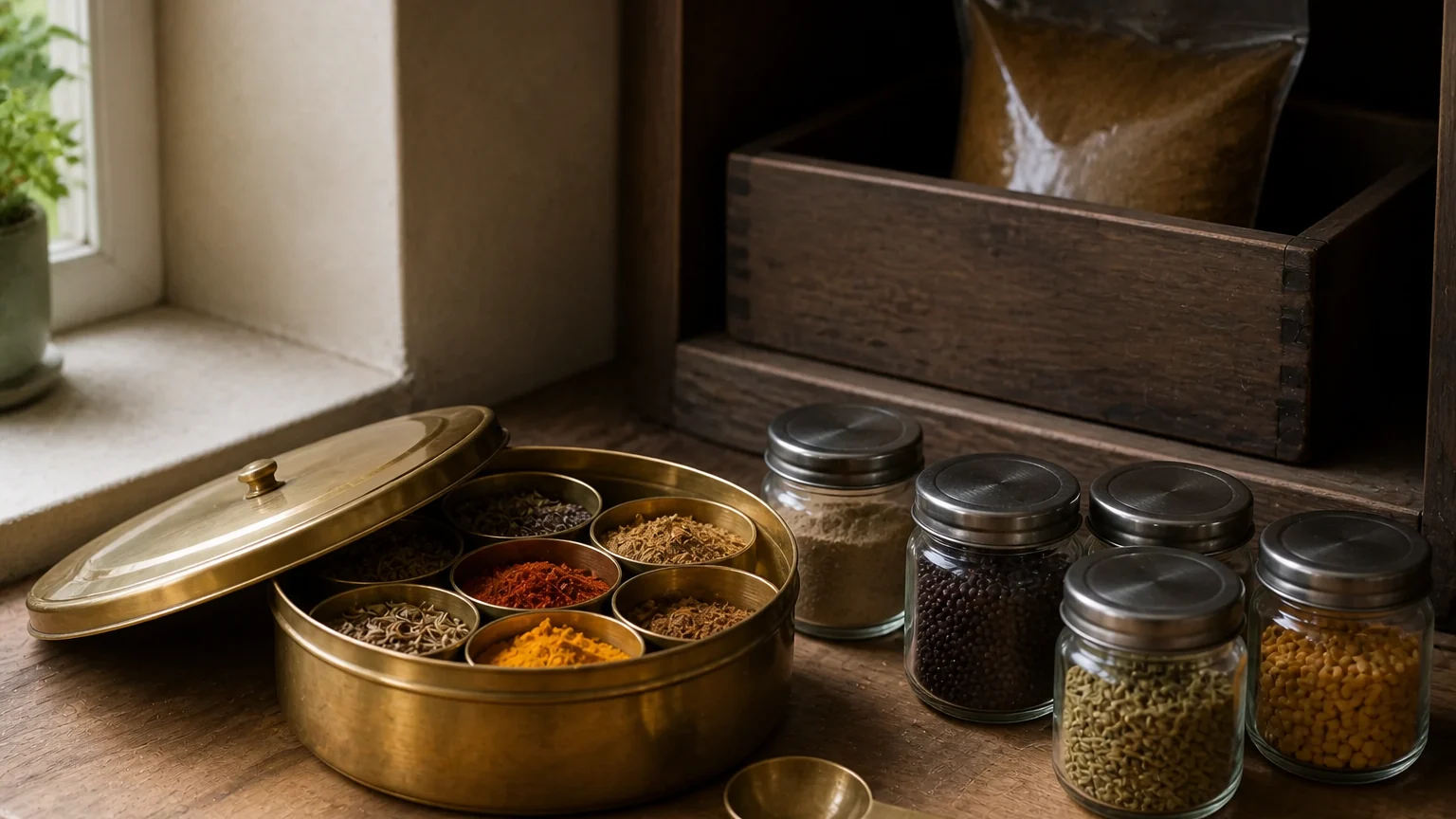
- Daily quantity: Put only what you will use soon in the masala dabba.
- Airtight jars: Protect powders and slower-moving whole spices between cooks.
- Dry spoon: Measure away from the steaming pot so moisture never enters the container.
- Sealed refill: Keep extra stock closed in a cooler darker cupboard.
Fill the dabba cups with quantities you will use soon and close the lid between cooks. Keep slower stock sealed in separate jars.
Large bags save money only with real turnover, so split a frequently used spice between one working jar and a sealed refill away from the stove.
- Date the jar: Mark the month opened instead of trusting a distant best-before date.
- Smell before measuring: A vivid aroma means a smaller amount can do the job.
- Keep steam out: Spoon spices into a prep bowl rather than shaking a jar over a pot.
- Separate daily and occasional stock: Keep the six starters close and regional extras in a cooler area.
- Upgrade what empties: Buy better cumin or chile before replacing a specialty jar that barely moved.
- Discard contamination: Moist clumps, insects, mold, or rancid oily aromas are not ordinary staleness.
Never pour a fresh purchase over the remnants of an old jar. Empty and clean the container so stale powder, moisture, or insects cannot contaminate the refill.
Color can flag a problem but cannot prove freshness alone.
Turmeric that has gone dull beige, chile that has lost both fruit and heat, or garam masala that smells only dusty should be replaced rather than doubled.
The broader spice storage guide covers container, light, heat, and humidity choices. Here the useful rule is narrower: keep six active jars fresh, refill what you finish, and let actual dishes decide what joins them.