
How Did the Spice Trade Change What We Cook Today?
Follow pepper, cinnamon, cloves, nutmeg, and chiles from trade routes to modern pantry logic.
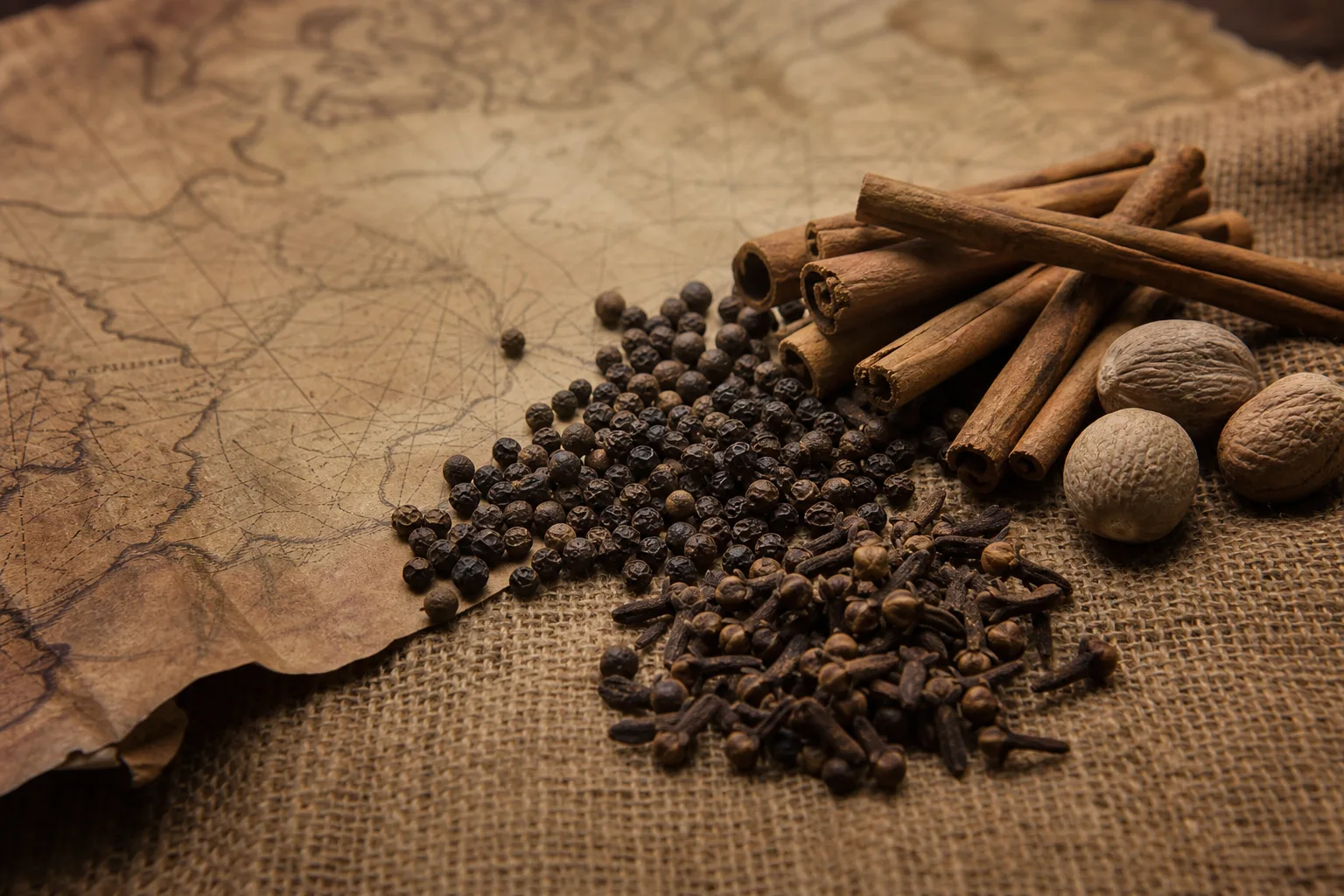
The spice trade changed cooking by moving high-value flavors across long routes and teaching cooks to preserve aroma, balance scarcity, and build regional blends. Pepper, cinnamon, cloves, nutmeg, and later chiles shaped sauces, sweets, meat preservation, medicine, status, and colonial economies. Modern cooks still see that history in pantry categories, spice blends, cuisine identities, and the price gap between whole, ground, fresh, and rare spices.
What the spice trade changed
The spice trade changed cooking because dried aroma could travel farther than fresh herbs, meat, or fruit. That made flavor portable.
Pepper, cinnamon, cloves, nutmeg, mace, cardamom, and saffron became pantry goods because they stayed valuable after weeks or months of movement.
| Spice | Trade value | Modern cooking echo |
|---|---|---|
| Black pepper | Compact heat and status | Table seasoning, rubs, sauces |
| Cinnamon | Sweet warmth and preservation aura | Baking, rice, meat stews |
| Cloves | Powerful aroma in tiny amounts | Ham, chai, pickles, sweets |
| Nutmeg and mace | Island scarcity and luxury | Cream sauces, baking, drinks |
What cooks call essential still reflects old trade habits. Pantry basics often outlive the route that made them common.
A spice was not valuable only because it tasted good. It was valuable because it stored, traveled, measured, and signaled access.
That split still matters in cooking. Nutmeg softens cream and sweets, while mace can feel lighter and more floral.
The practical lesson is simple: form creates value. Whole, dried, ground, and blended spices carry history into the kitchen differently.
A modern cook can use that lesson immediately. Buy the form that protects the aroma until the dish needs it.
Routes moved techniques, not just jars
Trade routes moved cooks, merchants, religious rules, preservation methods, and serving habits along with spices. The pantry traveled with technique.
Useful trade history shows why a spice enters a dish. Geography alone is not enough.
| Route system | Movement | Kitchen effect |
|---|---|---|
| Indian Ocean | Pepper, cardamom, cinnamon, cloves | Layered spice bases, rice, pickles |
| Silk Road | Aromatics, dried goods, ideas | Meat stews, sweets, medicinal overlap |
| Red Sea and Mediterranean | Spices into Europe and North Africa | Sauces, baking, preserved meat |
| Atlantic routes | Chiles, vanilla, allspice, cacao | New heat patterns and sweets |
No single cuisine came from the repeated contact of Silk Road spice routes. Markets and techniques kept meeting instead.
Maritime trade mattered because ships could move bulk. That changed price, access, and eventually everyday use.
- Ports: Coastal cities became flavor filters because merchants, cooks, and storage methods met there.
- Caravans: Overland routes favored compact, valuable goods that could survive long movement.
- Markets: Trade centers taught substitution because cooks adjusted to what arrived, what spoiled, and what cost too much.
- Households: Once prices dropped, former luxuries became ordinary pantry goods.
Modern pantry logic still follows route logic. Compact dried flavor remains easier to ship, store, and combine than fresh aromatics.
The route matters most when it changes the cooking method. A spice without technique becomes trivia.
That is why a map should lead back to the pan. Timing, grinding, soaking, and blending are the usable history.
Pepper, cinnamon, cloves, and nutmeg
Pepper became a daily seasoning because it balanced compact value with broad culinary use. It worked in meat, sauces, pickles, and table service.
This pattern becomes clear when you compare traded spices with different storage advantages and flavor jobs.
| Spice | Historical pull | Current kitchen role |
|---|---|---|
| Black pepper | Heat without chile and strong portability | Finishing bite and rubs |
| Cinnamon | Bark that stored aroma well | Sweet baking and savory rice or meat |
| Cloves | Tiny dose with huge aroma | Pickles, ham, chai, mulled drinks |
| Nutmeg | Island-controlled rarity and sweet warmth | Cream, custard, spinach, baking |
Black pepper became ordinary only after trade networks made it easier to buy. Its old value explains why it still sits on the table.
Cloves and nutmeg stayed powerful because tiny amounts change a dish. High intensity made them worth carrying long distances.
That concentration is why old spice routes favored them. A small sack could carry enormous flavor value.
Modern cooks should read old value as a dose warning. Expensive historical spices often need the smallest spoon.
Strong spices also explain old luxury cooking. One clove or mace blade could make scarcity visible at the table.
Blends turned trade into cuisine
Spice blends turned scattered trade goods into repeatable cooking systems. A blend preserved a house style, regional taste, or market shortcut.
You can see trade history in practical form through spice blends. Imported, local, roasted, and dried ingredients become one repeatable seasoning.
| Blend pattern | Trade influence | Cooking result |
|---|---|---|
| Warm sweet blends | Cinnamon, clove, nutmeg, mace | Baking, stews, festive drinks |
| Curry-style blends | Turmeric, coriander, cumin, chile | Early fat-bloomed bases |
| Baharat-style blends | Pepper, cinnamon, cardamom, cloves | Meat, rice, and vegetable depth |
| New World chile blends | Chiles plus older aromatics | Heat joined established spice systems |
This becomes visible in an Indian spice pantry, where whole seeds, ground spices, souring agents, and finishing blends do different jobs.
A blend is never just a list. It encodes timing, form, price, local crops, and cooking fat.
- Roasted blends: Toasting made hard spices more aromatic and easier to grind.
- Salted blends: Salt turned spice into immediate table seasoning but reduced control.
- Regional blends: Local herbs or chiles made imported aromatics taste native to a cuisine.
- House blends: Repetition turned trade goods into identity and memory.
When you use a blend, you use history in compressed form. The jar carries old trade choices into one spoon.
That is why substitutions for blends are difficult. You must replace jobs, not just spice names.
A blend also hides hierarchy. The first ingredient may be local and cheap, while the smallest pinch may carry the old route.
Colonial myths and harder truths
Spice trade stories often become simple adventure tales, but the real history includes coercion, monopoly, violence, and forced labor. Flavor had a cost.
The same conversation has to include spices and colonialism because European demand reshaped islands, ports, and labor systems.
| Myth | Why it misleads | Better reading |
|---|---|---|
| Europe needed spices to hide rotten meat | Spices were too costly for routine masking | Status, medicine, flavor, and preservation all mattered |
| One route explains everything | Multiple routes overlapped | Markets shifted by war, weather, and power |
| Spices moved only westward | Cooks and goods moved in many directions | Asia, Africa, Europe, and the Americas all changed |
| Authenticity is fixed | Trade constantly changed cuisines | Tradition can include adaptation |
The myth about rotten meat survives because it is easy to repeat. It ignores price, class, and cooking skill.
Some of the most expensive spices in history were status signals before they became everyday ingredients. Cost shaped use.
- Monopoly: Controlling supply could matter as much as growing the spice.
- Labor: Plantation systems and forced work shaped several spice economies.
- Medicine: Many spices crossed the line between kitchen, pharmacy, and ritual.
- Status: Serving rare spices could display wealth before it displayed taste.
A responsible history article should make dinner clearer, not romanticize extraction. The pantry has beauty and damage inside it.
That honesty helps modern cooks respect origin without turning origin into decoration.
Respect also means avoiding simple purity claims. Many beloved dishes exist because people adapted under pressure.
What modern cooks still see
Modern cooks still see spice trade history in price, freshness, form, and pantry categories. The old routes became shopping habits.
Modern spice substitution logic also comes from scarcity. Cooks have always repaired dishes around missing, expensive, or stale spices.
| Old trade issue | Modern version | Cooking response |
|---|---|---|
| Scarcity | Small jars and high prices | Use precise doses |
| Long travel | Ground spices fading before purchase | Buy whole when possible |
| Regional access | Cuisine-specific grocery stores | Shop where turnover matches use |
| Blend identity | Premixed masalas and rubs | Check salt, heat, and freshness |
Even blooming spices in oil has old roots. Heat and fat make stored aroma taste alive again.
Whole spices still protect aroma better than powders. That storage fact mattered on ships and still matters in cabinets.
That is why buying whole cumin, pepper, cardamom, or coriander can be a freshness upgrade. You grind only what the dish needs.
The spice trade is not only past tense. Every stale jar is a tiny lesson in distance, time, and form.
Better shopping is one answer to that lesson. Buy from turnover, store tightly, and grind only when aroma matters.
How to read origin without freezing food
Origin should help you cook better, not freeze a cuisine into one pure story. Trade made food adaptive from the start.
Across routes, Medieval European cooking, Indian masalas, Arab trade ports, and American chile routes all show changing taste over time.
| Question | Why it helps | Kitchen payoff |
|---|---|---|
| Was the spice local or imported? | Explains price and prestige | Use with dose awareness |
| Was it whole, ground, or blended? | Explains timing and storage | Choose the right form |
| Was it used in food, medicine, or ritual? | Explains intensity and symbolism | Avoid shallow claims |
| Did trade change the cuisine? | Explains adaptation | Cook tradition with flexibility |
Food, preservation, ritual, and medicine often overlapped in spices in Ancient Egypt. Modern categories are cleaner than old ones.
Use origin as context for technique. If a spice traveled whole, ask how cooks toasted, ground, soaked, or blended it.
- For buying: Origin can signal style, but freshness and turnover still decide quality.
- For cooking: Historical use should explain timing, amount, and food pairing.
- For substitutions: A route can suggest relatives, but the dish role decides the swap.
- For respect: Name traditions carefully and avoid making trade violence sound decorative.
History is useful when it changes a cooking decision. Otherwise it belongs in a footnote, not the main answer.
The best origin reading gives you humility and better technique. That is a stronger pantry than trivia.
Use history to ask better questions at the stove. Why this form, why this timing, and why this pairing are enough.