
Why Were Some Spices So Expensive in History?
The real cost sits in flowers, hands, routes, risk, and control of supply.
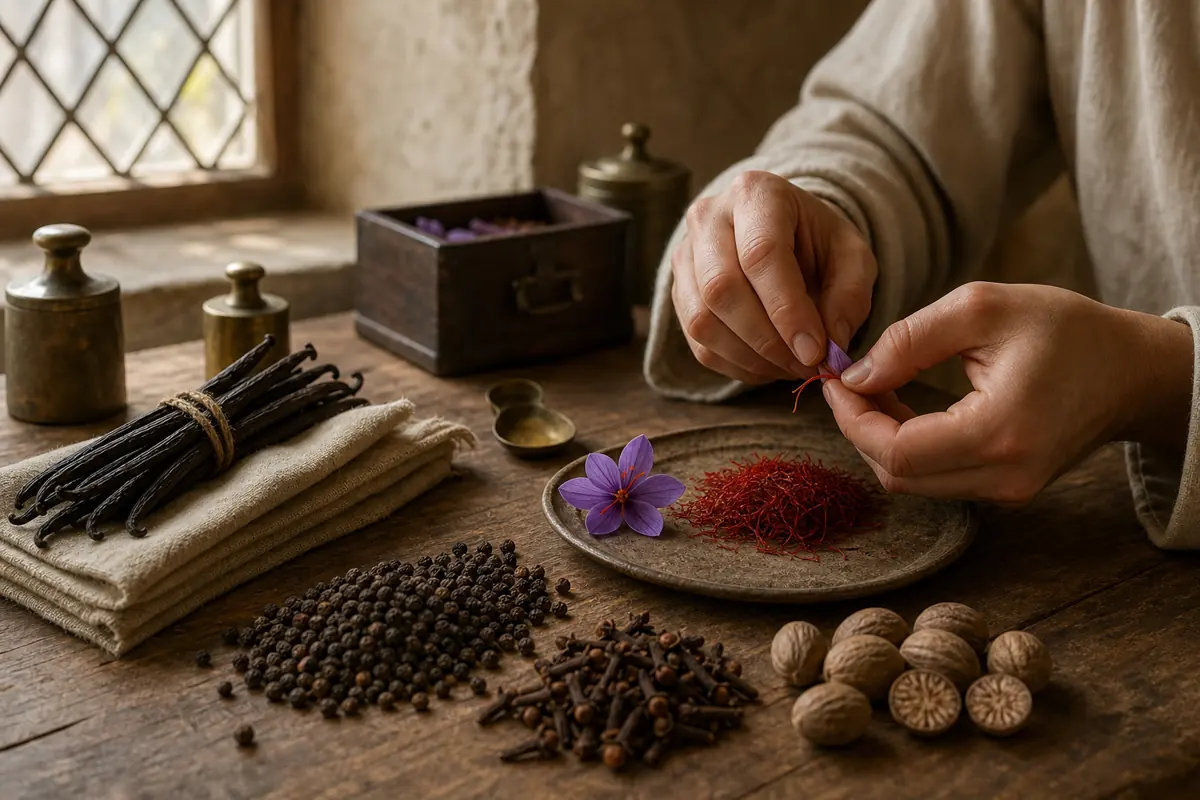
Historical spice costs came from different systems: hand-separated saffron stigmas, scaled pepper trade, controlled nutmeg and clove supply, and vanilla pollination and curing. Any price claim still needs a date, place, grade, unit, and wage comparison before the number means anything.
What made a spice expensive before modern shipping?
A spice became expensive when a small amount of aroma carried several layers of cost. Growing, harvesting, drying, transport, taxes, loss, and market control could all raise the final price.
The kilogram can mislead. Saffron is sold by the gram and used by the pinch, while pepper has often moved in sacks.
| Pressure | What created it | Typical consequence |
|---|---|---|
| Harvest labor | Flowers, bark, or fruit needed careful handwork | High cost before transport |
| Narrow ecology | A crop thrived in few places | Supply could not expand quickly |
| Processing loss | Drying and sorting reduced saleable weight | More raw crop per finished measure |
| Route risk | Cargo crossed seas, borders, and tax points | Each handoff added cost |
| Market control | A ruler or company restricted buyers | Price rose above production cost |
| Quality grading | Color, oil, origin, and condition varied | Two lots could not be compared fairly |
These pressures rarely worked alone. A difficult harvest could become dearer through customs, credit, spoilage, and restricted supply.
That is why spice trade history cannot be reduced to distance. Power at the port sometimes mattered more than miles at sea.
Households answered cost with dose. Rare aromatics appeared as a visible accent, a feast marker, or a small part of a larger blend.
Saffron made labor visible in every thread
Saffron threads come from the red stigmas of Crocus sativus. Each flower carries three, so harvesters must handle many flowers for a small finished weight.
The flowers open during a short seasonal window. Picking and separation must move quickly before weather and wilting reduce quality.
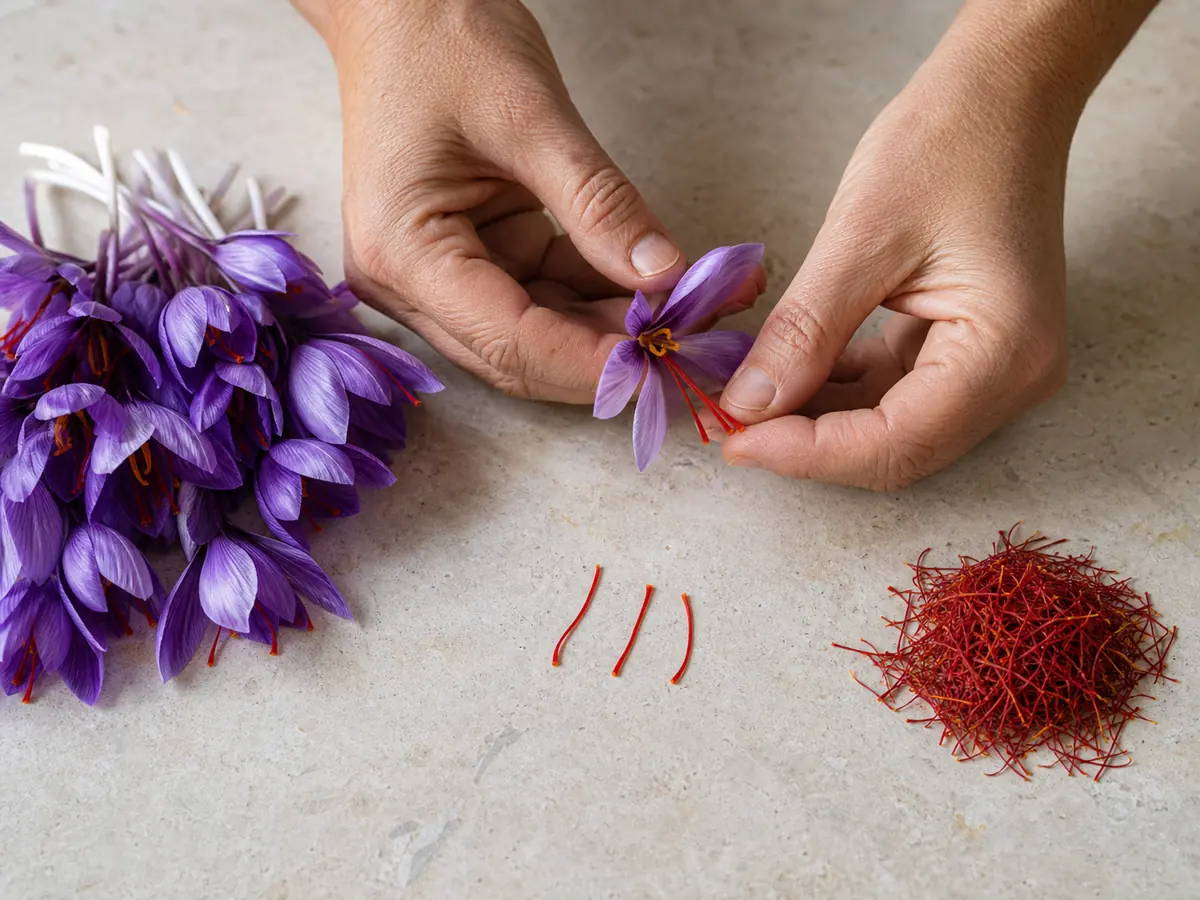
- Flower: The saleable spice is only a tiny part of the bloom.
- Separation: Delicate handwork keeps yellow style material and debris out.
- Drying: Moist stigmas lose weight as aroma and color concentrate.
Mechanization can help around the harvest, but the fragile stigma still resists the speed used for grain or pepper. Labor remains central.
The dose changes the kitchen calculation.
A few properly soaked threads can color and scent rice without making saffron a bulk seasoning.
Whole threads let a buyer inspect shape and color. Powder hides those clues and is easier to dilute with other material.
The enduring price is therefore less mysterious than it looks. Tiny botanical yield meets a short harvest and careful separation.
Pepper became ordinary after centuries of expensive movement
Black pepper proves that historical luxury does not require permanent rarity. It grows on productive vines and serves many foods, which made expansion worthwhile.
Pepper from South Asia passed through growers, coastal traders, ocean carriers, and Mediterranean merchants. Taxes and finance accumulated at those handoffs.
A merchant also paid for time. Capital remained tied up while cargo waited for sailing weather, crossed ports, and reached a buyer.
- At origin: Harvest timing, drying, and sorting set the usable grade.
- At sea: Freight, moisture, loss, and seasonal sailing added risk.
- At borders: Duties and controlled market access raised landed cost.
- At retail: Small urban measures carried another markup.
Its broad usefulness supported larger markets. Pepper seasoned meat, sauces, fish, vegetables, and preserved foods without demanding a new cooking system.
Demand across many meals encouraged repeated trade instead of occasional display purchases. Larger, steadier flows made storage and distribution more efficient.
Cultivation spread and transport grew more efficient.
Supply became harder for one merchant group to restrict.
A pepper mill on the modern table is the end of that change. The spice did not lose intensity, but access stopped signaling the same rank.
Nutmeg, mace, and cloves became monopoly spices
Nutmeg and mace grew naturally in the Banda Islands, while famous clove production centered farther north in Maluku. Concentrated geography made control tempting.
Regional merchants had moved these crops through Asian networks long before Europeans arrived. The islands were active societies, not isolated warehouses waiting for discovery.
| Spice | Natural limit | Control imposed |
|---|---|---|
| Nutmeg | Trees concentrated in Banda | Exclusive purchase and plantation rule |
| Mace | Aril from the same limited fruit | Separated and priced as another commodity |
| Cloves | Production concentrated in parts of Maluku | Approved growing zones and tree destruction |
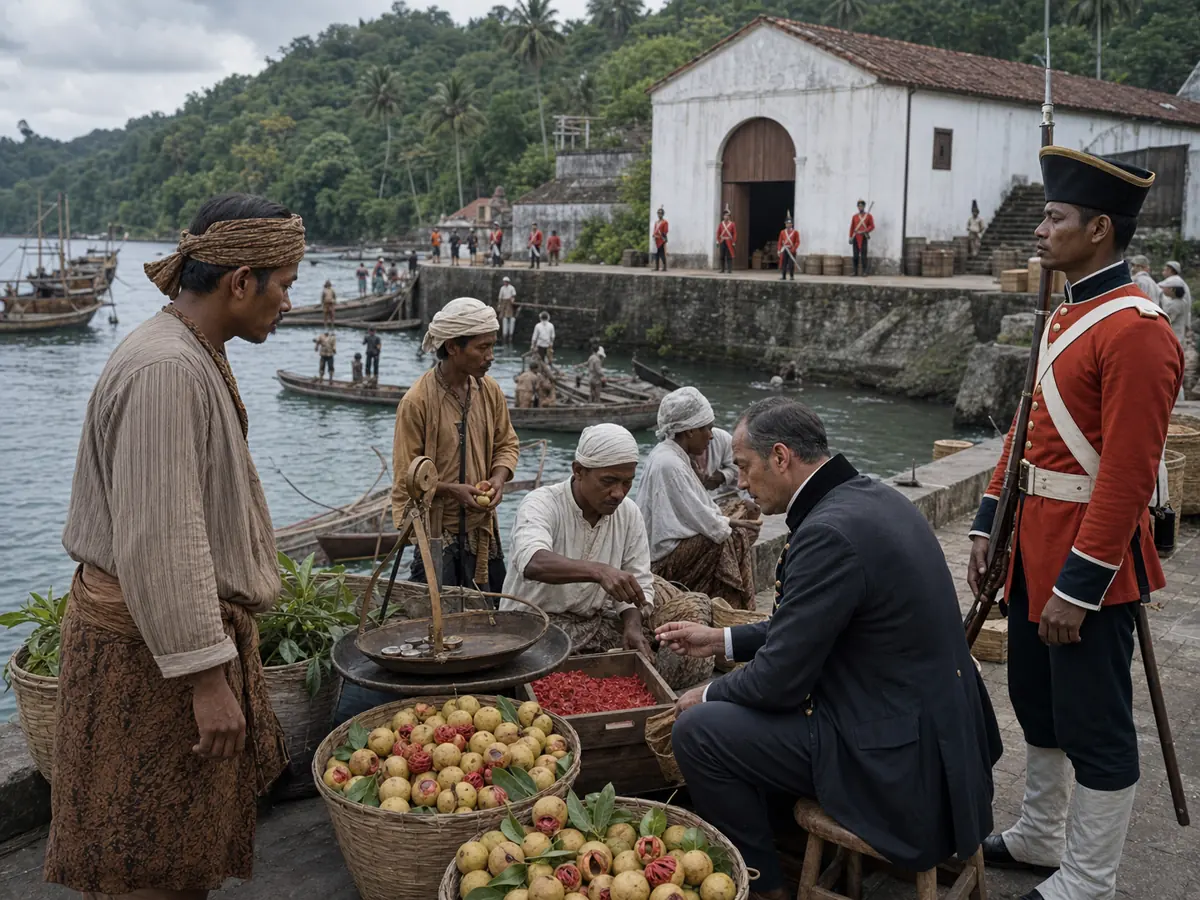
- Crop: Nutmeg supply began with a small island ecology.
- Gate: Exclusive purchase rules reduced competing buyers.
- Premium: Scarcity and enforced access raised the cost at each controlled handoff.
The Dutch East India Company sought more than a favorable deal. Control of clove production meant preventing sales to competing buyers.
That policy required forts, patrols, blockades, punishment, and surveillance of living trees. Monopoly had to be enforced repeatedly because trade continued around it.
The 1621 conquest of Banda turned price policy into mass violence, displacement, and plantation restructuring. The premium cannot be separated from that coercion.
This history belongs in the dedicated account of spices and colonialism. Here it explains why market price could rise far above farm cost.
Once viable trees spread to other colonies, geographic exclusivity weakened. A living plant could undo part of the commercial wall.
Vanilla shows why price can spike in a modern market
Natural vanilla remains vulnerable even in global trade. Outside its native Mexican ecology, commercial flowers commonly need hand pollination.
Each flower opens briefly. A missed pollination window means no pod from that bloom, while new vines take years to reach production.
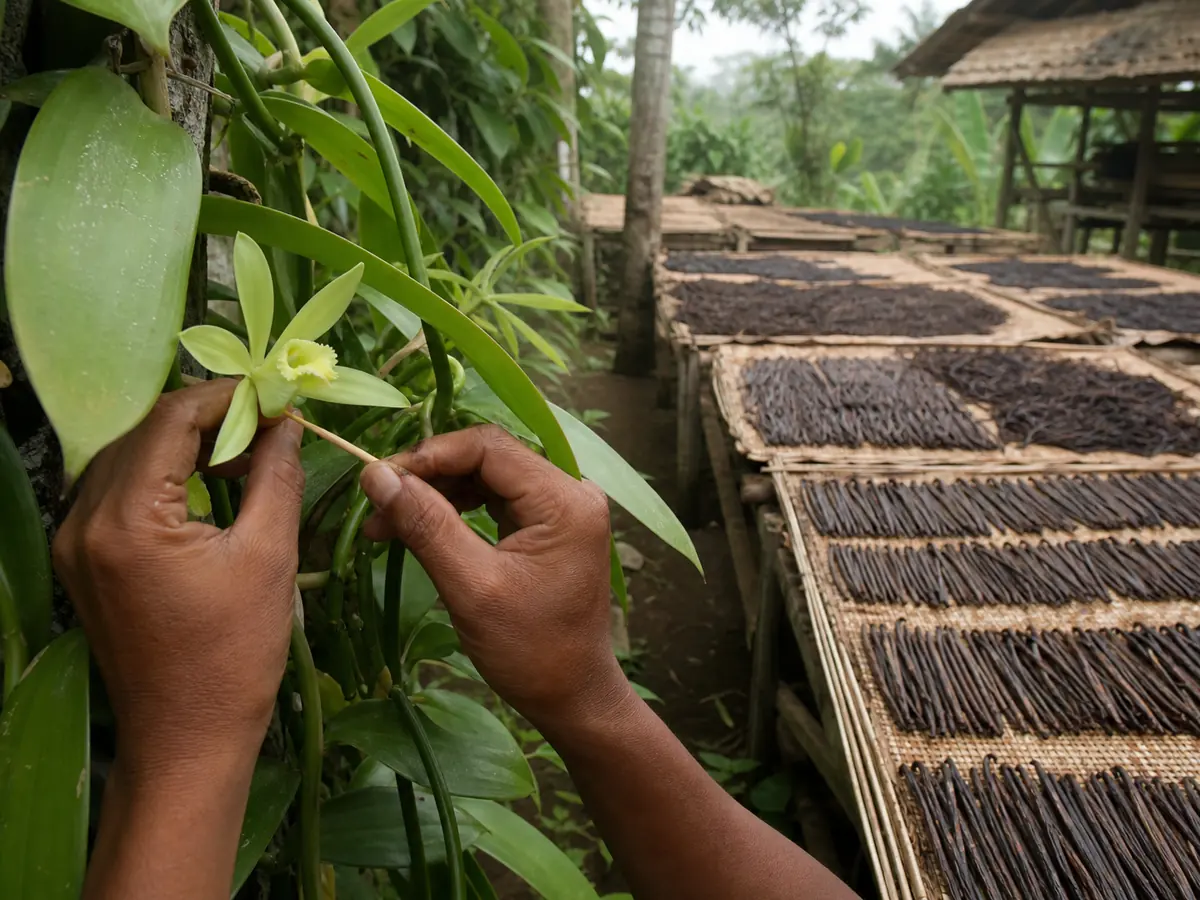
- Pollinate: Workers visit flowers during a narrow opening window.
- Mature: Pods need months on the vine before harvest.
- Cure: Heat, sweating, drying, and conditioning build the familiar aroma.
Curing creates another delay. Fresh green pods do not smell like finished vanilla, and rushed processing lowers quality.
Cyclones, theft, early picking, and speculative buying can tighten supply. High prices push manufacturers toward synthetic vanillin or other flavor systems.
That substitution reduces demand and can discourage planting.
Later scarcity may restart the cycle because vines cannot replace lost output quickly.
A bottle labeled vanilla flavor may therefore solve a different problem than whole cured beans. The same form distinction matters when whole and ground spices are priced.
Quality also develops after harvest. Careful conditioning lets aroma mature, while hurried drying can leave beans brittle, smoky, or weak.
Farmers cannot instantly answer a price spike with more cured beans. New vines, pollination, maturation, and curing impose separate delays.
Historical price claims need a unit and a date
A dramatic number is useless without its market. The same spice differs by grade, season, city, wholesale lot, and retail measure.
- Date: A war year and a normal harvest year are not comparable.
- Place: Source-port prices differ from inland retail prices.
- Unit: Pounds, ounces, local weights, and modern kilograms need careful conversion.
- Quality: Broken, damp, old, or adulterated goods did not command the best price.
- Income: A wage comparison often explains access better than a metal or currency conversion.
The phrase “worth more than gold” usually hides a missing detail.
Gold comparisons also ignore dose. A household bought spice by a small measure, while bullion served as a store of value and settlement medium.
It may compare unlike units or repeat a story without an account book.
A sound comparison names the archive, transaction, measure, buyer, and seller. It also admits when modern purchasing power cannot be recovered cleanly.
Wholesale records reveal trade scale but not household access. A retail account or wage record answers a different question about who could season dinner.
Wage context can reveal who had access. A spice affordable to a court by the chest could remain unreachable to a worker by the ounce.
This caution does not make spices ordinary. It makes the reason for their cost more precise.
Cost changed how cooks used the spice
Expense shaped recipes long before it shaped price lists. A cook made a rare spice noticeable through aroma, color, service, or a timed finish.
| Cost condition | Kitchen response | Example |
|---|---|---|
| Tiny dose carried far | Use a visible accent | Saffron threads in rice |
| Strong aroma dominated | Measure by piece or pinch | Clove in sauce or drink |
| Supply changed often | Substitute or blend | Pepper mixed with local aromatics |
| Status mattered | Serve at a feast | Warm spices in elaborate sauces |
Blending also stretched a scarce note. The expensive ingredient could lead while bread, acid, sugar, herbs, or cheaper seeds built the dish.
Grinding spread a small amount through more sauce, but early grinding also exposed aroma to loss. Timing helped cooks make a limited measure noticeable.
Color offered another economy. Saffron water could mark rice or sauce visibly even when each serving contained only a few extracted threads.
Service concentrated the signal too. A fragrant sauce added at the table made scarce aroma noticeable before steam and long cooking carried it away.
Substitution followed the missing job. Cooks could replace heat, color, or fragrance separately instead of finding one cheaper spice that copied everything.
Recipes also signaled value through placement. A costly aroma near service reached the diner before it disappeared into the background of a large dish.
Modern cooks inherit that logic. Buy little, protect aroma, and spend the spice where its distinct job survives the cooking method.