
How Did Spice Trading Turn Into Colonial Rule?
The decisive history lies between a purchase contract and the force used to enforce it.
Concentrated spice value helped chartered companies turn exclusive contracts into forts, blockades, production control, and territorial rule, with the 1621 conquest of Banda tying nutmeg monopoly to mass violence and plantation labor. Clove, cinnamon, and pepper produced different systems, while local growers and traders bargained, resisted, smuggled, fled, and preserved crops and communities.
How did a spice purchase become colonial rule?
The change began when a buyer demanded exclusivity. A normal trade offered competing sellers and buyers, while monopoly required everyone else to disappear.
European chartered companies combined private capital with state powers. Unlike ordinary spice trade, they could build forts, command ships, wage war, and administer territory.
| Stage | Commercial goal | Coercive requirement |
|---|---|---|
| Purchase | Secure regular cargo | Negotiate with producers and merchants |
| Exclusive contract | Block rival buyers | Monitor ports and punish other sales |
| Fort and blockade | Control access | Use armed ships and garrisons |
| Production control | Limit total supply | Direct planting, cutting, and harvest |
| Territorial rule | Make control permanent | Govern land, labor, and movement |
A paper agreement could not maintain this chain. Growers had reasons to sell to whoever offered rice, cloth, silver, credit, or a better price.
That gap between contract and consent introduced violence. Patrols inspected boats, forts watched channels, and punishments made market policy physical.
Spice demand joined wider imperial motives, including strategic ports, taxes, land, and rivalry. The premiums described among historically costly spices made it a powerful lever, not the only cause.
Company shareholders expected returns, while officials overseas answered changing conditions with broad discretion. Commercial delay could therefore invite military escalation.
Local treaties also passed through translation and unequal assumptions. A company could read permanent sovereignty where a ruler understood limited trading permission.
Banda shows the violence behind nutmeg monopoly
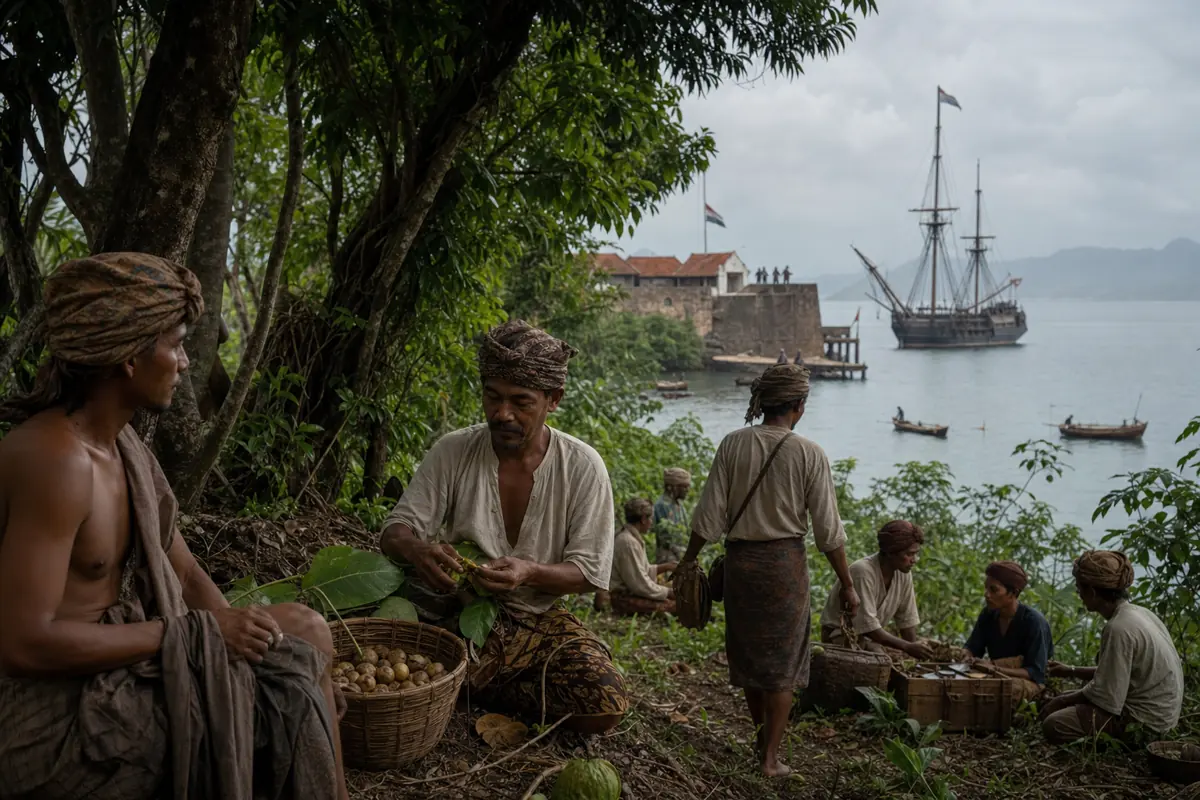
Before Dutch conquest, Bandanese communities produced nutmeg and mace while trading through a wide Asian network. Local leaders known as orang kaya negotiated with visiting merchants.
The islands depended on imported rice and cloth, yet that dependence did not make them passive. Multiple buyers helped balance risk and price.
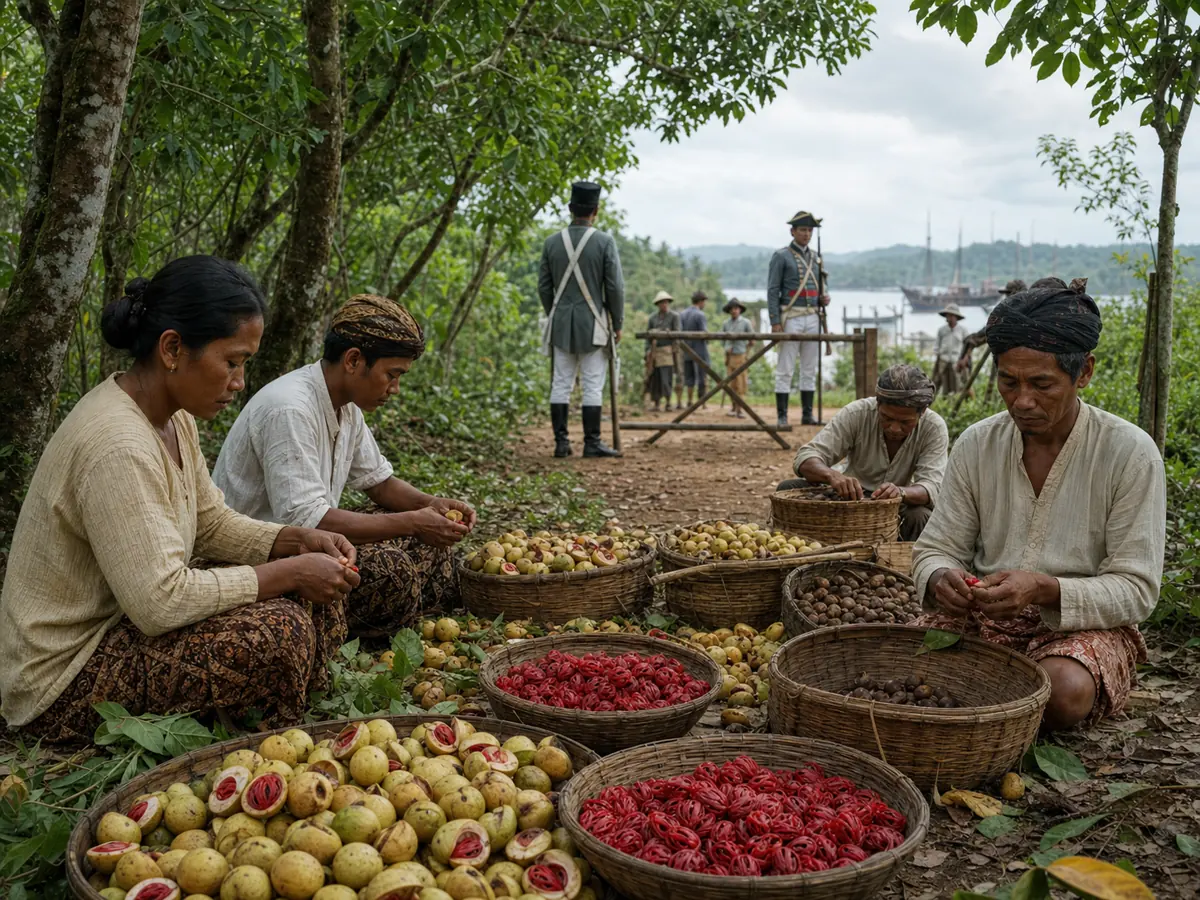
- Growers: Managed trees, harvest, fruit, mace, and seed.
- Local merchants: Connected food imports with spice exports.
- Company force: Tried to reduce many trading choices to one buyer.
Dutch East India Company officials demanded exclusive sale. Bandanese sellers continued other trade because the terms threatened their economy and autonomy.
In 1621, Jan Pieterszoon Coen led the conquest of the Banda Islands. Killing, execution, flight, and forced removal shattered much of the population.
The company divided land into perken plantations. European leaseholders oversaw production using enslaved and coerced labor brought from elsewhere.
This system made a market claim into a new social order. Nutmeg trees, land access, labor, and shipping all came under surveillance.
A romantic story about rare spice hides the people removed to make rarity profitable. The plantation was part of the price.
Clove control reached beyond one island
Clove production centered in northern Maluku, especially around Ternate, Tidore, and nearby islands. The wider island geography required another control strategy.
Dutch policy concentrated approved cultivation and ordered clove trees destroyed outside controlled zones. Less production made the official cargo easier to price.
| Monopoly action | Purpose | Local response |
|---|---|---|
| Destroy trees | Reduce unsanctioned supply | Hide, replant, or protect trees |
| Patrol sea lanes | Intercept rival cargo | Use smaller routes and night movement |
| Bind local rulers | Make enforcement indirect | Renegotiate or shift alliances |
| Set purchase terms | Control price at source | Smuggle to competing buyers |
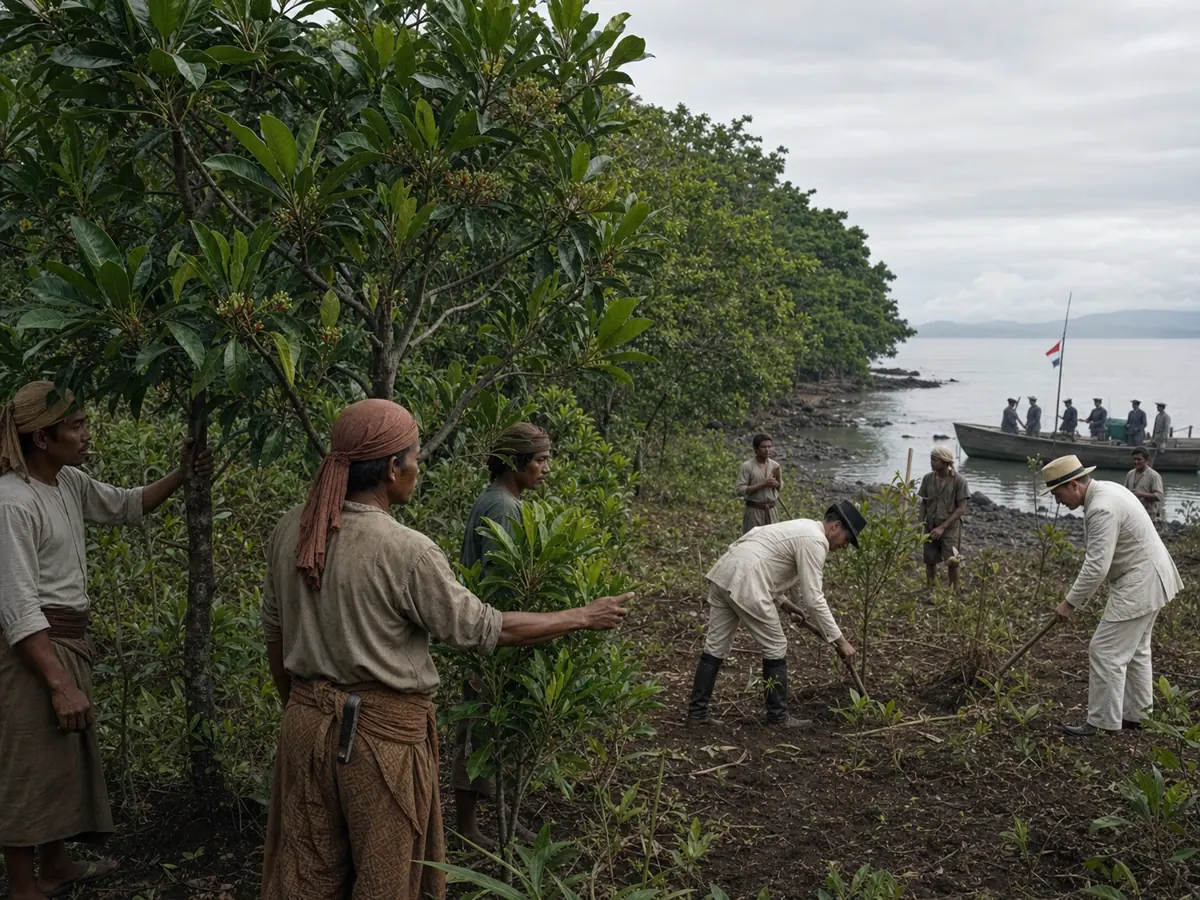
- Ecology: Tree destruction made commercial policy part of the landscape.
- Resistance: Protecting or replanting trees kept alternatives alive.
- Consequence: Crop survival changed who could trade cloves beyond the controlled harbor.
Tree destruction shows that monopoly was ecological. Company policy reached into the landscape and decided where a living crop could exist.
It also reveals weakness. If clove trade had stopped voluntarily, patrols and repeated extirpation campaigns would not have been necessary.
Ternate and Tidore had their own political histories and rivalries. European companies entered networks older than the European Silk Road idea rather than replacing them overnight.
Clove harvests also fluctuated. A rigid quota could collide with weather, tree cycles, household needs, and obligations to local rulers.
Monopoly records often count seized cargo but miss trade that escaped detection. Enforcement archives reveal pressure better than total market volume.
Cinnamon and pepper produced different colonial systems
No single spice created one colonial model. Crop geography and skilled labor changed what control looked like.
Sri Lankan cinnamon required skill in selecting shoots, peeling bark, scraping, rolling, and drying quills. Controlling peeling communities mattered beside controlling land.
| Crop | Production pattern | Colonial pressure |
|---|---|---|
| Nutmeg and mace | Concentrated island trees | Territorial monopoly and plantations |
| Cloves | Several Maluku islands | Restricted zones and tree destruction |
| Cinnamon | Skilled bark harvest in Sri Lanka | Labor obligations and coastal control |
| Pepper | Broader South and Southeast Asian cultivation | Contracts, ports, taxes, and competing suppliers |
Black pepper grew across a wider area and moved through resilient merchant networks. Closing every alternative source was much harder.
Pepper vines also required local knowledge about supports, shade, harvest timing, and drying. Port control could redirect sales without replacing that production skill.
Skilled labor could not be replaced by a fort. Peelers, growers, sorters, boat crews, and brokers still controlled knowledge needed for saleable cargo.
Control therefore focused on ports, contracts, shipping, and political alliances. Rival European companies never erased Asian trade.
A company could dominate one coast while pepper moved through another ruler or inland market. Wider cultivation kept monopoly claims expensive to enforce.
Comparison prevents a loose claim that “spices caused plantations.” The crop and place determined which labor and military tools were used.
Moving spice plants broke the old monopolies
A monopoly built on geography remained vulnerable to a seedling. If a rival could keep the plant alive elsewhere, the source islands lost exclusivity.
Plant transfer was difficult. Seeds lost viability, seedlings suffered salt, shade, heat, and rough voyages, while growers held practical knowledge outsiders lacked.
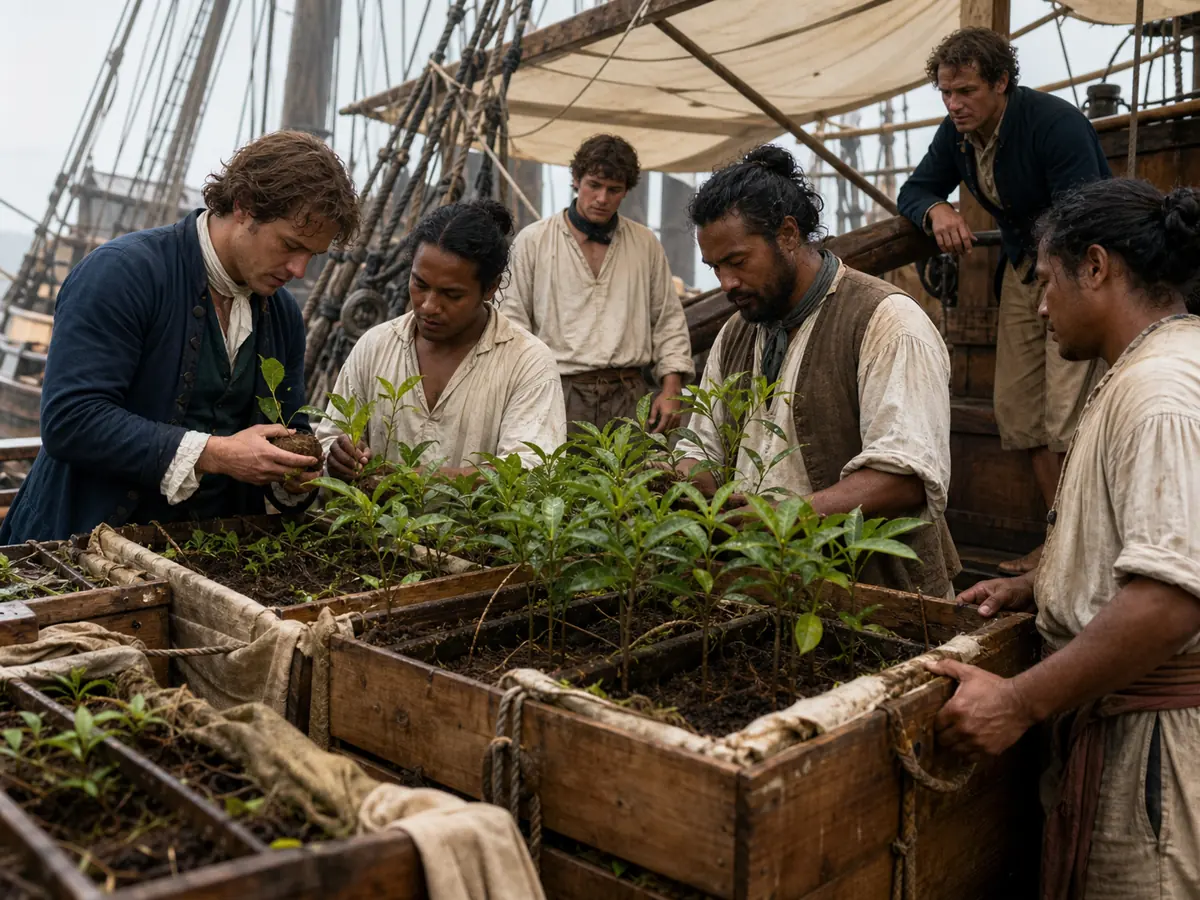
- Survive: Roots needed moisture without rot during the voyage.
- Adapt: New soil, shade, and rainfall changed early growth.
- Reproduce: A few living trees had to become a stable crop.
French administrator Pierre Poivre helped establish clove and nutmeg outside Dutch control in the eighteenth century. This later plant transfer differed from the earlier movement of dried spices.
A successful transfer needed more than one surviving tree. Growers had to learn flowering, pollination, shade, harvest, and curing under new conditions.
British occupations and later transfers spread plants farther. New production weakened the old link between one island group and world supply.
That expansion lowered geographic exclusivity but did not free labor. New plantations could reproduce coercion under another flag and another export port.
This was still imperial botany. Rival powers moved crops into other colonies and often built new labor systems around them.
Local traders and growers were never passive
Company archives often describe resistance as smuggling because monopoly law defined ordinary regional trade as a crime.
- Bargaining: Producers used rival buyers and political alliances to seek better terms.
- Smuggling: Small boats and regional ties moved cargo around official ports.
- Flight: Displaced people carried knowledge and community to other islands.
- Crop survival: Hidden or transferred trees weakened attempts at total control.
- Continuity: Foodways and identities persisted beyond company categories.
Resistance was not always open revolt. Delayed delivery, concealed harvest, selective cooperation, and changed routes could all limit control.
Local rulers also made strategic choices under pressure. An alliance could defend one rival while creating danger from another.
Restoring this agency changes the story. European companies appear as powerful intruders in existing networks, not the inventors of trade.
Oral knowledge and family memory can preserve experiences official ledgers reduce to lost cargo or disobedience. Reading both sources changes whose action becomes visible.
It also explains why monopoly stayed expensive to enforce. People kept making choices the company had to police.
What remains in the modern spice pantry?
Modern production maps still reflect centuries of plant transfer, plantation building, and commodity labeling. These maps differ from medieval spice access because the plants themselves moved.
A country name on a jar may identify packing, export, or broad origin. It rarely tells the buyer how growers were paid or who controlled processing.
Commodity grades can hide variety and farm identity because several harvests may enter one export lot before a retail brand receives it.
- Ask the crop: Was production concentrated naturally or by policy?
- Ask the labor: Which skill created the saleable spice?
- Ask the buyer: Could growers choose among markets?
- Ask the label: Does origin describe farm, port, processor, or brand story?
Certification can answer a modern standard, but history asks another set of questions. Ownership, bargaining power, and processing income rarely fit on the front label.
A named cooperative, estate, or processor offers a narrower claim than a country flag. You can investigate that claim without assuming it guarantees fair terms.
Processing location matters because value accumulates after harvest. Cleaning, grading, grinding, and packing can leave growers with little share of the retail price.
Long supply chains are not automatically abusive. The useful question is whether each handoff can be named and whether producers can negotiate alternatives.
Historical concentration still matters when one processor or buyer controls access behind a broad origin label.
History cannot certify a modern product, but it can improve the questions. The pantry becomes clearer when flavor and power remain in the same frame.